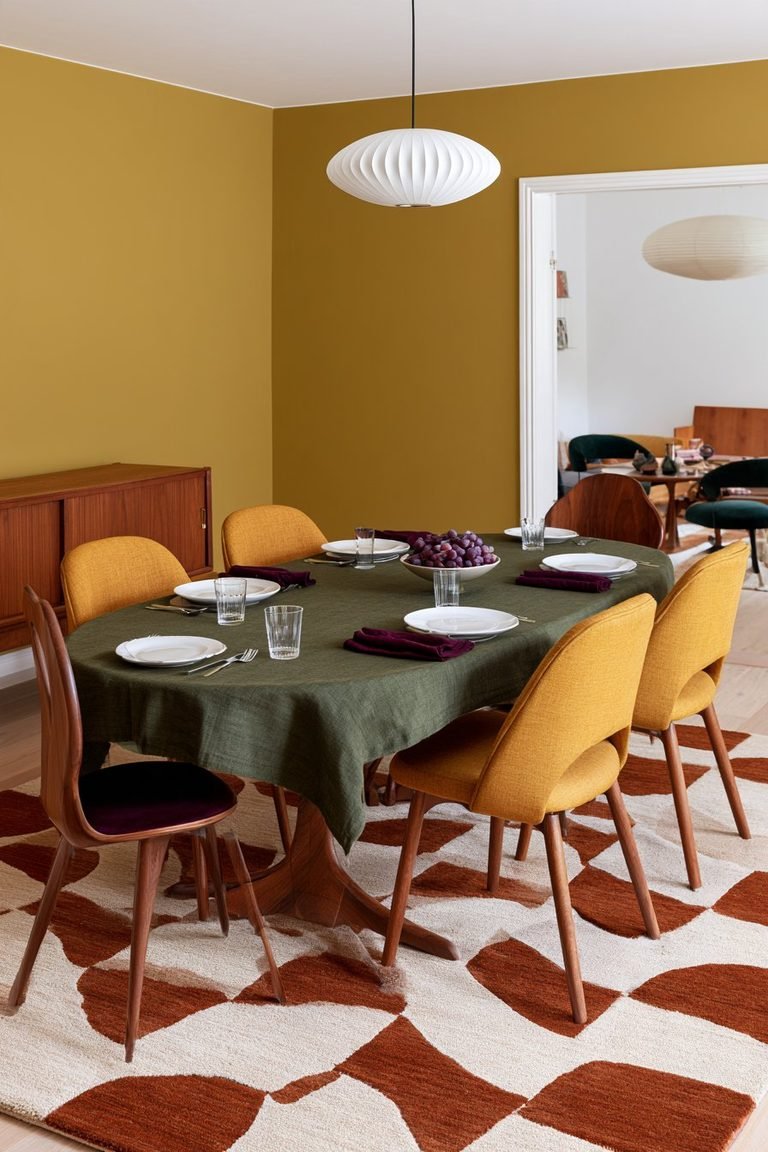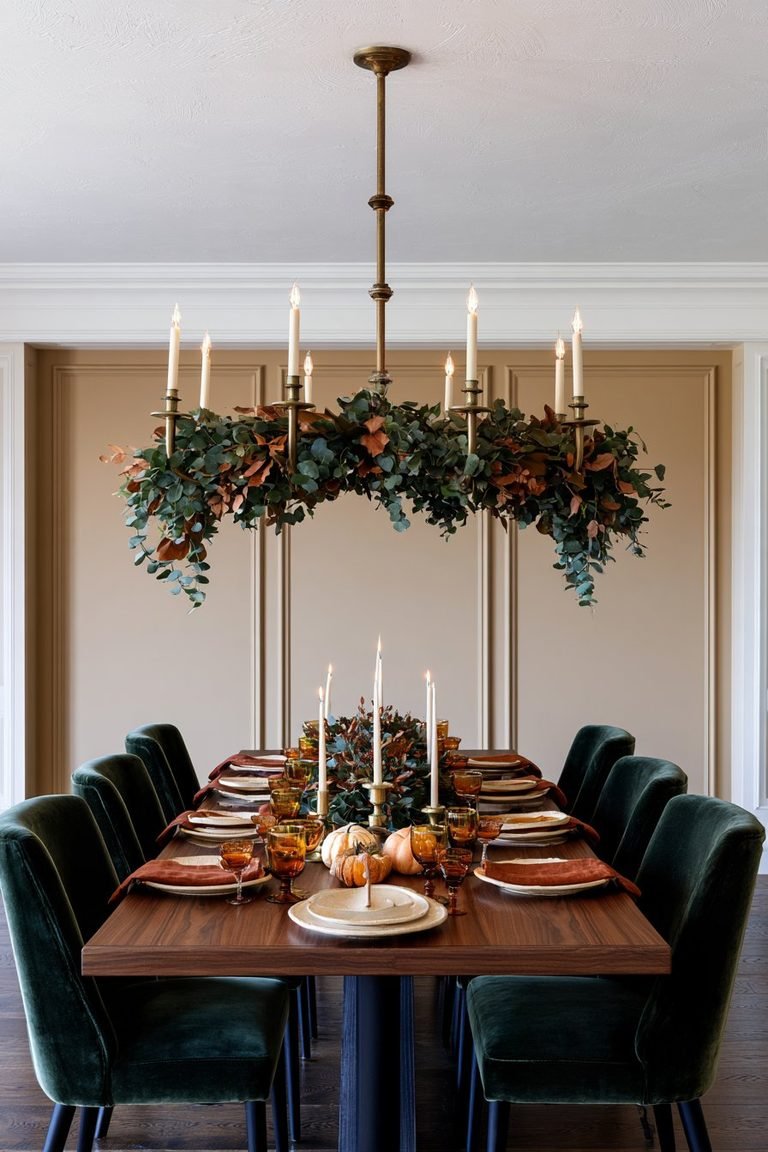
Minimalist decor ideas can help pare a room down to what it actually needs, then let each remaining piece carry its own weight. The style favors clean lines, a restrained color palette, and materials that can stand on their own without extra ornamentation. Done well, a minimalist room feels calm and spacious rather than empty or cold.
These ideas cover furniture, lighting, storage, and styling details that can bring the look into any room, from a compact apartment to a full house. Each one can be adopted on its own or layered together for a more complete minimalist refresh.
Start With a Neutral Base
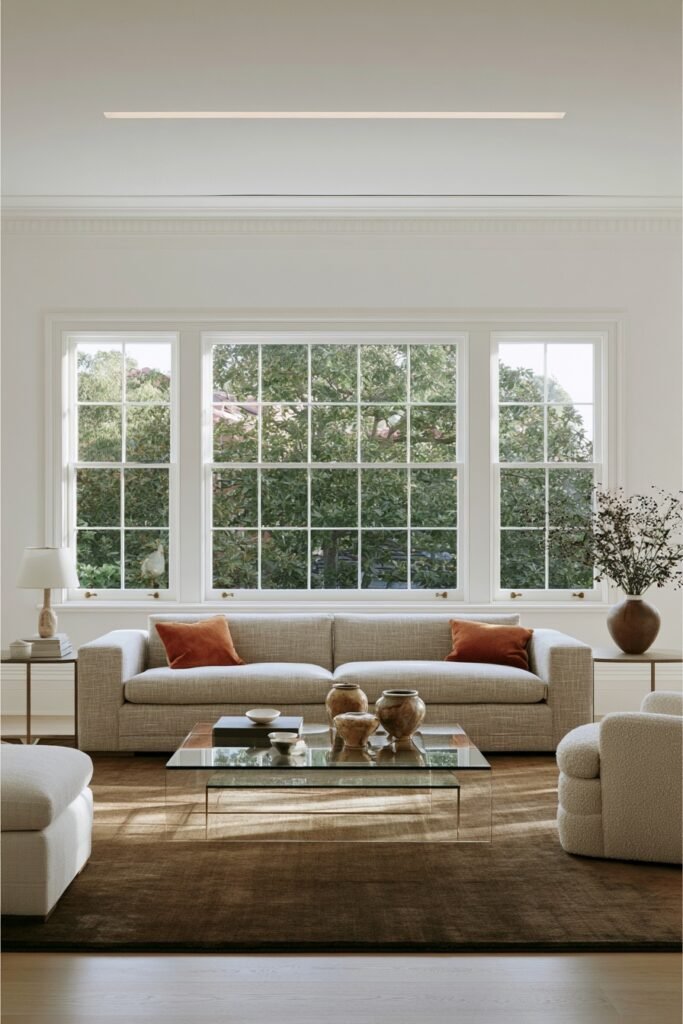
A monochromatic palette of white, black, and gray can give a room an easy foundation to build from. New York-based designer Emma Beryl kept a living room in this tight neutral range, letting the textures and materials of each individual piece stand out instead.
Let One Statement Piece Lead
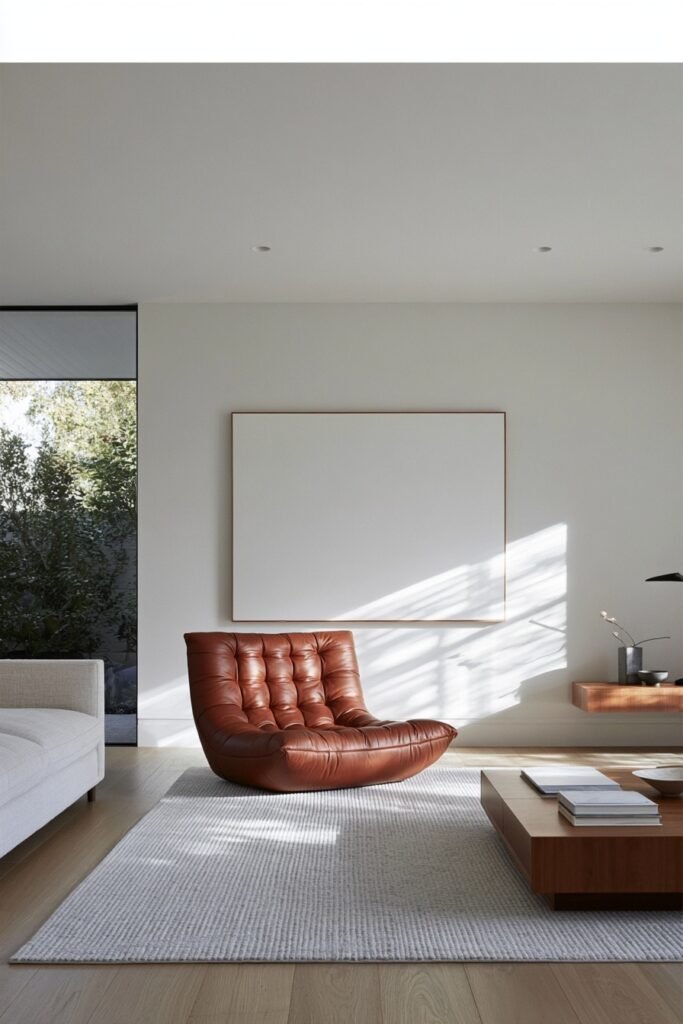
A minimalist room can hold onto one memorable piece, such as an oversized abstract painting or a sculptural chair, as long as the rest of the space stays quiet around it. Decorilla designers point to a dramatic ceiling light or a striking coffee table as the kind of single element that can carry a room’s visual interest on its own.
Choose Quality Over Quantity
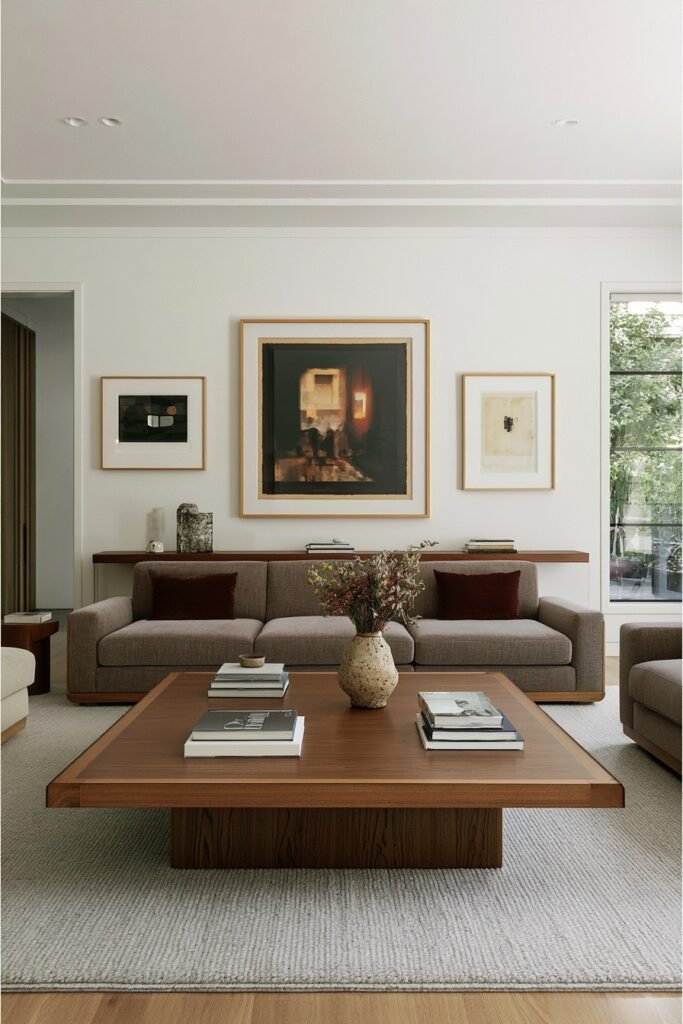
Filling a room with fewer, better-made pieces can do more for a minimalist look than a full set of matching furniture. Designer Amanda Barnes builds her minimalist projects around thoughtful planning and adequate storage, so every piece that stays has earned its place.
Keep Wall Art Sparse and Oversized
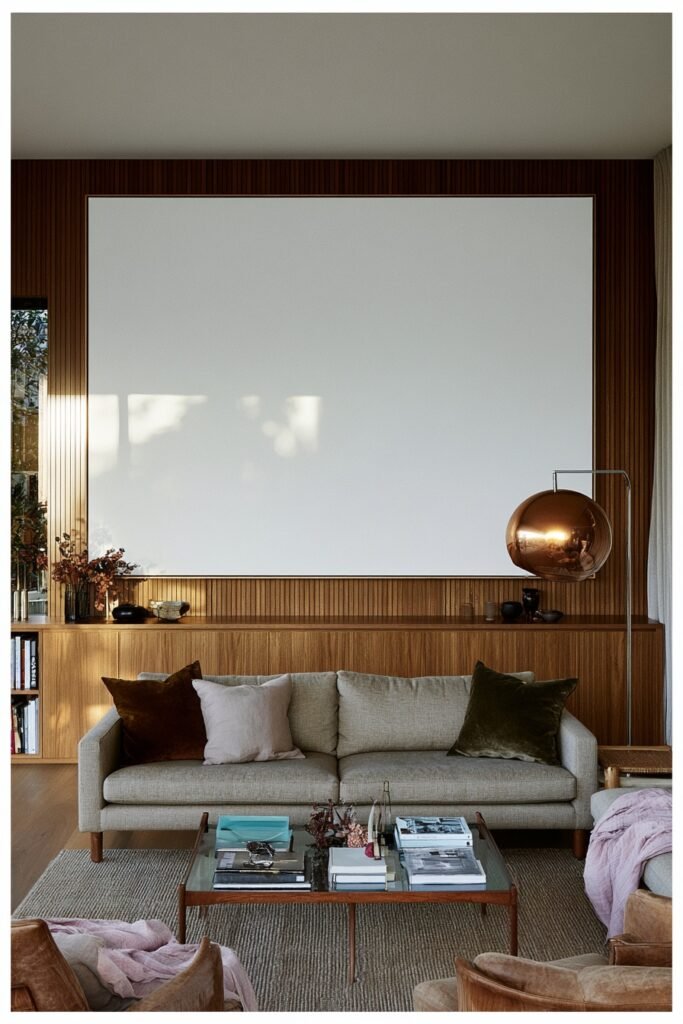
Leaving most of a wall open and hanging one oversized painting or a dramatic abstract can read as more intentional than a full gallery wall. A ceiling light can also stand in for wall art, acting as a hanging sculpture that pulls the eye upward instead of outward.
Swap Overhead Light for a Sculptural Fixture
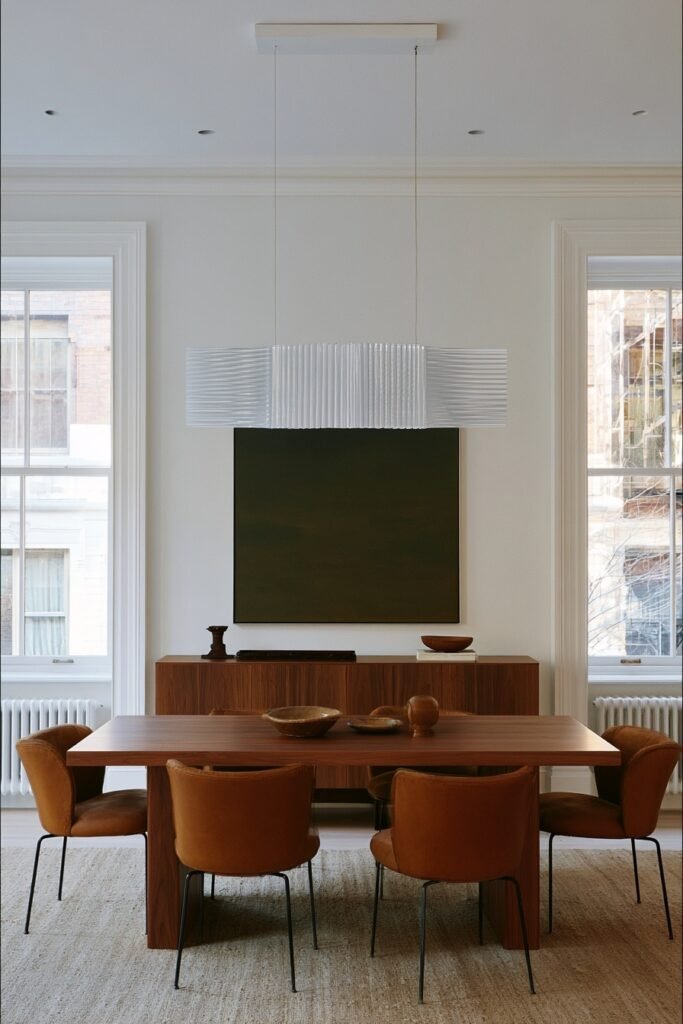
Pendant lights, track lighting, and wall sconces in neutral tones and sharp angles can provide the bright, even light a minimalist room needs without adding visual clutter. Fixtures with gold or copper finishes can bring in a touch of warmth without breaking from the clean-lined look.
Build in Concealed Storage
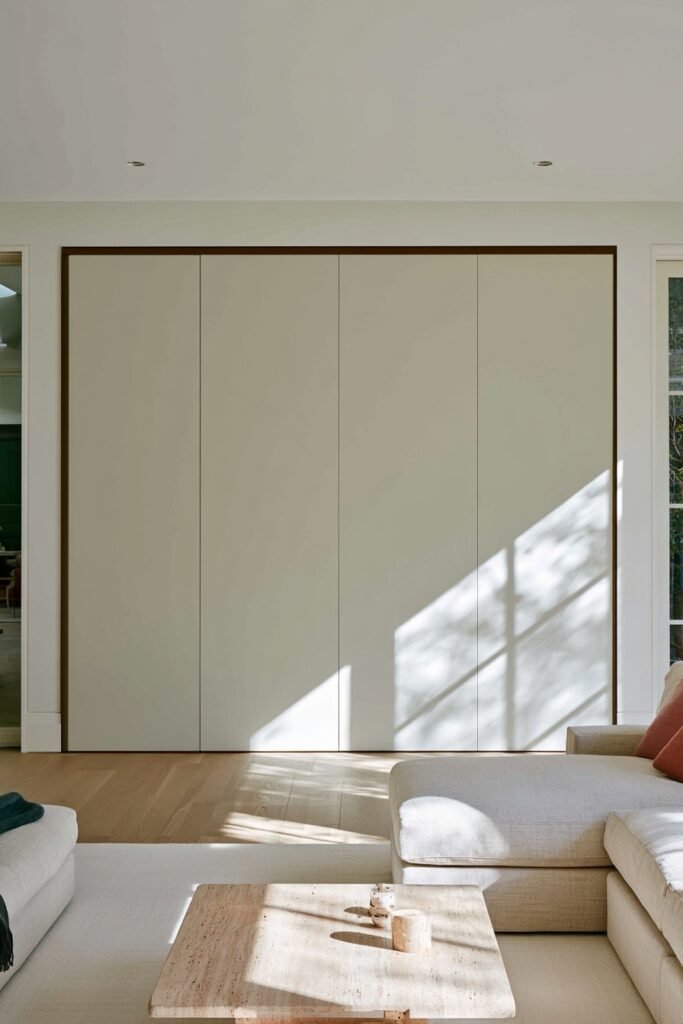
Ottomans and coffee tables with hidden compartments can keep everyday items out of sight while still holding what a room actually needs. For one client’s fireplace wall, Amanda Barnes built concealed storage for board games and media equipment, skipping visible hardware in favor of a magnetic touch latch that keeps the cabinetry flush with the wall.
Float Your Shelving
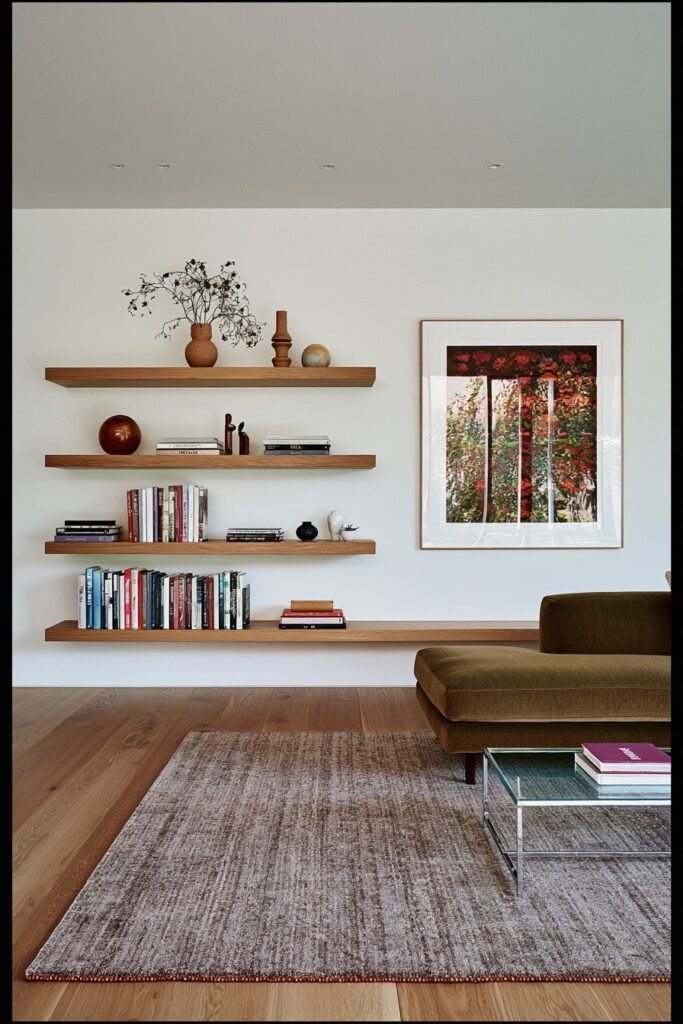
Floating shelves and built-ins can create storage without visually crowding a room, since the wall behind them stays partly exposed. Faux walls can achieve a similar streamlined effect, letting a room feel uncluttered while the materials underneath still do the work.
Pick Furniture With Clean, Straight Lines
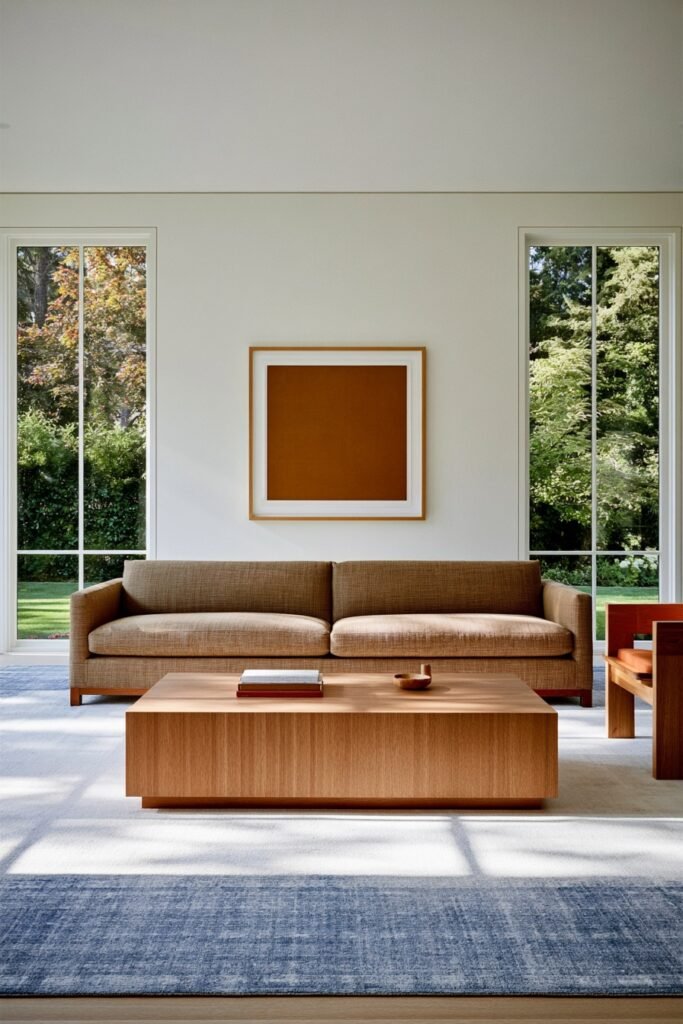
Furniture with straight edges and squared corners can read as more deliberate than pieces with heavy ornamentation. Squared doorways in place of arched ones and simple geometric accents can carry that same clean-lined language throughout a room.
Use Mirrors Instead of Windows You Don’t Have
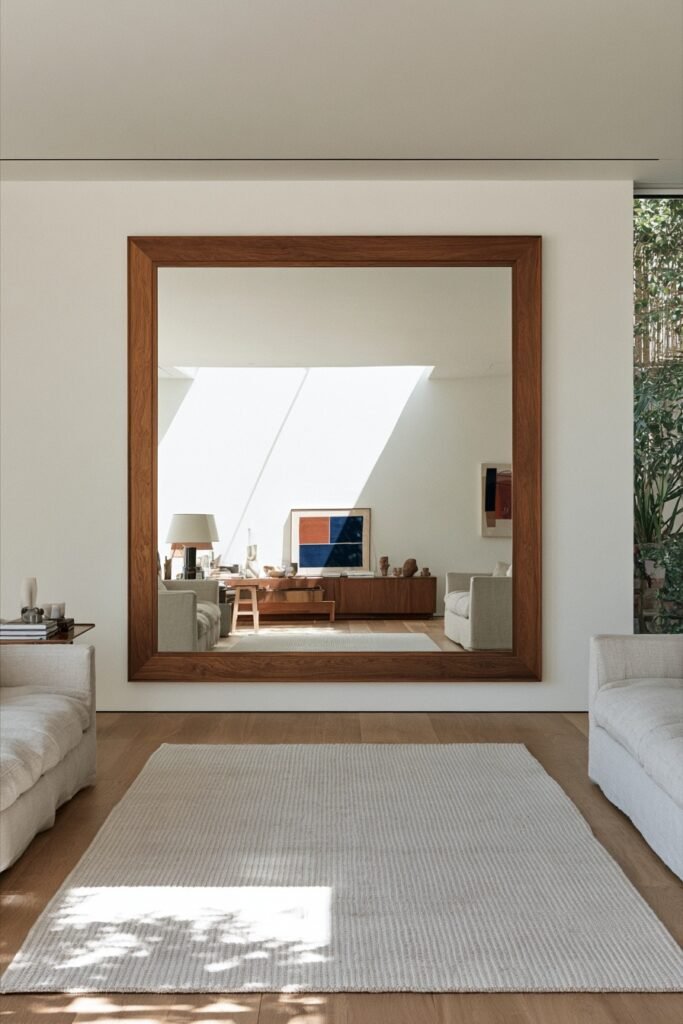
Large, unframed mirrors can open up a small or windowless space while staying true to a minimalist material palette. For renters especially, mirrors can substitute for a costly window renovation while still adding light and a sense of scale to a room.
Add Warmth With Natural Textures
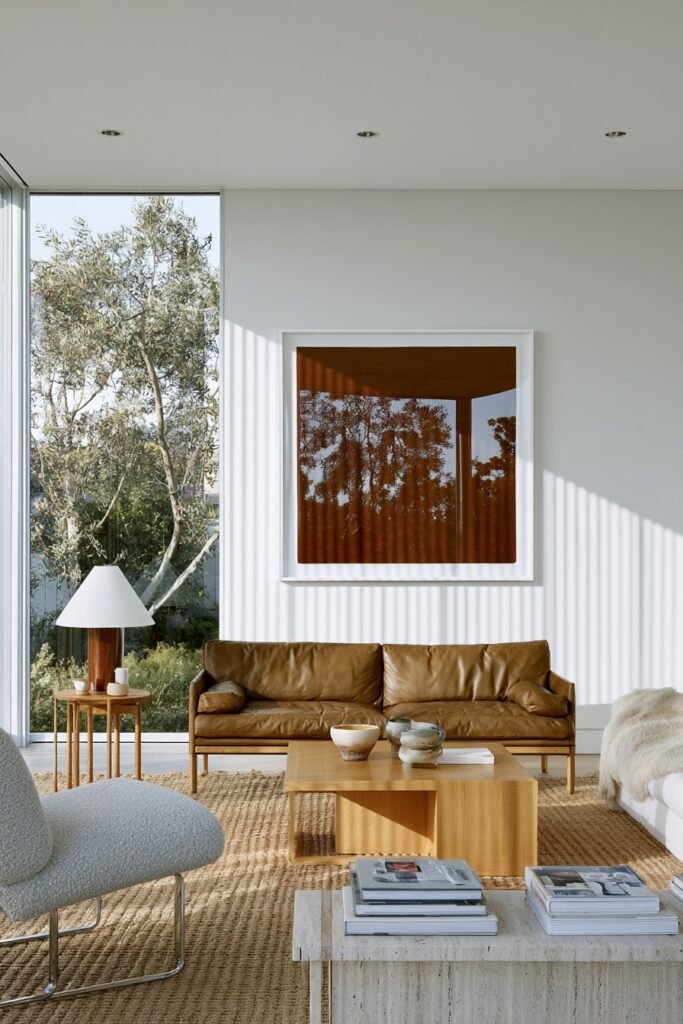
A minimalist room can lean too cold if every surface stays hard and flat, so a few natural materials can soften the effect. Fresh flowers, potted plants, and jute or wicker accessories can bring in that texture and a personal touch without adding clutter.
Bring in a Few Well-Placed Plants
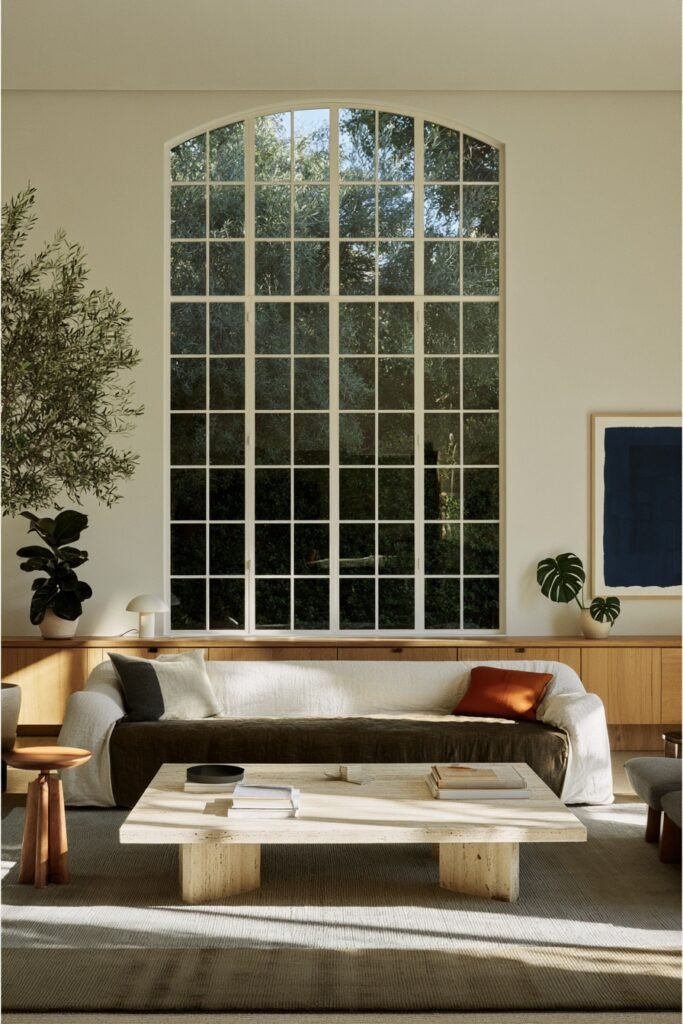
A couple of well-placed plants can add color and life to a room that otherwise leans heavily on neutral tones. Minimalist rooms can start to feel flat without a few grounding, organic elements like greenery, so it’s worth checking that any chosen plant will adjust well to the room’s natural light before committing to a spot for it.
Stick to One or Two Accent Colors
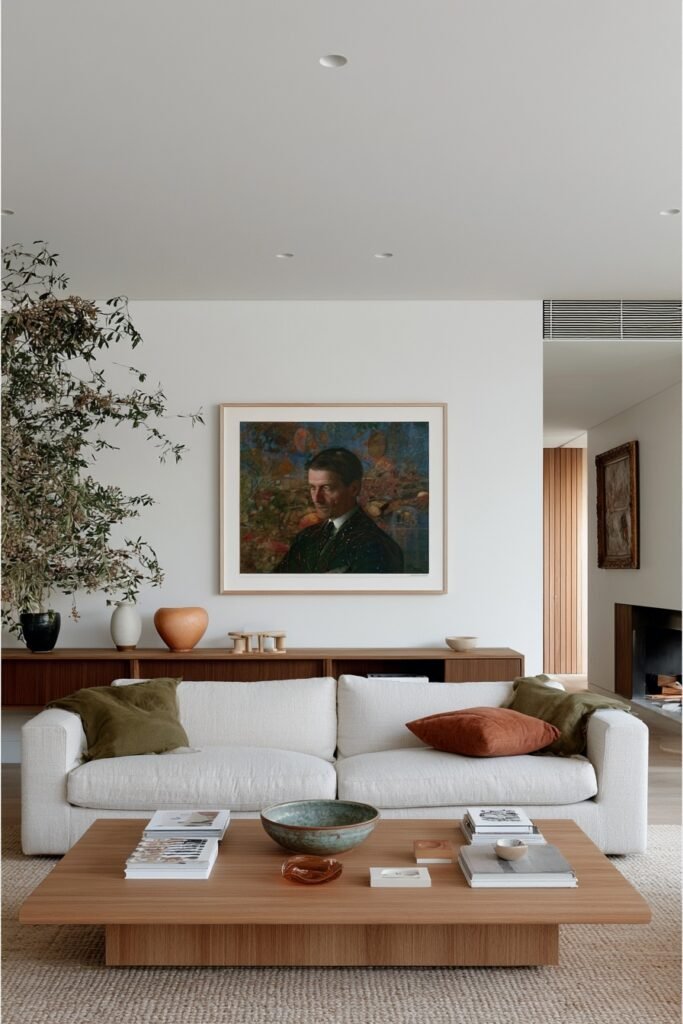
Adding color to a minimalist scheme tends to work best in small, controlled doses rather than throughout the room. A neutral base with one or two accent colors used sparingly can stand out precisely because the rest of the palette stays quiet.
Let Architectural Details Do the Talking
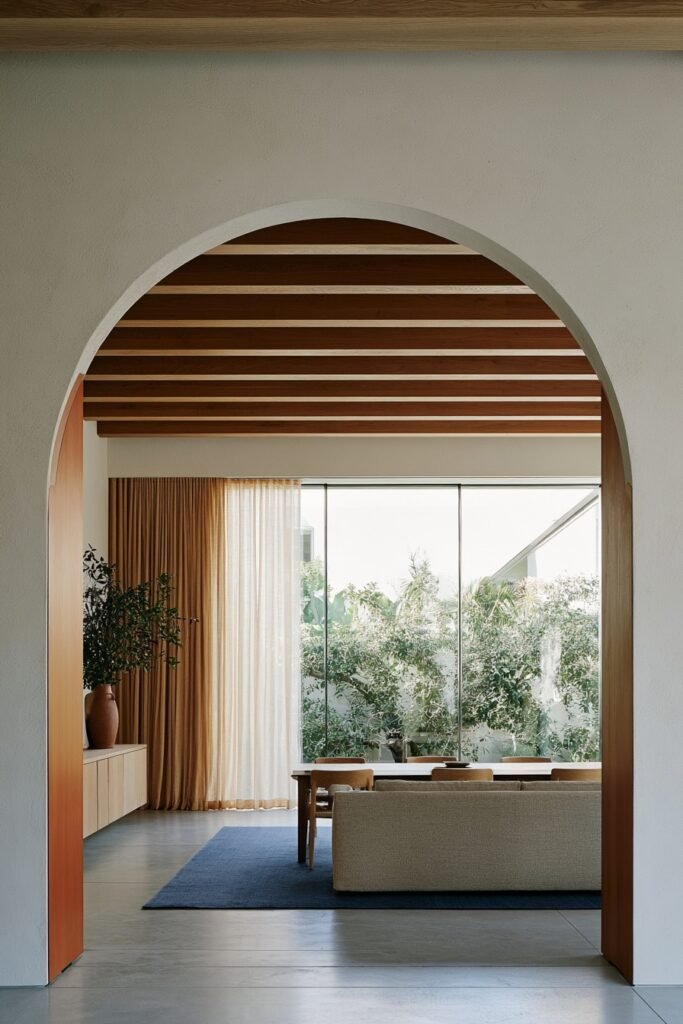
Ornate crown molding or decorative millwork can give a one-tone room the depth and variety that a flat neutral palette sometimes lacks. Designer Yena Jung of By Yena Designs uses cabinetry to bring that same architectural depth into a minimalist kitchen.
Choose Tapered, Mid-Century-Inspired Legs
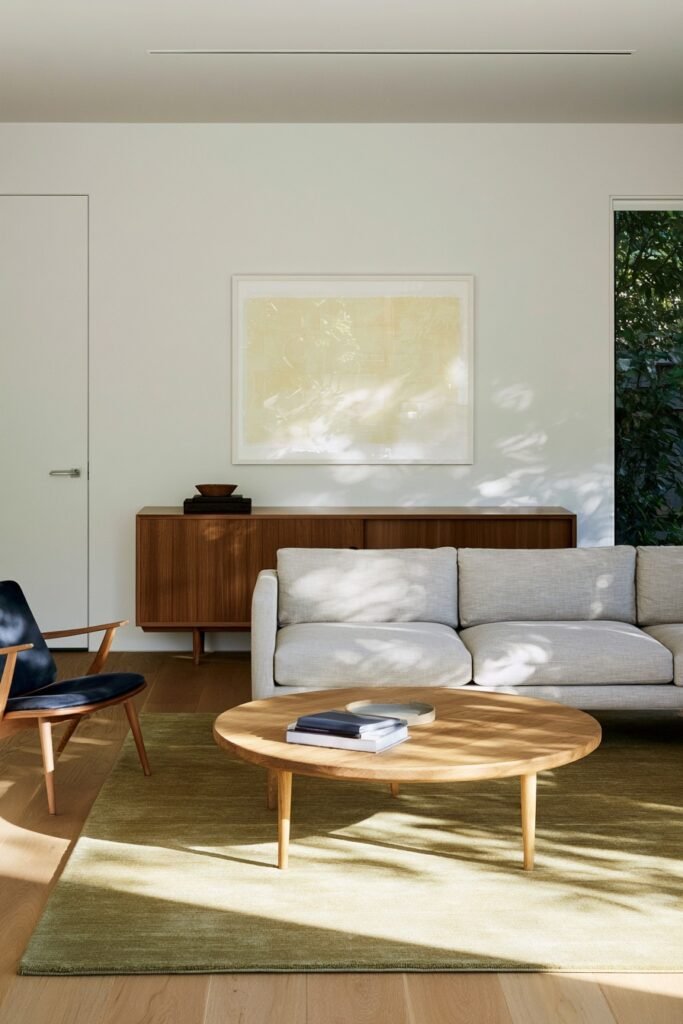
A tapered leg can pack a lot of visual interest into a small, minimal silhouette, making it a natural fit for minimalist dining chairs, desks, and console tables. Keeping the surrounding materials organic and the colors light can keep the overall look breezy rather than heavy.
Zone Open-Plan Rooms With Furniture, Not Walls
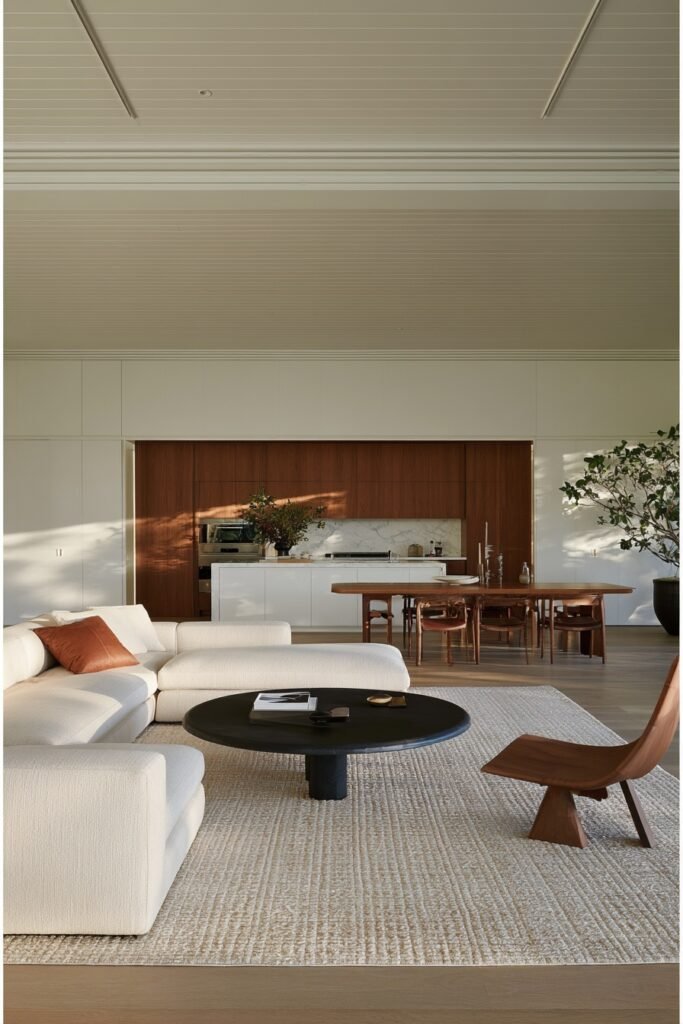
An open floor plan can stay true to minimalist principles by using furniture placement, rather than walls, to define separate living and working areas. A sofa positioned to divide a living space from a home office, for instance, can create separation without adding a single extra wall.
Keep Cords and Clutter Out of Sight
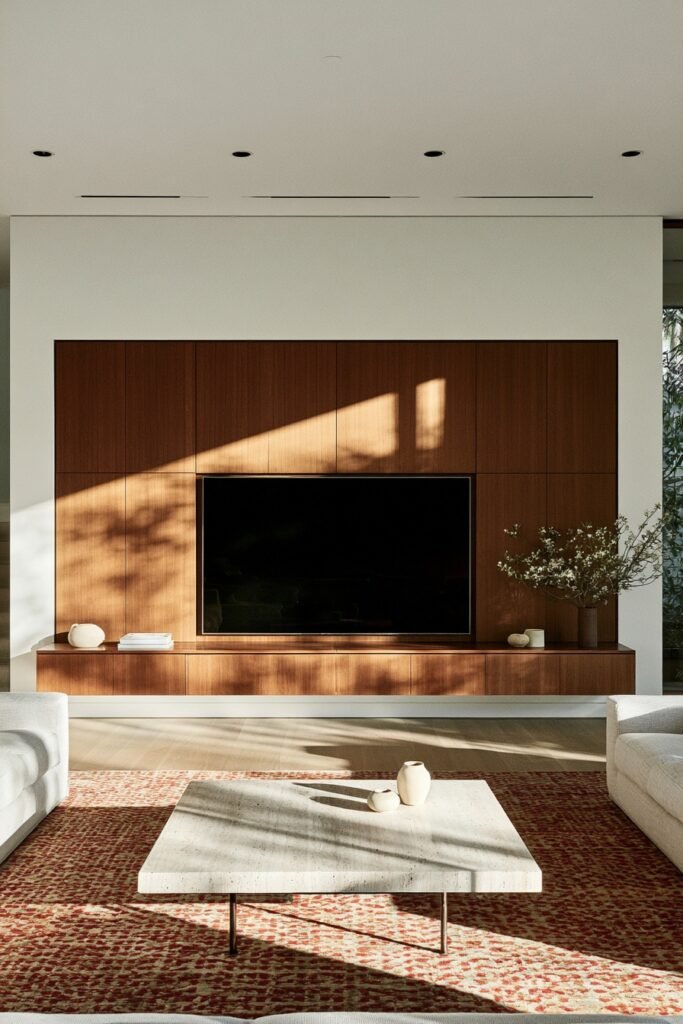
Storage hutches and coffee tables with concealed compartments can keep small everyday items from breaking up a clean-lined room. Routing cords behind furniture or through cable channels can carry that same principle into the more technical corners of a space.
Layer in Soft Textiles for Coziness
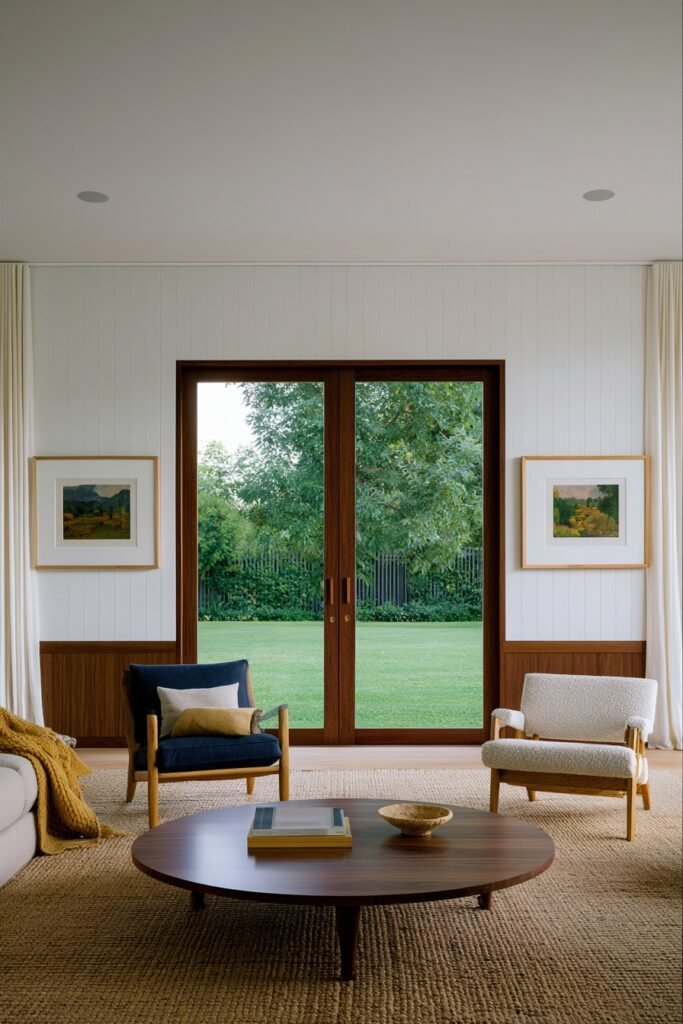
A soft rug or a textured throw can keep an industrial-leaning minimalist room from feeling too rugged or cold. Pairing rustic materials like metal and wood with one layered textile can add warmth without breaking from the room’s clean lines.
Try Soft Minimalism for a Livable Edge
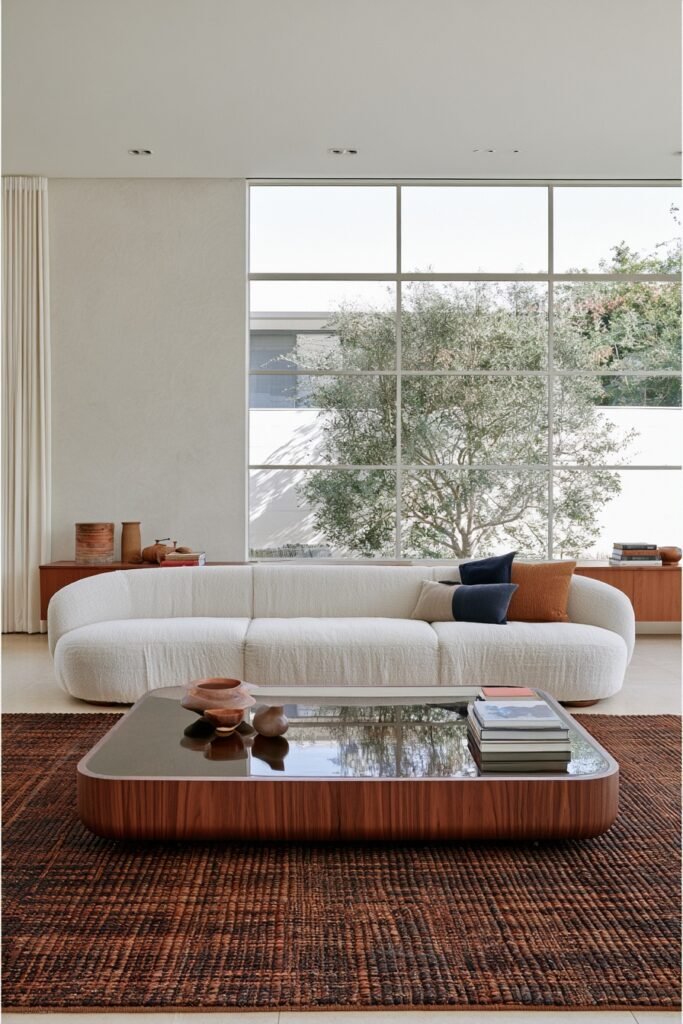
A softer take on minimalism can allow a few carefully curated decorative pieces into an otherwise pared-back room. A coffee table can become the room’s central focal point under this approach, tying the scheme together without adding visual noise elsewhere.
Curate a Small, Rotating Display Shelf
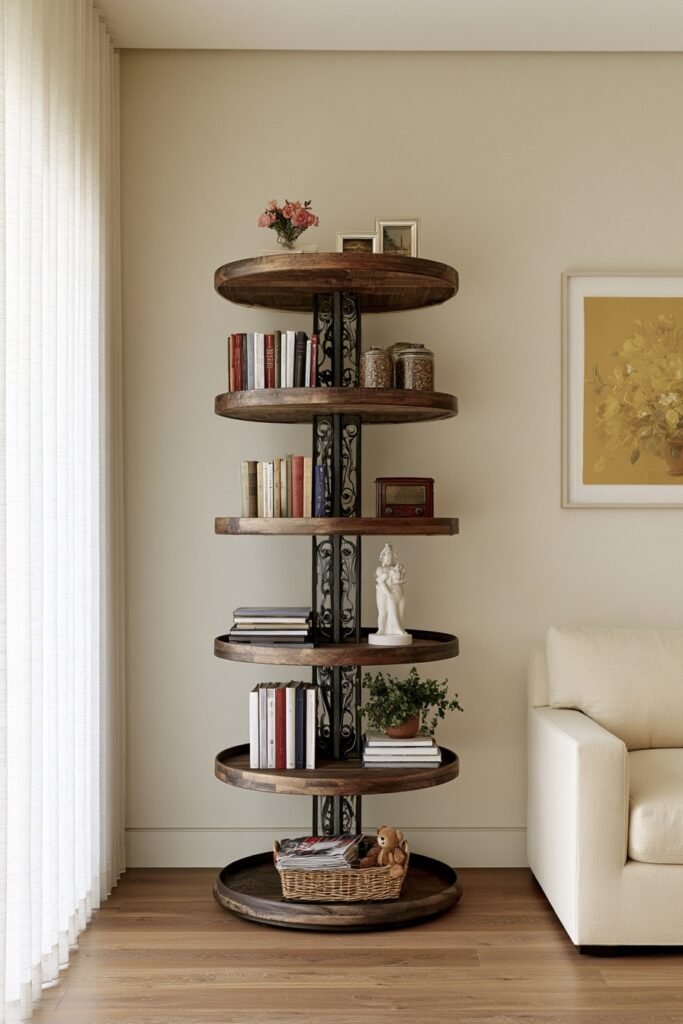
A single open shelf or display ledge can act as a focal point for sculptural objects, books, or framed photos, provided every new addition fits the room’s existing tone. Treating that shelf as the room’s one spot for personal touches can keep the rest of the space feeling calm and edited.
Design Room-by-Room, Not All at Once
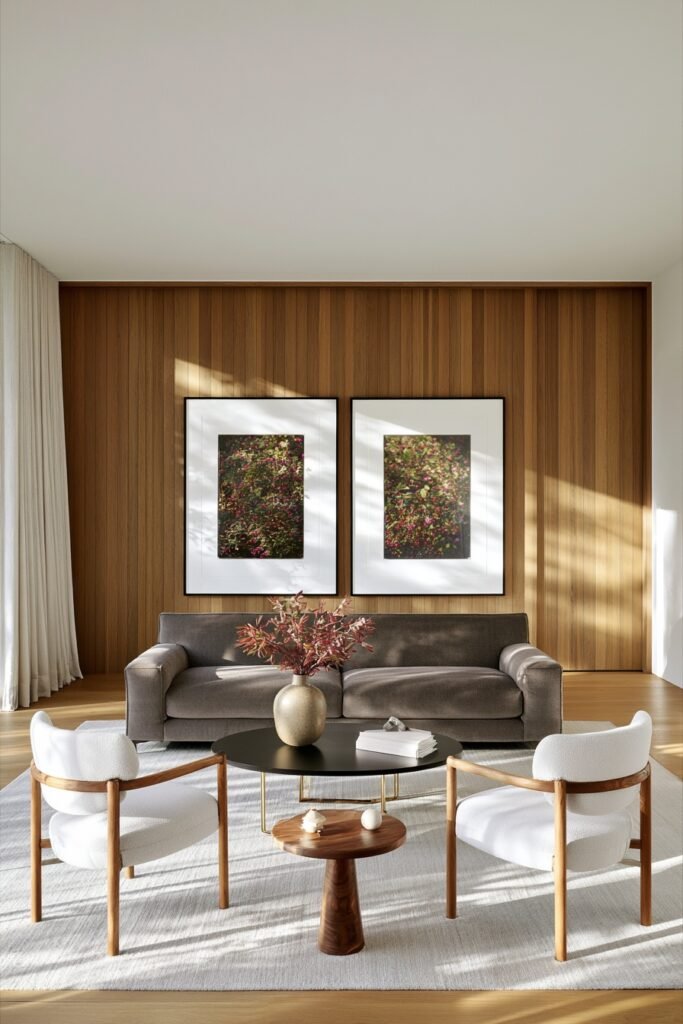
A minimalist bedroom and a minimalist home office serve different functions, so each room can call for its own version of the style rather than a single blanket approach. Thinking through how a room actually gets used, whether for hosting guests or focused work, can shape which minimalist ideas make the most sense for that specific space.
Bringing It All Together
Minimalist decor isn’t about emptying a room, it’s about being selective with what stays in it. Working through even a handful of these ideas, room by room, can bring a calmer, more intentional feel to a home without requiring a full renovation.
Frequently Asked Questions
Is minimalist decor the same as having an empty room? No. Minimalist decor focuses on curated pieces that each serve a purpose or add real visual interest, rather than leaving a room bare. A well-executed minimalist room can still feel warm and personal.
What colors work best in a minimalist home? A neutral palette of white, black, and gray typically forms the base, with one or two accent colors layered in sparingly. Sticking to a tight color range can help the textures and materials in a room stand out more.
Can a minimalist home still feel cozy? Yes, natural textures like wool, linen, and jute, along with a few layered textiles, can keep a minimalist room from feeling cold. Soft minimalism, which allows a handful of curated decorative pieces, can also add warmth without cluttering the space.
Is minimalist decor budget-friendly? It can be, since the style prioritizes fewer, better pieces over a large volume of furniture and accessories. Renters can lean on removable elements like mirrors and textiles rather than permanent architectural changes to get the look.