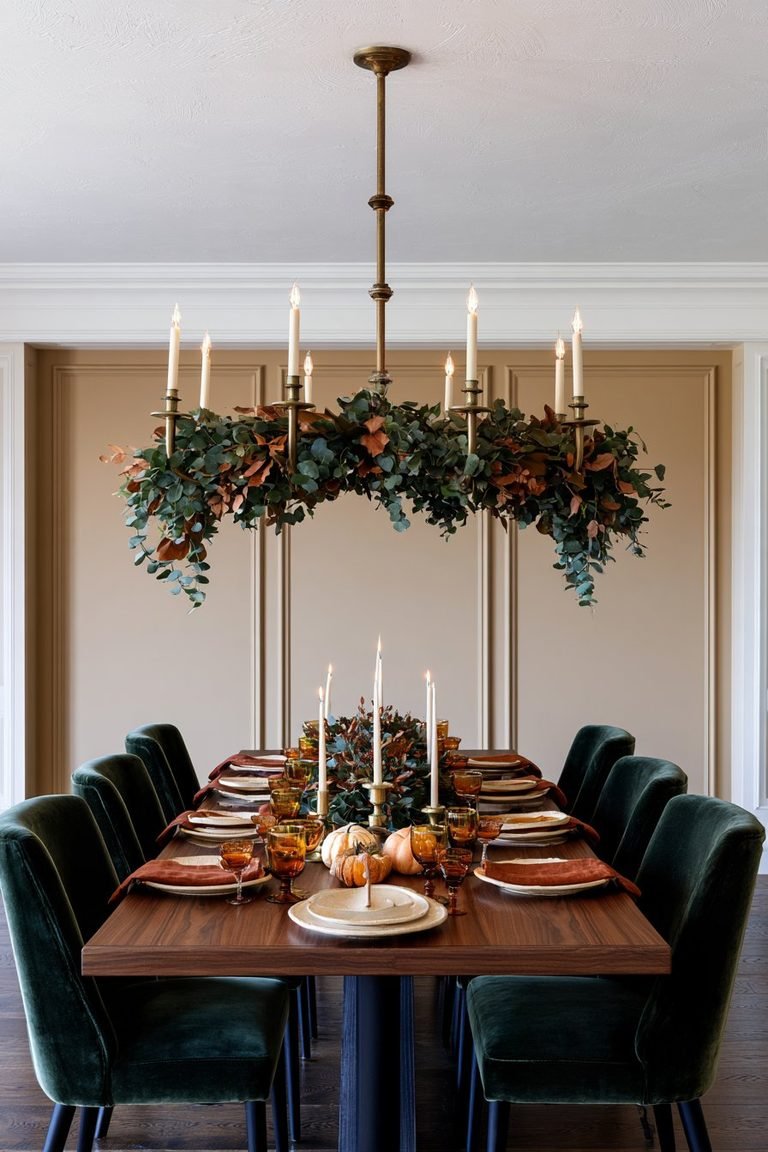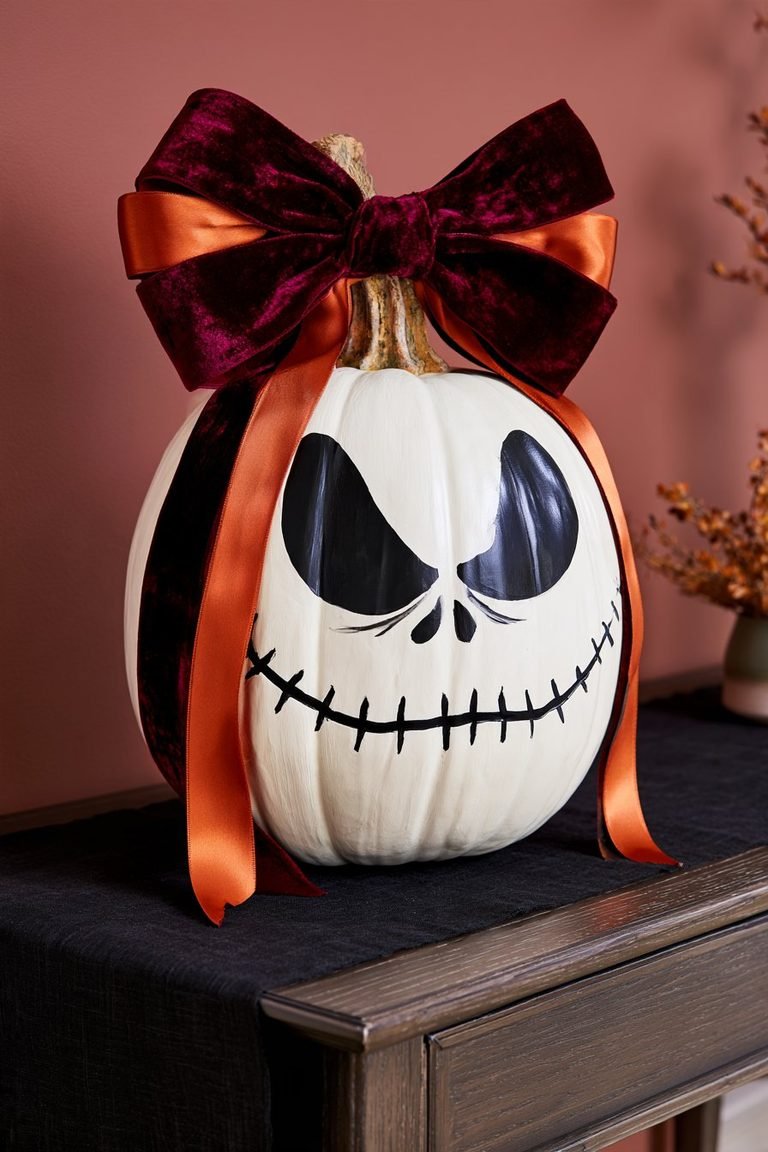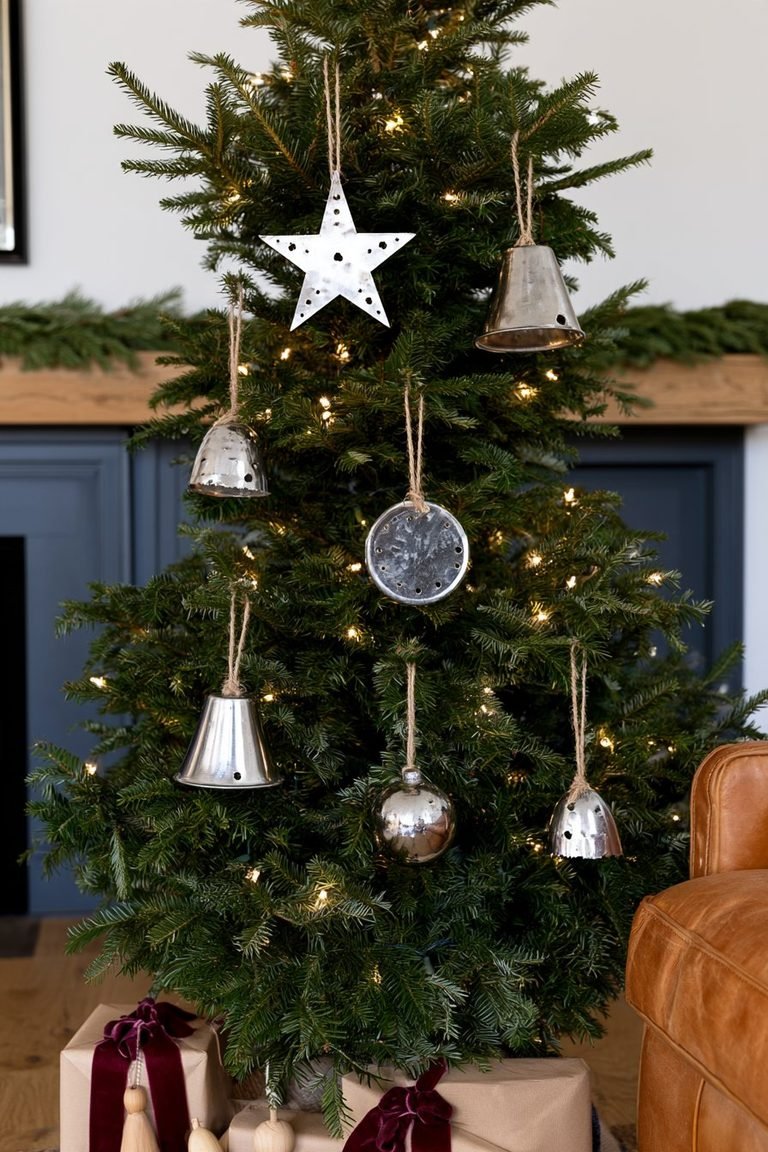
Fall dining table decor can transform an everyday meal into a seasonal occasion without requiring a full room redesign. A warm color palette, a few natural elements, and thoughtful layering are usually all it takes to bring autumn indoors. The ideas below cover everything from centerpieces and candles to napkins and place settings, so any style — rustic, modern, or somewhere in between — can find a fitting look.
Start With a Warm, Earthy Color Palette
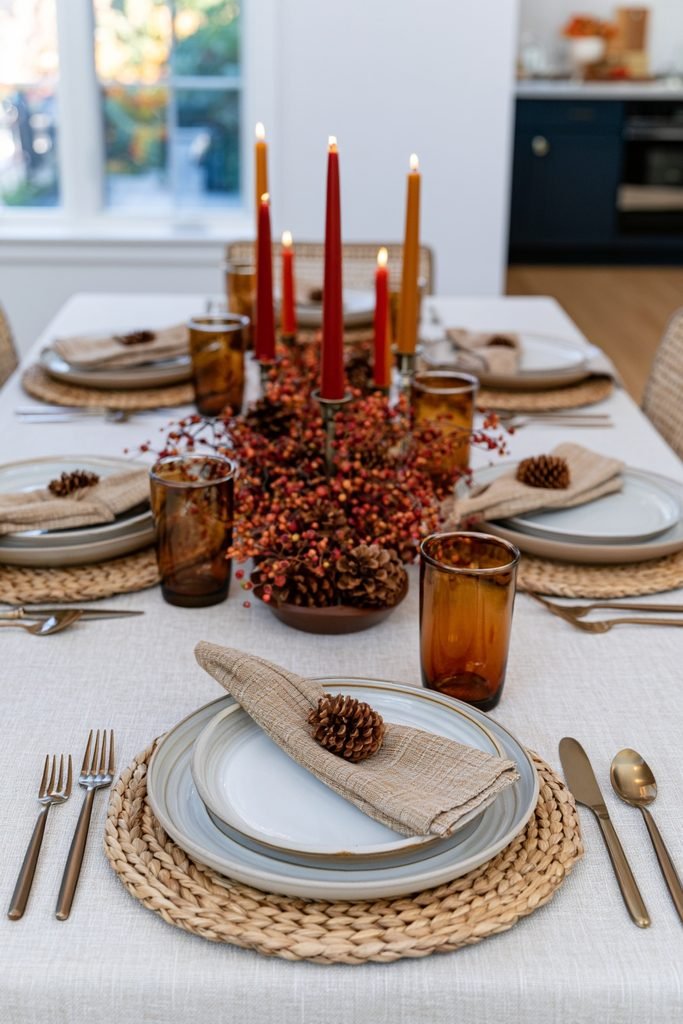
Choosing a color palette first can guide every other decision, from the tablecloth to the centerpiece. Deep oranges, rustic reds, golden yellows, and earthy browns work well against neutral or wooden furniture, and stylist Zara Stacey of Homes & Gardens recommends piling pine cones onto a tiered stand with sprigs of berries tucked between them for a cohesive, autumnal feel.
Choose a Tablecloth or Bare Wood Base
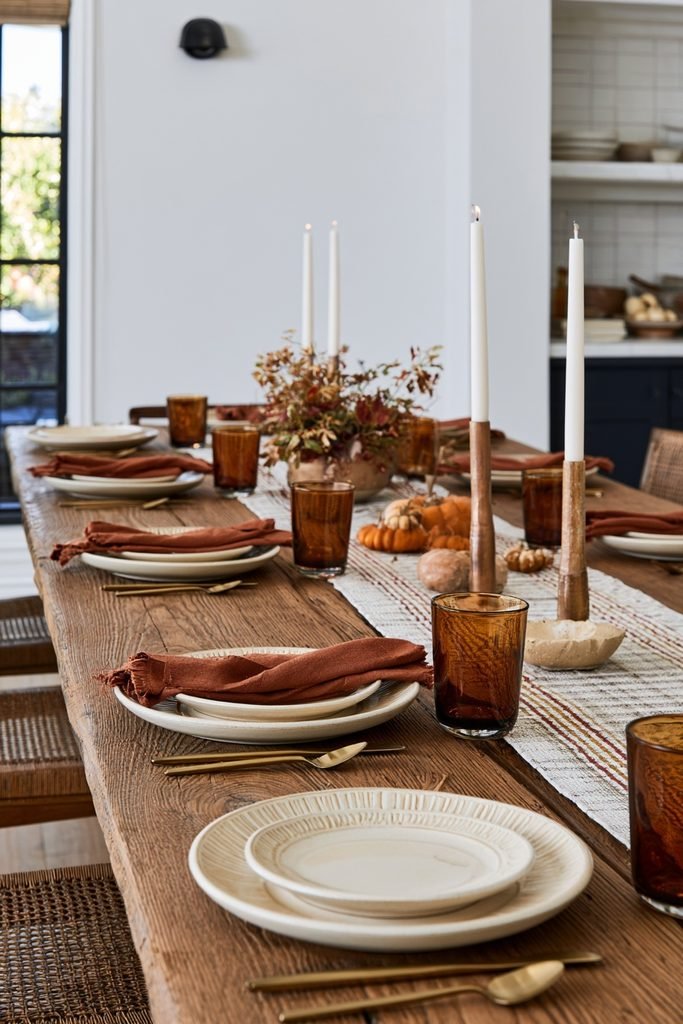
A tablecloth sets the canvas for the entire table, so it can contrast with the centerpiece and place settings in color, texture, and material. A linen or classic patterned cloth works well for fall, though a wooden dining table can also be left bare for a warmer, more natural look, as suggested by Homemade by Carmona.
Layer a Textured Table Runner
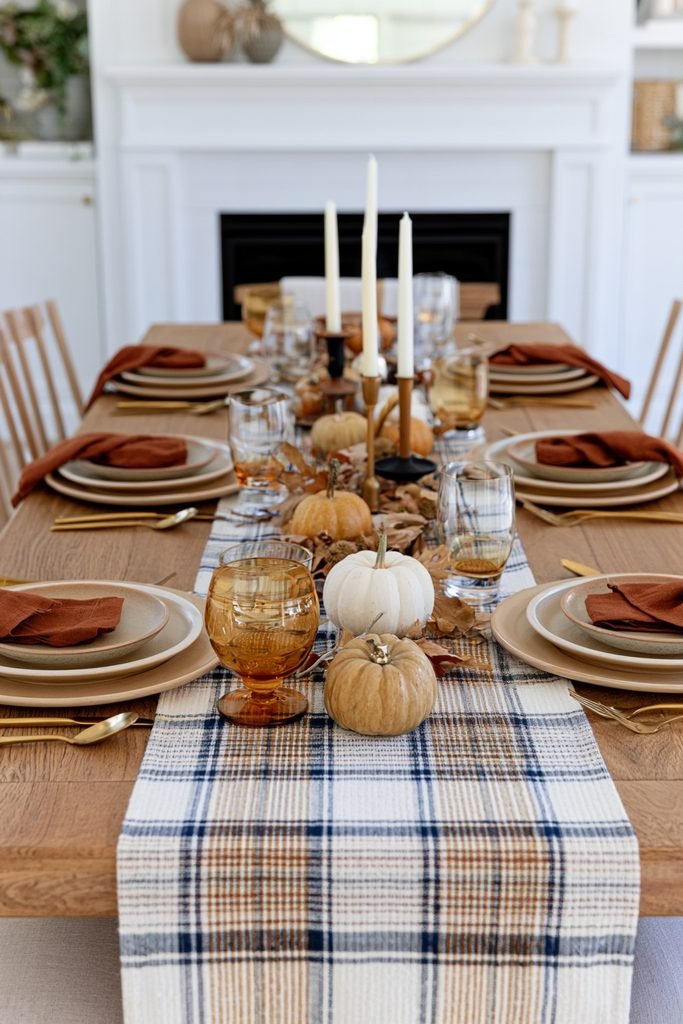
A table runner can add another layer of pattern and texture without overwhelming the base beneath it. Plaid, embroidered, or woven runners all pair naturally with autumn dinnerware and can transition easily from a harvest dinner straight through Thanksgiving.
Add Woven or Burlap Placemats
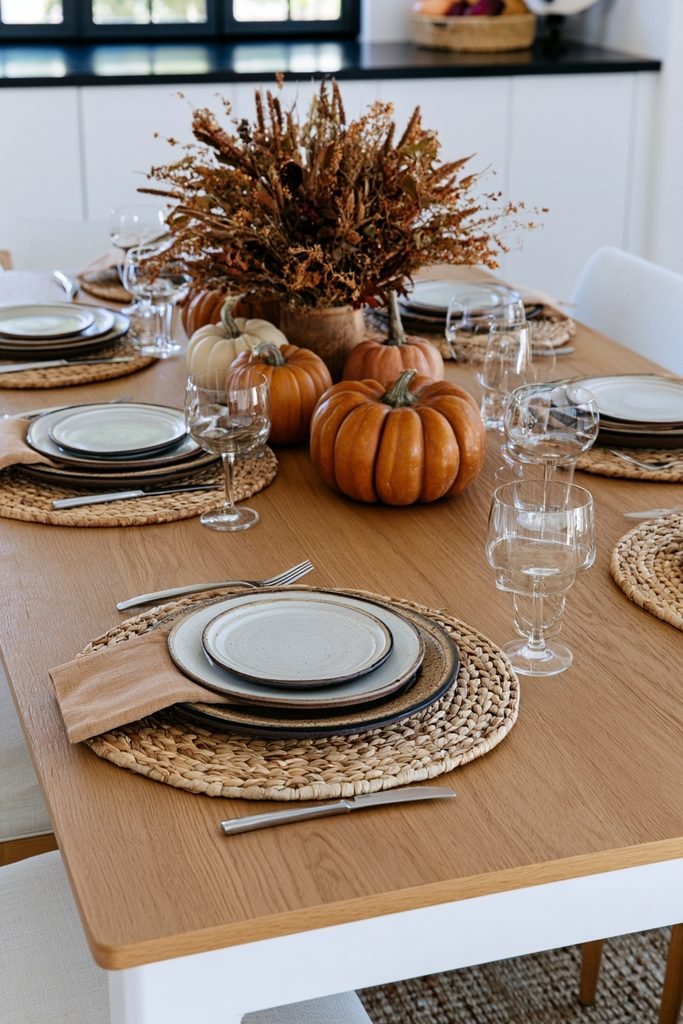
Placemats can introduce texture at each place setting while keeping the overall look casual. Woven placemats or burlap runners bring a rustic touch that pairs well with stoneware, linen napkins, and other natural materials, according to My 100 Year Old Home.
Stack Chargers Under Dinnerware
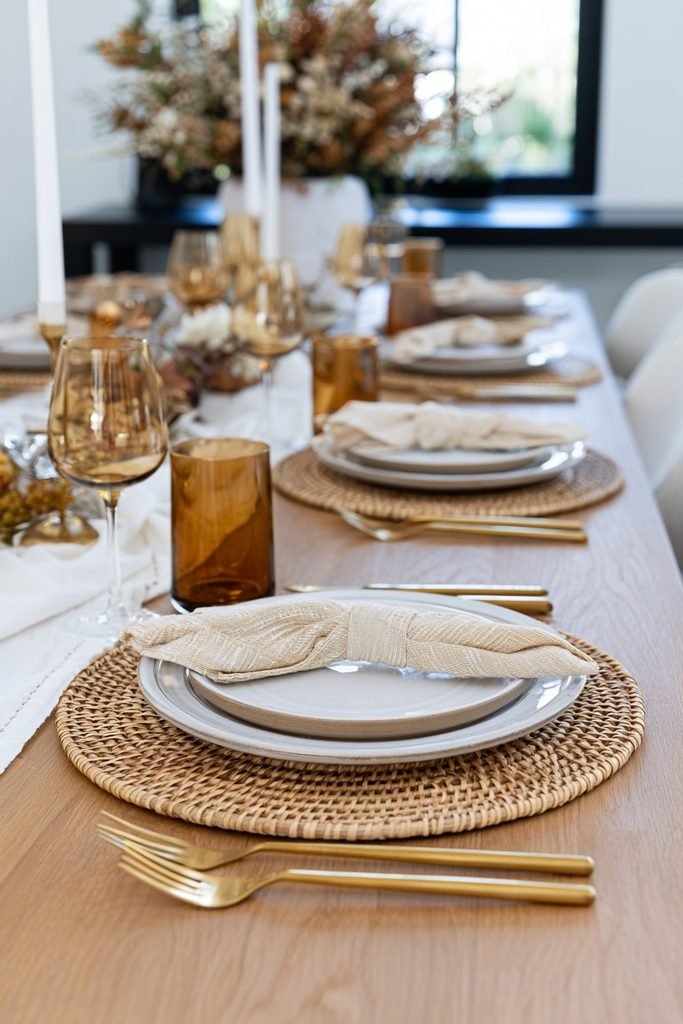
Chargers can elevate a place setting by adding a base layer of color or texture beneath the plates. Twig, rattan, or wood-toned chargers pair especially well with a fall palette, and stacking plates and napkins on top creates a layered look with very little added effort.
Build a Raised or Pedestal Centerpiece
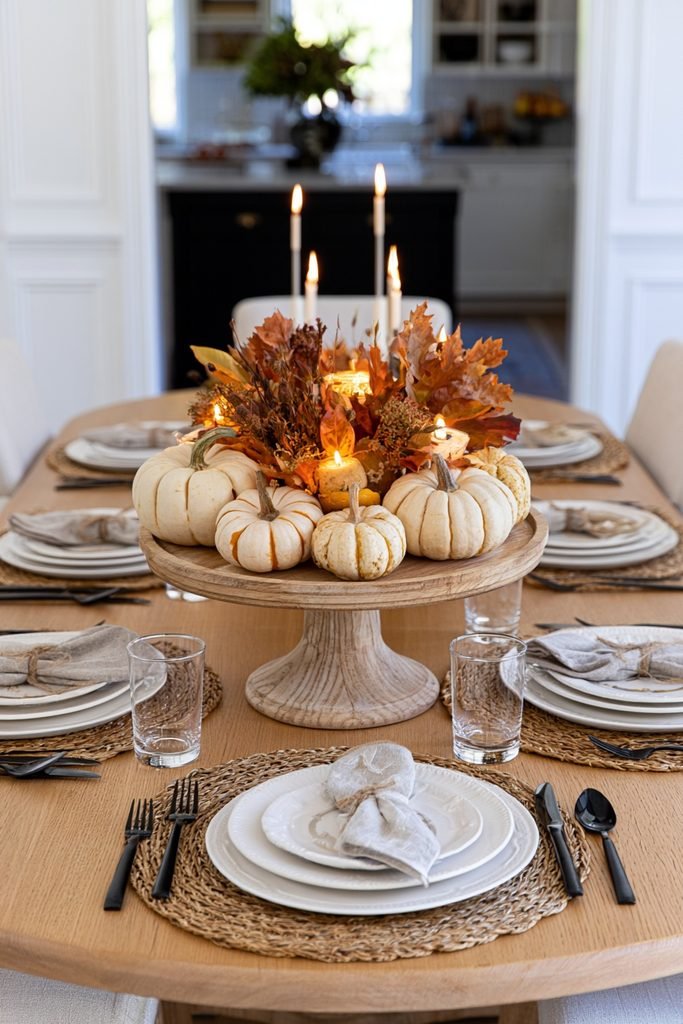
Placing a centerpiece on a riser or cake stand can elevate it — literally and visually — and make it the true focal point of the table. Balsam Hill recommends gathering natural elements like pumpkins, gourds, and autumn leaves in a basket or tray, then adding candles or seasonal flowers for a cozy finish.
Fill a Dough Bowl With Mixed Gourds
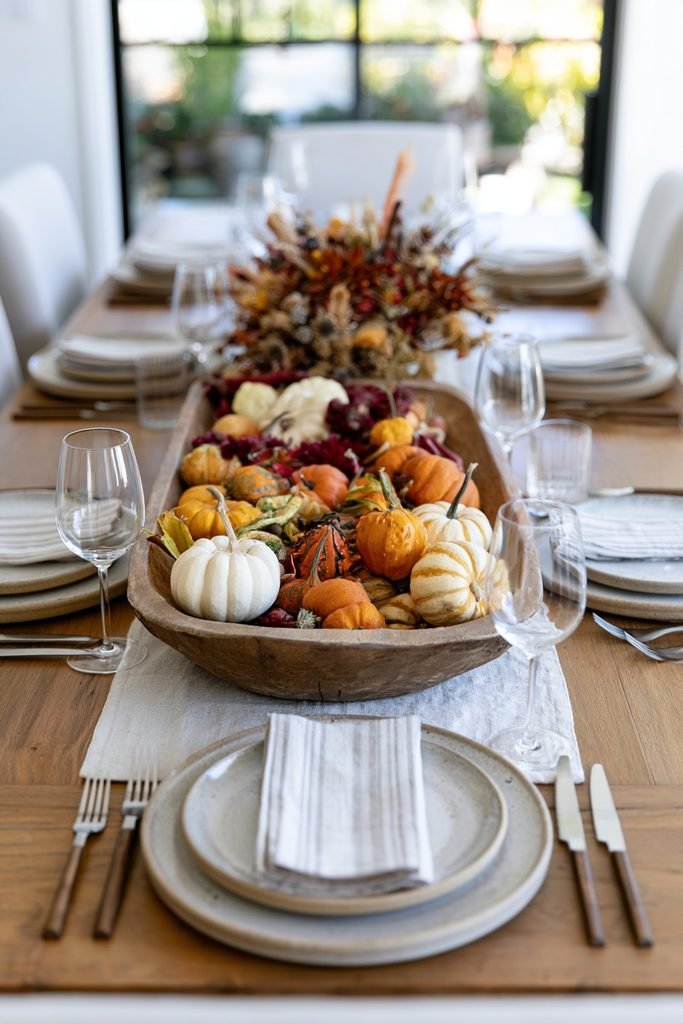
A long wooden dough bowl can hold a low, easy-to-see-over arrangement that works well for a dining table meant for conversation. Filling it with a mix of small pumpkins, gourds, and dried florals creates a full centerpiece without blocking sightlines across the table.
Use Velvet Pumpkins as Accent Pieces
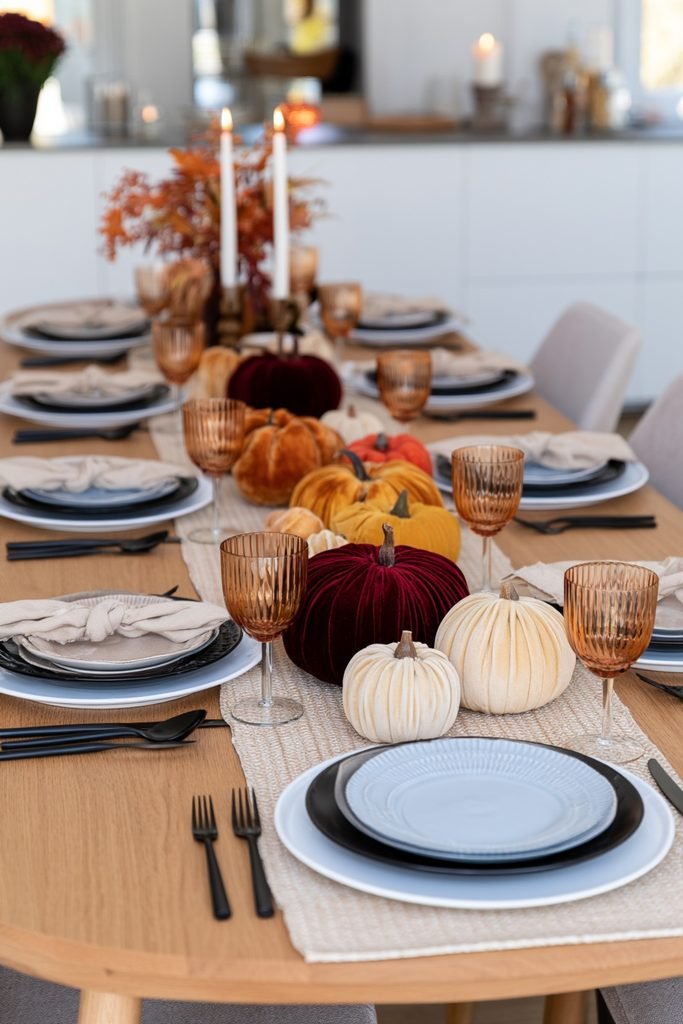
Velvet pumpkins can add a soft, tactile element to a centerpiece or table runner in nearly any color scheme. They can be reused year after year and moved between rooms, making them a practical alternative to fresh pumpkins that only last a season.
Try Hand-Painted or Lettered Pumpkins as Place Cards
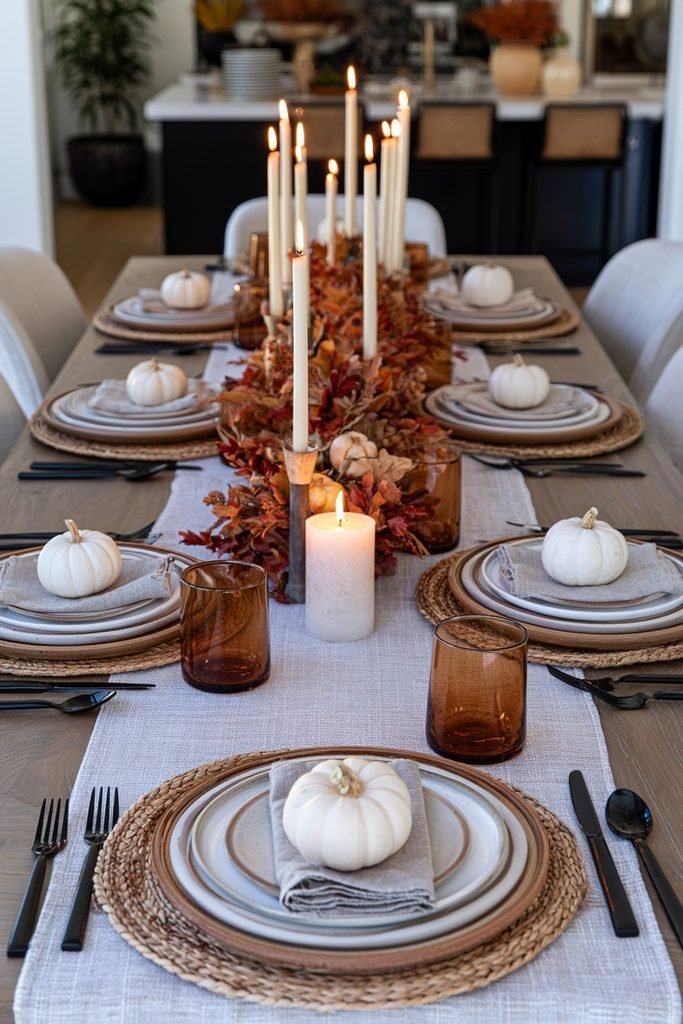
Small white pumpkins can double as place cards when hand-lettered with a guest’s name using a paint pen. This adds a personal touch to each setting and works especially well for a more casual or intimate dinner gathering.
Mix Faux and Fresh Florals for Longevity
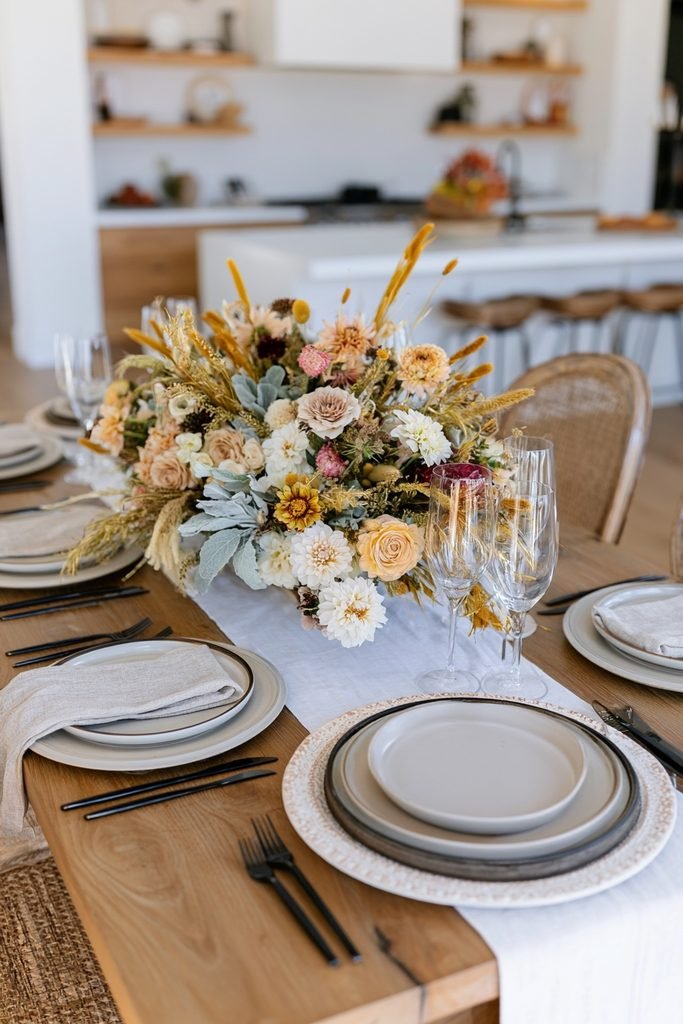
Combining fresh and faux flowers in the same arrangement can extend the life of a centerpiece while still keeping some organic texture. My 100 Year Old Home built a centerpiece around soft sage greenery, golden stems, and light orange faux florals, noting that faux flowers hold up for months without water or sunlight.
Add Dried Orange Slices for Texture and Scent
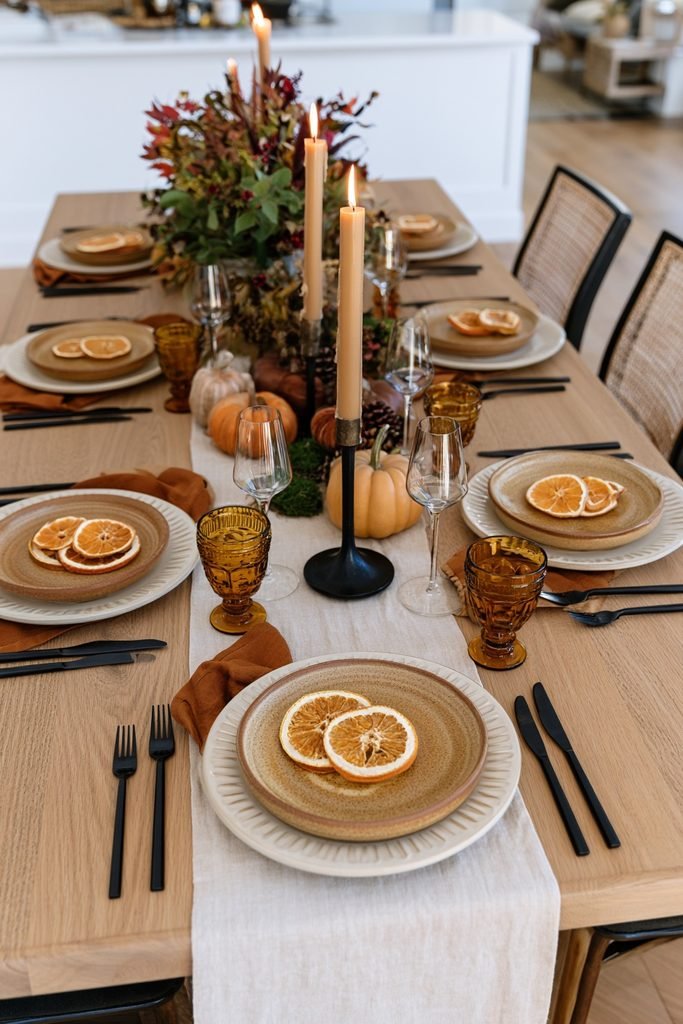
Dried orange slices can bring warm color and a subtle citrus note to a tablescape, whether scattered near place settings or added to a centerpiece. They also tie in well with pumpkin-toned dinnerware, and can be reused straight through the winter holidays.
Incorporate Wheat Stalks in a Tall Glass Vase
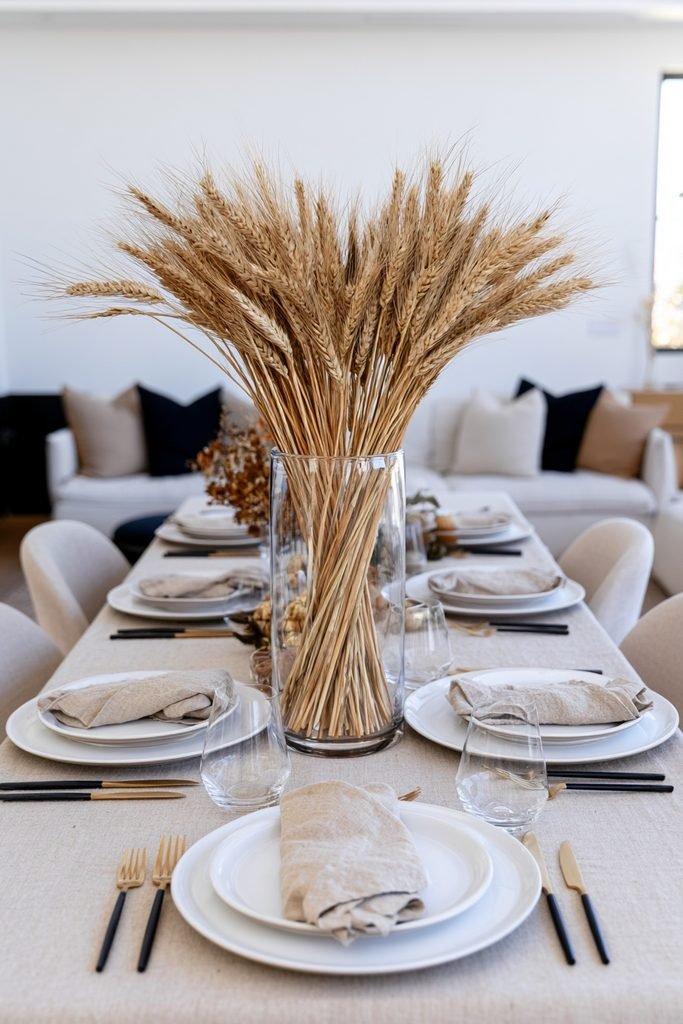
Wheat stalks in a tall glass vase can add height and movement to a centerpiece without much bulk. This works particularly well on a narrower table, where a wide arrangement might otherwise crowd the place settings.
Try Pampas Grass for a Boho, Minimal Look
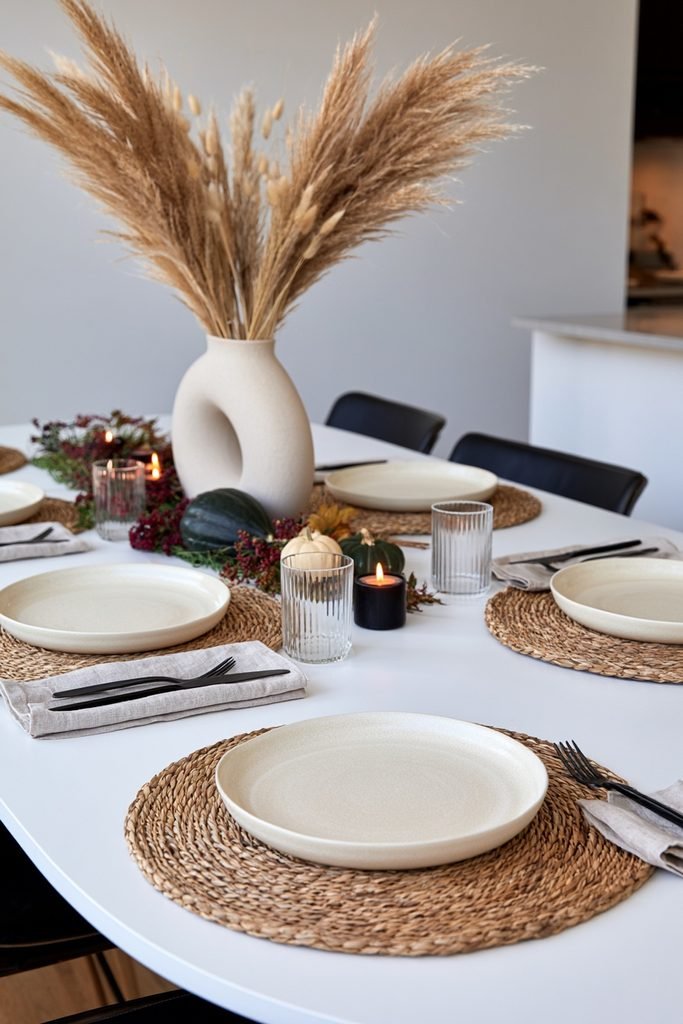
Pampas grass can bring a soft, neutral texture to a table for anyone who prefers a more minimal or boho aesthetic over traditional fall colors. It pairs naturally with autumn greens, small squashes, and glowing tealights for a tablescape that reads as seasonal without leaning on orange and red, an approach Lemon Thistle used to reimagine a more modern fall look.
Add Taper Candles for Warm Ambiance
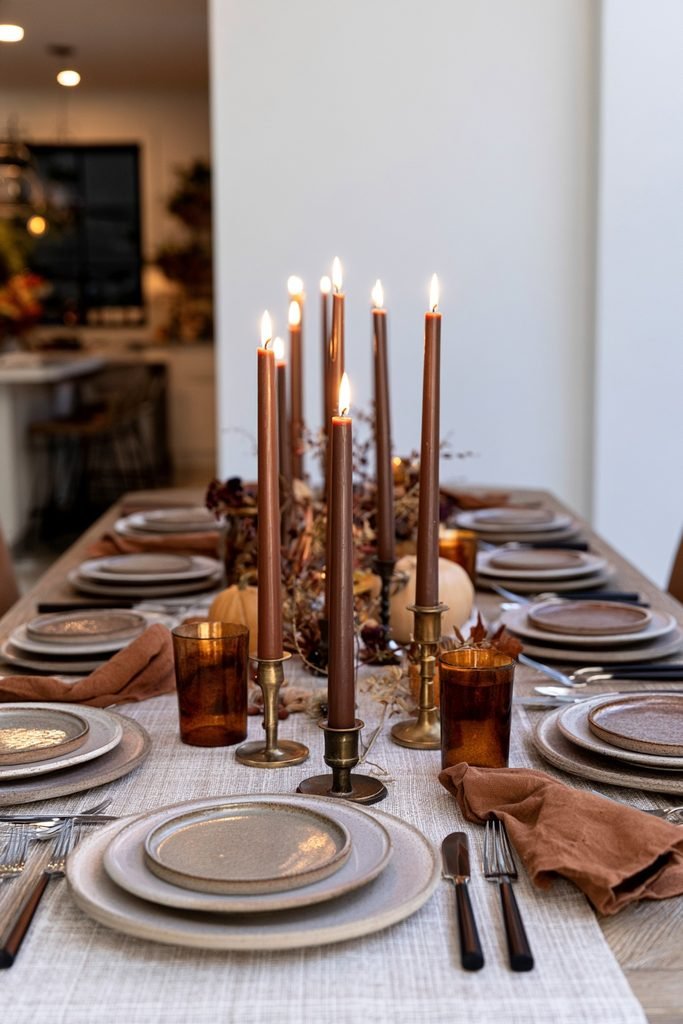
Taper candles bring a timeless look to a fall table and can be paired with warm colors or subtle seasonal details for extra ambiance. Beeswax candles in harvest tones can add a bit of whimsy without straying from a classic table setting.
Group Varying Candle Heights and Votives
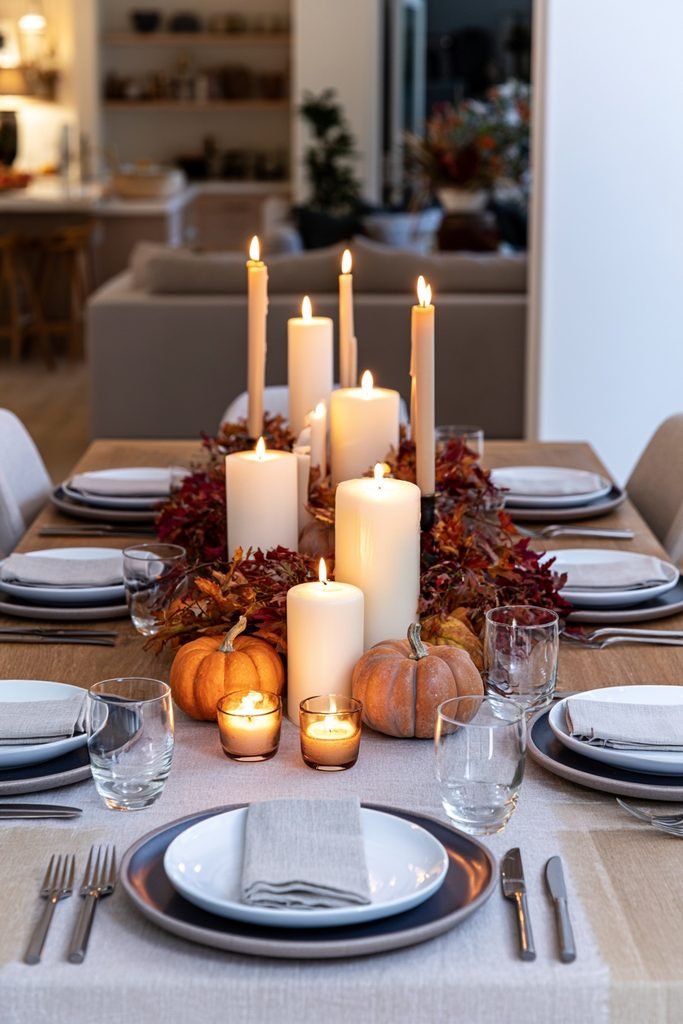
Grouping candles of different heights together can create a softer, more layered glow than a single centerpiece candle. Votives and pillar candles can be clustered near a wreath, gourd arrangement, or dough bowl for a cozy evening atmosphere.
Scatter Pinecones, Acorns, and Twigs Down the Table
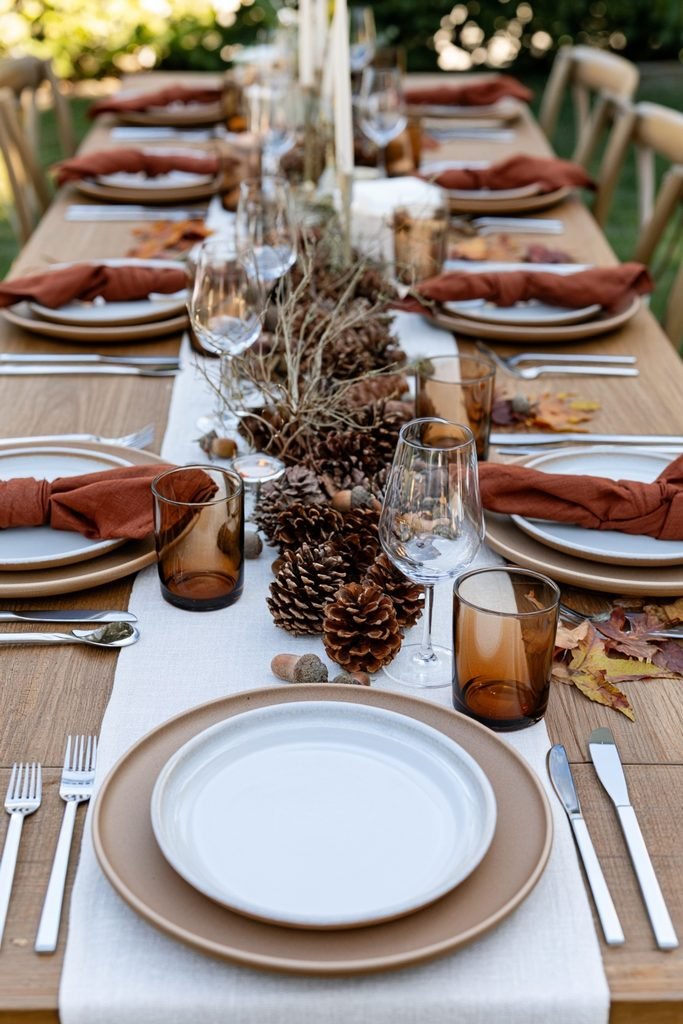
Natural elements like pinecones, acorns, and twigs can be scattered directly down the center of the table for texture between place settings. These pieces are typically free to gather outdoors and can be reused across multiple fall tablescapes throughout the season.
Use Cloth Napkins in Earthy Tones
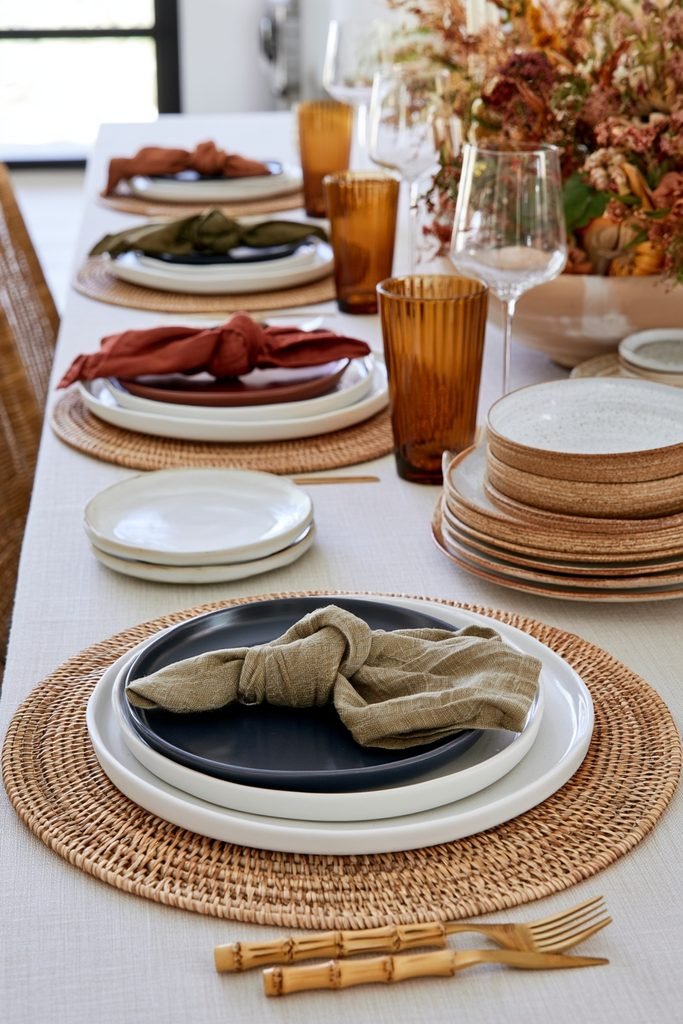
Cloth napkins in rust, olive, or warm neutral tones can tie a place setting together without needing a patterned tablecloth underneath. Interior designer Rumi Bunya recommends pairing organic materials like bamboo utensils and rattan placemats with burnt orange accents for an earthy, harvest-inspired look, as noted by Redfin.
Add Napkin Rings for a Low-Cost Seasonal Touch
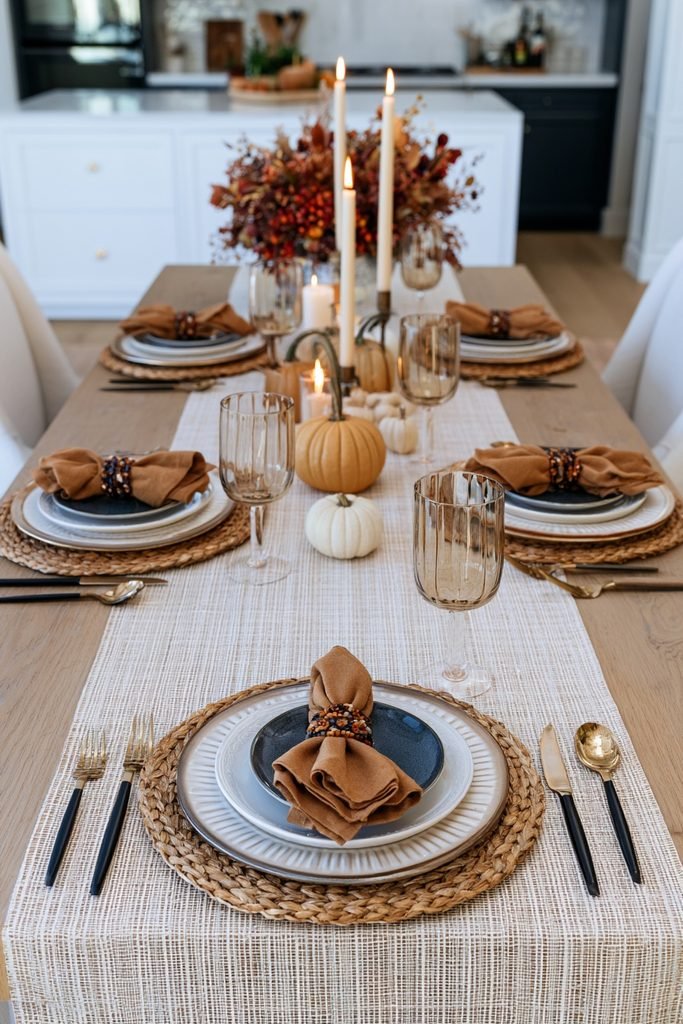
Napkin rings are an inexpensive way to add a seasonal detail to each place setting, whether in a metallic finish, a woven texture, or a small charm. They can be swapped out easily between fall, Thanksgiving, and winter without changing anything else on the table.
Try Twig or Rattan Chargers for Texture
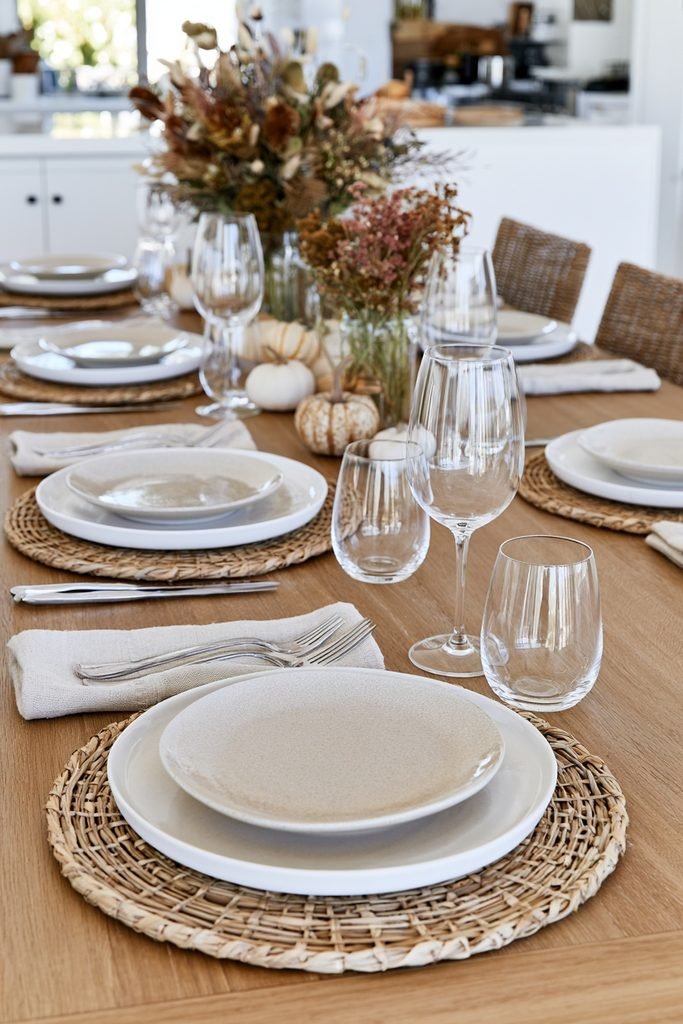
Chargers made from twig or rattan can add natural texture underneath dinnerware while keeping the overall palette neutral. This pairing works well alongside linen napkins and dried florals for a table that feels organic rather than themed.
Bring in Greenery With Sage or Eucalyptus Stems
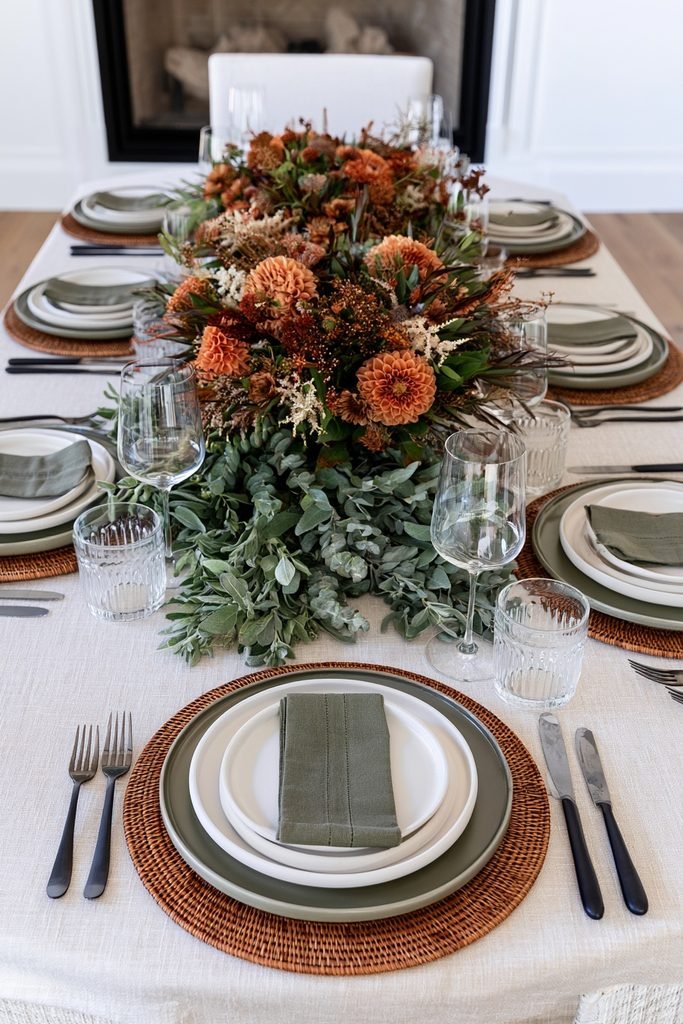
Greenery like sage or eucalyptus can soften an otherwise warm-toned centerpiece and keep the palette from leaning too heavily on orange and brown. A few stems mixed into a floral arrangement or laid flat along a runner can add a cooler, more grounded note.
Mix in Metallics Like Gold or Amber Glassware
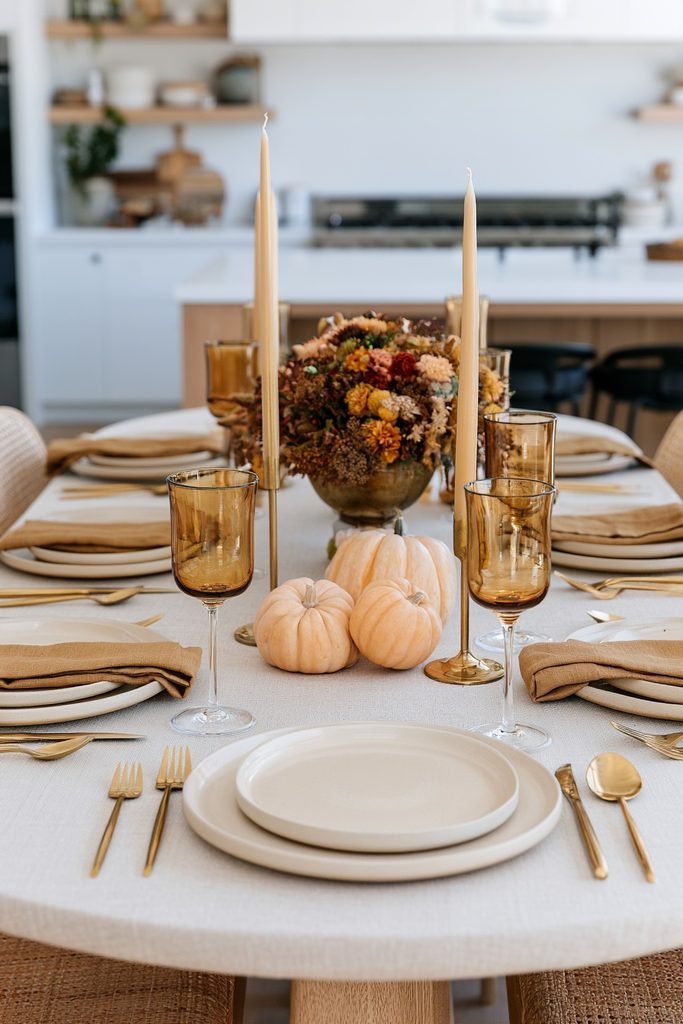
Gold flatware, amber glassware, or brass candle holders can add a touch of warmth and shine to a fall table without overwhelming it. Gold works especially well as an anchor color for a softer palette, pairing naturally with tan, cream, and light orange accents.
Use a Tiered Tray for Mini Vignettes
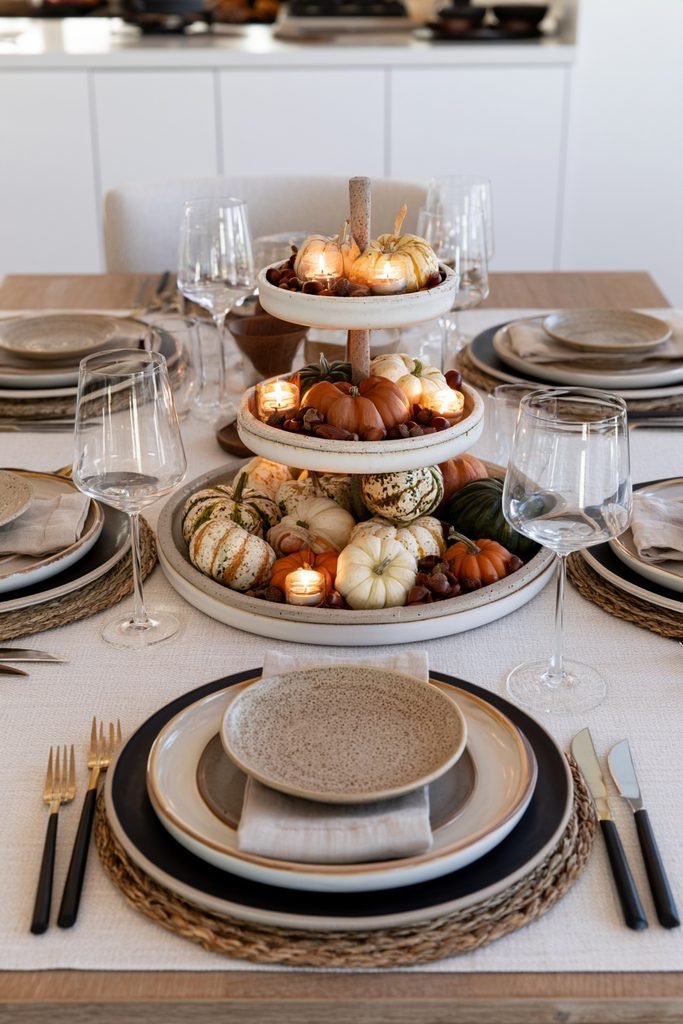
A tiered tray can hold small, styled vignettes — like mini pumpkins, candles, or a scattering of acorns — near the centerpiece or on a sideboard nearby. This adds visual interest at varying heights without requiring a large, single statement piece.
Go Bold With Deep Jewel Tones
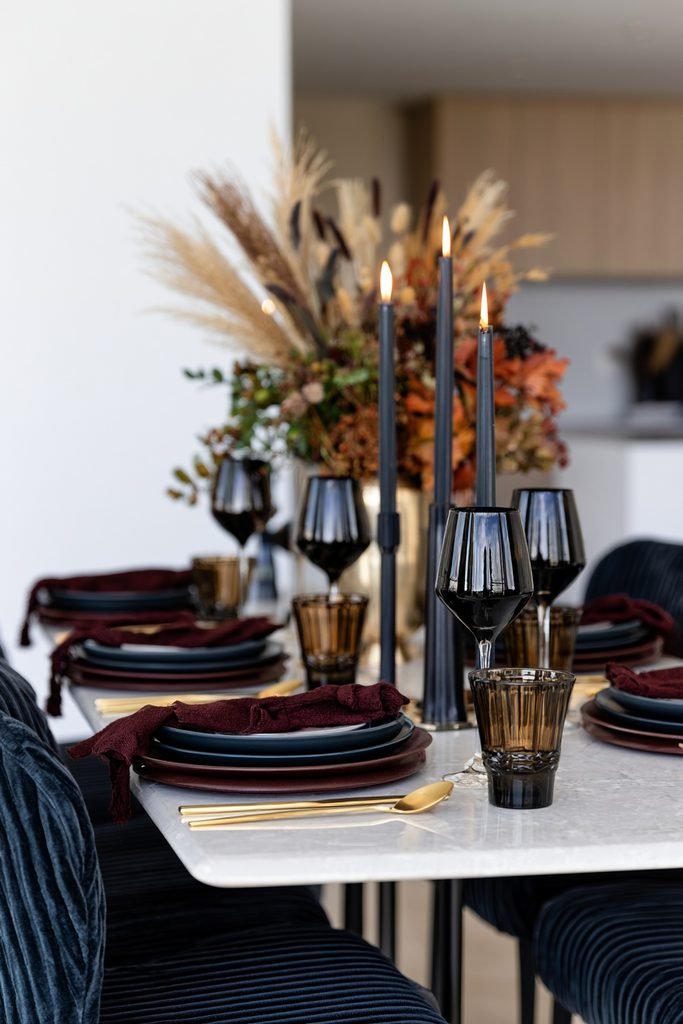
For a more dramatic look, a table can lean into jewel tones like plum, deep teal, or burgundy instead of traditional oranges and browns. HGTV highlights a dining room where clay-colored paneling and deep teal walls strike a balance between warm and cool, paired with botanical artwork and ornamental grasses to keep the look grounded in the season.
Keep It Renter- and Budget-Friendly With Thrifted Pieces
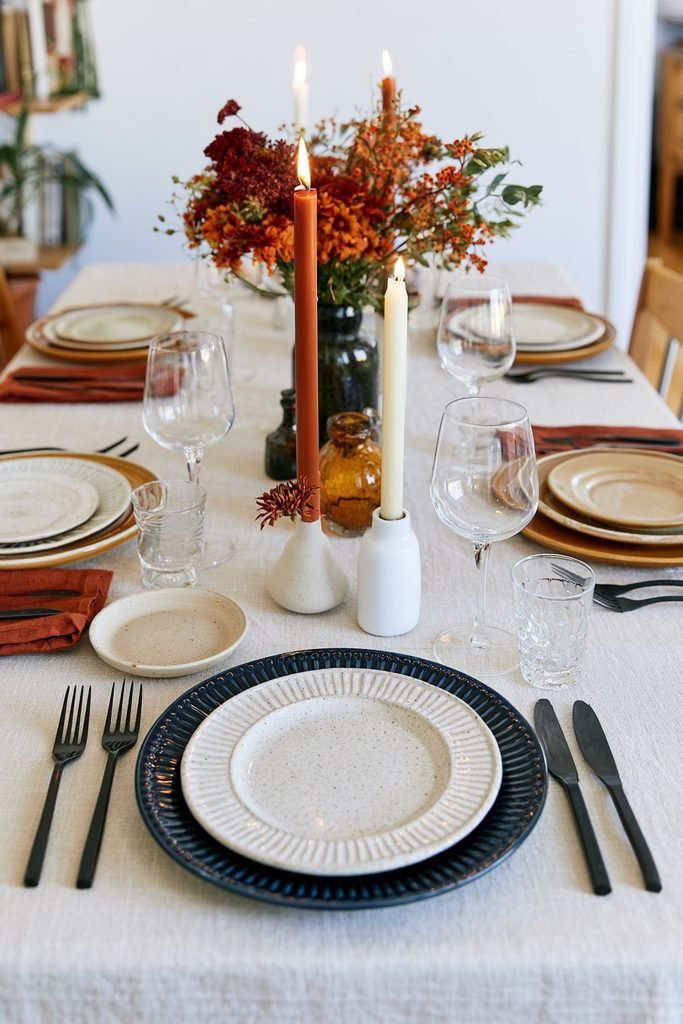
A fall tablescape doesn’t require new purchases each season — thrifted vases, secondhand candle holders, and repurposed everyday dishware can all fit the palette with a bit of styling. Southern Home & Hospitality recommends anchoring a look with neutrals and letting just one or two seasonal colors shine through accents like candles, napkins, and small vases.
Frequently Asked Questions
What colors work best for fall dining table decor?
Traditional fall palettes lean on rust, burnt orange, golden yellow, and deep brown, though softer combinations like gold, tan, and light orange or bolder options like plum and navy can work equally well. The best choice usually depends on the existing color scheme of the dining room.
Do I need a tablecloth for a fall table?
A tablecloth isn’t required — a bare wood table can look just as intentional, especially when paired with a runner, chargers, or a well-styled centerpiece. The choice often comes down to whether the table’s finish is meant to show or be layered over.
How can I decorate a fall table on a budget?
Natural elements like pinecones, acorns, and leaves can be gathered outdoors at no cost, and thrifted or repurposed items like vases and candle holders can stand in for new decor. Focusing spending on just one or two seasonal pieces, like a runner or a centerpiece, keeps the look updated without a full refresh.