A kitchen backsplash does more than protect the wall behind a stove or sink — the way the tile is laid can change the entire feel of the room. Pattern choices can make everyday tile feel custom, and small layout shifts like turning a subway tile sideways or angling it into a chevron can carry as much visual weight as switching materials entirely, according to Sweeten’s 2026 remodel guide.
From timeless straight-lay layouts to bold geometric mosaics, there’s a pattern suited to nearly every kitchen style, whether the goal is quiet and cohesive or lively and eclectic. The following 26 backsplash patterns cover classic, trending, and statement-making options for a kitchen refresh or full renovation.
Keep It Classic
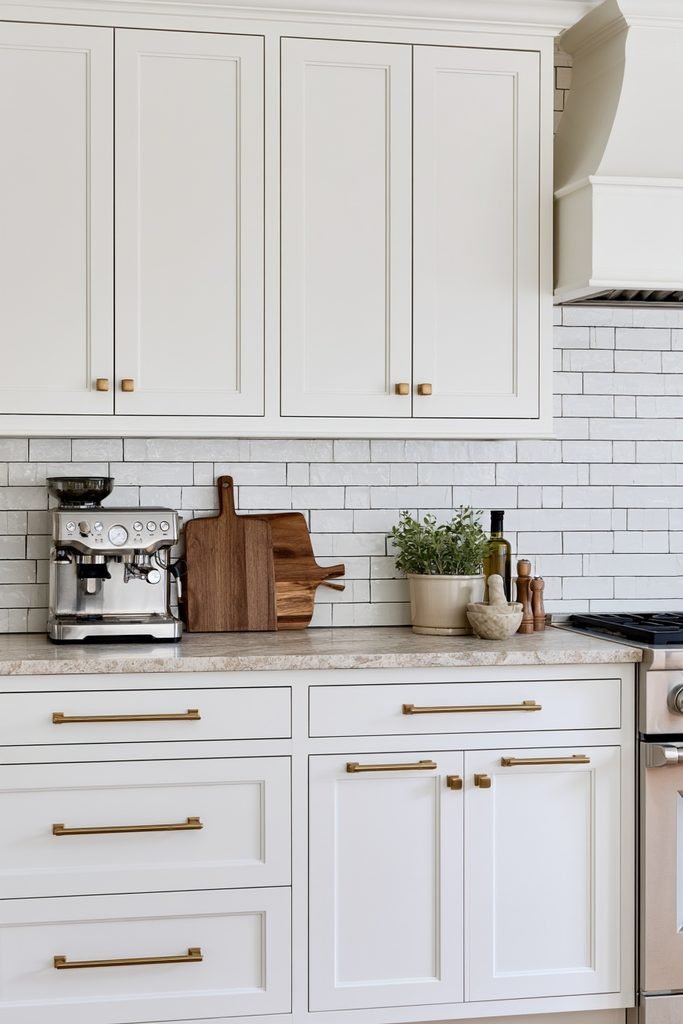
Running bond, also called straight-lay, arranges rectangular tiles end to end in horizontal rows and remains one of the most enduring kitchen layouts. White subway tile set in a running bond continues to be one of the most popular backsplash options for white kitchens, and contrasting grout or warm brass hardware can keep the look from feeling flat, per NARI’s design roundup.
Turn Tiles Sideways
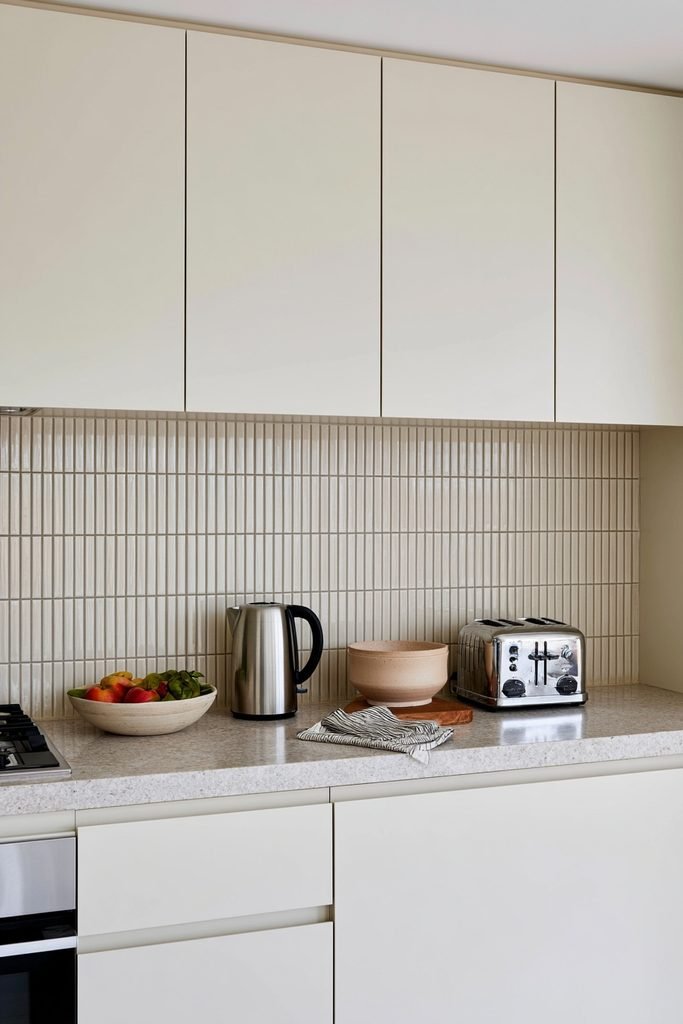
A vertical stack layout takes the same subway tile and turns it on its side, stacking each piece directly above the last instead of offsetting the joints. This orientation creates a dynamic, unexpected look and can make a wall feel taller by elongating the visual lines, an effect shabbyfufu highlights as a fresh alternative to the traditional horizontal layout.
Add Movement with Herringbone
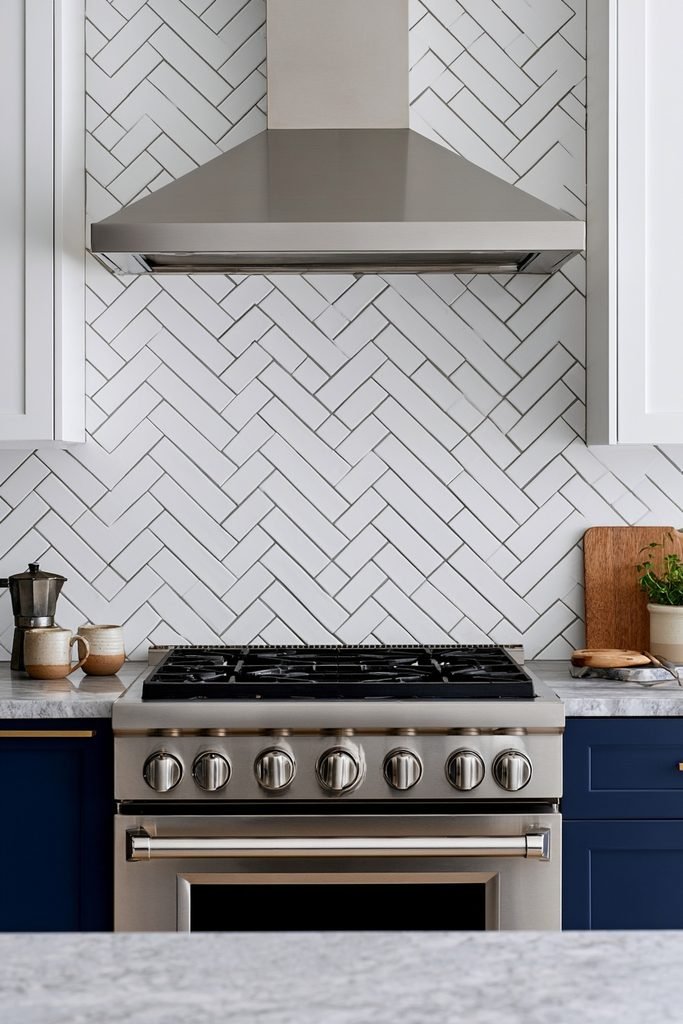
Herringbone arranges rectangular tiles at 90-degree angles so their short ends meet in a V shape, creating a zigzag that adds movement to an otherwise plain wall. Elongated, thin-format tiles bring a sleek, contemporary feel to the pattern, while handmade tiles introduce depth and irregularity for a more artisanal result, according to Cle Tile.
Double Up the Zigzag
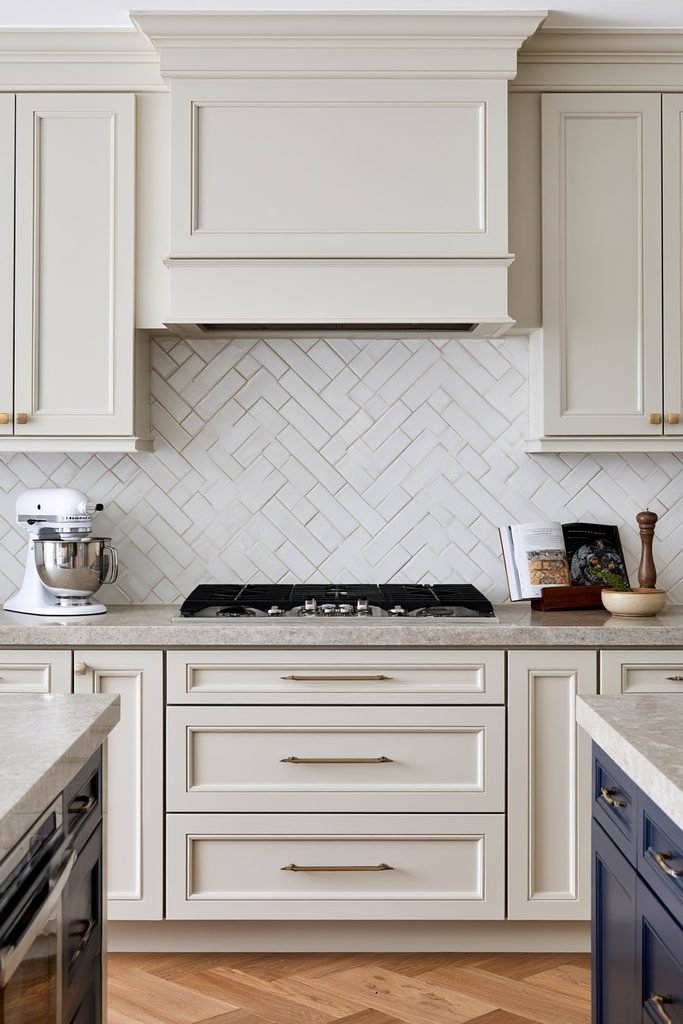
A double herringbone layout stacks two rows of the classic zigzag together, creating a subtle basketweave effect while keeping the sense of movement of the single pattern. The Tile Shop notes that this doubled-up version can add visual weight and texture to a wall without changing the tile itself.
Sharpen the Angle
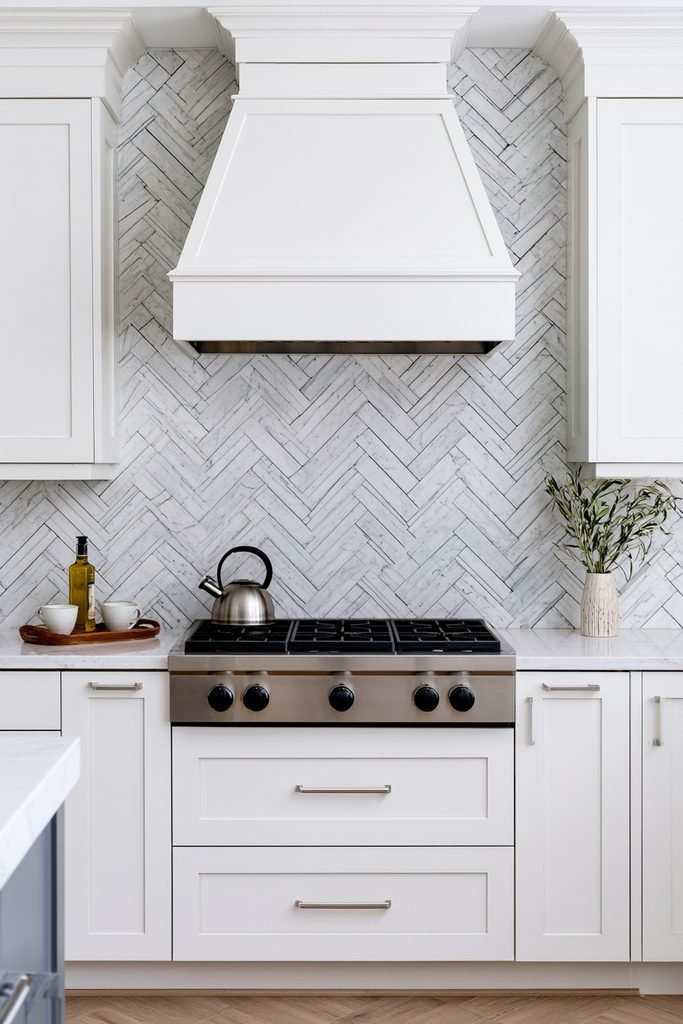
Chevron looks similar to herringbone but uses tiles cut at a precise angle so the edges meet in a continuous, seamless V rather than a stepped one. Marble chevron can add elegance to a kitchen, while a solid color delivers a more modern, graphic statement, per NARI.
Weave a Pattern
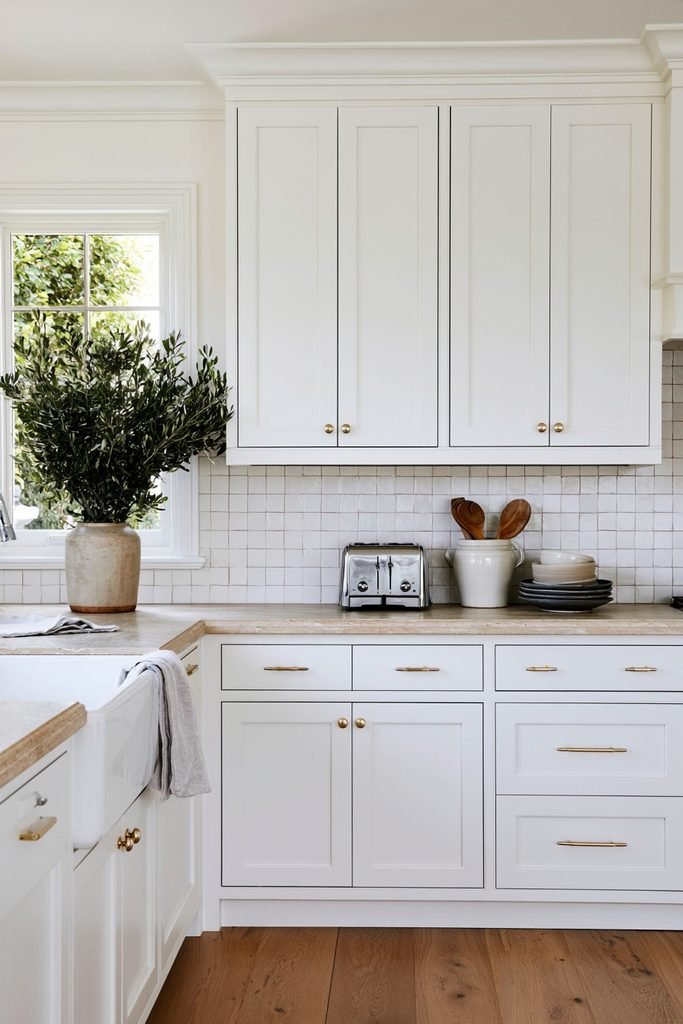
Basketweave alternates pairs of tiles in a woven-look grid, mimicking the over-under texture of a woven basket. This layout works well with square or rectangular tile in a single color and can bring subtle texture without introducing new colors or shapes into the kitchen.
Spin a Pinwheel
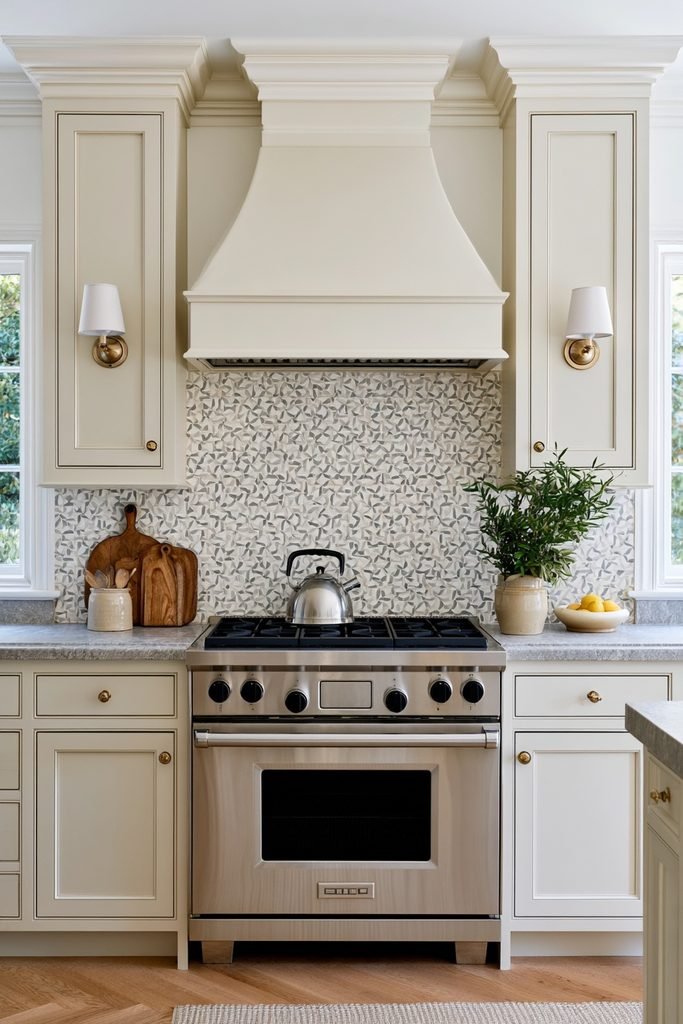
A windmill, or pinwheel, layout pairs a small square tile with four larger rectangular tiles arranged around it, creating a spinning effect at each intersection. This pattern can work well as an accent panel behind a range or in a smaller nook, where a full wall of pattern might feel overwhelming.
Elongate with Picket Tile
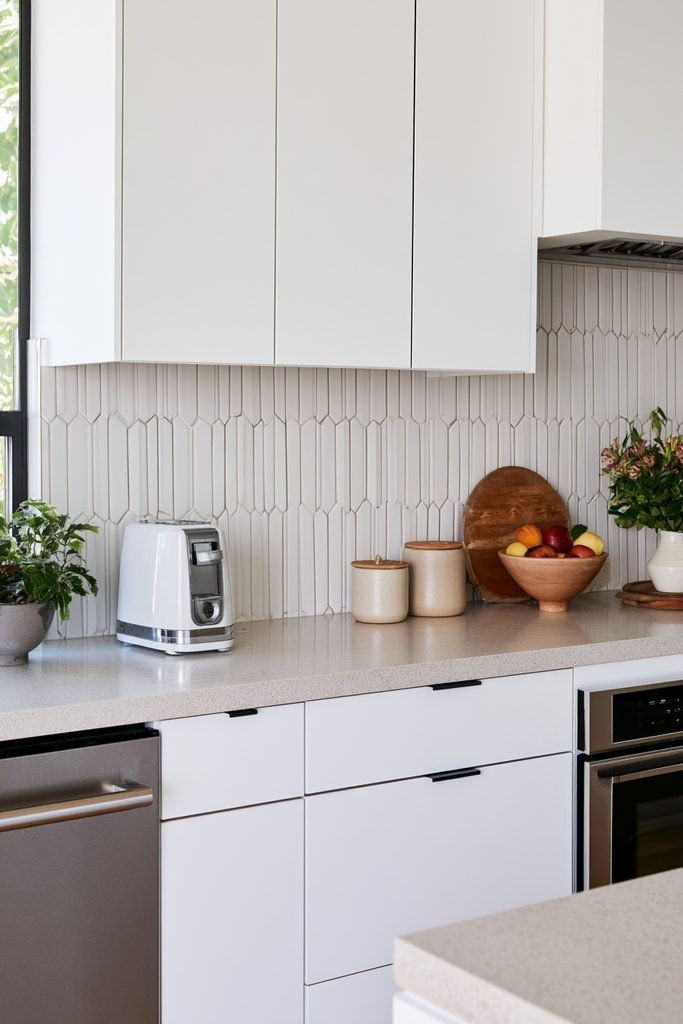
Picket tile takes the elongated hexagon shape and sets it point-up, offering a modern twist on classic subway tile. The shape adds visual interest while maintaining the clean, structured look that pairs well with white cabinetry, according to NARI.
Set Tiles on Point
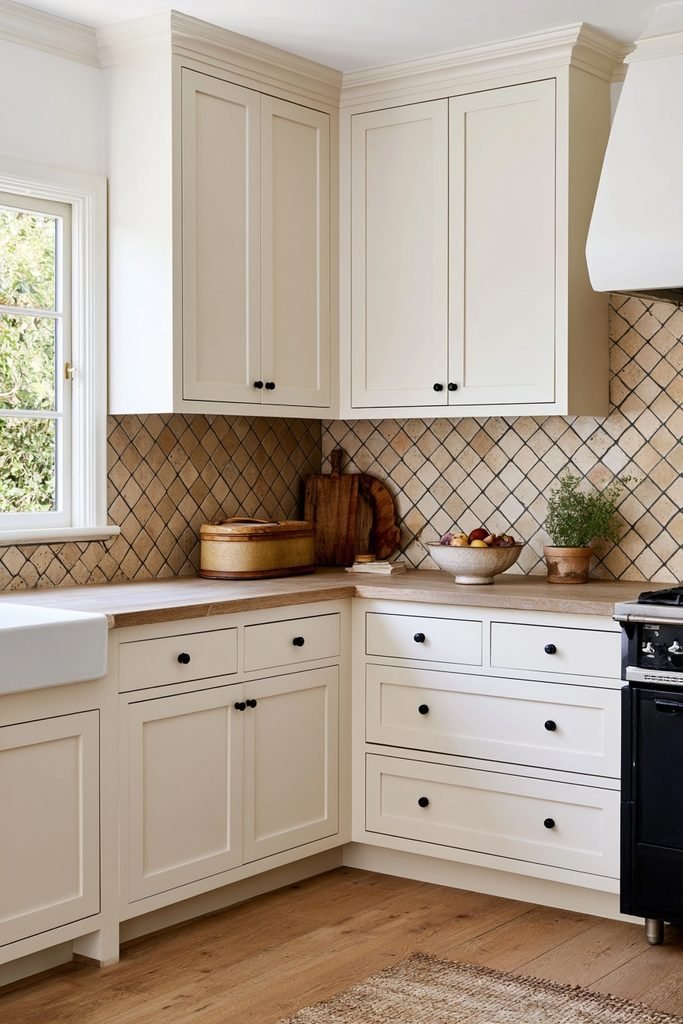
A diagonal, or on-point, layout rotates square tile 45 degrees so the grid reads as a series of diamonds instead of squares. This shift in orientation alone can add energy to a small backsplash without introducing a single new material.
Shift the Brick Bond
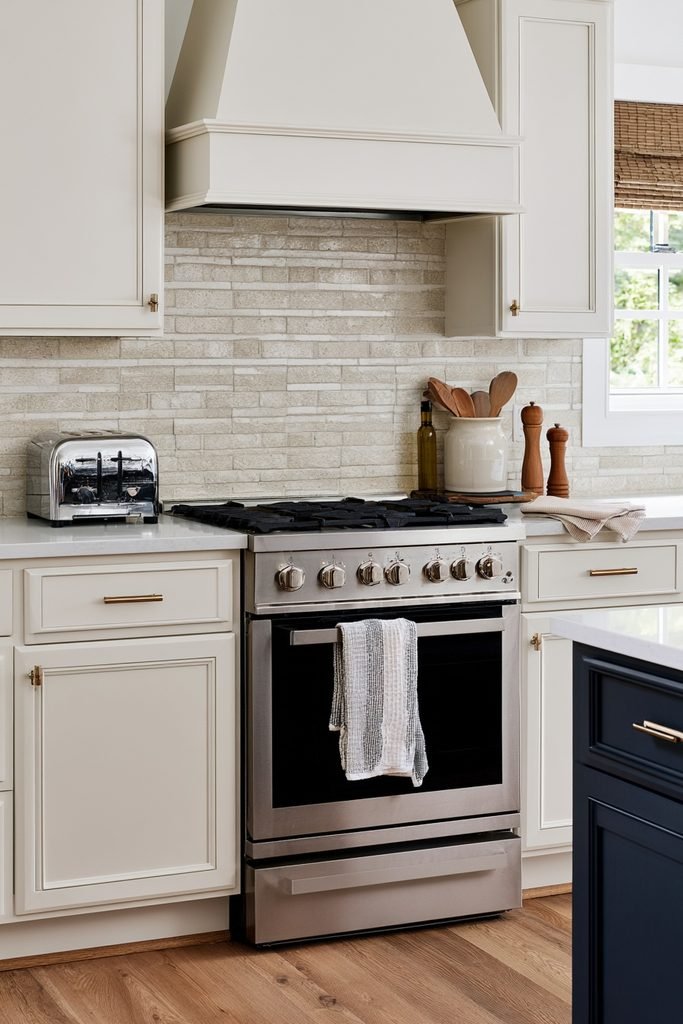
Offset brick staggers each row of tile so the vertical joints fall at the one-third or one-half point of the tile below, rather than lining up in a strict grid. This slight stagger softens the look of a straight-lay pattern while keeping the installation simple and budget-friendly.
Frame with a Soldier Course
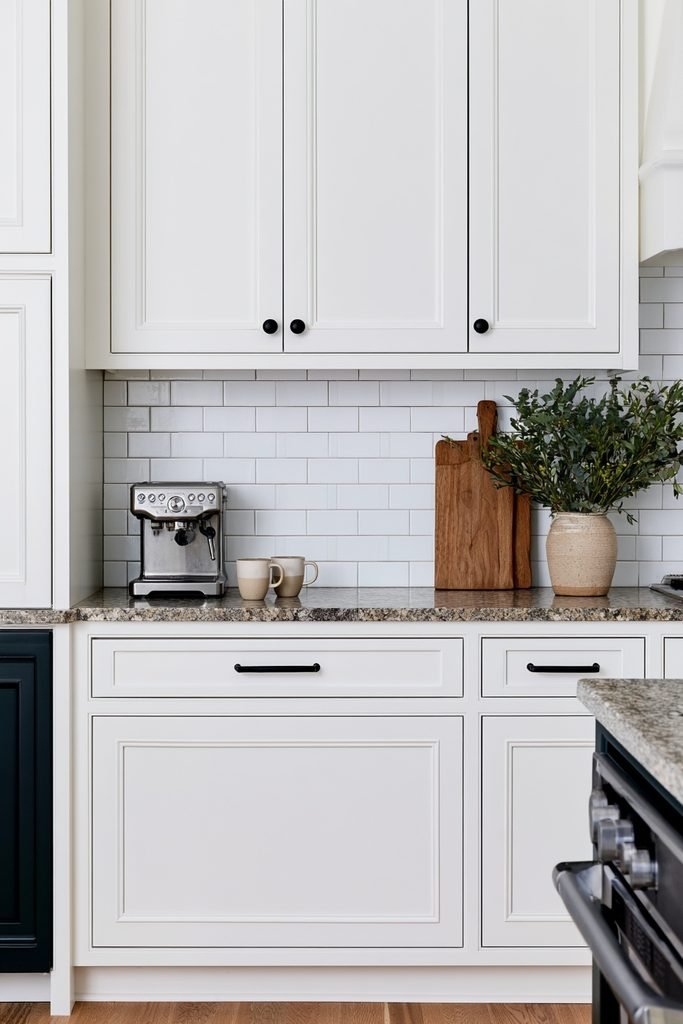
A soldier course lines tiles up vertically, side by side, typically as a border along the top or edge of a backsplash. Pairing a soldier course with a horizontal field pattern can define the edges of the installation and give it a finished, tailored look.
Play with Checkerboard
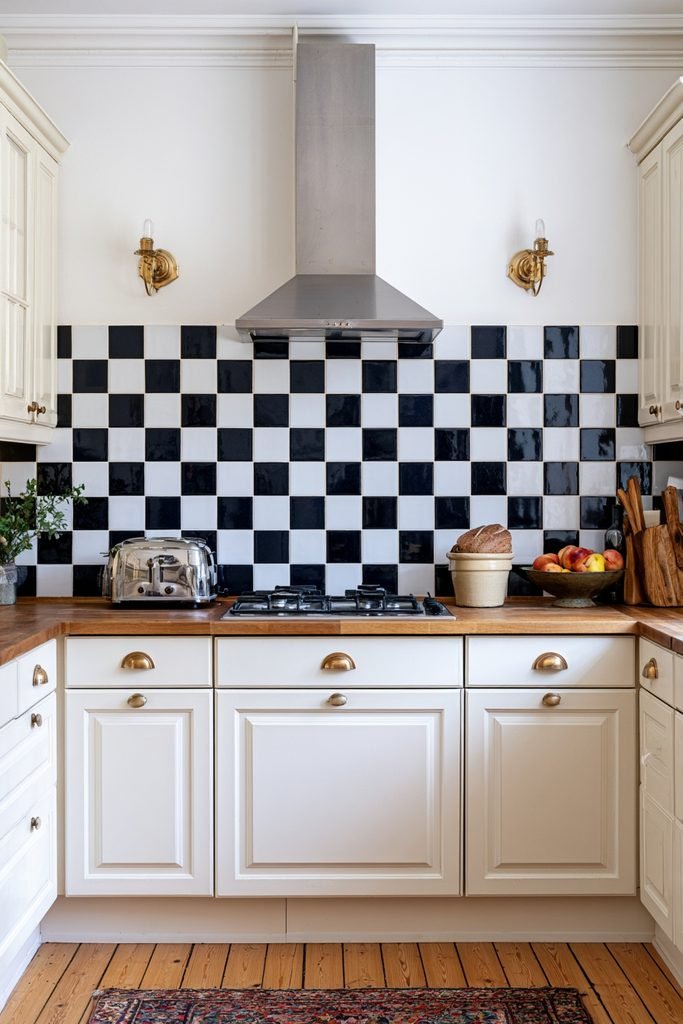
Checkerboard alternates two contrasting tile colors in a grid, most often black and white, for a graphic, high-contrast look. This pattern reads best on a larger expanse of wall and can anchor a kitchen with a retro or modern-farmhouse feel.
Go Geometric with Hexagons
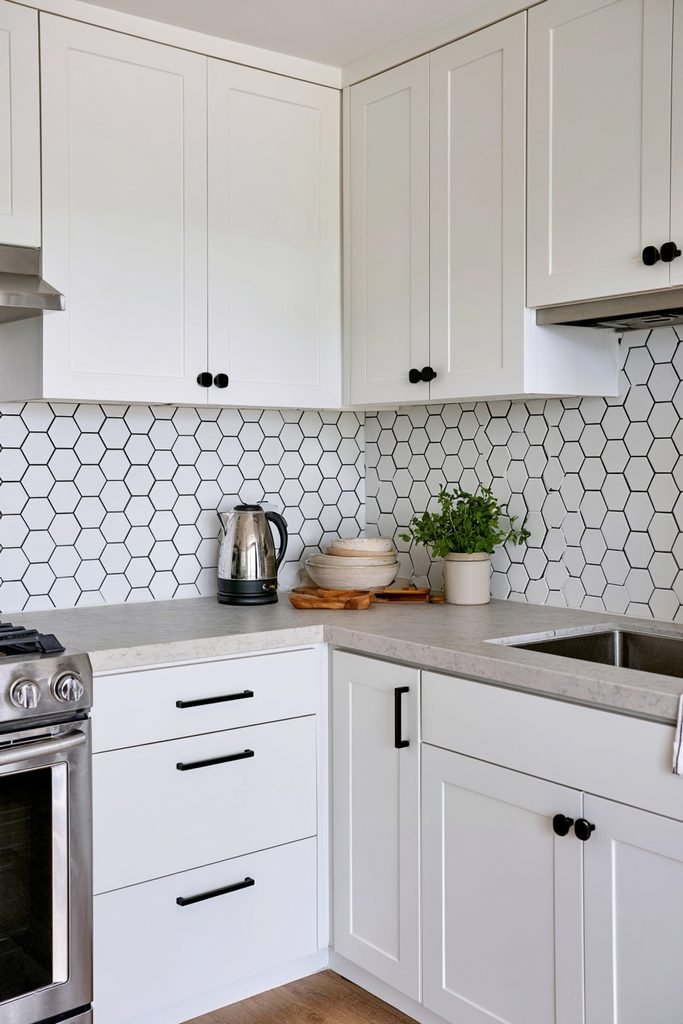
Hexagon tile arranged in a honeycomb grid brings bold shapes and a modern feel to a backsplash, and pairing the pattern with simpler countertops and cabinets keeps it from competing with the rest of the kitchen, per Simpolo.
Detail with Penny Tile
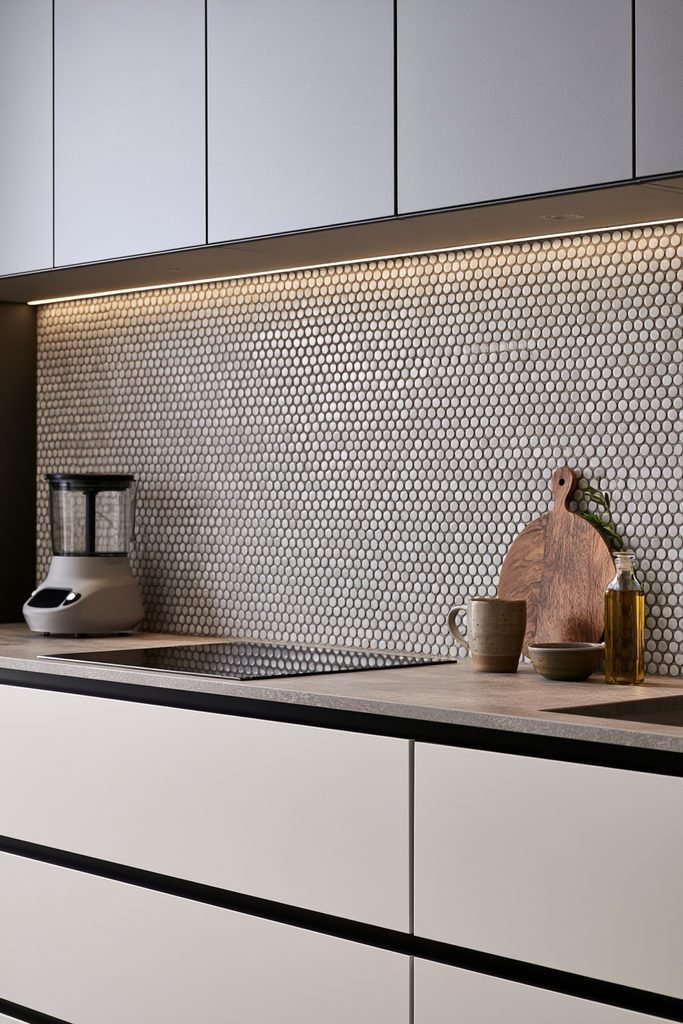
Small circular penny tiles add texture and detail at a much finer scale than standard subway or hexagon tile, creating a subtle yet eye-catching surface, according to Simpolo. Penny tile in a single color can read as understated, while a mixed palette turns the backsplash into a mosaic-like focal point.
Soften with Scalloped Tile
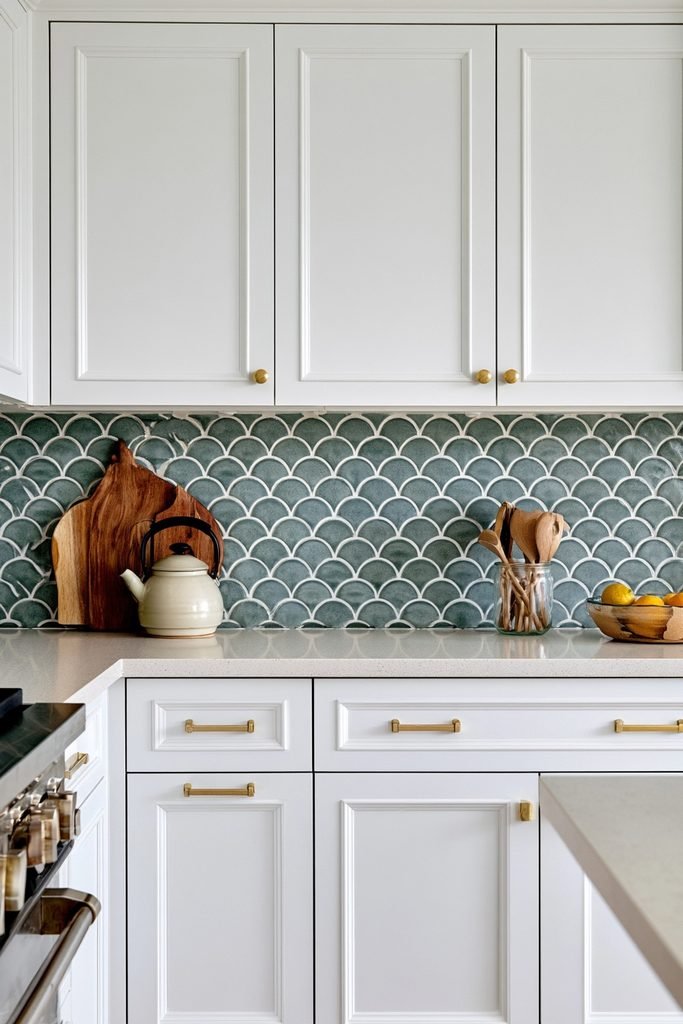
Fish scale, or scalloped, tile brings an organic, rounded shape to the backsplash, giving the kitchen a playful, relaxed feel. Soft sea-foam green or ocean blue can lean coastal, while classic white scalloped tile keeps the look timeless and versatile, per shabbyfufu.
Bring in Arabesque Shapes
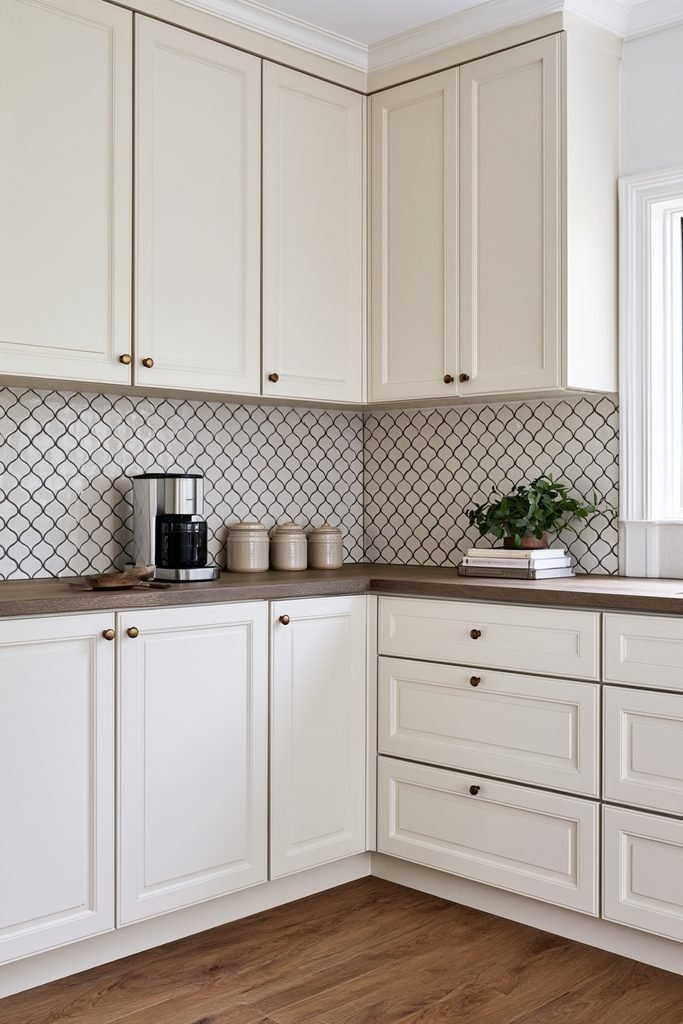
Arabesque-shaped tile, with its curved, lantern-like silhouette, adds personality and visual drama to a backsplash while keeping the surrounding cabinetry feeling clean and classic. This pattern pairs naturally with white or cream cabinets that let the tile shape do the work, per NARI.
Layer on Moroccan Pattern
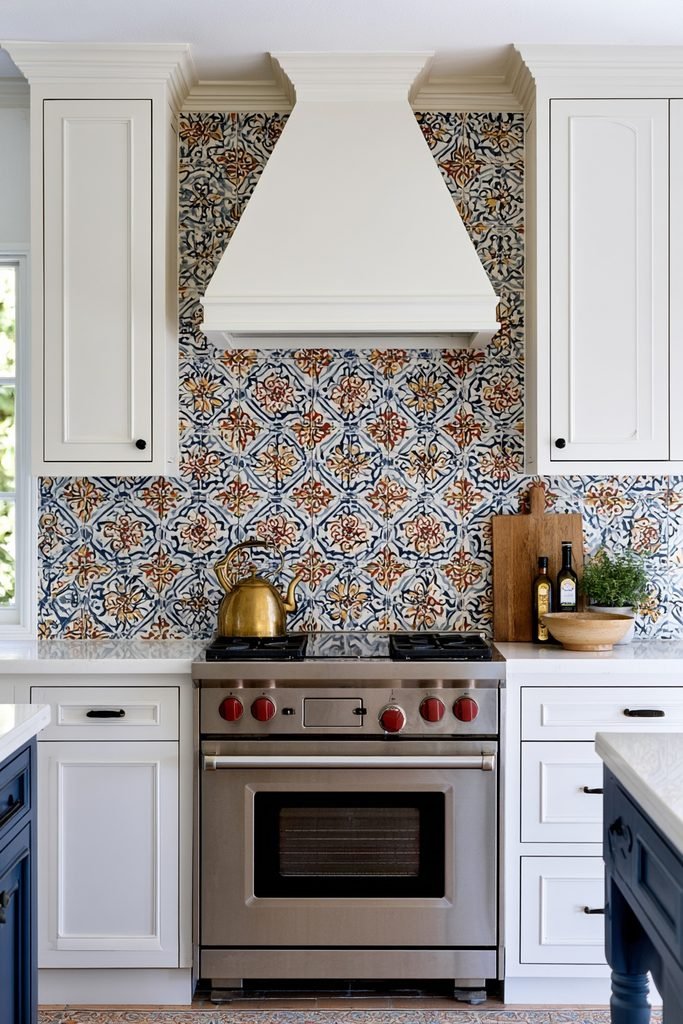
Moroccan and encaustic-inspired tile patterns layer bold, repeating motifs across the backsplash for a look with built-in visual richness. Geometric-patterned backsplashes like these introduce a unique, eclectic tone, with polygons, flowers, and spirals decorating the tile in both large and small formats, according to Chairish.
Mirror the Veining
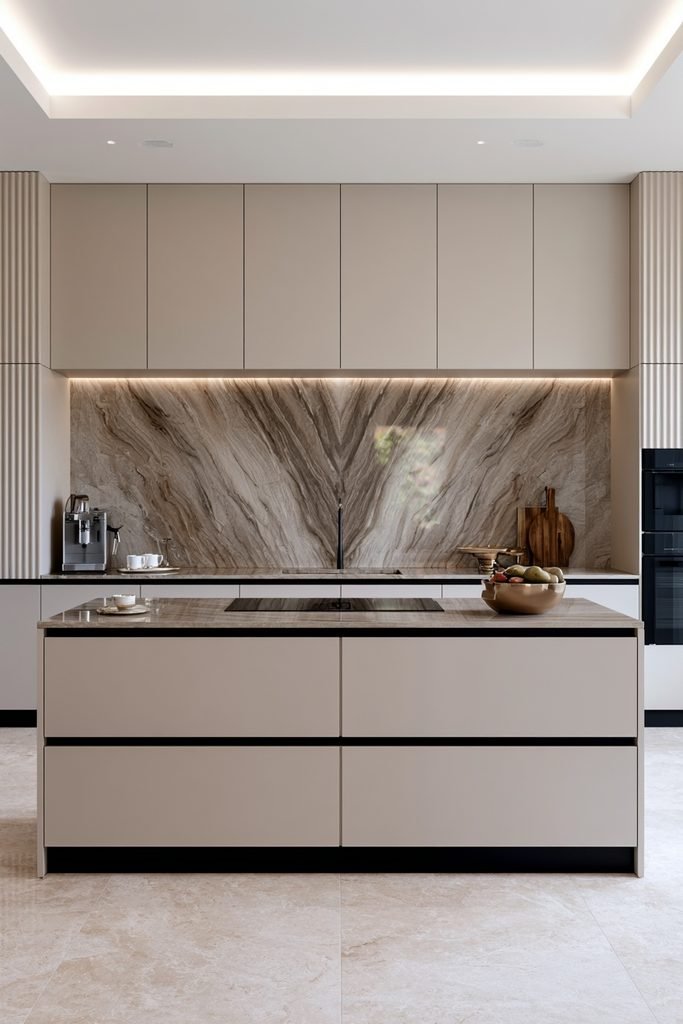
A bookmatched slab pairs two adjacent cuts of stone so their veining mirrors across the seam, creating a symmetrical, dramatic effect. Bookmatch tile creates a mirrored pattern that adds a dramatic, premium visual impact to the kitchen, per Simpolo.
Let the Counter Climb the Wall
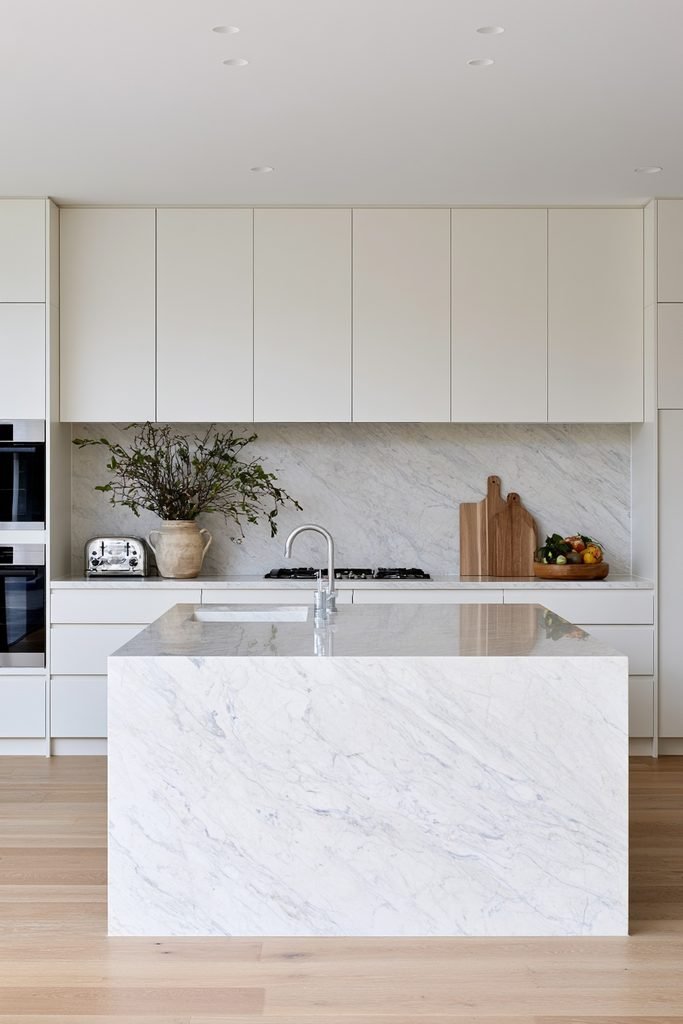
A continuous slab backsplash carries the countertop material straight up the wall, so the eye reads one uninterrupted plane instead of a separate counter and backsplash. Sweeten notes that this approach works especially well in open-plan kitchens, where long sight lines cut across the room.
Minimize the Grout Lines
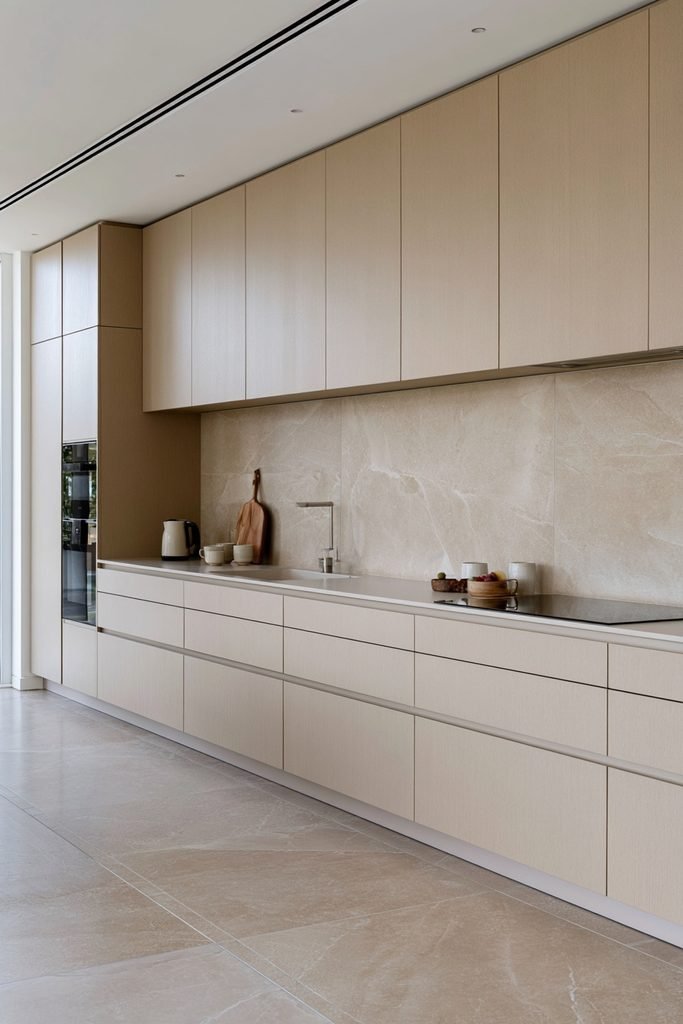
Large-format tile reduces the number of grout lines across a backsplash for a seamless look that can make the whole kitchen feel bigger and cleaner, according to Simpolo. Pairing large-format tile with a quiet color palette lets the material, rather than the grout pattern, become the visual focus.
Embrace Handmade Irregularity
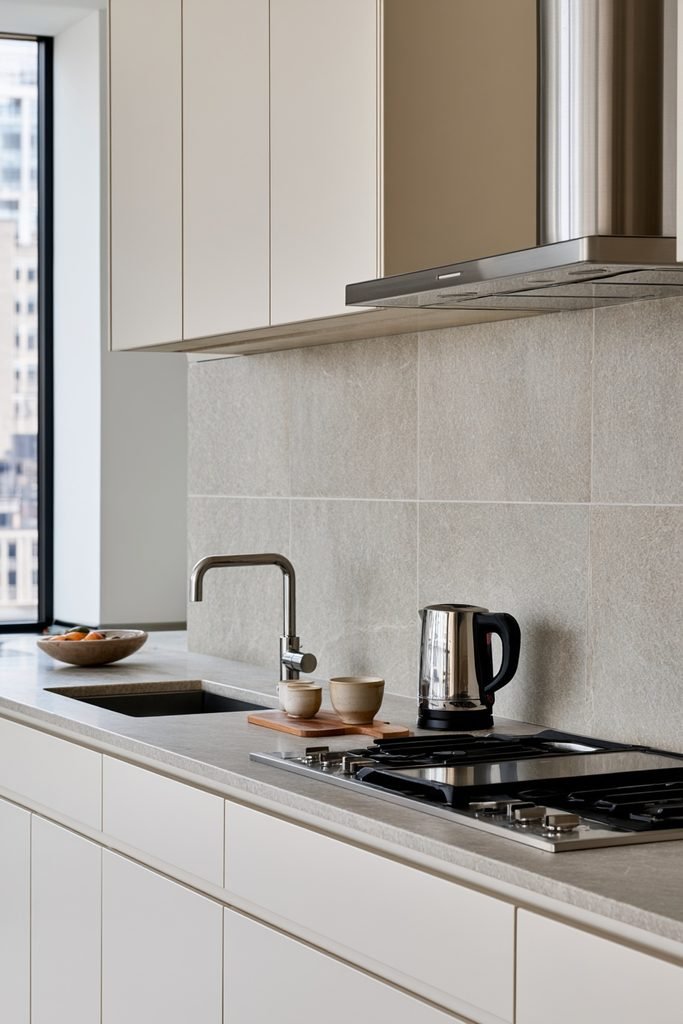
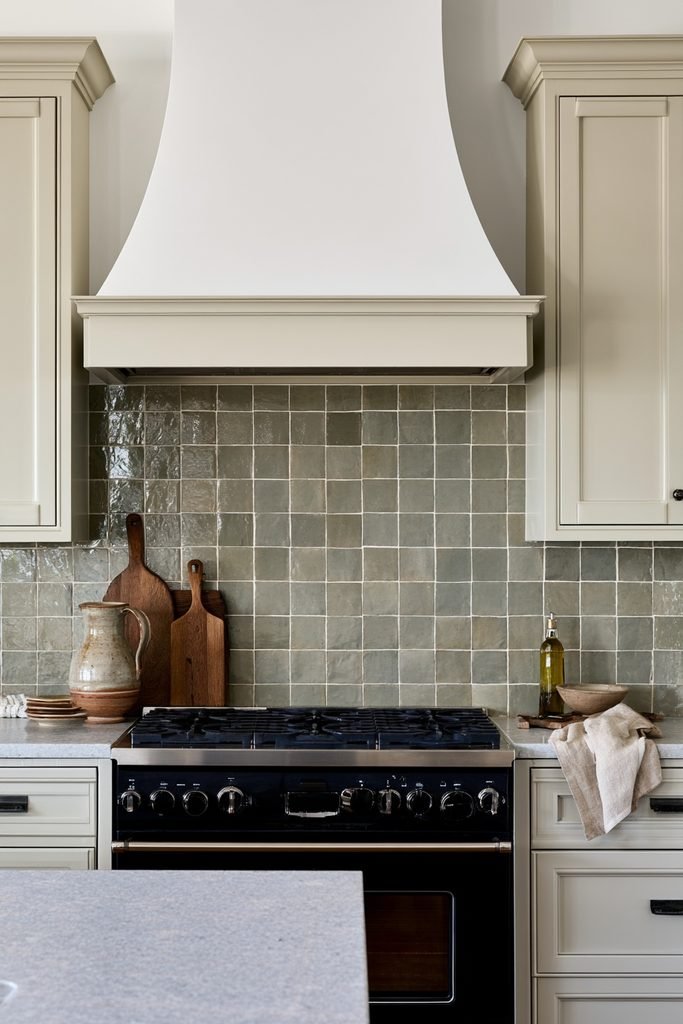
Zellige tile brings a handmade appearance, with slight variations in shape and glaze that make a simple backsplash feel custom rather than mass-produced. Sweeten points out that big veining or bold color works best when the rest of the kitchen’s finishes stay quiet.
Speckle It with Terrazzo
A terrazzo-look pattern scatters flecks of stone, glass, or shell across the tile surface for a speckled, playful finish that pairs naturally with a mid-century or eclectic kitchen. This pattern can work as a full backsplash or as a smaller accent panel behind open shelving.
Trace a Quatrefoil
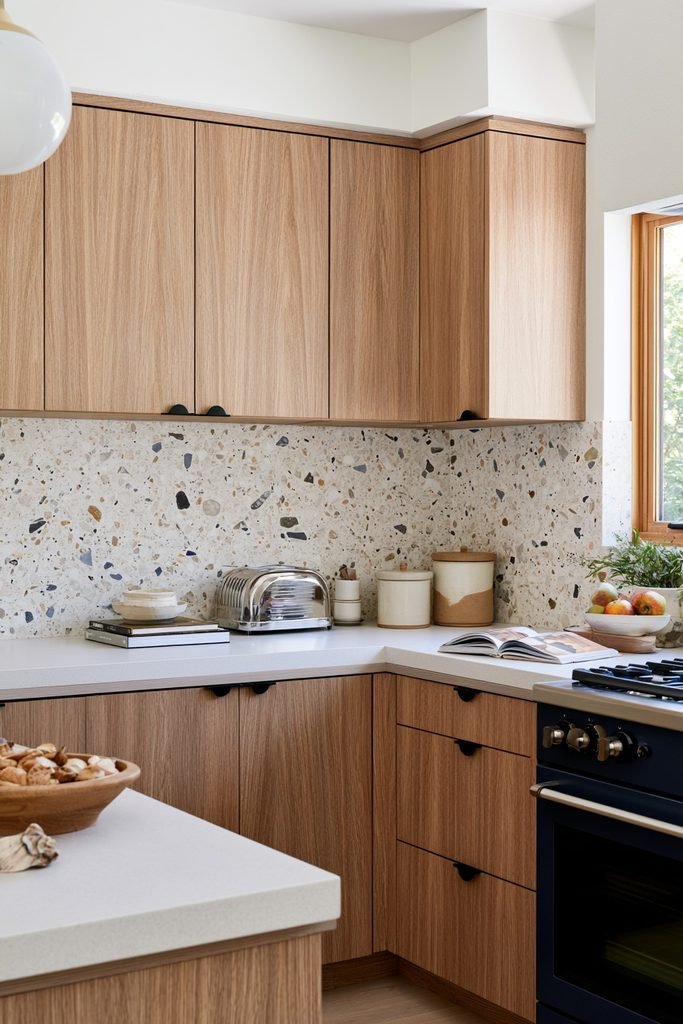
Quatrefoil tile repeats a four-lobed, flower-like shape across the backsplash, offering a softer alternative to strictly geometric patterns like hexagon or chevron. This pattern can lean traditional in a muted stone finish or modern in a glossy, saturated color.
Let Grout Do the Talking
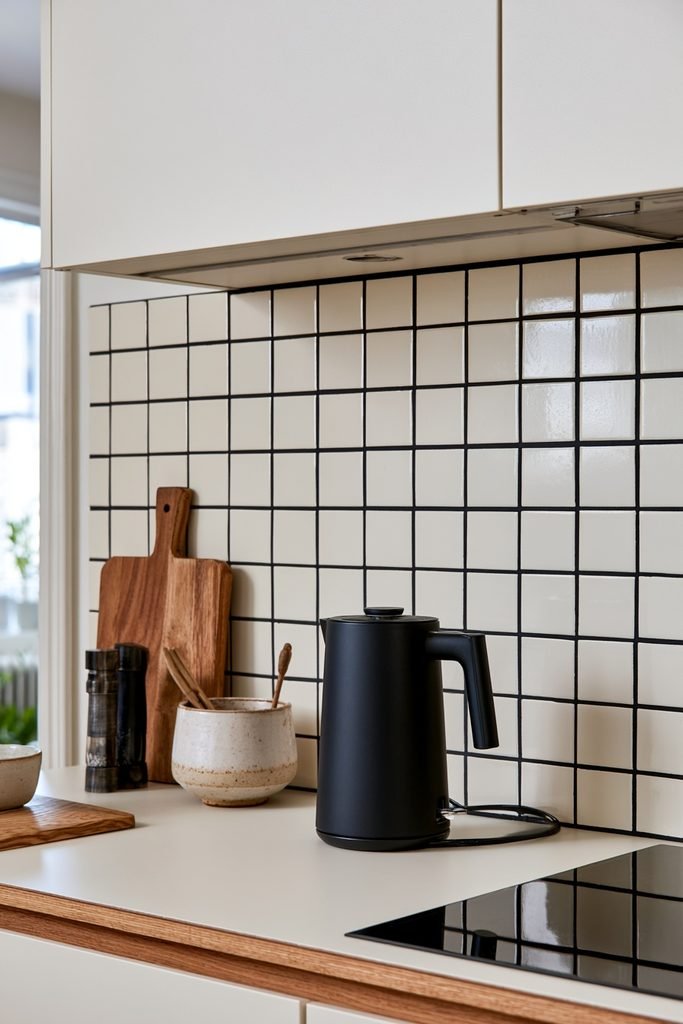
A grid layout in a simple square or rectangular tile can rely on contrasting grout, rather than an elaborate shape, to create pattern. Using contrasting grout with a simple tile is a modern twist on classic designs and works particularly well in industrial or Scandinavian kitchens, per Simpolo.
Mix and Match on Purpose
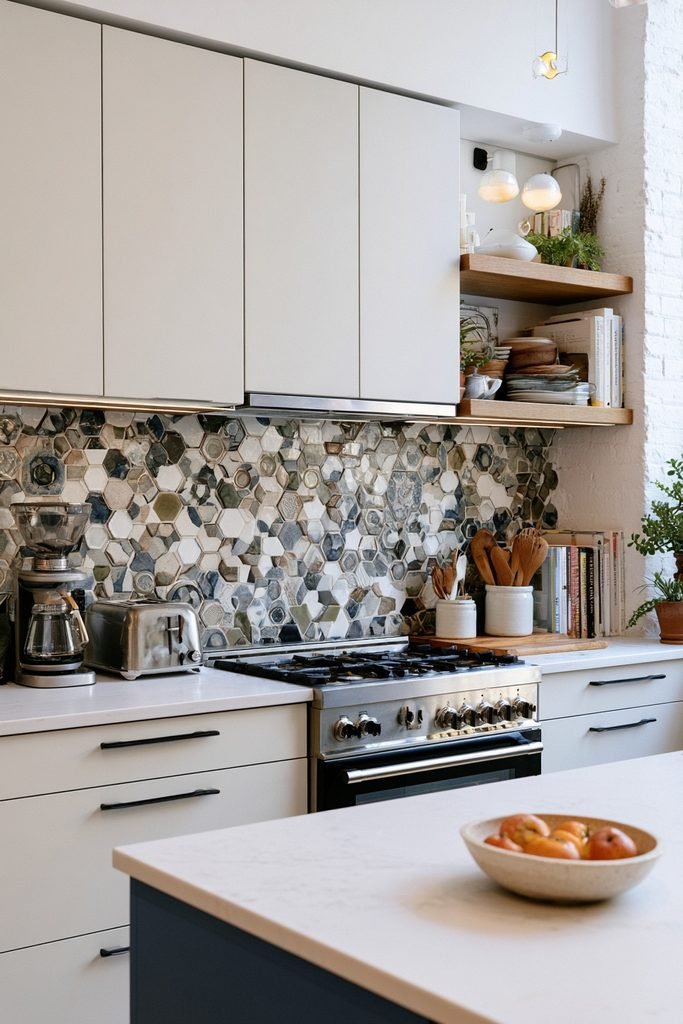
A mix-and-match layout pairs different colors, shapes, or materials of tile within the same backsplash for a one-of-a-kind result. Combining glass and ceramic hexagonal tiles in varying colors and textures can create a playful, geometric-inspired backsplash, according to shabbyfufu.
Insert an Accent Band
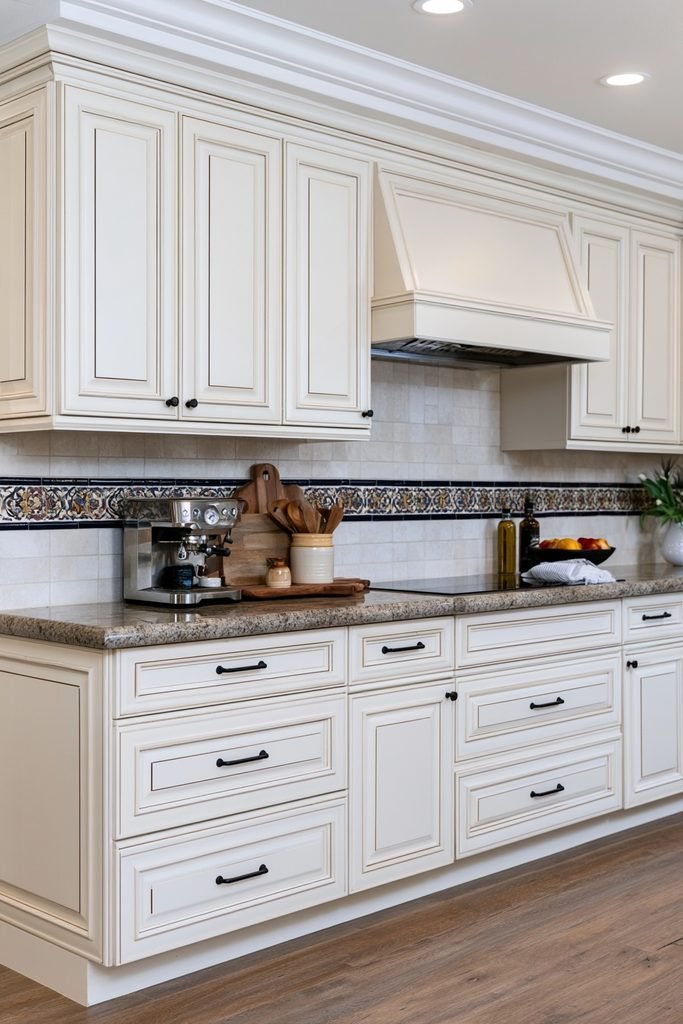
An accent band inserts a narrow strip of colorful or patterned tile within an otherwise neutral field, adding interest without overwhelming the kitchen. This approach lets a kitchen incorporate a bold pattern in a smaller, more controlled dose, per NARI.
Frequently Asked Questions
What’s the difference between herringbone and chevron?
In herringbone, rectangular tiles meet at their ends to form a V shape, while chevron tiles are cut at an angle so their edges align into one continuous zigzag line. Herringbone tends to read as more traditional and textured, while chevron looks sleeker and more graphic.
Are patterned tile backsplashes still trendy in 2026?
Herringbone and chevron have cooled somewhat as floor patterns but are seeing a comeback on subway tile backsplashes, with designers angling classic subway tile at 45 degrees for a fresh, textured look, according to Hunker. Slab and zellige backsplashes are also popular for 2026 kitchens, especially in open-plan layouts.
What’s the most budget-friendly backsplash pattern?
A straight-lay running bond in standard subway tile remains one of the most affordable patterns to install, since it requires the least cutting and the simplest layout. Offset brick and vertical stack layouts use the same budget-friendly tile while offering a slightly different look.