A games room can turn an underused spare room, basement, or garage into the most requested spot in the house. Whether the goal is a serious pool table setup, a retro arcade corner, or a flexible hangout for card nights and movie marathons, the right combination of game tables, seating, and lighting makes the space feel intentional rather than accidental.
These games room ideas cover everything from choosing the right table size for a room’s footprint to layering in acoustic treatment, storage, and theming. Some ideas call for a full room renovation, while others are simple enough to add in an afternoon, so there’s a starting point here for nearly any budget or space.
Start With a Pool Table
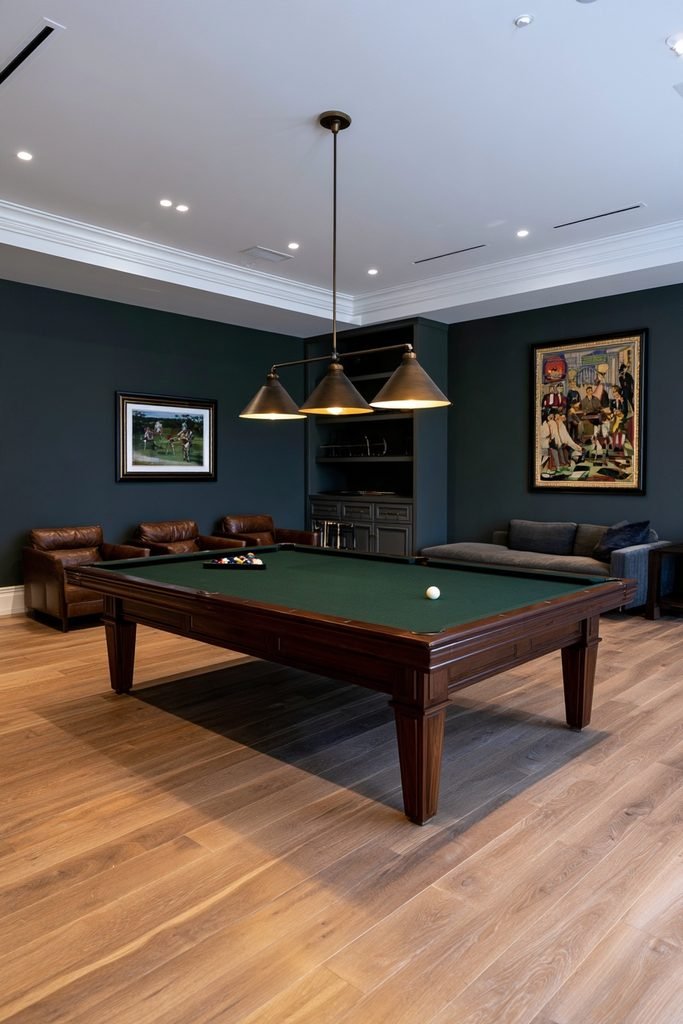
A pool table can anchor a games room the way a sectional anchors a living room, giving the space one clear focal point to build around. Brunswick Billiards recommends measuring the room before buying, since an 8-foot table needs roughly 13’4″ x 17′ of clearance for a standard 58-inch cue.
Size the Room Around Cue Clearance
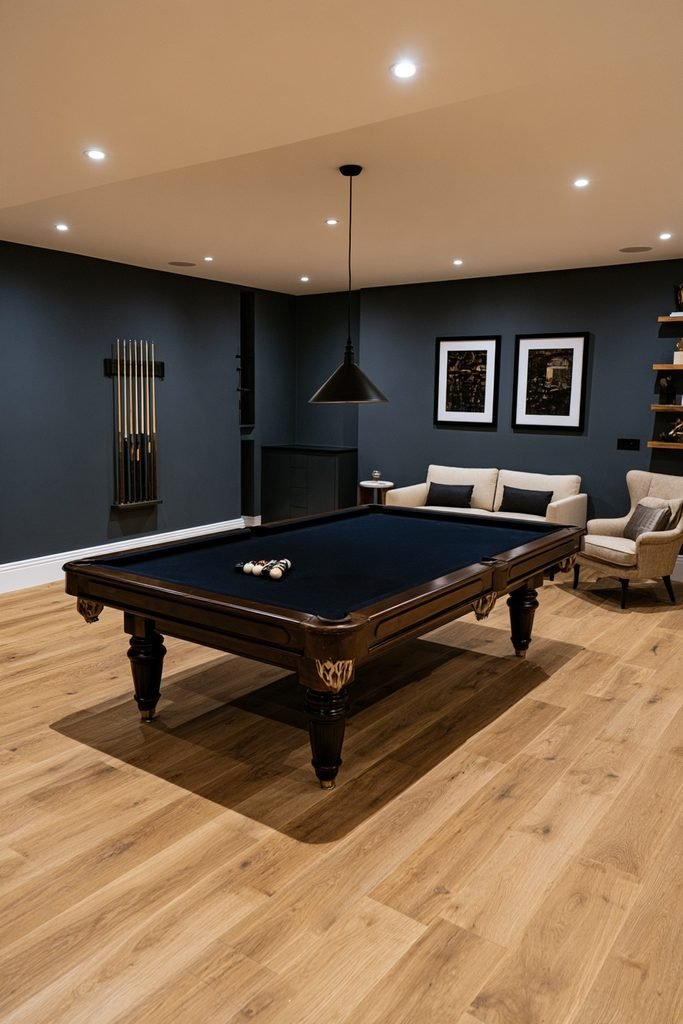
Playing surface size matters less than the clearance around it, since a cramped cue swing can ruin the game no matter how nice the table looks. According to Dr. Dave Pool Info, an 8-foot table has an 88 x 44-inch playing surface, while a 9-foot tournament table jumps to 100 x 50 inches, so a shorter cue can help bridge a tighter room.
Add a Compact Foosball Table
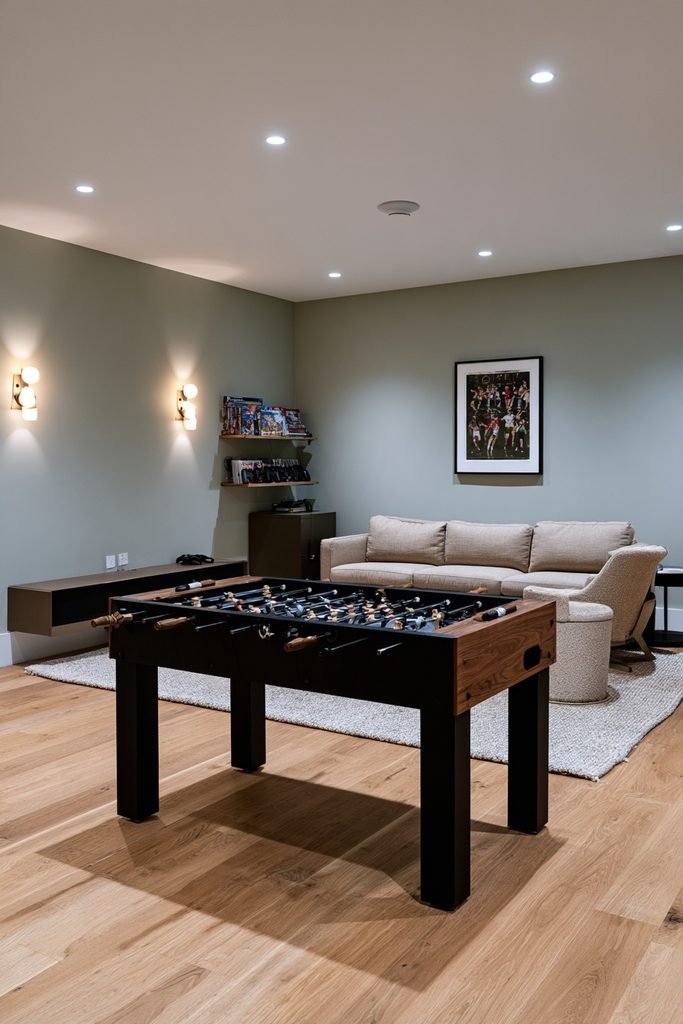
Foosball can fill the role a full pool table can’t in a smaller games room, delivering fast matches without demanding a 17-foot-long footprint. Gameroomshop.com notes a standard foosball table runs about 56 inches long and 30 inches wide, though the rods extend outward during play, so leave extra clearance on each side.
Mount a Regulation Dartboard
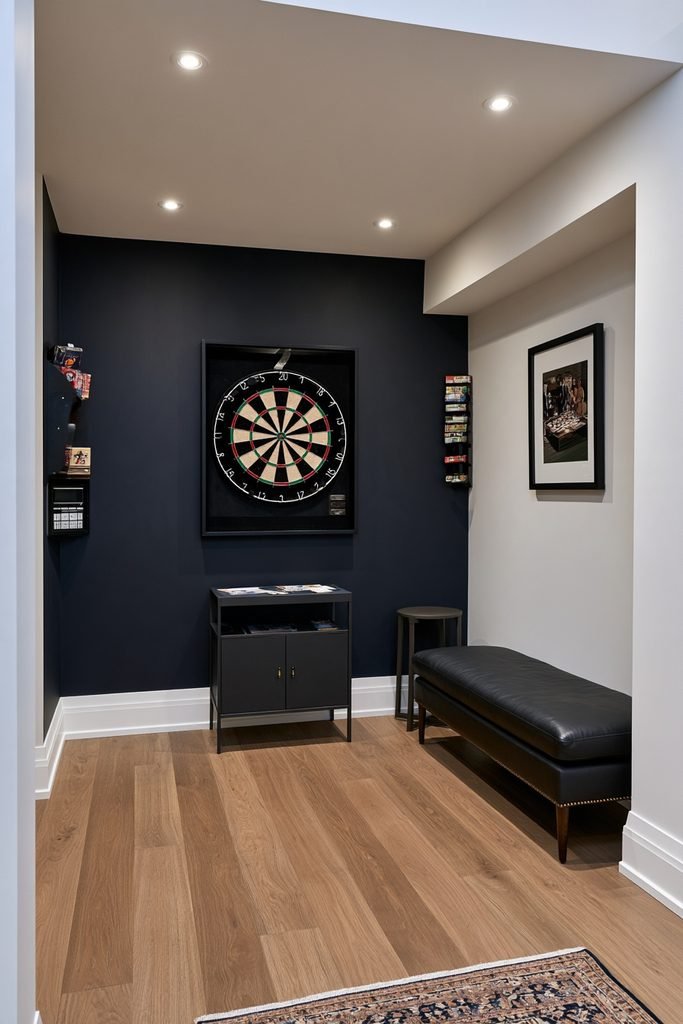
A dartboard adds a low-footprint game that can work even in a converted closet or hallway nook. GLD Products sets regulation height at 5’8″ from floor to bullseye, with a steel-tip throw line 7’9 1/4″ away, so hanging it precisely from the start keeps games fair for every player.
Keep Dartboard Lighting Shadow-Free
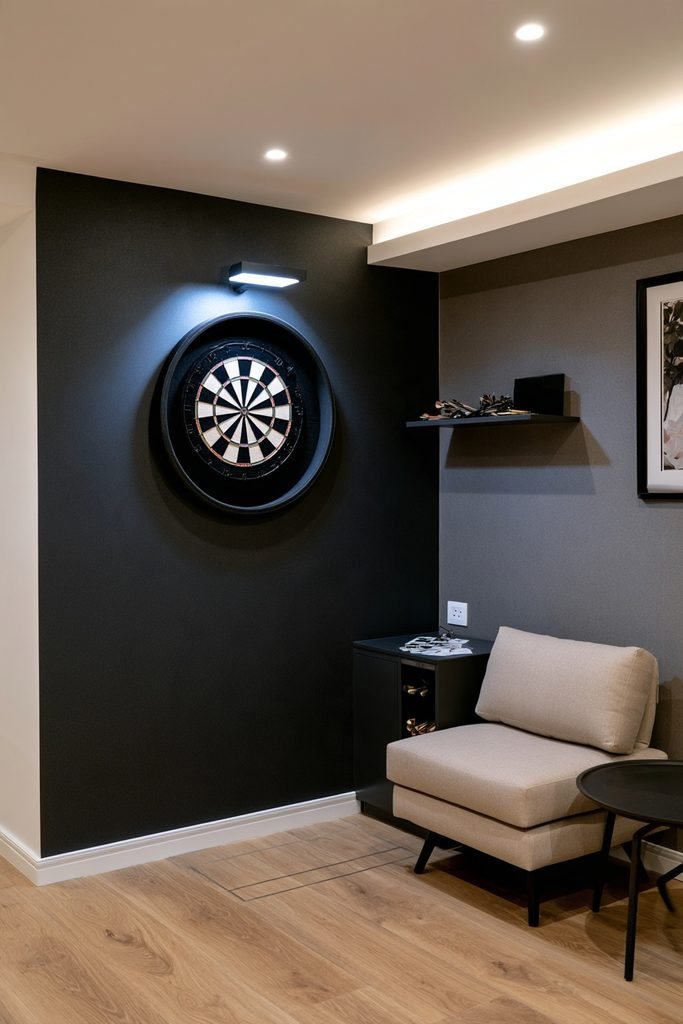
Lighting can make or break dartboard accuracy, since shadows across the board throw off aim more than most players realize. CAVES recommends bright, even, shadow-free lighting over the board, paired with a protective surround to catch stray tips.
Bring In a Foldaway Ping Pong Table
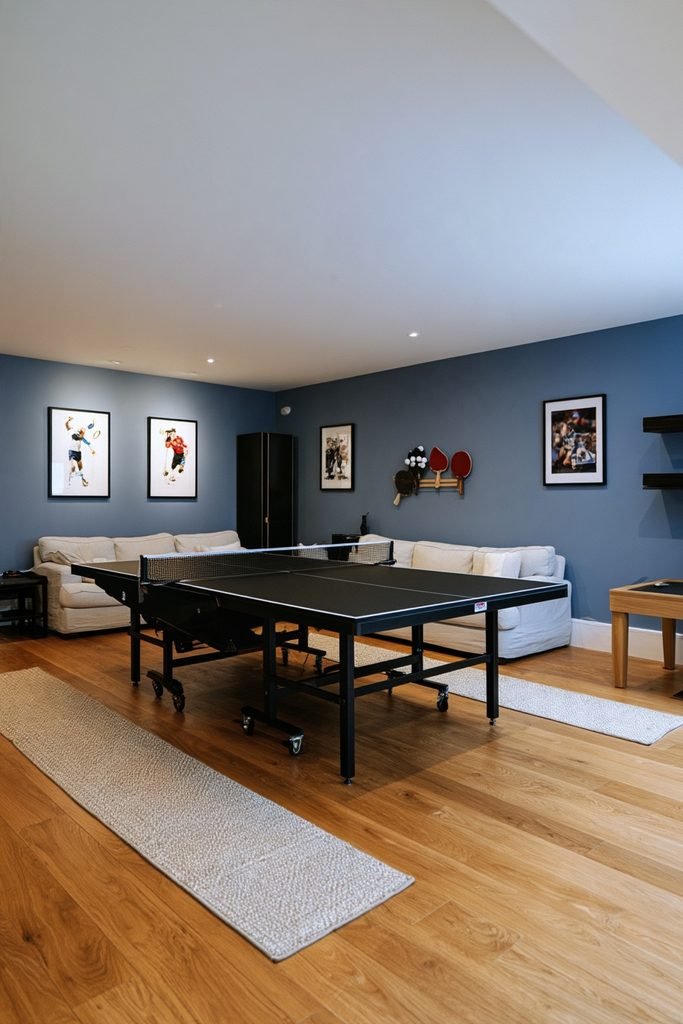
A ping pong table with folding legs can double as extra floor space when it’s not game night, which matters most in multi-use rooms. Choose a model with locking wheels so it tucks against a wall without sliding, and pair it with wall-mounted paddle and ball storage to keep the surface clear.
Install a Tabletop Shuffleboard
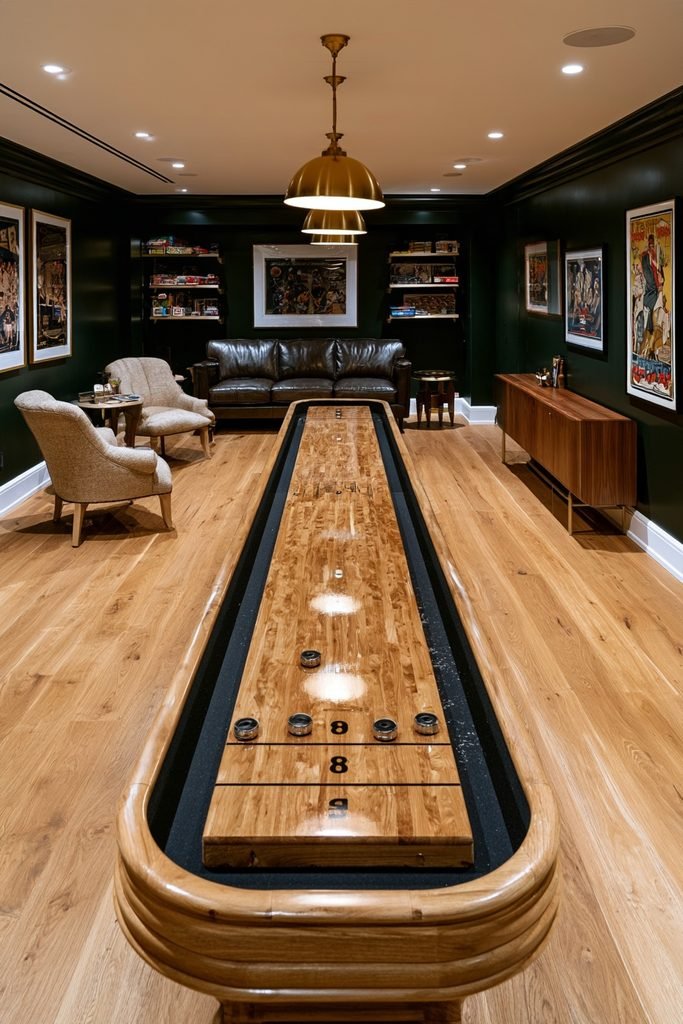
Shuffleboard can bring a lounge feel to a games room without the bulk of a pool table, since most home tables run narrower and can slide flush against a wall when not in use. A honed hardwood or laminate surface holds up best, and a light coat of shuffleboard wax keeps the weights gliding smoothly.
Go Retro With a Pinball Machine
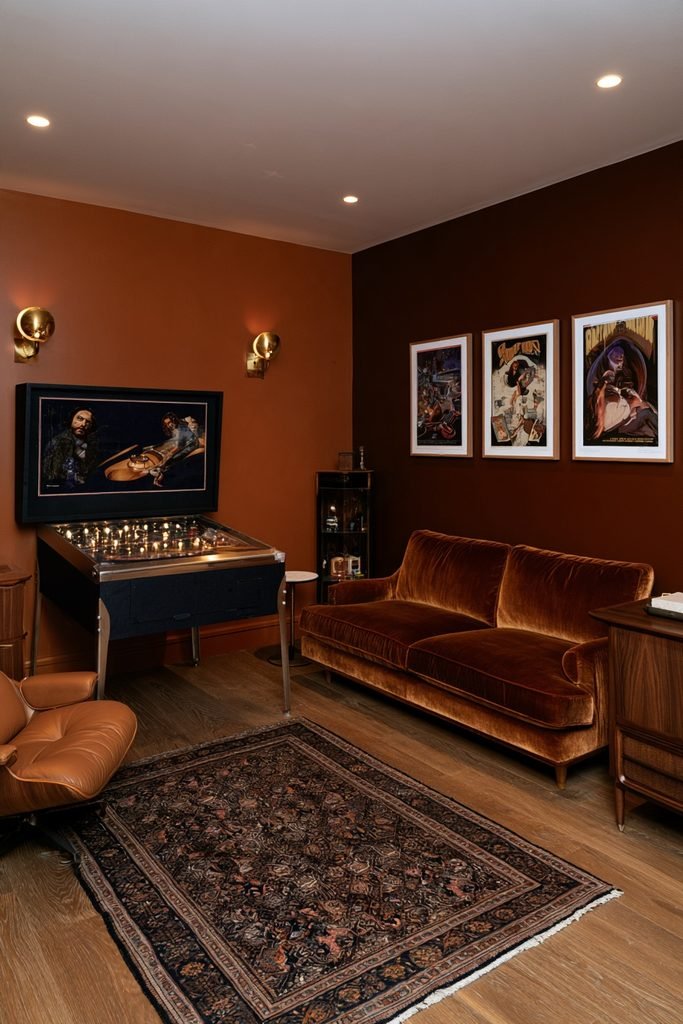
A pinball machine can become the visual centerpiece of a retro-themed games room, especially when paired with a cohesive color palette. Jersey Jackpin suggests leaning into a single era or theme throughout the space, from red-and-white circus tones to charcoal-and-chrome for a more modern arcade feel.
Build an Arcade Cabinet Corner
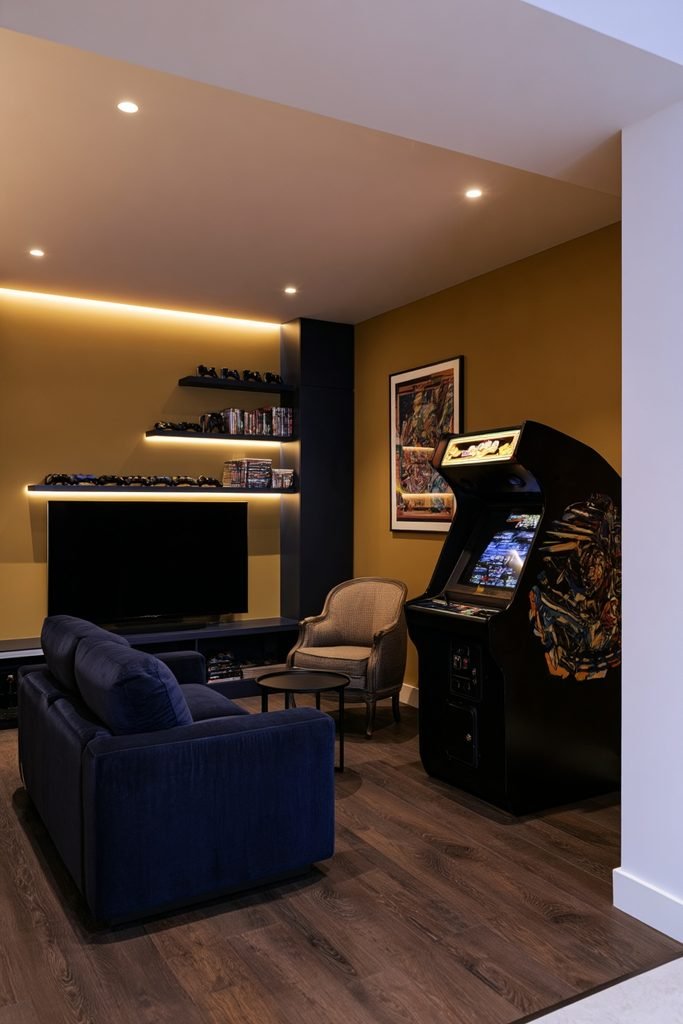
Stand-up arcade cabinets can turn one corner of a games room into a mini arcade without eating up the whole floor plan. Multi-game cabinets loaded with classic titles maximize variety per square foot, and angling the cabinet toward the seating area helps it read as part of the room rather than an afterthought.
Add a Card Table for Game Nights
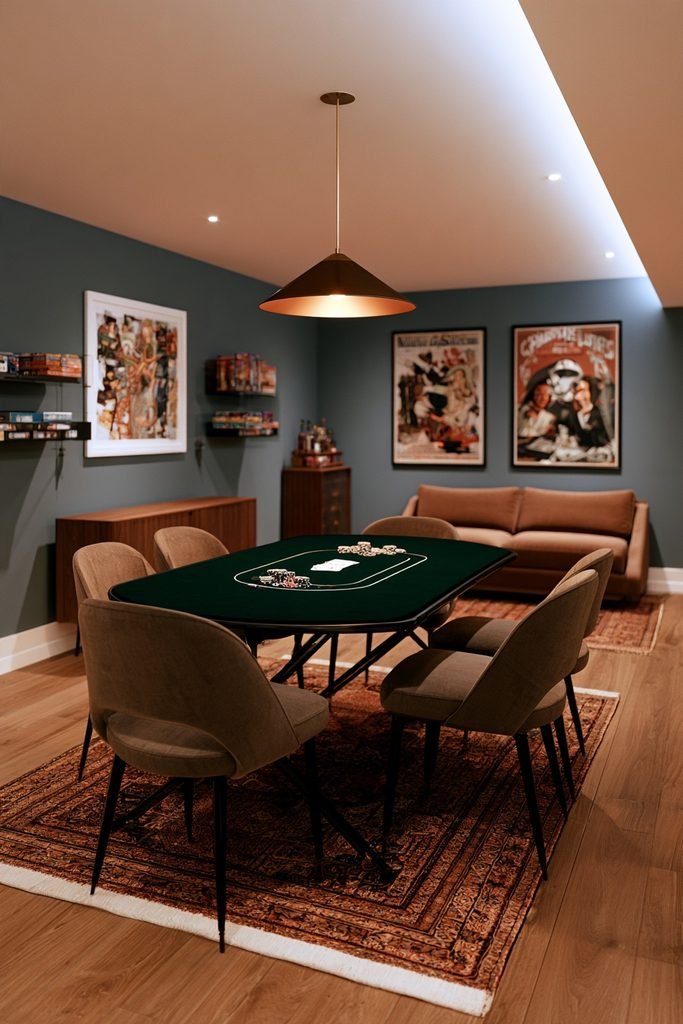
A folding card table gives a games room flexible seating for poker night, trivia, or puzzles without committing permanent floor space. A felt-topped table adds a casino feel for card games, while a wood-topped version can double as a puzzle or crafting surface.
Choose Acoustic Panels for Cleaner Sound
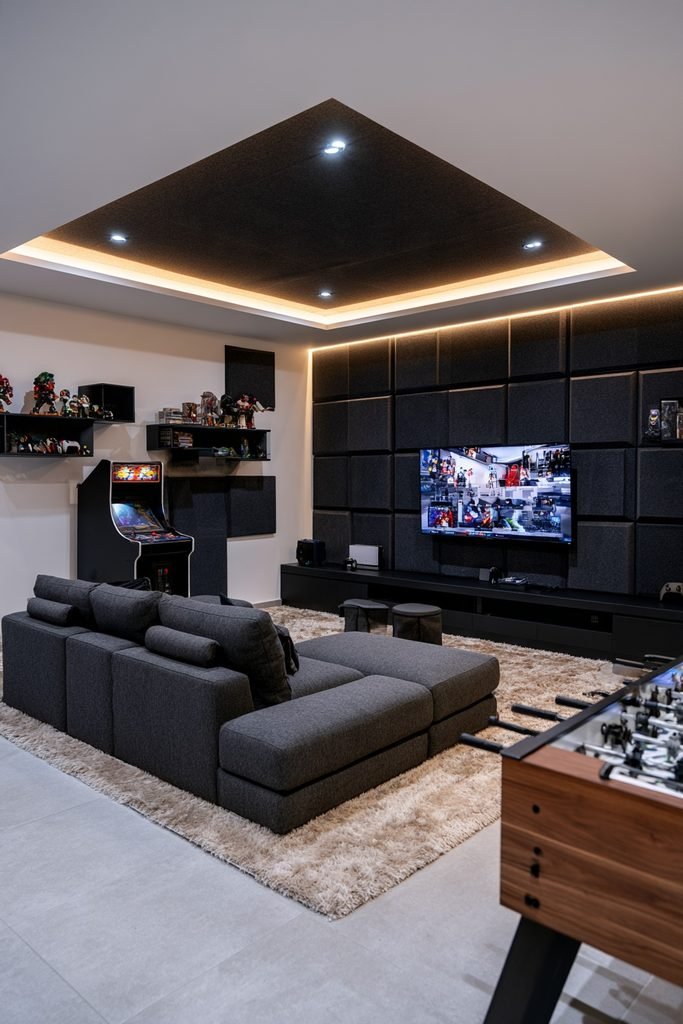
Acoustic panels can noticeably calm the echo in a games room full of hard floors and bare walls. Aeco-sound.com notes that high-density felt panels can absorb up to 90% of disturbing noise and significantly reduce reverb, which matters most in rooms with a subwoofer or loud arcade cabinets.
Cover Reflection Points, Not Full Walls
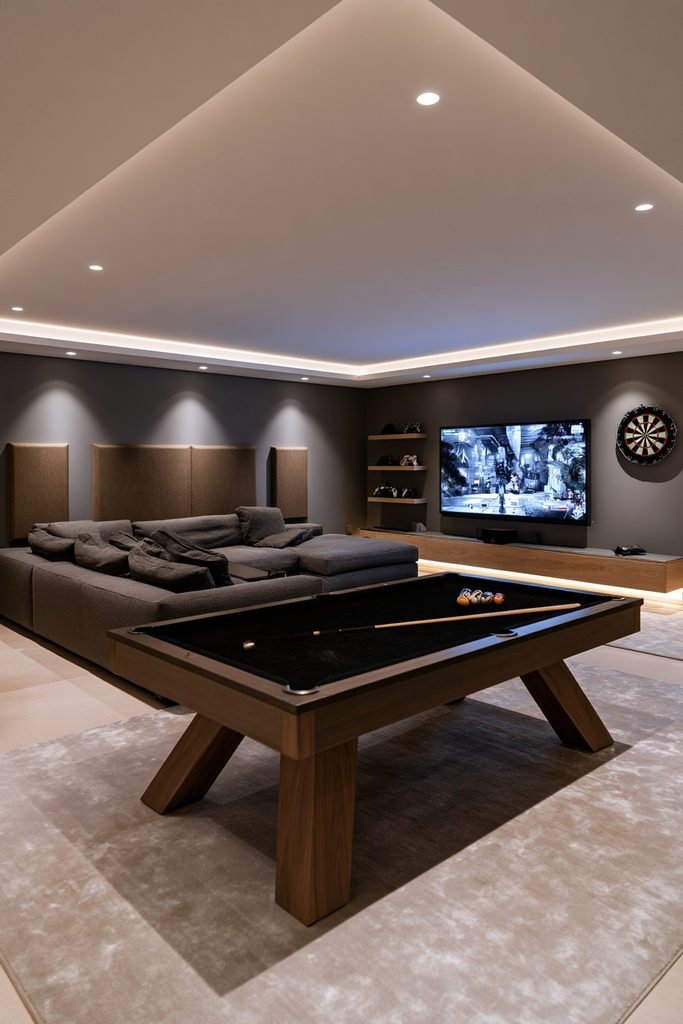
Acoustic treatment doesn’t require covering every wall, since a strategic approach works nearly as well as a full buildout. SoundAssured recommends covering 20 to 30% of wall space, focused on the points where sound bounces directly between the seating area and the nearest hard surface.
Pick a Projector Over a Wall-Mounted TV
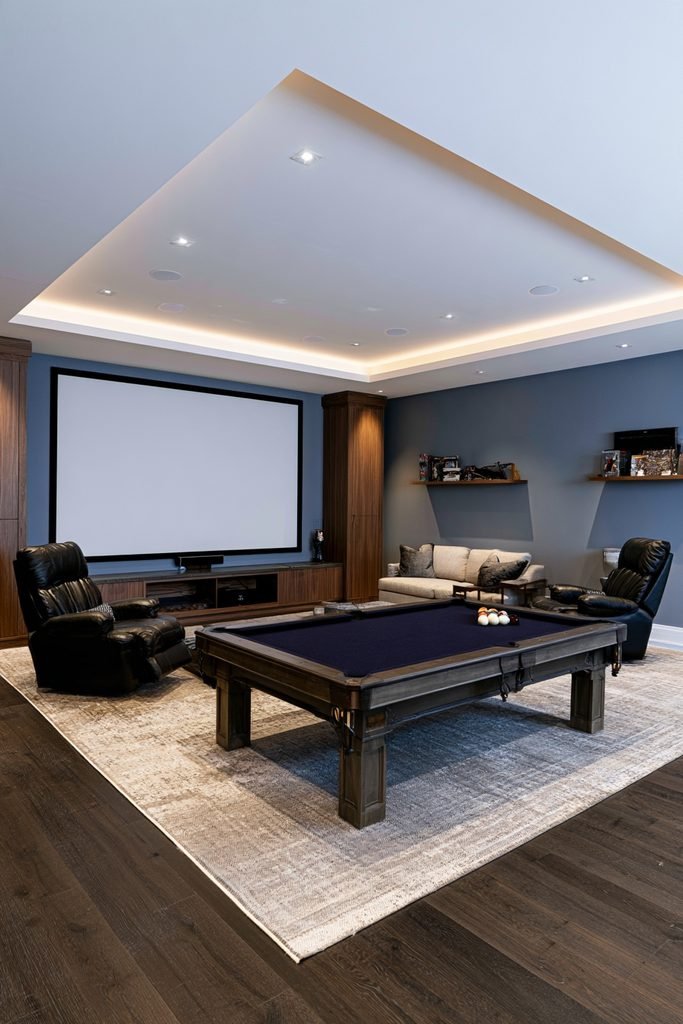
A projector and drop-down screen can free up wall space a large TV console would otherwise claim, which helps in rooms already crowded with game tables. A screen that retracts into the ceiling keeps the room feeling open between movie nights and tournament play.
Build Tiered or Theater-Style Seating
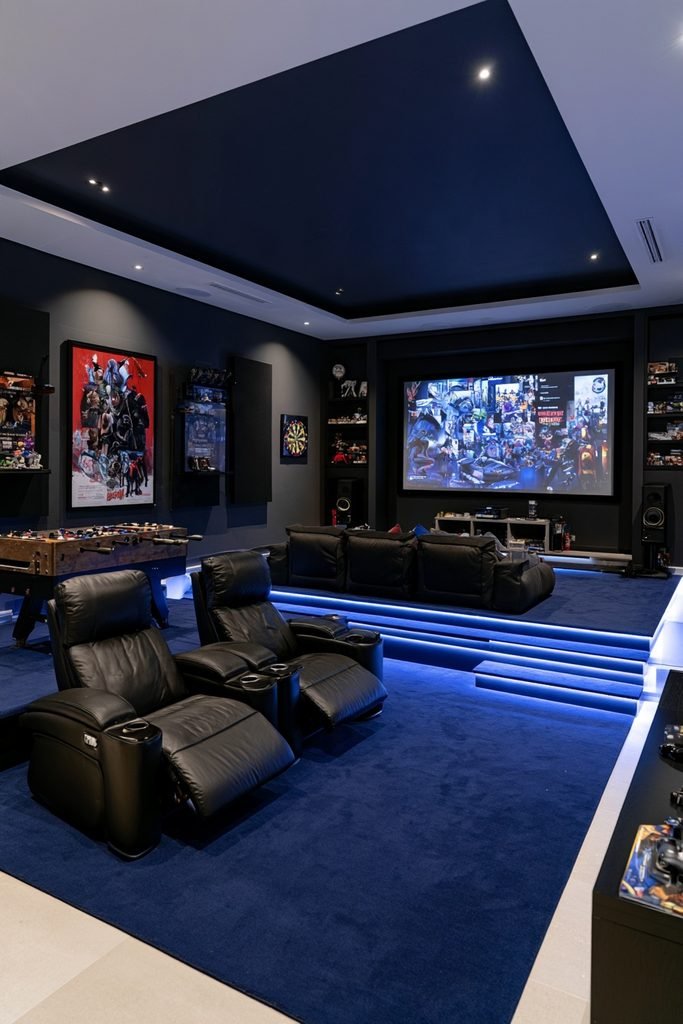
Tiered seating can turn a games room into a proper viewing space for sports or movie nights, giving every seat a clear sightline to the screen. HGTV features games rooms with reclining chairs and counter-height barstool seating layered across two levels, a setup that works especially well in a converted basement with room to build a platform.
Add a Sectional for Group Hangouts
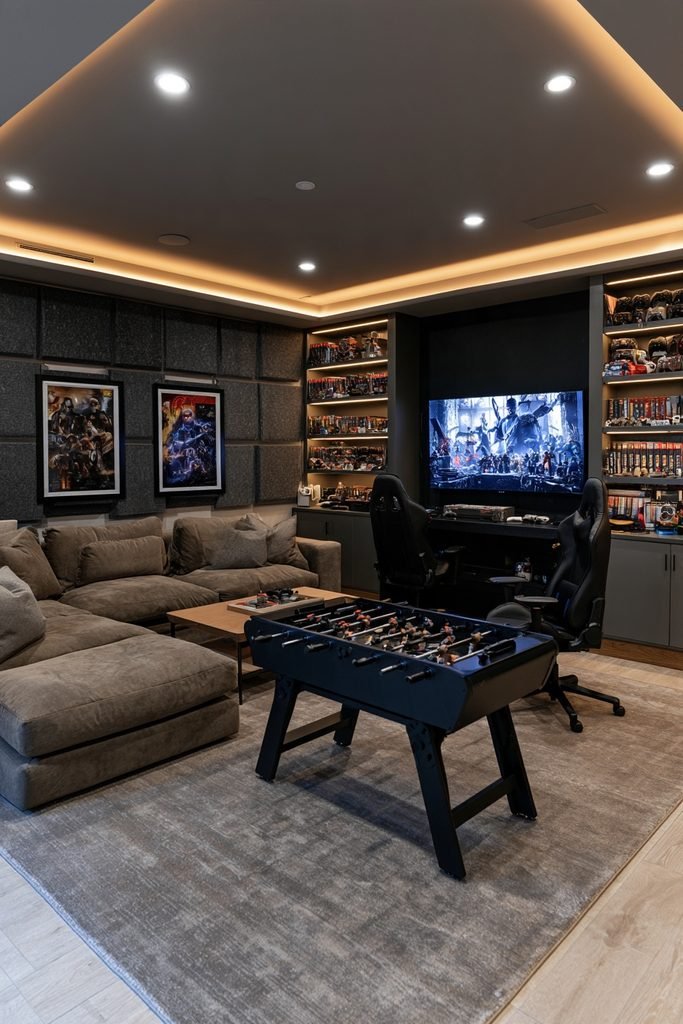
A deep sectional can seat a crowd for game night while still leaving floor space open for a table or console. An L-shaped or U-shaped layout works especially well along one wall, freeing the center of the room for active games like foosball or ping pong.
Bring In Bean Bags for Casual Seating
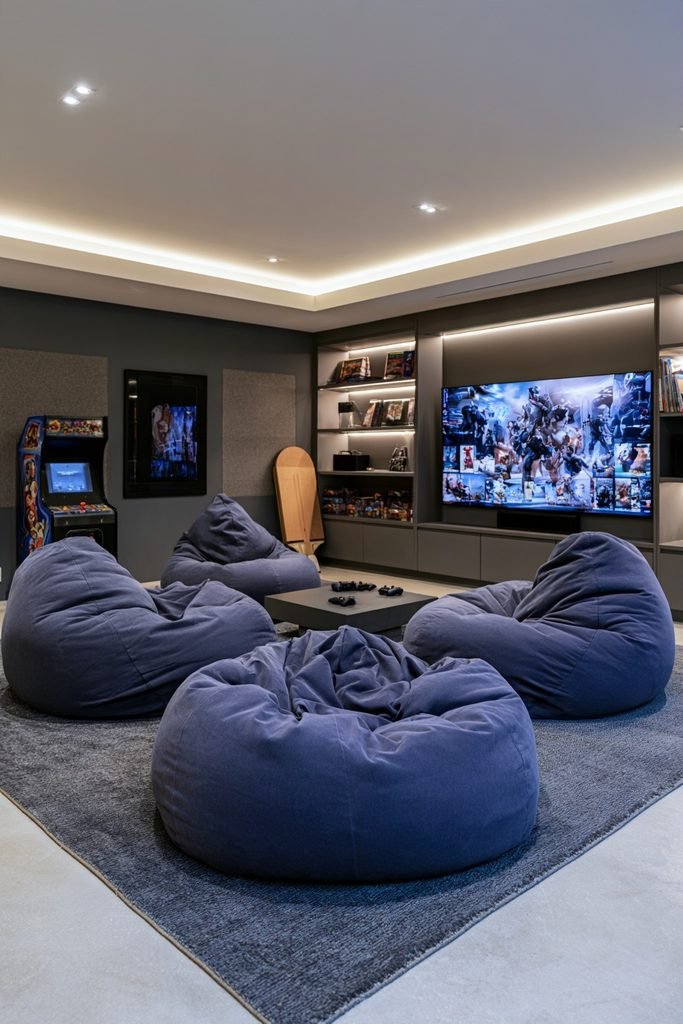
Bean bag chairs add low-commitment, easy-to-move seating that suits a more casual games room, especially one shared with kids. They tuck into a corner when not in use and can be reupholstered or replaced far more cheaply than a sofa as tastes change.
Install a Bar Cart or Wet Bar
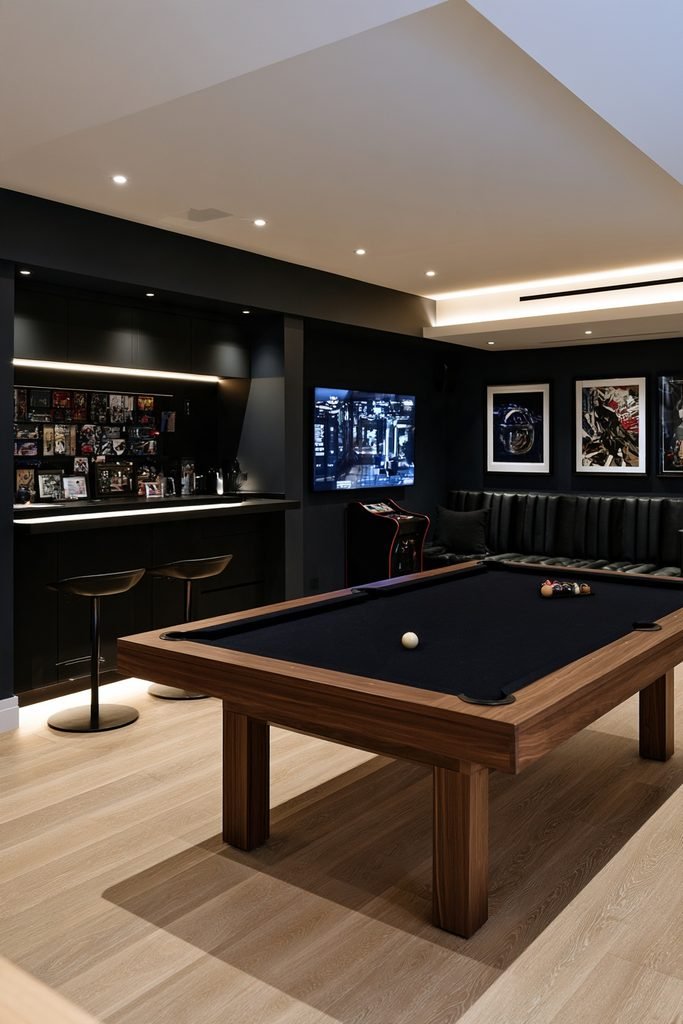
A dedicated bar area gives a games room a natural gathering point outside the game tables themselves. Jersey Jackpin recommends a bar for entertaining and snacking, positioned along a wall that doesn’t interrupt sightlines to the pool table or screen.
Add a Mini-Fridge for Drinks and Snacks
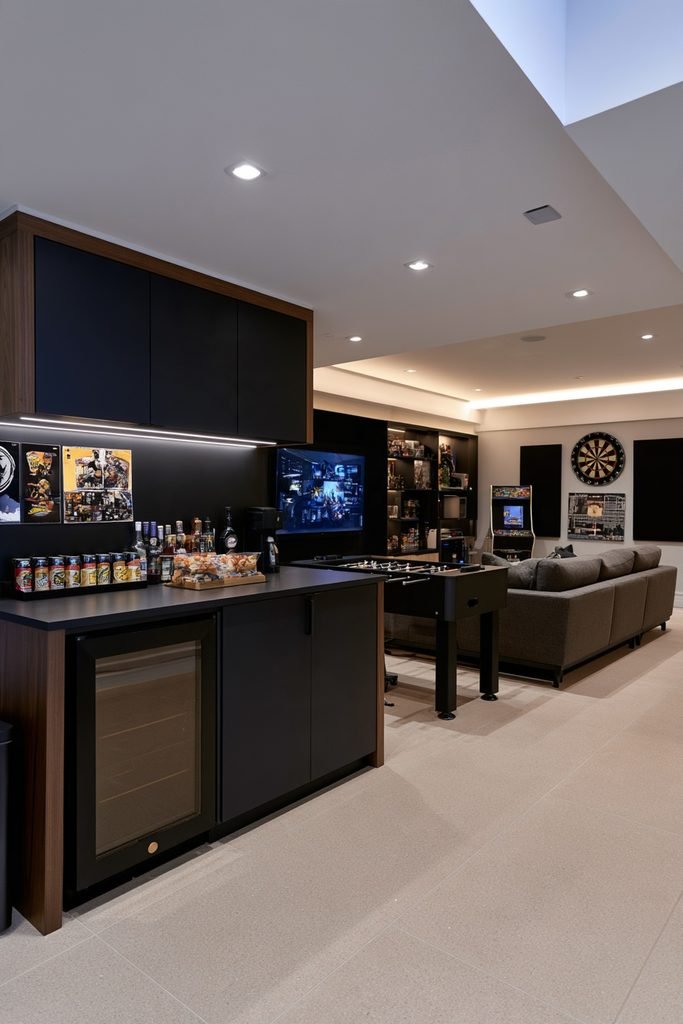
A mini-fridge keeps drinks and snacks within reach without anyone leaving mid-game. The Home Depot‘s game room guide points to a dedicated snack station stocked with cold beverages as one of the simplest upgrades for keeping guests comfortable through a long tournament.
Choose Colorful, Theme-Driven Paint
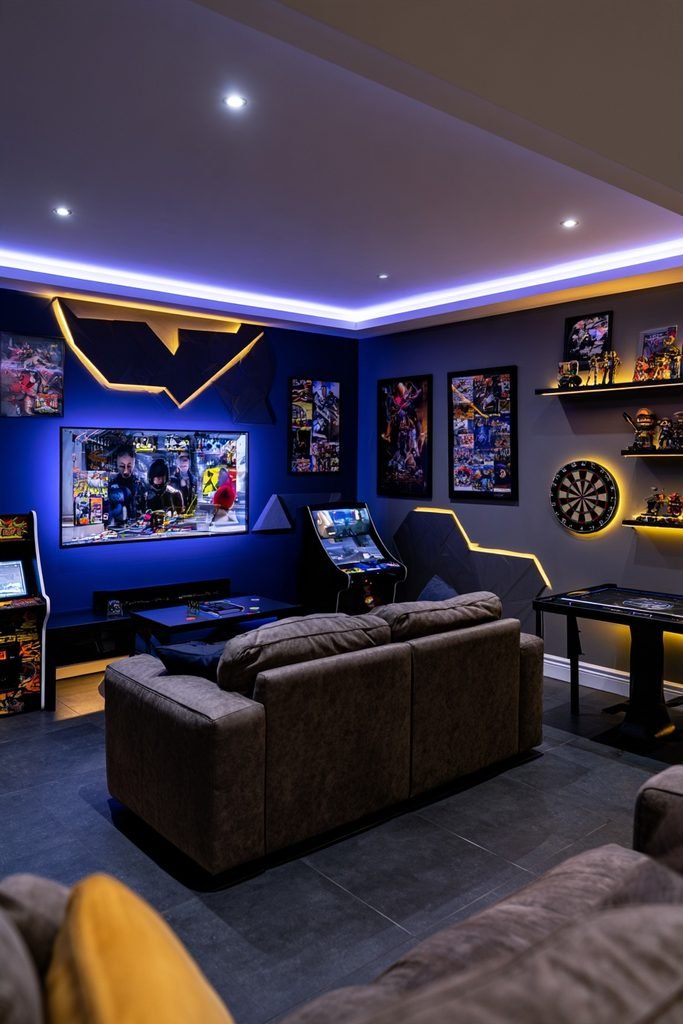
Paint can set the tone for an entire games room faster than any single piece of furniture. Jersey Jackpin suggests a cohesive palette built around the room’s theme, whether that’s charcoal and chrome for a modern setup or neon yellow as a nod to classic arcade games.
Add Neon or LED Accent Lighting
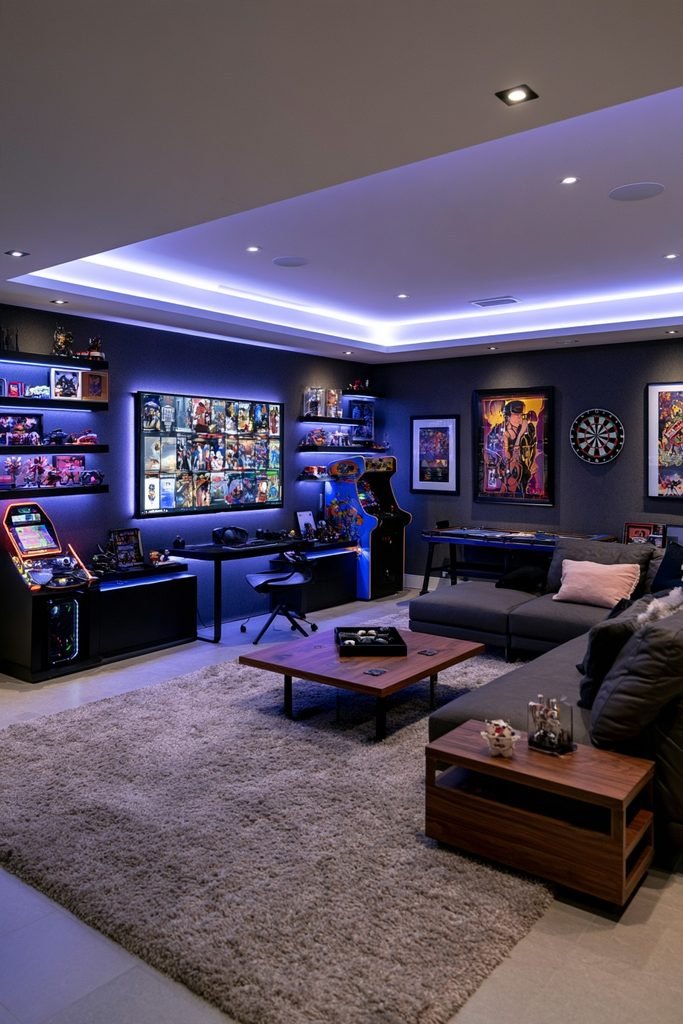
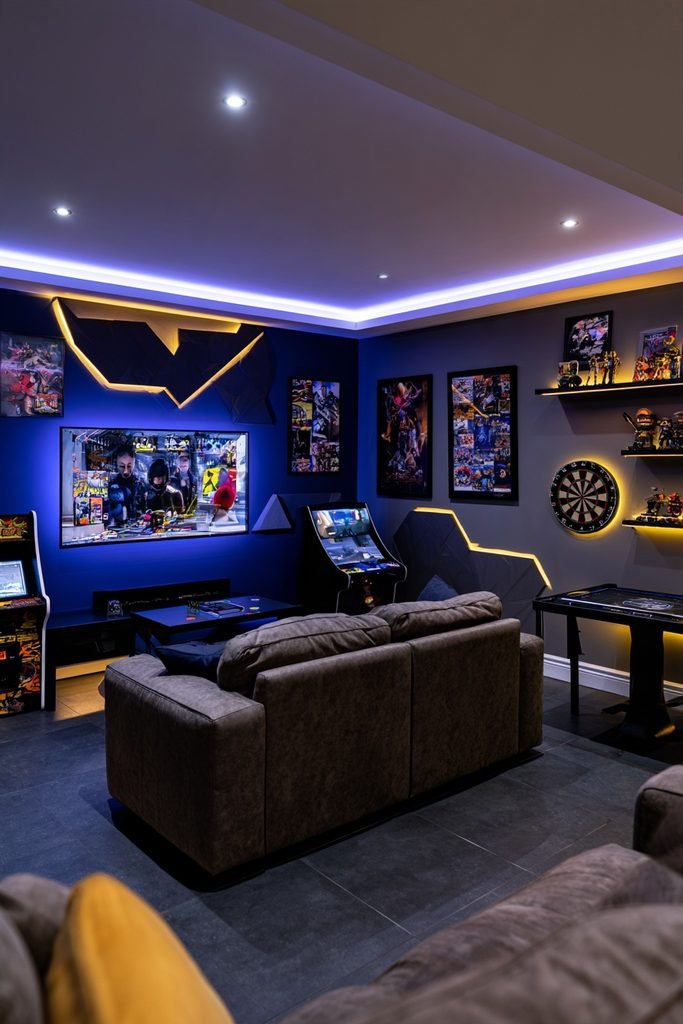
LED strip lighting behind shelving or along a bar can give a games room an arcade glow without the cost of a full lighting renovation. Color-changing strips can shift the mood from a bright daytime hangout to a moodier setup for late-night tournaments.
Hang Framed Vintage Game Posters
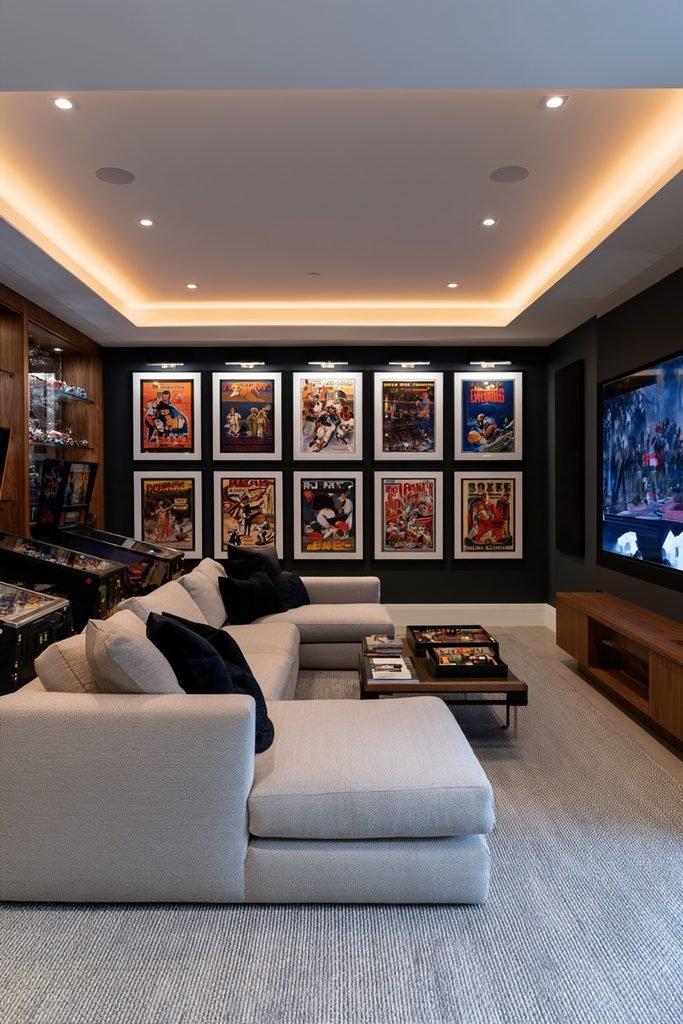
Framed vintage posters can add personality to a games room without competing with the game tables for attention. Houzz points to framed vintage movie, city, or sports posters as a way to feel playful yet sophisticated rather than cluttered.
Display Collectibles and Memorabilia
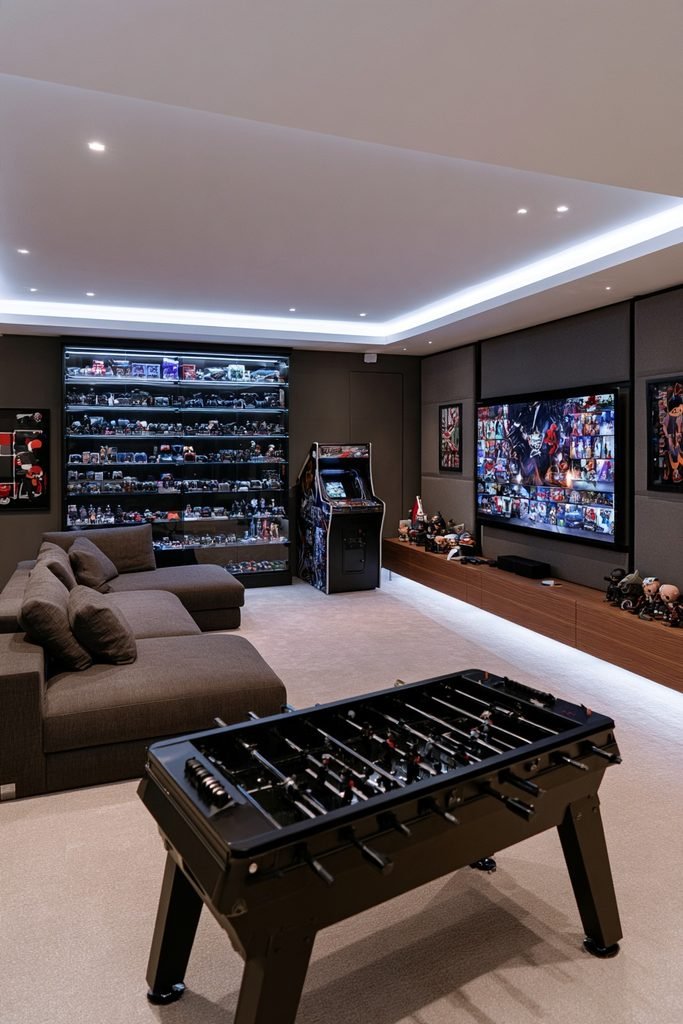
A games room built around a favorite hobby or console generation can use collectibles as decor rather than storing them away. Mark’s Magic recommends building the whole vibe of the space around favorite games through wall art, posters, and small props, blending multiple themes for a personal, layered look.
Use Glass Dividers for Open-Plan Spaces
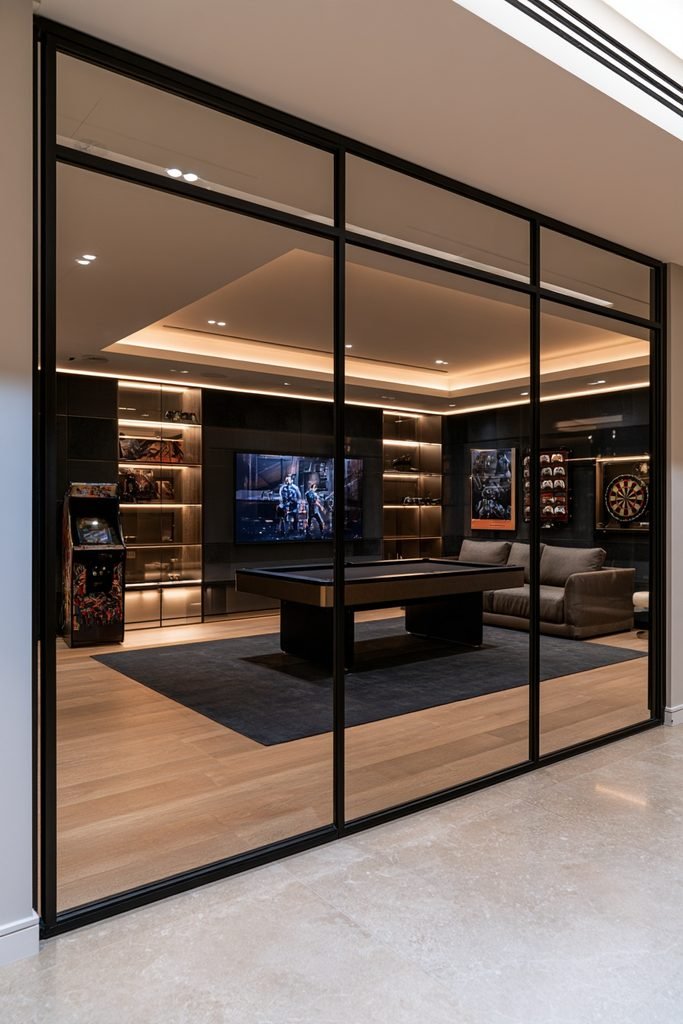
Glass dividers can carve a games room out of a larger open-plan space without closing it off completely or blocking natural light. Jersey Jackpin suggests choosing a divider style that reflects the room’s theme or era, from sleek black frames to more ornate vintage-style mullions.
Convert a Garage Into a Family Game Room
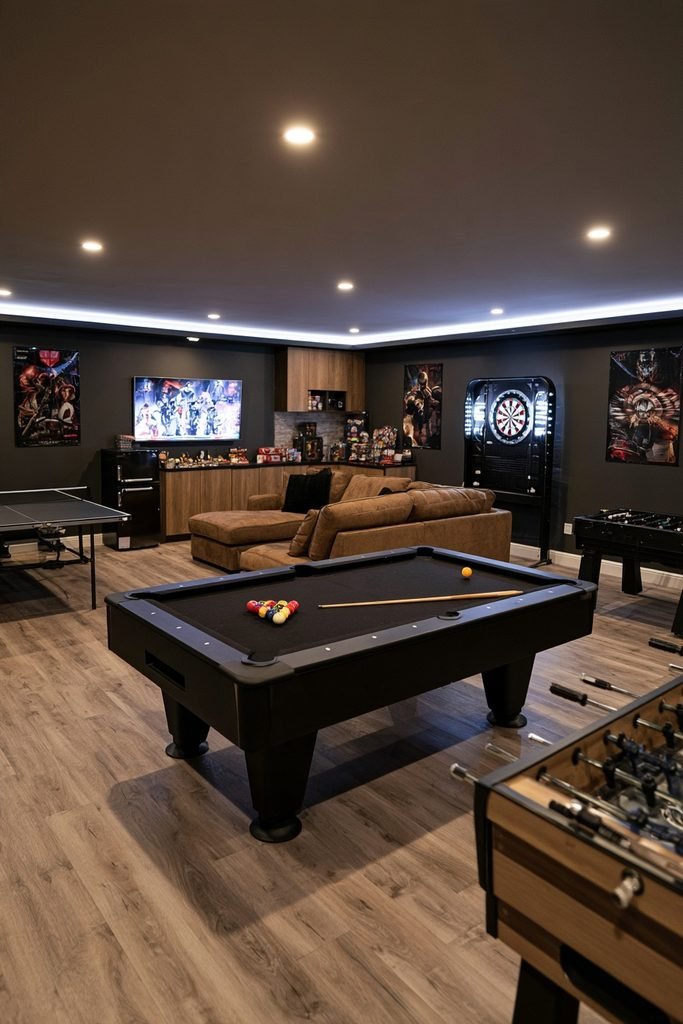
A garage can become a full family games room with the right flooring, insulation, and seating, all while keeping gaming equipment and accessories stored in the remaining space. Planner5D notes that a well-insulated garage games room works especially well for families who want a space dedicated to bonding over game night.
Frequently Asked Questions
How much space does a home games room need?
It depends on which games take priority, but a room built around an 8-foot pool table needs roughly 13 x 17 feet for comfortable cue clearance. Smaller footprints can still work well with a foosball table, dartboard, or folding ping pong table instead.
What’s the cheapest way to upgrade a games room?
Paint, lighting, and a rug are usually the least expensive changes with the biggest visual impact. Bean bags and folding tables also add seating and play surfaces without the cost of built-in furniture.
Do acoustic panels actually stop noise from leaving a room?
Not entirely. Acoustic panels absorb sound reflecting inside the room and reduce echo, but blocking sound from traveling to neighboring rooms requires denser materials like mass-loaded vinyl or a decoupled wall system.
What’s the best flooring for a games room?
Durable, easy-to-clean flooring works best under game tables and heavy foot traffic. Options like vinyl plank, tile, or a low-pile rug over hardwood can handle spills and rolling furniture better than carpet does.