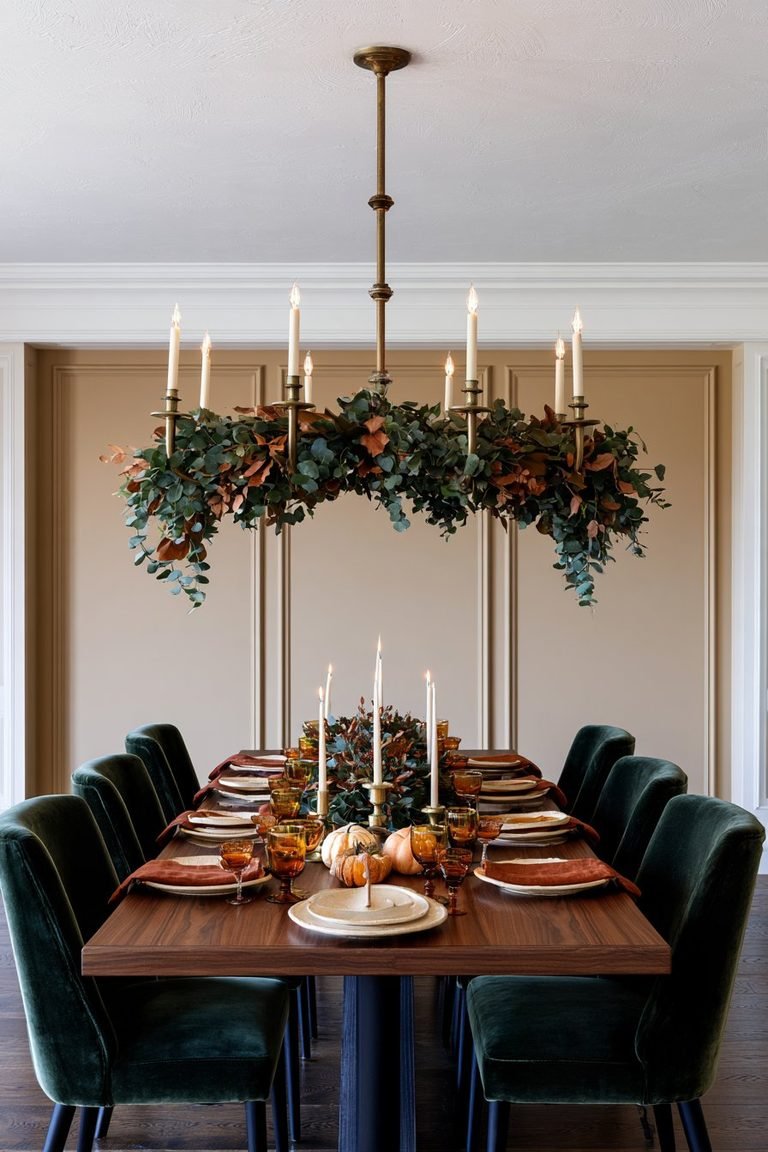
Dado rails have moved well beyond their period-house origins and back into modern renovation plans. Homebuilding notes the moulding has been a fashionable home detail since the 18th century, and interest in it has surged again in recent years. Also known as a chair rail, a dado rail is a horizontal moulding fixed around the perimeter of a room, traditionally placed to protect walls from furniture.
From bold colour blocking to quiet period restoration, the detail can suit almost any style of home. These 26 dado rail ideas cover colour pairings, materials, and placement options for hallways, staircases, and living spaces alike.
Classic One-Third Split
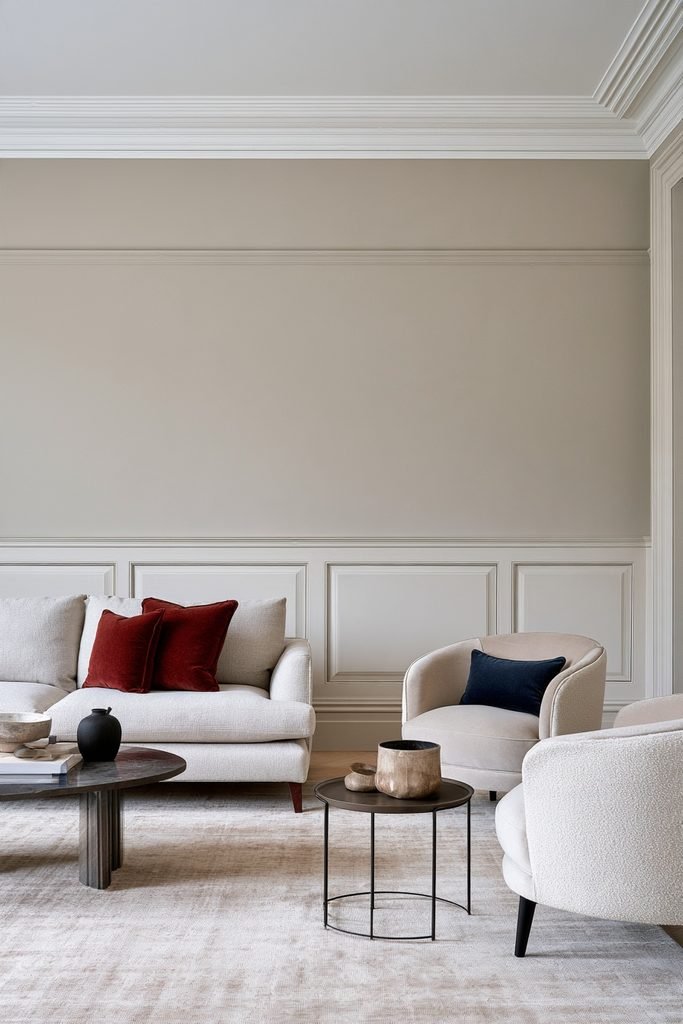
Position the rail roughly one-third of the way up the wall, the traditional dado height used to shield walls from chair backs. Naturewall notes this placement suits many different styles and works especially well when paired with wall panelling below.
Bold Two-Tone Colour Block
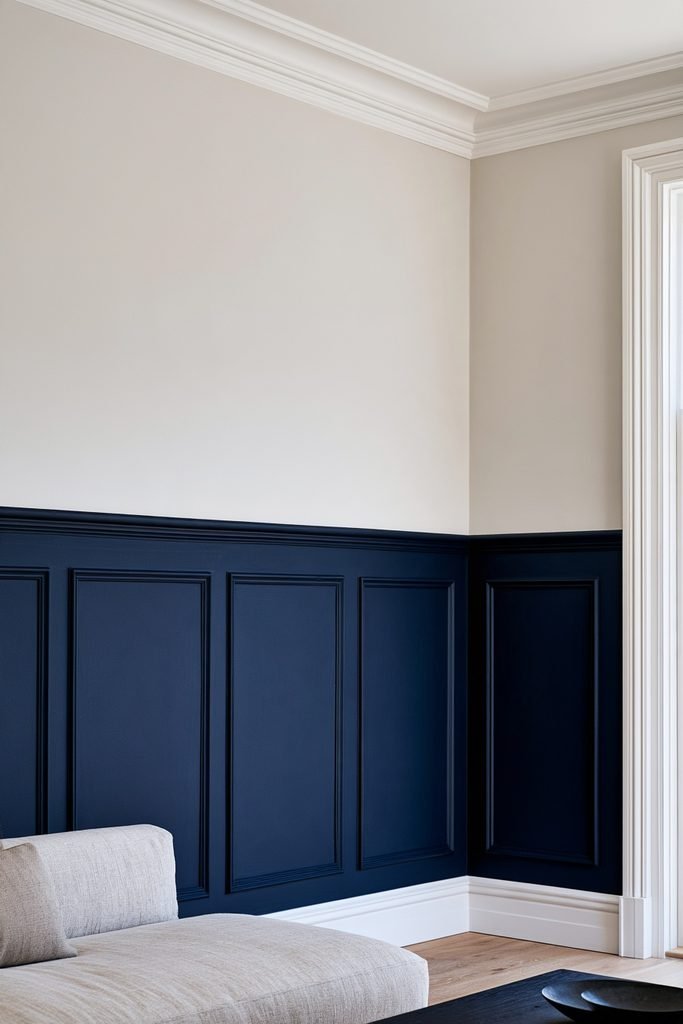
Paint the lower wall a deep, punchy shade and keep the upper wall lighter for contrast. Homebuilding points out that a darker lower half can add a sense of visual height to a room while the lighter upper section keeps it feeling open.
Wallpaper Above, Paint Below
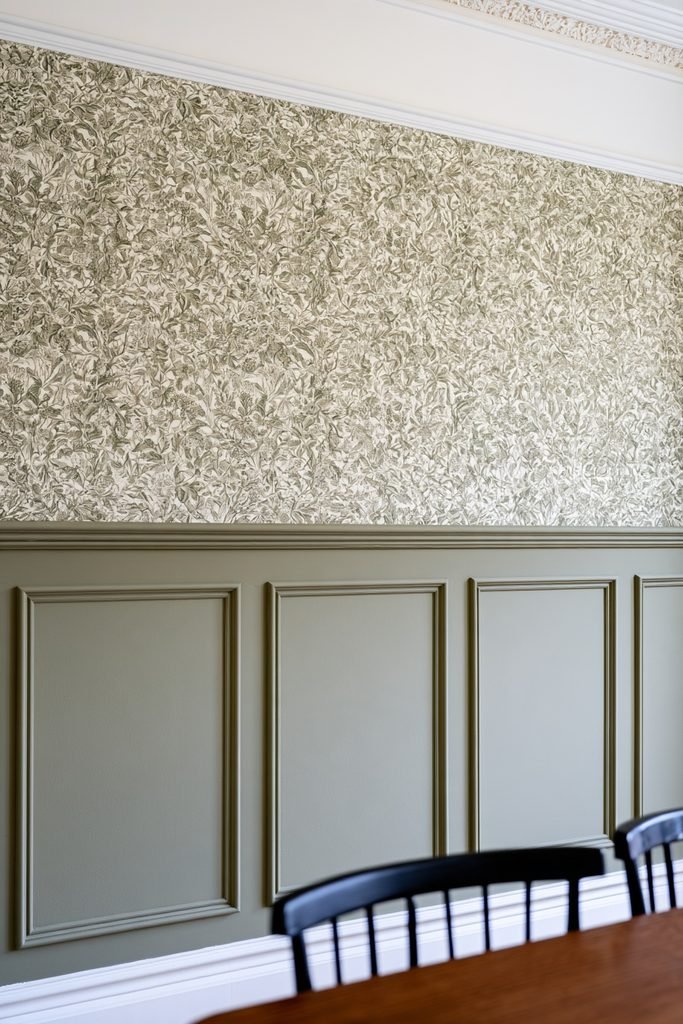
Pair a patterned or textured wallpaper above the rail with a solid, washable paint finish below. Naturewall suggests this combination as a way to add a stylish finish above the rail while keeping the lower panel practical.
Match Rail To Skirting
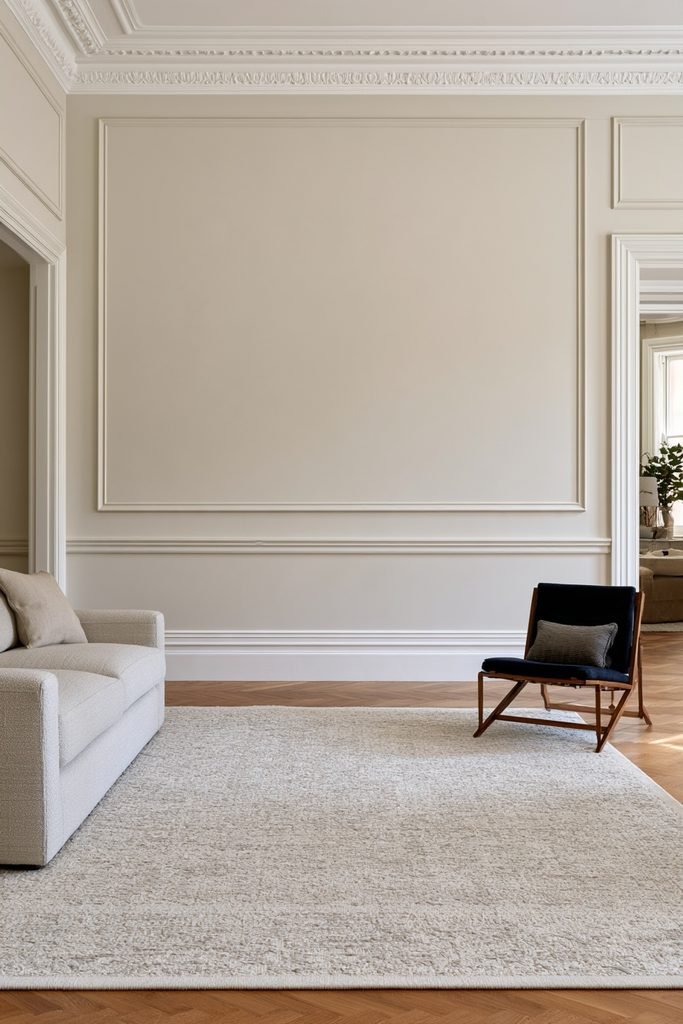
Paint the dado rail the same colour as the skirting board and door architrave for a cohesive, considered look. Homebuilding recommends mirroring the rail’s finish across the room’s other mouldings so the woodwork reads as one unified scheme.
Contrasting Rail Colour
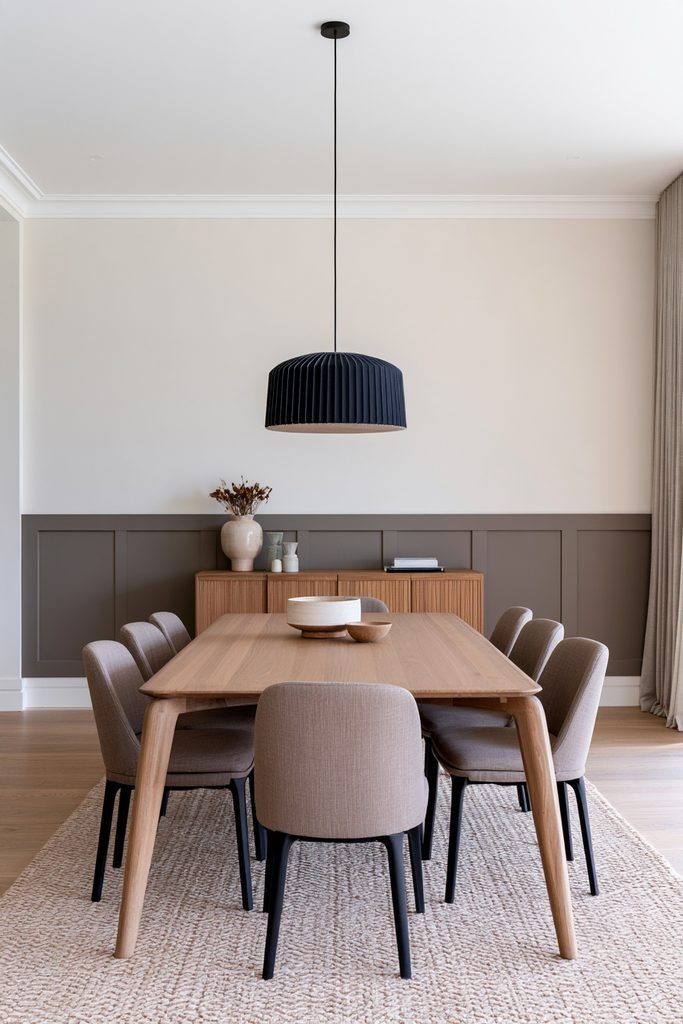
Pick a rail shade a few tones darker or lighter than the surrounding wall so the moulding reads as a deliberate feature. Skirting4U can finish rails in a custom RAL or Farrow & Ball colour match, making it easy to tie the rail to an existing palette.
Shaker Panelling Pairing
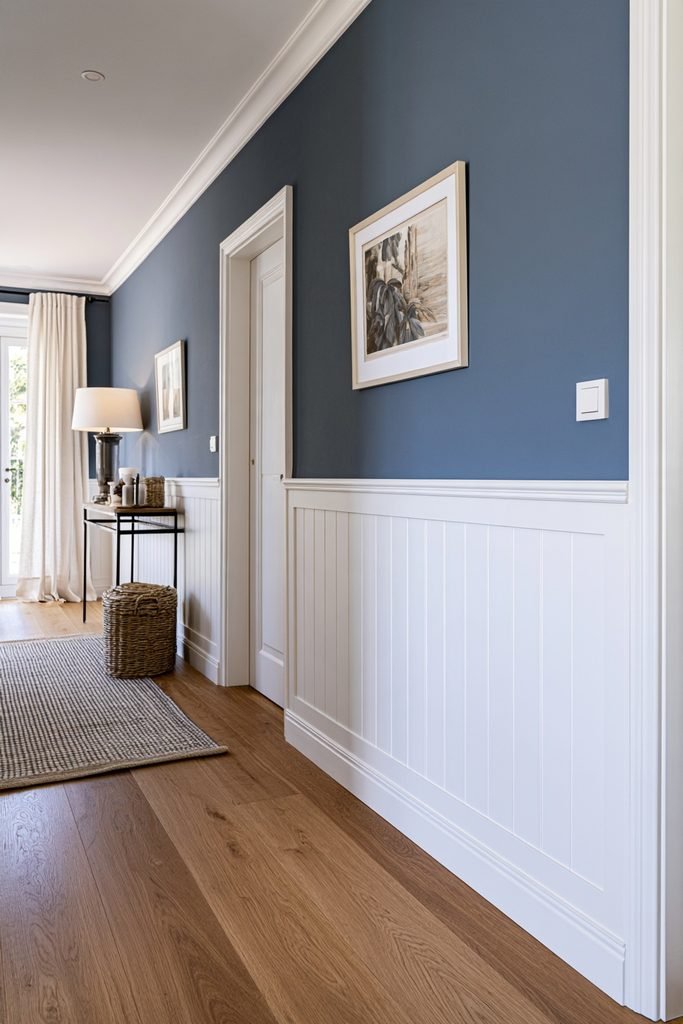
Combine the rail with simple shaker-style half-wall panelling for a look that suits both traditional and contemporary interiors. Skirting World notes shaker panelling appeals to those wanting a more contemporary finish than an ornate period profile.
Ornate Ogee Profile
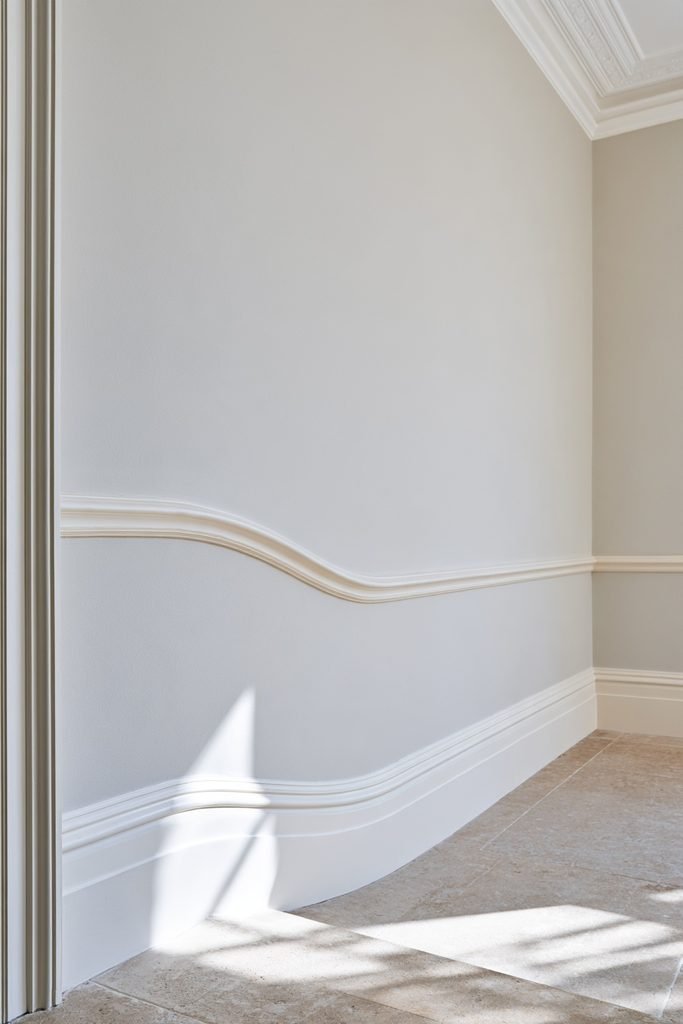
Choose an ornate, curved Ogee profile for a period property that calls for more decorative detailing. Skirting World points to profiles like the Ogee, which have historic roots in grand interiors from French chateaus to the Taj Mahal, as a fit for a distinctly classic scheme.
MDF Rail On A Budget
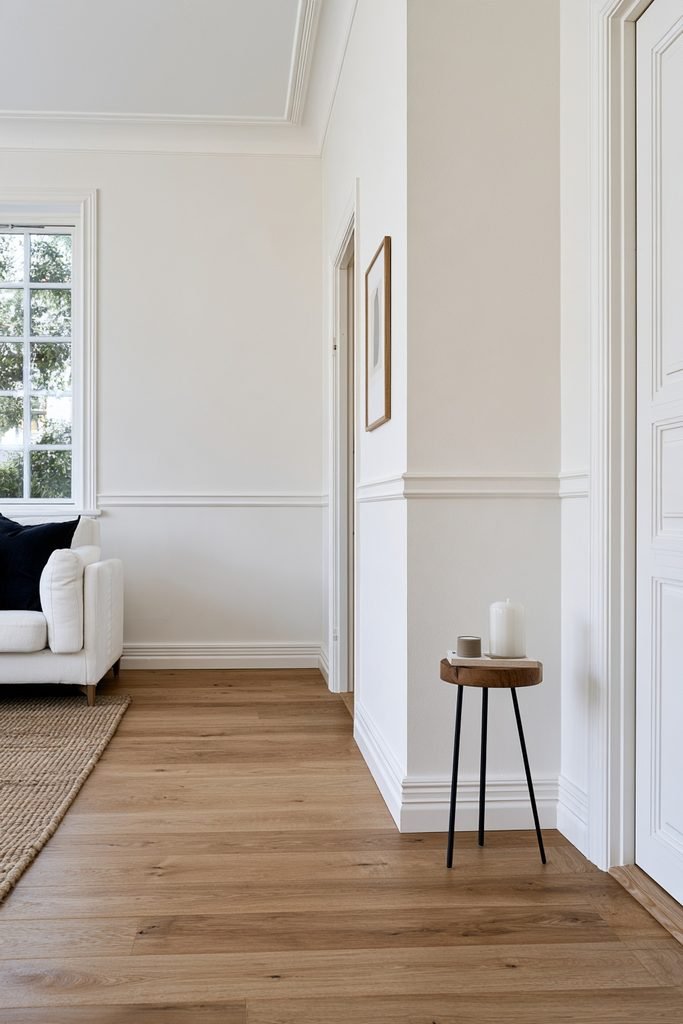
Opt for a high-density MDF or polystyrene rail instead of solid timber to keep material costs down. Homebuilding notes these lighter alternatives have made dado rails more accessible outside of period timber originals.
Tongue-and-Groove Below
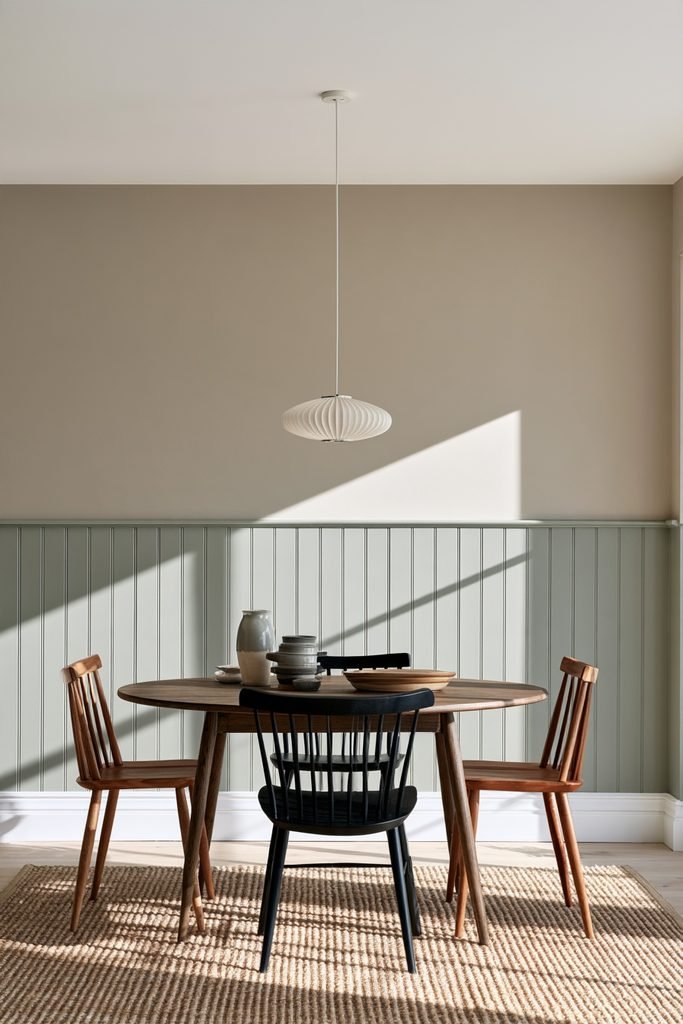
Fit tongue-and-groove panelling beneath the rail for added texture and a cottage-inspired finish. Naturewall pairs this treatment with wainscotting-style panels set below a painted or papered upper wall.
Narrow Hallway Trick
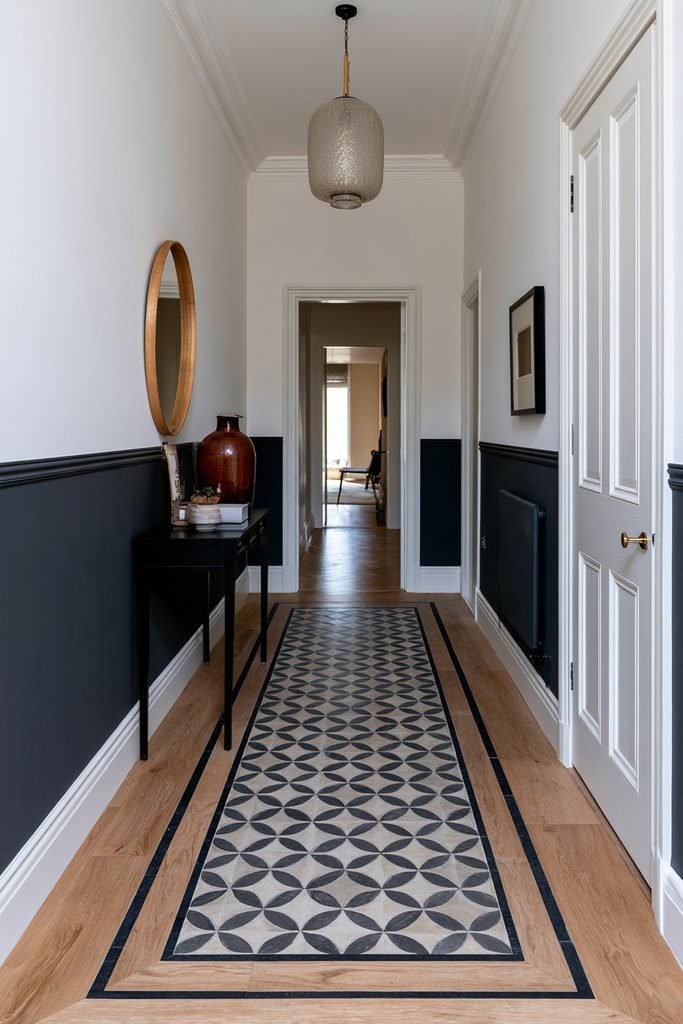
Use a contrasting colour block below the rail to visually widen a narrow hallway. A darker lower half combined with a lighter upper wall, as Homebuilding describes, can add a sense of height and structure to a tight space.
Picture Rail Pairing
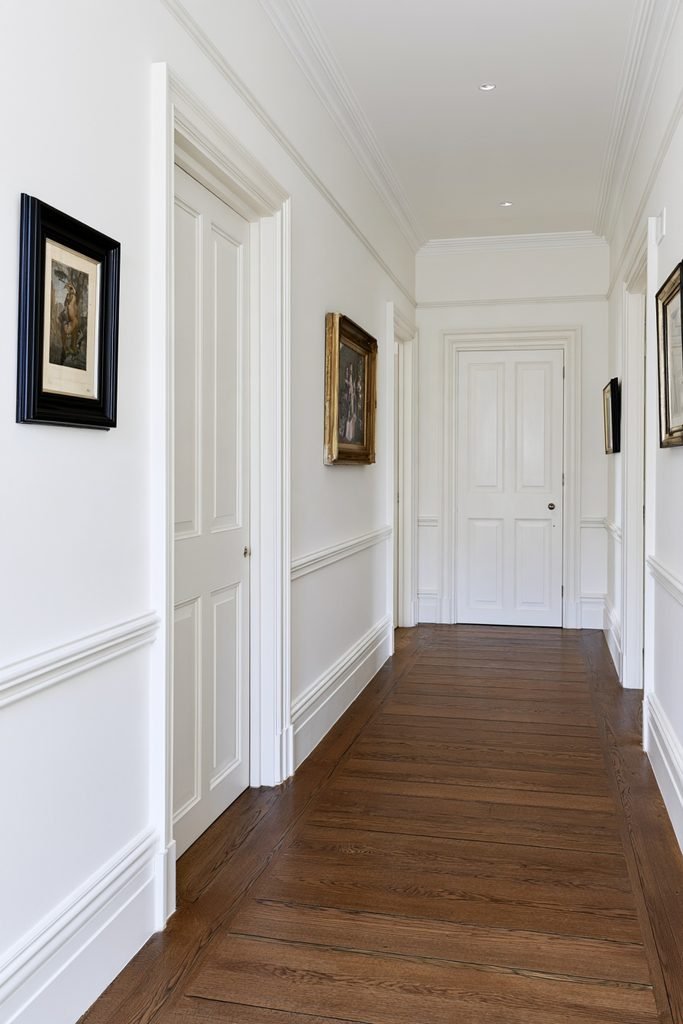
Combine a dado rail lower on the wall with a picture rail set higher, near door-frame height. Skirting4U notes picture rails were traditionally hung with hooks for art, mirrors, and plates without marking the wallpaper.
Gallery Ledge Feature
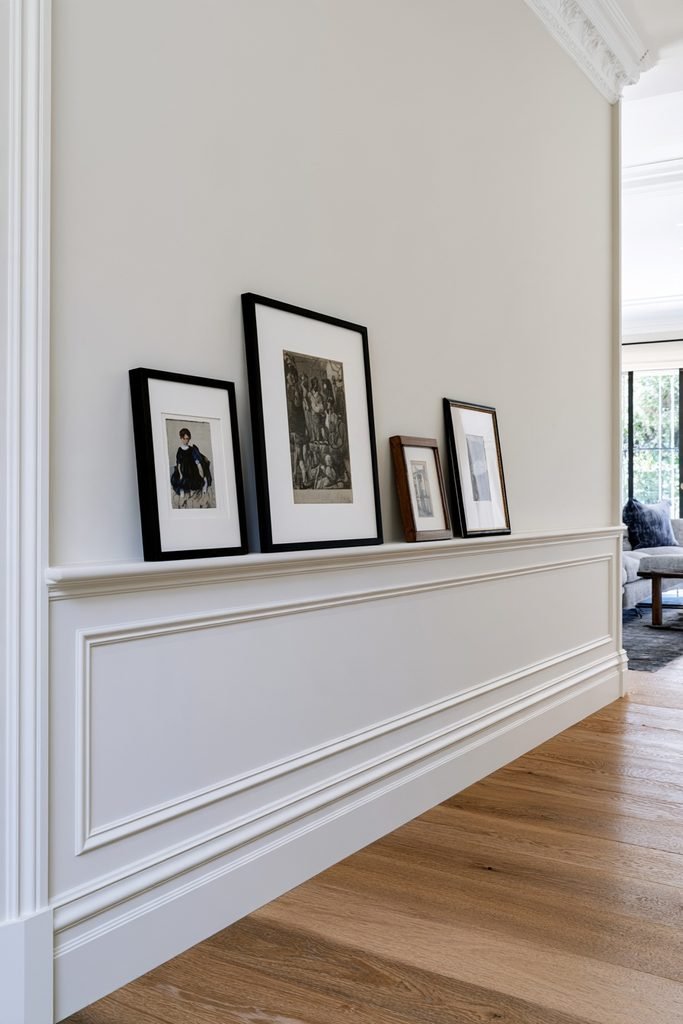
Turn the rail into a working picture ledge by leaning framed art directly on top of it instead of hanging pieces on hooks. This creates an easily updatable gallery wall that can be rearranged without adding new nail holes.
Dark, Moody Lower Half
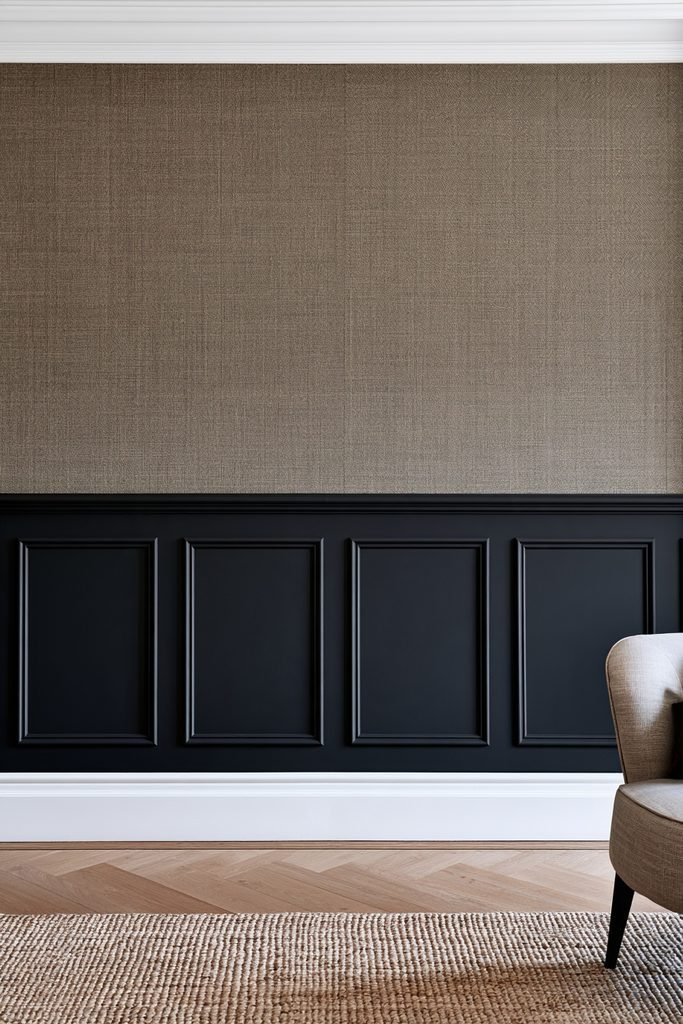
Paint the section below the rail in a deep charcoal, forest green, or ink navy for a grounded, dramatic feel. The Crafty Hacks pairs deep tones like these with softer wallpaper above to keep the room from feeling too heavy.
Sage Green And Cream
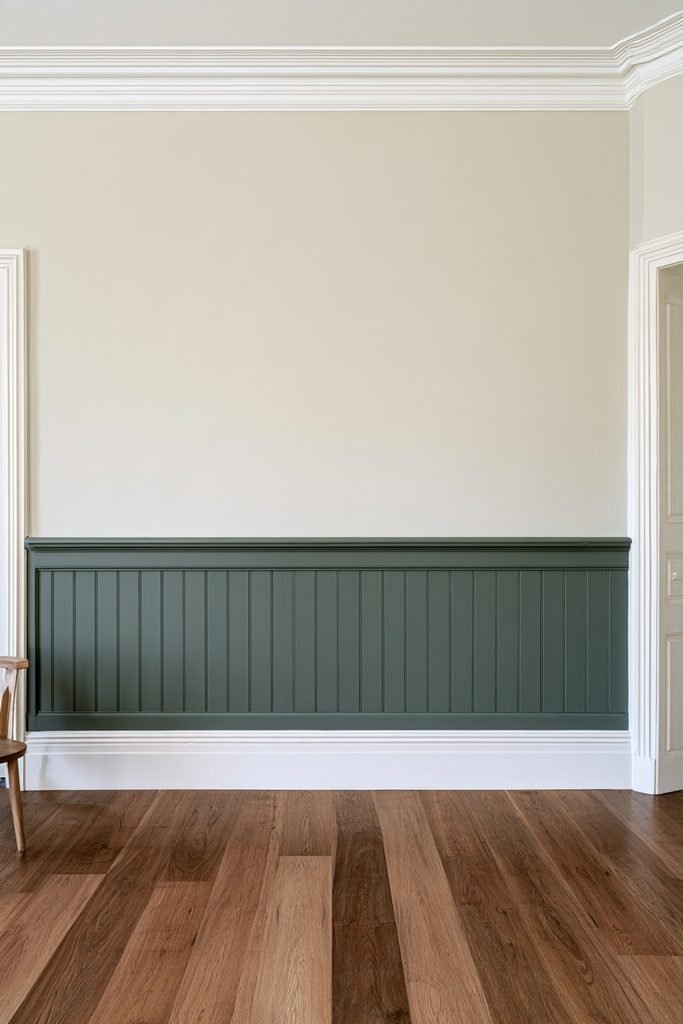
Combine a sage green lower half with a warm cream upper wall for a soft, period-appropriate palette. The Crafty Hacks lists this pairing as one of its favourites for creating a deliberate transition between the two wall sections.
Terracotta And Neutrals
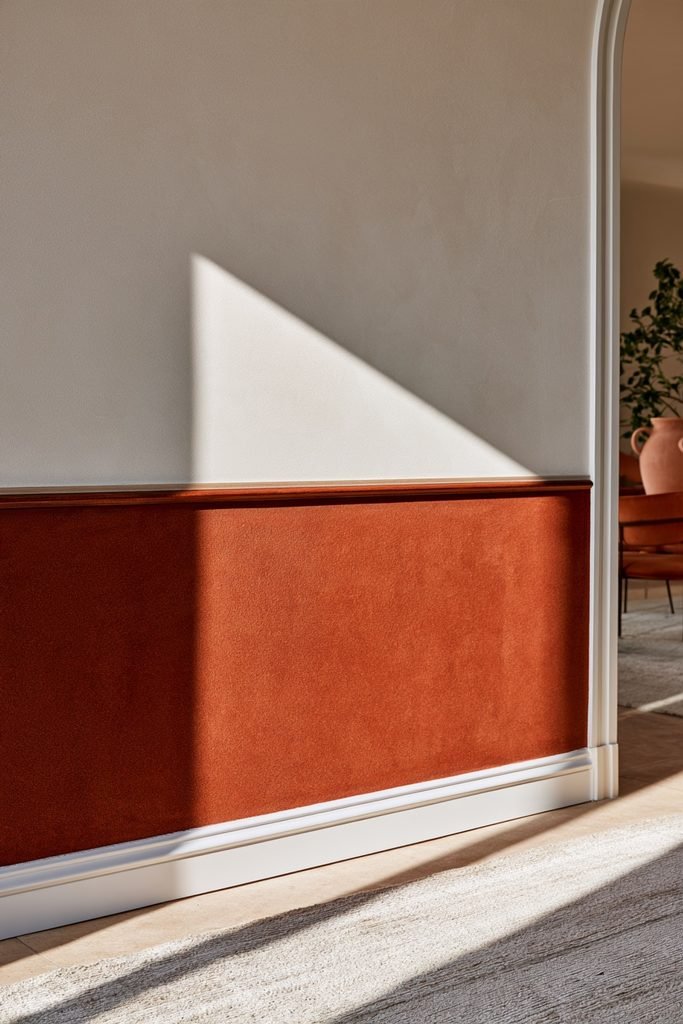
Pair a terracotta or warm beige lower half with a neutral upper wall for an earthy, grounded scheme. The Crafty Hacks suggests repeating either tone in nearby furniture finishes to tie the whole room together.
Navy And Brass Accents
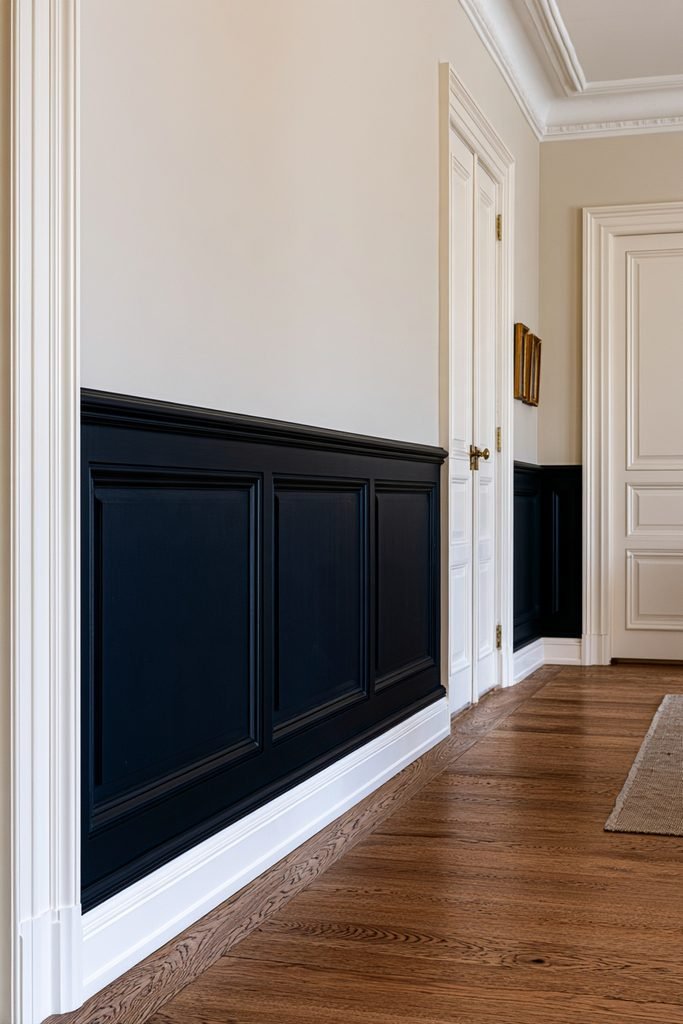
Match a navy lower wall with brass door hardware, light fittings, or picture frames for a richer, more formal finish. The deep blue below the rail can read as sophisticated rather than heavy when paired with warm metal accents.
Scandinavian Pale Wood
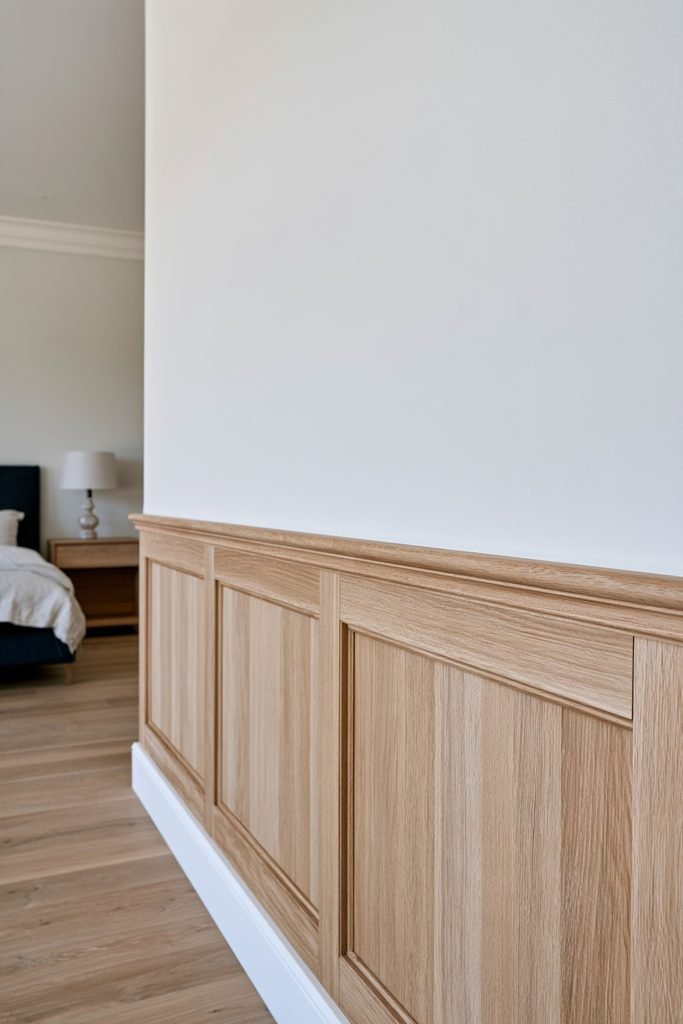
Keep the rail and panelling in a natural pale wood tone against soft white or off-white walls for an uncluttered, Scandinavian-inspired finish. The Crafty Hacks describes this approach as a way to keep dado rail styling fresh and pale rather than ornate.
Victorian Heritage Restoration
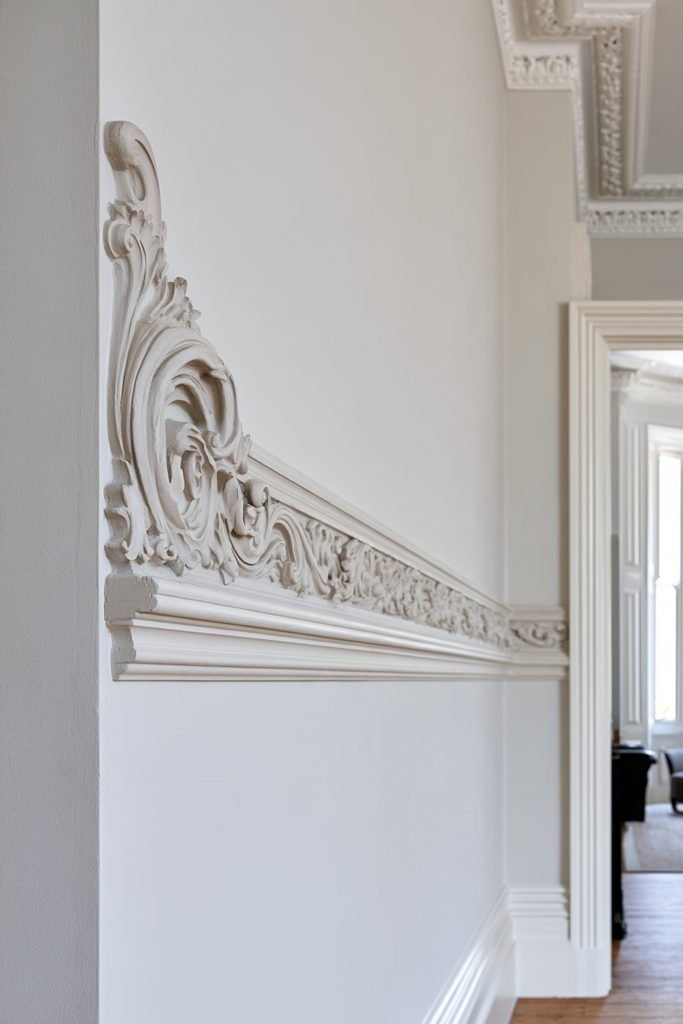
Choose an intricate, decorative profile with detailed moulding for a Victorian or heritage-style restoration project. The Crafty Hacks recommends keeping the surrounding décor restrained so the architectural detail of the rail itself stays the focus.
Georgian-Style Proportions
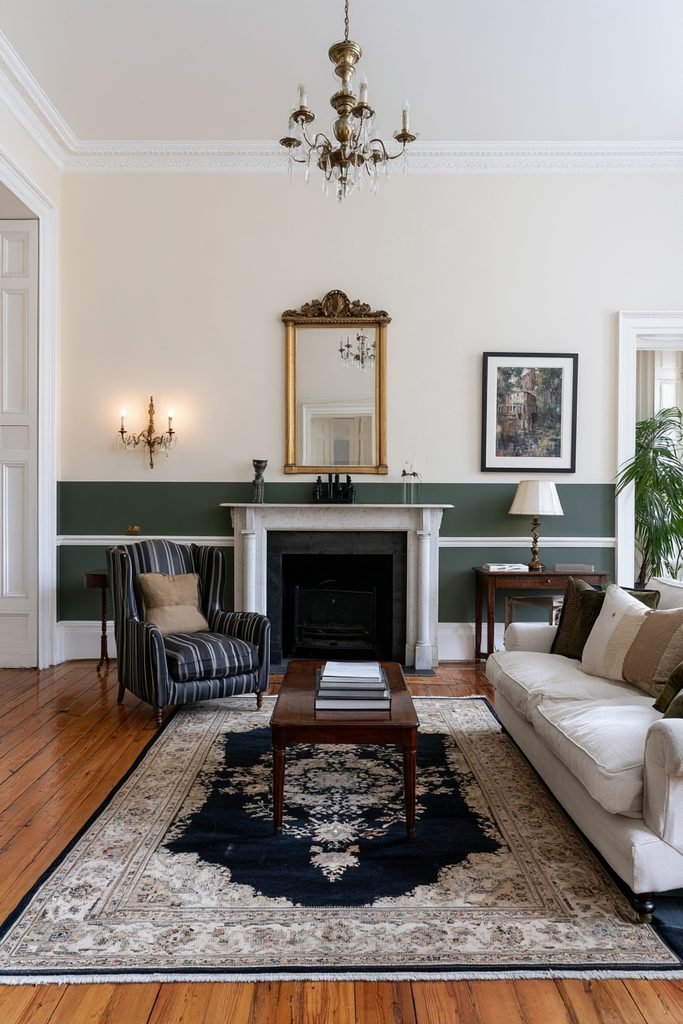
Follow the restrained, symmetrical proportions typical of Georgian interiors, pairing a simpler rail profile with classic colours like deep cream and muted green. Wikipedia notes dado rails have long been used in cities such as Bath, England, to echo elements of the classical order.
Edwardian Hallway Refresh
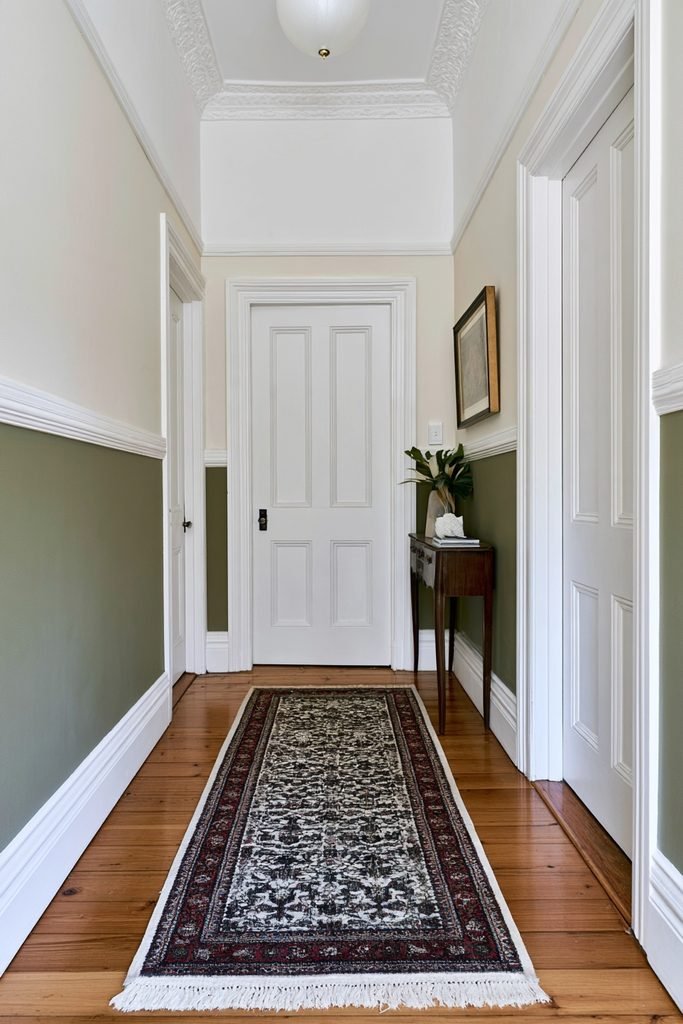
Update an Edwardian hallway by keeping the original dado rail in place and refreshing the colours above and below it rather than removing the moulding. This preserves the architectural character of the house while giving the space a current look.
Farmhouse Panelling
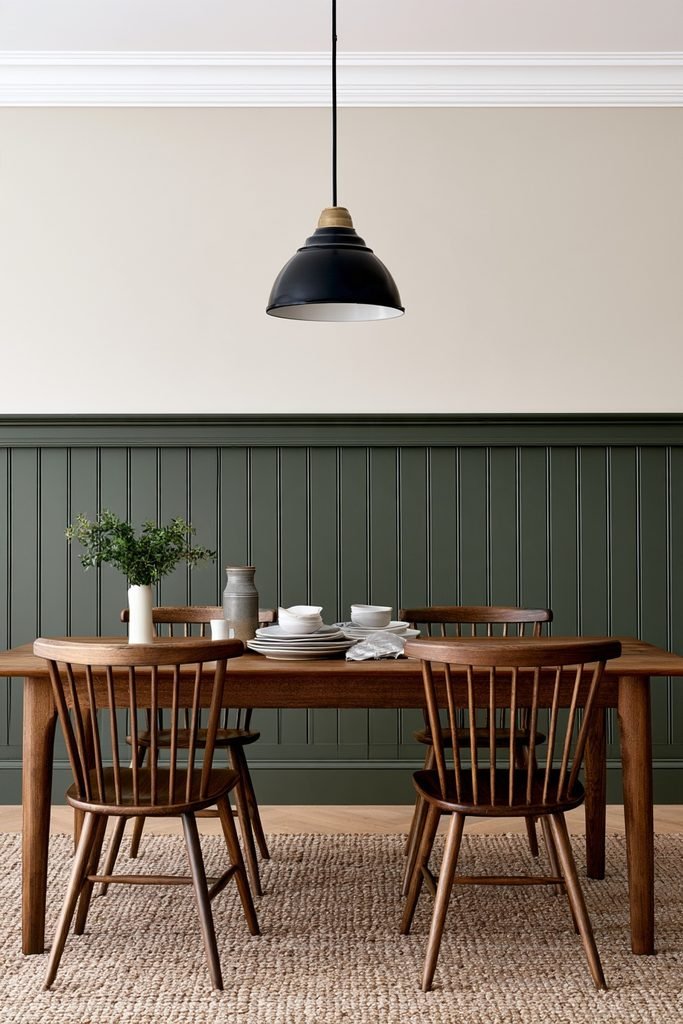
Pair the rail with wider tongue-and-groove panelling and a chalky, matte paint finish for a farmhouse-style scheme. Soft greens, warm beiges, and off-whites suit this treatment particularly well in dining rooms and kitchens.
Coastal, Light-Filled Scheme
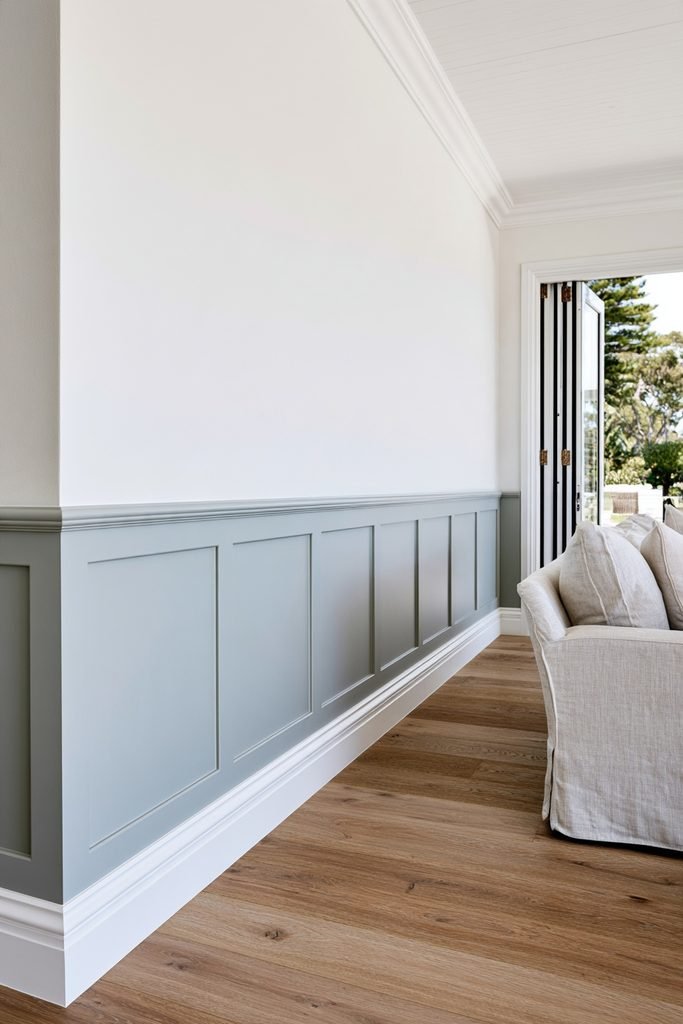
Keep both the rail and the walls in soft blues, sandy neutrals, and crisp white for a light, coastal-inspired finish. This palette works especially well in rooms that already get plenty of natural light.
Bathroom Dado Rail
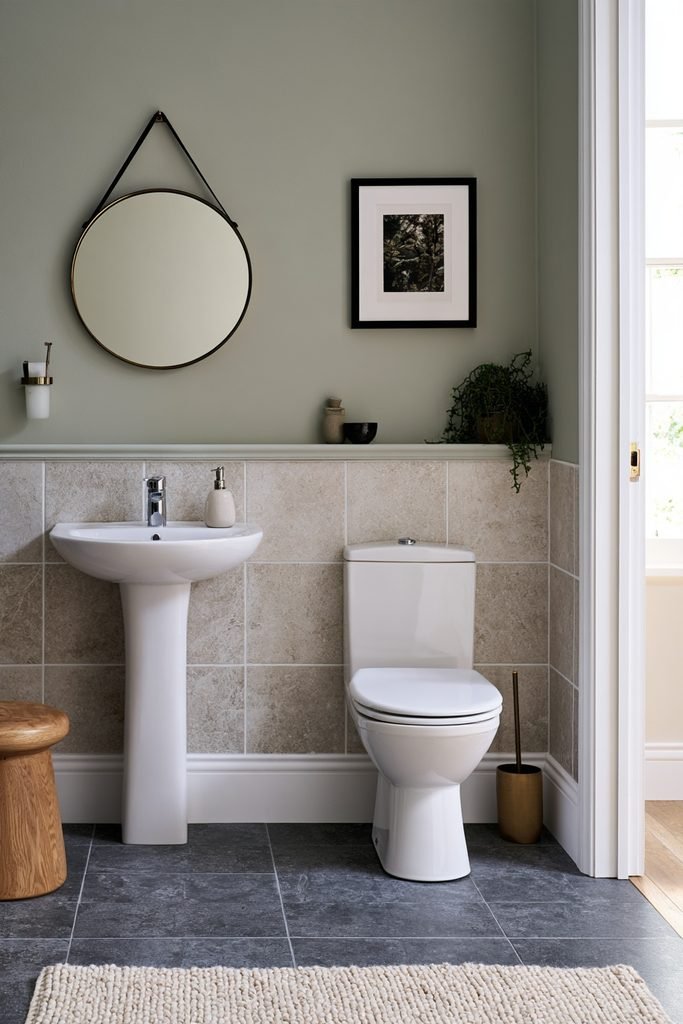
Fit a moisture-resistant MDF or PVC rail in a bathroom to add definition above tiling or a painted lower half. The rail can mark a clean line between splash-prone tiling below and a painted or papered finish above.
Renter-Friendly Peel-and-Stick
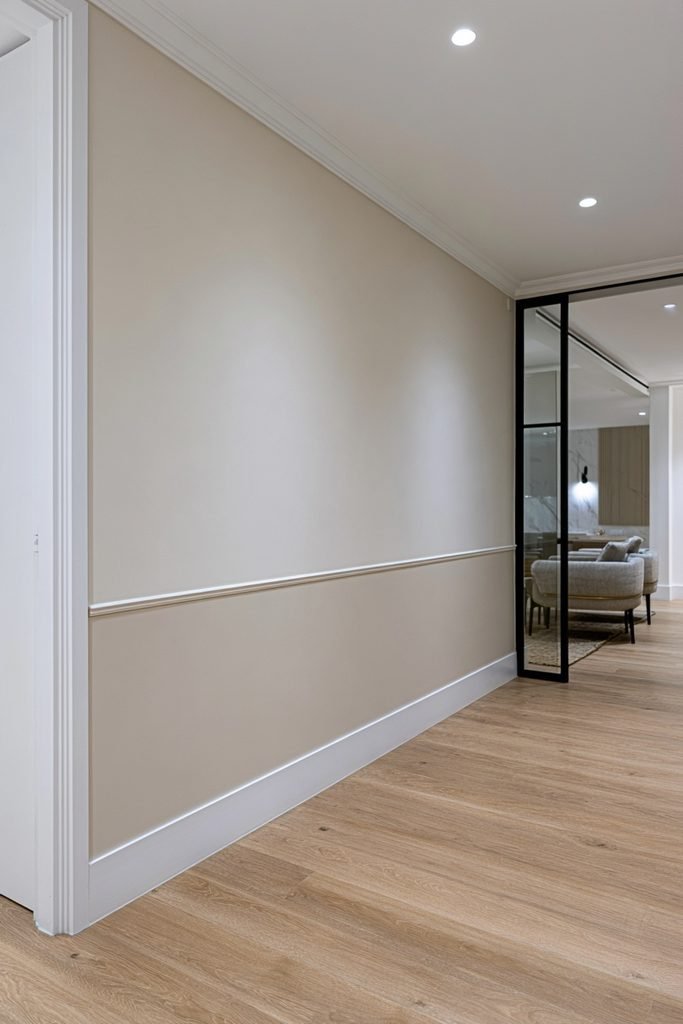
Use a removable, peel-and-stick dado rail or trim strip for a renter-friendly way to add the detail without permanent fixings. This option can come down at the end of a tenancy without damaging the original wall.
Frequently Asked Questions
What height should a dado rail be?
Dado rails typically sit around one-third of the way up the wall, roughly 24 to 36 inches above the skirting board. This height reflects the rail’s original purpose of protecting walls from chair backs and remains a reliable starting point for most rooms.
Are dado rails still in style?
Dado rails have moved back into favor in recent years, particularly alongside the renewed popularity of wall panelling. They now appear in both period restorations and contemporary renovations rather than being limited to older properties.
What is the difference between a dado rail and a picture rail?
A dado rail sits lower on the wall, around a third of the way up, while a picture rail is positioned higher, closer to door-frame height. Picture rails were traditionally used to hang art and mirrors from hooks, while dado rails mark the top of the lower wall section.
Can a dado rail be painted a different colour to the wall?
Yes, painting the rail a contrasting or complementary shade is one of the most common ways to make it a deliberate design feature rather than a background detail. Matching it to nearby skirting or architrave can also help unify the room’s woodwork.
What material are dado rails made from?
Dado rails are traditionally made from timber or plaster, though MDF and high-density polystyrene versions are now widely available as more affordable, lightweight alternatives. Material choice mainly affects cost and ease of installation rather than the final painted look.