A courtyard garden is any outdoor space enclosed on at least three sides by walls, fences, or the house itself, and that enclosure is what makes it both a challenge and an opportunity. Limited square footage, shade from surrounding structures, and restricted sightlines call for smarter choices in planting, furniture, and layout than an open backyard needs.
The ideas below cover planting schemes, lighting, water features, screening, and furniture that all work within a compact, walled footprint. Whether the space is a shaded, stone-walled nook or a sunny paved patio, there’s a way to turn a courtyard garden into a private, usable extension of the home.
Plant Upward, Not Just Outward
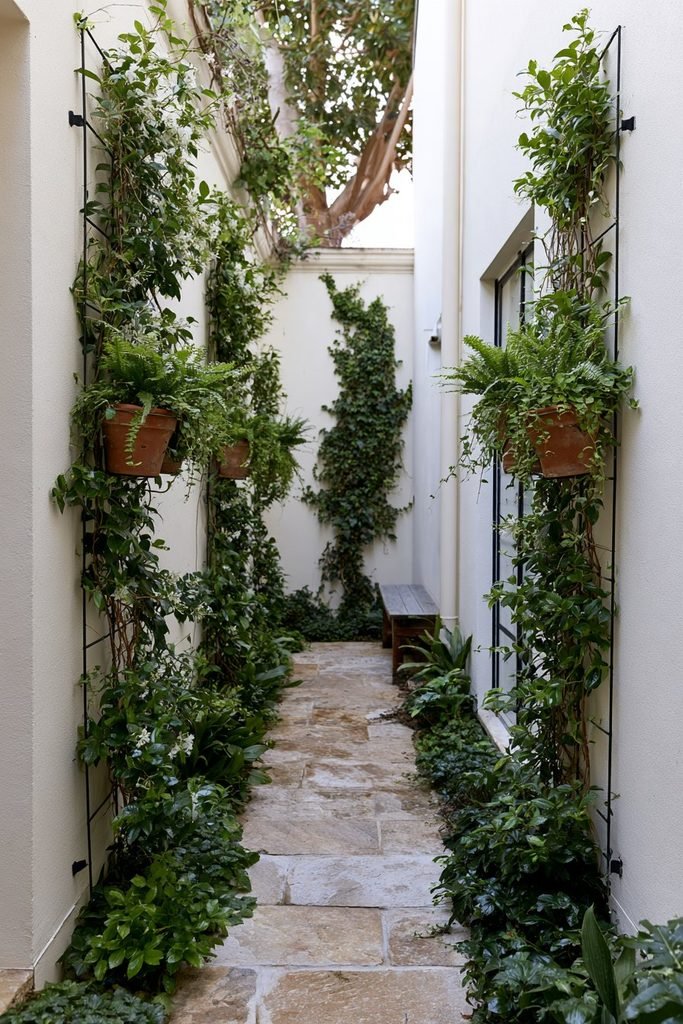
Climbing plants and wall-mounted planters can turn blank vertical surfaces into growing space without eating into limited floor area. Garden designers often rely on dense vertical planting with climbers and wall shrubs to increase a courtyard’s sense of seclusion, an approach used in enclosed London courtyard gardens profiled by Homes & Gardens.
Stick to a Simple Material Palette
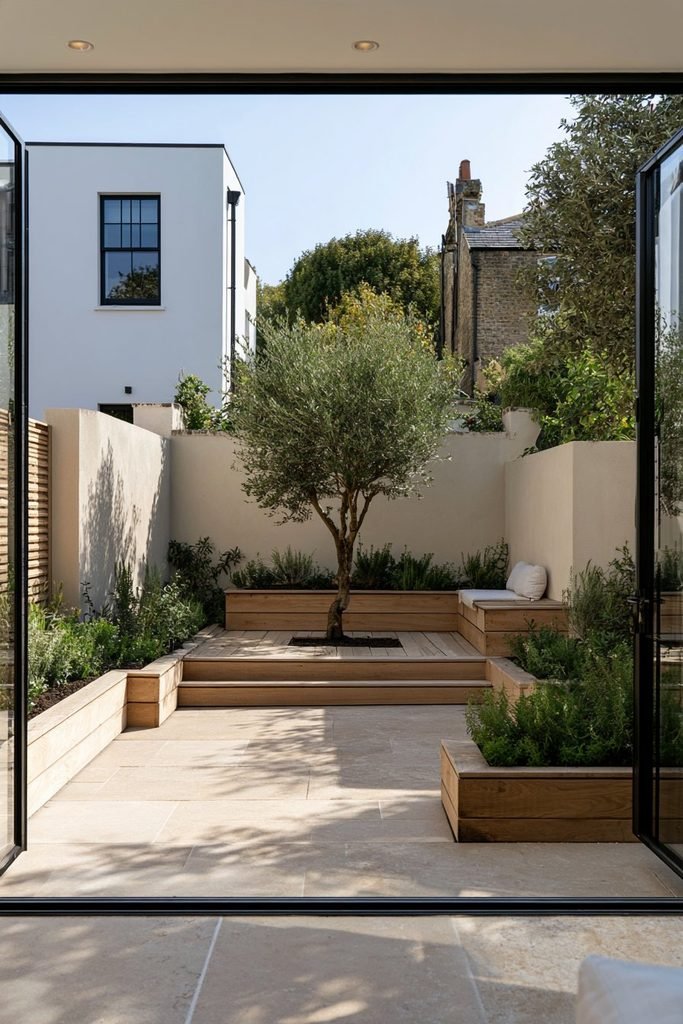
Choosing just two or three hard-landscaping materials that echo the tones inside the house can create a seamless transition between indoors and out. A pared-down palette of paving, raised bed, and wall materials keeps a small space feeling calm rather than busy, a principle designers apply in courtyard schemes profiled by Homes & Gardens.
Add a Water Feature for Ambient Sound
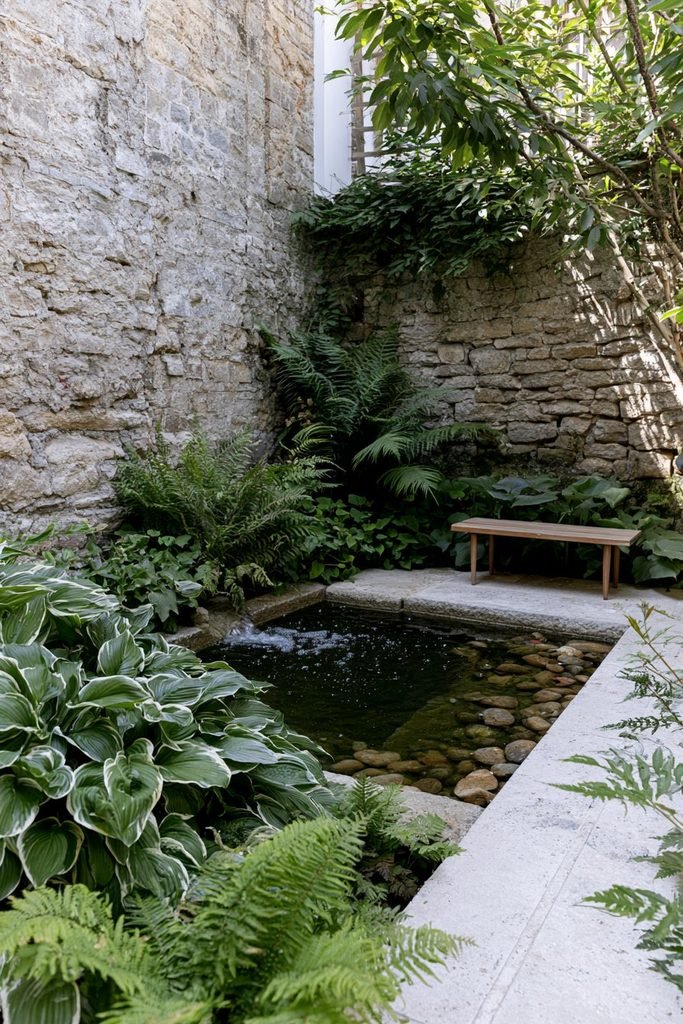
A small, subtly bubbling water feature can mask outside noise and add a calming focal point to an enclosed space. Gardeners can build one from a simple reservoir, a quality pump, and a few stones rather than buying a complete unit, keeping the sound gentle instead of gurgling or splashing, as Learning with Experts suggests.
Don’t Fight the Shade
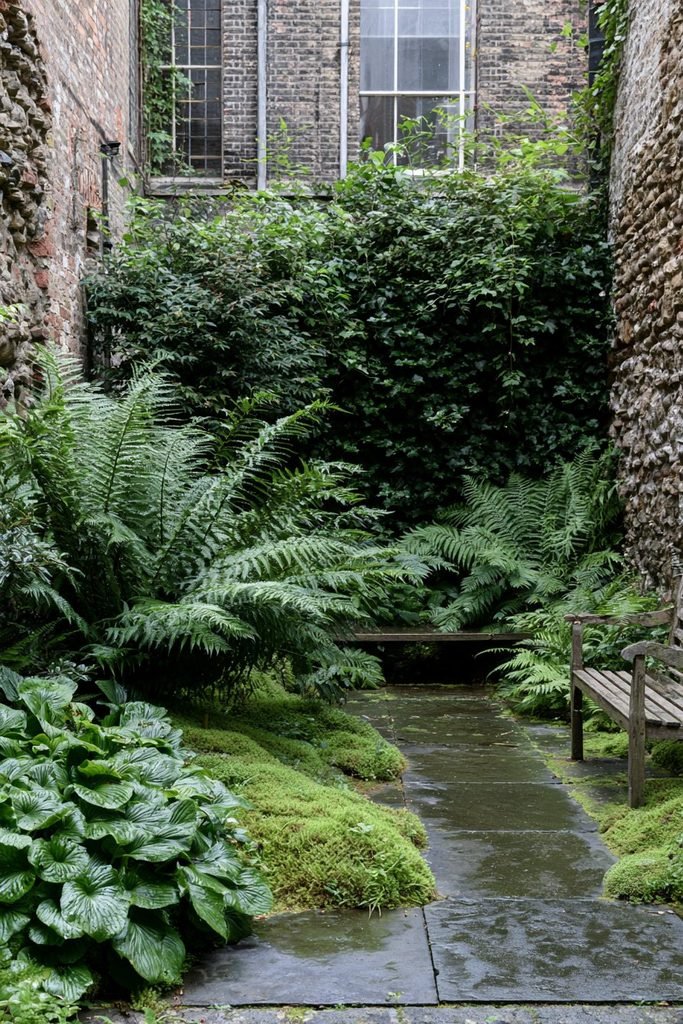
A courtyard’s old walls or tall boundaries may be the very thing that creates deep shade, and treating that shade as an asset rather than a problem can shape a stronger design. Garden owner Jack Laver Brister filled a shaded, centuries-old walled courtyard with ferns and evergreen planting rather than trying to force sun-loving plants to survive there, as described on Gardenista.
Lean on Shade-Loving Ferns
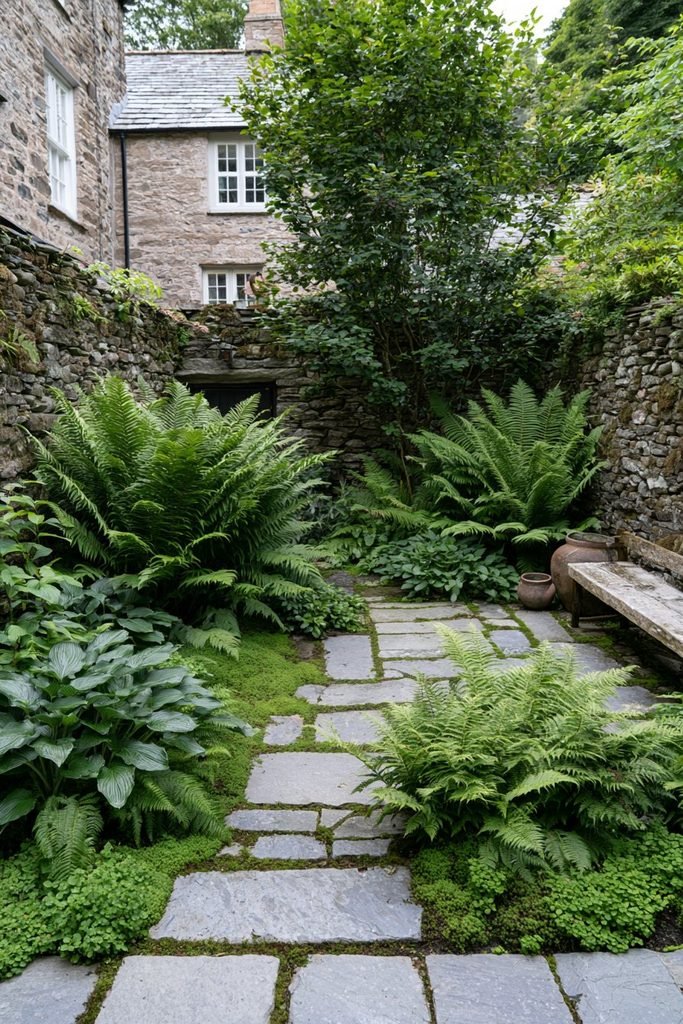
Ferns can add rich texture and dramatic shapes to a courtyard that gets little direct light. Varieties such as Dryopteris filix-mas and Polystichum aculeatum can thrive in the cool, damp conditions common to walled gardens, according to design tips shared on Gardenista.
Train Climbers Up Trellis and Walls
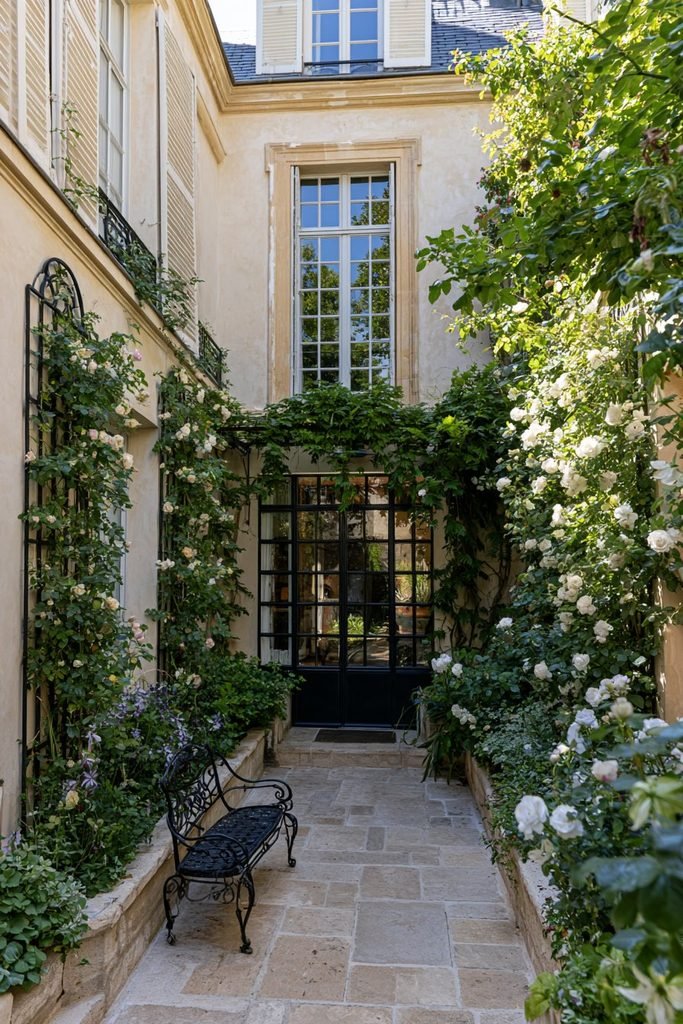
A narrow trellis or a slim pergola around the courtyard’s edge can be dressed with climbing plants to disguise a boxed-in feel. Ivy, clematis, or flowering vines dripping from an overhead structure can turn a plain enclosure into what feels like a private, secret garden, per Learning with Experts.
Grow Vines That Tolerate Low Light
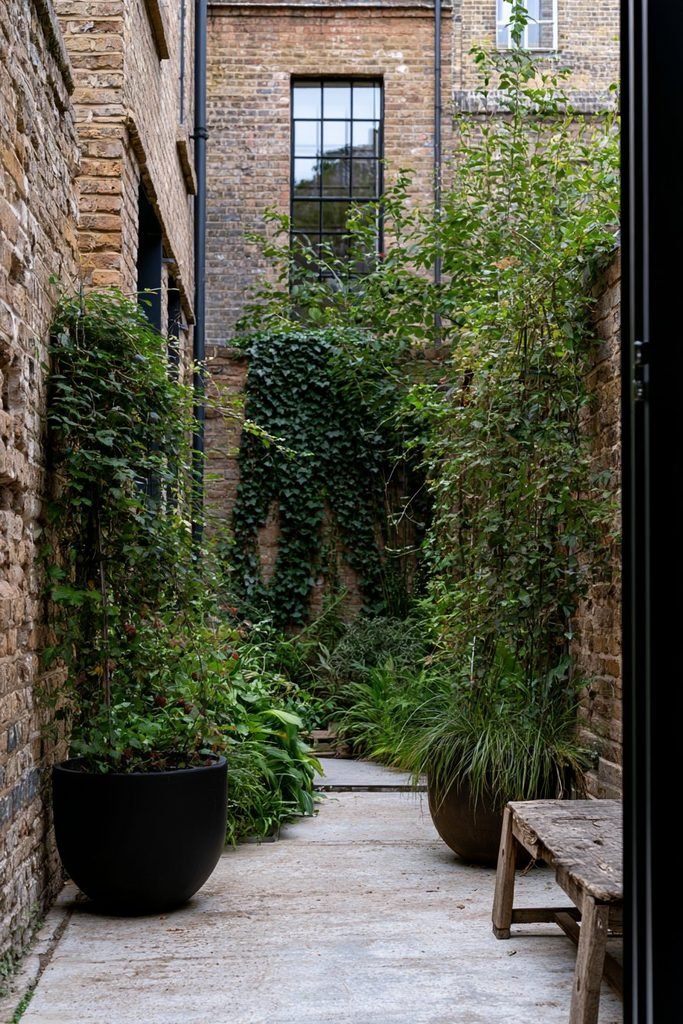
Since many courtyards receive limited direct sun, choosing vines suited to lower-light conditions matters more than in an open yard. Perennial vines like Arctic kiwi can be grown in large containers when garden beds aren’t available, giving the roots enough room to establish, notes HGTV.
Use Mirrors to Expand the Space Visually
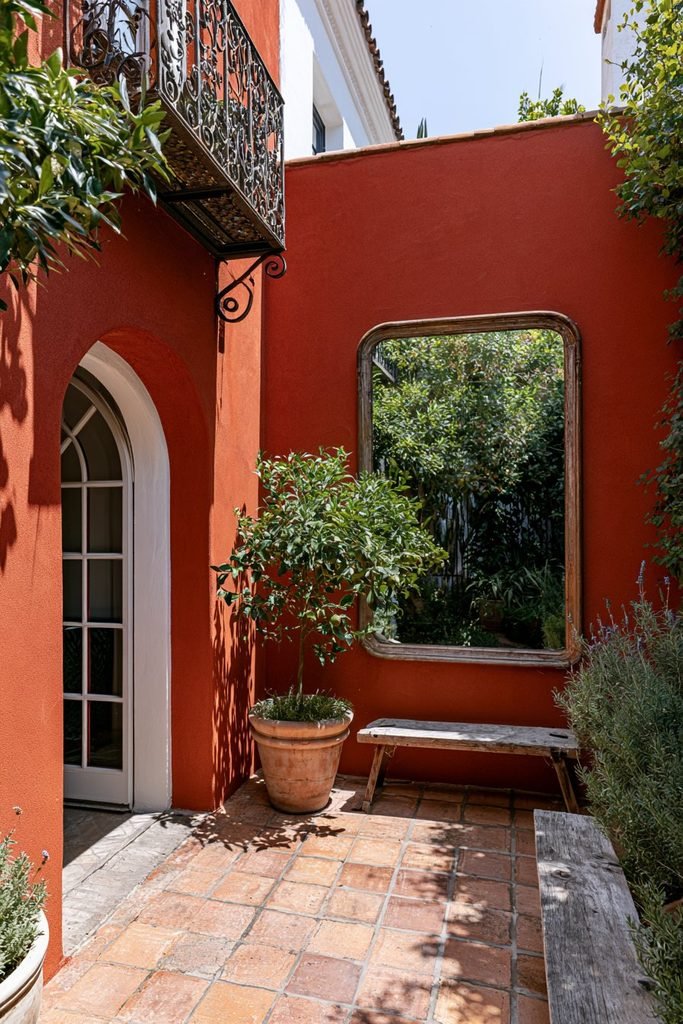
An outdoor mirror mounted on a boundary wall can create the illusion of a courtyard extending beyond its actual footprint. Positioning one to reflect greenery or a light source can make even a heavily enclosed space feel less confined, an idea highlighted by Homebuilding & Renovating.
Light the Space in Layers
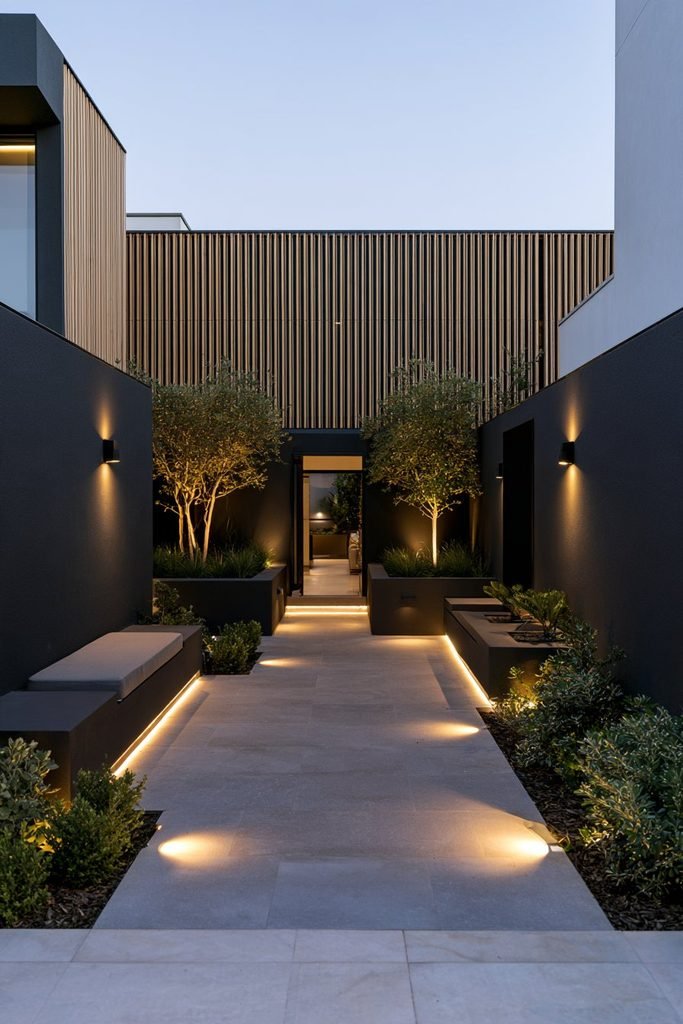
Rather than relying on a single floodlight, breaking courtyard lighting into layers, paths, steps, walls, and planting, can create a more welcoming evening atmosphere. Lighting designer Luke Thomas of John Cullen Lighting recommends addressing each of these elements separately rather than lighting the whole space evenly, according to Homebuilding & Renovating.
Choose Slow-Growing, Compact Plants
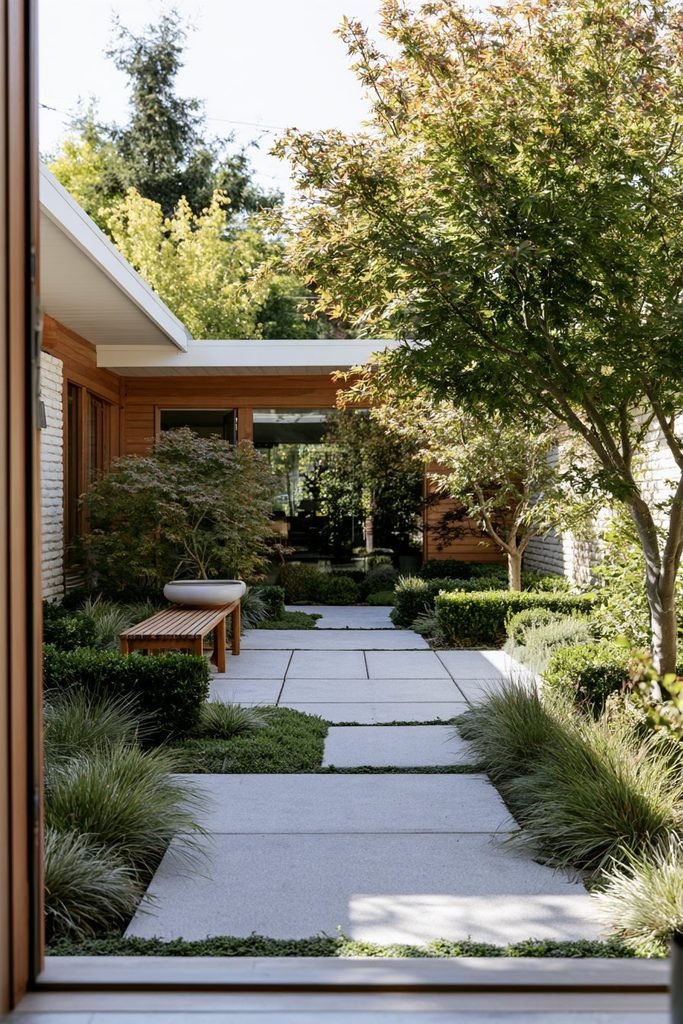
Selecting plants suited to the courtyard’s specific light and space constraints keeps a small area from feeling overgrown within a season or two. Landscape designer Alex Betz recommends slow-growing, trailing, and compact varieties to make the most of a courtyard’s limited footprint without letting the planting take over, as noted on Homes & Gardens.
Add a Fire Bowl or Fire Pit
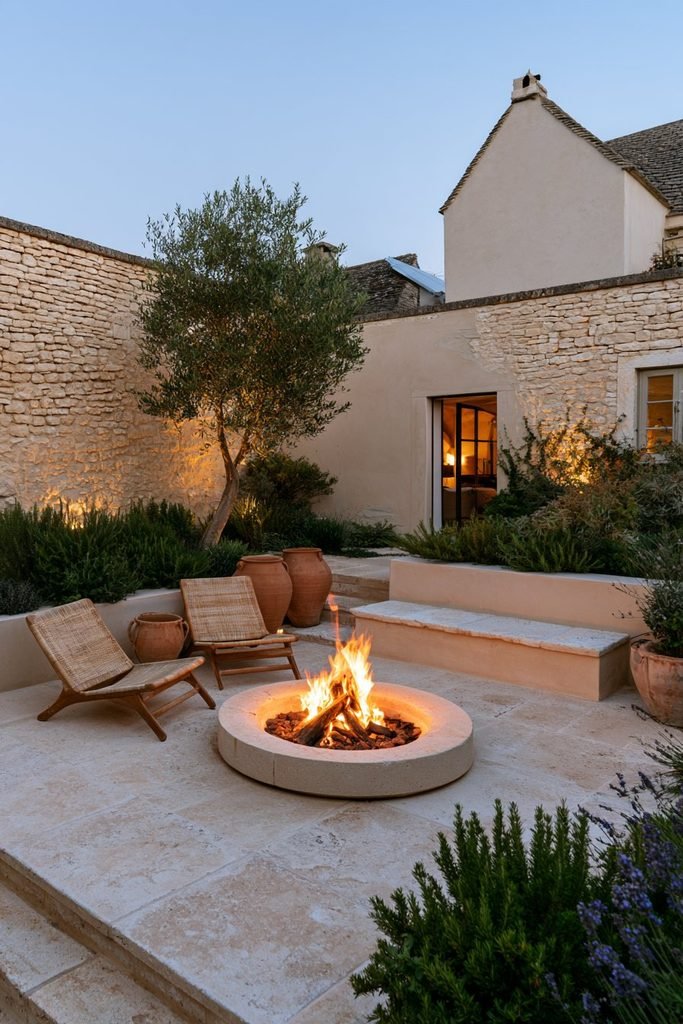
A compact fire feature can make a courtyard usable well past summer, adding warmth and a natural gathering point. Pairing it with simple, low seating keeps the space feeling intimate rather than crowded.
Build a Container Garden Over Paving
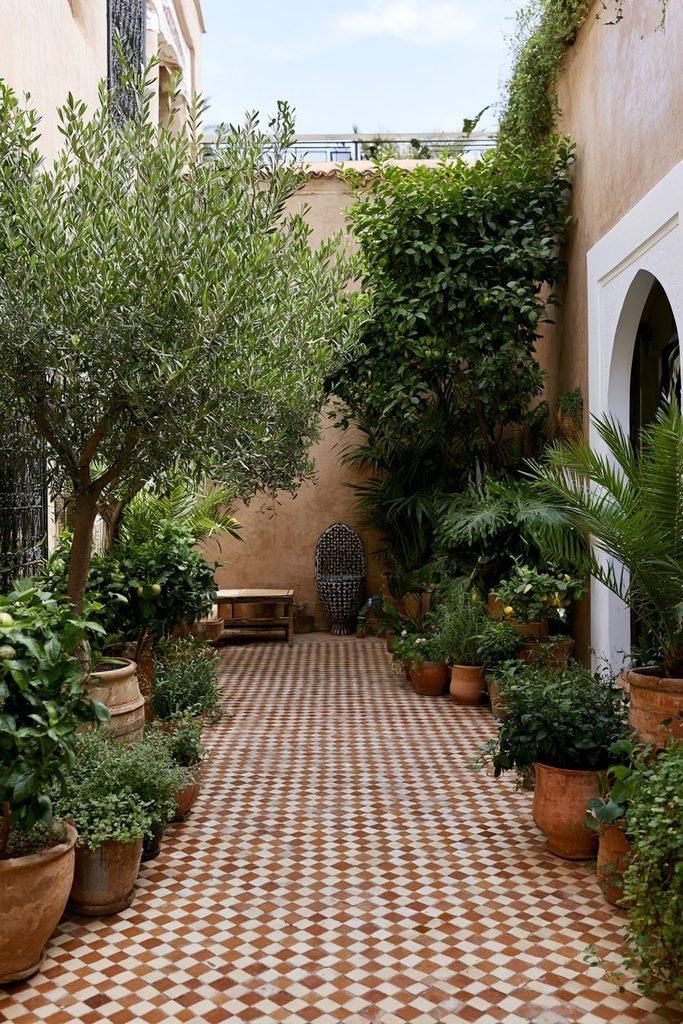
When a courtyard is entirely paved or bricked over, a container garden can substitute for planting beds altogether. RHS curator Marcus Chilton-Jones suggests this approach for courtyards with no exposed soil, since pots and planters can be grouped and swapped out as the seasons change, per Homebuilding & Renovating.
Zone the Courtyard by Activity
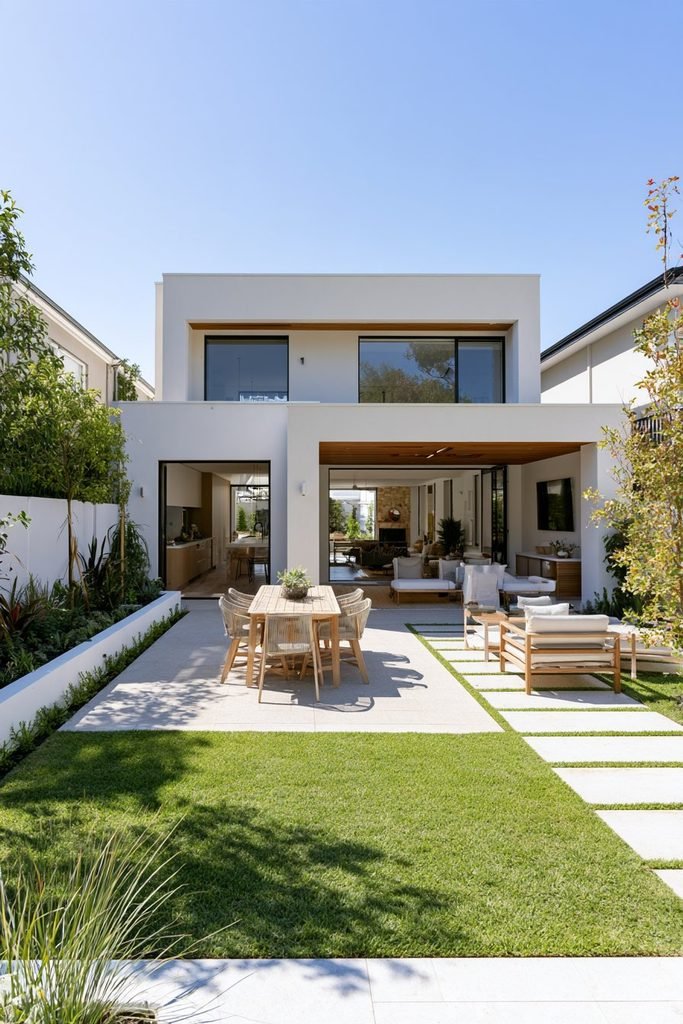
Dividing a small courtyard into a dining corner, a lounge area, and a green border can give the space a sense of depth despite its size. Defined zones also make the courtyard feel more intentional, since every corner has a clear purpose rather than blending into one crowded area.
Choose Furniture With a Thin Profile
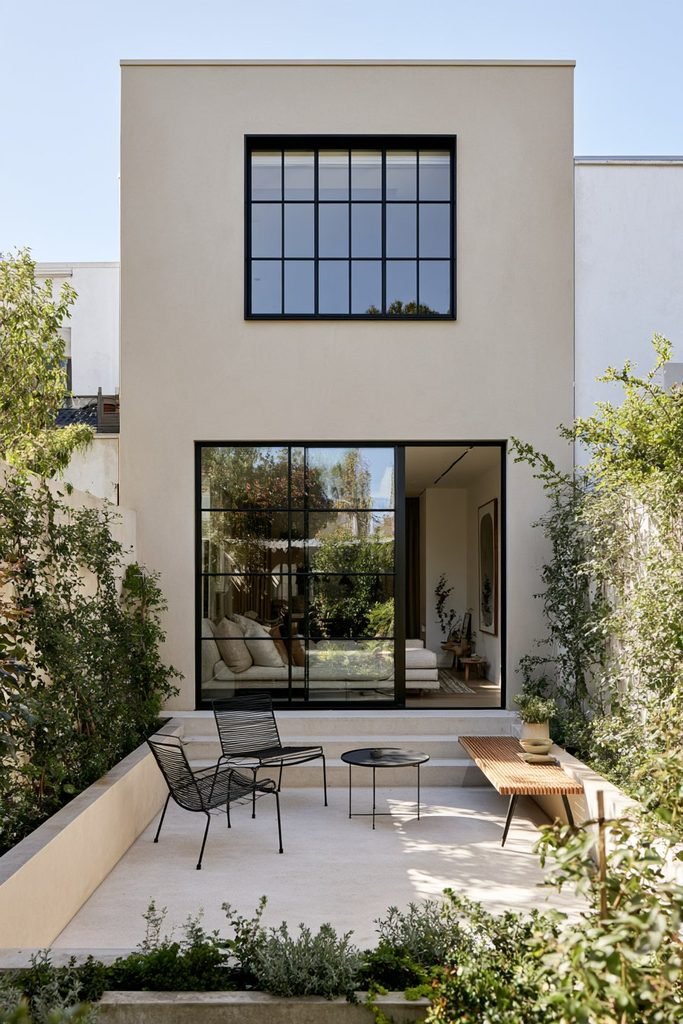
Elegant, narrow-profile furniture can provide seating without visually or physically crowding a tight courtyard. Even the most compact layouts have room for outdoor seating once bulky pieces are swapped for slimmer designs that don’t obstruct sightlines, according to Livingetc.
Build In Banquette Seating
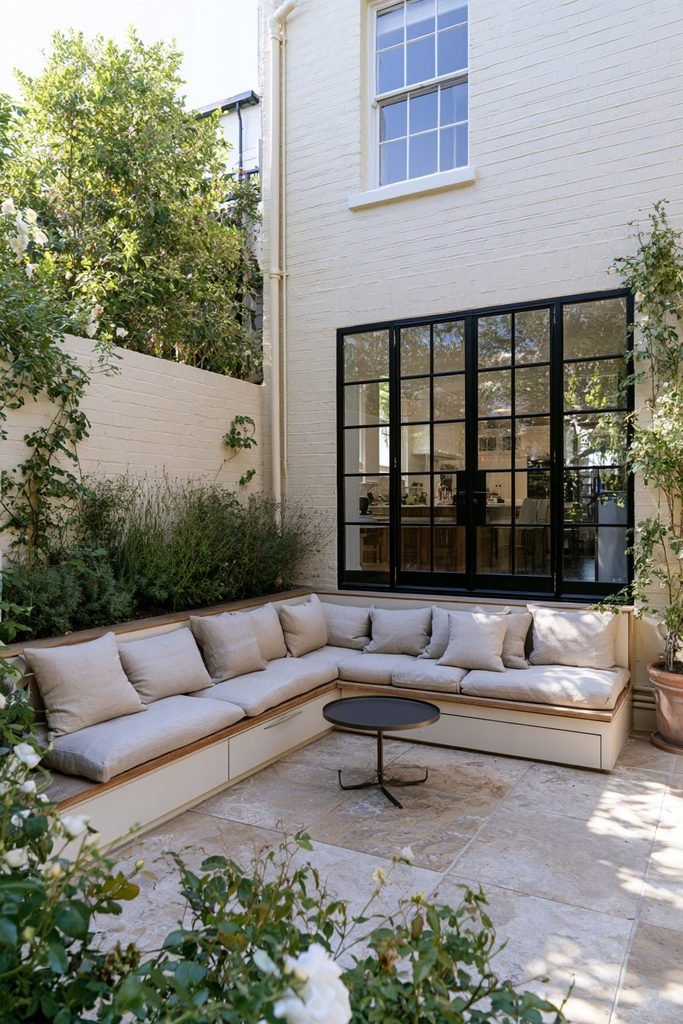
A built-in bench along a courtyard wall can maximize seating capacity while freeing up floor space for movement. Banquette-style seating also sets up a natural spot for outdoor hosting without requiring extra chairs to be stored elsewhere, an approach featured on Livingetc.
Use Decorative Screens as a Focal Point
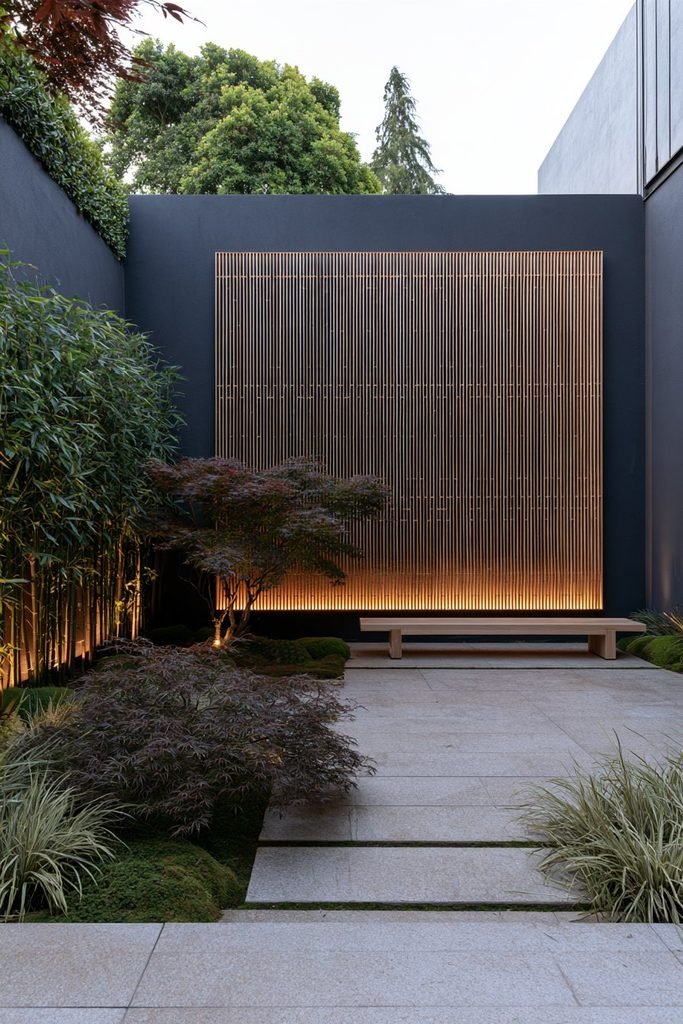
Ornamental screens mounted on a boundary wall can double as a design feature and a way to soften an otherwise plain surface. Aluminum or timber screening set behind LED lighting can shift the entire mood of the space after dark, an approach designer Jack Dunkley has used in contemporary courtyard schemes profiled by Homes & Gardens.
Draw the Eye With Repetition
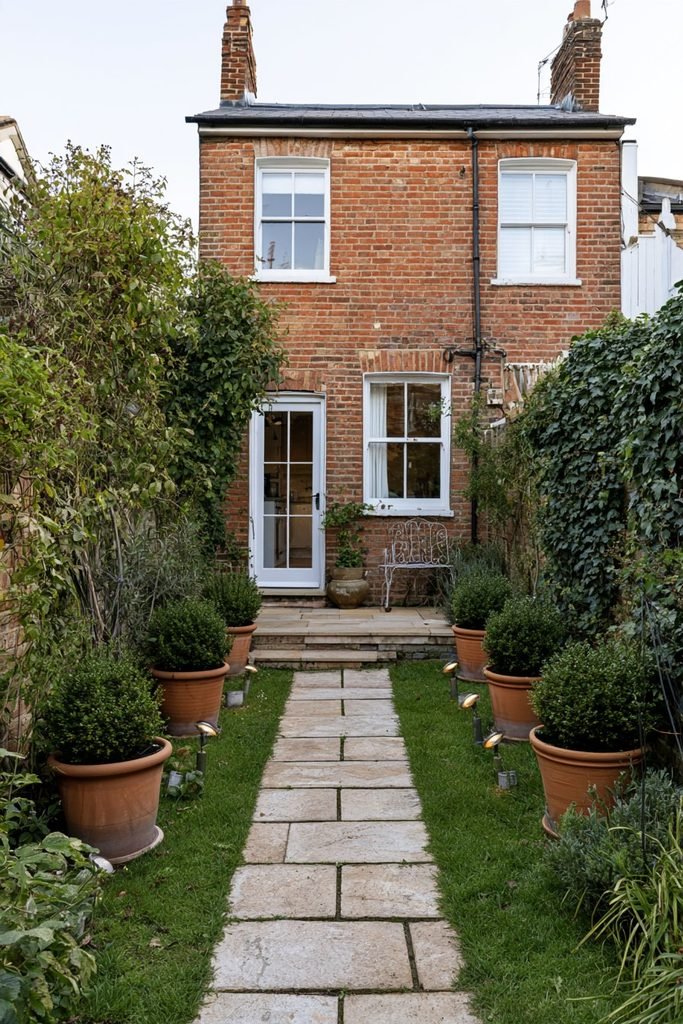
Repeating a single element, matching containers, a paving pattern, or a run of the same plant, down the length of the courtyard can make the space feel longer and more considered. This repetition gives the eye a path to follow rather than settling on the boundary walls.
Plant a Small Specimen Tree
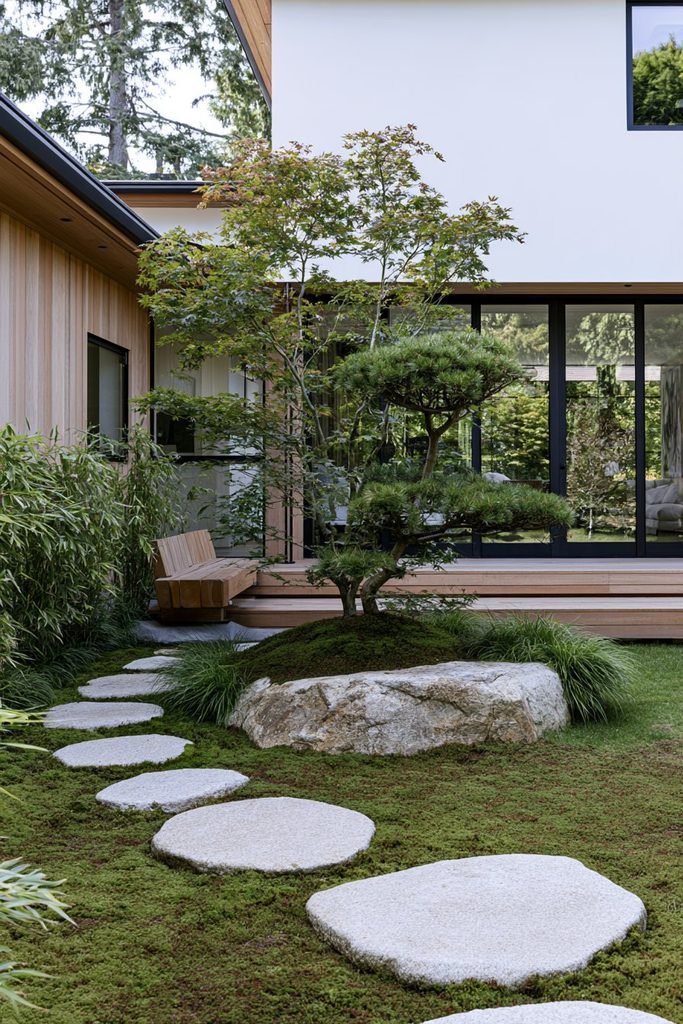
A single well-placed tree, such as a Japanese maple, can anchor a courtyard with structure and seasonal color without overwhelming the footprint. Its intricate leaves and strong autumn color make it a natural focal point in a space too small for a full tree canopy, notes Gardenia.net.
Build a Living Wall
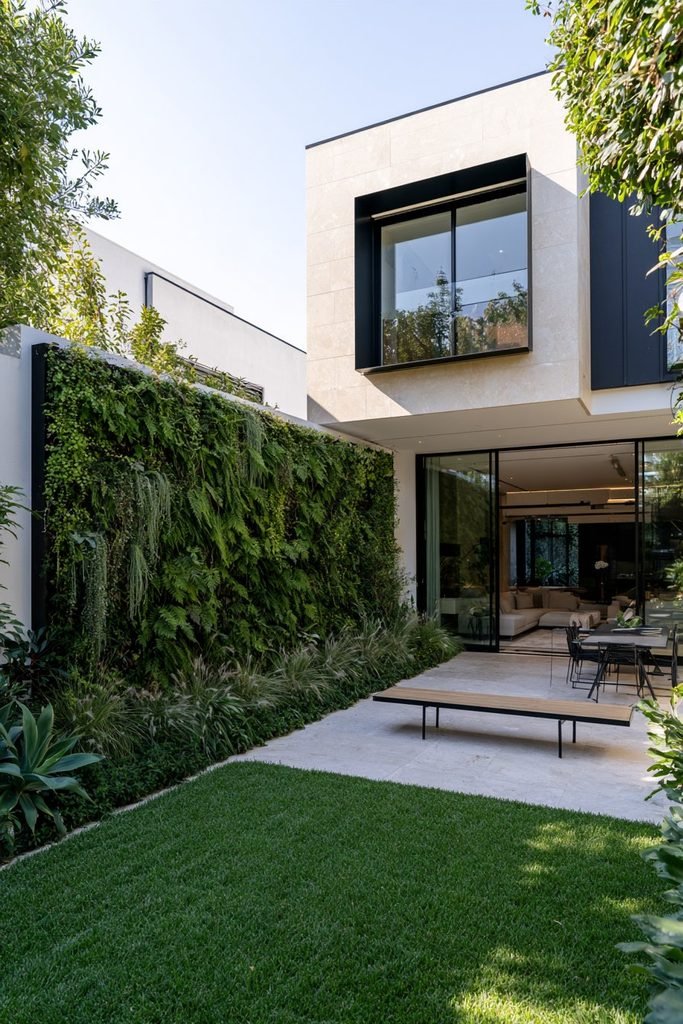
A living wall of trailing and leafy plants grown on climbing trellises or wall-mounted planters can turn a blank vertical surface into the courtyard’s main visual feature. This vertical approach saves ground space entirely while still delivering the density of greenery a larger garden would offer, per Gardenia.net.
Add Colorful Tiles or Pavers Underfoot
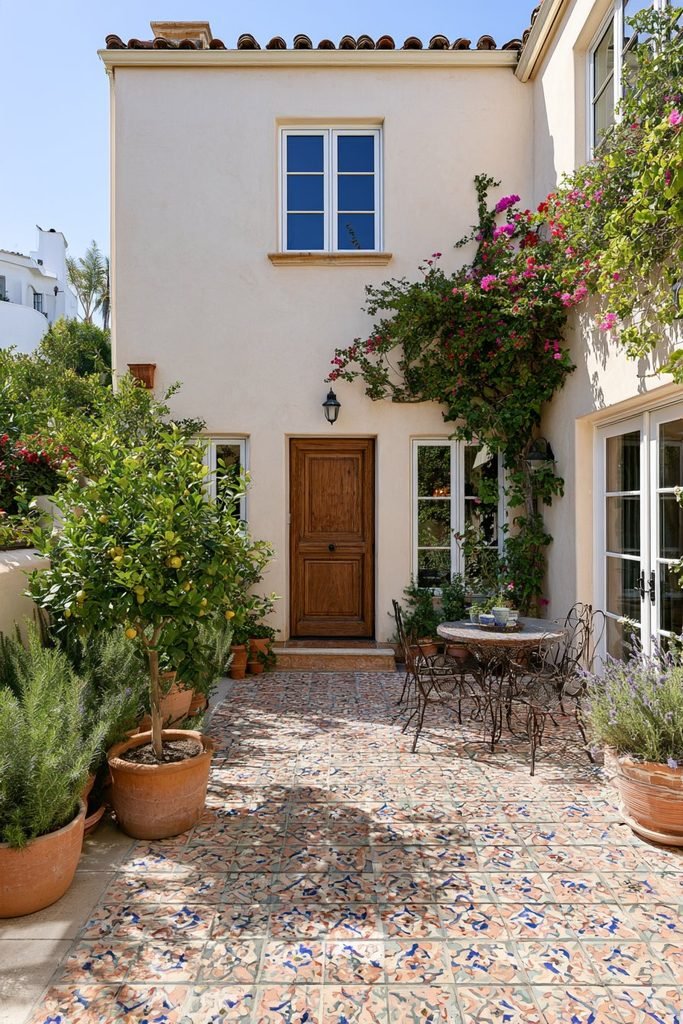
Patterned or colored tiles can bring personality to the courtyard floor and help lead the eye through the space. Choosing tiles that echo tones already present in the planting can tie the whole scheme together while staying slip-resistant and durable enough for outdoor use.
Tuck Storage Into Built-In Seating
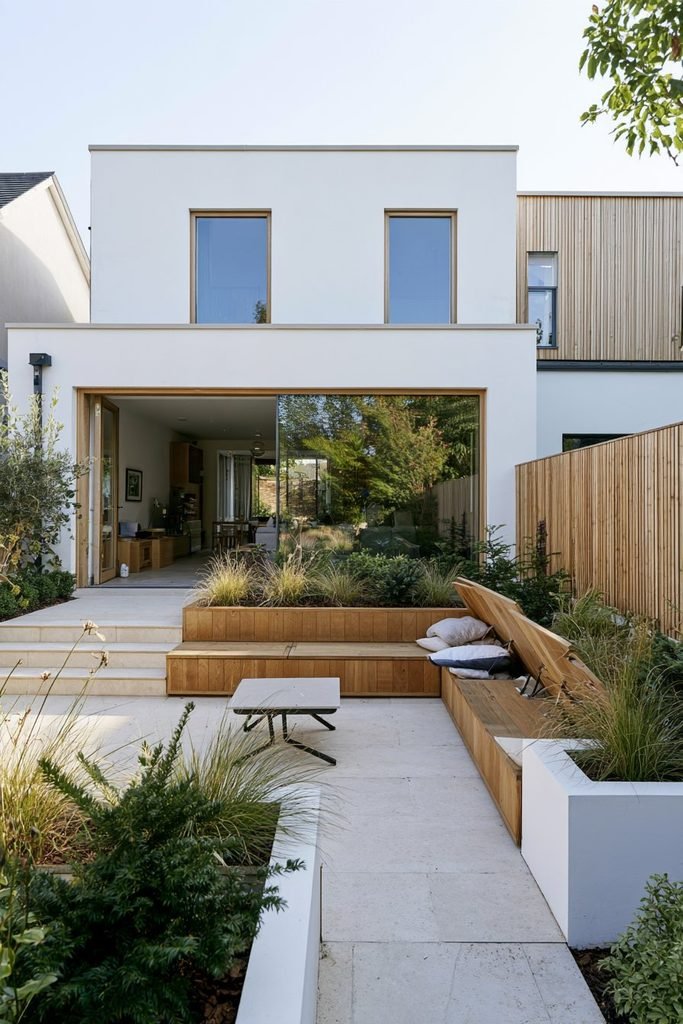
Hidden storage lockers built under a bench or seat can keep cushions, tools, and outdoor accessories out of sight in a space with no shed or garage. This kind of built-in storage is especially useful in a courtyard where every corner needs to serve more than one purpose.
Go Minimalist With a Japanese-Inspired Scheme
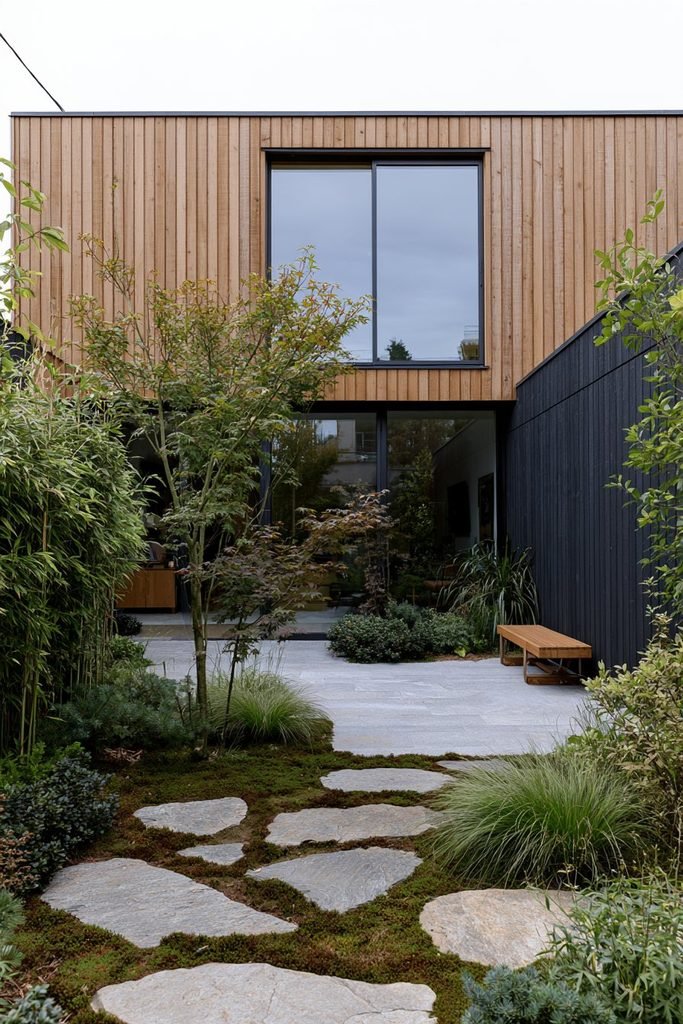
A limited color palette and simple, deliberate plant choices can borrow from Japanese garden design to create an illusion of extra space. Bamboo, Japanese forest grass, and Japanese iris in containers can support this restrained, tranquil look even in a fully enclosed courtyard, suggests HGTV.
Bring in a Mediterranean Feel
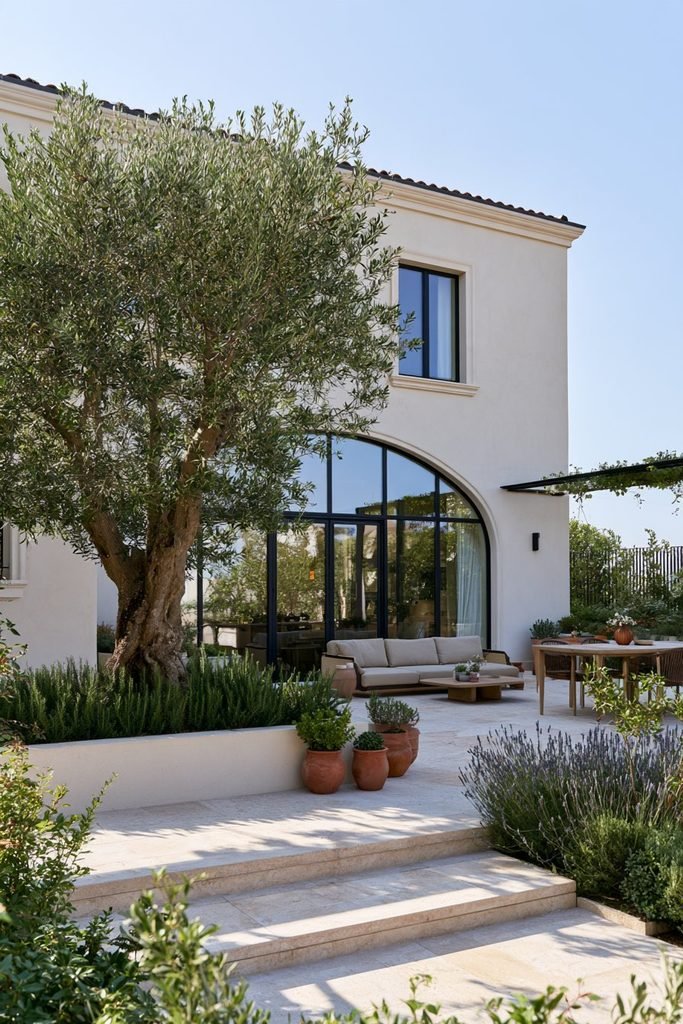
Terracotta pots, olive trees, and sun-loving herbs can give a paved courtyard a warm, Mediterranean-terrace feel. This theme works especially well in courtyards that get good direct light for at least part of the day.
Grow Herbs and Edibles in Raised Containers
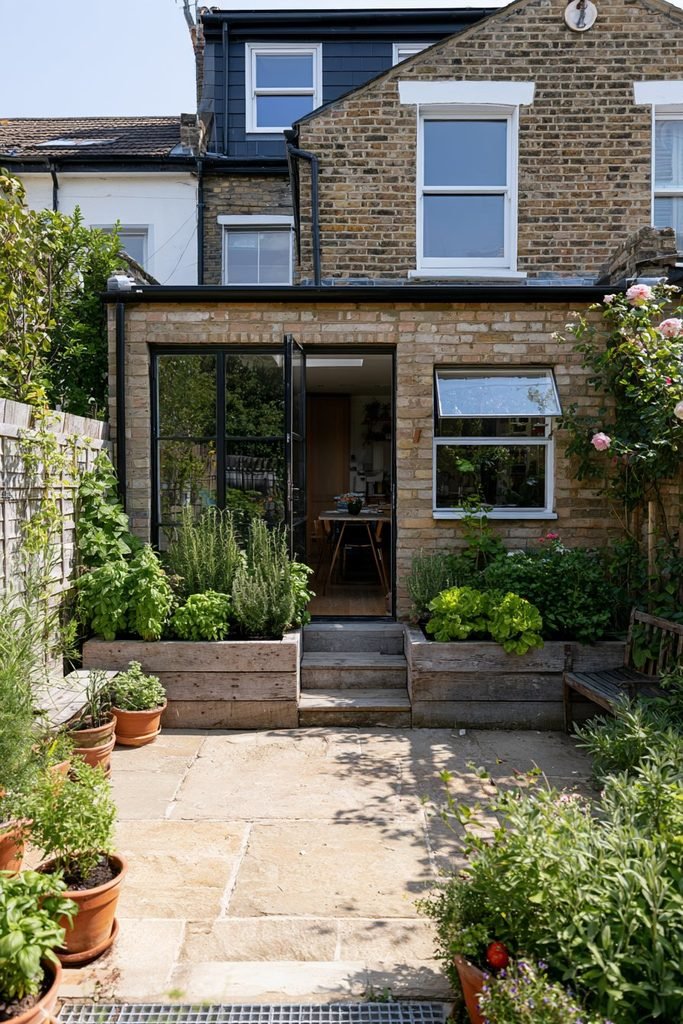
Raised containers can host a working herb or vegetable garden even where there’s no exposed soil to dig into. Positioning them near the kitchen door keeps everyday herbs within easy reach for cooking.
Soften Hard Surfaces With Rugs and Cushions
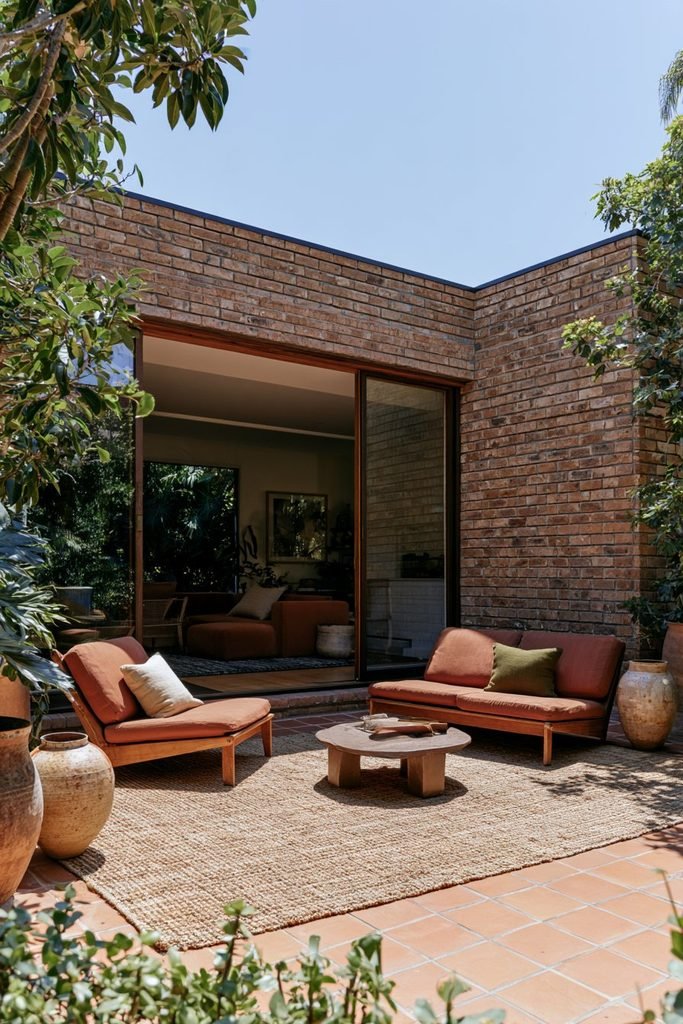
An outdoor rug and weatherproof cushions can take the edge off a paved or tiled courtyard floor and make the seating area feel like an extension of the indoors. Choosing durable, fade-resistant fabrics keeps the look intact through a full season of use.
Uplight Walls and Trees for Drama
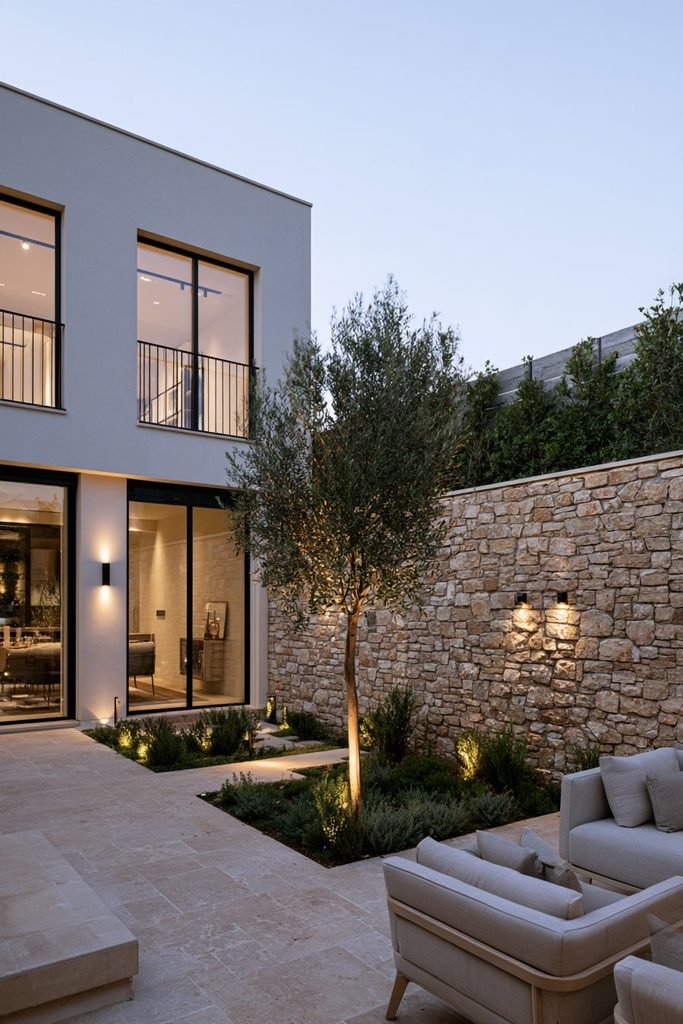
Uplights set into paving or aimed at a tree can highlight vertical surfaces and add depth to a courtyard after dark. Rope lighting tucked under a wall’s coping stone can bring an otherwise flat boundary wall to life at night, an approach detailed on Houzz.
Hang Baskets When Floor Space Runs Out
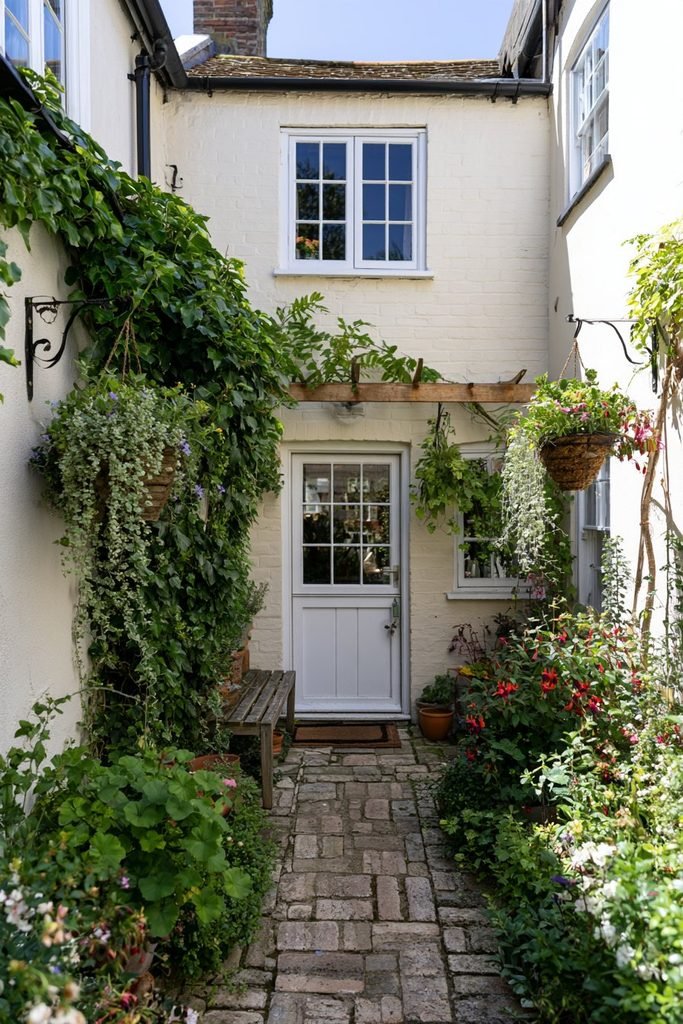
When a courtyard is too paved or too small for pots on the ground, hanging baskets from a pergola or wall bracket can add color without taking up any floor space. This approach works particularly well in courtyards where every square foot is already accounted for by seating or dining.
Add a Small Bistro Set for Two
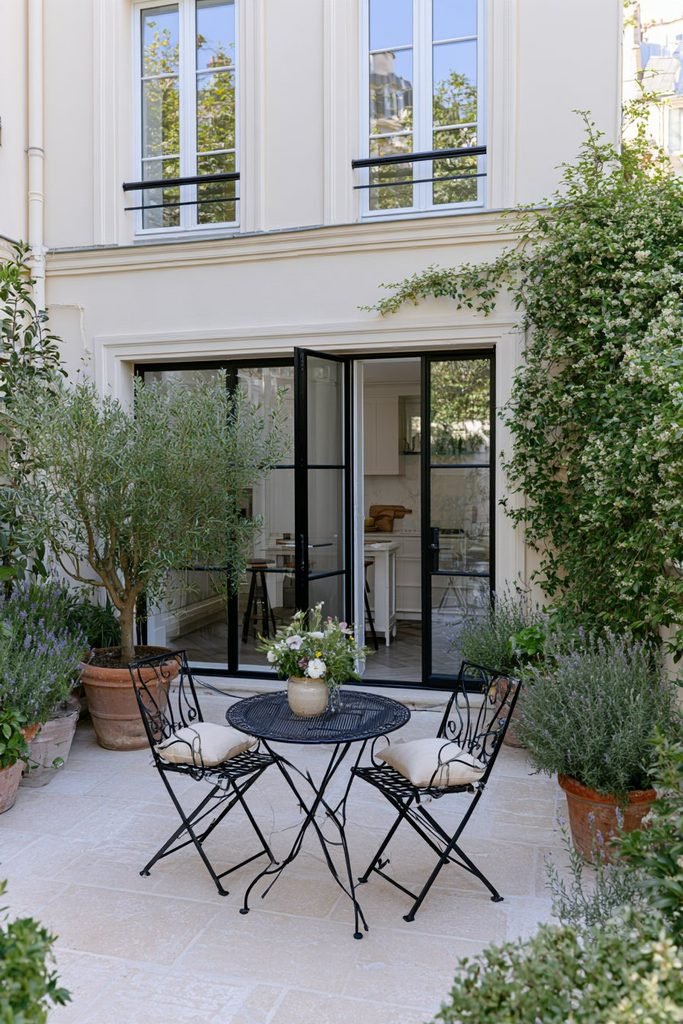
A compact bistro table and two chairs can turn even the tightest courtyard corner into a spot for morning coffee or an evening drink. Weather-resistant cushions and a small vase of flowers can dress up the set without adding bulk.
Frequently Asked Questions
What is a courtyard garden?
A courtyard garden is any outdoor space enclosed on at least three sides by the walls of a house, a fence, or a neighboring building. It’s typically smaller and more sheltered than an open backyard, which allows for more tender or shade-loving plants to thrive.
What plants work best in a shady courtyard?
Ferns, hostas, and Japanese anemones tend to do well in the low light common to walled courtyards. Evergreen climbers such as ivy can also fill in shaded vertical space where sun-loving plants would struggle.
How can a small courtyard be made to feel bigger?
Vertical planting, a limited material palette, and a well-placed outdoor mirror can all help a small courtyard read as larger than it is. Repeating a single element, like matching containers or a consistent paving pattern, also helps draw the eye down the length of the space.
Do courtyard gardens need irrigation systems?
Not necessarily, though container-heavy courtyards dry out faster than beds planted directly in the ground and may need more frequent watering. A simple drip irrigation system can help keep potted plants consistently watered without daily manual effort.
What’s the easiest way to add privacy to a courtyard?
Dense vertical planting with climbers and wall shrubs is one of the simplest ways to increase a courtyard’s sense of seclusion. Decorative screening panels can achieve a similar effect quickly, in spaces where plants need more time to establish.