Wainscoting ideas range from classic white raised panels to painted trim that mimics the look for a fraction of the cost. This decorative paneling typically covers the lower third to half of a wall, adding texture, architectural character, and a layer of protection against everyday scuffs.
This list covers 25 wainscoting ideas across styles, colors, materials, and rooms, from beadboard and board and batten to faux stone and marble. Each idea includes a practical detail, such as a paint color, a material choice, or a budget-friendly alternative.
Whether the goal is a formal dining room, a cozy bedroom, or a hardworking mudroom, there is a version that suits the space.
Classic White Panels
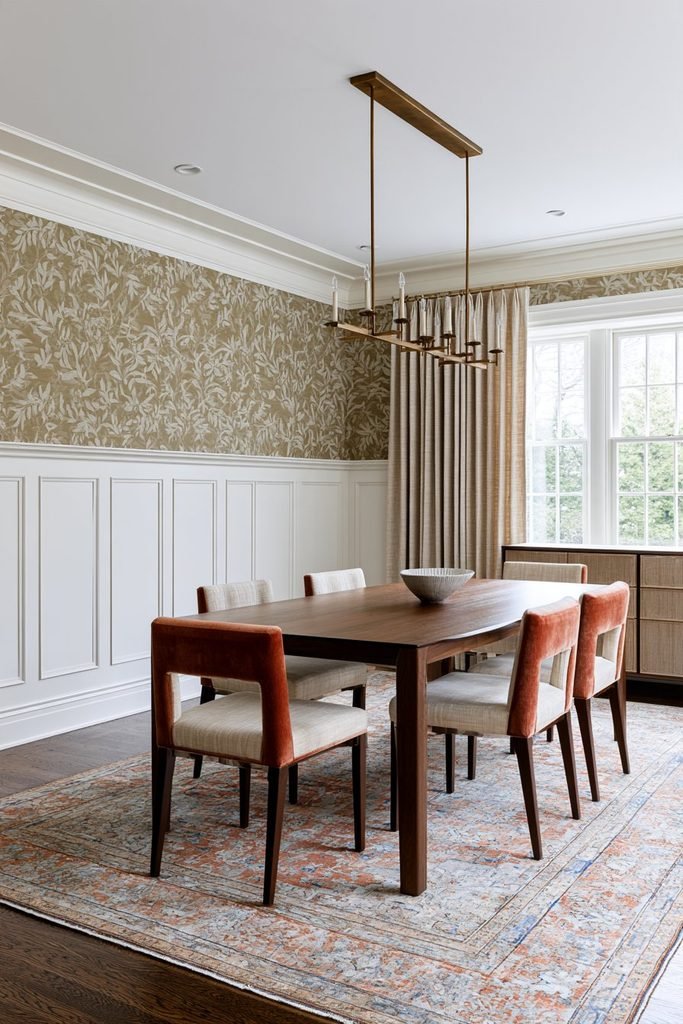
Choose raised or recessed white panels for a timeless dining room or entryway. Designer Michelle Gage paired classic white wainscoting with lively jungle-print wallpaper to keep a traditional room fresh, and Angi suggests continuing raised paneling along corridors when an entry opens into other rooms, creating a graceful flow.
Board and Batten Basics
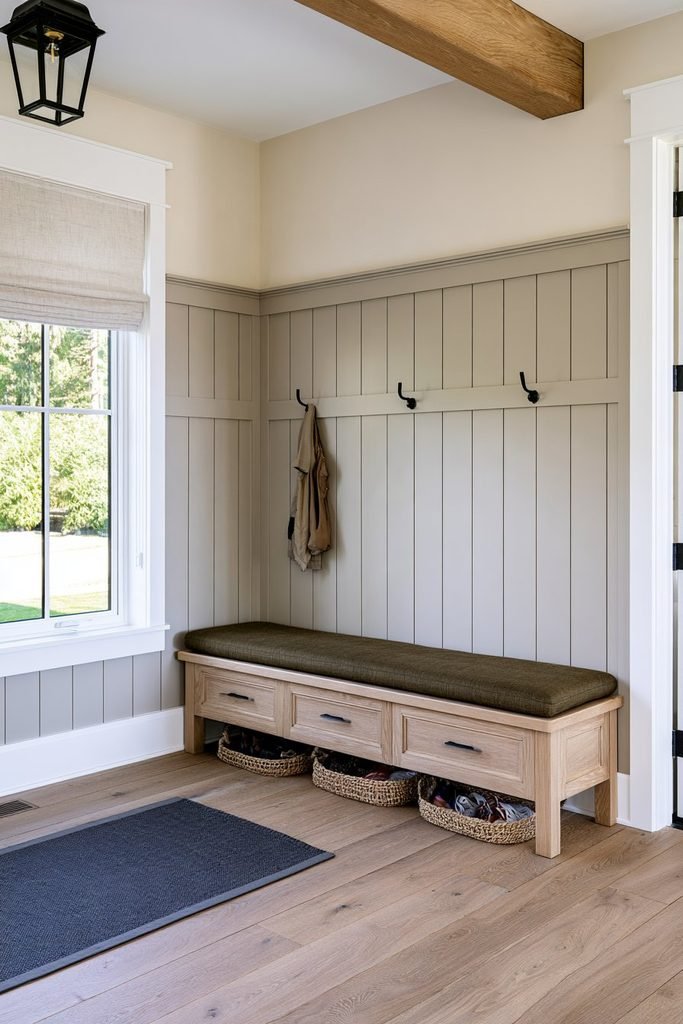
Use wide vertical boards topped with narrow battens for clean lines that suit craftsman, modern farmhouse, and transitional homes. The style involves more pieces and precise cuts than beadboard, so it can be a rewarding weekend DIY for anyone comfortable with a level and a nail gun.
Beadboard Charm
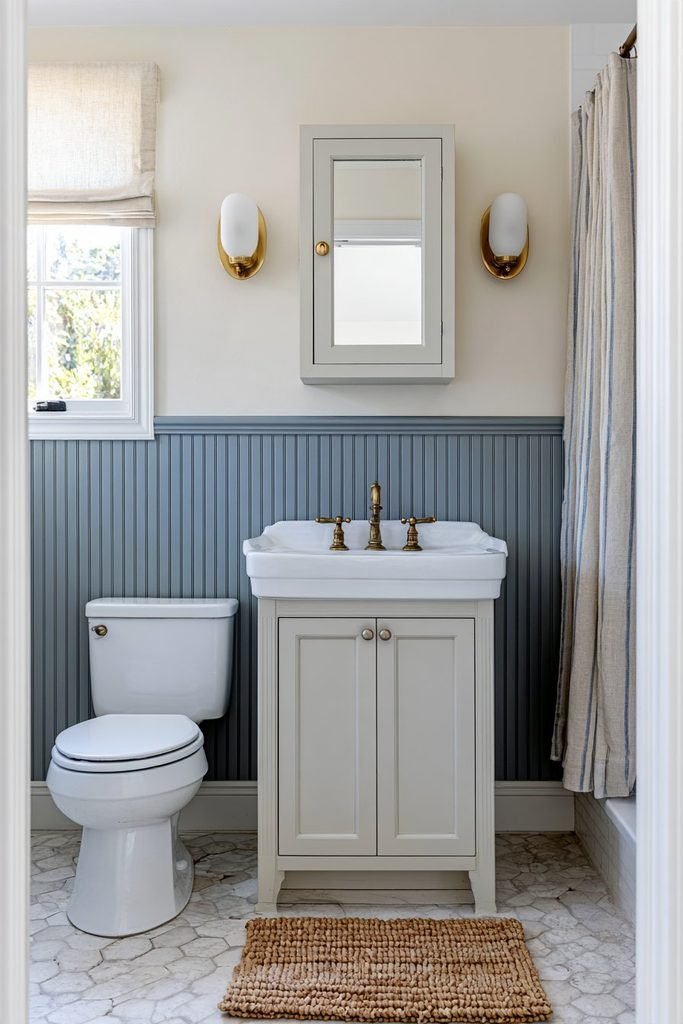
Select beadboard for narrow vertical grooves and a cottage feel in bathrooms, kitchens, and back hallways. Lowe’s notes that beaded panels can act as a subtle visual divider, and a satin or semi-gloss finish can make dust in the grooves easier to wipe away.
Picture Frame Trim
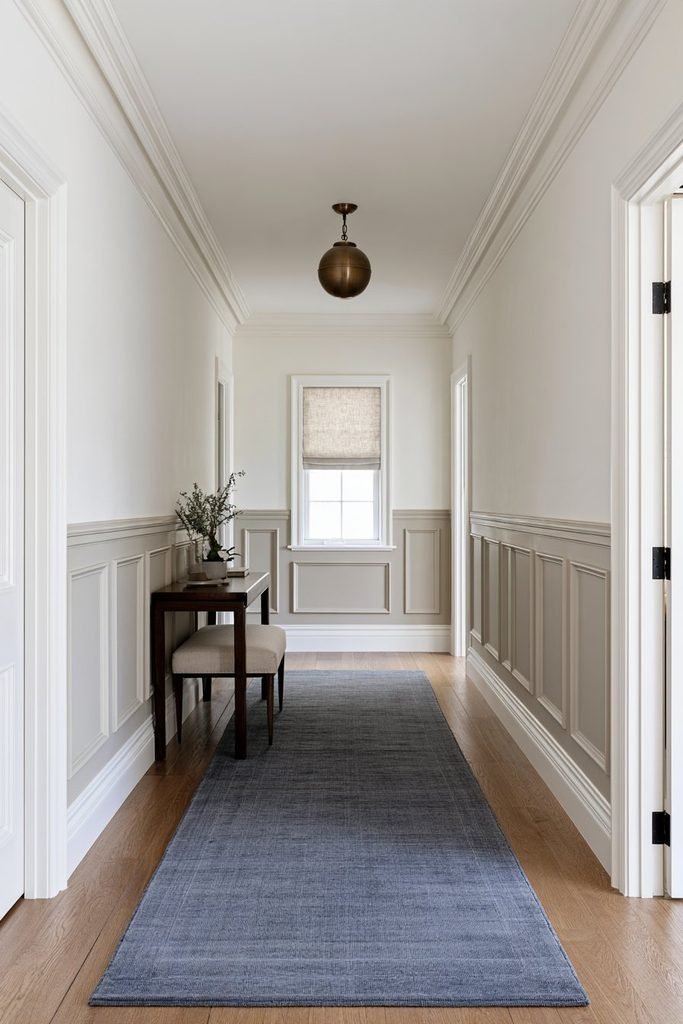
Apply rectangles of thin molding directly to drywall for the look of paneling at a lower cost. This budget-friendly, DIY-friendly style is flexible when it comes to height, and a single coat of paint in a soft white or warm greige can unify dining rooms and hallways.
Paint-Only Wainscoting
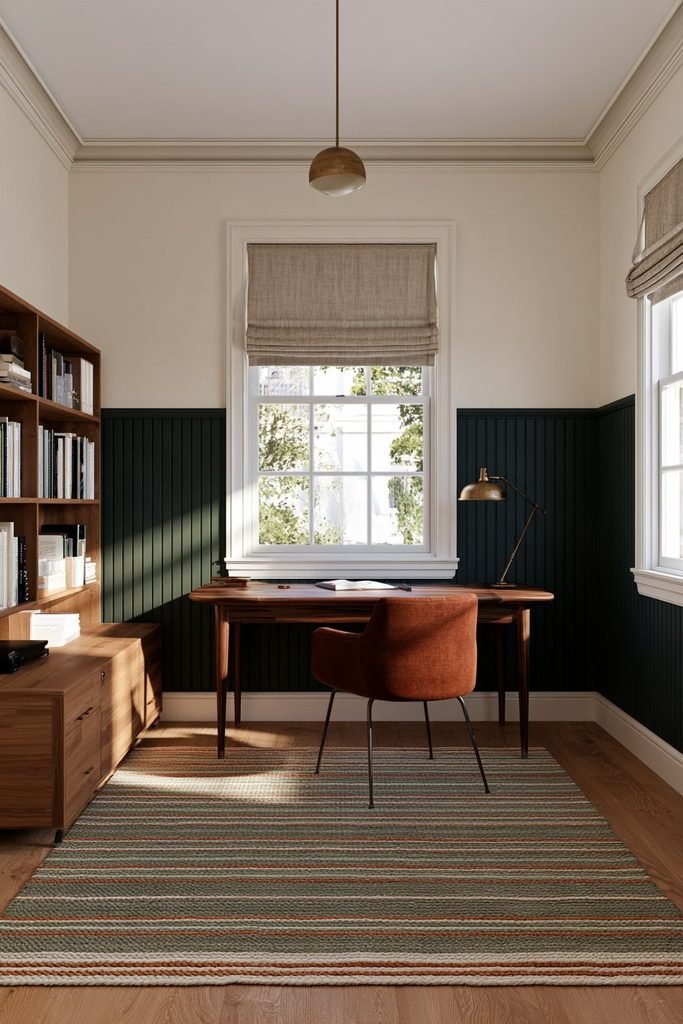
Mimic the contrast of paneling with two paint colors and a dividing line instead of millwork. Benjamin Moore calls the technique feign-scoting and showed a home office with grounding Cushing Green on the lower wall and brighter Crystalline above.
Vertical Shiplap Cottage
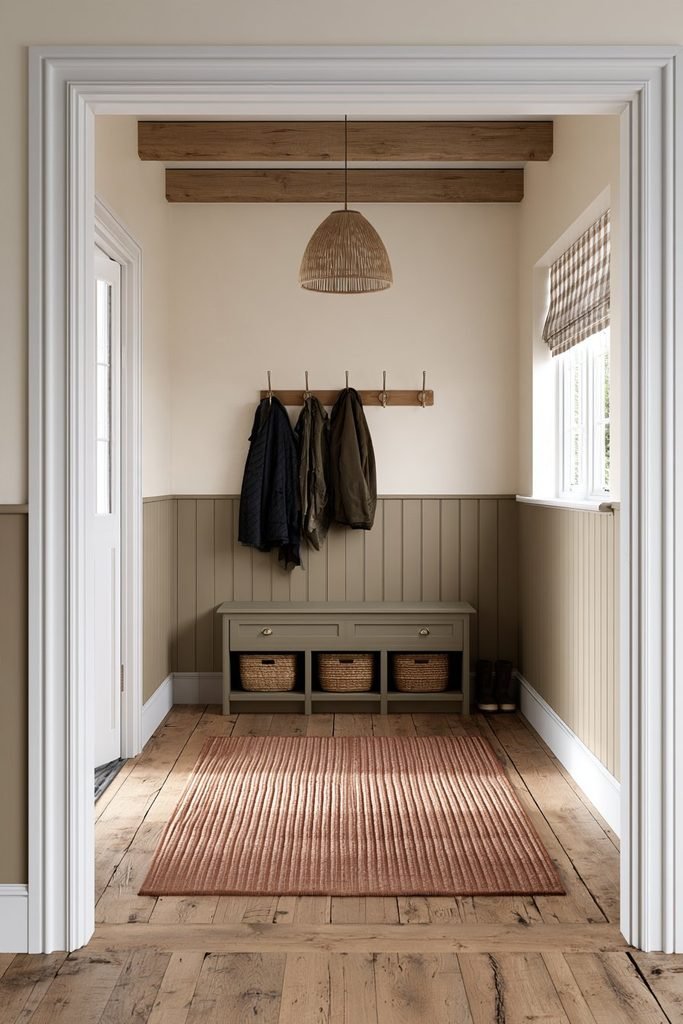
Run shiplap boards vertically instead of horizontally for a cozy cottage feel with a more rustic look. Entryways and mudrooms suit the style well, and a warm hue such as soft cocoa or muted cream can add to the inviting feel.
Dark and Moody
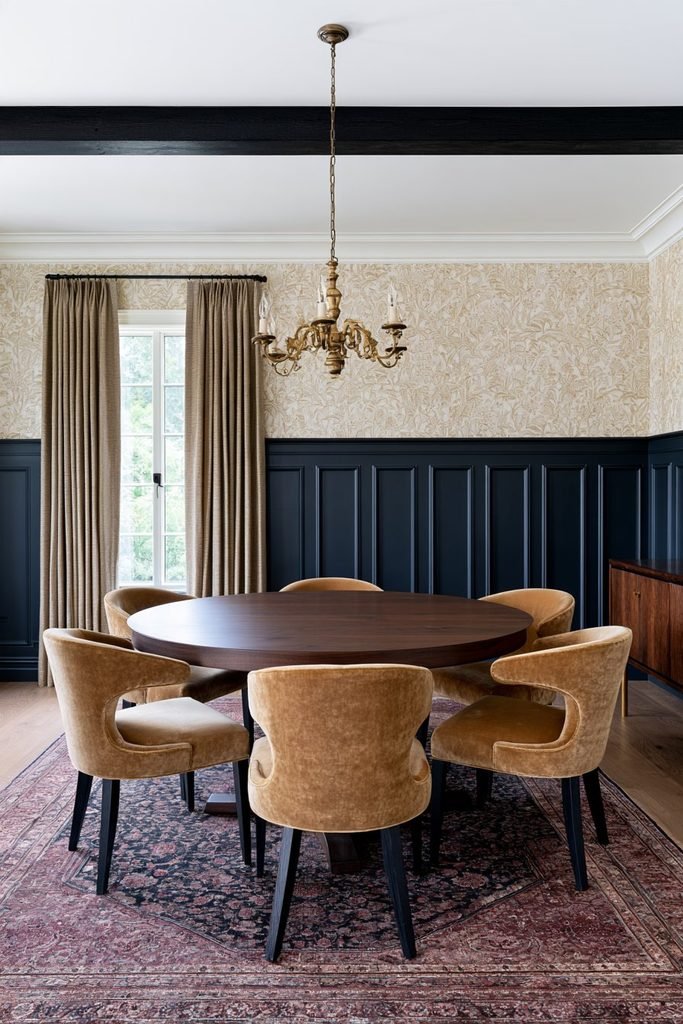
Paint wainscoting in deep navy or charcoal to ground a room with bold wallpaper above. Hugh Jefferson Randolph Architects paired navy wainscoting with aviary-inspired wallpaper in a dining room, letting the dark lower wall anchor the pattern.
Sage Green Calm
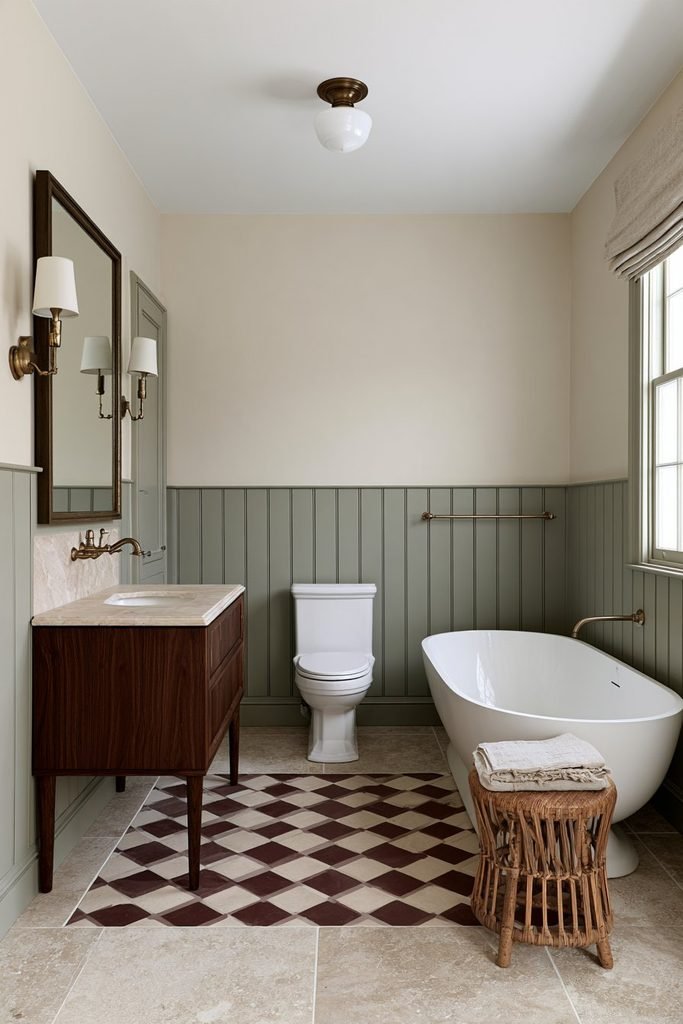
Choose sage green paneling for bathrooms and reading nooks that call for a tranquil feel. Designer Fletcher Rhodes used sage wainscoting to echo a marble-topped vanity and burgundy checkerboard floors, and a glossier paint finish can help moisture wipe clean.
Monochrome Wrap
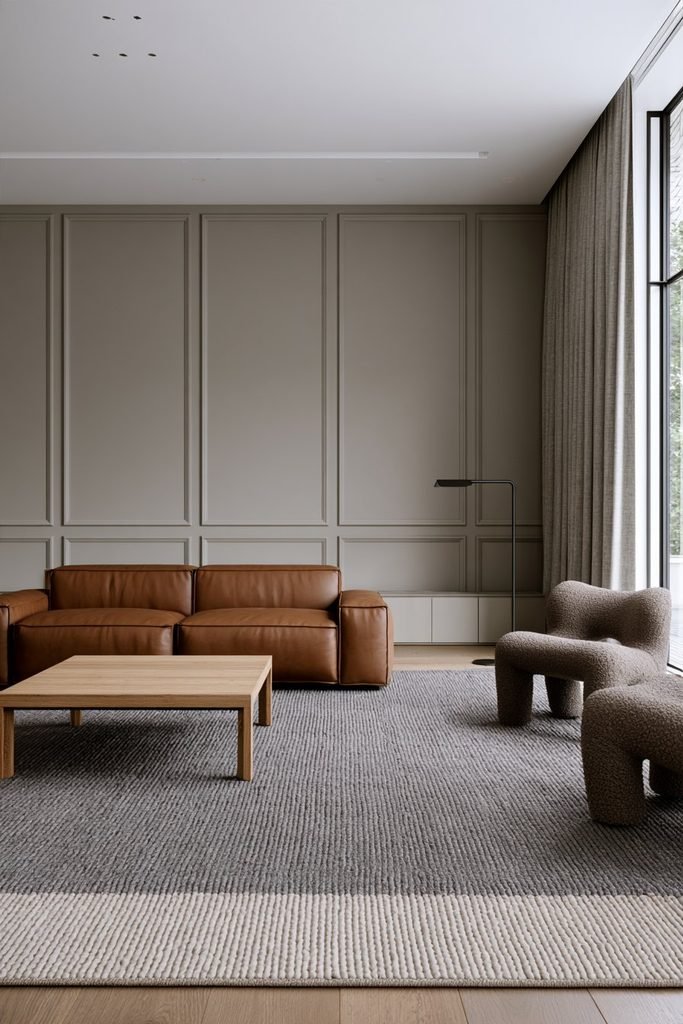
Paint the walls, wainscoting, trim, and doors in one color for a streamlined, cohesive feel. A monochromatic scheme can also use two tints of the same hue, such as a pair of soft grays in a living room, to keep the paneling visible without heavy contrast.
Sunny Yellow Entry
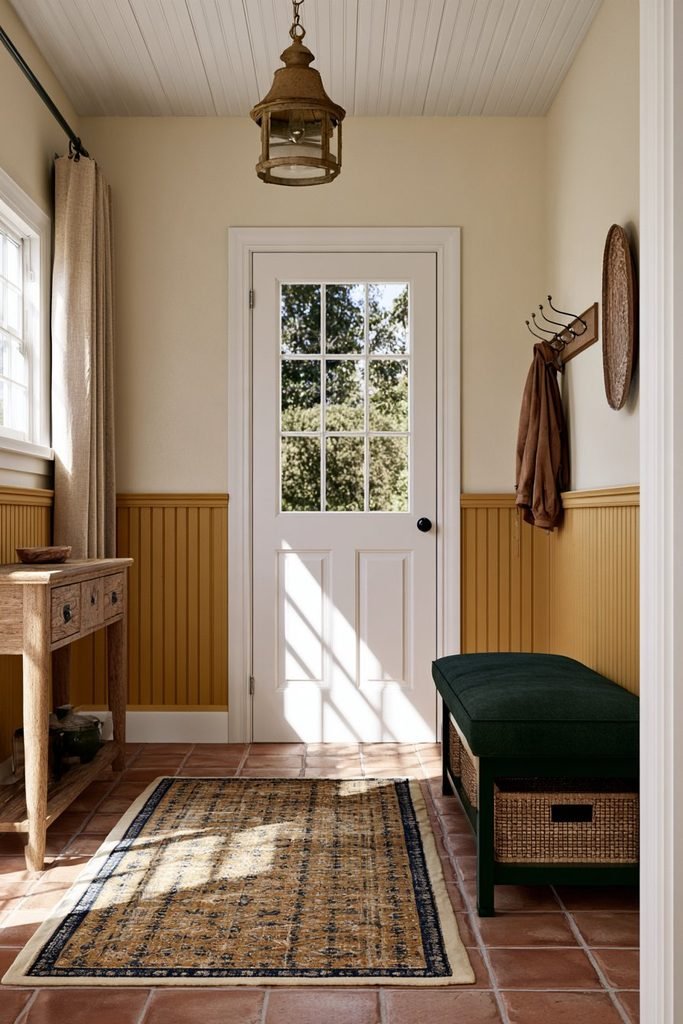
Add yellow beadboard to a neutral entryway for a cheerful welcome. Drake Interiors used bright yellow beadboard in a country cottage foyer, and a wide top trim thick enough to hold leaning artwork can turn the paneling into a practical ledge.
One-Wall Headboard
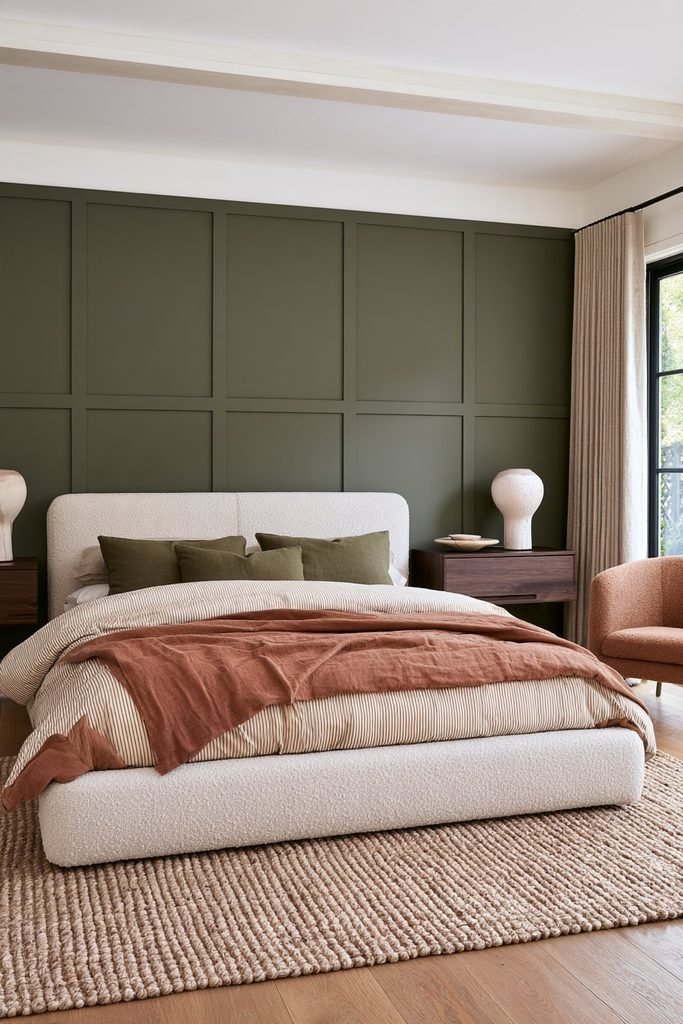
Limit wainscoting to a single bedroom wall to create the look of an extended headboard. Mina Starsiak Hawk painted the paneling olive green in a bedroom on Good Bones and balanced it with a gallery wall above.
Scalloped Edges
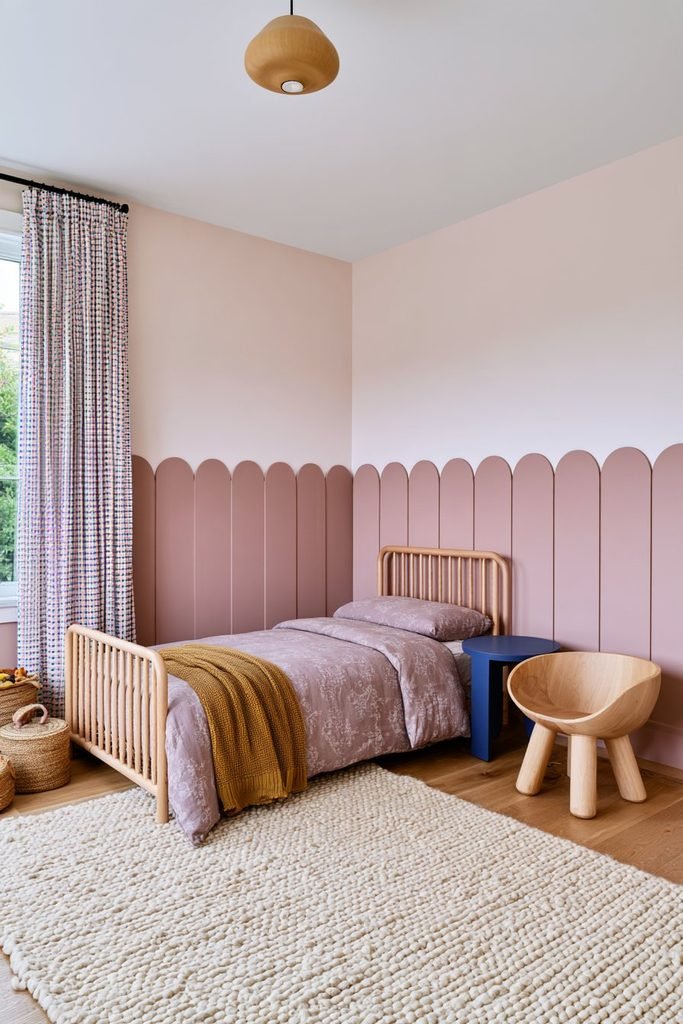
Choose scalloped paneling for a playful twist in a nursery or kids’ room. HGTV highlights a nursery where scalloped wainscoting, framed by a chair rail on either side, was painted the same light pink as the walls for a soft, cohesive feel.
Wallpaper Pairing
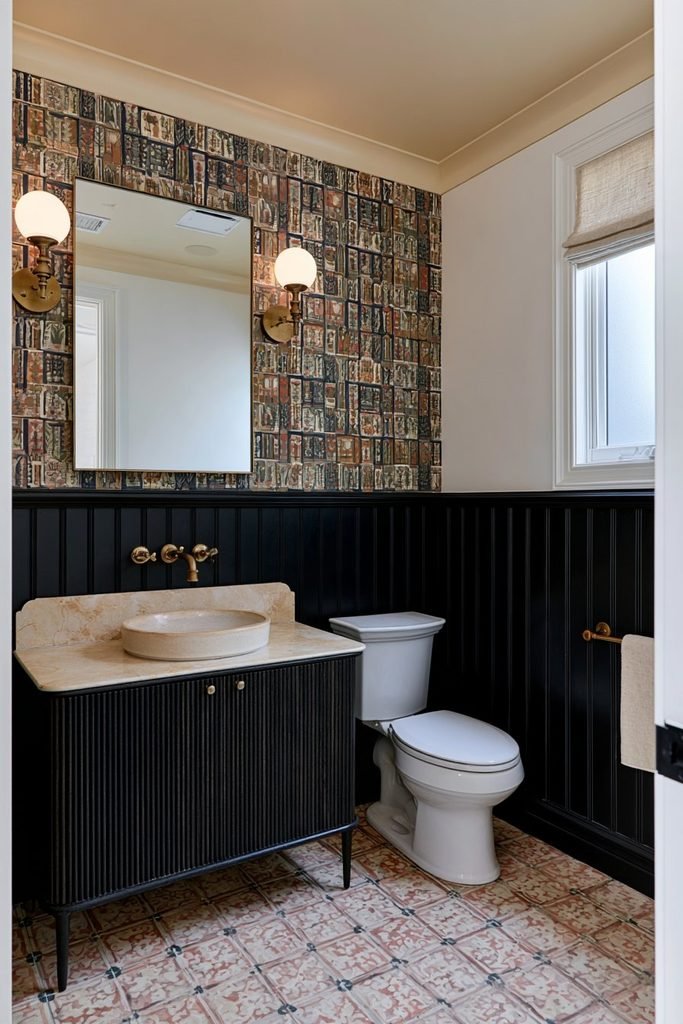
Pair wainscoting with wallpaper above to balance a busy pattern. In an eclectic powder room, designer Harmony Weihs used black wainscoting with vertical molding beneath a colorful puzzle-print wallpaper, letting the dark lower wall calm the pattern.
Stained Wood Warmth
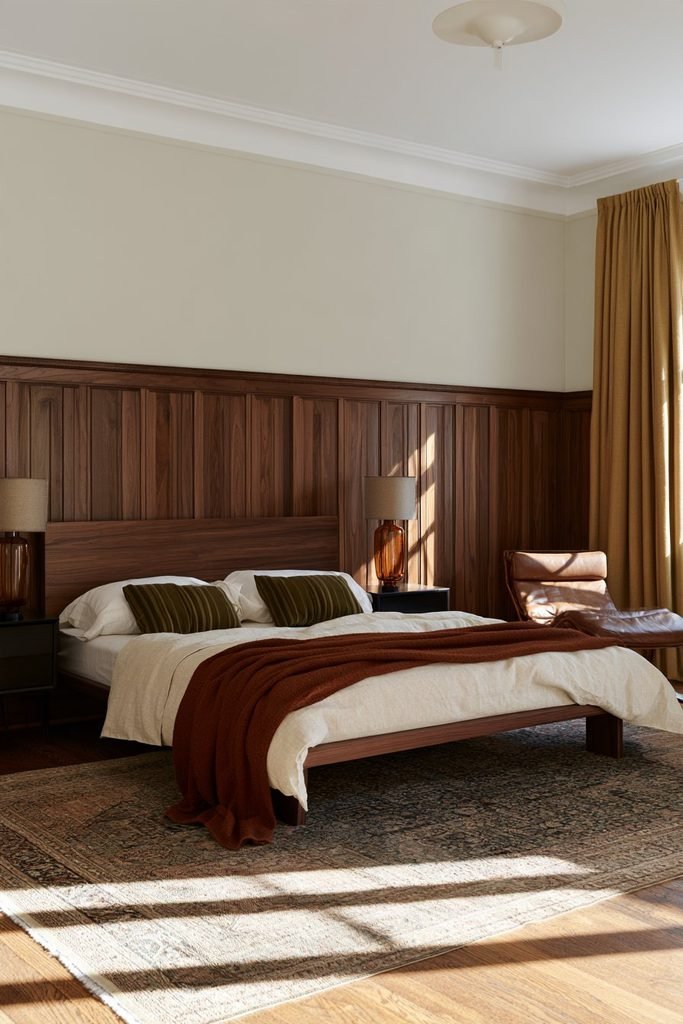
Leave wood wainscoting stained instead of painted for a warm, vintage feel, with oak, walnut, or mahogany suiting traditional and Victorian homes. Designer Brian Kleinschmidt used wood paneling that appears to wrap out of a nightstand and around the walls to lean into a retro 1970s look in a hotel room on 100 Day Hotel Challenge.
Flat-Panel Contemporary
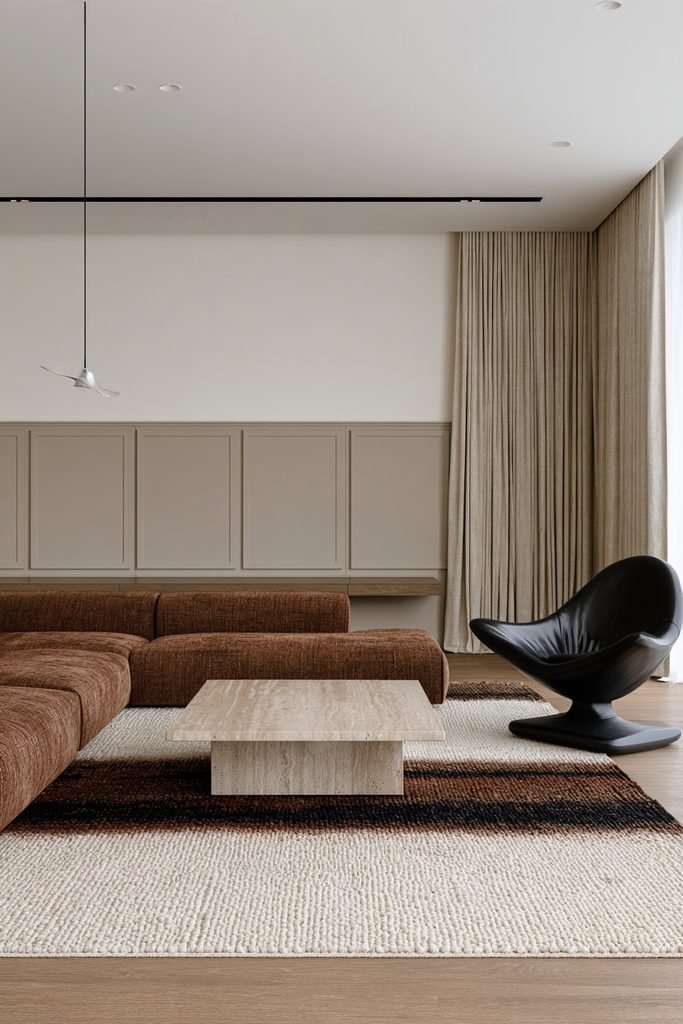
Select flat panels with smooth, recessed fields for a sleek, contemporary look. Painted in a single color and finished with simple baseboard and crown molding, flat-panel wainscoting can add subtle depth to a minimalist living room or bedroom.
Black Beadboard Drama
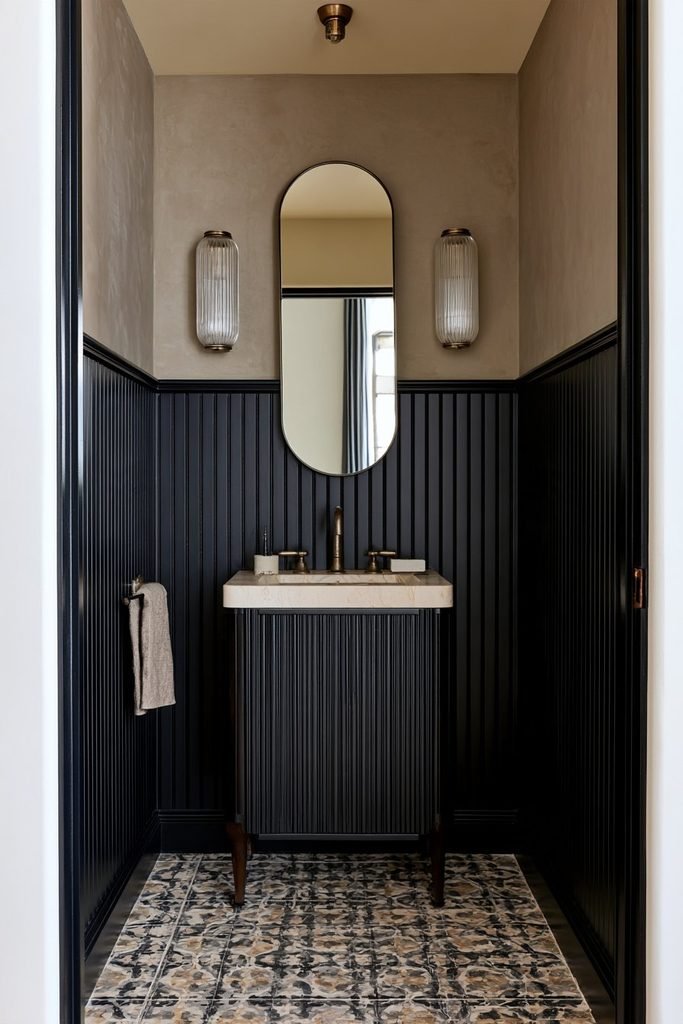
Paint beadboard black for a statement in a powder room or living room. Curbly features black beadboard as a bold twist on a classic style, and a satin finish can keep the effect moody rather than shiny.
Faux Stone Tub Surround
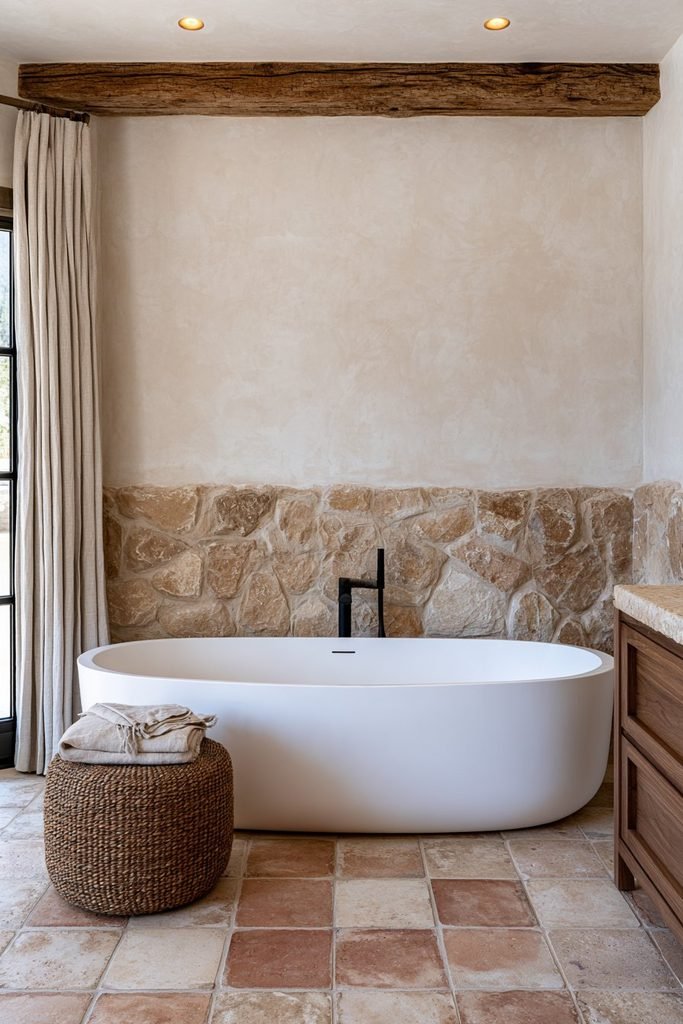
Use faux stone panels around a freestanding tub for rich texture and color. Barron Designs showed Anson Fieldstone faux stone wainscoting framing a freestanding tub, keeping the focus on the tub while adding energy to the room.
Marble Luxury
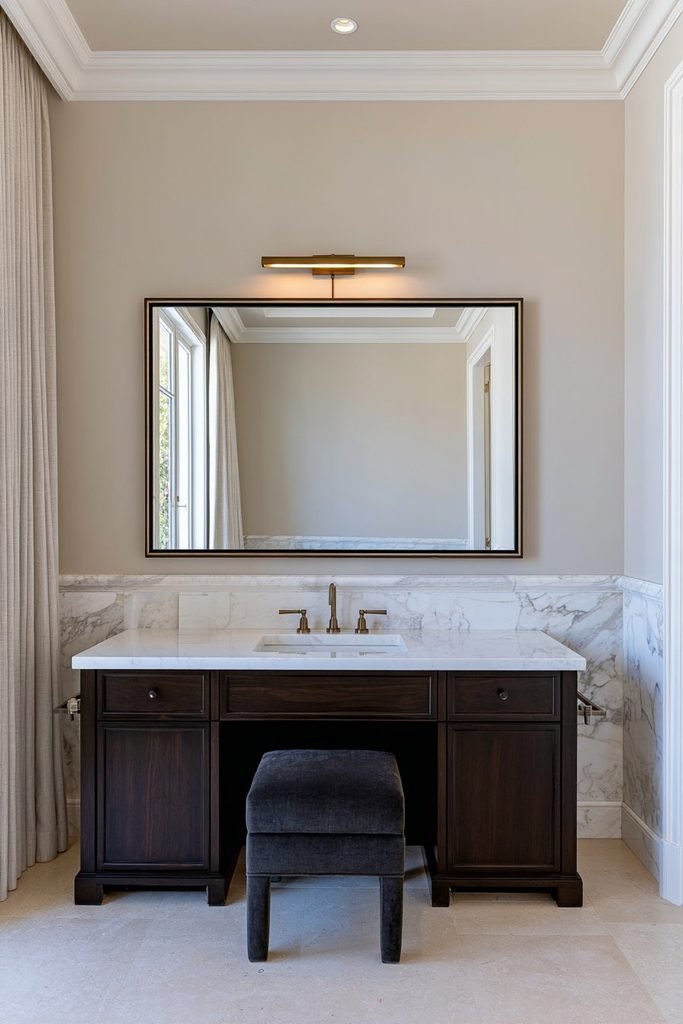
Choose marble panels for a luxurious, elegant look in a bathroom or formal entry. Marble-look tile set at wainscot height can be a more budget-friendly alternative that keeps the same polished feel.
Kitchen Softener
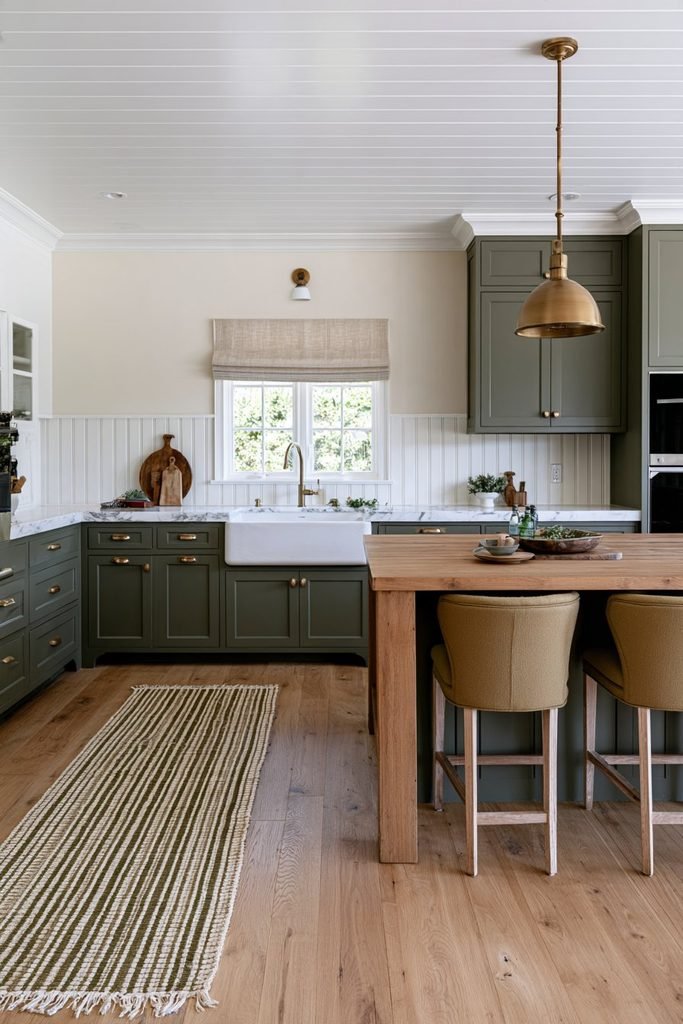
Add wainscoting to a kitchen to soften hard, reflective surfaces such as cabinetry and countertops. Benjamin Moore paired off-white beadboard in warm-gray Revere Pewter with plenty of gold hardware in a farmhouse kitchen for a modern take on a traditional style.
Bathroom-Smart Panels
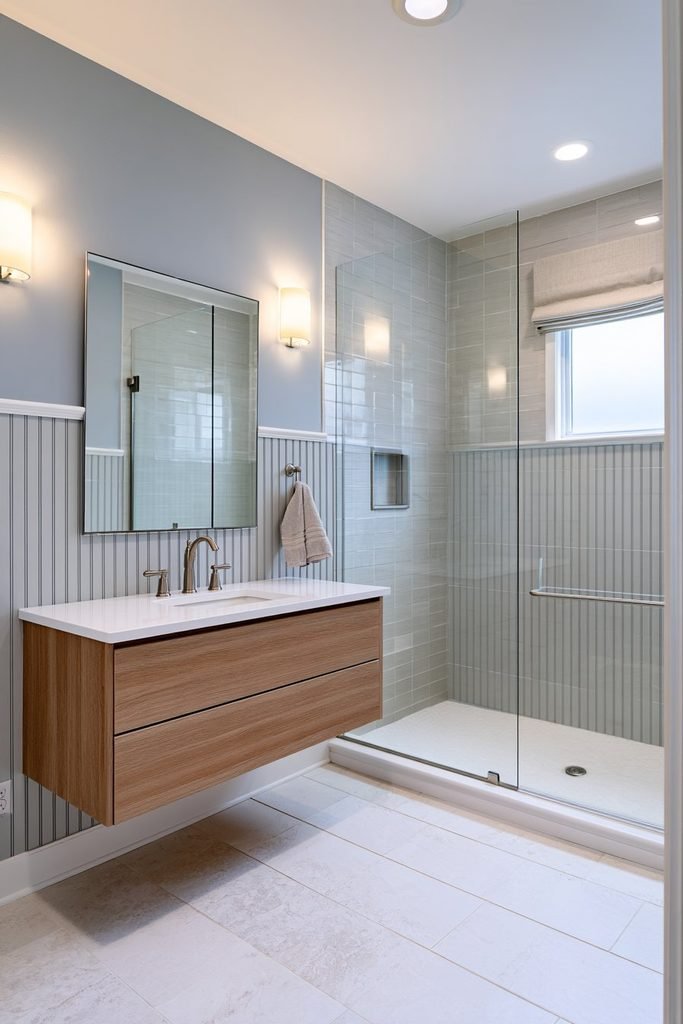
Select moisture-resistant panels and set them between 36 and 42 inches to clear most vanities and protect walls from splashes, as outlined in Koffler Sales’ wainscoting height guide. Real wood beadboard can warp in a steamy bathroom, so extruded PVC beadboard is a smooth, paintable, and easy-to-clean option.
Mudroom Workhorse
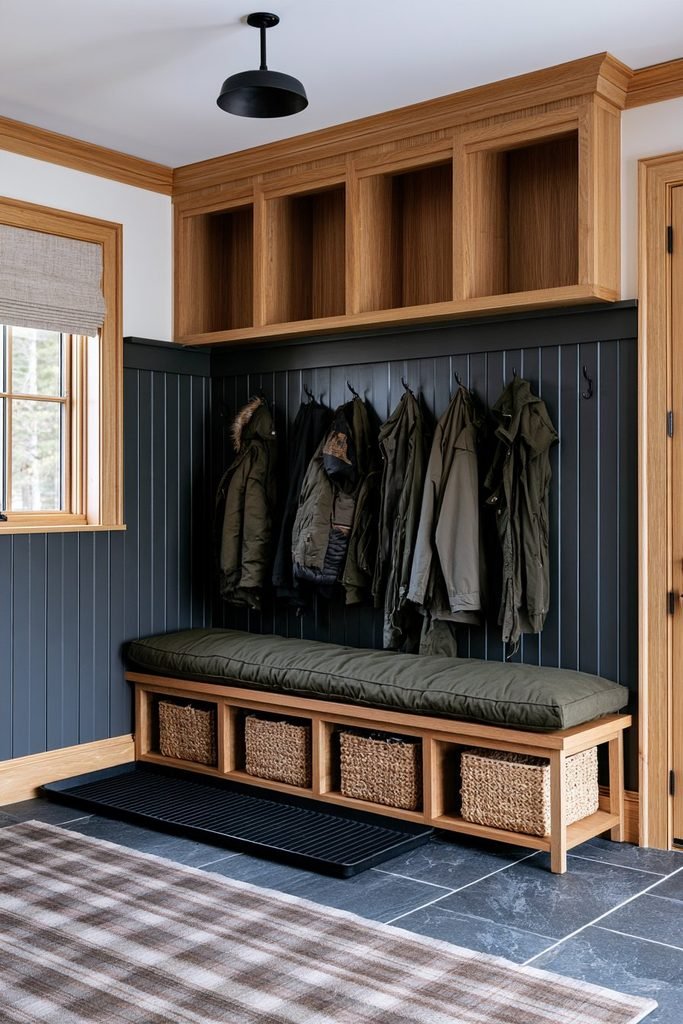
Use wainscoting as a wipeable wall protector in high-traffic mudrooms. Yond Interiors painted mudroom wainscoting in deep charcoal in a lake cottage, creating a decorative backdrop for built-in cubbies that resists dirt and cleans easily.
Breakfast Nook Backdrop
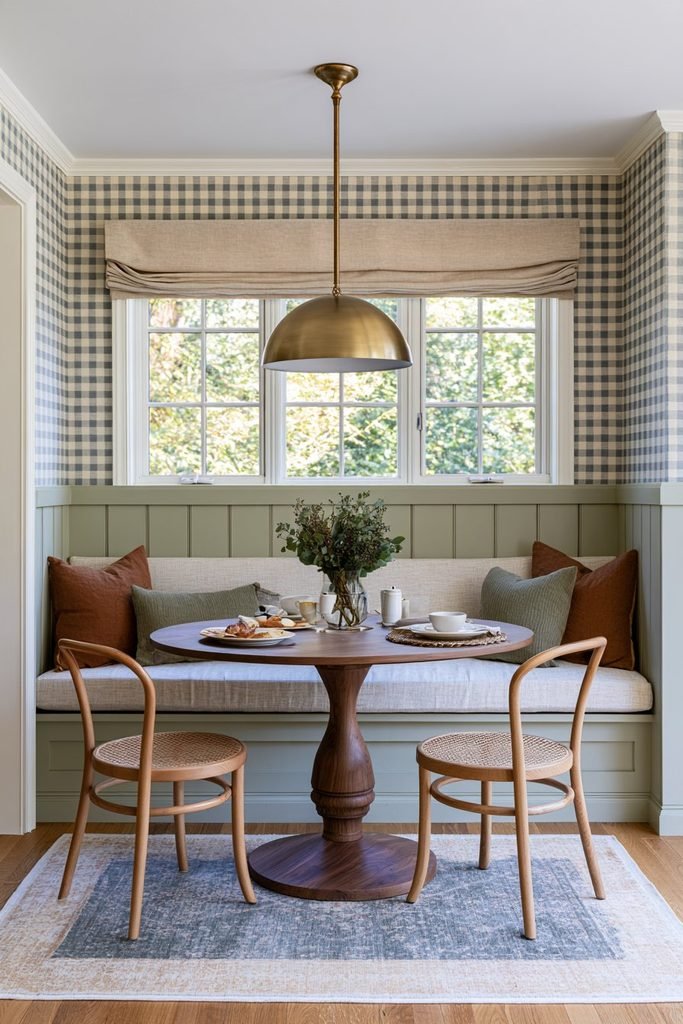
Line the wall behind a built-in bench with paneling painted to match the seating. Drake Interiors painted paneling light green to coordinate with buffalo check wallpaper in a breakfast nook, giving the corner a custom, finished feel.
Staircase Wainscoting
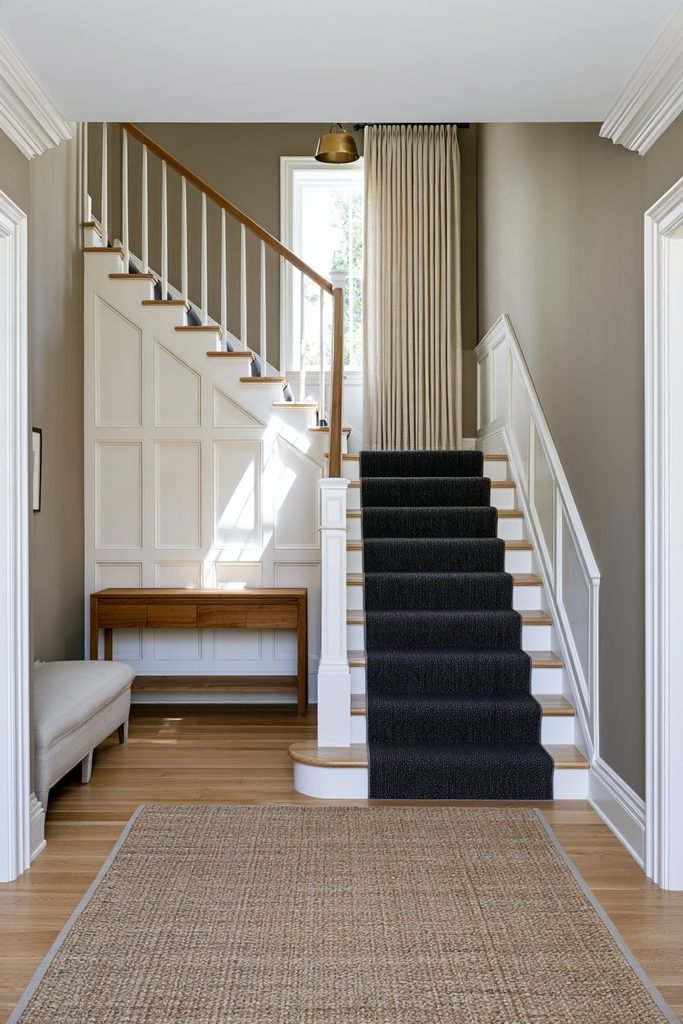
Run wainscoting along a staircase wall to follow the rise of the steps and add a tailored feel to a hallway. Benjamin Moore suggests a neutral white such as Simply White in a higher sheen to highlight the paneling details.
Home Office Focus
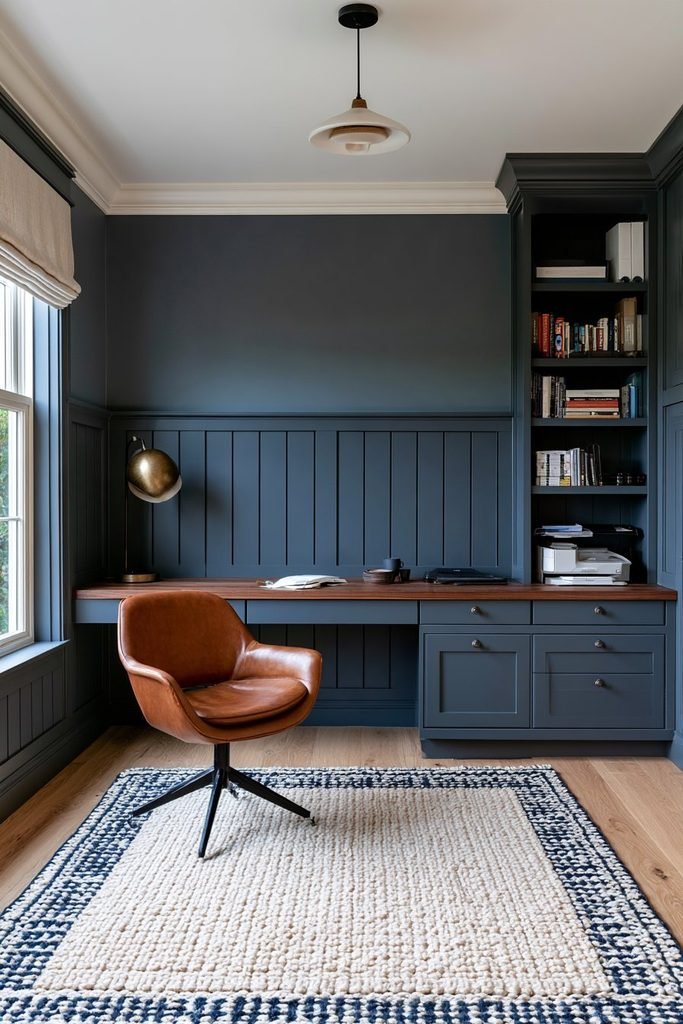
Paint wainscoting and built-ins in a muted color to make a small home office feel considered. Little Greene paired the muted blues Obscura and Juniper Ash on paneling and a desk for a calm, focused scheme.
Frequently Asked Questions
What height should wainscoting be?
Wainscoting typically covers one-third to one-half of the wall, or about 32 to 36 inches on an 8-foot wall, and can reach two-thirds in formal spaces such as entryways and dining rooms. Bathrooms often work well at 36 to 42 inches to clear vanities. Aligning the top rail with a window sill can create a cohesive look.
What is the difference between wainscoting and beadboard?
Wainscoting is the umbrella term for decorative paneling on the lower part of a wall, and beadboard is one style within it, recognized by narrow vertical grooves. Raised panel, flat panel, board and batten, shiplap, and picture frame are other common styles.
What is the best wainscoting material for bathrooms?
PVC and vinyl resist moisture and are easy to clean, making them a practical choice for bathrooms. MDF is affordable and paintable but works best when primed and well sealed, while real wood beadboard can warp in steamy spaces.
Can wainscoting be added without a full installation?
Yes. Picture frame molding applied to drywall or a paint-only treatment with a chair rail can create the look of wainscoting at a lower cost. Both options are easy to update if the style changes later.