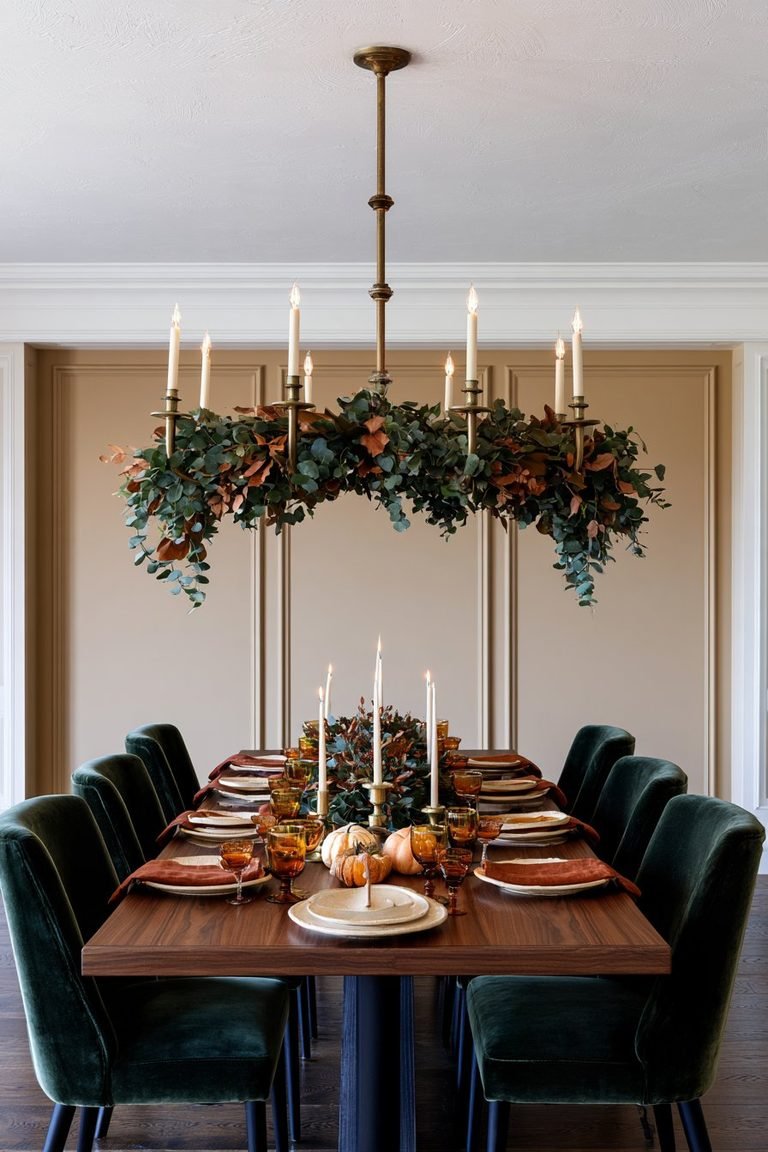
Venetian plaster wall ideas are moving from luxury hotels into everyday homes, and the search data supports it. Houzz reported that searches for Venetian plaster rose 94% in early 2026 compared with the same period a year earlier, part of a wider shift toward walls with depth and touch.
Made traditionally from slaked lime and marble dust, the finish can read matte and chalky or polished like stone, depending on how it is troweled and burnished. The 26 ideas below cover rooms, colors, finishes, and practical options, from a single bedroom wall to a full powder room wrap.
Headboard Wall Glow
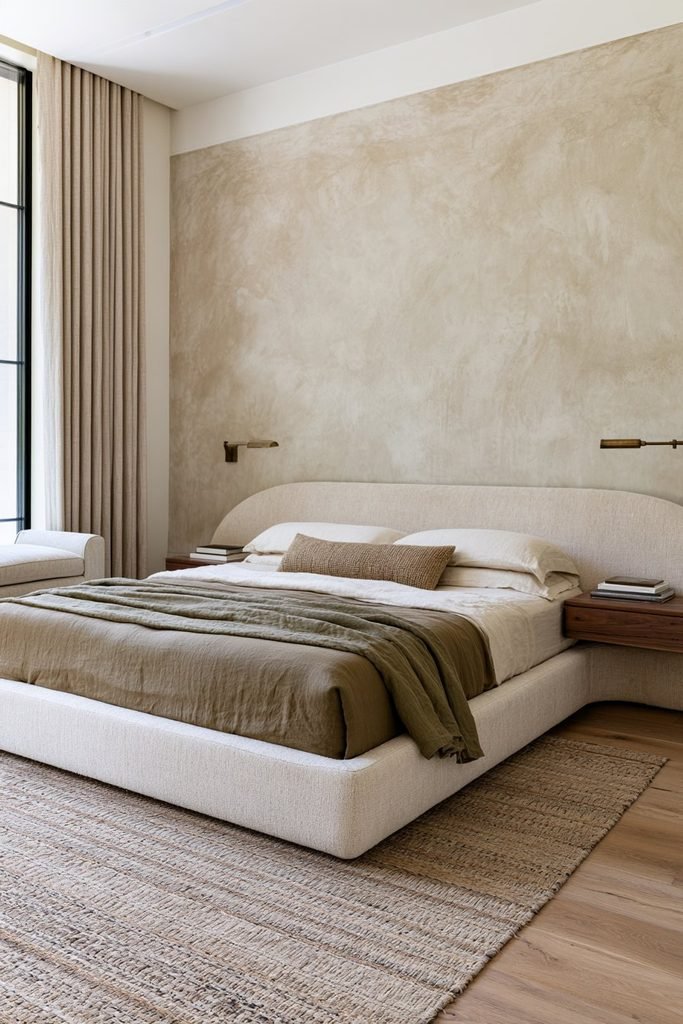
Apply plaster to the wall behind the bed to create a focal point that shifts with the light through the day. A satin or matte finish in warm ivory or soft mushroom can keep the room restful, with the remaining walls painted in a matching matte tone.
Test the color on a large sample board first, since plaster can look different from a paint chip under bedroom lighting.
Fireplace Surround Polish
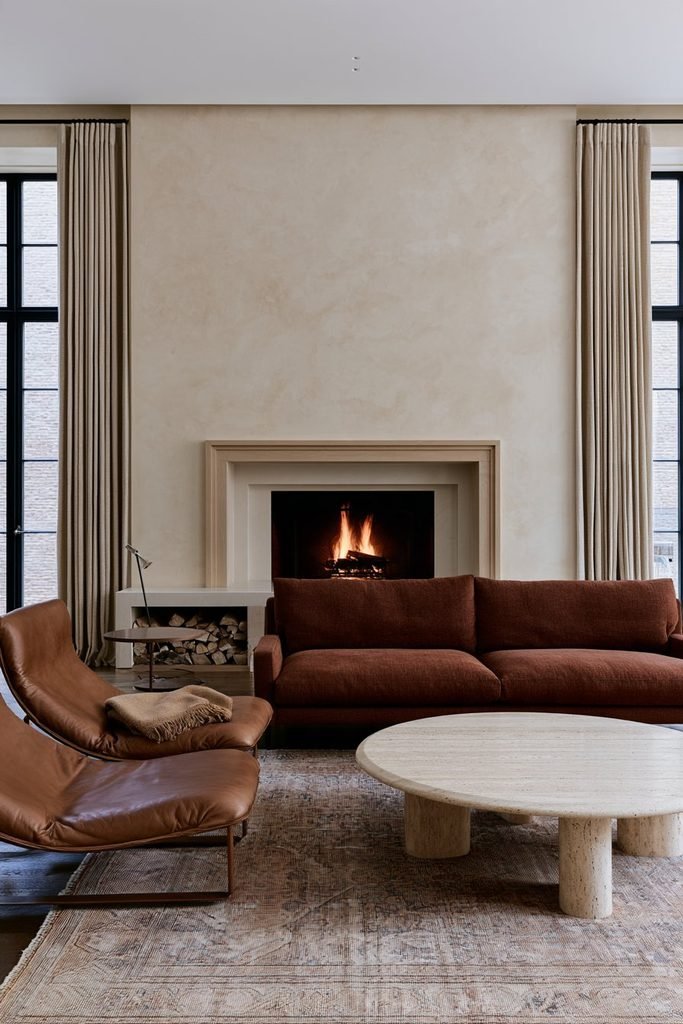
Wrap the fireplace wall in burnished plaster for a marble-like surface without stone slabs or seam lines. The seamless finish can follow corners and curves, and a polished sheen can pick up firelight in the evening.
Pair the surround with a simple oak mantel shelf and linen drapes to keep the focus on the sheen of the wall.
Venetian Plaster Feature Wall
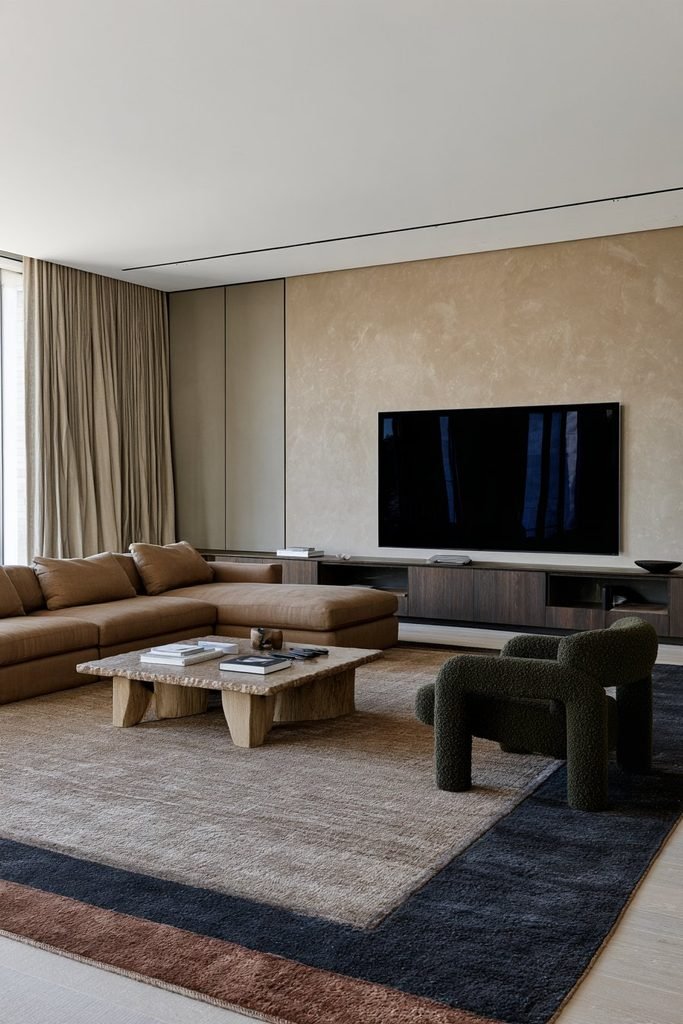
Limit plaster to the main seating or TV wall in a living room to keep cost and effort manageable. Decora recommends warm, earthy tones for feature walls and points to Marmorino Classico as a balanced option for living rooms that want texture without a high-gloss look.
Keeping the other walls in flat matte paint in a matching tone can balance the budget and the overall look.
Powder Room Drama
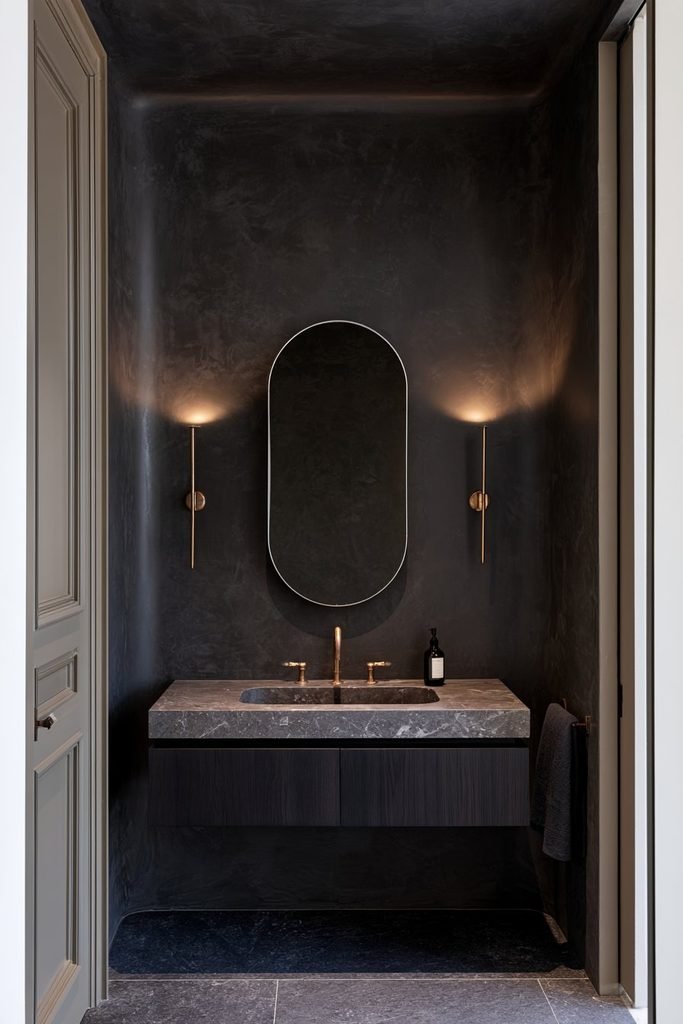
Use a deep tone such as charcoal or olive on the walls, and even the ceiling, to turn a small powder room into a jewel box. Brass sconces can bring out the depth of the finish, and the compact footprint keeps the amount of plaster modest.
Sealing the surface with wax or a water-based topcoat can help the finish handle occasional splashes.
Terracotta Dining Warmth
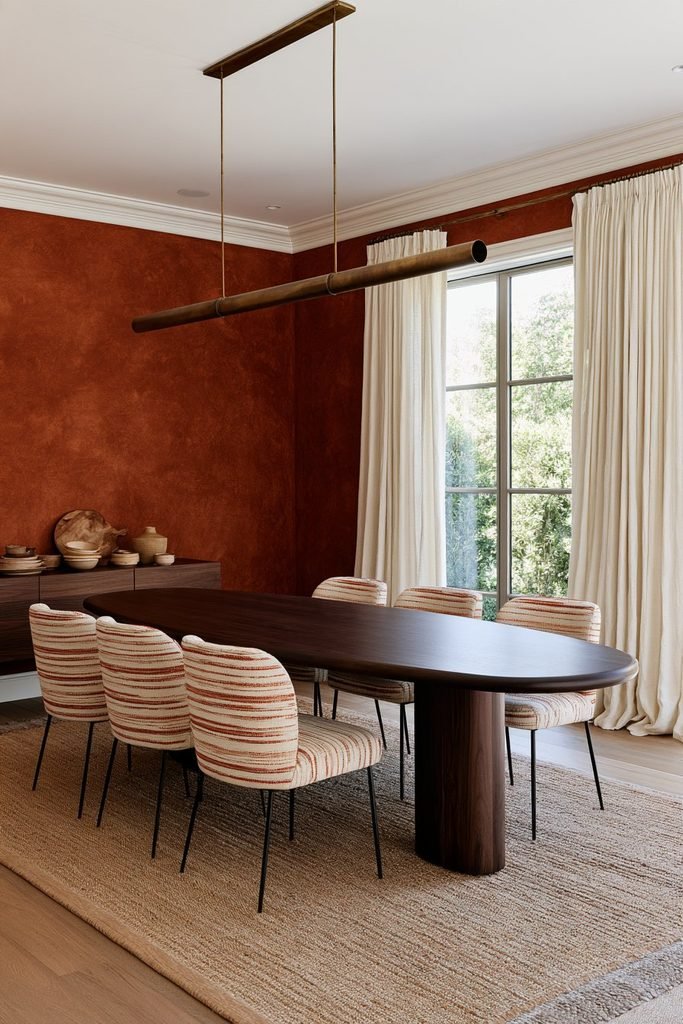
Choose terracotta plaster behind the dining table to bring warmth to evening meals. A lime-based plaster tinted with iron oxide pigments can give the color natural depth, especially when paired with unlacquered brass fixtures and white oak furniture.
Candlelight and pendant lighting can deepen the color further in the evening.
Mushroom and Taupe Neutrals
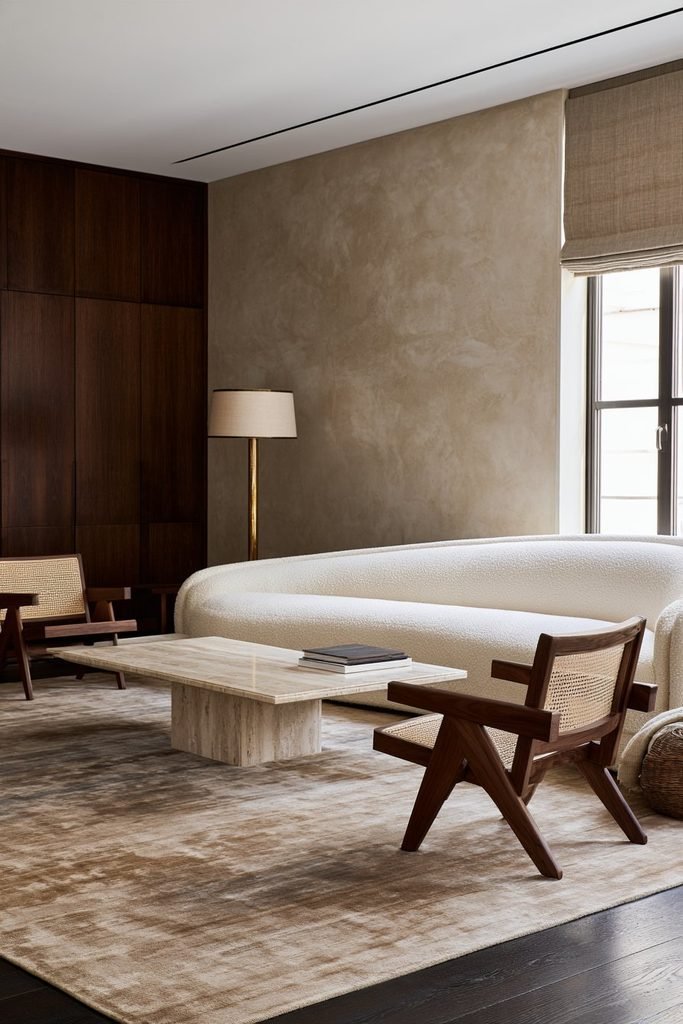
Pick mushroom, taupe, or cream plaster for a warm neutral with more depth than flat paint. SBK Wall Finishes cites Houzz data showing searches for mushroom up 69%, taupe up 50%, and cream up 44%, a palette where Venetian plaster sits naturally.
Walnut furniture and brushed brass accents can add contrast to these softer tones.
Warm White Marmorino
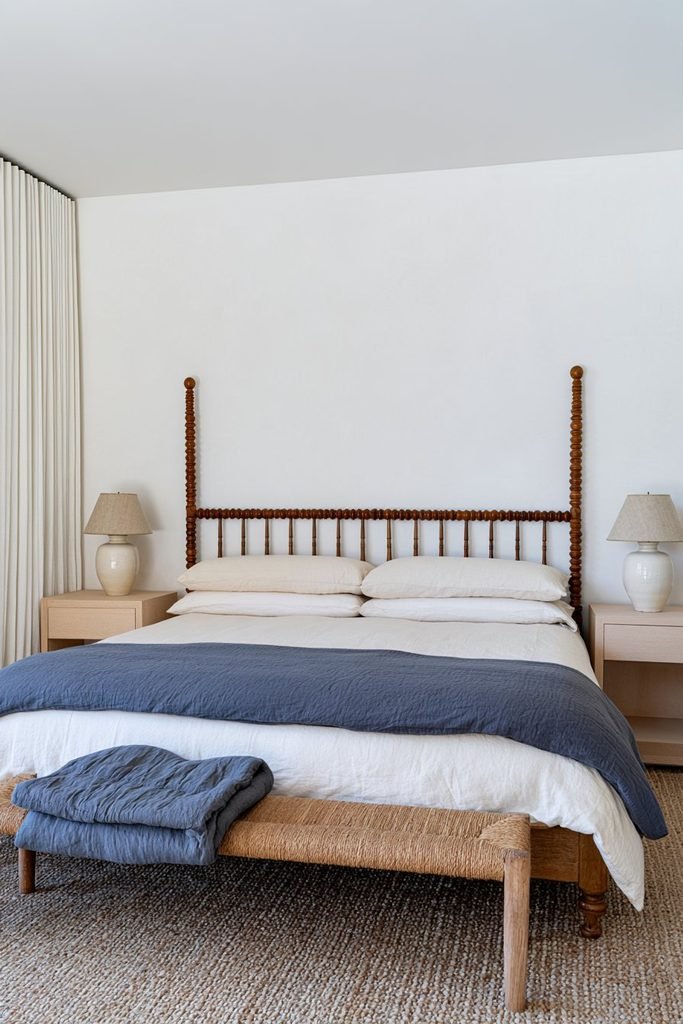
Choose a warm white in a matte Marmorino finish to brighten a room without the clinical feel of stark white. A soft off-white such as Farrow & Ball Pointing can serve as a color reference, and the plaster can show gentle tonal variation as light changes.
In a north-facing room, a slightly warmer white can keep the plaster from looking muddy in cool light.
Sage Green Calm
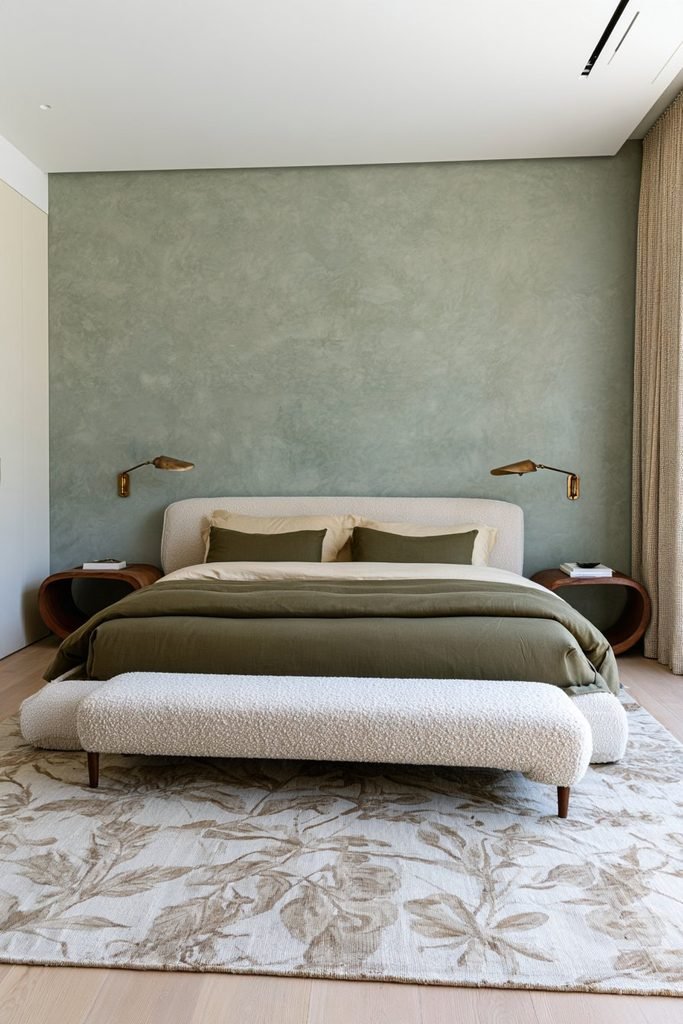
Select a sage with gray undertones rather than yellow to avoid a minty look in a bedroom or living room. The subtle texture of plaster can keep sage from feeling flat, and brass hardware with natural linen bedding can complete a calm, hotel-like feel.
Benjamin Moore October Mist can serve as a reference color when tinting the plaster.
Navy Home Office
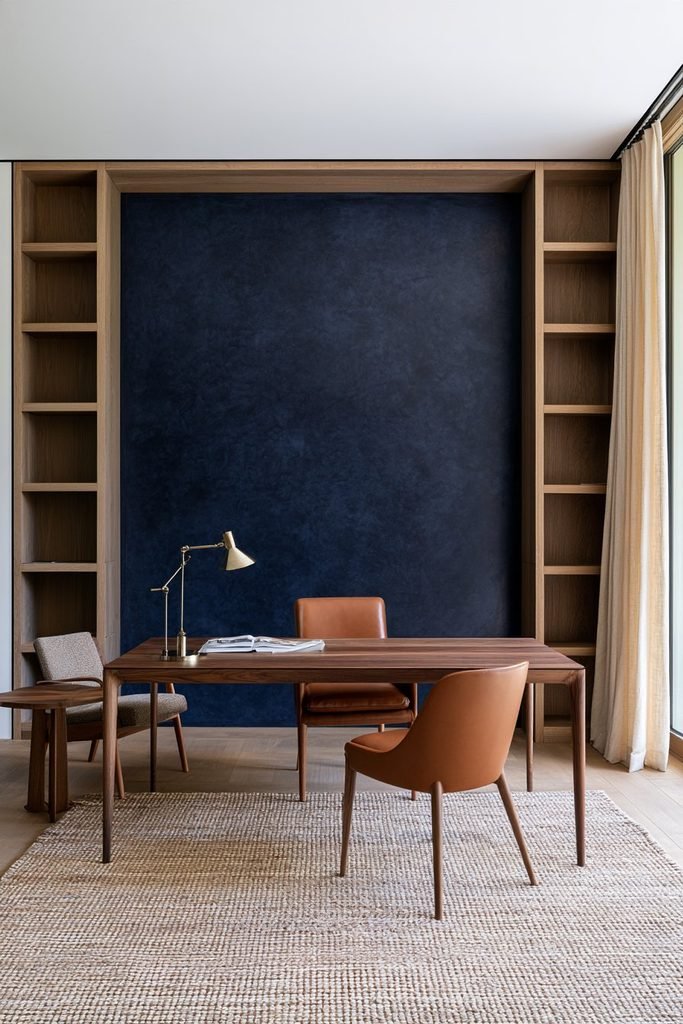
Use navy plaster in a study or home office to create a library-like feel. Sketched Interiors pairs navy walls with brass task lighting and oak built-ins, and notes that dark plaster can show dust more readily, so regular wiping can help.
Dark walls set against light wood can create a balanced contrast in a workspace.
Forest Green Library
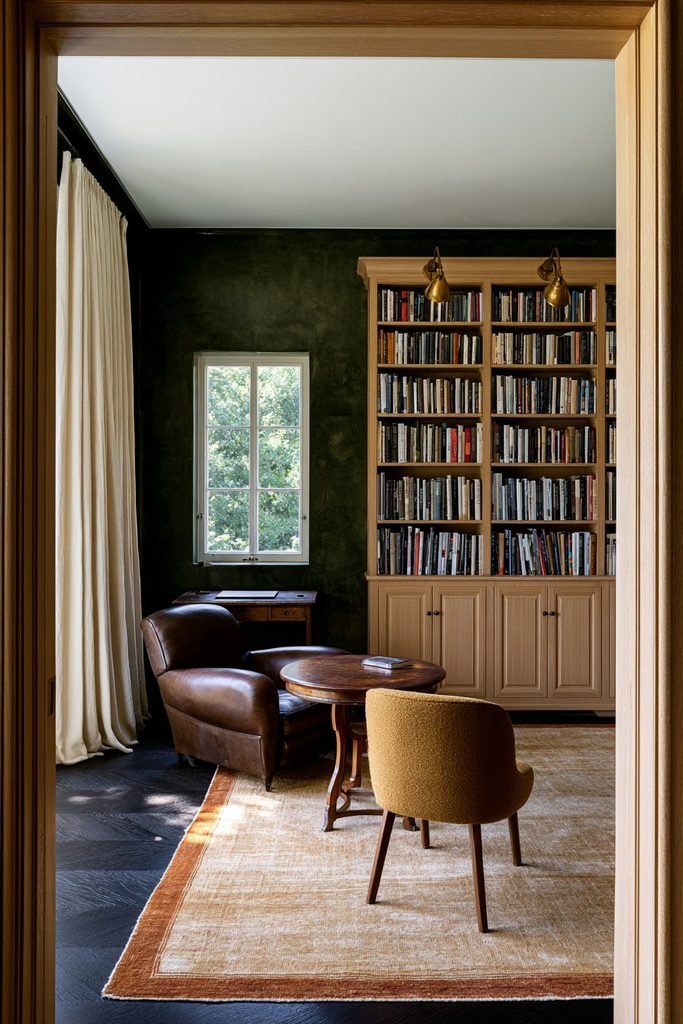
Apply deep forest green plaster to a home library or formal sitting room for a rich, enveloping feel. Light oak shelving and brass picture lights can add contrast, and the texture can keep the dark color from looking flat.
Dark green can feel heavy in busy rooms, so lighter-traffic spaces such as libraries suit it best.
Charcoal Accent Wall
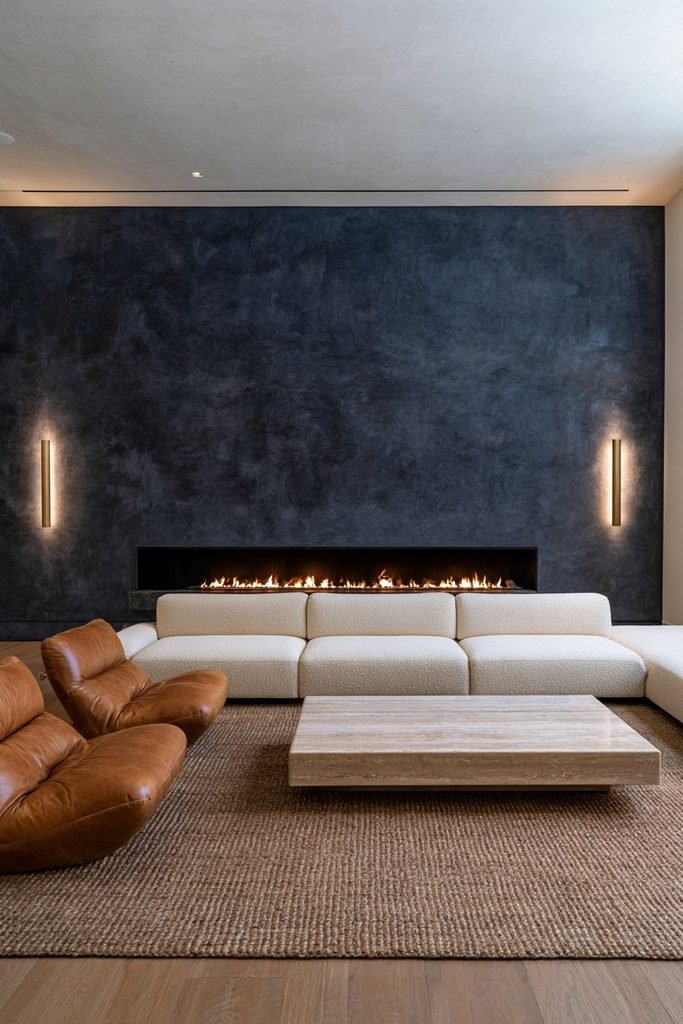
Layer ambient and accent lighting with charcoal plaster so the wall reads as depth rather than a cave. Brass sconces can highlight the texture behind a fireplace or sectional, and the finish suits spaces where walls are touched less often, since dark plaster can show fingerprints.
Warm wood and layered textiles can keep the dark wall feeling grounded rather than heavy.
Blush Pink Softness
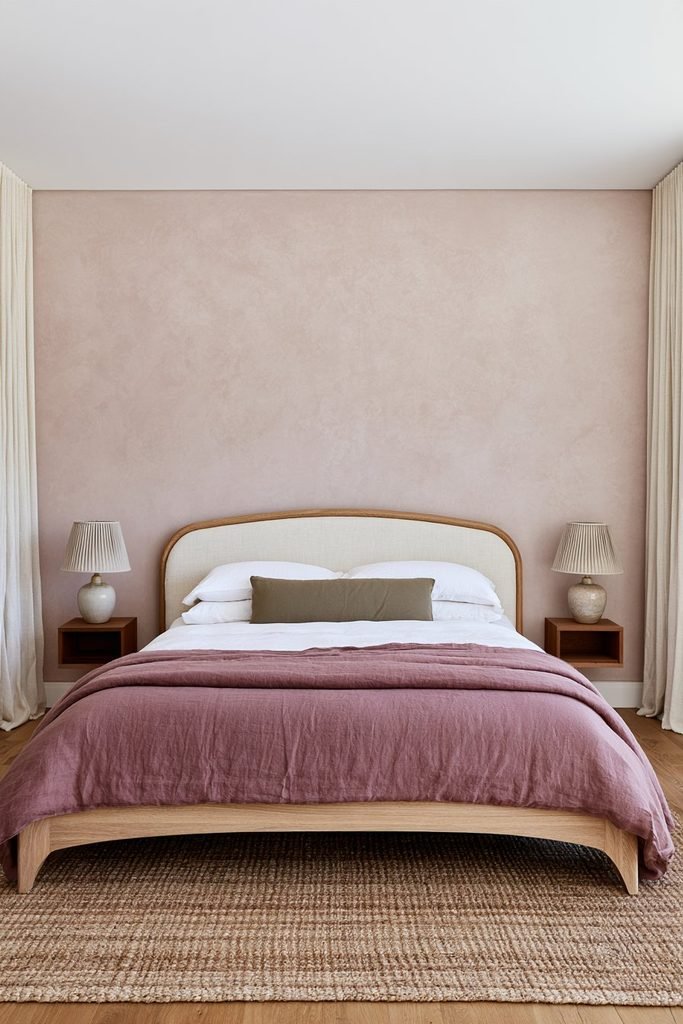
Choose a pale blush with gray undertones for a bedroom or nursery to avoid a peachy look that can date quickly. A satin sealer rather than a high-gloss one can keep the finish natural, and natural wood furniture can balance the soft color.
Skipping busy wallpaper or decals can let the plaster texture provide the visual interest on its own.
Cream Bath Retreat
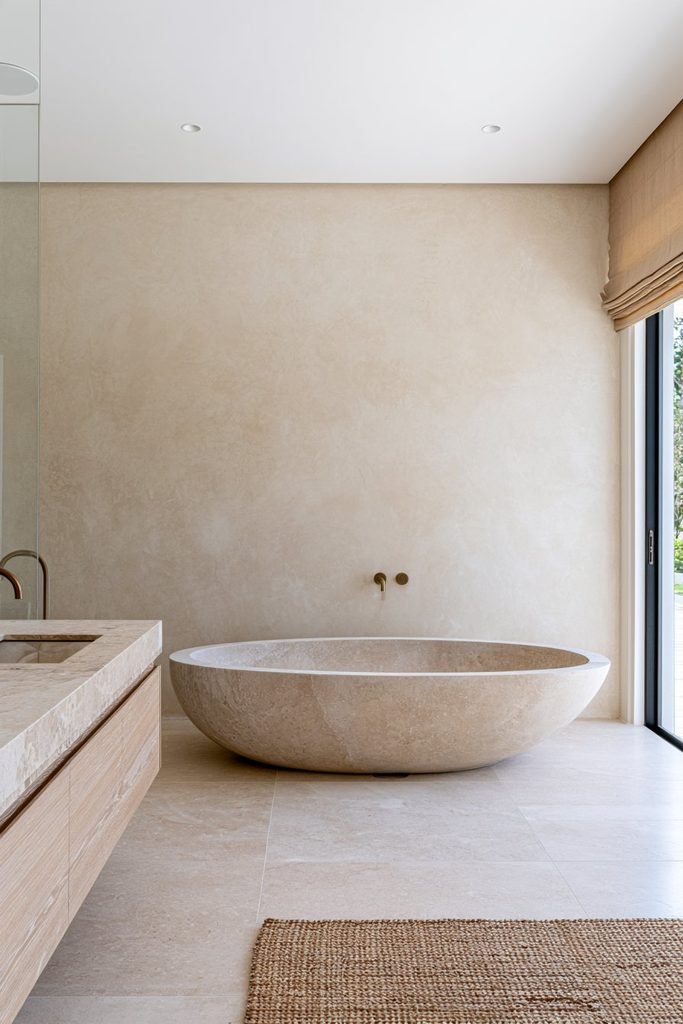
Use cream plaster with subtle gold undertones to give a primary bathroom a spa-like feel. Pair it with unlacquered brass fixtures, a white oak vanity, and natural stone counters, and specify a lime-based plaster with proper sealing in humid rooms.
Natural stone and white oak can balance the warmth of the cream with more grounded materials.
Venetian Plaster Vanity Wall
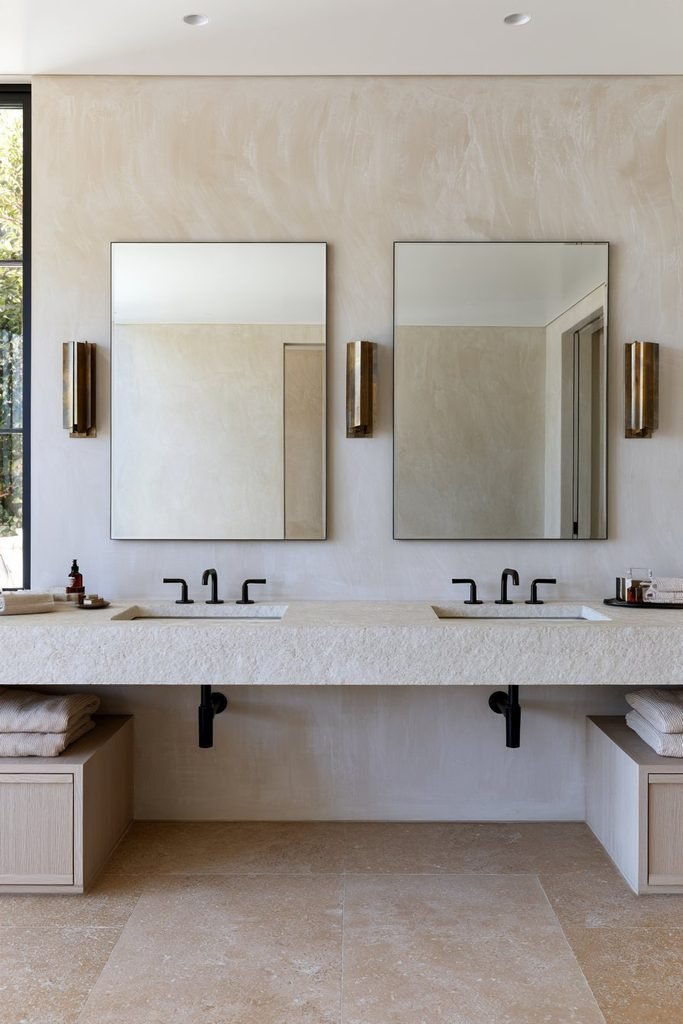
Plaster the wall behind the vanity to create a focal point while keeping other bathroom surfaces in more traditional finishes. Muro d’Arte recommends positioning mirrors and lighting so they enhance the surface, with sconces on either side to bring out the texture.
Brass or matte black fixtures can complement the plaster without competing with it.
Plastered Ceiling Overhead
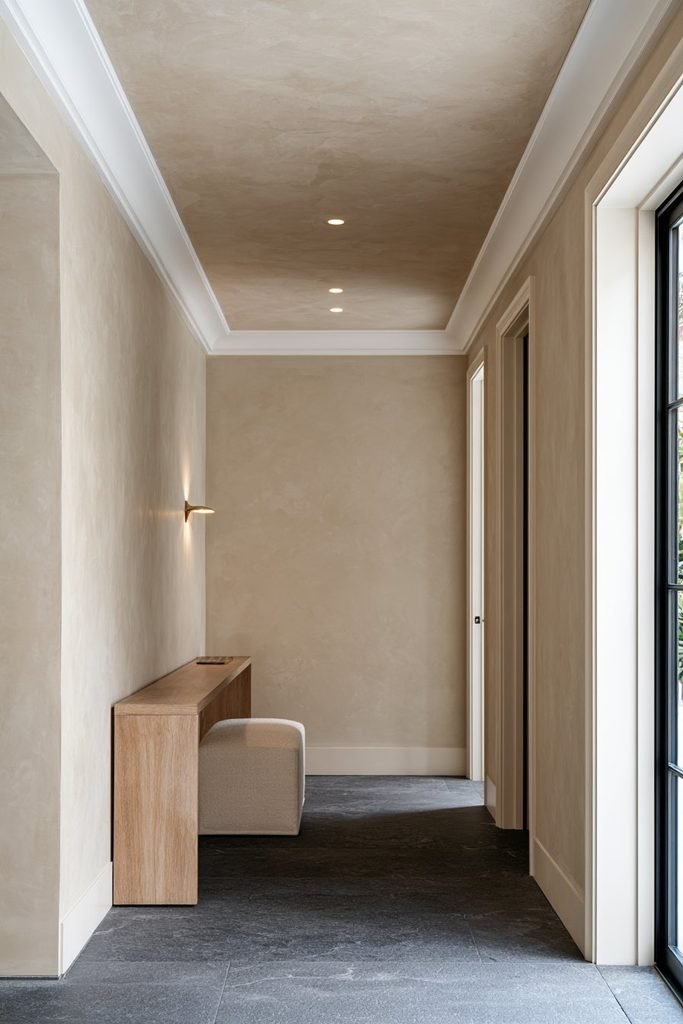
Apply plaster to the ceiling of a powder room or entry to add overhead luxury while keeping the walls in a simpler finish. Ceiling work is more demanding than wall work, so a professional plasterer is the usual route.
Painting the walls in a matching tone can tie the ceiling into the rest of the room.
Wet Zone Solutions
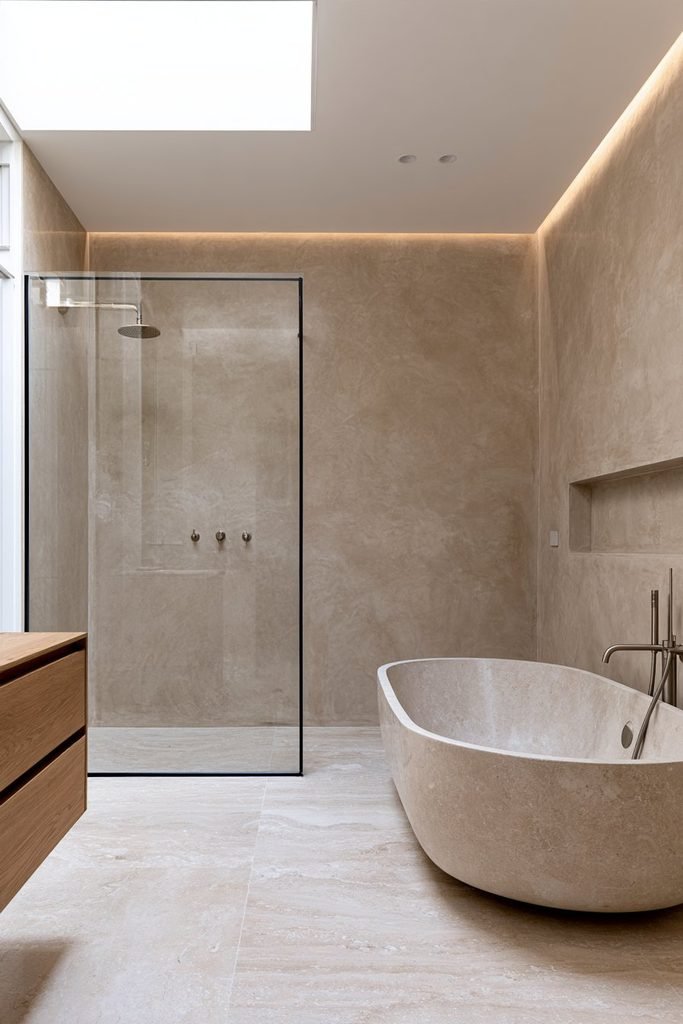
Use tadelakt or a waterproof plaster system where water is involved, since standard decorative plaster is better kept outside direct water. Tadelakt is a traditional Moroccan lime plaster burnished with olive oil soap, while shower interiors can also use a wet-area microcement system.
Professional application is usually advised for these systems, since waterproofing depends on the correct materials and sealing.
Kitchen Backsplash Switch
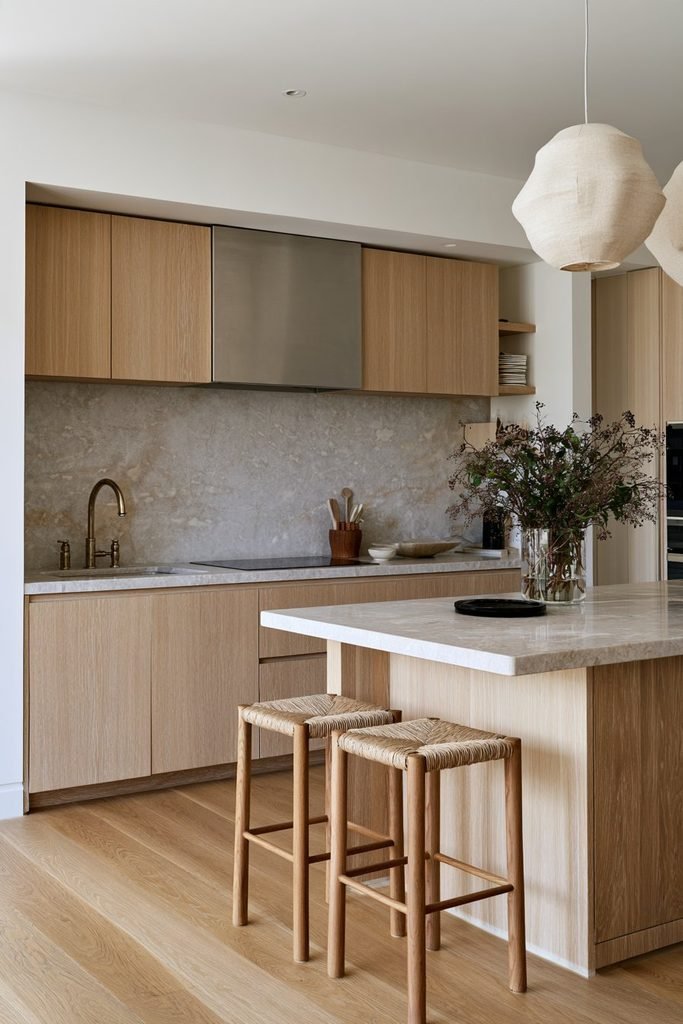
Replace tile with a sealed plaster backsplash for a seamless, grout-free surface. A polished finish in a light neutral can make a compact kitchen feel more open, and a topcoat of wax sealant can make plaster waterproof, though the backsplash works best as a visual feature rather than a heavy splash zone.
Sample boards can help test how the sealed finish handles light and cleaning before committing to the full area.
Misty Blue Calm
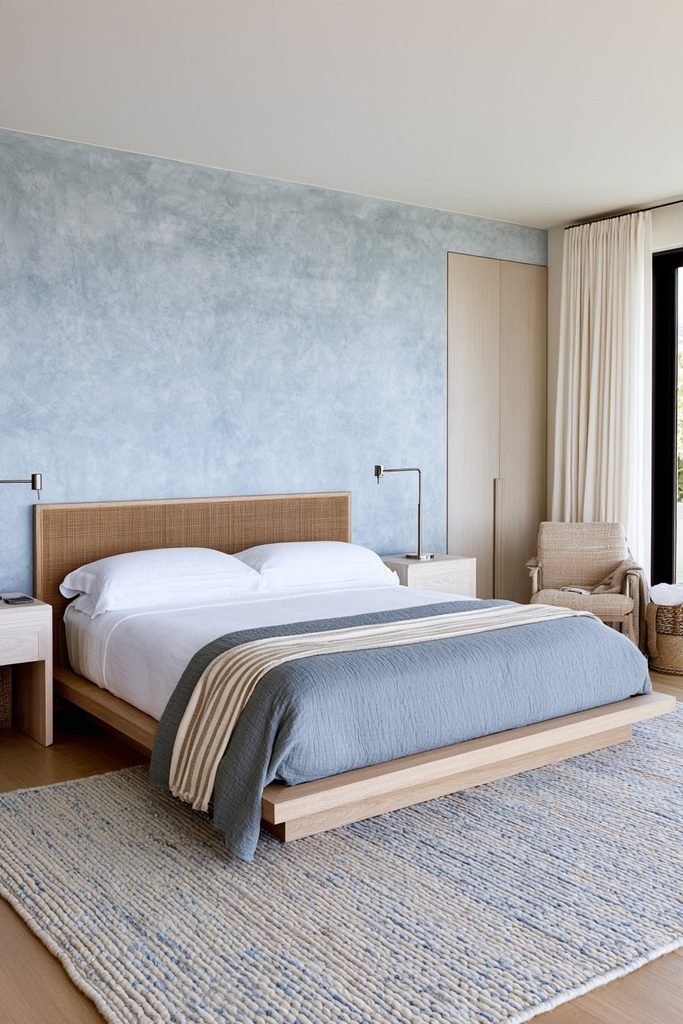
Choose a soft, misty blue for a bedroom or spa-style bathroom to get an atmospheric feel that reads as calm rather than nautical. Pair it with white bedding, pale wood, and brushed nickel for a light and airy look.
Soft white curtains can help the room stay bright against the color.
Matte Marmorino Texture
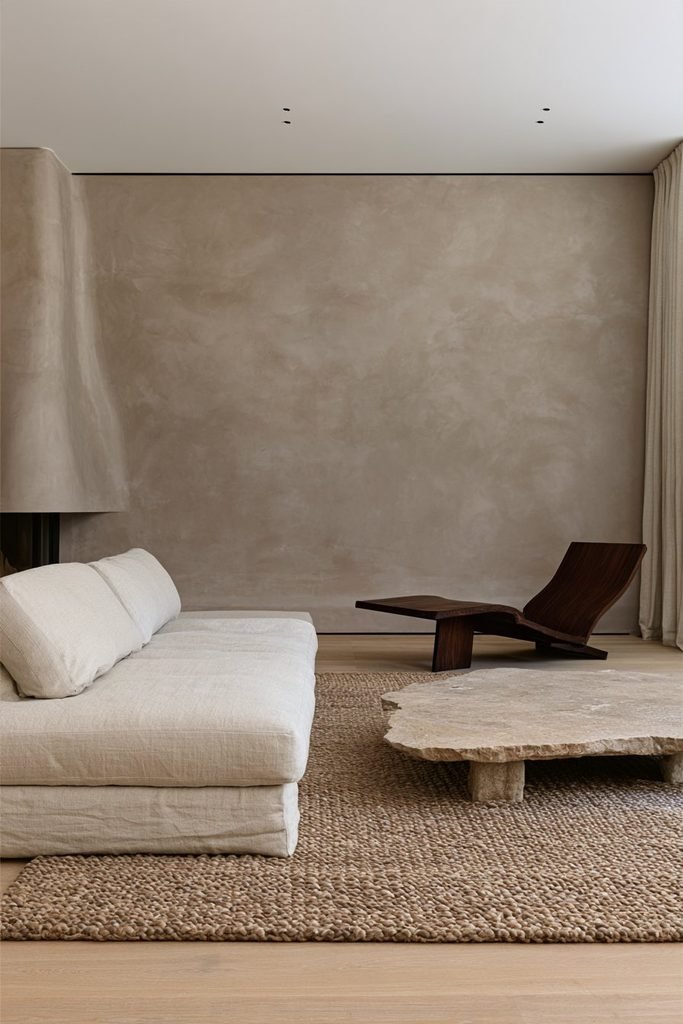
Choose a matte finish for understated texture with visible trowel movement. Meoded offers Tintoretto as an example of a matte plaster with a diffused finish, a good match for contemporary rooms that avoid high shine.
Left un-burnished, plaster stays rough and stone-like to the touch, which can suit relaxed or rustic styles.
High-Gloss Marble Look
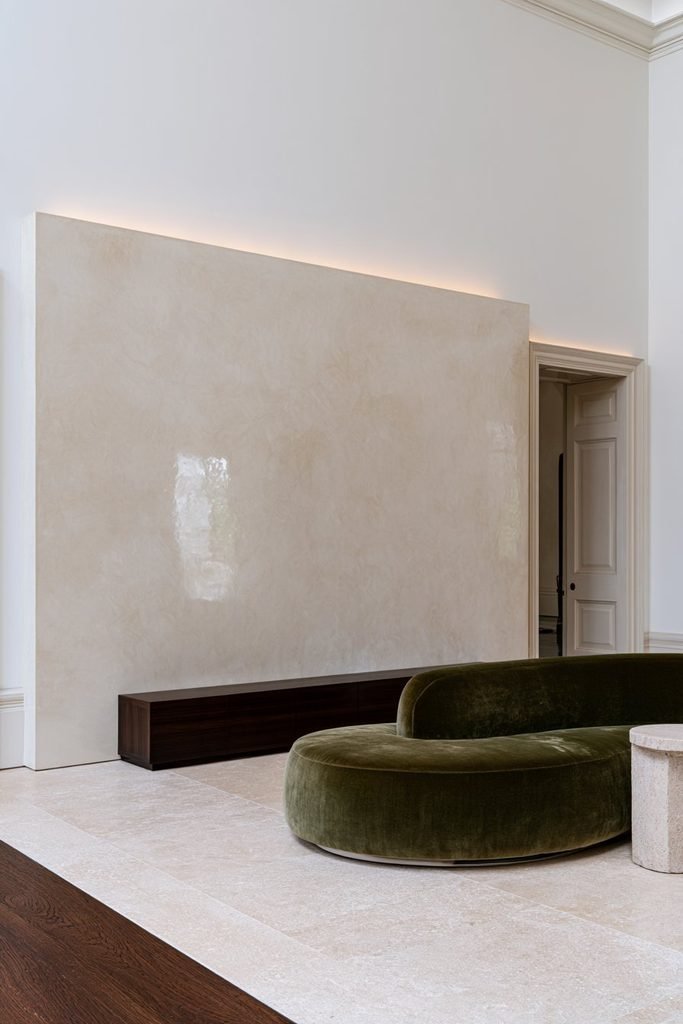
Burnish multiple layers to a high sheen for a polished-marble effect in formal rooms, entryways, and bathrooms. Plaster can be tinted to match a specific marble tone, and techniques such as marmorino and scagliola sit within the same family of finishes.
Address wall imperfections before application, since plaster tends to highlight flaws rather than hide them.
Wood and Stone Pairing
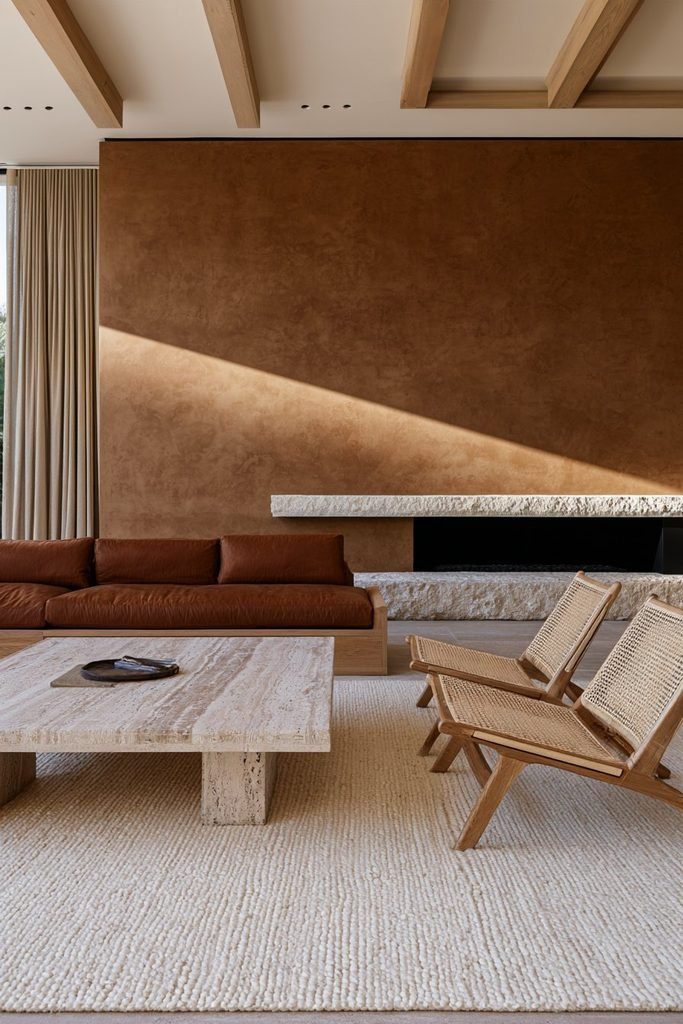
Pair plaster walls with oak, limestone, or travertine to build a layered, natural material palette. Houzz Pro notes rising interest in tactile finishes alongside travertine, with searches for the stone up 84%.
A stone coffee table or limestone hearth can repeat the material elsewhere in the same room.
Gallery Art Backdrop
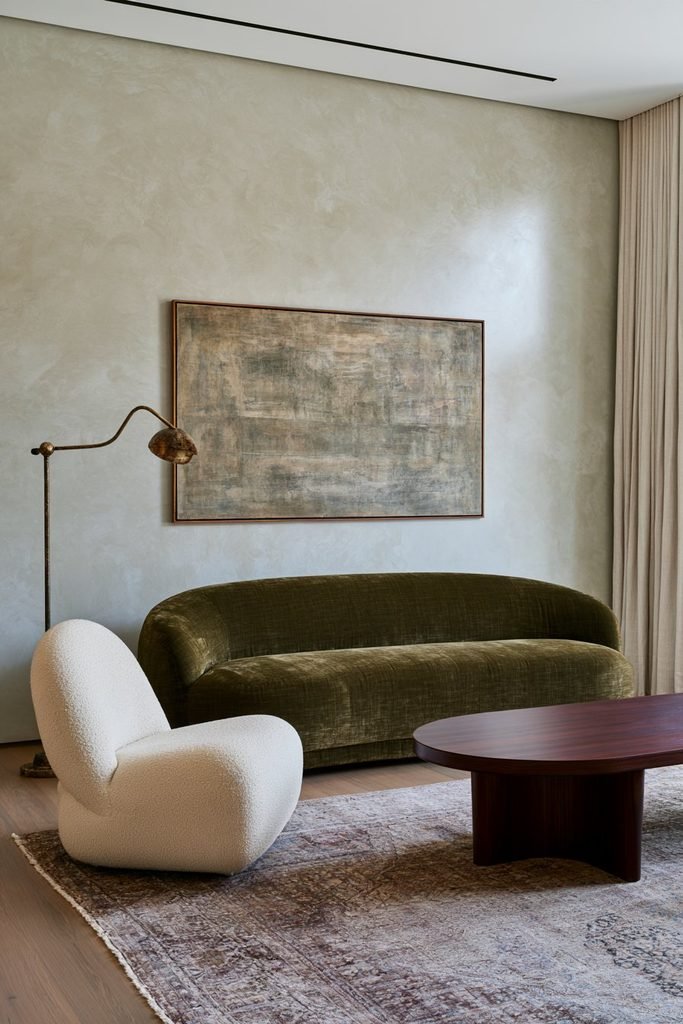
Use a tonal plaster wall behind large-format art or a framed print. The texture can energize the negative space around the piece while keeping the wall from feeling like a blank surface.
Choose a piece with plenty of negative space so the subtle movement of the wall stays visible.
DIY Venetian Plaster Accent
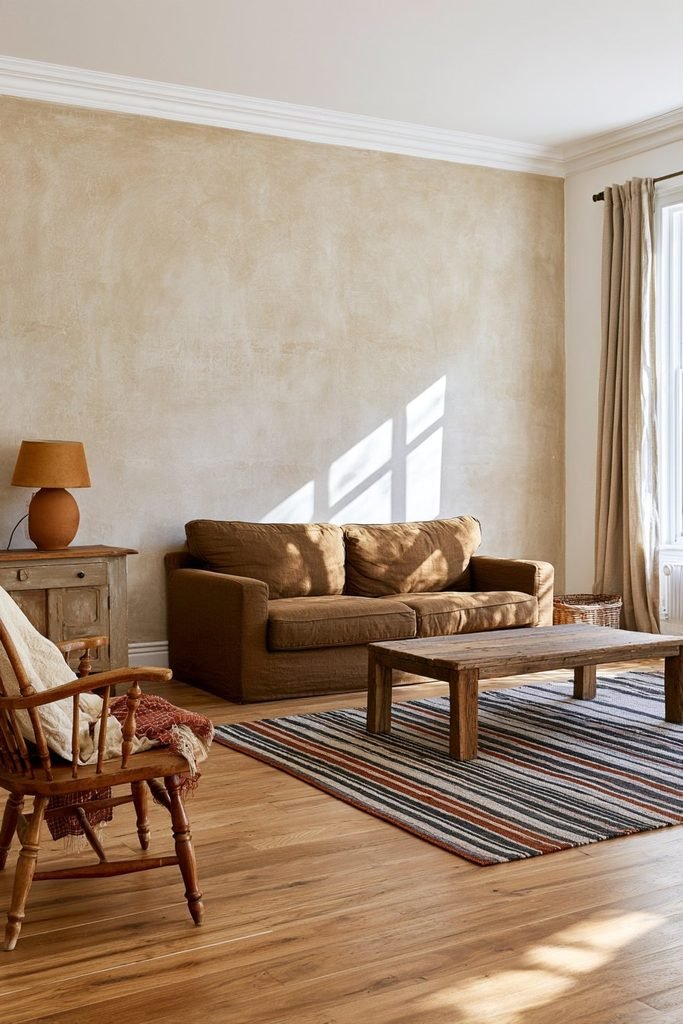
Start with a single accent wall under 100 square feet and practice on scrap drywall first, as Easy Room AI suggests. A forgiving lime-based product such as Marmorino Classico in a matte finish can let small imperfections read as character.
Plan for a cure period of about 30 days before the surface reaches full durability.
Frequently Asked Questions
How much does Venetian plaster cost?
Sketched Interiors cites roughly $8 to $15 per square foot for quality installation, with higher costs for complex colors or metallic effects. Easy Room AI cites $10 to $30 per square foot, so pricing varies by finish, region, and installer.
How long does Venetian plaster last?
Decora states that sealed, correctly applied finishes can last 15 to 20 years, compared with repainting every 3 to 5 years in living rooms. High-traffic areas may need rewaxing every 2 to 3 years, according to Sketched Interiors.
Can Venetian plaster be used in a bathroom?
Yes, on walls outside direct water exposure with the right system and sealing. Shower interiors and true wet zones are better suited to tadelakt or a wet-area microcement system.
Can Venetian plaster be a DIY project?
A matte lime plaster on a small accent wall is a realistic starting point with practice. High-gloss finishes, curved surfaces, ceilings, and full-room applications are usually left to professionals.