An arched doorway can turn a plain passage between rooms into one of the most characterful details in a home. The curve softens straight lines, guides the eye upward, and adds a sense of flow that a standard rectangular opening rarely delivers.
This list covers 25 ways to use an arched doorway, from budget-friendly paint tricks and plasterboard upgrades to polished metal reveals, stone surrounds, and traditional trim. Each idea works across styles, including modern, traditional, Mediterranean, minimalist, and mid-century.
Open the Flow
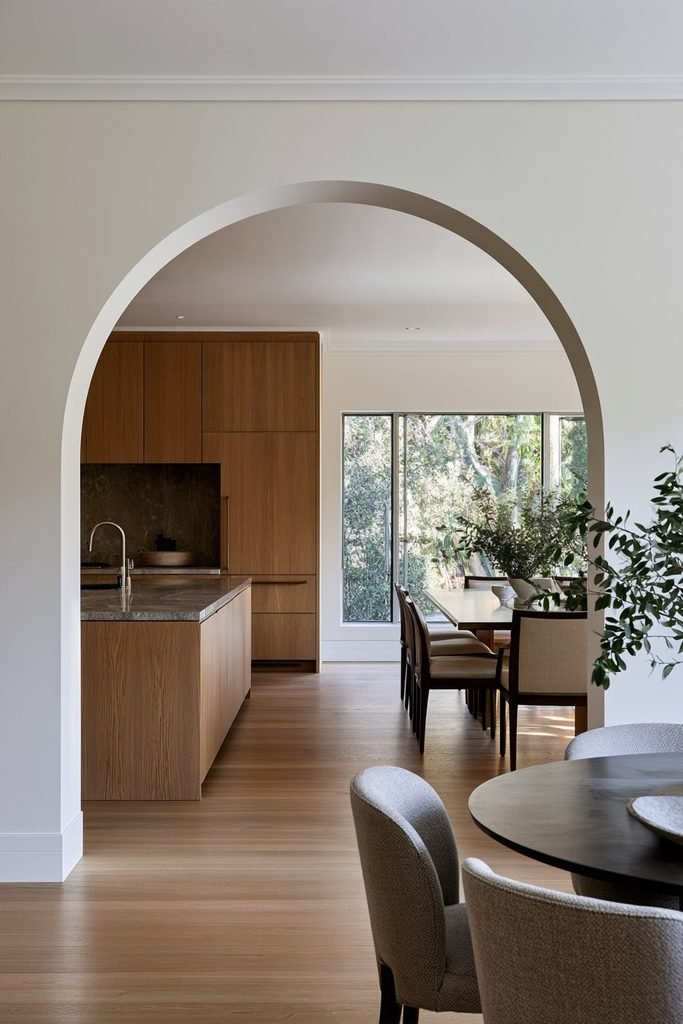
Use a wide arch to separate the kitchen from the dining area while keeping an open-plan feel. In one Singapore home, a wide archway acts as a gateway between the cooking and dining zones without sacrificing the beauty of an open kitchen, and matching oak flooring on both sides can make the transition read as continuous. Wide openings suit open-concept layouts where defined zones are still wanted.
Frame the Hallwaay
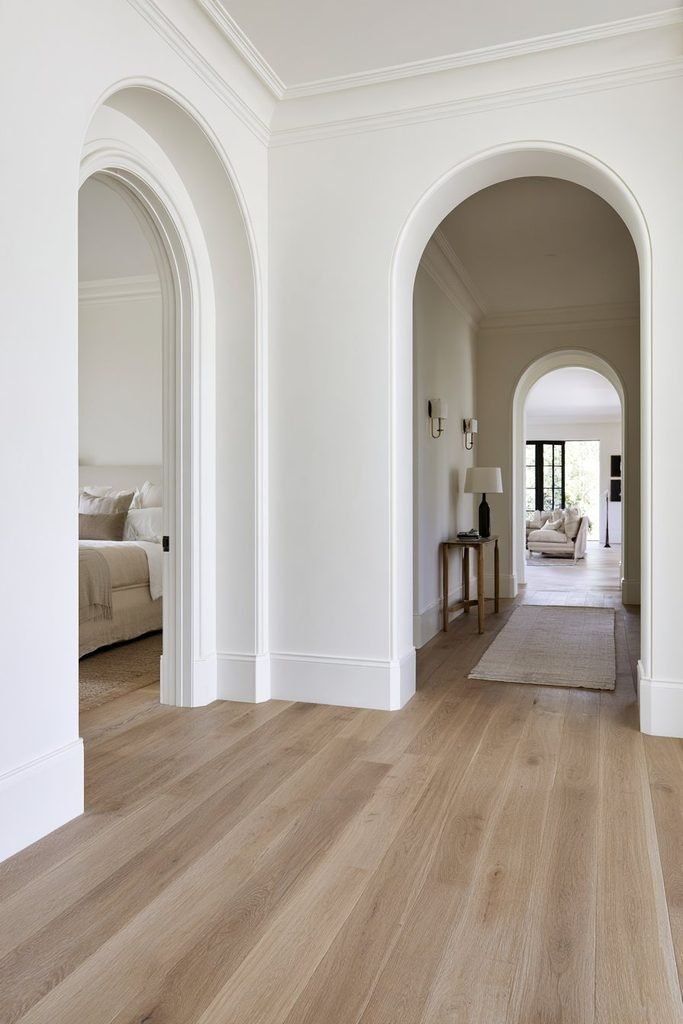
Repeat identical arched openings along a hallway to create a gallery-like rhythm. Matching plaster arches in warm white, spaced evenly between rooms, can make a narrow corridor feel longer and more intentional. Soft wall sconces placed between each arch can add a warm, evening glow.
Soften Modern Rooms
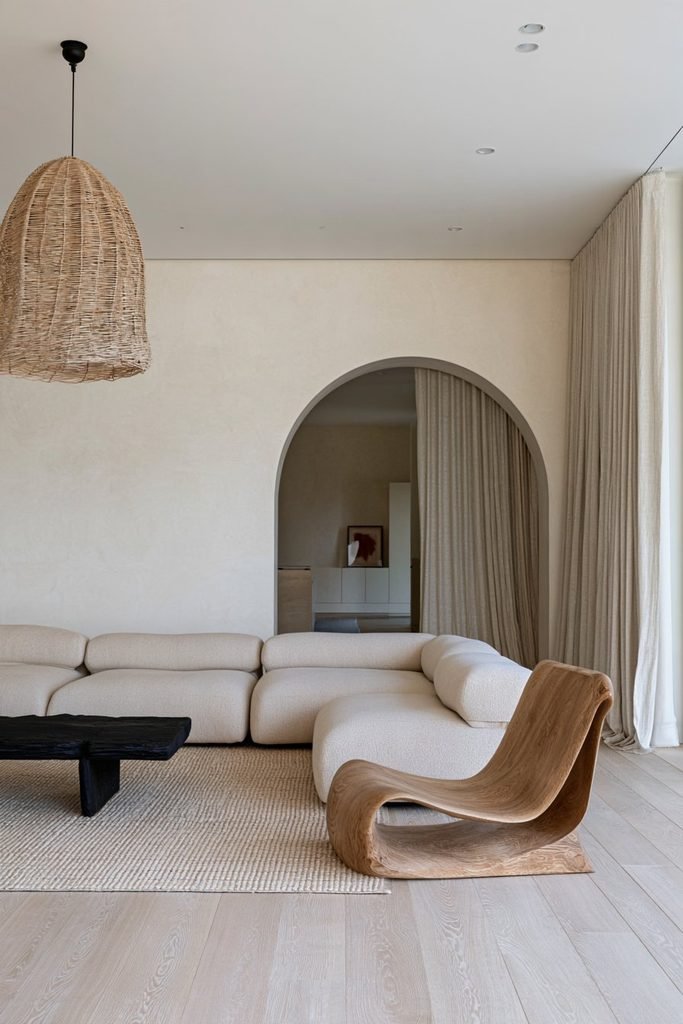
Choose a shallow, gently curved arch to soften the straight lines of a modern interior without adding ornament. Singapore design studio Monocot paired rounded doorways and mirrors with a muted palette to create a peaceful, relaxed feel. Pale plaster, light oak, and linen textiles can keep the overall feel calm and airy.
Add a Plasterboard Arch
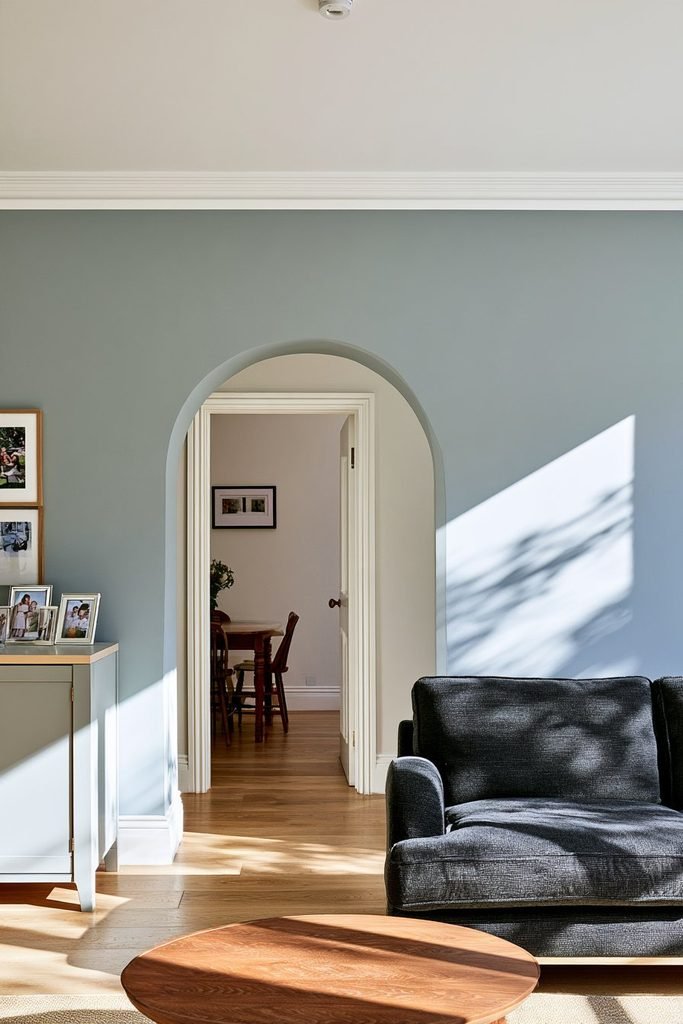
Build a plasterboard arch over an existing rectangular opening for a cost-effective update that needs no structural work. A smooth skim coat in the same paint color as the wall can help the new curve blend in seamlessly. Keeping the curve gentle can make the project simpler for a confident DIYer or a local plasterer.
Choose a Classic Arched Doorway
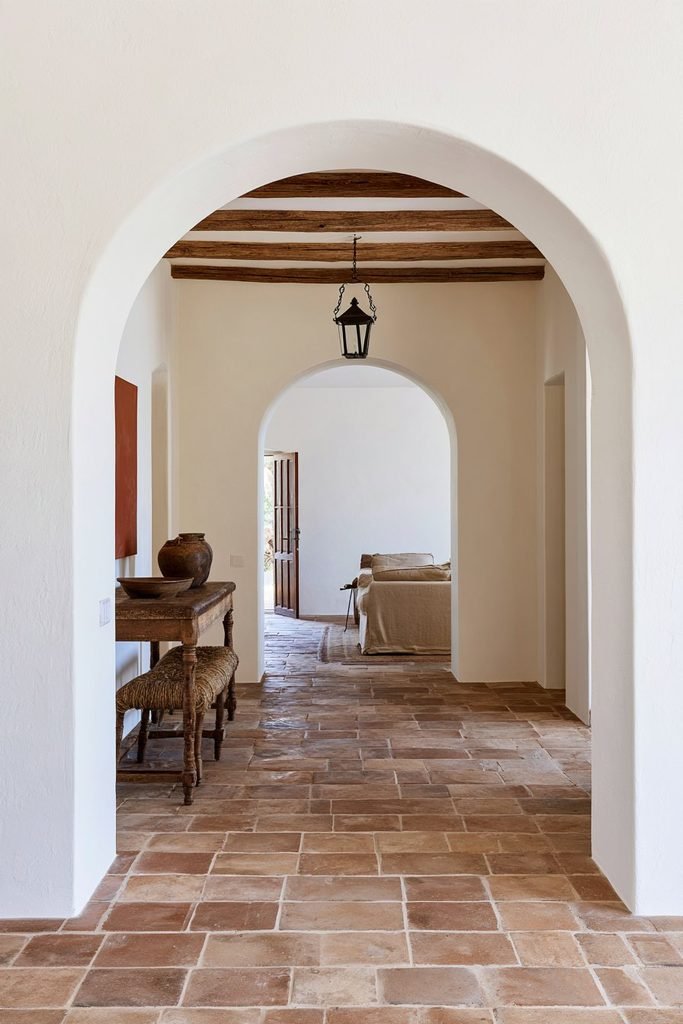
Pick a full semicircular arch for symmetry and a traditional feel in Mediterranean, farmhouse, or colonial-inspired homes. White plaster walls, oak flooring, and a wrought iron pendant can reinforce the old-world look. Terracotta floor tiles or a woven jute runner can add warmth to the entry.
Go Segmental
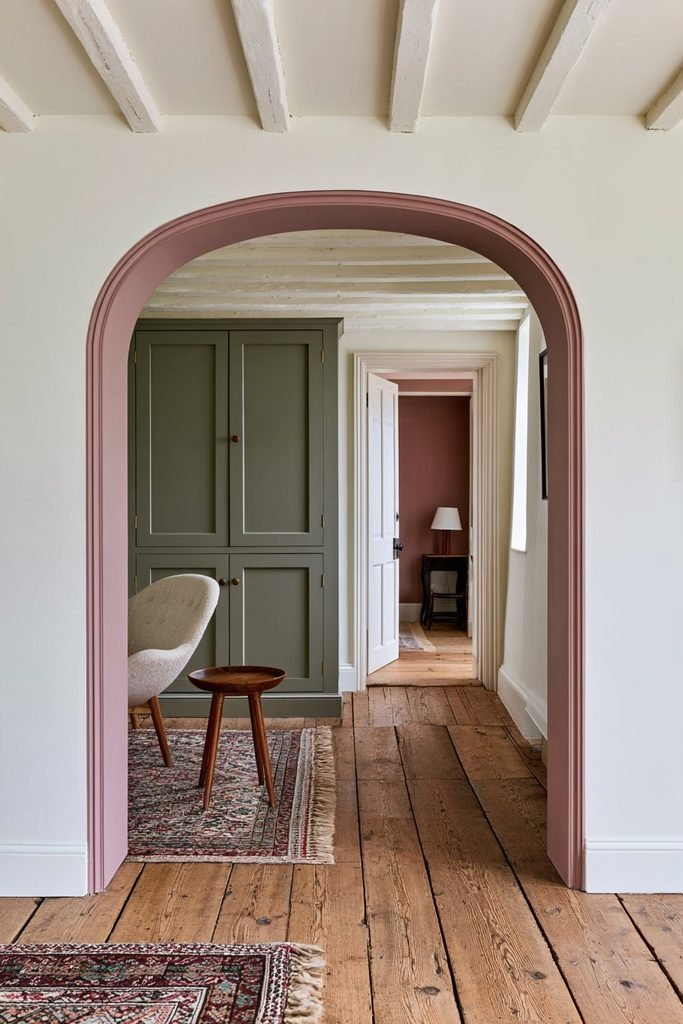
Consider a shallow segmental arch for rooms with lower ceilings, since the curve rises less than a full semicircle. Painted the same shade as the surrounding wall, the soft curve can add shape without competing with furniture. This approach can also work well in older homes where ceiling height is limited.
Contrast the Inside
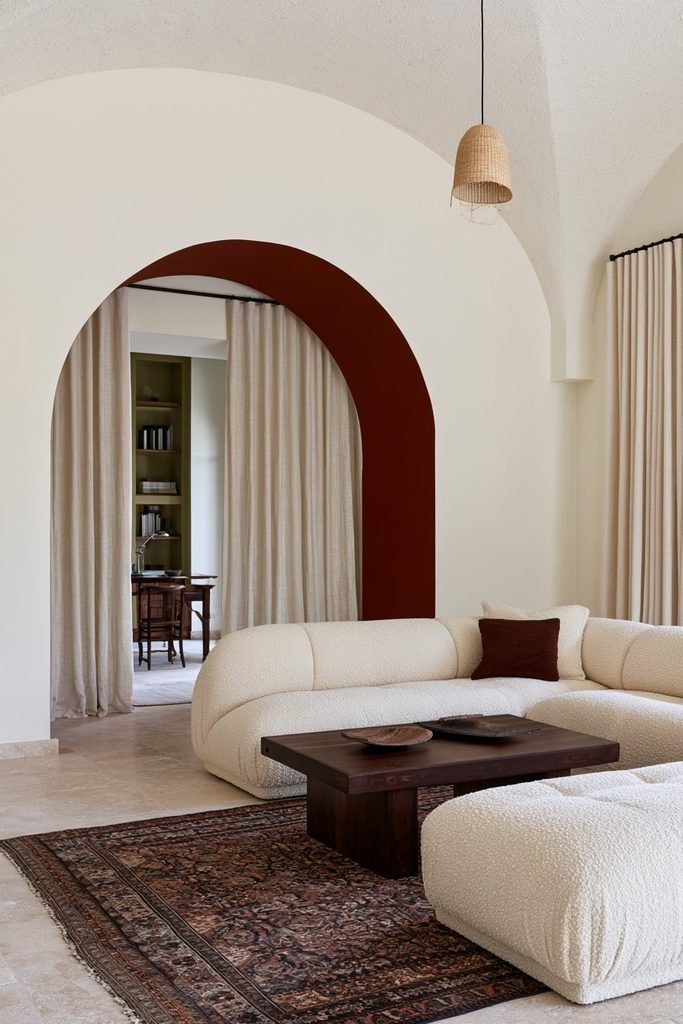
Paint the inner surface of an arched doorway in a contrasting color to highlight the curve. Resene suggests a metallic shade such as rose gold to add warmth and sparkle against standard wall paint. A deep terracotta or sage green can create a richer, more modern look in the same way.
Color the Casing
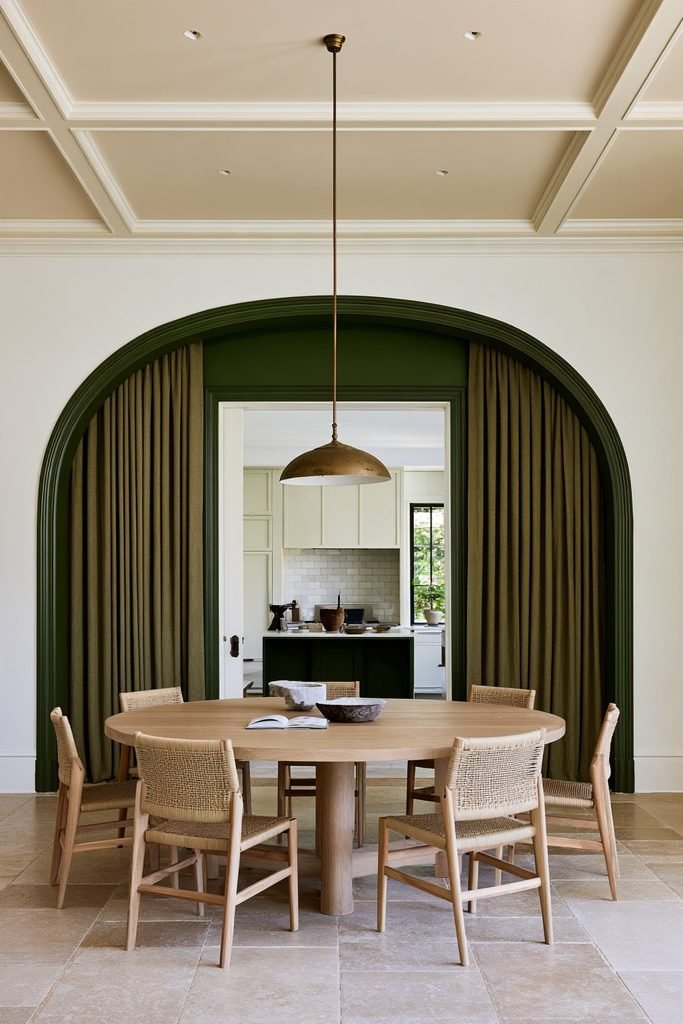
Add color to the door casings while keeping walls neutral for a layered, personalized look. Designer Kathryn Murphy describes this as a good compromise when two people want different color levels, with neutral walls for one and bold trim for the other. Colors such as deep green, rust, or navy can stand out against white or warm gray walls.
Tile the Reveal
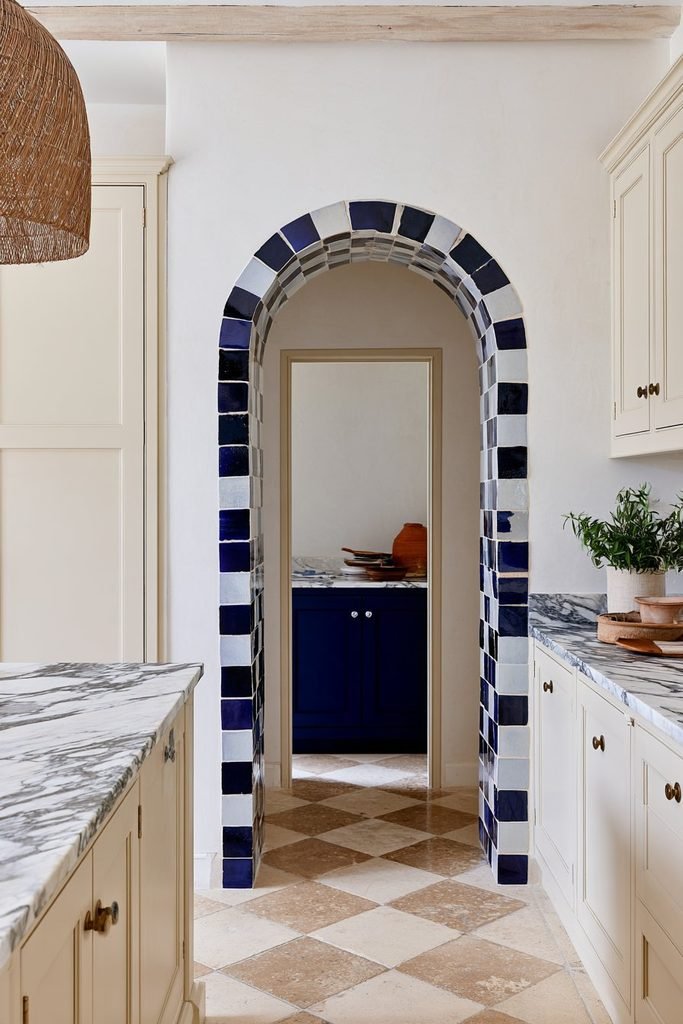
Carry kitchen tile into the arch reveal to tie two rooms together. Morgan Stewart of Studio Lithe lined a kitchen doorway in light blue tile against white tile walls, then repeated the blue in the wallpaper and casework of the butler’s pantry beyond. Zellige, subway, or handmade ceramic tile in a single shade can keep the effect cohesive.
Add High Gloss
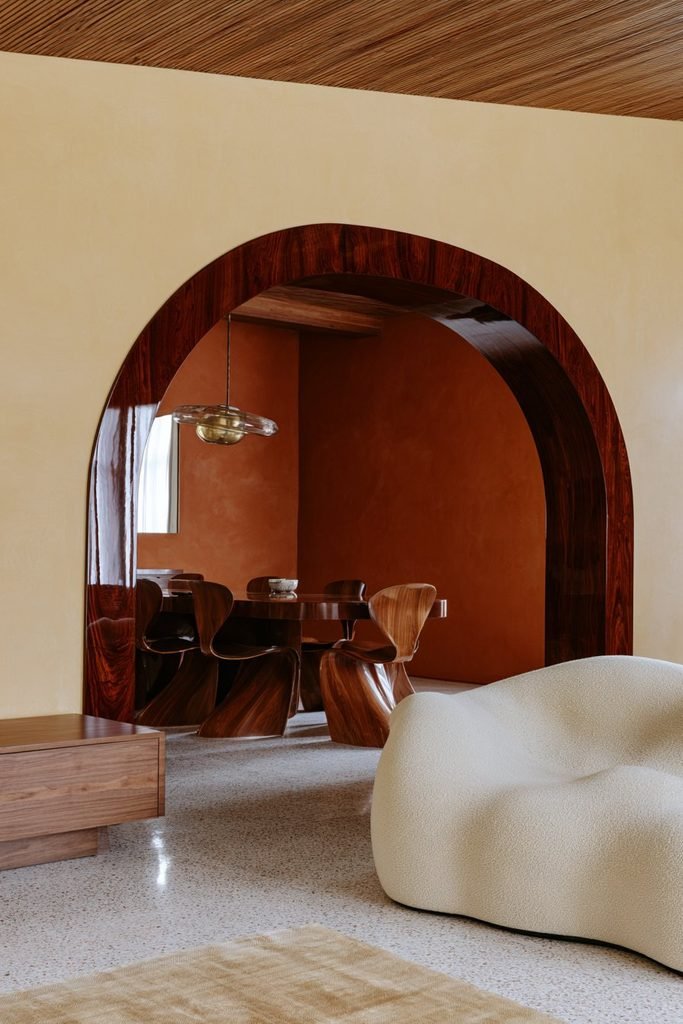
Use a high-gloss finish such as lacquer on arched openings for a rich, retro feel in mid-century interiors. Agnes Rudzite Interiors built arches from lacquered cherry veneer between a green living room and an orange terrazzo dining room. Pairing glossy surfaces with matte walls can balance the shine and keep the look refined.
Shine in Chrome
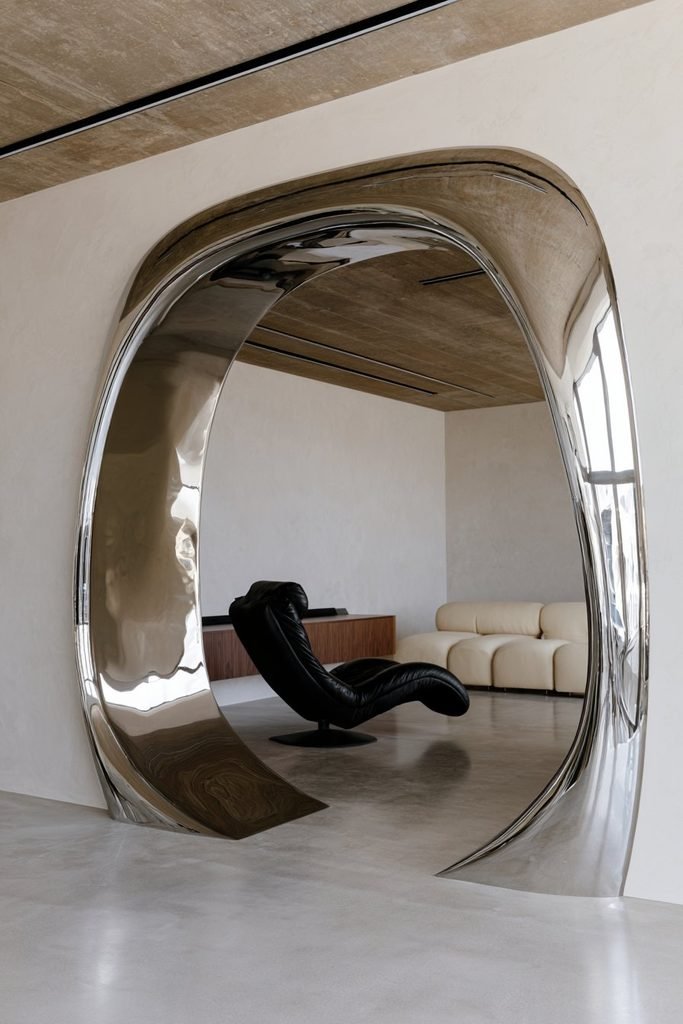
Frame the opening with a polished metal reveal for a futuristic, reflective effect. Designer Paddy Pike used an oversized chrome reveal around an arched doorway, where the mirrored finish picks up the tones of the room instead of overpowering it. Chrome can pair well with concrete floors, white plaster walls, and a simple wooden console.
Edge in Brass
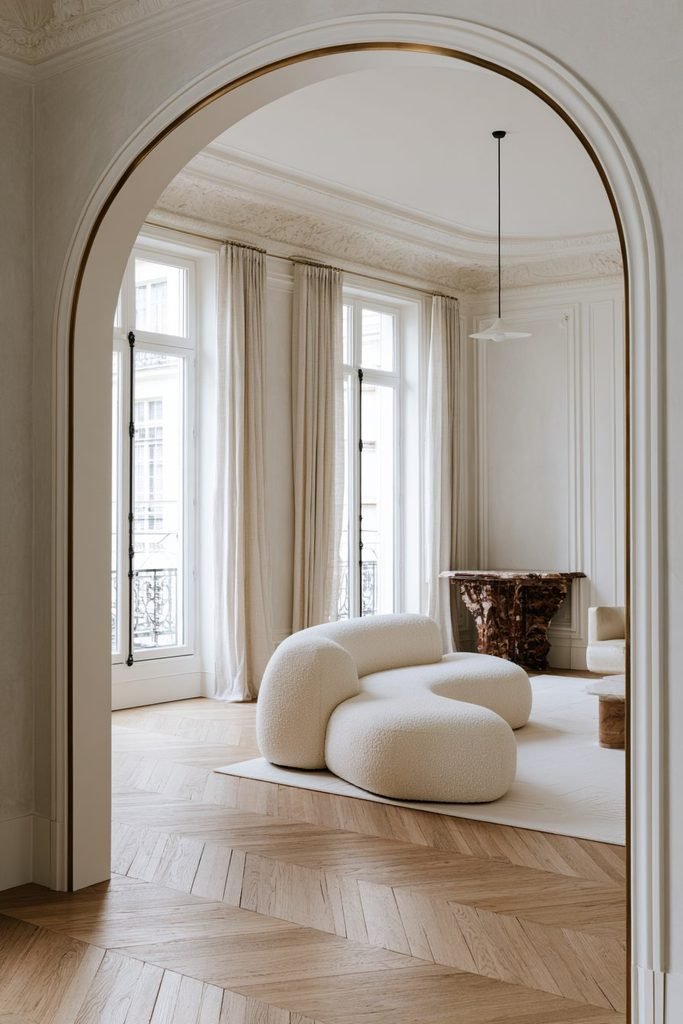
Outline an arch in thin brass for a refined, jewelry-like detail against plain walls. Heju Studio shaped a brass sheet into an irregular curved doorway in a Paris apartment, keeping the rest of the white room calm so the metal reads as the focal point. Brushed brass can bring a softer, warmer effect than polished chrome in traditional rooms.
Frame With Pilasters
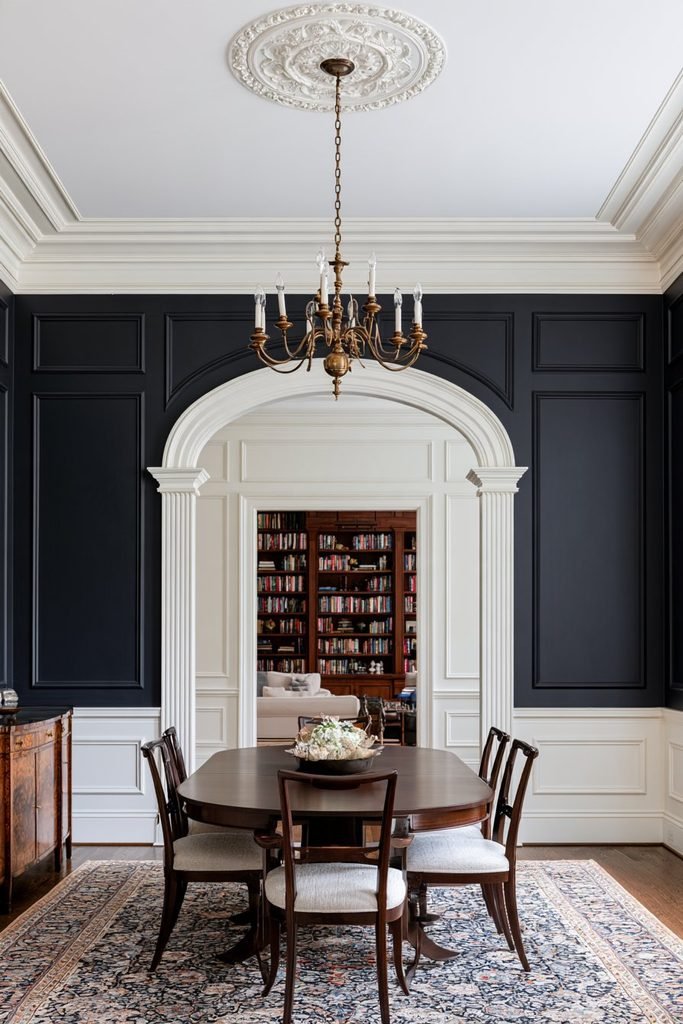
Pair a classic arch with pilaster-inspired trim that flows into picture molding on the surrounding walls. This layered detail can give a formal living or dining room a more tailored, traditional feel. Crisp white semi-gloss paint can highlight the carved detail, while a deep charcoal can create more drama.
Layer in Wood
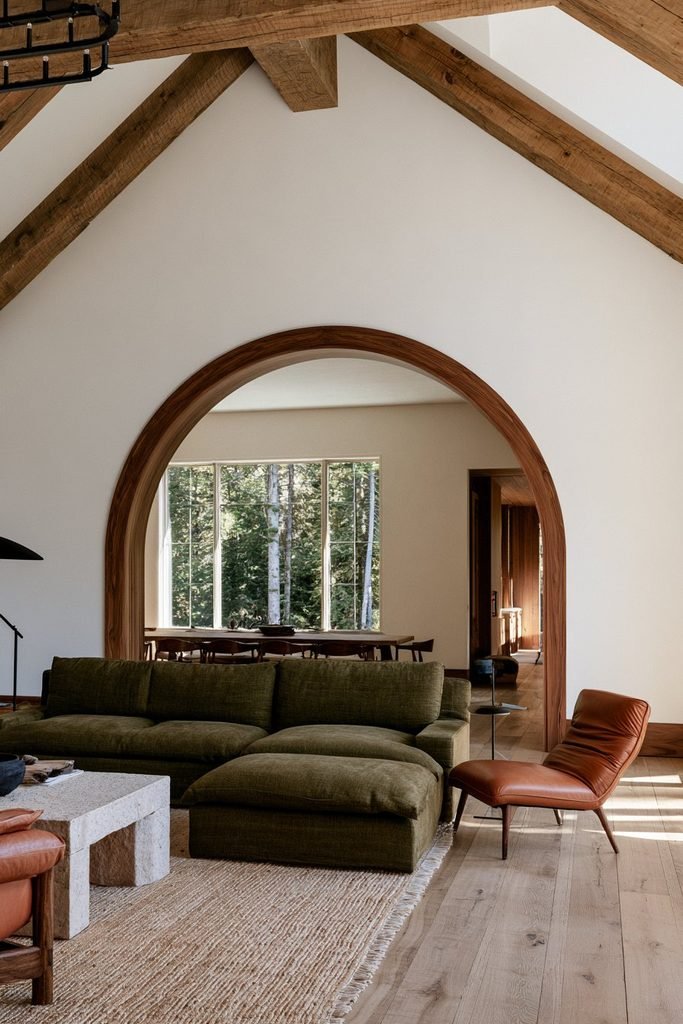
Use natural wood trim on an arched doorway to add warmth to a modern rustic home. Hardwood floors in a similar tone can make the trim feel built in rather than added on. Oak, walnut, and ash are all natural choices that can age well in a high-traffic passage.
Set a Stone Arch
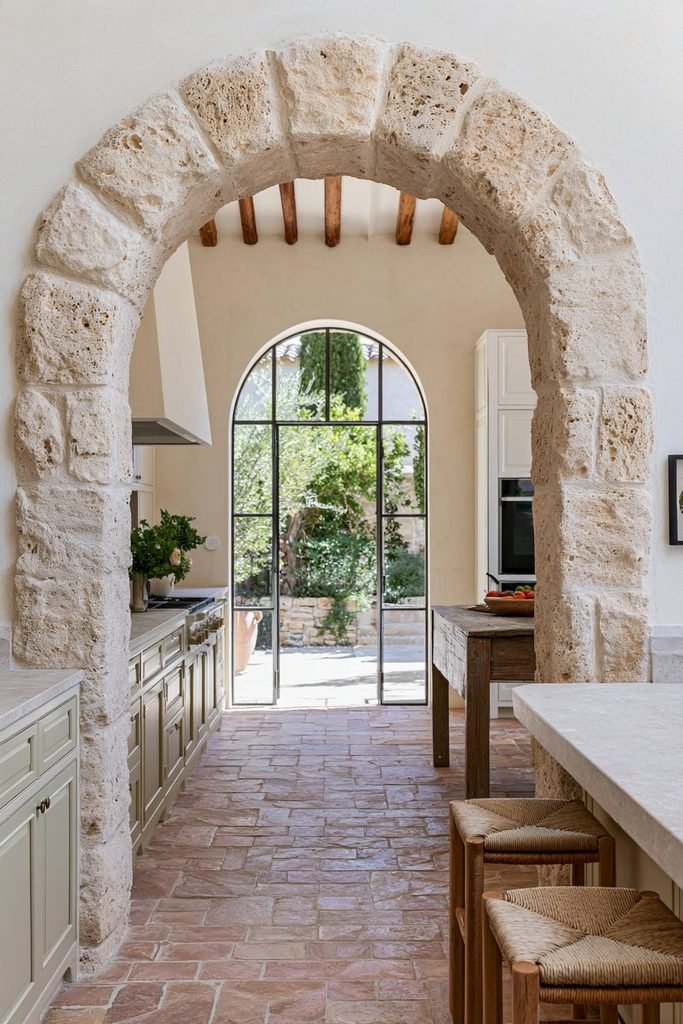
Choose natural stone for an arch that doubles as a statement feature. The owners of one Singapore condo could not find the right stones, so they had a large boulder cut and reshaped by an artisan to build the stone arch leading to the kitchen and balcony. Limestone, travertine, or reclaimed brick can offer a similar effect at a smaller scale.
Shift the Mood
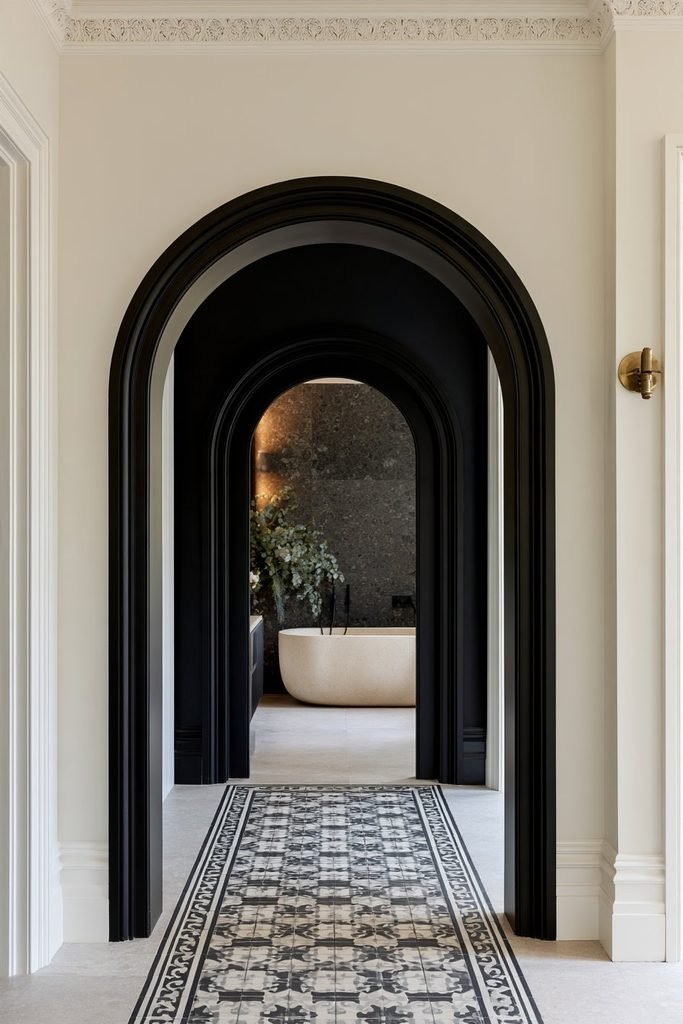
Use arched doorways to signal a change in atmosphere between rooms. Robert Simeoni Architects painted a series of arches in a Victorian-era Melbourne home from white to black, leading into a spa-like bathroom. The shift in color can make each room feel like a separate chapter within the same home.
Open to the Closet
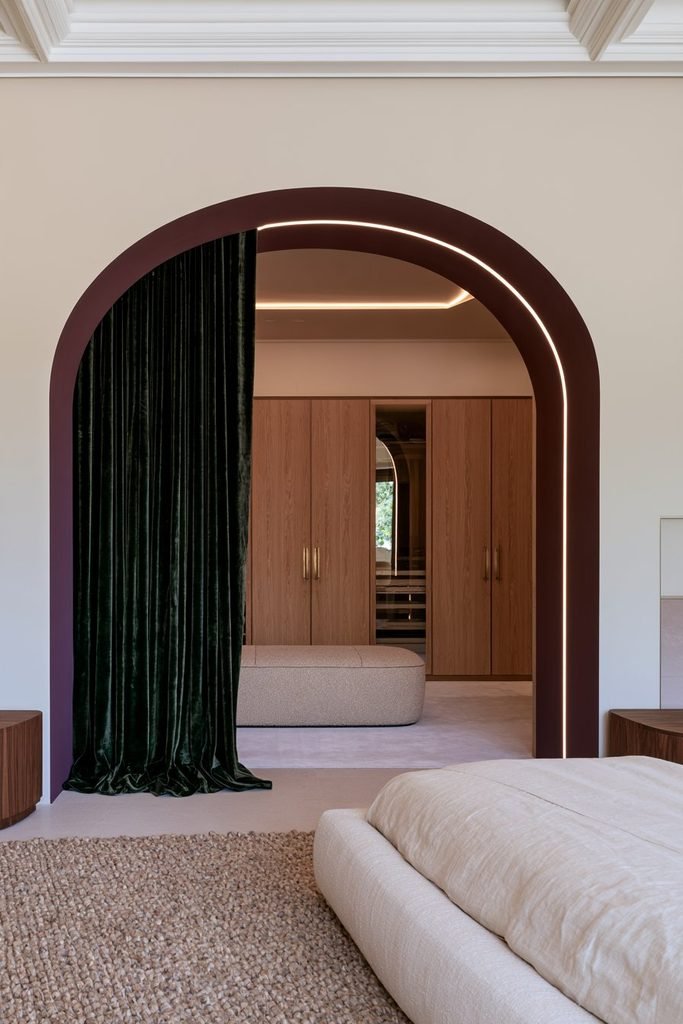
Add an arch to the entrance of a walk-in closet or dressing area to give storage a boutique-style feel. A warm paint color inside the curve and a soft LED strip along the top can highlight the opening without extra fixtures. A velvet curtain in a deep jewel tone can add privacy when the arch is left without a door.
Echo the Arched Doorway
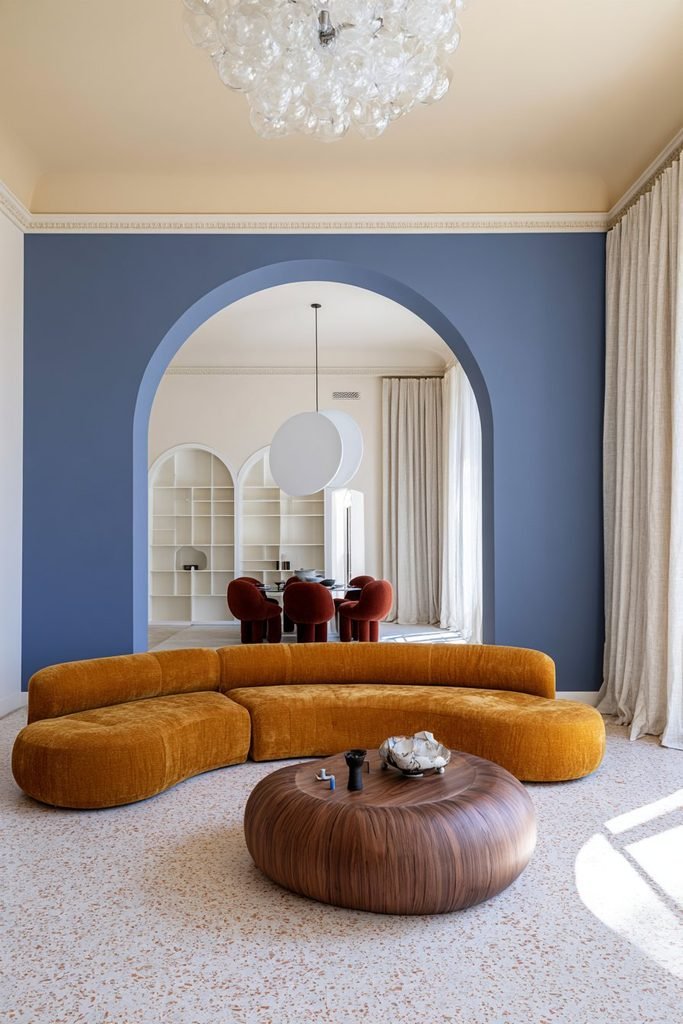
Repeat the curve in nearby furniture and lighting to make the arch feel intentional. In one home covered by MyMove, the doorway shape is picked up by a round chandelier, pendant lights, and round barstools in the adjoining room. Mirrors and arched shelving can extend the same theme across the room without feeling repetitive.
Glass the Arch
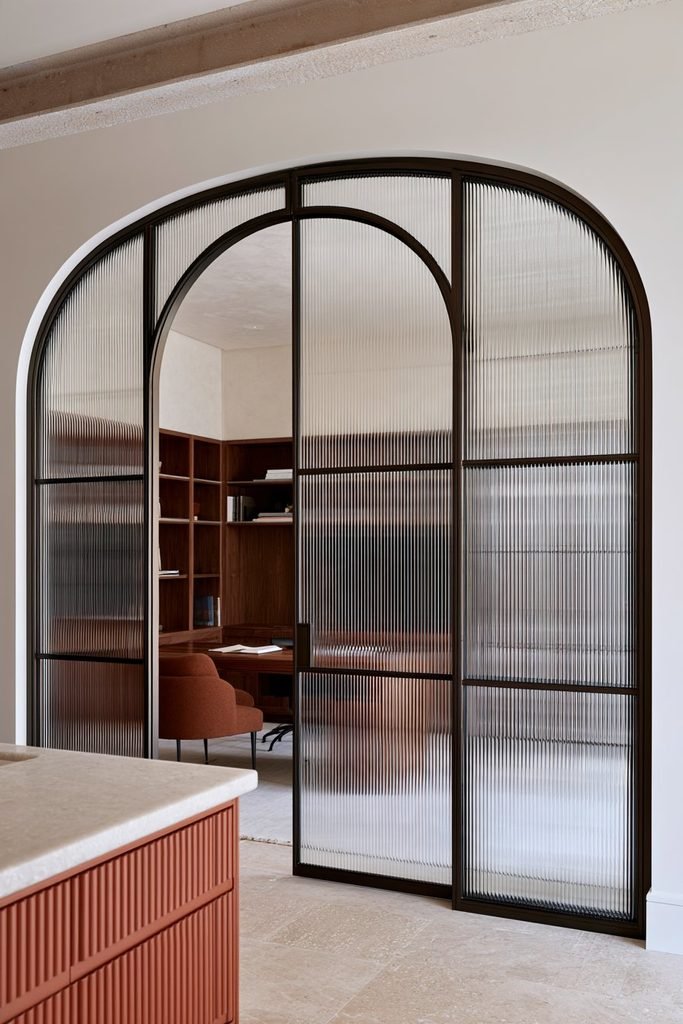
Fit an arched frame with reeded or fluted glass to let light pass between rooms while softening the view. Black steel mullions can add a crisp contrast for a modern industrial feel, while a painted wood frame suits a softer, cottage-inspired look. This option can work especially well between a kitchen and a home office or dining room.
Start Small With Paint
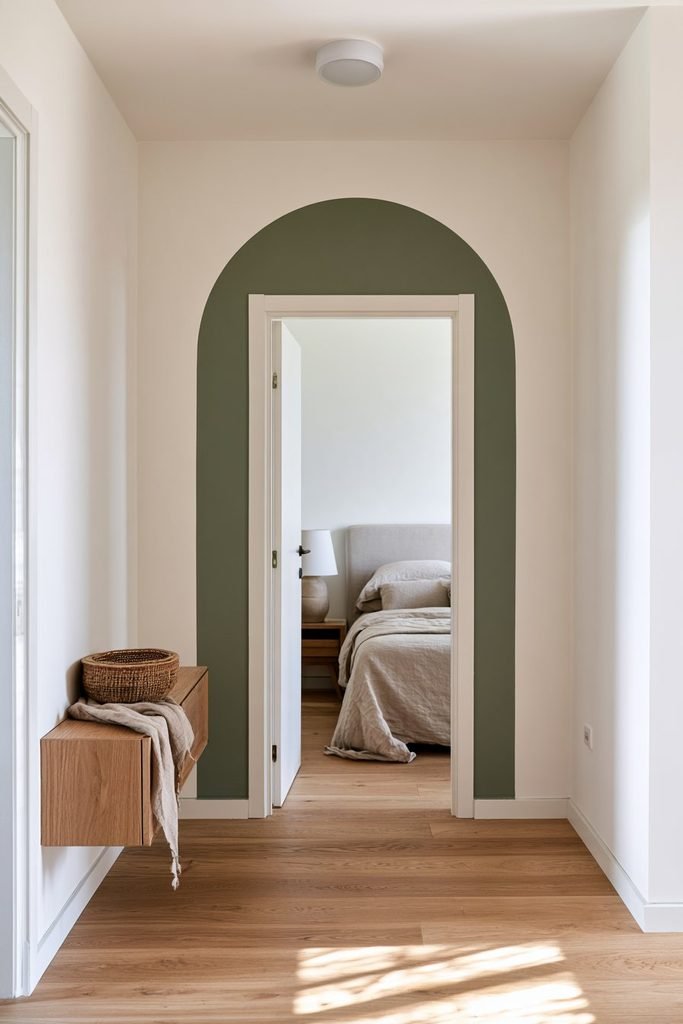
Paint a curve above a standard rectangular doorway for a budget-friendly way to mimic an arch. The painted arch trend is a low-cost way to add architectural detail to hallways, living rooms, and bedrooms, and it needs little more than sample pots and masking tape. A bold shade such as terracotta or sage green inside the curve can create a focal point on a plain wall.
Frequently Asked Questions
Can an arched doorway be added to an existing home?
Yes, a plasterboard arch can be added over an existing rectangular opening without structural work. Widening or reshaping the opening itself can require a structural assessment and local permits, so a contractor can confirm what is possible.
Which arch shape works best with low ceilings?
A shallow segmental arch can suit lower ceilings because the curve rises less than a full semicircle. Painting the arch the same color as the wall can keep the opening from feeling heavy.
What styles suit an arched doorway?
Arched doorways suit traditional, Mediterranean, and farmhouse homes, and they also work in modern, minimalist, and mid-century interiors. Finish, trim, and color usually determine whether the arch feels classic or contemporary.
How can an arched doorway be highlighted without renovating?
Paint is the simplest option, either by contrasting the inside of an existing arch or by painting a curve above a standard doorway. Repeating the shape in mirrors, lighting, and furniture can reinforce the effect.