Radiator cover ideas can turn one of the most overlooked features in a home into a genuine design opportunity. A radiator cover is a decorative casing, usually built from wood or metal, that fits over a radiator while still letting heat pass through, as Checkatrade explains.
The right cover can disguise a dated or mismatched radiator, add storage or display space, and even double as a bench or console table. This list moves through wood, metal, and fabric options, along with a few kitchen- and bathroom-specific ideas, so a reader can find an approach that fits their budget, tools, and style.
Go Classic With Slats
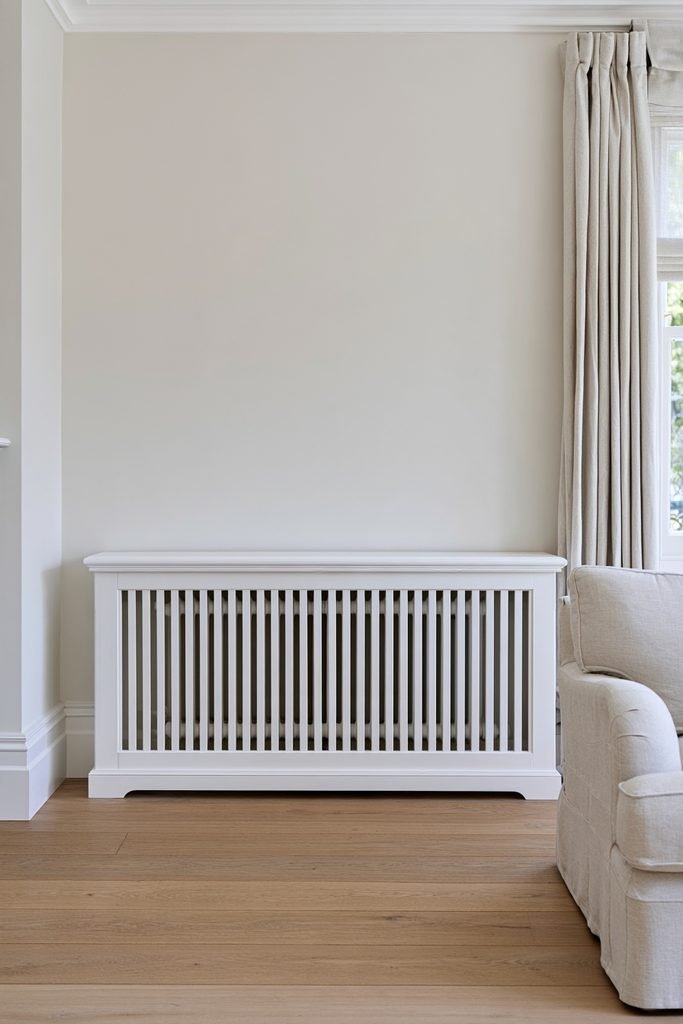
A classic slatted wood cover brings quiet structure into a living room without overwhelming the surrounding decor. Painted white, it can sit comfortably beside neutral walls and pale flooring, an approach The Crafty Hacks highlights as a way to keep the design timeless.
Warm Up With Oak
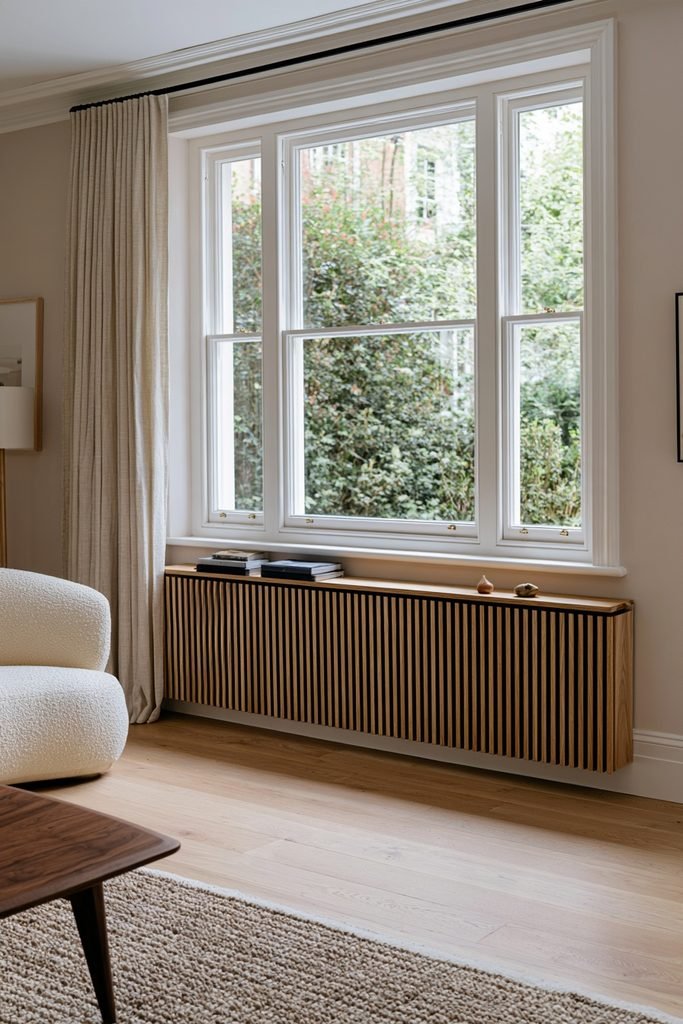
Natural oak can transform an ordinary radiator into a softly sculptural focal point instead of something to hide. A slim upper shelf leaves room for books or a few small objects, reinforcing a Scandinavian feel when paired with pale textiles nearby.
Add Fluted Detail
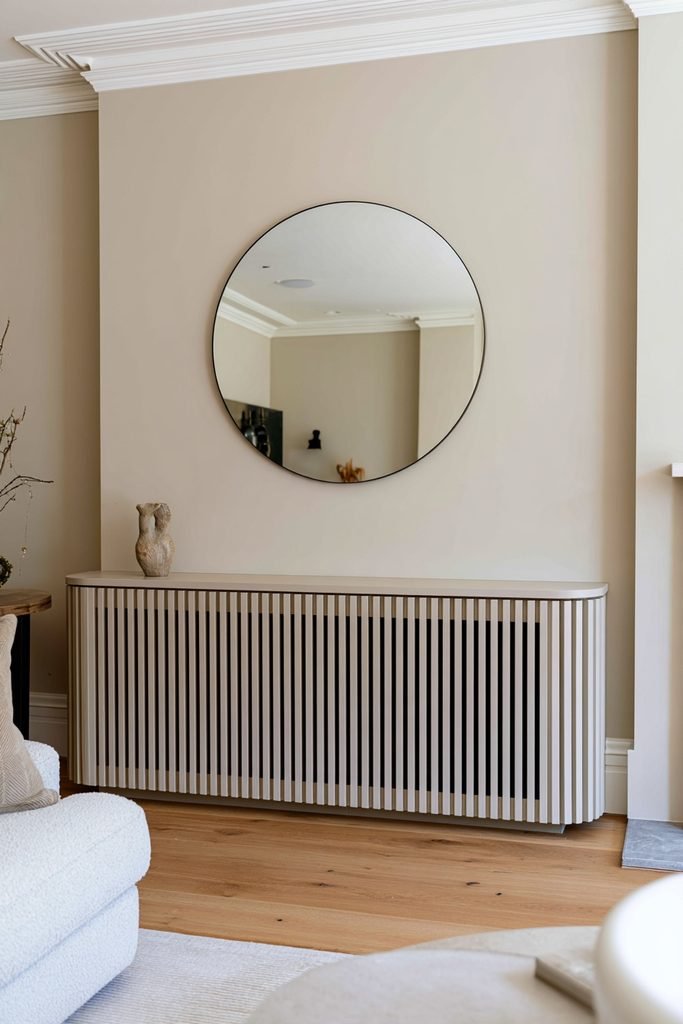
Narrow fluted grooves can give a radiator cover a more architectural presence than a flat panel. Soft beige or greige paint can heighten that quietly luxurious look, especially beneath a mirror or wall shelf.
Go Dark and Architectural
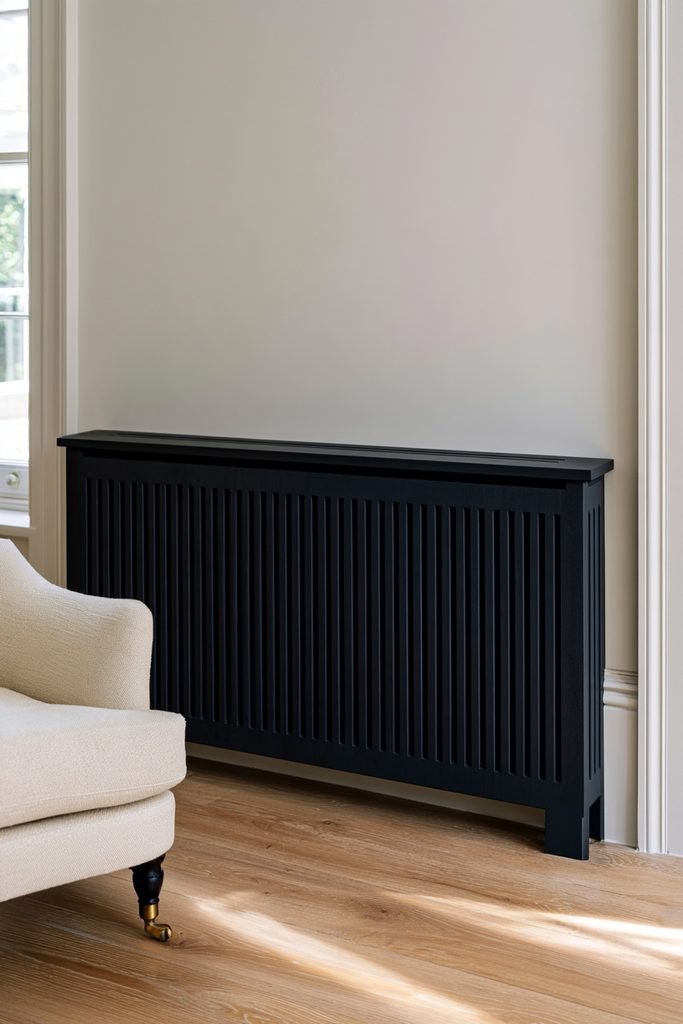
Charcoal paint can turn a radiator cover into a dramatic feature rather than something to disguise, particularly in a room with warm timber floors. This deeper shade can work well against light walls, creating contrast without dominating the room.
Build In Storage Drawers
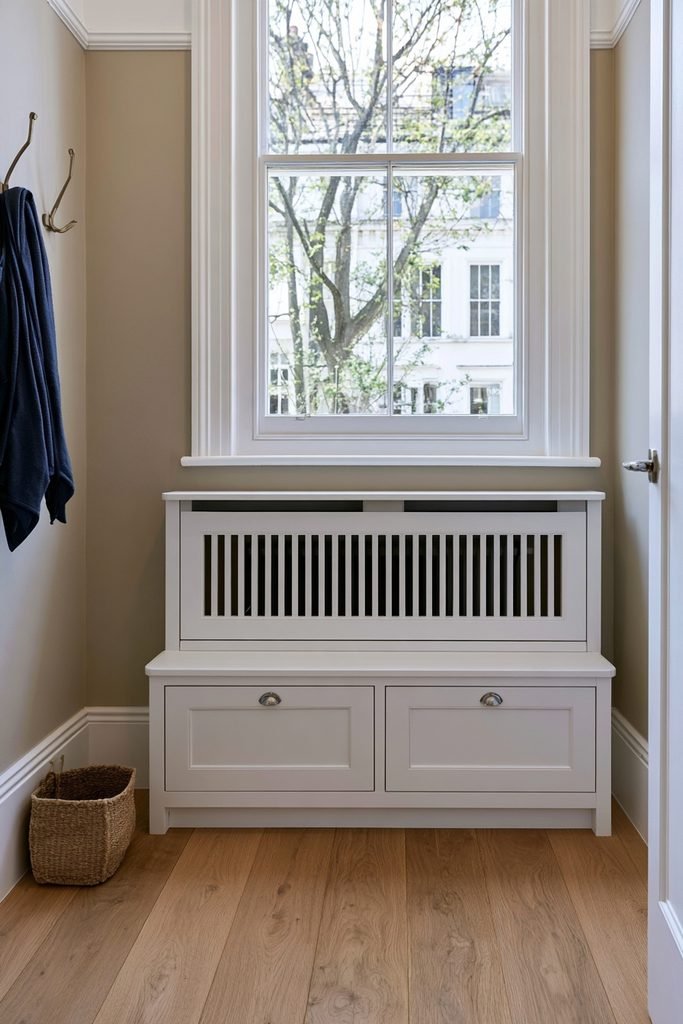
A radiator cover with drawers built into its base can add hidden storage to a hallway or living room. This works especially well below a window, where floor space would otherwise go unused.
Create a Cushioned Bench
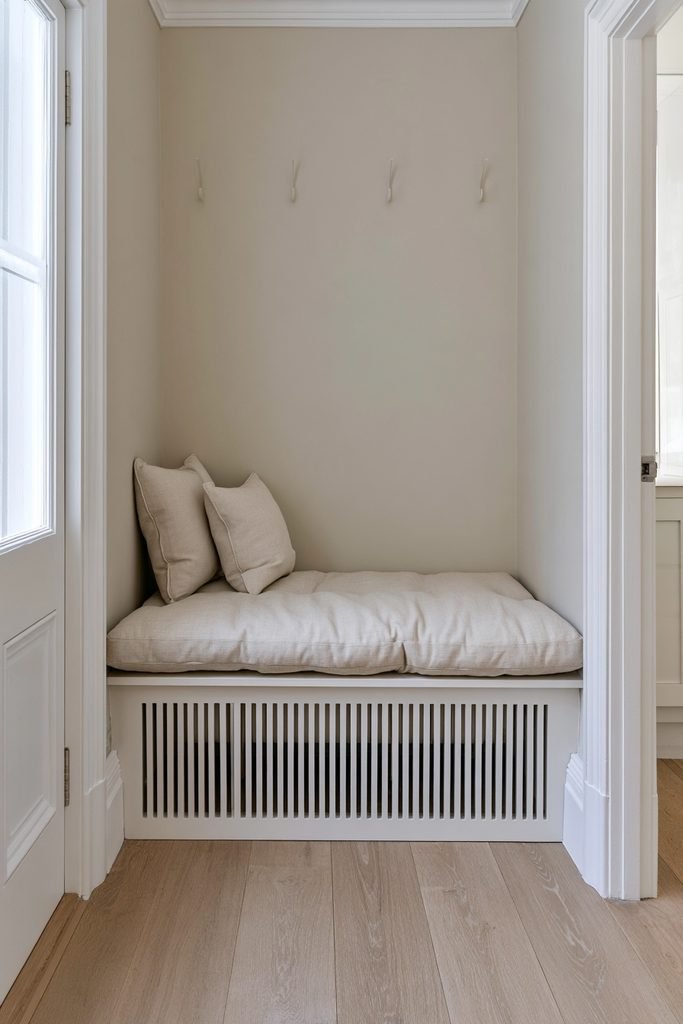
Topping a radiator cover with a cushioned seat can turn it into extra seating for a hallway or living room. A long radiator set between two walls is a natural fit for this kind of built-in bench.
Pair With Open Shelving
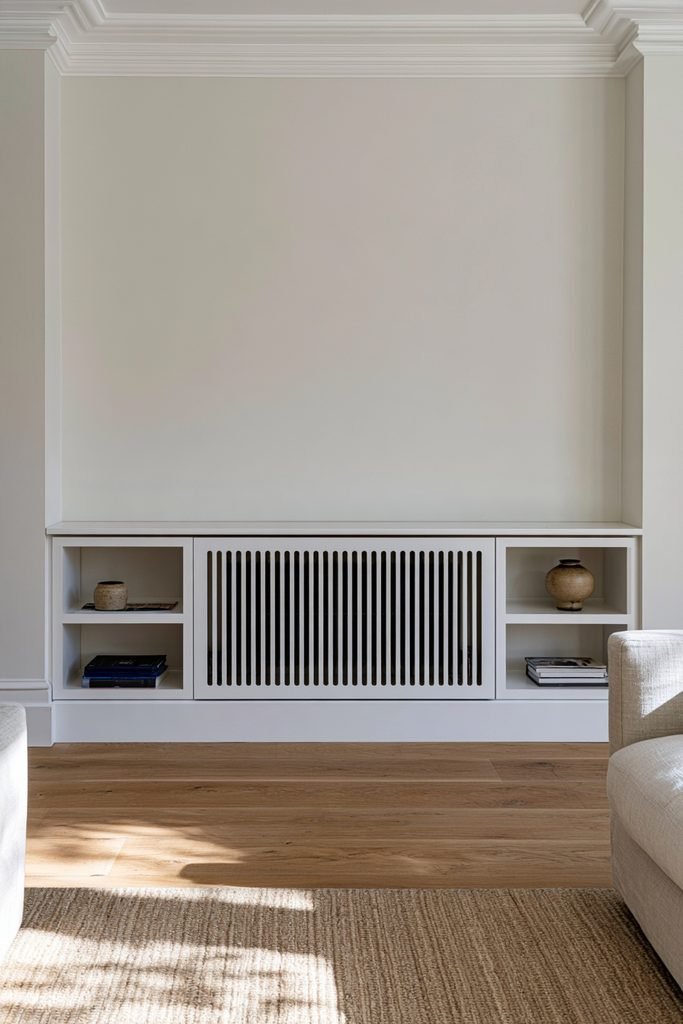
A radiator cover with open bookshelf sides can add storage while making the piece feel more like furniture than a utility box. This works particularly well in an awkward gap left after installing a cover, finishing off the space instead of leaving it bare.
Choose a Perforated Metal Grille
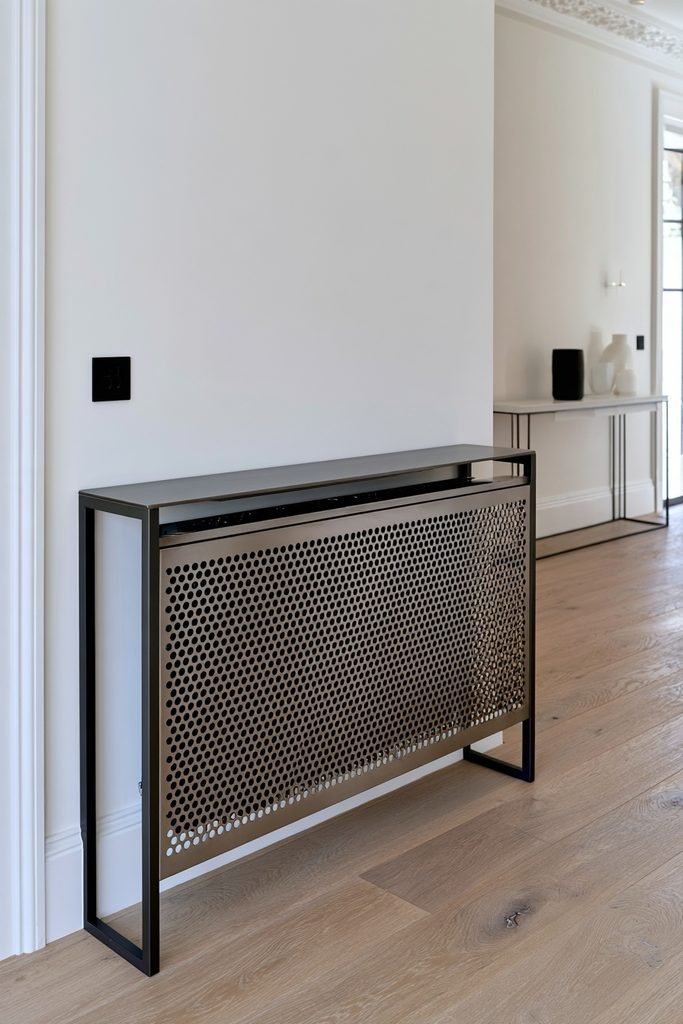
Perforated metal panels combine durability with a decorative punched pattern that still lets heat escape into the room. Steam radiators run hotter than standard hot-water types, so a metal front is best reserved for the latter, according to Apartment Therapy.
Try a Laser-Cut Grille
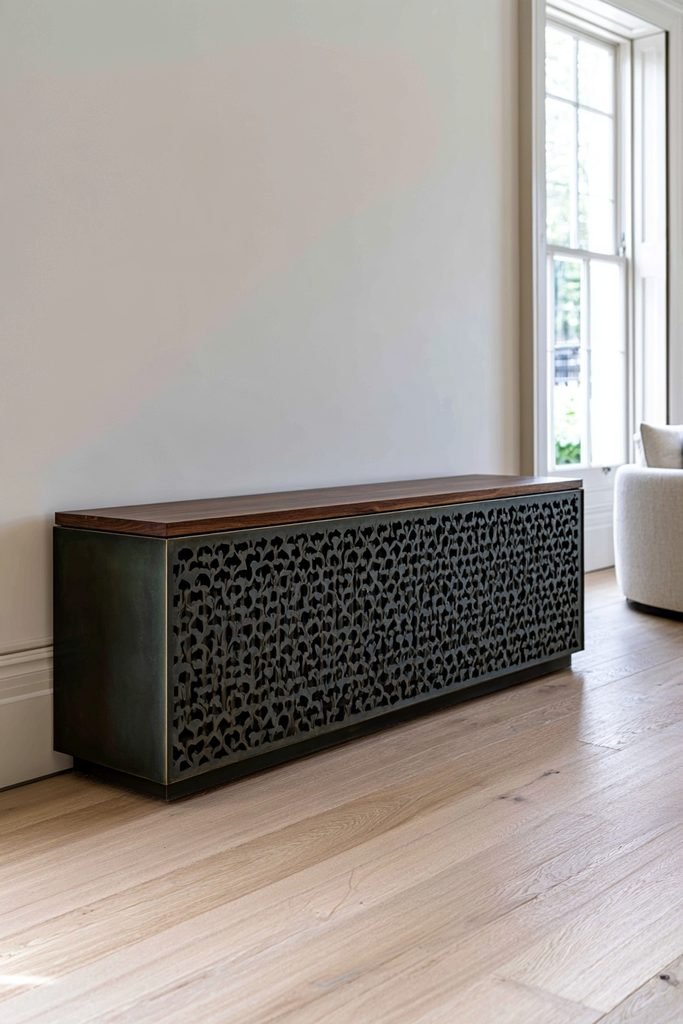
A laser-cut metal grille can add a decorative, almost lace-like pattern to the front of a cover. It combines the heat-conducting properties of metal with a pattern that still allows airflow, a balance Ideal Home points to as a strong middle ground between looks and efficiency.
Weave In Cane or Rattan
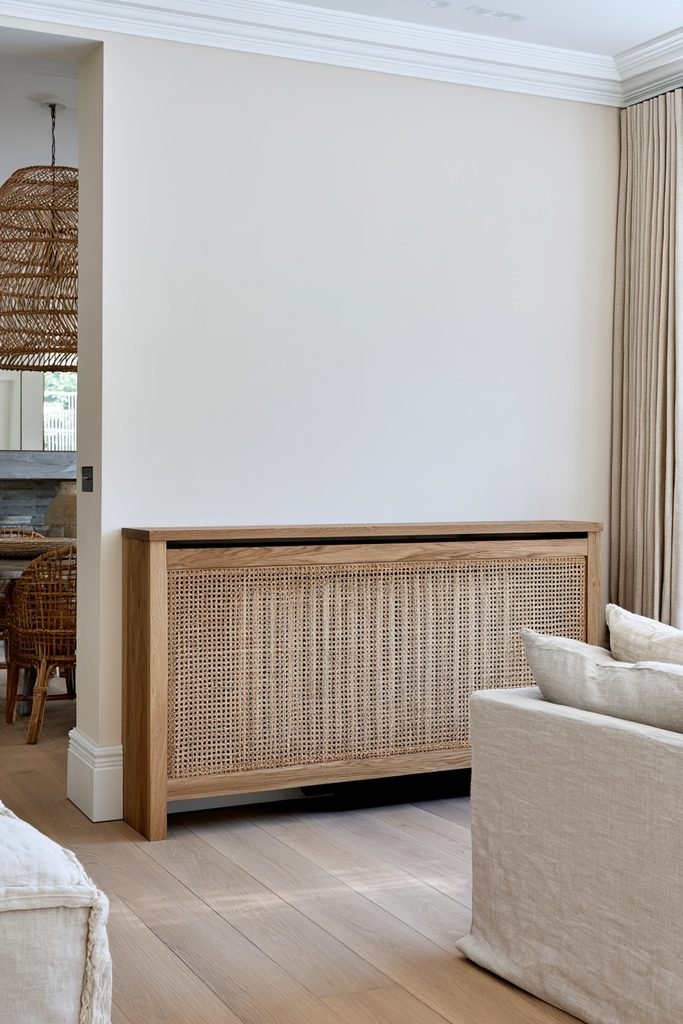
A cane or rattan front panel can soften the look of a radiator cover and bring in some texture. This pairing works particularly well in a coastal or bohemian room, where rattan already appears in furniture or lighting.
Keep It Traditional With Lattice
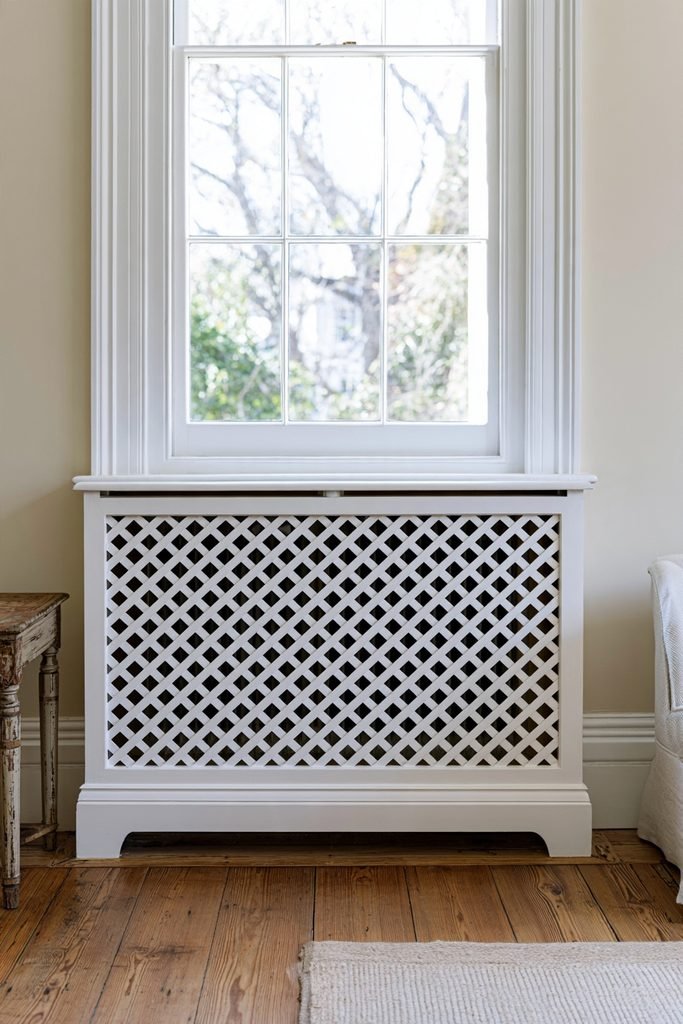
A lattice-front panel can suit a period home better than a plain slatted design. Its crisscross pattern reads as more decorative while still allowing airflow through the gaps.
Add a Glass Top
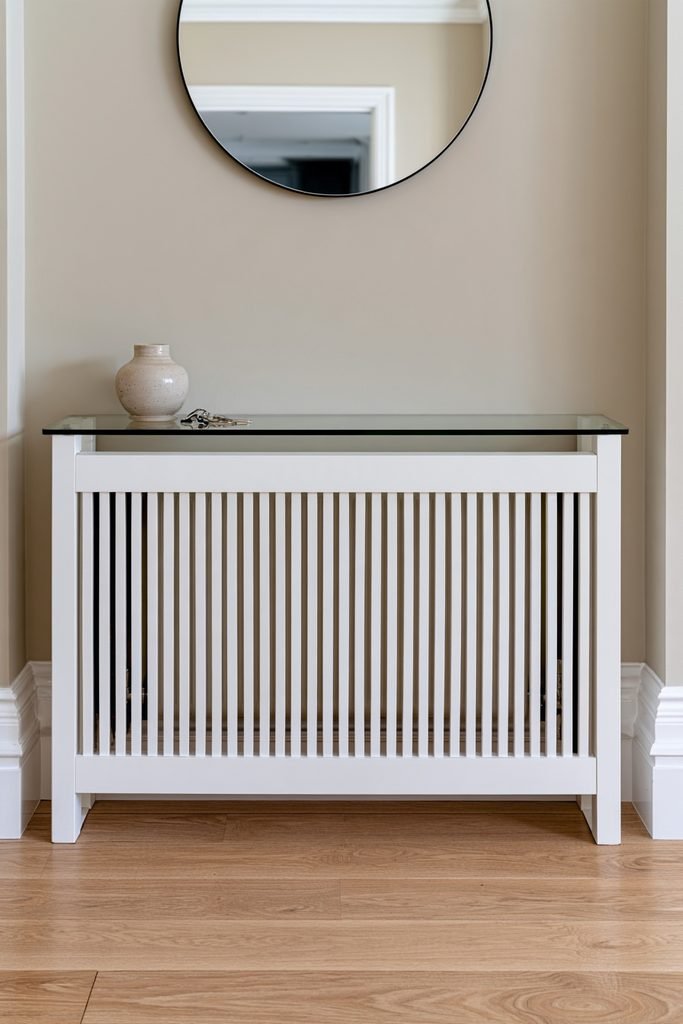
A basic radiator cover can be taken up a level with a tempered glass top that also protects the surface from water rings. This finishing touch can turn a plain wood box into a piece that reads more like furniture, an idea Family Handyman highlights.
Mix Two Wood Tones
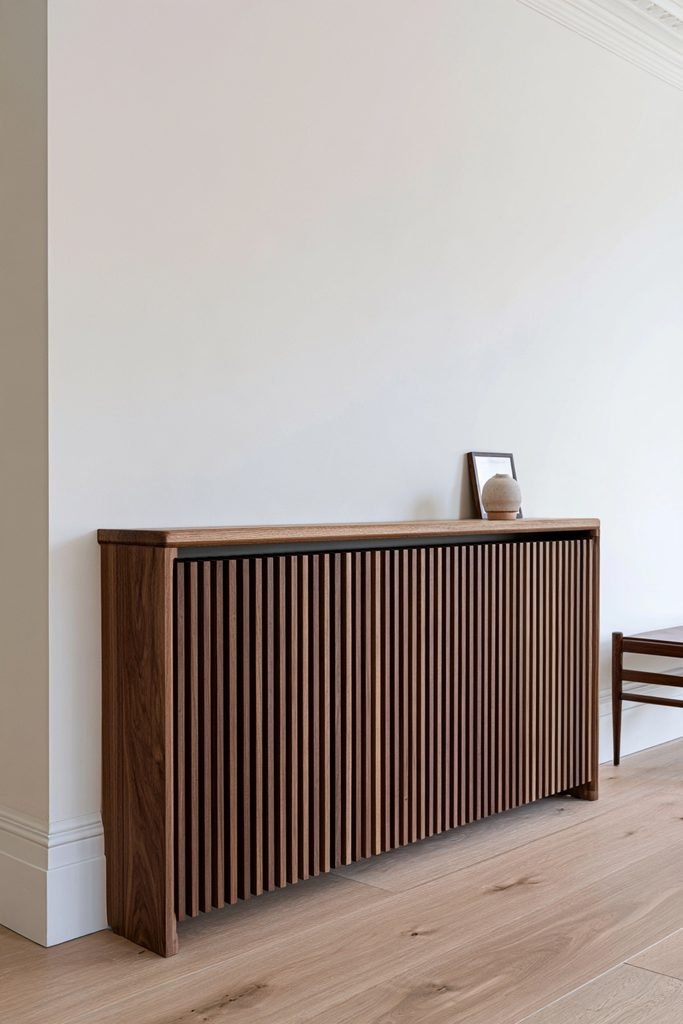
A two-toned wood radiator cover can bring a mid-century look into either a modern or a more traditional room. Slats spaced generously apart direct heat outward, while a solid wood top can double as a hallway console.
Style It as a Console
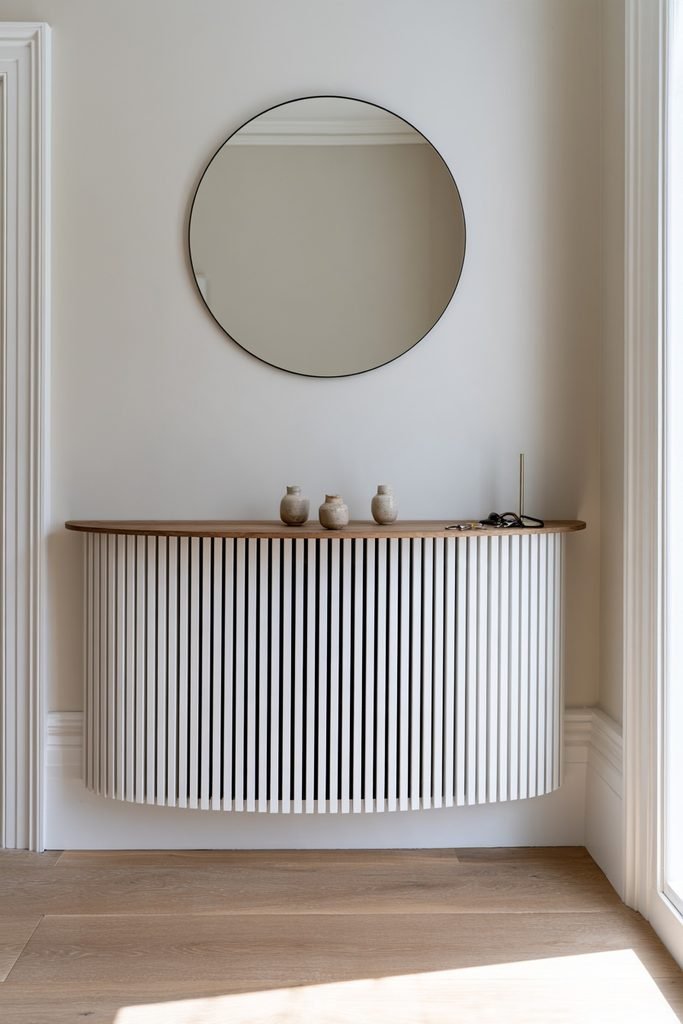
Placed in an entryway, a radiator cover with a flat top can function as a console table for keys, mail, or a lamp. A trio of vases and a mirror above can turn that same surface into a small styled vignette.
Build a Wall-Length Unit
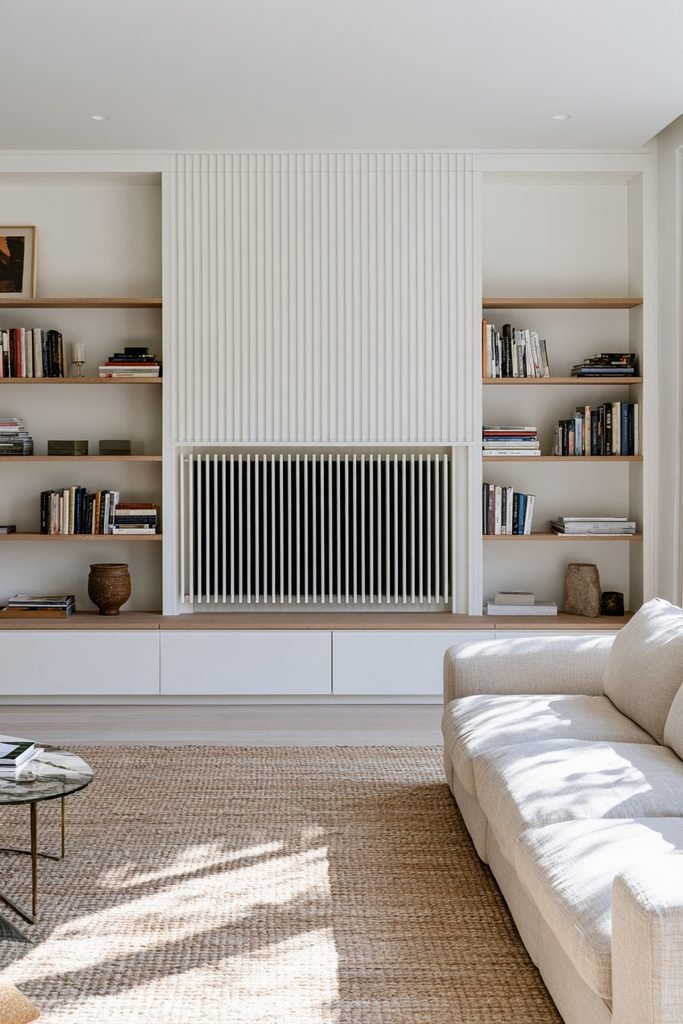
For a radiator that needs to disappear entirely, a full built-in shelving unit can run the length of the wall around it. Leaving generous clearance on all sides keeps heat circulating properly and prevents the surrounding cabinetry from overheating.
Turn It Into a Plant Shelf
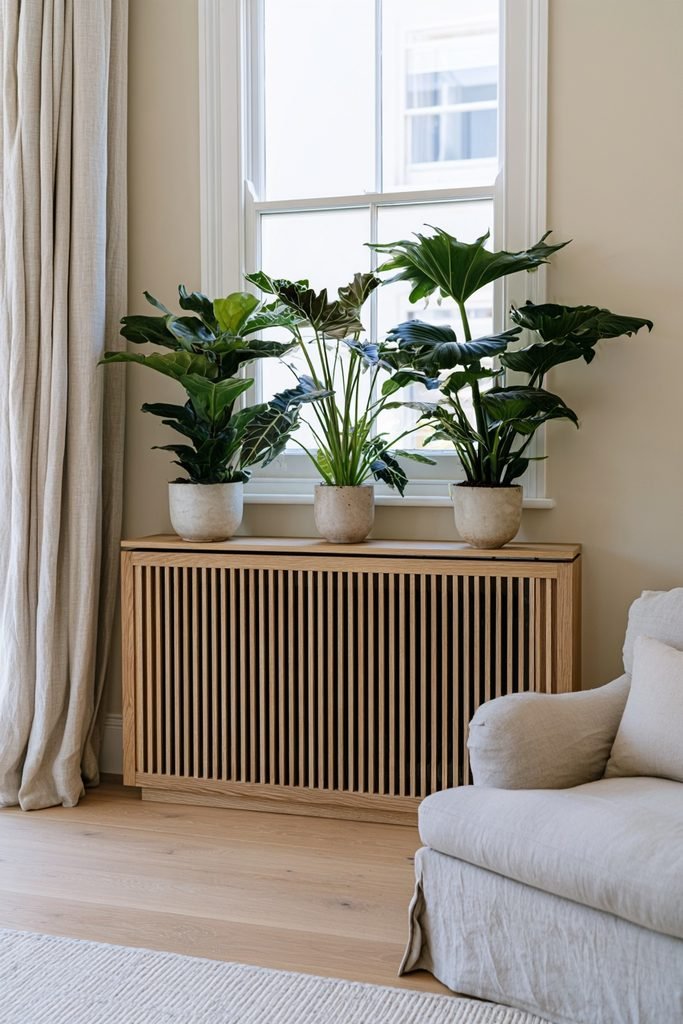
A radiator cover with a flat top can double as a display spot for potted plants. The warm air rising from underneath can help circulate air around the plants, adding a functional bonus to a decorative one.
Add a Hinged Door
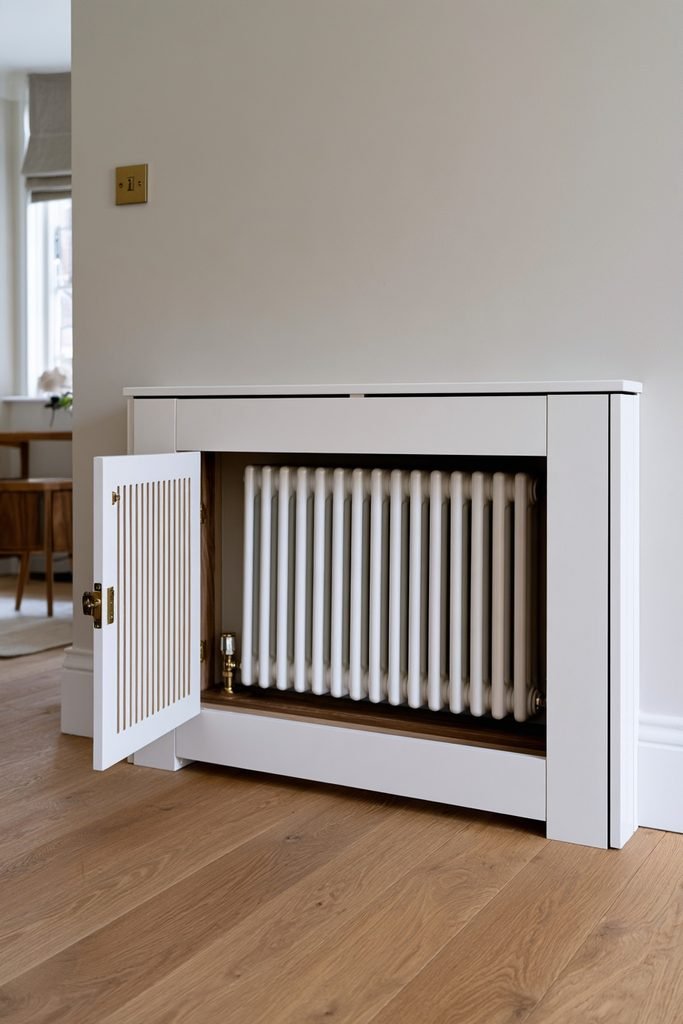
A hinged front panel can solve the everyday annoyance of reaching a radiator’s dial without lifting the whole cover off. This detail keeps the room’s look intact while still leaving the controls easy to reach.
Make a Paint Statement
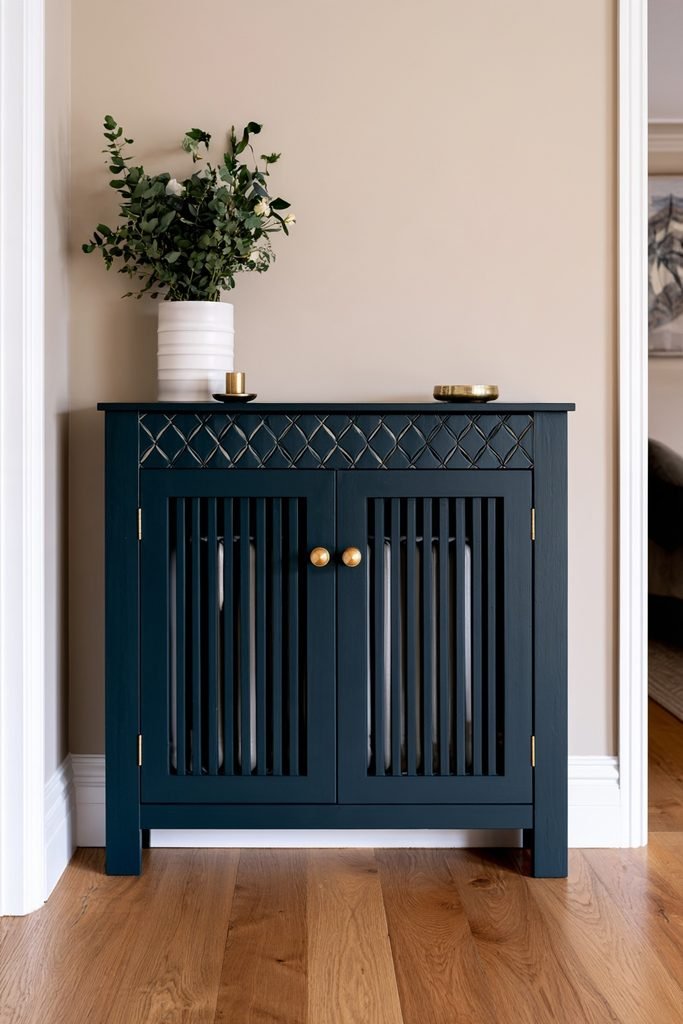
New hardware and a stenciled pattern can give an existing radiator cover a completely different personality without a full rebuild. This works as a low-cost update for a rental or for a cover that already fits but looks dated.
Go Budget With Pallet Wood
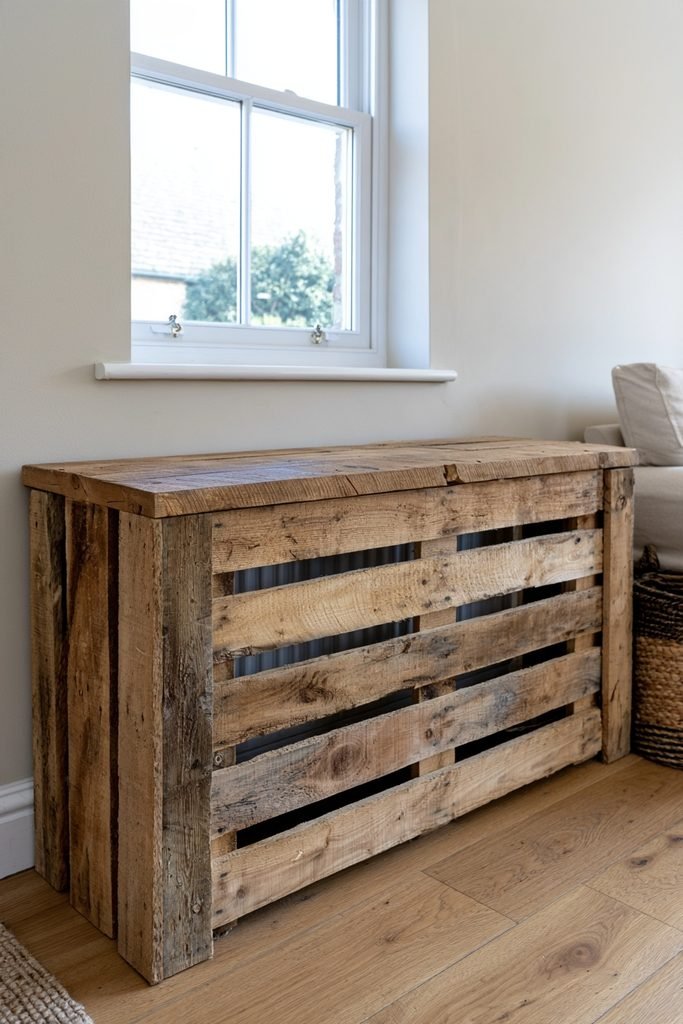
A radiator cover built from reclaimed pallet wood can be one of the most affordable DIY options available. MDF is generally the safer, more affordable choice overall, particularly in homes with kids or pets, a distinction Today’s Homeowner points out.
Hang a Fabric Curtain
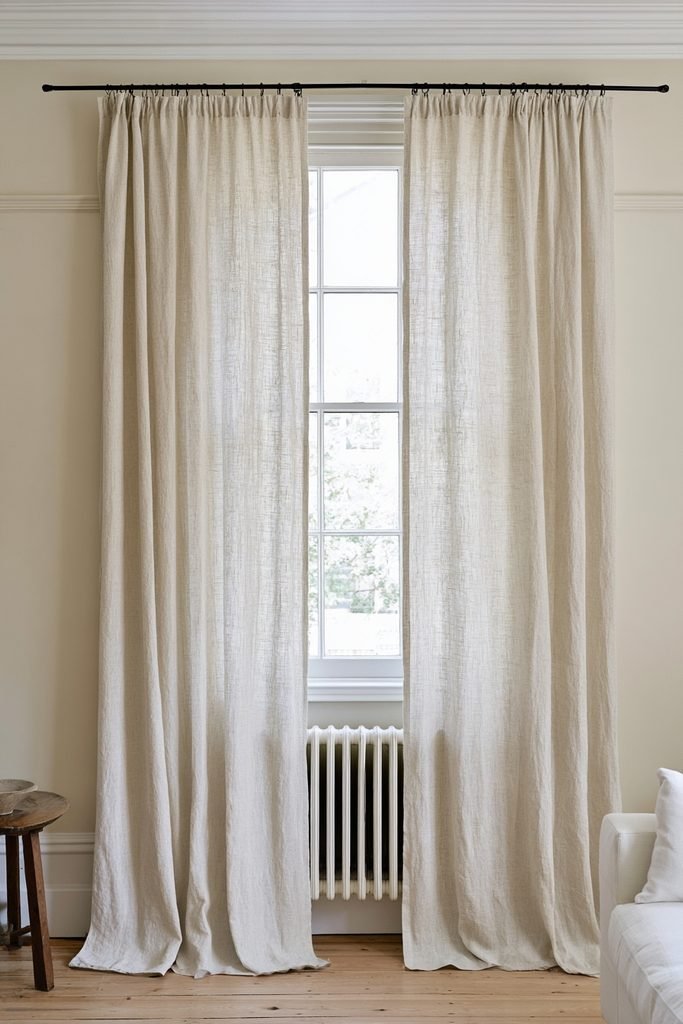
A fabric curtain hung in front of a radiator is a no-tools option that suits a renter who can’t drill into walls. A lightweight, breathable fabric works best here, since it won’t trap heat against the radiator.
Finish With Crown Molding
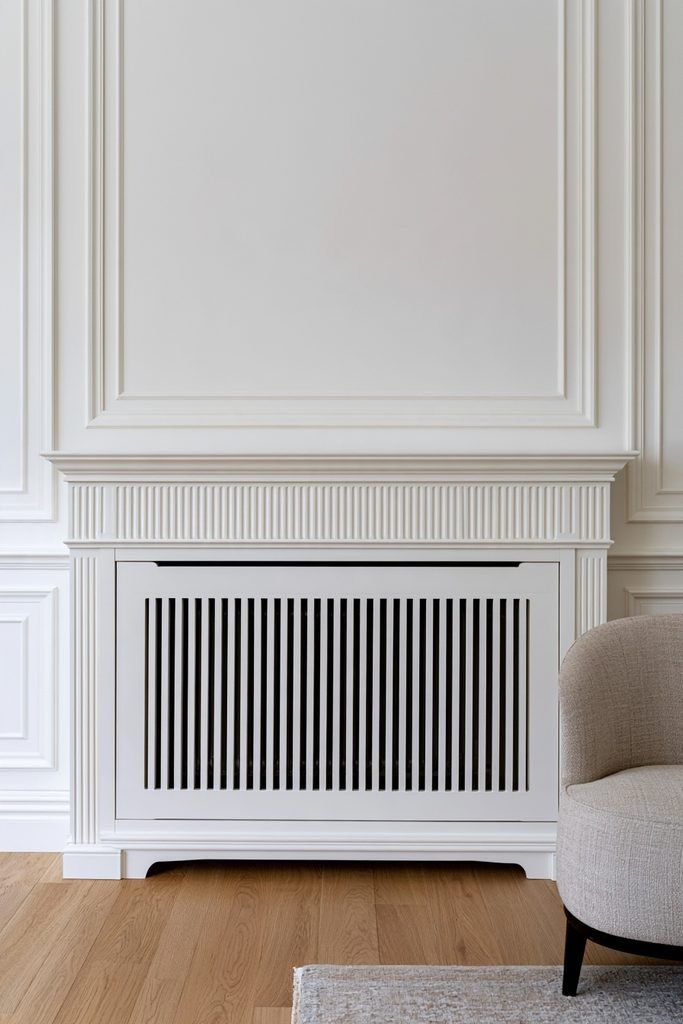
Adding a strip of crown molding along the top edge of a cover can give it a more finished, built-in appearance. This small detail can make a simple MDF box look closer to custom millwork.
Extend Kitchen Counter Space
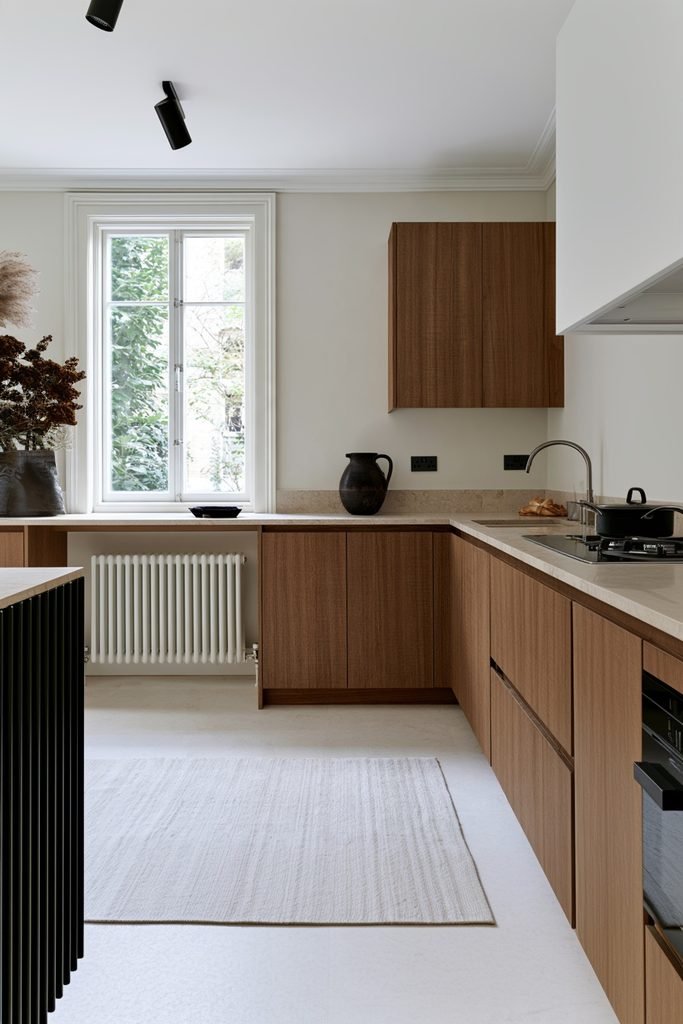
In a kitchen, a radiator cover with a durable flat top can add a few extra inches of counter space near a window or doorway. A heat-resistant finish on top keeps it practical for setting down warm dishes.
Go Farmhouse
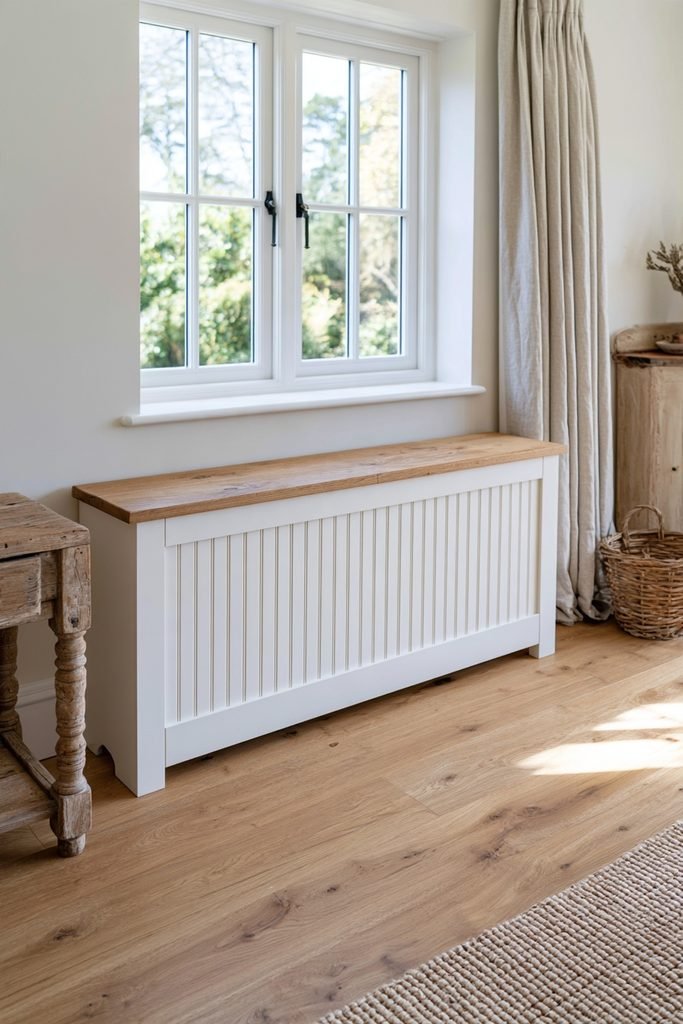
A farmhouse-style radiator cover pairs beadboard paneling with a chunky wood top for a more rustic look. Whitewashed or cream paint can keep the piece feeling light rather than heavy in a room with plenty of natural wood.
Whether the goal is a full custom build or a simple fabric curtain, radiator cover ideas can take an overlooked utility item and give it a real role in a room’s design. Matching the material and style to the specific radiator, room, and budget makes it easier to land on a cover that looks intentional rather than added on.
Frequently Asked Questions
Do radiator covers reduce heat output?
A properly vented cover typically lowers heat output by roughly 5 to 15 percent, while a tightly sealed cover without enough ventilation can cut output by 25 percent or more, according to D and G Flooring. Choosing a design with generous grille openings helps minimize that loss.
What’s the best material for a DIY radiator cover?
MDF is widely recommended for painted covers because it’s more affordable than solid wood and less prone to warping or cracking over time, per This Old House. Solid wood or plywood remain options for a more traditional or stained finish.
How much does a DIY radiator cover cost compared to buying one?
Materials for a straightforward DIY build often run around £80, while a comparable custom-made cover can be quoted at more than double that price, according to one builder’s project breakdown. Ready-made covers bought directly from a retailer can run even higher depending on material and finish.
Are radiator covers safe for kids and pets?
Yes, a well-built radiator cover is generally safer than a bare radiator, since it creates a barrier between curious hands or paws and a hot surface. It also helps protect piping and valves from being bumped or damaged, though any cover should still leave adequate clearance for airflow and follow the manufacturer’s spacing guidelines.