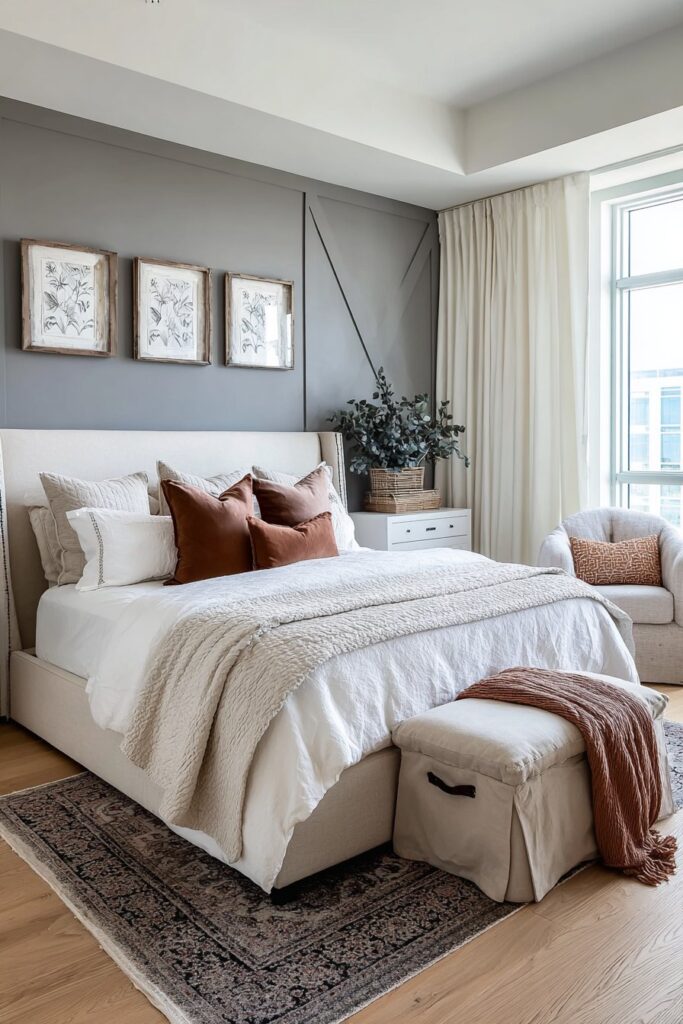
Finding the right bedroom ideas can feel impossible when you’re working with limited square footage. For example, one time, a newlywed couple asked me to fit a king-sized bed, a home office, and a yoga corner into their 12 x 13 bedroom. The truth is, a 13×11 bedroom can look premium with smart design choices. We’ve compiled 13 practical bedroom decor ideas that transform small bedroom ideas into modern bedroom ideas without sacrificing the cozy bedroom ideas you crave.
Floating Platform Bed with Hidden Storage
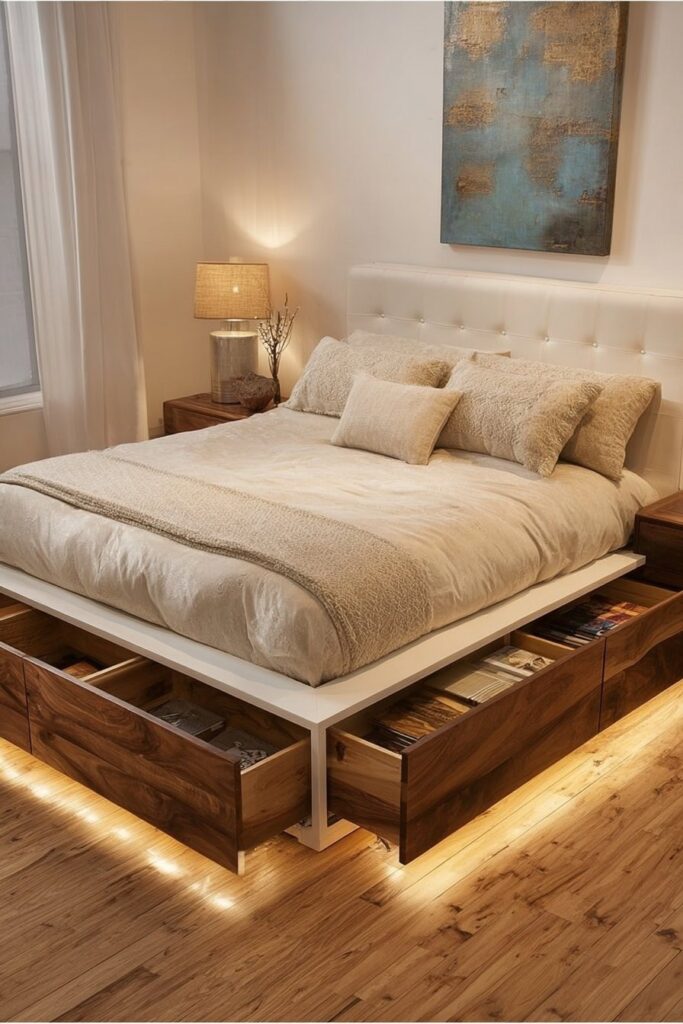
A floating platform bed creates an optical illusion that instantly elevates bedroom decor ideas. The hidden leg design makes the frame appear suspended in mid-air, giving even cramped quarters a sophisticated edge. I’ve watched clients’ faces light up when they see how this single piece transforms their small bedroom ideas into something that feels custom-designed.
What Makes It Premium
The visual trick lies in the construction. Support comes from recessed legs or wall-mounted brackets that remain invisible from most angles. This design eliminates the boxy, grounded look of traditional frames. Moreover, these beds require no box spring, which drops the overall height and maintains clean proportions. You can select from solid woods like cherry, walnut, or bamboo. The low-profile stance improves air circulation beneath the mattress, which prevents moisture buildup and extends mattress life.
Storage Benefits
The Container Bed by Dielle pushes storage capacity further than standard designs. Lift the mattress on its gas-supported hinges, and you access more than three cubic meters of organized space. That’s roughly equivalent to a standard chest of drawers without consuming valuable floor space. The storage area sits at waist height when opened, tall enough to stand inside. Two sections accommodate hanging garments, while shelves hold folded clothes, shoes, suitcases, and extra bedding. Narrow compartments fit jewelry and gloves.
Drawer-style platforms offer different advantages. Pull-out compartments give quick access to everyday items like blankets or seasonal clothing. Families appreciate how intuitive they are, particularly for children who need to reach stored toys or books. Lift-up mechanisms work better for bulky items you access infrequently. Consequently, the choice depends on whether you prioritize daily convenience or maximum capacity. Lift-up models typically cost between USD 1,200 and USD 3,000 due to hydraulic systems.
Installation Tips
Modular construction simplifies both assembly and future moves. Design your bed in three main sections that screw together, which allows disassembly for narrow doorways. Use quality screws that won’t strip during repeated assembly cycles. Some platforms include modular stairs and landings that function as additional dresser space. For instance, optional vertical wardrobes and bookcases can fit behind the headboard.
Assembly takes roughly one hour with clear instructions, though a drill speeds the process. The weight factor matters. Solid wood frames built in five separate pieces require on-site assembly, which professional delivery teams handle. Plan for side or foot clearance if you select drawer configurations.
Floor-to-Ceiling Built-In Wardrobes
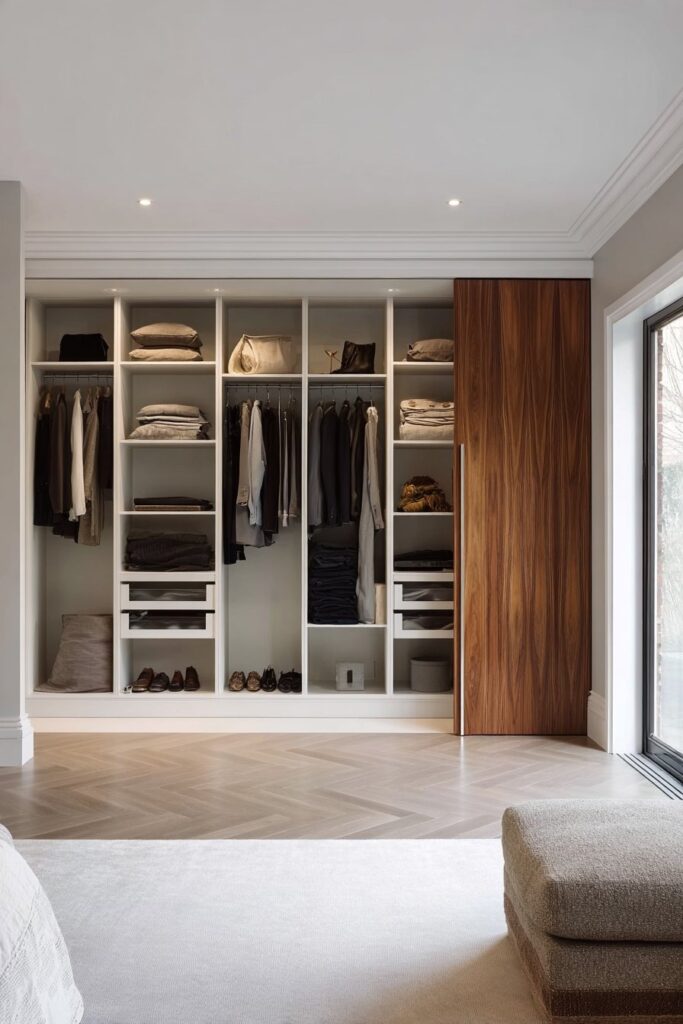
Standard wardrobes leave awkward gaps near the ceiling that collect dust and waste vertical real estate. Built-in wardrobes that stretch from floor to ceiling eliminate this inefficiency while creating a streamlined look that reads as custom architecture rather than added furniture. The seamless integration makes small bedroom ideas feel more spacious and polished.
Design Features
These wardrobes blend directly into room architecture, creating a fitted finish that appears part of the original construction. While freestanding units sit visibly against walls, built-ins become the wall itself. The coverage creates a modern appearance that adds sophistication to bedroom decor ideas. You can customize every interior detail to match your routine. Adjustable shelves accommodate folded sweaters or handbags. Pull-out drawers keep smaller items organized. Shoe racks display pairs at eye level so you grab what you need quickly. Hanging rails can be configured by garment length, which creates usable space underneath shorter items for additional drawers or shelving.
Door selection changes both function and esthetics. Sliding doors work well in tight quarters since they require no swing clearance. Hinged doors offer full interior access but need floor space to open. Mirrored panels on sliding doors reflect light and visually expand the room.
Space Optimization
Vertical coverage maximizes capacity without consuming floor area. The design works particularly well for awkward room features. Alcoves become dedicated storage zones. Corners can be bridged to create continuous runs. Sloped ceilings accommodate shaped storage that remains reachable. This approach eliminates the need for separate dressers or storage furniture, which opens up floor space and makes the room feel lighter.
Internal planning starts with measuring your wall length. Each meter typically accommodates one double section with two doors, so a three-meter wall fits six doors and three compartments. Double hanging sections increase capacity for shorter garments. The top shelf behind upper cupboard doors stores suitcases, bedding, and seasonal items you access infrequently.
Cost Considerations
Pricing varies based on materials, features, and size. Basic fitted wardrobes range from USD 160 to over USD 500 per linear foot, inclusive of labor and materials. Some estimates show USD 1400 to USD 1600 per linear foot for closed wardrobe storage with doors and drawers. Sliding door configurations typically cost USD 2600 to over USD 5200, while hinged designs start at USD 1800 and reach USD 4800+ for premium materials. The investment adds property value since prospective buyers appreciate ready-made storage solutions.
Layered Lighting with Dimmer Controls
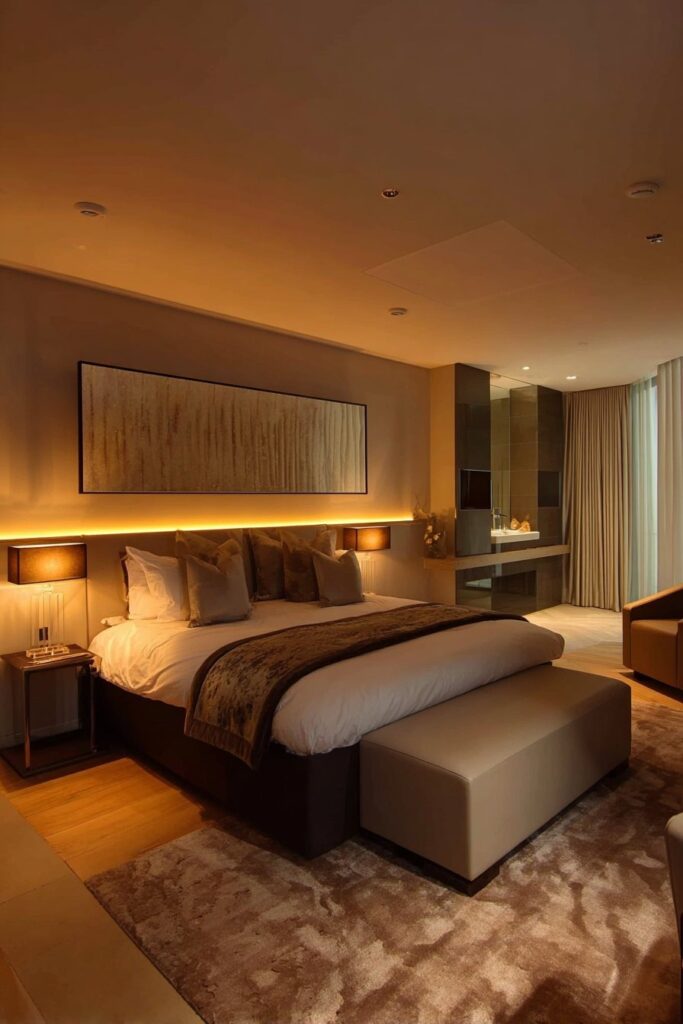
Single overhead fixtures rarely deliver the ambiance small bedroom ideas need. Layered lighting with dimmer controls transforms how a room feels throughout the day, shifting from bright functionality to cozy bedroom ideas with one adjustment. The approach combines multiple light sources at varying intensities, giving you precise control over atmosphere.
Lighting Layers Explained
Three distinct layers create balanced bedroom decor ideas. Ambient lighting provides overall illumination, typically from ceiling-mounted fixtures, pendants, or recessed downlights that cast light over wider areas. This general layer sets the room’s baseline brightness but feels flat without supplementary sources. Task lighting delivers direct, intense illumination for specific activities like reading or grooming. Bedside lamps, desk fixtures, and vanity lights prevent eyestrain during focused work. Accent lighting adds esthetic dimension by highlighting architectural details or creating focal points. For instance, LED strips behind headboards or under-bed placement generates visual depth without disrupting ambient comfort.
Mixing these sources means the space you use for morning routines can transform into an elegant retreat by evening. The combination removes unflattering shadows while adding dimension that makes modern bedroom ideas feel custom-designed. Warm white LED bulbs lend the cozy ambiance required for quality sleep, particularly when paired with carefully chosen color temperatures.
Mood Enhancement
Dimmer switches shift brightness to match your current need. Keep lights bright while cleaning, then reduce intensity for bedtime reading. This flexibility eliminates eye strain that harsh overhead lighting causes, especially during early mornings or late evenings. Adjustable lighting highlights texture and depth in materials, allowing brass fixtures or textured walls to reveal new dimensions as brightness changes.
The control reshapes how you experience your space. Lower lighting for yoga sessions, brighten for dinner preparations, or dim for cinema-like movie watching. Consequently, one room serves multiple functions without physical changes. Smart dimmers enable remote adjustments via smartphone apps or voice commands, adding convenience beyond traditional switches.
Smart Integration Options
Smart dimmers integrate with platforms like Amazon Alexa, Google Home, and Apple HomeKit. You can preset scenes for specific occasions, from morning routines to evening wind-down periods. For instance, scheduling lights to gradually dim and shift warmer as bedtime approaches helps your body ease into rest mode. Energy monitoring features track consumption patterns, helping reduce bills while extending bulb lifespan. These systems allow nuanced programming where ambient fixtures dim while accent lighting remains bright, creating hierarchies that direct attention.
Mirrored Sliding Closet Doors
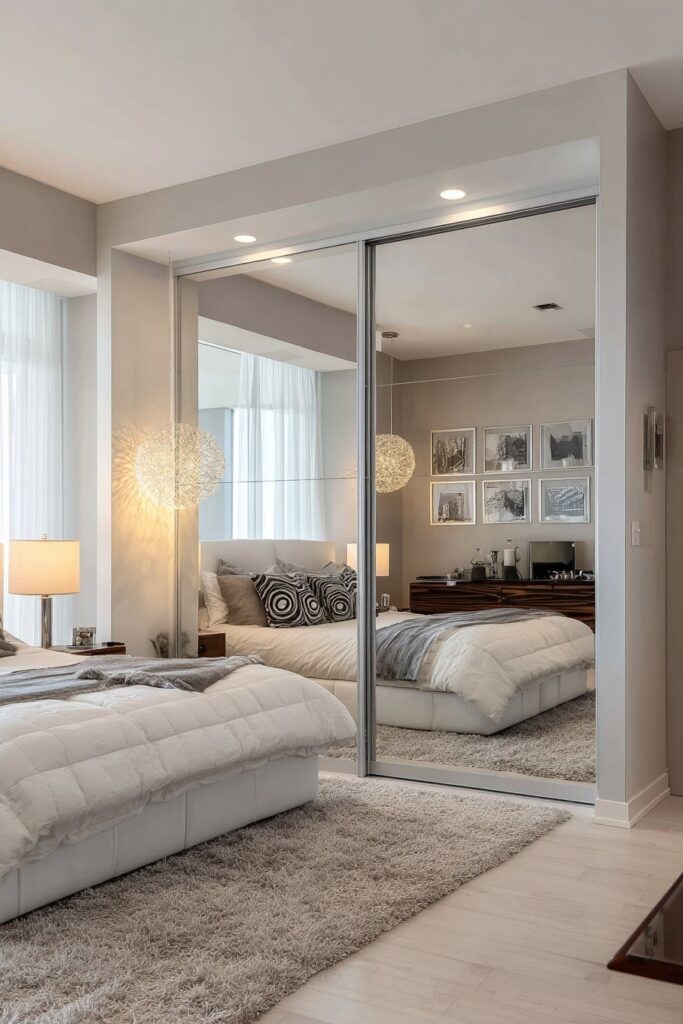
Mirrors transform how you perceive boundaries in confined quarters. Mirrored sliding closet doors deliver this spatial magic while eliminating the need for a separate full-length mirror, which saves precious wall real estate. The reflective surfaces bounce both natural and artificial light throughout the room, creating brightness that makes small bedroom ideas feel more inviting. When positioned across from windows, these doors can double the natural light entering your space.
Visual Impact
The illusion works by reflecting room dimensions and surroundings, tricking your eyes into perceiving expanded depth. This space-enhancing effect proves particularly effective in compact bedrooms, studios, and apartments where every visual trick counts. Glass doors visually expand the area, making it feel less confined. Modern designs have evolved beyond outdated frames. You can select from wood frames that accept paint, aluminum finishes, frameless mirrors, or beveled and flat options that complement current bedroom decor ideas.
Space-Saving Benefits
Sliding mechanisms glide horizontally along rail systems rather than swinging outward on hinges. This design removes the need for door clearance, which makes them perfect for tight quarters where furniture placement matters. The doors stack to the right, left, or center positions, allowing comfortable access to everything inside your closet. For instance, you gain a functional full-length dressing mirror without mounting one on already limited wall space. Consequently, your modern bedroom ideas stay uncluttered while maintaining practical utility.
Maintenance Tips
Clean mirrors using ammonia-free products to prevent streaking and edge damage. Never spray cleaner directly onto the mirror surface. Apply it to a soft cloth first, then wipe. Water accumulation on mirror edges causes deterioration, so dry these areas thoroughly after cleaning. Microfiber cloths prevent scratches better than abrasive materials. Keep the bottom track clear of debris by vacuuming with a crevice tool. Lubricate rollers and tracks with silicone spray or WD40 to maintain smooth gliding. Check rollers annually and replace worn tracks before panels jam.
Upholstered Accent Wall Behind Bed
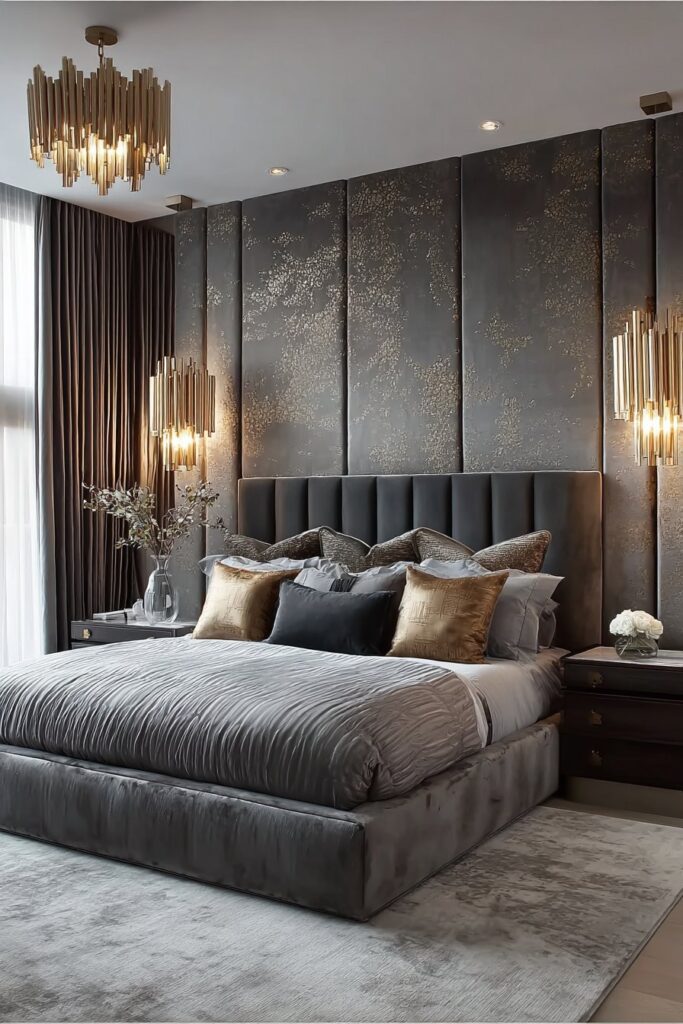
Texture adds a dimension that paint and wallpaper cannot replicate. Upholstered accent walls combine fabric, padding, and structured backing to create soft, tactile surfaces that transform bedroom decor ideas from ordinary to refined. The wall covering consists of core materials like foam, Earthwool, or mineral wool layered with acoustically transparent fabric. This construction delivers both visual elegance and functional benefits that standard finishes lack.
Material Options
Fabric selection determines both appearance and performance. Velvet provides rich texture and luxury appeal, while linen and cotton offer durability for high-traffic areas. Silk creates sleek sophistication, though it requires careful handling during installation. Wool fabrics bring warmth and excellent acoustic properties. The fabric must have sufficient weight to prevent show-through effects where padding becomes visible. Wipeable and bleach-cleanable coated options work well for households concerned about maintenance.
The padding layer serves multiple purposes beyond esthetics. It conceals wall imperfections like cracks and uneven plasterwork. Moreover, wadding creates the characteristic padded depth that gives upholstered walls their distinctive relief. High-density foam cores provide excellent acoustic insulation while maintaining shape over time. The soft texture contributes warmth and psychological comfort, which proves particularly valuable for people with anxiety or insomnia.
Acoustic Benefits
Sound absorption stands as one of the most significant advantages. Acoustic studies demonstrate reverberation time reductions of 30 to 50% in certain applications. The padding absorbs sound vibrations, reducing ambient noise from traffic, neighbors, and even snoring partners. This deadening effect improves sleep quality by creating quieter environments. Upholstered headboards act as buffers, adding insulation between you and the wall while absorbing sound. As shown above, the combination transforms bedroom acoustics completely by softening the sonic environment.
DIY vs Professional Installation
Professional installation using the tacking method involves framing walls with tacking strips, adding batting, then stretching fabric over the surface. This specialized craft requires reading walls, managing plumb lines, and calculating tensions. BeauClip mounting systems offer DIY-friendly alternatives, holding up to 15 pounds per clip. Velcro tape provides another accessible option for panel installation. Pricing ranges from USD 10 to USD 50 per square foot in 2025, with professional services adding labor costs. Panel-based systems add USD 24 to USD 70 per panel depending on complexity.
Multi-Functional Corner Desk Setup
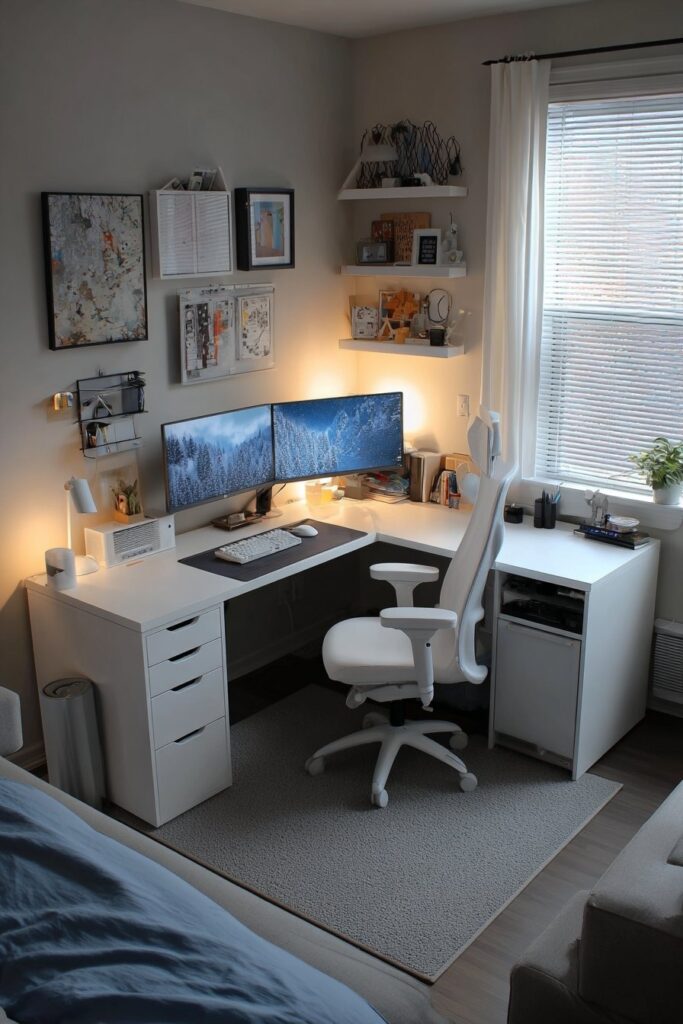
Corners collect dust more often than they collect furniture. Corner desks transform these neglected zones into productive workstations while keeping main walls available for your bed and storage. The triangular or clipped-corner design minimizes the desk’s footprint, which proves particularly effective in 10×10 bedrooms where every inch counts. Position the desk in the corner furthest from the door to reduce visual clutter when entering the room.
Design Configuration
Slim, standing desks provide ample work surface without bulk. These narrow profiles suit people working from home part-time or just a few hours daily. For instance, a simple corner tabletop creates functional workspace without consuming excessive floor area. Floating desks that mount directly to walls free up even more space, and some fold up like Murphy beds when not in use. Lightweight, durable furniture stores easily when guests visit.
Workspace Integration
Place your desk near windows for maximum natural light, which boosts mood and makes working from home more pleasant. The area in front of bedroom windows typically goes unused, so a small desk and comfortable chair fit naturally. In addition, built-in wardrobes with integrated desk sections create dual-purpose spaces without separate furniture pieces. Choose a rectangular farmhouse-style table with a supportive chair that lacks bulky arms for reduced footprint. Wall shelves or cabinets utilize vertical space for supplies without crowding the floor.
Cable Management Solutions
Cord channels, under-desk trays, and fabric cable sleeves hide wires and restore calm to bedroom workspaces. Cable management boxes conceal power strips and excess cord length instantly. Adhesive clips keep cords running neatly along desk edges. Label cables at both ends so you know what you’re unplugging without guessing. Wireless keyboards, mice, and charging pads significantly reduce cable clutter. Consequently, organized tech setups look better and make troubleshooting easier.
Vertical Storage with Tall Narrow Shelving
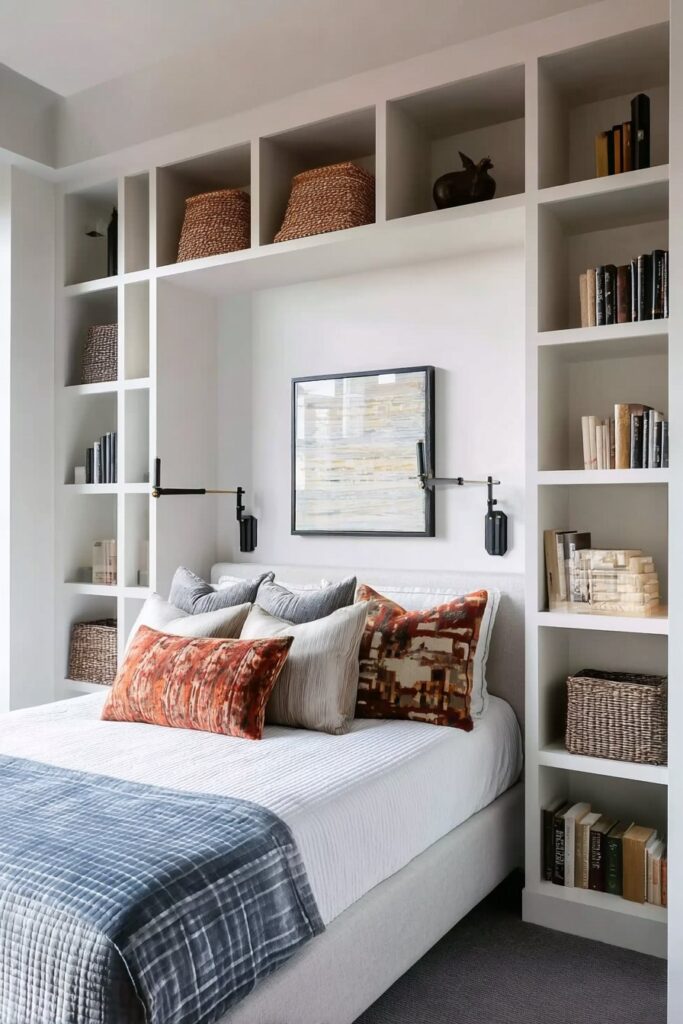
Walls stretch upward while floor space remains precious. Tall narrow shelving units capture this vertical dimension, stacking storage upward rather than outward to maximize capacity without expanding your footprint. The design works particularly well for small bedroom ideas where standard furniture won’t fit, slipping into spaces beside wardrobes or doors. I’ve installed these units in bedrooms where clients insisted they had no room left, only to discover unused corners and wall segments that accepted slim shelving perfectly.
Height Optimization
Vertical shelf columns installed from floor to near ceiling create strong visual lines that enhance perceived height. The upward emphasis makes rooms feel taller than actual measurements suggest. For instance, empty corners gain purpose with custom-cut wooden shelves that fit architectural indentations. This approach transforms wasted space into functional storage for books, trinkets, or accessories.
The 4:1 stability rule governs safe installation. For every four units of height, you need one unit of depth at the base. A tall, narrow unit becomes inherently unstable when loaded with heavy items, especially if the center of gravity rises too high. Besides depth ratios, floor fixing proves essential for any tall shelving unit. Bolt base uprights directly into concrete floors using expansion bolts. Cross-bracing on the back and sides prevents swaying under load.
Display Ideas
Alternate open display areas with closed storage to maintain visual balance while keeping clutter hidden. Consistent spacing between shelves creates clean lines. Rainbow-organized books above seating areas let you quickly select reads. Cubby-style shelving with baskets stores cosmetics, art supplies, clutches, or baseball caps. Wall shelves eliminate the need for traditional bookcases when paired with multifunctional nightstands that include built-in shelving.
Weight Distribution
Going higher doesn’t increase total bay capacity. A bay rated for 2,000kg UDL applies that rating to the entire unit, not per shelf. Five shelves at 400kg each use vertical space more efficiently than three at 600kg, but total capacity remains 2,000kg. Place heavier items on shelf sides and lighter items toward the middle. Position the heaviest objects directly over brackets. Uneven loading causes failures even when total weight stays within limits.
Custom Window Treatments from Ceiling Height
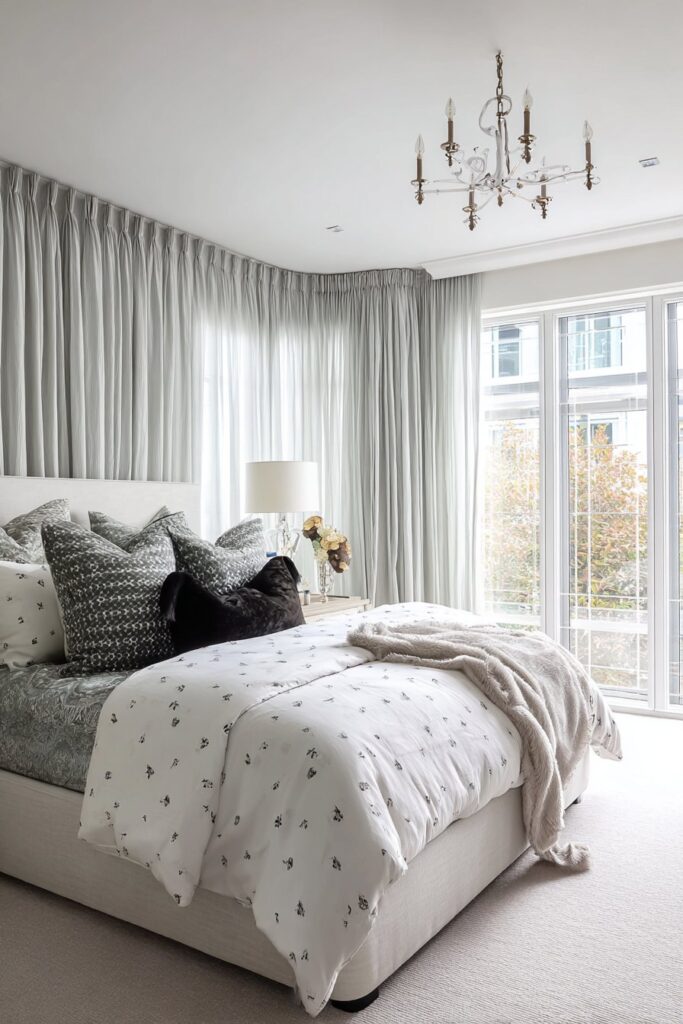
Curtain rods mounted at standard height pull visual attention downward. Installing custom window treatments from ceiling height shifts this dynamic completely, creating one of the most effective illusions for bedroom decor ideas. The elevated positioning draws eyes upward and makes ceilings appear taller while adding architectural polish that distinguishes small bedroom ideas from generic spaces.
Fabric Selection
Blackout fabrics block light completely and remain essential for quality sleep. Velvet, heavy microfior, lined cotton, and purpose-designed blackout materials provide complete darkness while reducing noise. Light filtering options offer middle ground, diffusing harsh sunlight while maintaining natural glow. These fabrics reduce glare and UV exposure without eliminating daylight entirely. Sheer materials maximize brightness for daytime but provide minimal privacy at night. Cotton and linen deliver durability with low maintenance, often machine-washable, while specialty weaves require dry cleaning.
Visual Height Tricks
Position curtain rods 6 to 8 inches above window trim or 2 to 3 inches below the ceiling. This placement creates the perception of taller windows and more spacious rooms. For rooms with 9-foot ceilings, mount rods 8 to 12 inches above the window for maximum effect. Extending rods beyond window frame edges makes windows appear wider while allowing more light when drapes open. Wall-to-wall mounting combined with ceiling-height placement produces the most dramatic transformation. Floor-length panels that kiss the floor rather than stopping short complete the elongated visual line.
Light Control Features
Blackout treatments eliminate up to 99% of light, which proves vital for bedrooms requiring complete darkness. Pairing translucent curtains with separate blackout panels mounted back-to-back provides flexibility between filtered light and total darkness. Cellular shades with blackout liners combine light control with energy efficiency. Besides blocking light, these treatments improve privacy and reduce street noise penetration.
Under-Bed LED Accent Lighting
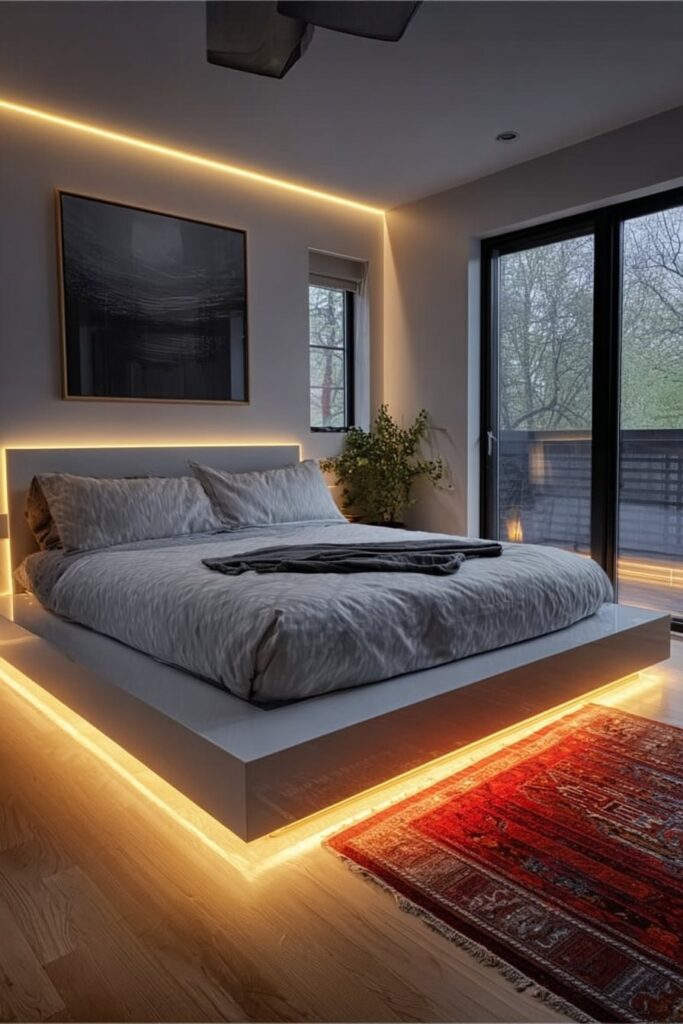
LED strips positioned beneath your bed frame generate a floating effect that rivals high-end hotel bedroom ideas. The soft glow creates separation between furniture and floor, adding depth that makes small bedroom ideas feel less cramped. Analogous to how mirrored surfaces expand perceived boundaries, this lighting trick opens up visual space without physical changes.
Ambient Effect
The illumination makes your bed appear suspended, creating a modern edge that elevates bedroom decor ideas instantly. Motion-activated LED strips add practical value beyond esthetics. The lights activate softly as you step out of bed, providing enough visibility for nighttime navigation without disturbing your partner or disrupting the room’s tranquility. This feature works particularly well for families with young children who need safe passage during night hours.
Color Temperature Options
Warm white creates inviting ambiance that supports cozy bedroom ideas. The soft temperature promotes relaxation before sleep. Color gradients introduce visual interest for those preferring modern bedroom ideas with personality. RGB options let you shift hues based on mood or activity, from energizing blues for morning routines to calming ambers for evening wind-down.
Installation Method
Measure the perimeter where strips will attach, then cut LED strips to length. Test your power source before connecting components. A 12v power supply works with most LED strips, though verification prevents overload issues. Adhesive backing secures strips along bed frame edges. Position them close to the back lip so they remain invisible from bed level. Diffuser tape softens the light output, eliminating harsh spots. Remote-controlled switches enable convenient adjustments without leaving bed.
Neutral Color Palette with Metallic Accents
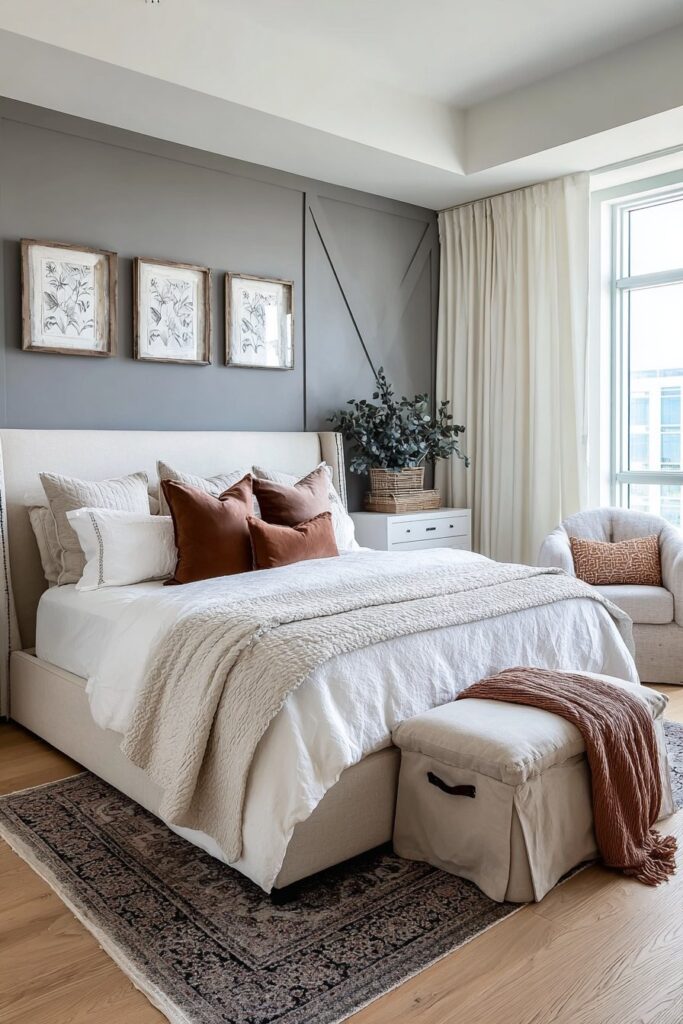
Neutral palettes provide the foundation for bedroom ideas that feel both restful and refined. In fact, softer neutral palettes create calming atmospheres that support better sleep. Certain colors elicit psychological responses, and swathing your space in easy-on-the-eyes neutrals contributes to a full eight-plus hours of rest. Neutral doesn’t mean boring. The sophistication emerges when you layer metallic accents that catch light without overwhelming the senses.
Color Psychology
Soft neutrals reduce visual noise and encourage mental stillness. Warm neutrals like soft beige, creamy off-white, and muted taupe promote safety and relaxation. Cool neutrals such as pale gray create clean modern bedroom ideas when balanced with proper lighting. These tones support calm without creating overstimulation that disrupts winding down for the night.
Luxury Material Choices
Metallic tones introduce opulence and sophistication to bedroom decor ideas. Bedding with gold or silver highlights, like duvet covers interwoven with metallic threads or sequined pillowcases, transforms beds into luxurious retreats. Blending plush velvet cushions with silver or gold throws cultivates welcoming atmosphere. Brass, copper, rose gold, and bronze offer alternatives to traditional gold and silver.
Balancing Warm and Cool Tones
Warm tones (golds, beige) stimulate, while cool tones (silvers, grays) calm. Balance prevents spaces from feeling either stuffy or unwelcome. Consider color temperature before selecting metallic accents. For instance, warm-toned rooms pair with brass, while cooler spaces suit silver fixtures. Mixing temperatures creates dimensional, cohesive looks in small bedroom ideas.
Space-Saving Murphy Bed or Wall Bed
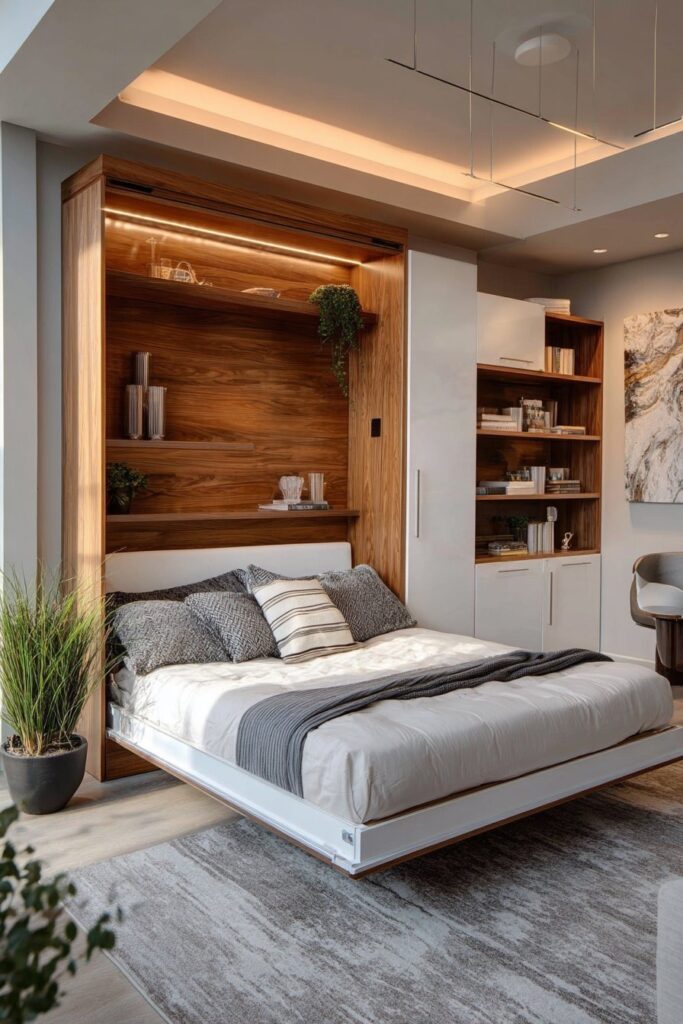
Wall beds fold against walls when not needed, instantly converting bedrooms into offices, gyms, or living areas. This furniture adapts rooms to changing needs throughout the day rather than dedicating square footage to single purposes.
Mechanism Types
Two primary systems control Murphy bed operation. Spring mechanisms use compressed steel coils, typically 18 springs total with 9 per side. You can adjust tension by adding or removing springs to match mattress weight. These systems require periodic adjustment after a couple of years as springs stretch. On the other hand, piston mechanisms use gas or air pressure for counterbalancing. A child or elderly person can operate piston systems with minimal effort. Piston units include locking devices that secure beds inside cabinets, preventing accidental opening. In either case, both mechanisms handle mattresses up to 11 inches thick and support up to 2000 lbs when lowered.
Room Transformation
Murphy beds enable rooms to serve multiple functions. For instance, guest rooms convert to home offices during the day. Some designs incorporate sofas that fold with the bed, creating dual-purpose furniture. Built-in storage compartments, shelves, or desks maximize functionality.
Price Range
Murphy beds cost USD 300 to USD 5800 depending on size and features. Installation adds USD 100 to USD 550. Twin sizes start at USD 300, queens range from USD 1000 to USD 5800.
Minimalist Floating Nightstands
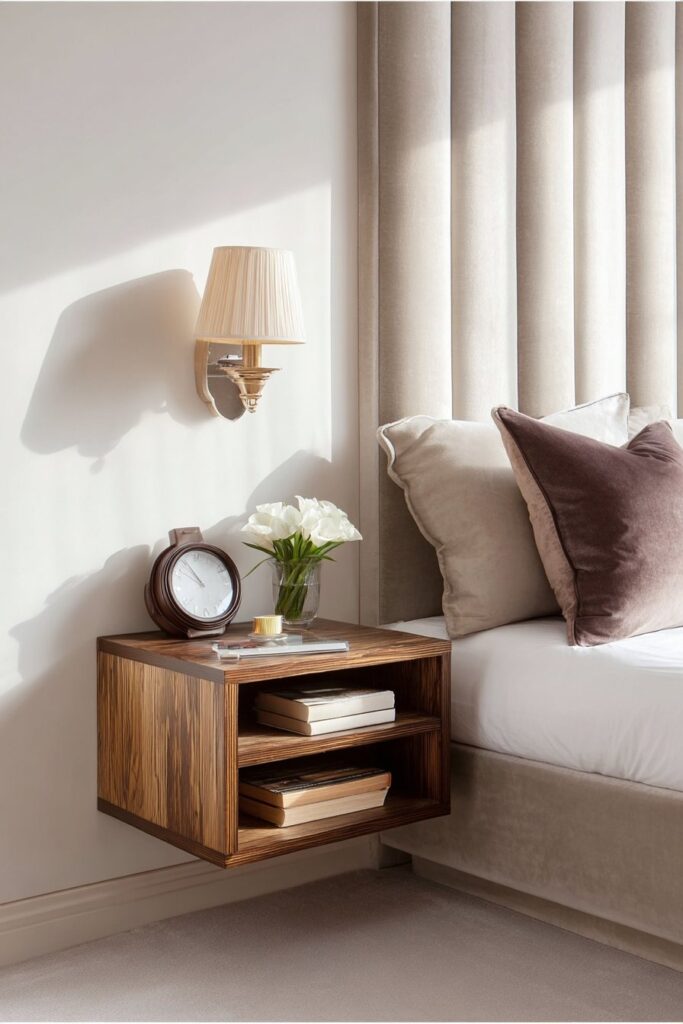
Nightstands typically consume 18 to 24 inches of floor width per side. Floating nightstands eliminate this footprint entirely while delivering the surface area you need for lamps, books, and bedside essentials. Wall-mounted designs create modern bedroom ideas that feel intentional rather than cramped.
Modern Esthetic
Clean lines define the floating nightstand appeal. These wall-mounted pieces offer a minimalist look that suits any bedroom style. When properly installed, they appear sleek and stable. The suspended effect removes visual bulk, allowing bedroom decor ideas to breathe. For instance, models crafted from oak veneer wood feature one roomy drawer with flawless surfaces and consistent color tones. Available in four rich wood stains, each piece displays unique grain patterns. Consequently, the nightstand becomes architectural detail rather than afterthought furniture.
Floor Space Freedom
The clearance beneath floating nightstands makes cleaning significantly easier[482]. You can vacuum or mop without moving furniture. Moreover, the open area accommodates shoes, storage baskets, or even a small ottoman. This floor space freedom proves particularly valuable in small bedroom ideas where every square foot matters. The practical benefit extends to rooms with low platform beds, where traditional nightstands create awkward height mismatches.
Mounting Requirements
Locate studs in your wall using a studfinder before installation. The nightstand must attach directly to studs for secure mounting. If placement aligns with only one stud, use butterfly screws for non-stud screw holes. Product weights range from 40 pounds for 30-inch models to 50 pounds for 39-inch versions. Basic tools include a meter, pencil, level, and drill.
Textured Wall Treatments and Paneling
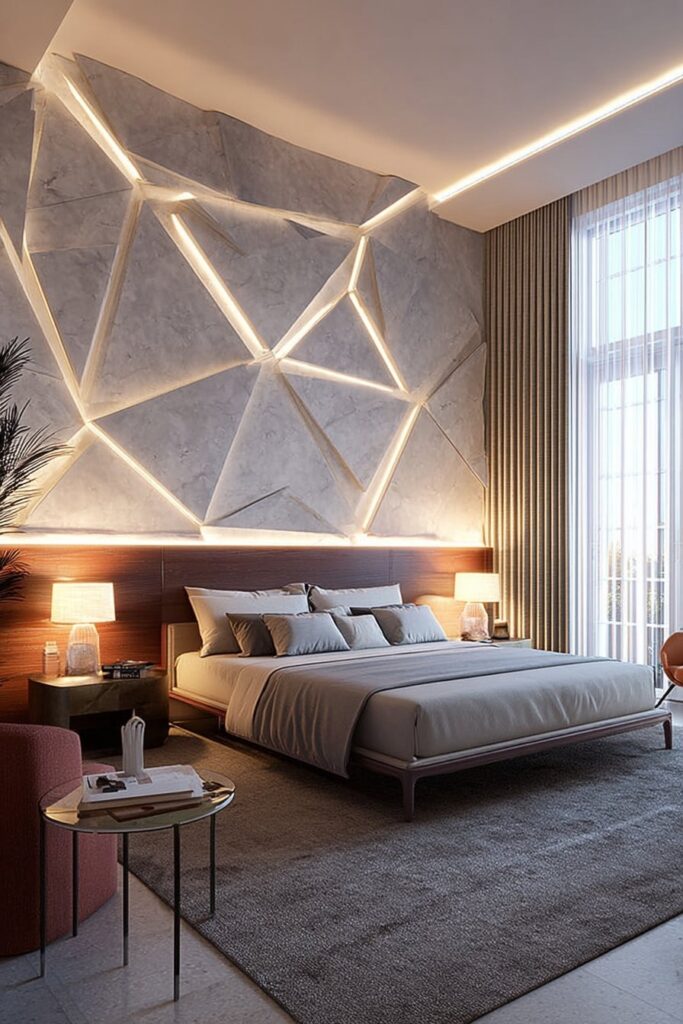
Flat surfaces lack the dimensional qualities that distinguish premium bedroom decor ideas from basic spaces. Textured wall treatments bring warmth and character while breaking up visual monotony. Panels, boards, finishes, or stacked materials give flat surfaces depth and personality.
Material Options
Grasscloth wallpaper brings warmth through woven natural fibers, making each roll unique. Peel-and-stick wallpaper suits renters who need removable options without wall damage. Reclaimed wood paneling introduces rustic charm and sustainability, with natural imperfections creating lived-in warmth. Fluted walls feature parallel grooves carved end-to-end, adding distinctive texture through varying depth, width, and spacing. Venetian plaster consists of plaster mixed with marble dust, applied in thin layers and polished for rich, textured appearance. Limewash delivers organic, mottled looks from natural lime and pigments, creating serene atmospheres.
Visual Depth Creation
Textured surfaces add layers of interest by manipulating light and shadow. The dimensional effect makes plain walls visually appealing while concealing cracks, dents, and imperfections. Panels create depth without consuming floor space, with slim profiles keeping rooms visually layered.
Budget Alternatives
Basic 3D wall panel packages covering 32.29 square feet cost approximately USD 45.00, or USD 1.39 per square foot. PVC-based panels range between USD 1.50 and USD 1.90 per square foot. Faux finishes mimic stone or marble appearances without hefty price tags.
Conclusion
All things considered, transforming your small bedroom into a premium space doesn’t require massive renovations or expensive contractors. You can start with one or two ideas from this list, whether that’s installing floating nightstands, adding LED strips beneath your bed, or simply switching to ceiling-mounted curtain rods. In fact, I’ve watched clients achieve stunning results by implementing just three of these strategies. Not every suggestion will suit your specific layout or budget, and that’s perfectly fine. Pick the bedroom ideas that resonate with your lifestyle, test them out, and watch your compact space evolve into something that feels custom-designed and genuinely premium.