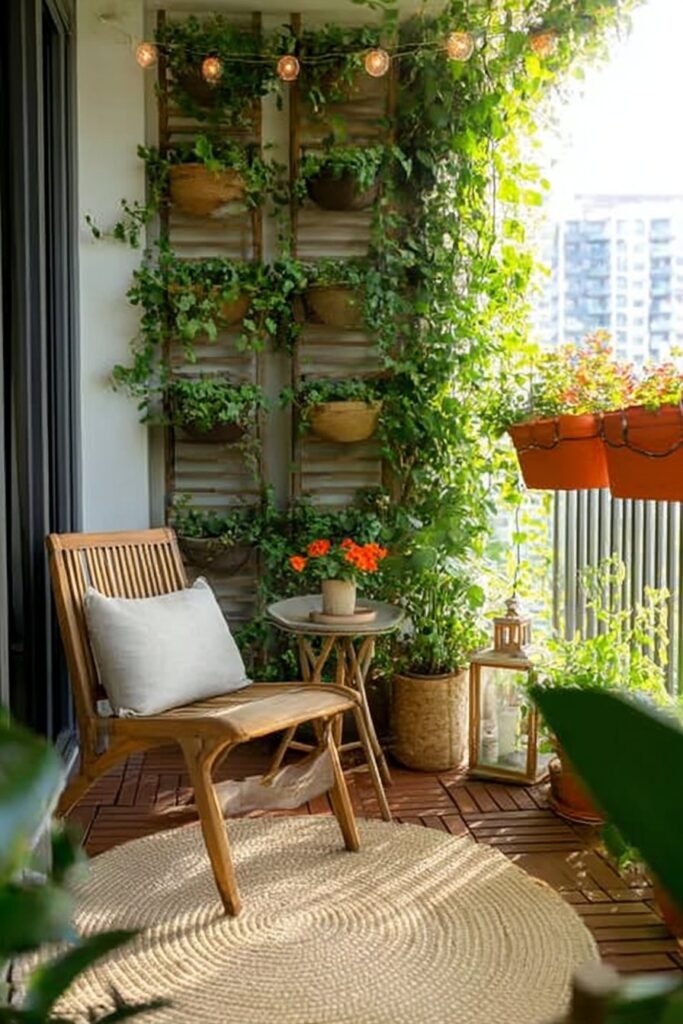
When floor space is limited, the most effective way to bring greenery onto a balcony is to grow up rather than out. Vertical gardens make it possible to fit a surprising amount of plant life into even the smallest outdoor space, using walls, railings, and hanging structures instead of ground area. Beyond their space-saving benefits, vertical gardens add texture, privacy, and a genuine sense of lushness that transforms a bare balcony into a green retreat. This guide covers fourteen vertical garden ideas suited to balconies of any size, from simple hanging planters to more involved living wall systems, all designed to maximize greenery without sacrificing usable floor space.
1. Wall-Mounted Planter Grids
Modular wall-mounted planter grids consist of individual pockets or containers that attach to a metal or wooden frame fixed to an exterior wall. This system allows for easy rearranging and replacing of individual plants without disturbing the whole display, making it simple to experiment with different combinations over time. Grids work particularly well for growing a mix of herbs, succulents, and trailing flowers in a single organized display. Because the frame distributes weight evenly, planter grids are often a more balcony-friendly option than heavier built-in planter boxes.
2. Hanging Baskets
Hanging baskets suspended from balcony ceilings, brackets, or railing hooks are one of the simplest ways to introduce greenery at eye level without using any floor space. Trailing plants like ivy, petunias, or ferns look especially striking cascading down from a hanging basket, softening hard architectural lines. Choosing baskets with built-in drainage trays prevents water from dripping onto furniture or neighbors below. Grouping baskets at slightly different heights adds visual interest and avoids a flat, uniform look.
3. A Ladder Plant Stand
A wooden or metal ladder-style plant stand leans against a wall and provides several tiered shelves for potted plants, using minimal floor footprint while displaying a substantial amount of greenery. This style works particularly well in corners, where a flat shelving unit might feel bulky. Mixing plant sizes and pot styles across the different rungs of the ladder creates a layered, garden-like display. A ladder stand also adds architectural interest to the balcony even before any plants are added.
4. Trellis with Climbing Vines
A simple trellis, whether freestanding or mounted directly to a wall or railing, gives climbing plants like jasmine, morning glory, or clematis a structure to grow upward on. Over a season or two, a well-established climbing vine can create a genuinely lush green wall that also functions as a natural privacy screen. Lightweight trellis materials like bamboo or coated wire are easier to install on balconies with weight restrictions than heavier wood or metal options.
5. Pocket Planters
Fabric or felt pocket planters hang flat against a wall and hold multiple small plants in individual pockets, similar to an over-the-door shoe organizer. This system is especially space-efficient for growing herbs or small flowering plants in a compact grid pattern. Because the pockets are lightweight when dry, they’re a good option for balconies where structural weight limits are a concern. Breathable fabric also helps prevent root rot by allowing excess moisture to evaporate more easily than solid plastic containers.
6. Tiered Plant Stands
A tiered plant stand, whether a simple metal étagère or a more decorative wooden design, stacks multiple planting levels into a single small footprint. This is particularly useful for balconies that want to grow a variety of plants, from tall leafy greens on top to trailing varieties on lower tiers. Positioning a tiered stand in a corner keeps the center of the balcony open for seating or movement. Look for stands with a stable, weighted base to prevent tipping in windy conditions.
7. Repurposed Pallet Gardens
A wooden pallet, stood upright and lined with landscape fabric, can be transformed into a vertical planting surface with multiple rows for small plants or herbs. This budget-friendly approach is popular for its rustic look and low material cost, since pallets are often available for free from local businesses. Securing the pallet firmly to a wall is essential for balcony safety, particularly on upper floors where wind exposure is greater. A coat of weatherproof stain or paint helps the wood last longer outdoors.
8. Macramé Hangers
Macramé plant hangers add a textural, boho-inspired element to a vertical garden while suspending pots at varying heights from a single ceiling or wall mount. The woven rope detailing adds visual interest even before considering the plant itself, making macramé hangers a popular choice for balconies leaning into a relaxed, natural aesthetic. Clustering three or four hangers of different lengths creates a layered display that feels intentional rather than sparse. Trailing plants like pothos or string of pearls suit this hanging style particularly well.
9. Window Box Planters
Window box planters mounted along the balcony railing or an adjacent wall bring the classic look of a flower-filled window straight to a balcony setting. These long, narrow containers are ideal for growing a mix of flowering plants, trailing vines, and small herbs in a single continuous row. Because window boxes attach directly to existing structures, they require no additional floor space, making them one of the most efficient vertical planting solutions available. Choose secure mounting brackets rated for outdoor wind conditions, especially on higher floors.
10. A Living Wall Kit
Pre-assembled living wall kits, complete with a built-in irrigation system and modular planting cells, offer the most polished and lush vertical garden option for balconies willing to make a larger investment. These systems can support a dense mix of plants in a single vertical panel, creating a dramatic green backdrop for the entire space. While the upfront cost is higher than DIY alternatives, the built-in watering system reduces ongoing maintenance, making it a practical option for balconies that don’t get daily attention.
11. Stackable Planter Towers
Stackable planter towers consist of individual pots that interlock vertically, allowing water to drain from the top pot down through each level below. This design is particularly efficient for growing strawberries, herbs, or small salad greens in a compact column that takes up roughly the same footprint as a single large pot. Because the tower is freestanding rather than wall-mounted, it works well for balconies where drilling into walls or railings isn’t an option, such as many rental units.
12. Herb Spiral on the Railing
A spiral-shaped railing planter, purpose-built to fit around or along a balcony railing, provides an efficient way to grow a variety of herbs in a compact, decorative arrangement. The spiral shape naturally creates different microclimates, with lower sections retaining more moisture and upper sections drying faster, which suits different herb varieties without needing separate containers. This option combines the practicality of a kitchen herb garden with a distinctive decorative shape that stands out from standard rectangular planters.
13. Recycled Bottle Planters
Plastic bottles cut and mounted in rows along a wall or fence create an eco-friendly, budget-conscious vertical planting system, especially suited to growing succulents, herbs, or small seedlings. Painting the bottles in a cohesive color palette before mounting gives the display a more polished, intentional look rather than an obviously recycled appearance. This approach is popular in small-space and sustainability-focused gardening communities for its low cost and ability to repurpose household waste into functional decor.
14. Seasonal Rotation Strategy
A truly effective vertical garden isn’t static — rotating plants seasonally keeps the display looking fresh and ensures each plant is growing in appropriate conditions throughout the year. Cool-season plants like pansies or lettuce can fill spaces in spring and fall, while heat-tolerant succulents or flowering vines take over during summer months. Planning ahead for seasonal swaps, and keeping a few backup pots ready, prevents the vertical garden from looking sparse during transition periods between growing seasons.
Final Thoughts
Vertical gardens prove that balcony size doesn’t have to limit how much greenery a space can hold. By using walls, railings, and hanging structures instead of relying solely on floor space, even the smallest balcony can become a genuinely lush, garden-like retreat. Start with one or two vertical elements, such as a hanging basket or a simple trellis, and expand gradually as you learn what thrives in your balcony’s specific light and wind conditions. With fourteen different approaches to choose from, there’s a vertical gardening solution suited to nearly any balcony size, budget, and level of gardening experience.