A staircase sits at the center of most floor plans, which means it shapes a first impression before any other room gets the chance. A dated railing, worn carpet, or a plain wall running up the stairs can make an entire entryway feel unfinished, even when the rest of the home is fully updated. The good news is that a staircase makeover rarely requires a full rebuild — small, targeted changes to paint, materials, lighting, and the space around the stairs can transform the whole area. These 25 staircase makeover ideas cover budget-friendly weekend projects alongside bigger upgrades, so there’s a starting point for almost any style and skill level.
Paint It Bold
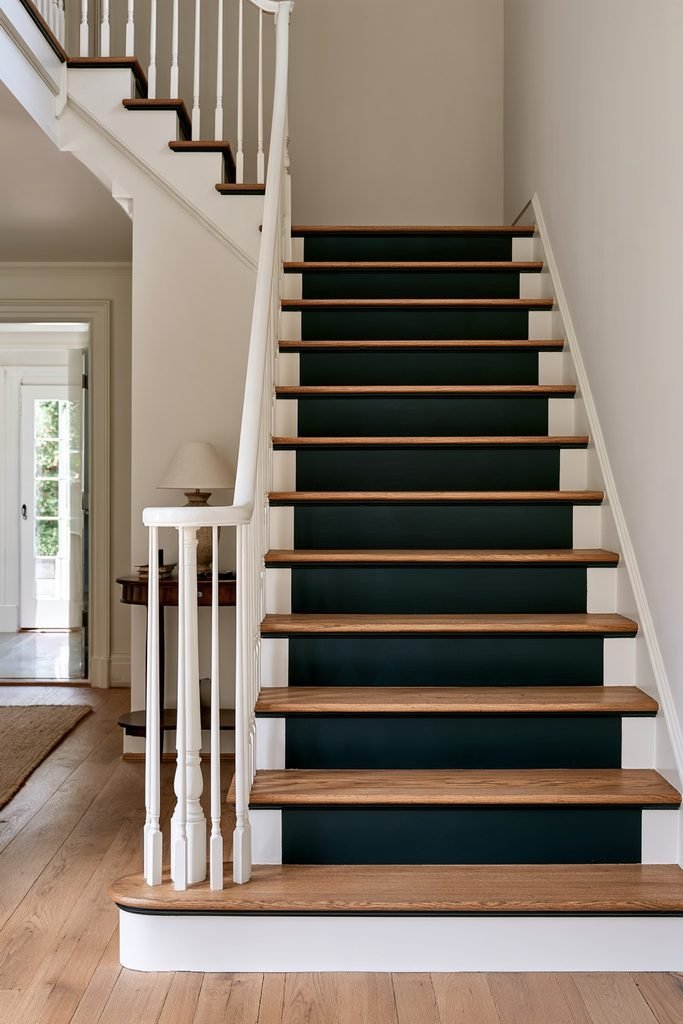
A saturated paint color on the stair risers or the wall running alongside the staircase can turn a plain staircase into a focal point. Deep navy, forest green, or matte black risers paired with light wood treads create contrast that reads as intentional rather than unfinished.
Add a Runner
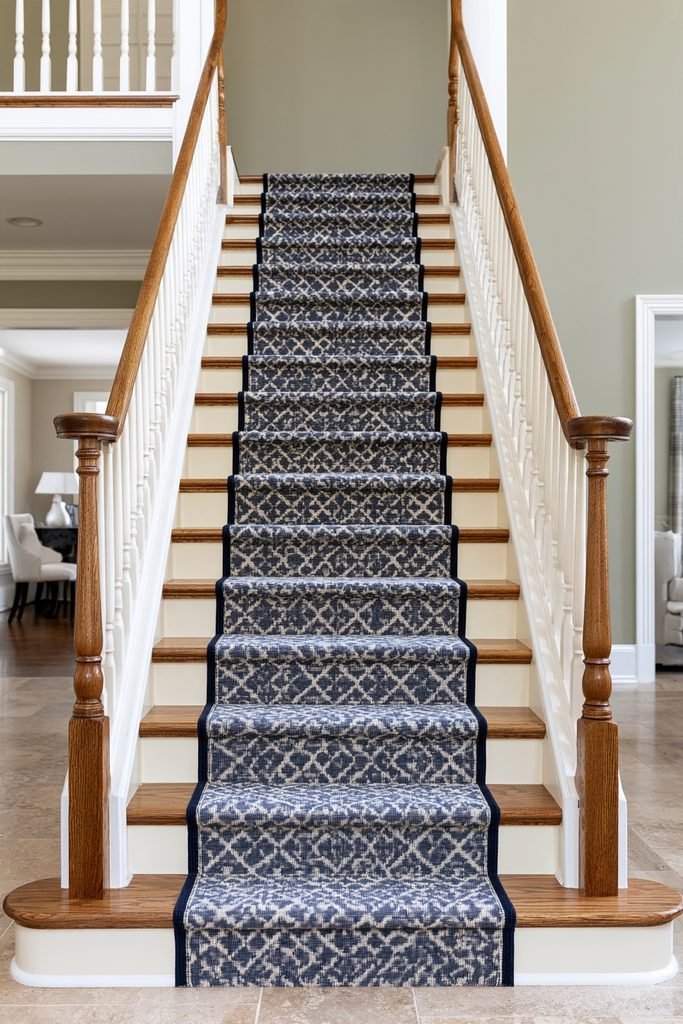
A stair runner softens hard treads, muffles noise, and protects the wood underneath from everyday wear. Installation typically runs $40 to $100 per step for a standard straight staircase, and choosing a patterned wool or synthetic blend can add texture without needing to recarpet the entire staircase.
Fake the Runner
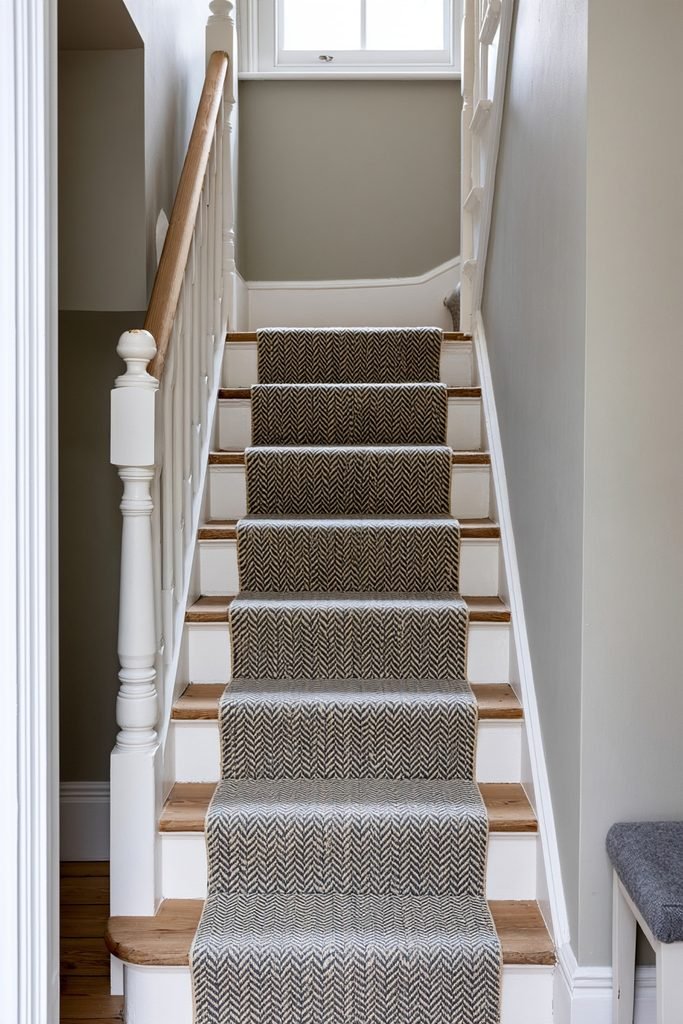
For a temporary or renter-friendly option, a stenciled or painted “runner” down the center of the treads can mimic the look of carpet at a fraction of the cost. A herringbone or striped pattern in a contrasting color reads as a deliberate design choice rather than a shortcut.
Wallpaper the Risers
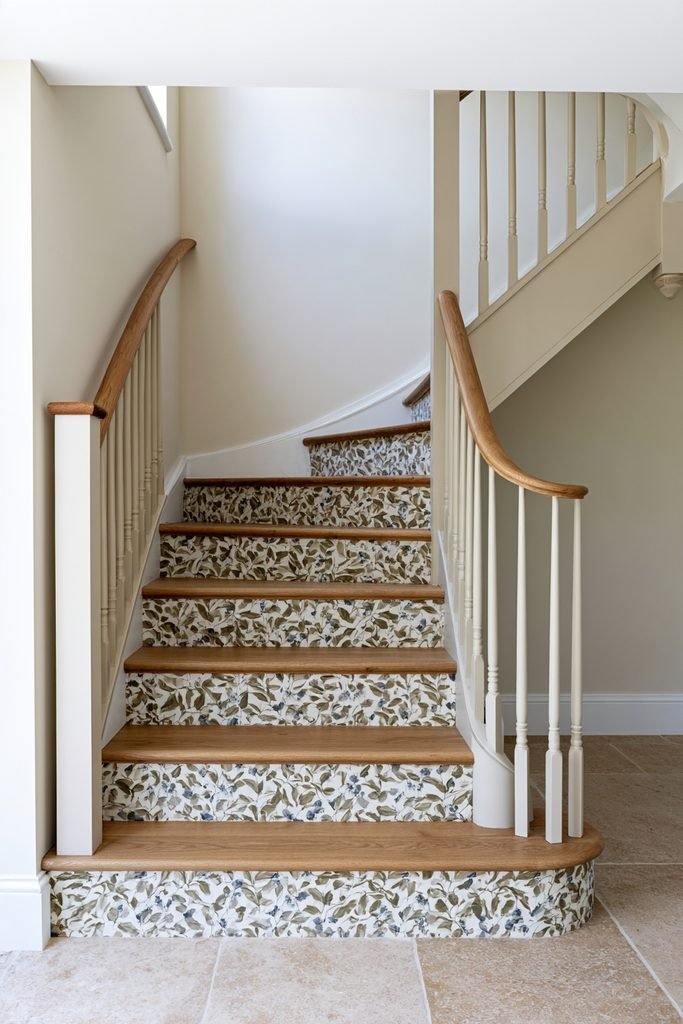
Wallpapering just the risers — the vertical part of each step — adds pattern and color without overwhelming the space the way wallpapering an entire wall might. Peel-and-stick wallpaper in a bold floral or geometric print works well here since each riser is a small, low-commitment surface to experiment on.
Two-Tone It
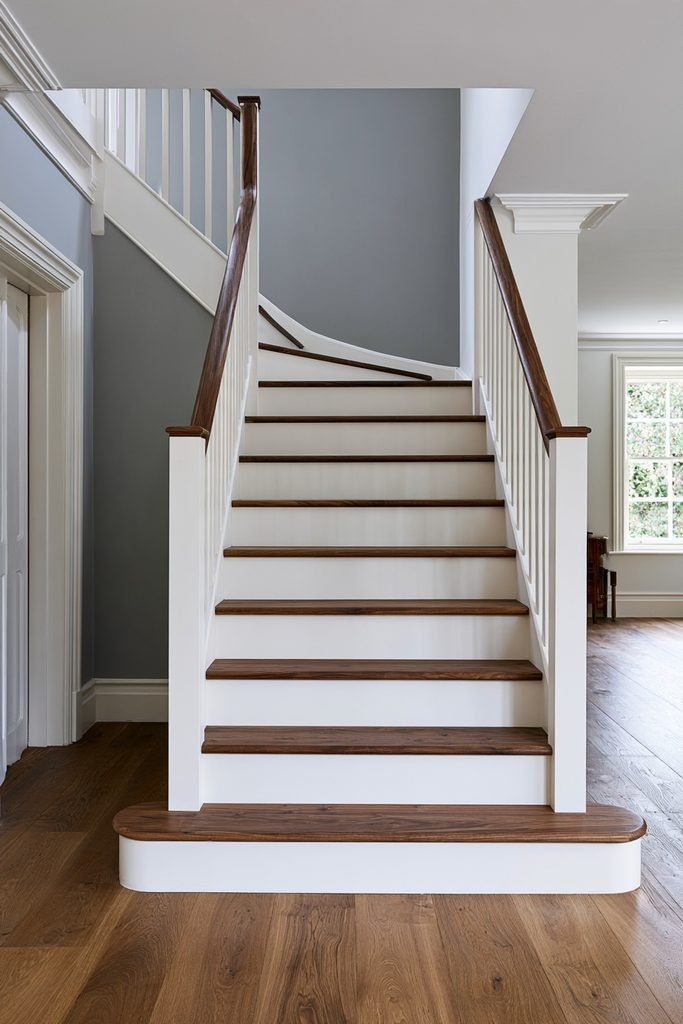
Painting the treads one color and the risers another creates a two-tone effect that feels custom without much extra effort. A crisp white riser paired with a natural wood tread lets the grain show through while still brightening the whole staircase.
Switch to Iron
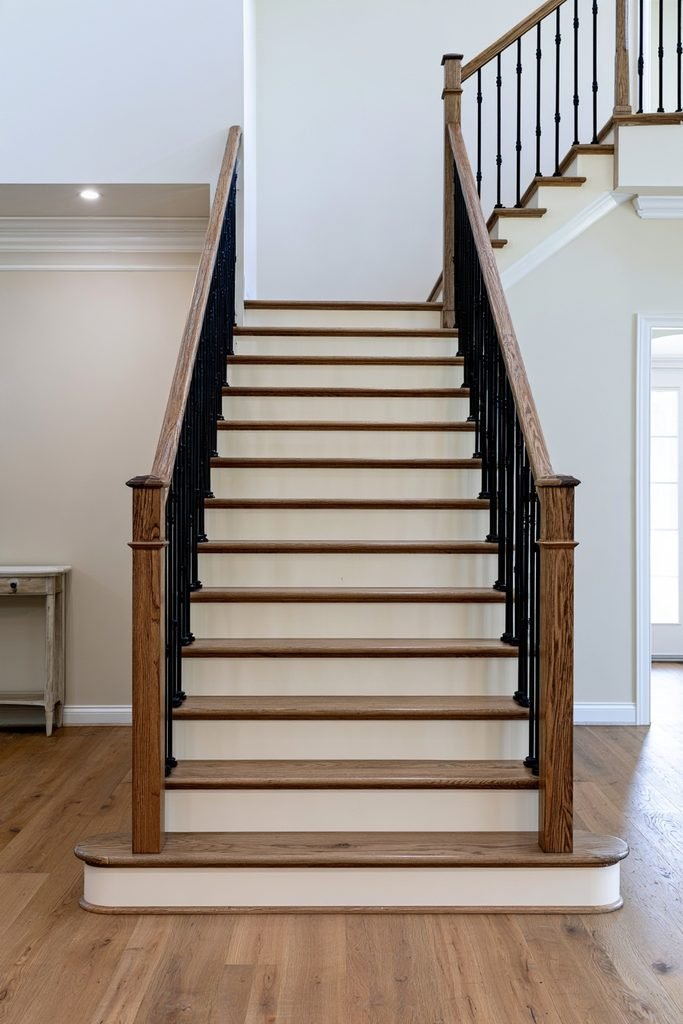
Iron balusters create slimmer, cleaner sightlines than bulkier wood spindles and tend to hold their finish well over time. Iron spindles are one of the fastest ways to update a staircase without rebuilding it entirely, and they pair naturally with both traditional and contemporary interiors.
Go Cable and Clean
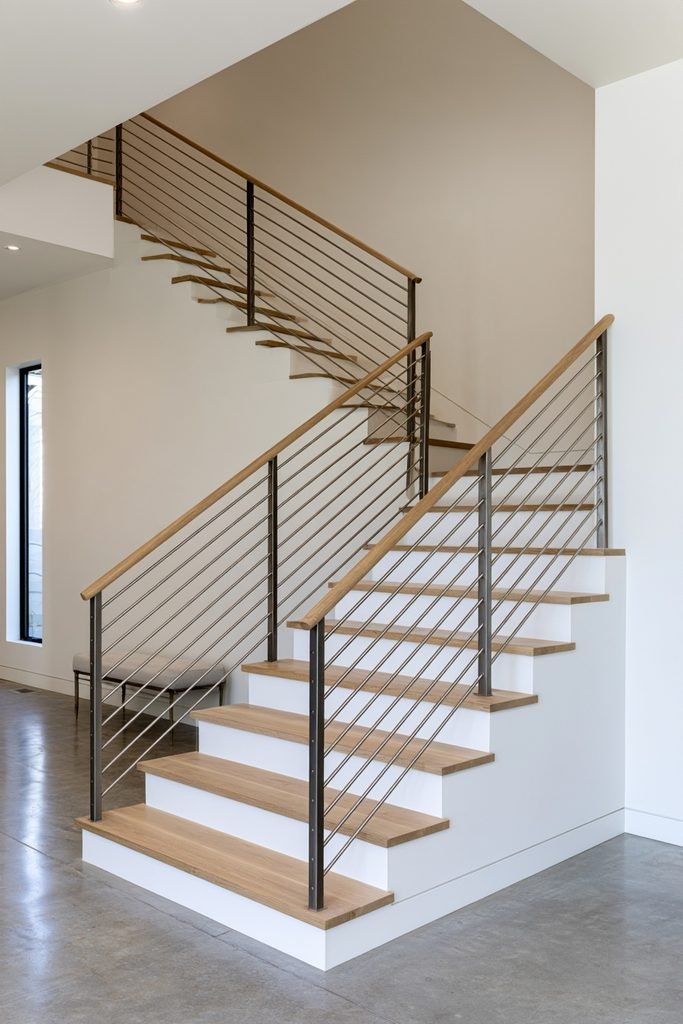
Cable railing systems trade solid balusters for horizontal steel cables, opening up sightlines and letting more light move through a stairwell. This style tends to suit modern or minimalist homes where clean lines and an airy, open feel matter more than ornamentation.
Mix Metal and Wood
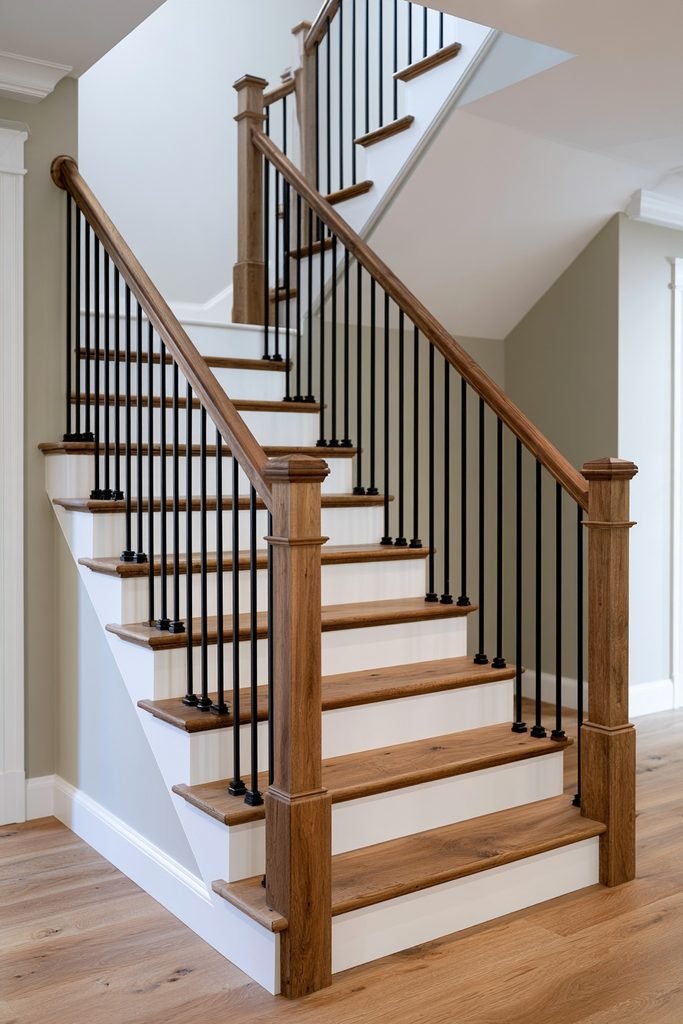
Combining a wood handrail with metal balusters — or the reverse — can bridge a traditional staircase and a more contemporary interior. Transitional stair designs often pair a simple wood handrail with updated baluster shapes, which keeps an older home’s character while giving it a more current look.
Light the Treads
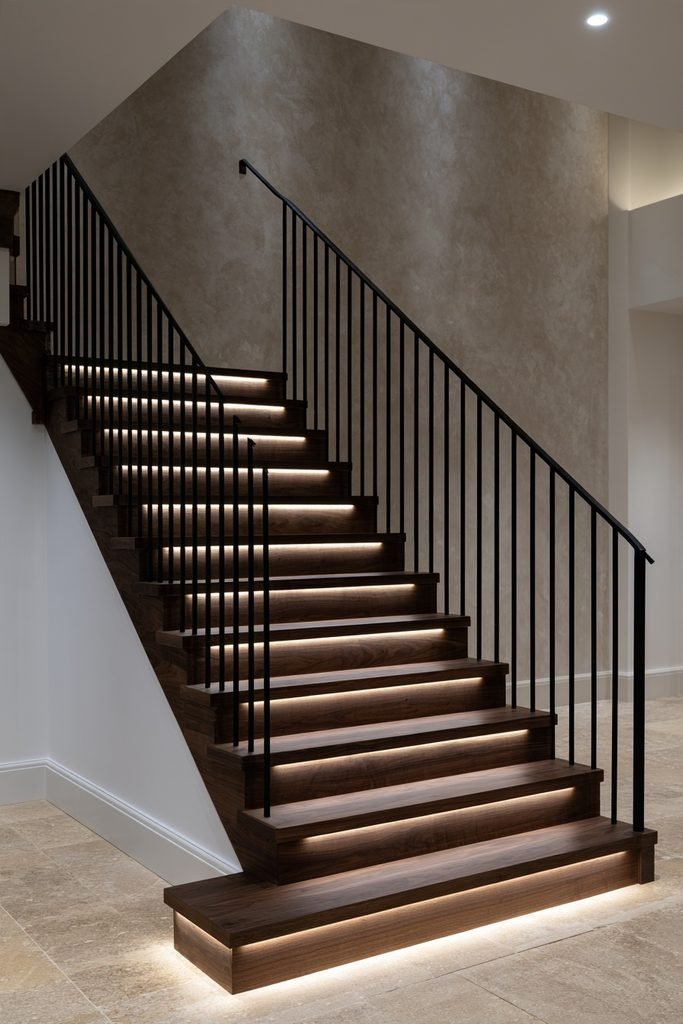
Hidden LED strips mounted under the front edge of each tread cast a soft downward glow and make the staircase easier to navigate after dark. Installing LED strips under the tread’s overhang creates a continuous, gently floating light effect that works well on both open-riser and traditional staircases.
Glow the Handrail
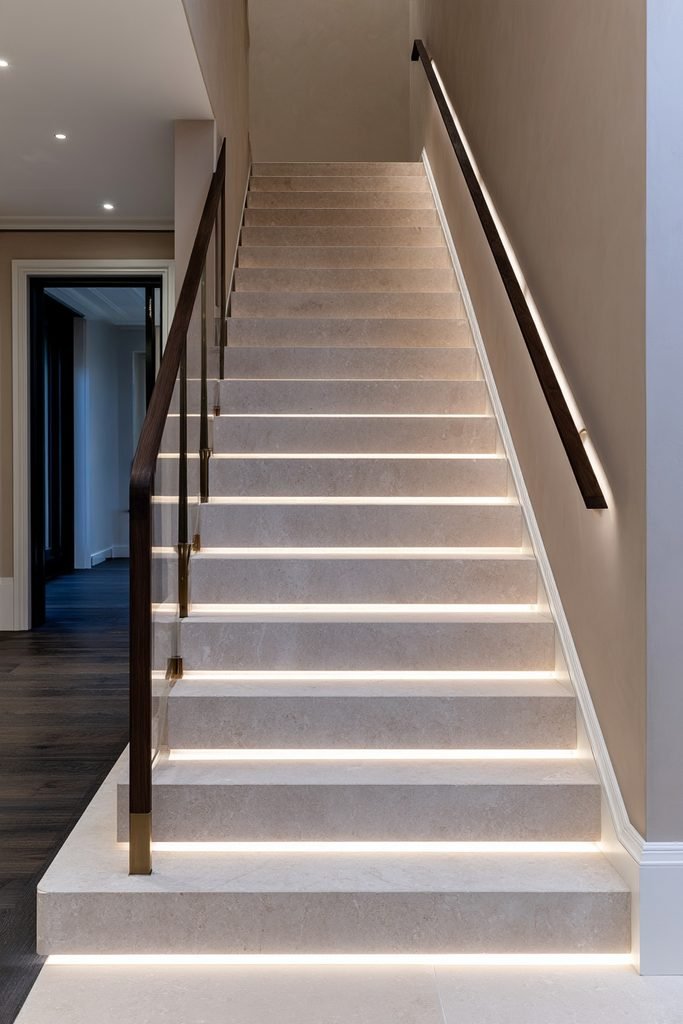
Running a light channel along the underside of the handrail provides a steady line of illumination the entire length of the staircase. On staircases with premium materials like natural stone or wide-plank wood, concealing warm LED strips beneath the treads highlights the material’s texture at night while doubling as a safety feature.
Hang a Statement Fixture
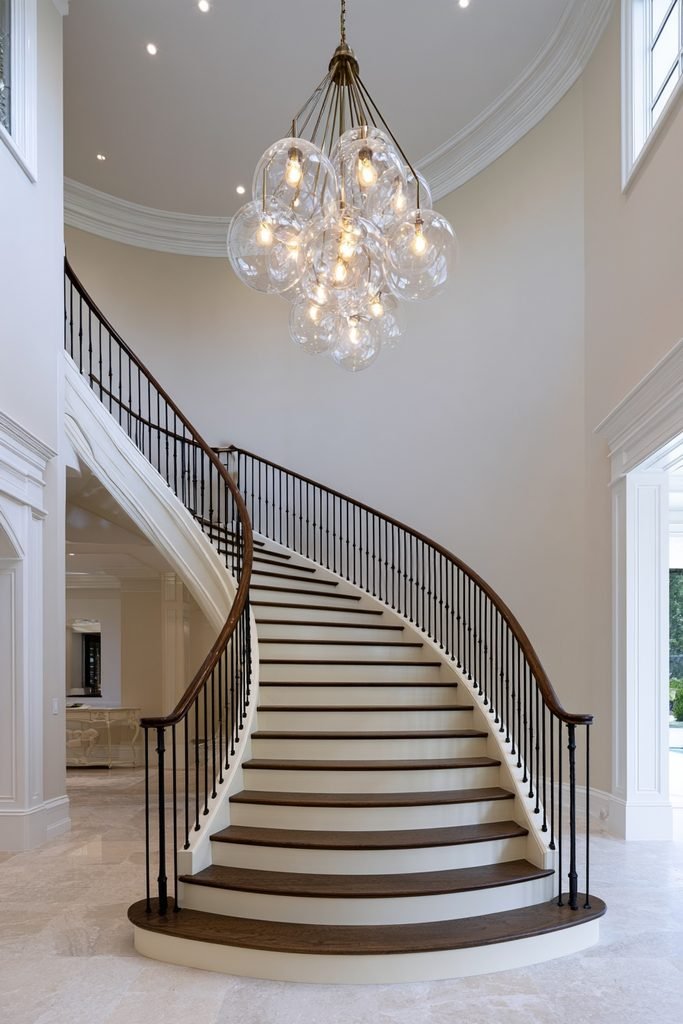
A stairwell with vertical height is an ideal spot for an oversized pendant, a linear chandelier, or a cluster of glass globes suspended from the highest point. Positioning the fixture so it’s visible from the entryway gives the staircase a focal point before anyone even reaches the first step.
Build a Reading Nook
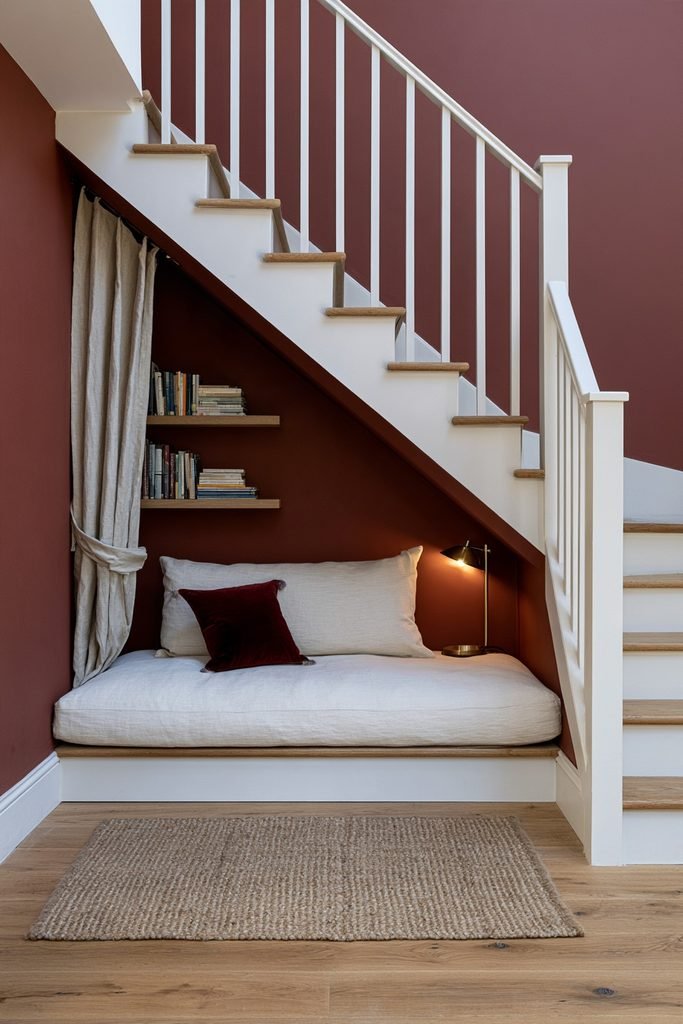
The triangular space under a staircase can become a cozy reading nook with a built-in bench, a soft rug, and a small reading lamp. Adding curtains with tiebacks lets the nook double as a hideaway spot, which works especially well in family homes.
Carve Out an Office
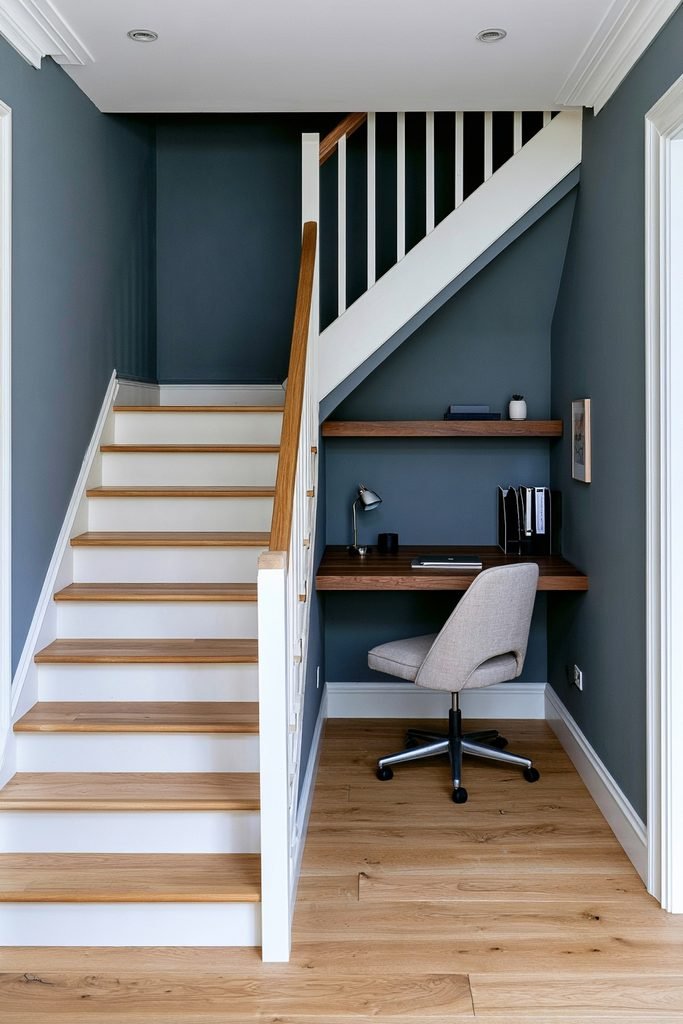
A slim desk and a floating shelf fit neatly into the under-stair area, turning unused square footage into a compact workstation. Adding a task lamp and a few vertical file organizers keeps the space functional even with limited depth.
Build a Wine Wall
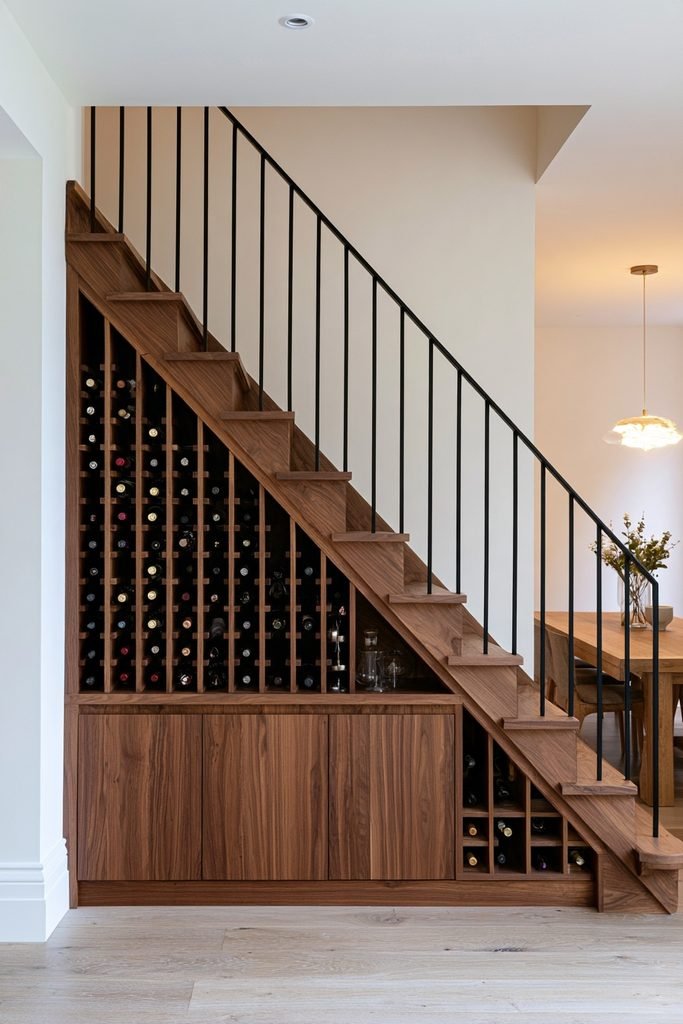
Angled wine racks installed under the stairs make use of the sloped ceiling in a way that few other furniture pieces can. This idea works particularly well in open-concept homes where the staircase is visible from the kitchen or dining area.
Uncover the Wood
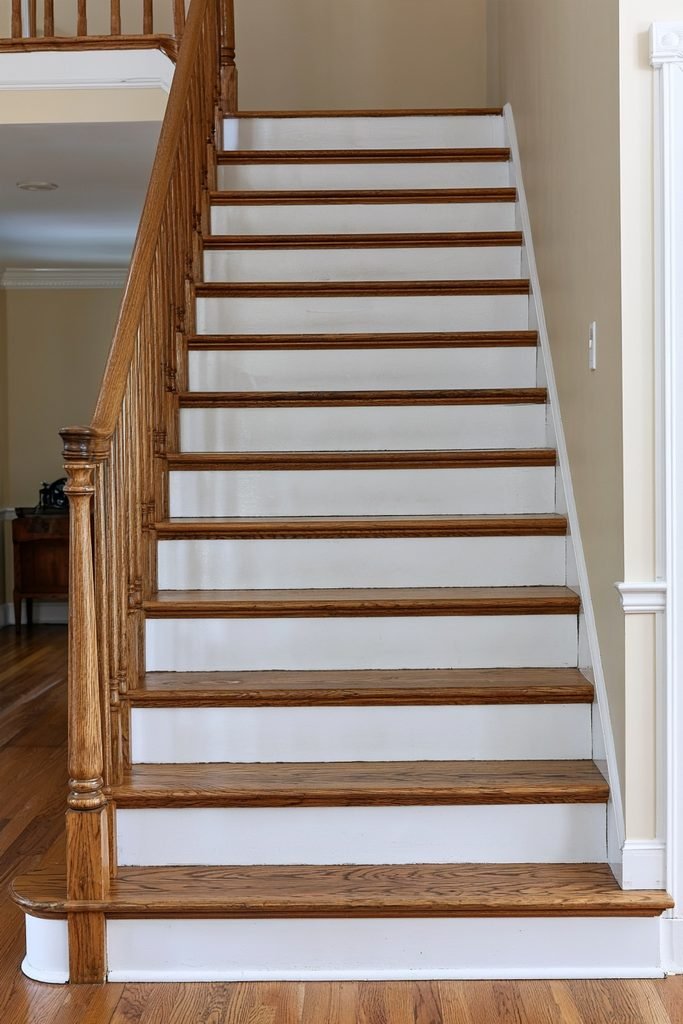
Homes with carpeted stairs sometimes have solid wood treads hiding underneath, and removing the carpet can reveal a warmer, more natural finish. Sanding, staining, and sealing the exposed wood gives the staircase texture and character that carpet can’t replicate.
Lay Down Stone or Tile
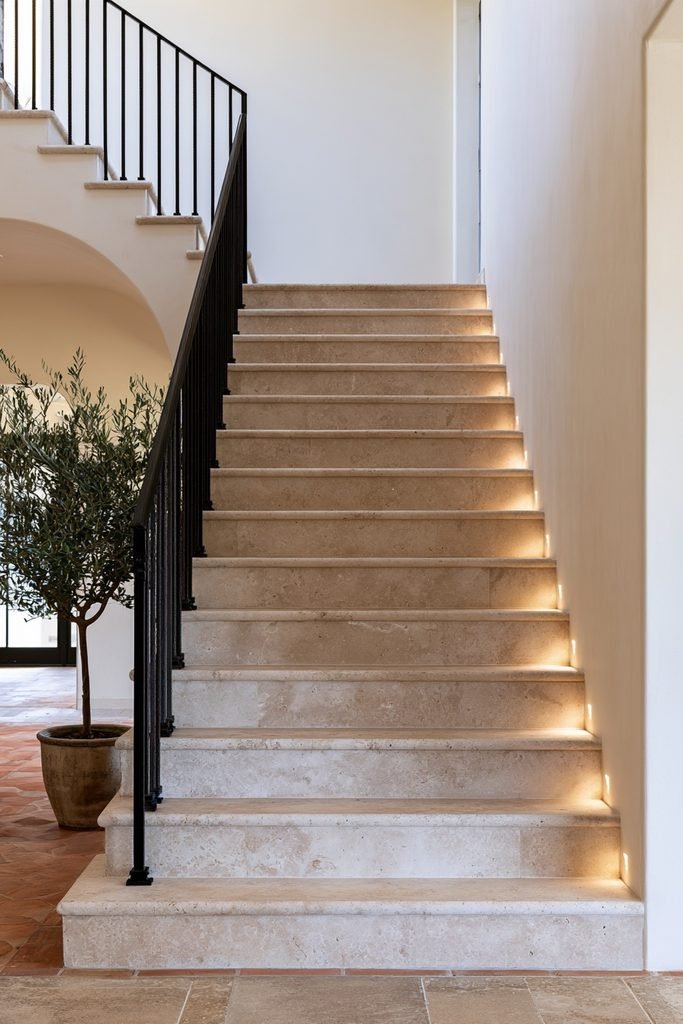
Stone or tile treads bring a durable, high-contrast look to entryways, especially in homes with a modern or Mediterranean-inspired aesthetic. Natural materials like marble or slate also pair well with hidden LED lighting, since the light emphasizes the stone’s texture after dark.
Add a Stair Skirt
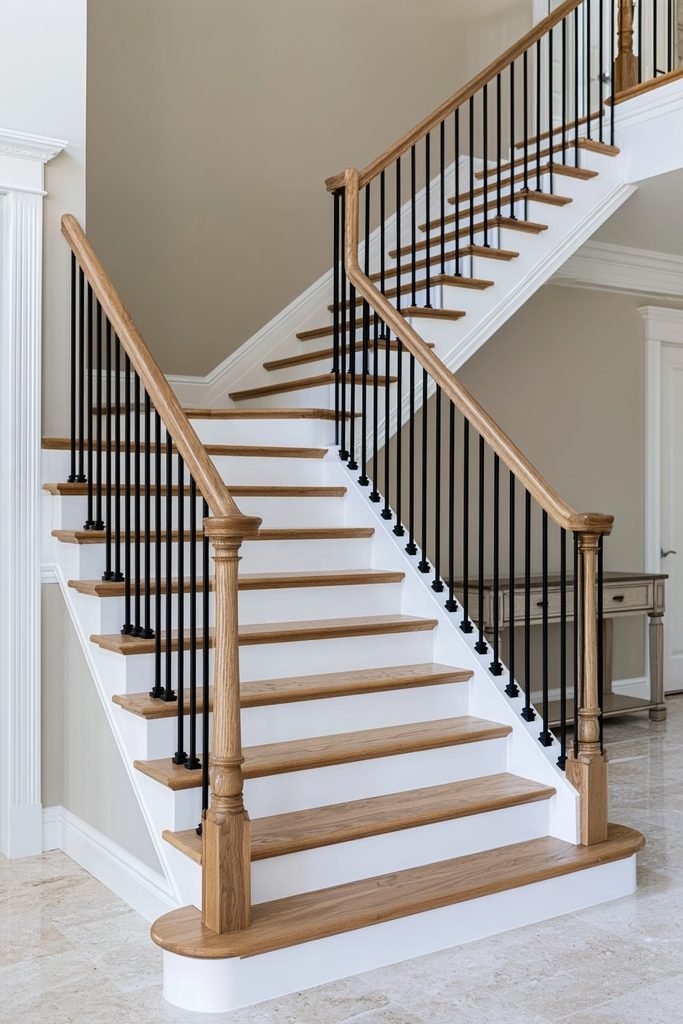
A stair skirt — the diagonal board that runs along the open side of a staircase — gives an unfinished-looking stairway a cleaner, more polished edge. Painting the skirt to match the trim throughout the rest of the home ties the staircase into the broader color scheme.
Climb a Gallery Wall
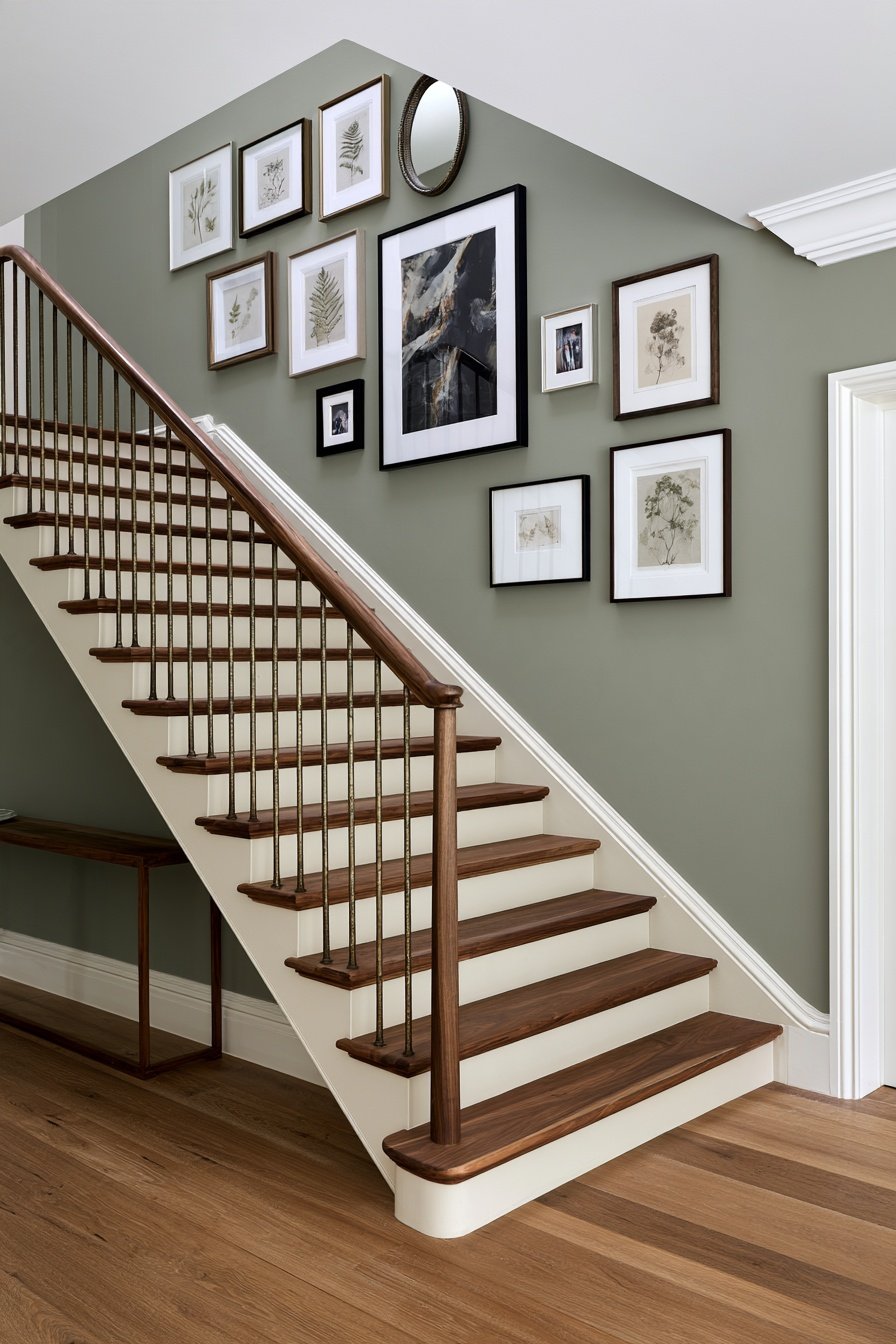
The wall running alongside a staircase is one of the few spots in a home with enough uninterrupted vertical space for a full gallery wall. Framed prints, family photos, or a mix of mirrors and art can be arranged in a staggered line that follows the angle of the stairs.
Paint a Herringbone Pattern
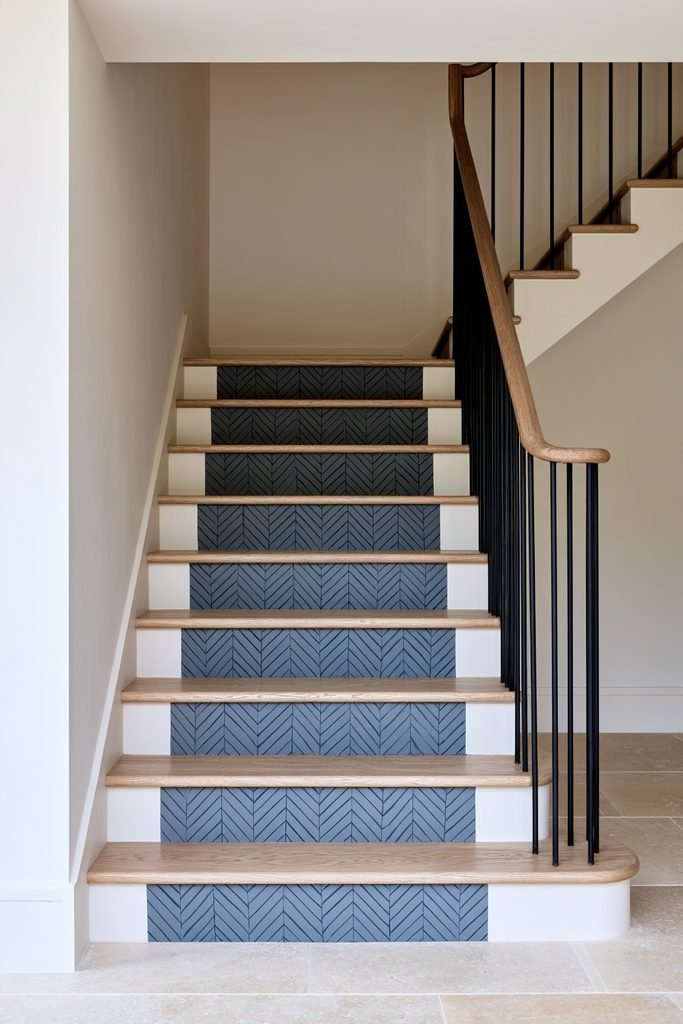
A herringbone or chevron pattern painted directly onto the risers adds movement and visual interest without any structural changes. Two closely related paint colors — like two shades of gray or blue — keep the pattern subtle rather than overwhelming.
Bring In Greenery
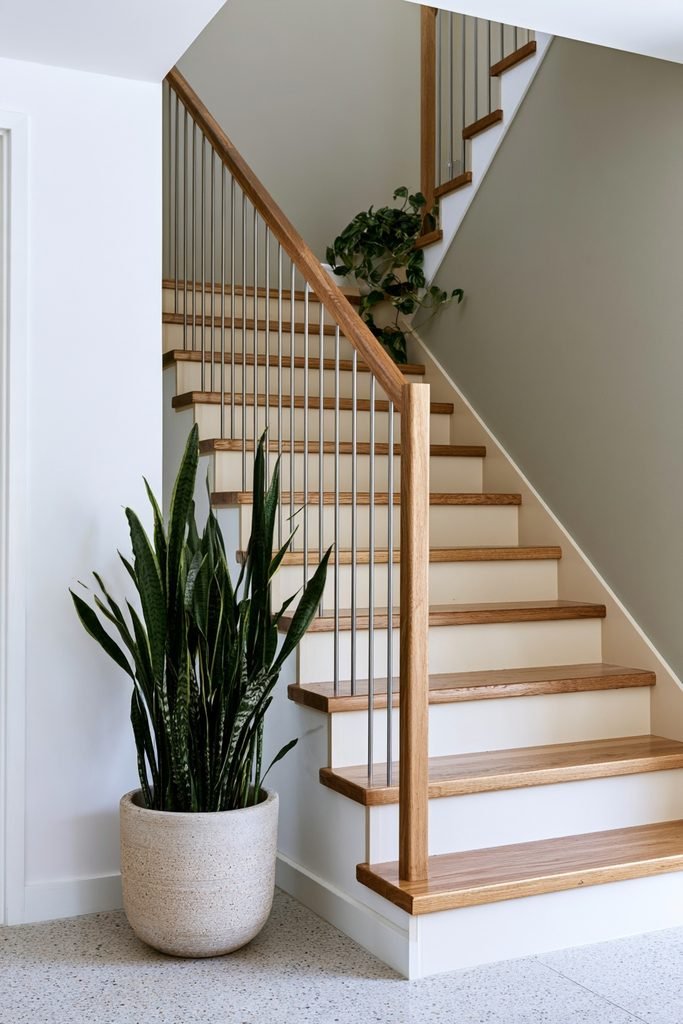
A trailing plant on a landing, or a small potted tree at the base of the stairs, softens all the hard surfaces typically found in a stairwell. Low-maintenance options like pothos or a snake plant hold up well in stairwells that don’t get much direct light.
Go Reclaimed
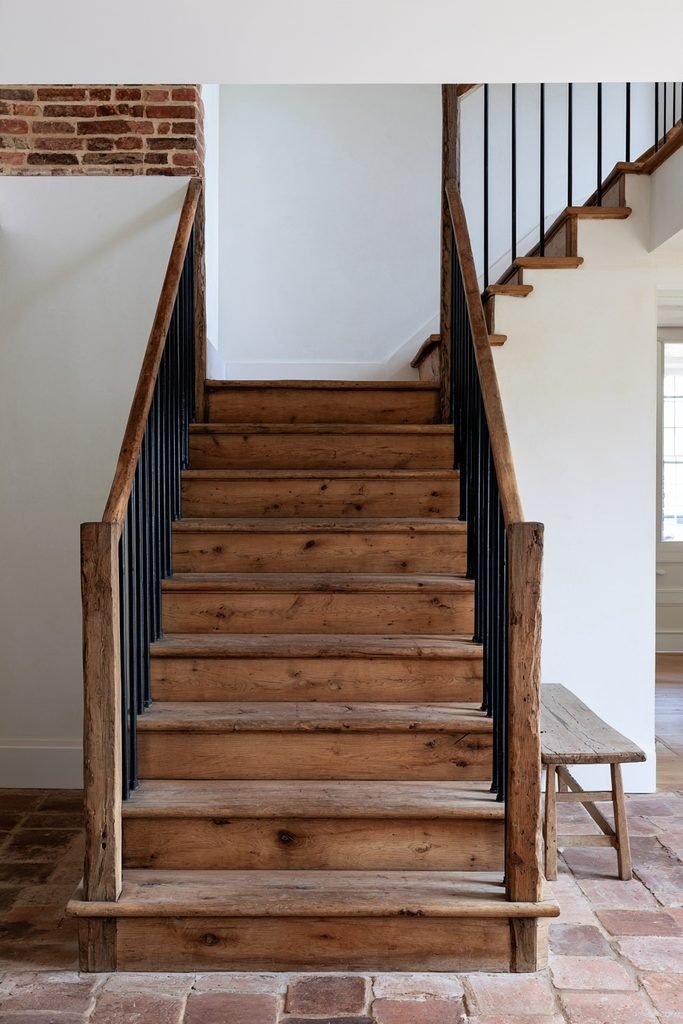
Reclaimed wood, salvaged porch spindles, or repurposed metal pipes can all be worked into a staircase railing for a look with more history than anything bought new. Cleaning and painting old pipes for balusters, or sanding and sealing reclaimed wood for a handrail, gives a staircase unique character while cutting material costs.
Update the Hardware
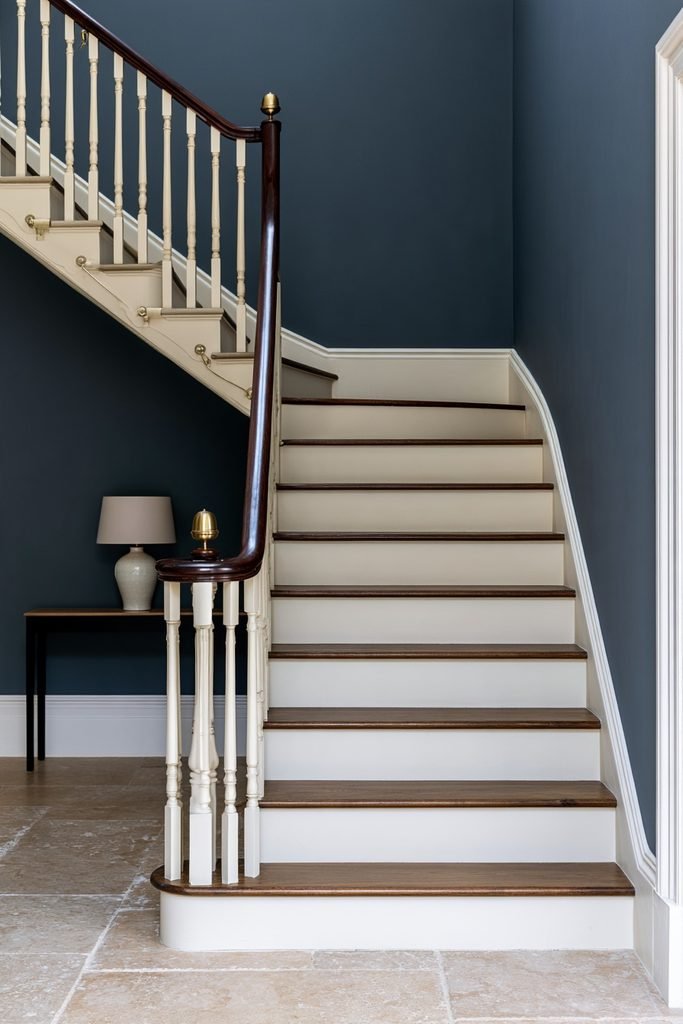
Swapping out finials, brackets, and handrail hardware for a matching finish — brushed brass, matte black, or oil-rubbed bronze — pulls a staircase’s whole look together. This is one of the least expensive updates on this list, since the parts themselves are small and don’t require rebuilding the railing.
Frequently Asked Questions
Is a staircase makeover something a homeowner can do without hiring a contractor?
Many of the ideas on this list — paint, wallpaper, hardware swaps, and stenciled runners — are DIY-friendly and don’t require special tools. Structural changes, like replacing a railing or converting under-stair space into a room, usually call for a contractor.
What’s the most budget-friendly way to update a staircase?
Paint is generally the least expensive option, since it can transform risers, a stair skirt, or the surrounding wall for the cost of a can of paint and a weekend. Updating hardware finishes is a close second, since the individual parts are small and inexpensive to replace.
How much does it typically cost to add a stair runner?
Installation for a standard straight staircase generally runs $40 to $100 per step, depending on the material and the number of steps. Custom shapes, curved staircases, or premium materials like wool can push costs toward the higher end of that range.
Is it possible to update a staircase without replacing the railing?
Yes — paint, lighting, a runner, wallpaper, and hardware updates can all significantly change a staircase’s look while leaving the existing railing in place. Railing replacement tends to be reserved for staircases where the existing balusters are damaged or the homeowner wants a different material altogether.