Hallway runner ideas turn one of the most overlooked spaces in a home into a stretch that actually feels finished. A long, narrow rug protects hardwood, stone, or tile flooring from daily traffic while adding color, pattern, and texture to a corridor that often gets skipped during a full redecorating project.
This list works through the styles, materials, and layout choices that make a runner suit a hallway specifically, since the narrow, elongated shape comes with its own rules around scale, slip resistance, and durability. Some picks lean traditional, others modern, so there is a direction here whether the goal is quiet and cohesive or bold and eye-catching.
Vintage Persian-Inspired Runner
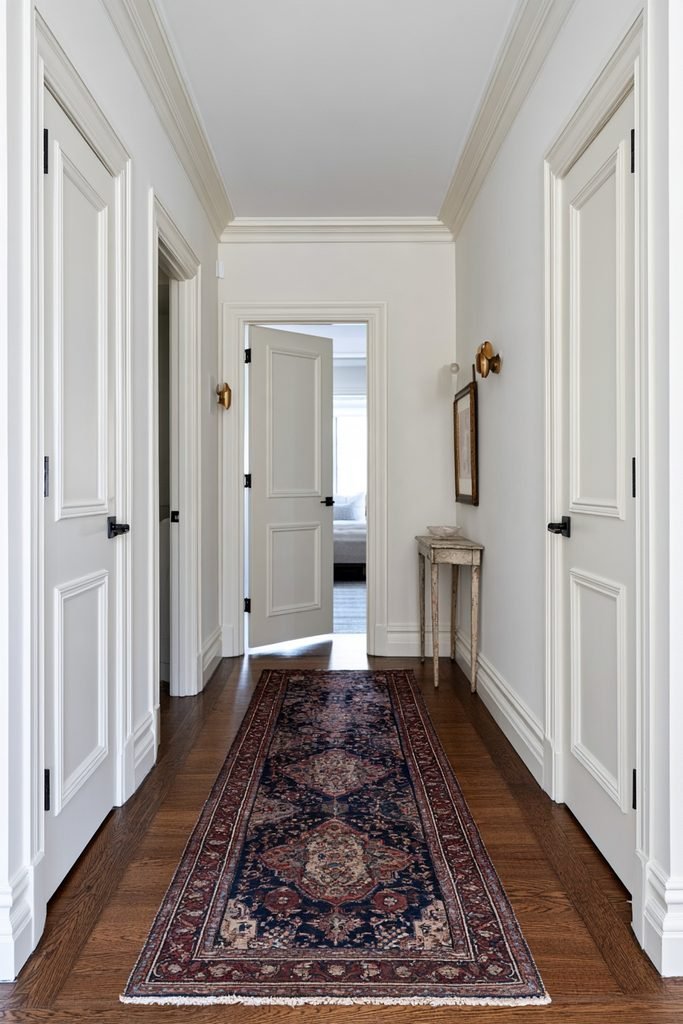
A runner with faded medallions or intricate Persian-style patterns can bring old-world character to a plain corridor. A worn-in wool runner in rust and navy tones works well against white walls and dark wood flooring, since the muted palette ages naturally rather than looking newly unrolled.
Bold Striped Runner
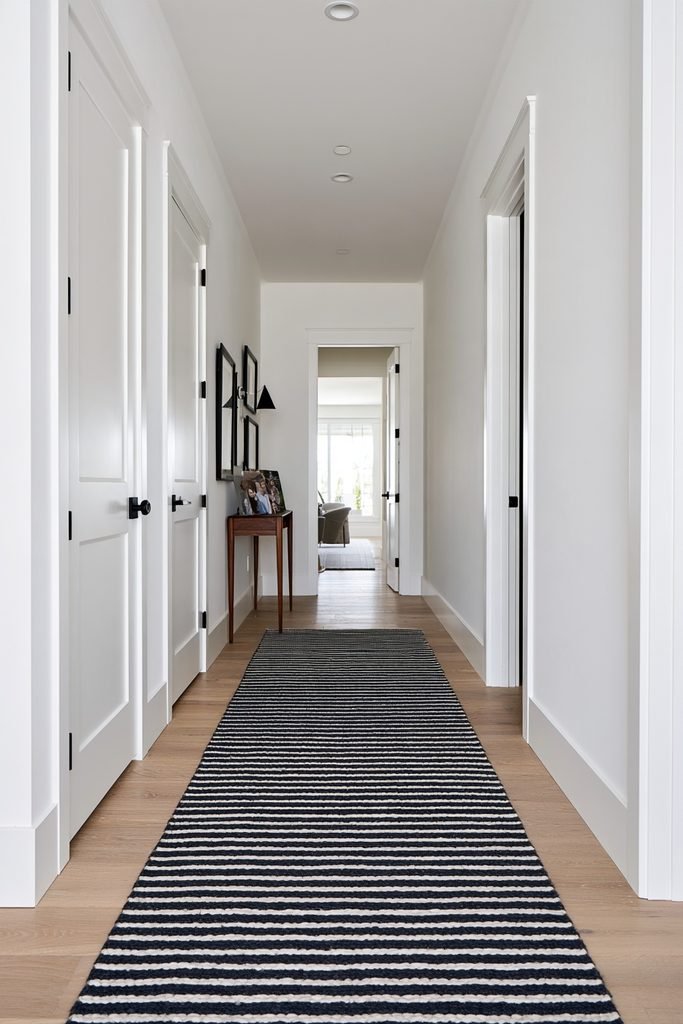
Wide stripes in two contrasting colors can turn a runner into the hallway’s focal point without adding a busy pattern. Bold striped runners work especially well against neutral walls and simple furnishings, an approach this roundup of hallway runner ideas leans on to let the stripe carry the visual weight of the space.
Neutral Jute Runner
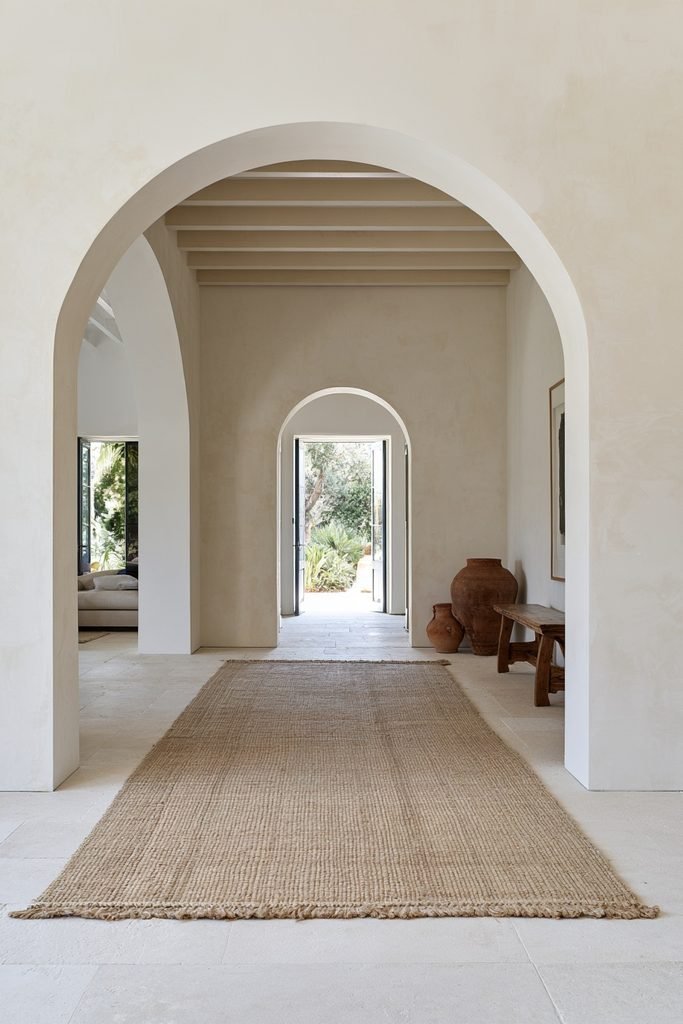
A jute or sisal-look runner can ground a hallway in a warm, natural texture, especially over patterned tile or stone flooring. Jute holds up well underfoot and pairs easily with almost any wall color, which The Rug Decor’s guide to hallway runners points to as one reason natural fiber runners suit long, busy hallways.
Moroccan-Pattern Runner
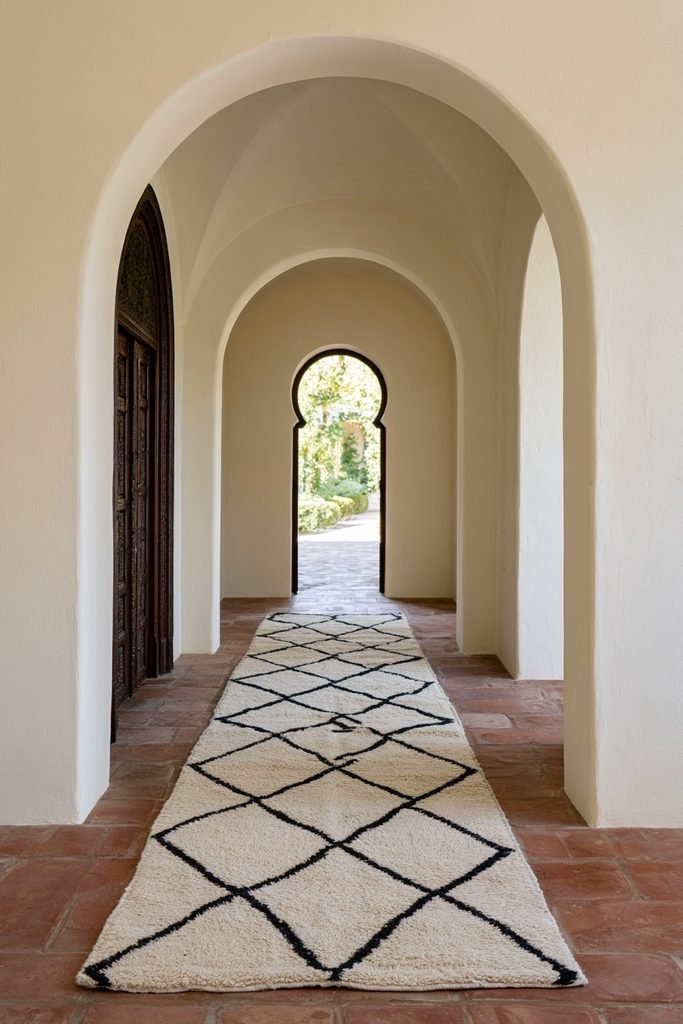
Diamond lattices and Beni Ourain-style motifs can add movement to a long, narrow hallway without overwhelming it. A cream runner with black geometric detailing keeps the look modern while still nodding to traditional Moroccan weaving.
Diagonal Stripe Runner
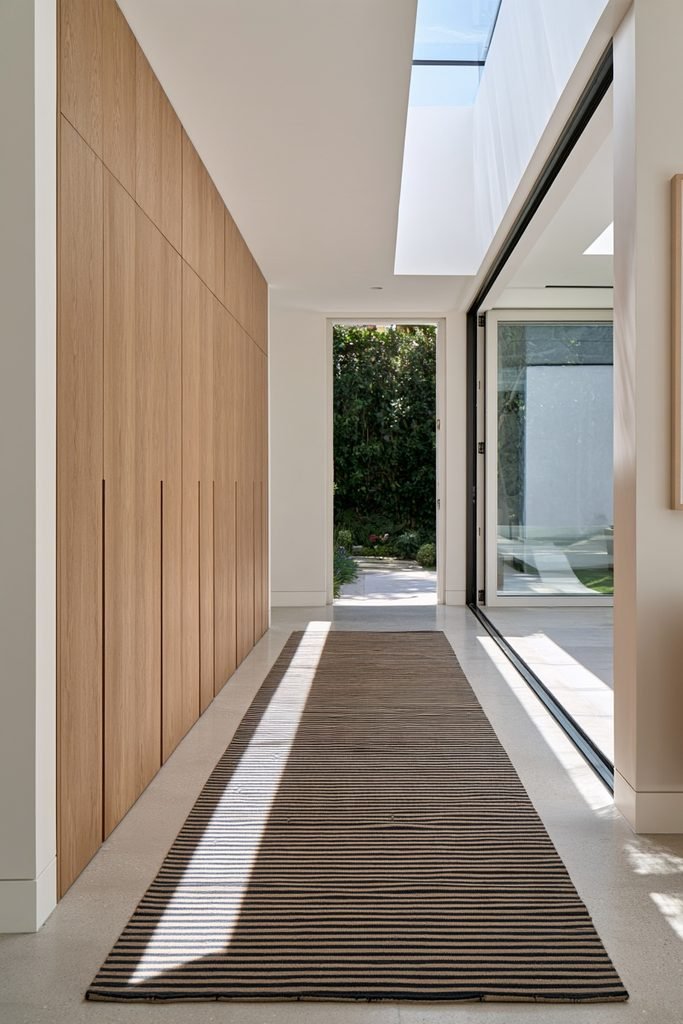
Diagonal stripes create an optical widening effect, making a narrow hallway feel a touch more spacious. Design experts featured in Homes & Gardens’ entryway rug guide point to diagonal patterns as a way to visually square up an elongated room.
Colorful Statement Runner
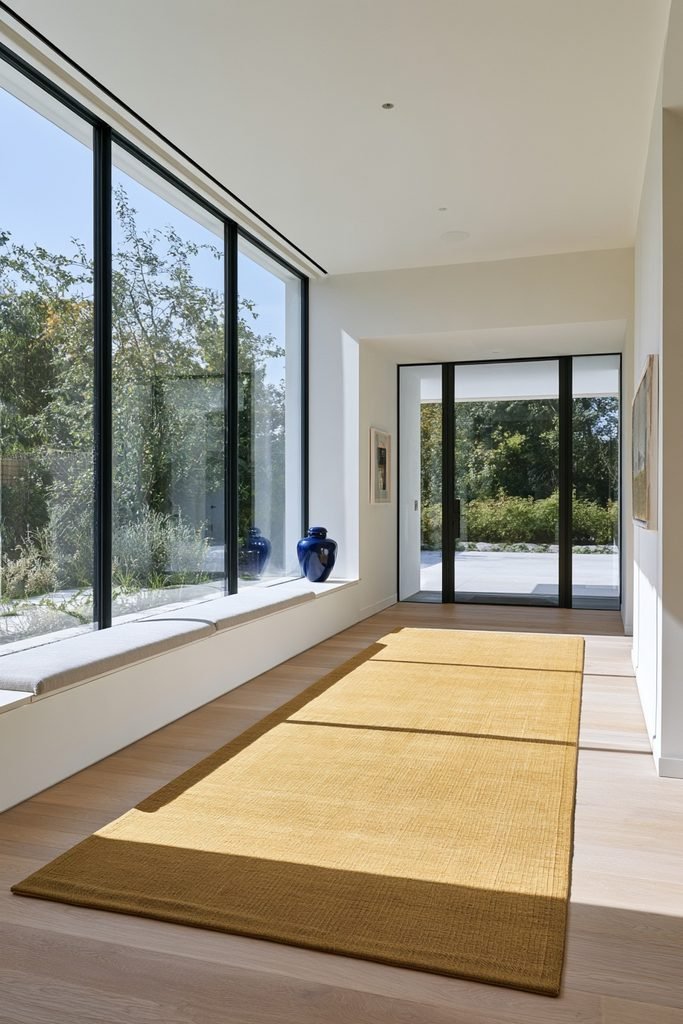
A saturated color like mustard yellow or cobalt blue can lift the mood of a hallway that doesn’t get much natural light. Since a hallway is often the first space seen after a long day, a cheerful runner sets a different tone than a neutral one would.
Geometric Modern Runner
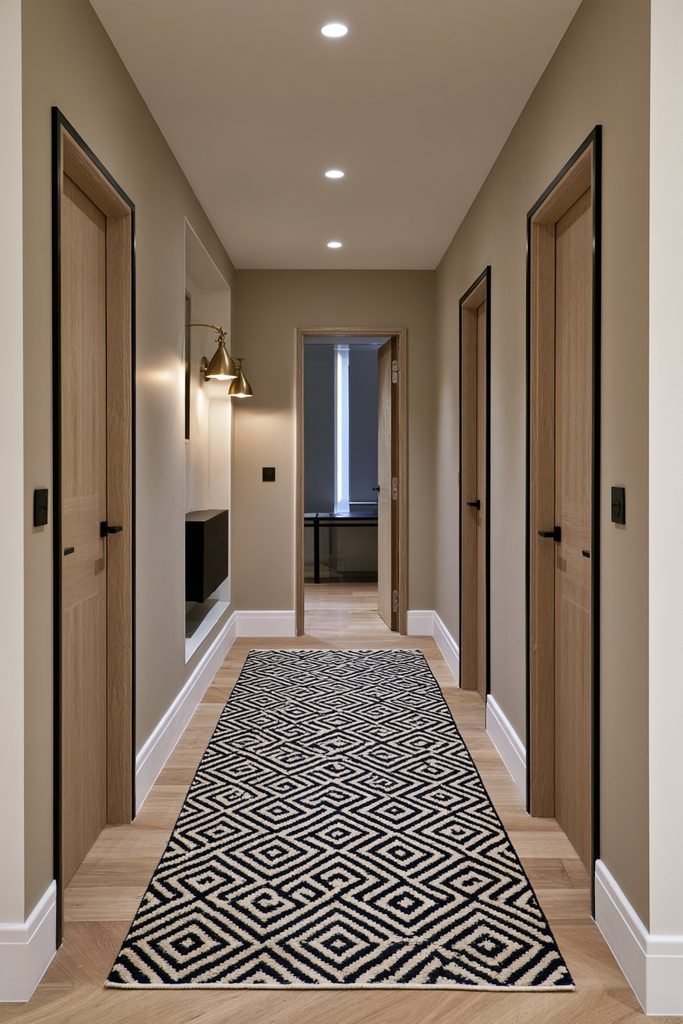
Angular shapes and repeating geometric motifs can bring a contemporary edge to an otherwise plain corridor. Pairing a black-and-white geometric runner with brass hardware or modern sconces keeps the whole hallway feeling current.
Floral Cottage-Style Runner
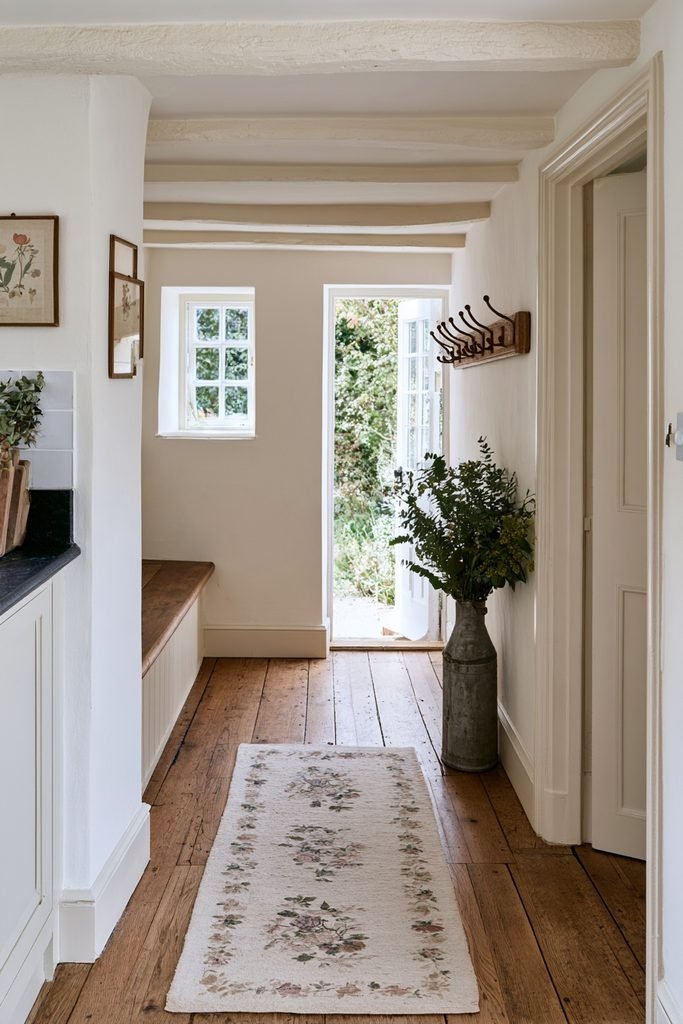
Small-scale floral prints can soften a hallway and tie it to a cottage or traditional interior. A faded floral runner in dusty pink or sage works especially well leading into a kitchen or living room with similar soft tones.
Herringbone Grey Runner
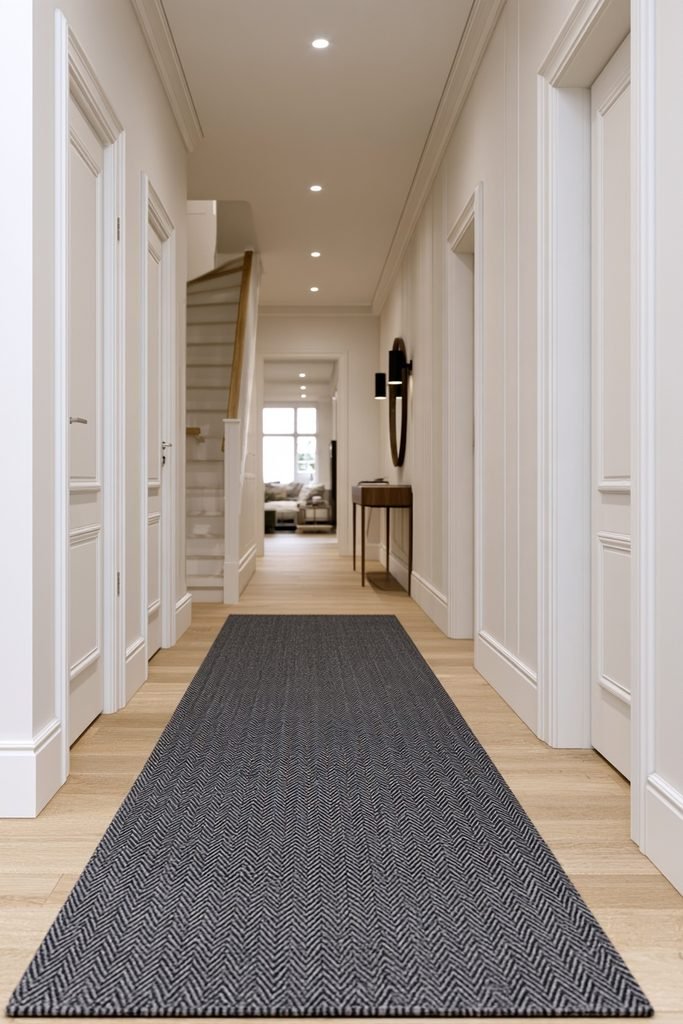
Grey runners in a herringbone weave add texture and depth without introducing color commitment. Grey works as a flexible base, since it can complement nearly any accent color used elsewhere in the home, an approach The Rugs highlights as one of the more versatile modern hallway choices.
Washable Runner for High-Traffic Halls
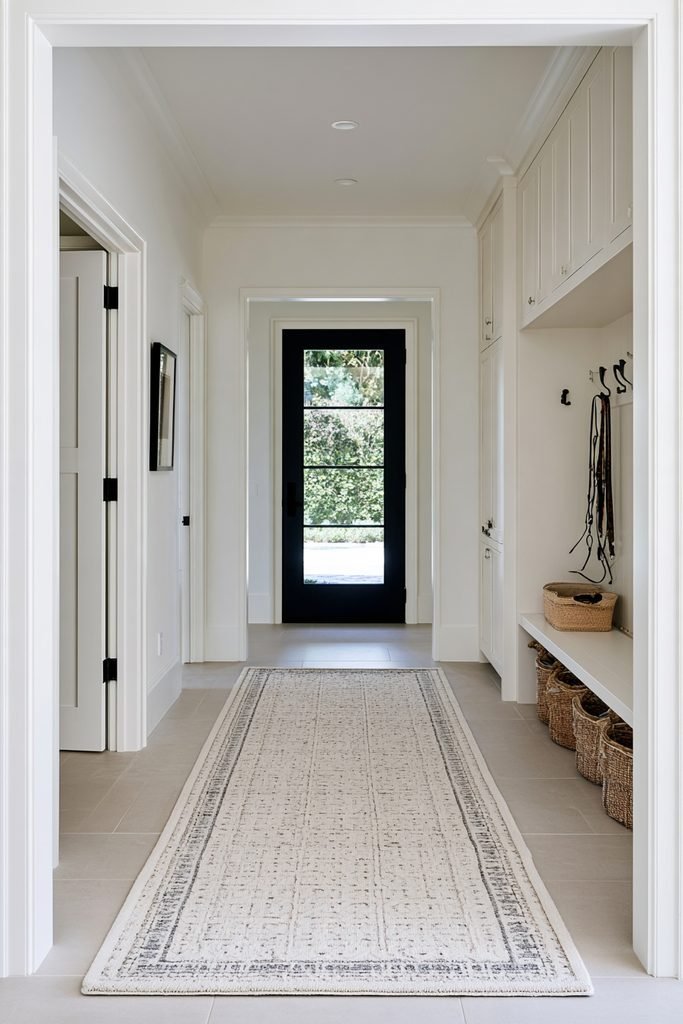
A machine-washable runner in a synthetic or blended fiber can handle a hallway that sees daily foot traffic, pets, or muddy shoes. Washable runners hold up especially well near entry points that connect directly to a mudroom or garage.
Non-Slip Backed Runner
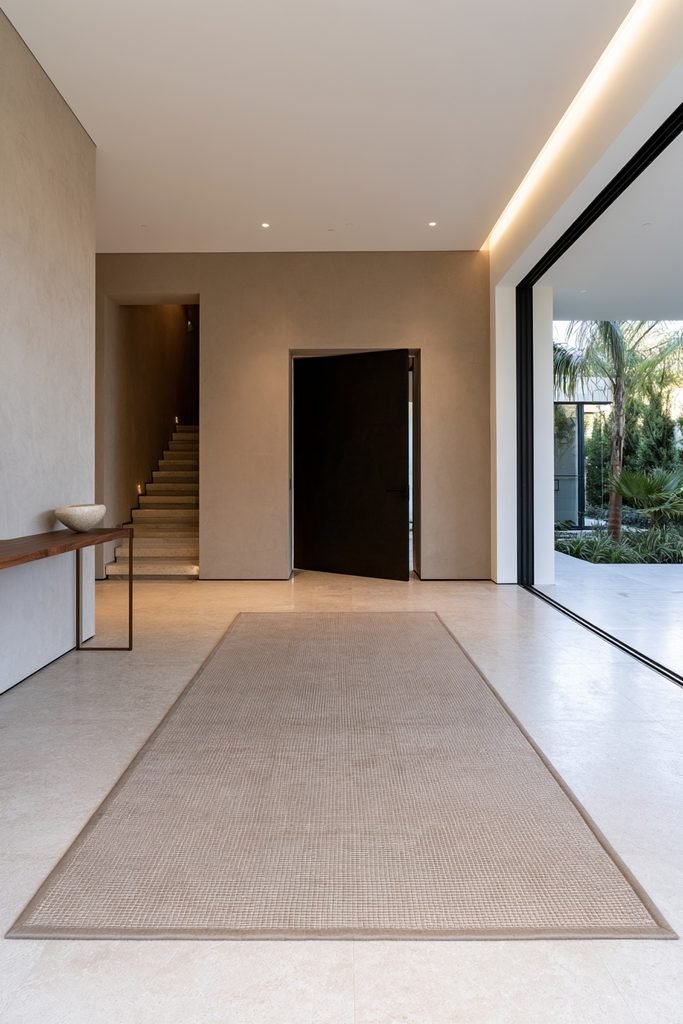
A runner with a rubber or non-slip backing keeps the rug in place on hardwood, tile, or stone flooring. This detail matters most in narrow hallways, where a shifting runner becomes a real tripping hazard rather than just a styling inconvenience.
Wool Flatweave Runner
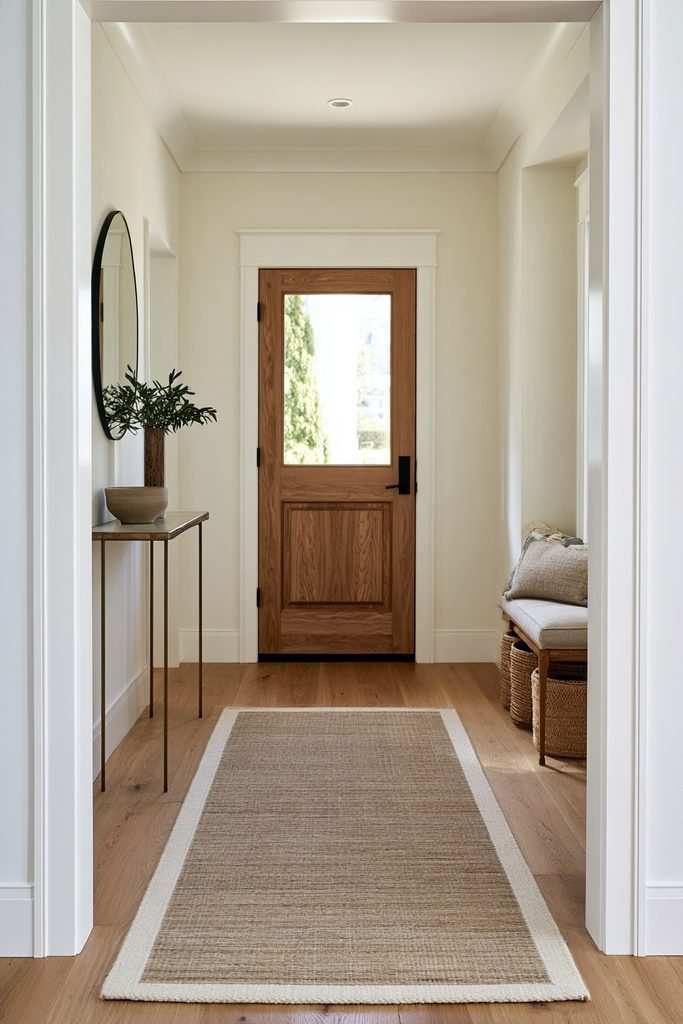
A wool flatweave runner can soften footsteps on a hard floor while still letting the wood or stone grain show through at the edges. Roger Oates creative director Andy Guard notes, in Homes & Gardens’ hallway runner ideas feature, that a flatweave laid over underlay dampens noise in a way fitted carpet can’t match, while keeping the floor visible underneath.
Tasseled Farmhouse Runner
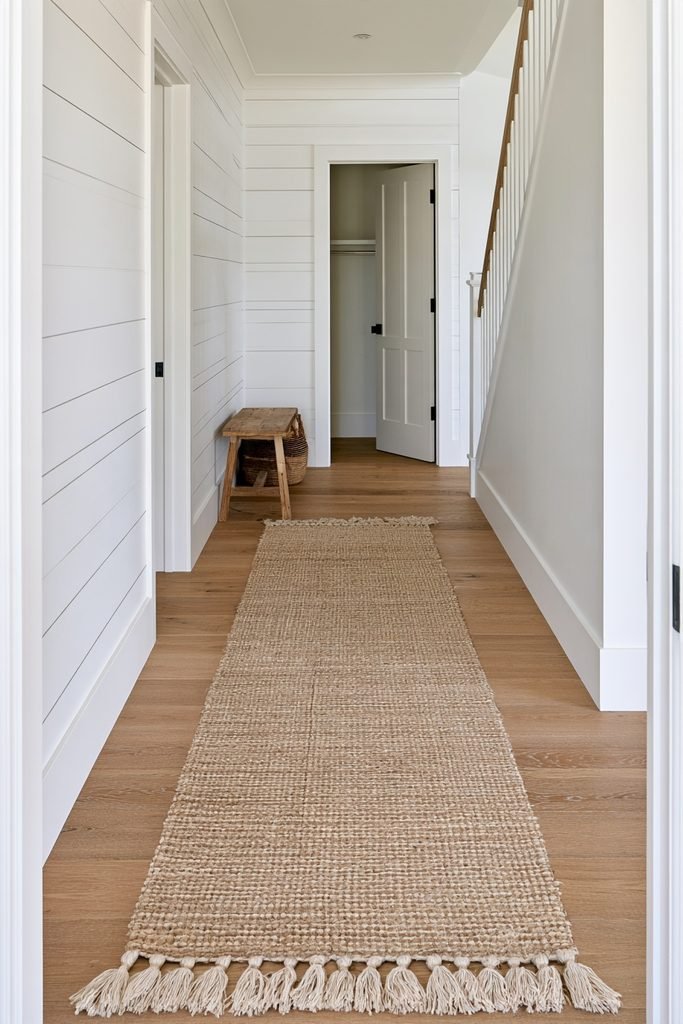
Fringed or tasseled edges can add a homely, farmhouse feel to a hallway with shiplap walls or rustic wood flooring. An earthy tan or oatmeal tasseled runner works especially well leading from an entry into a farmhouse-style kitchen.
Coastal-Style Striped Runner
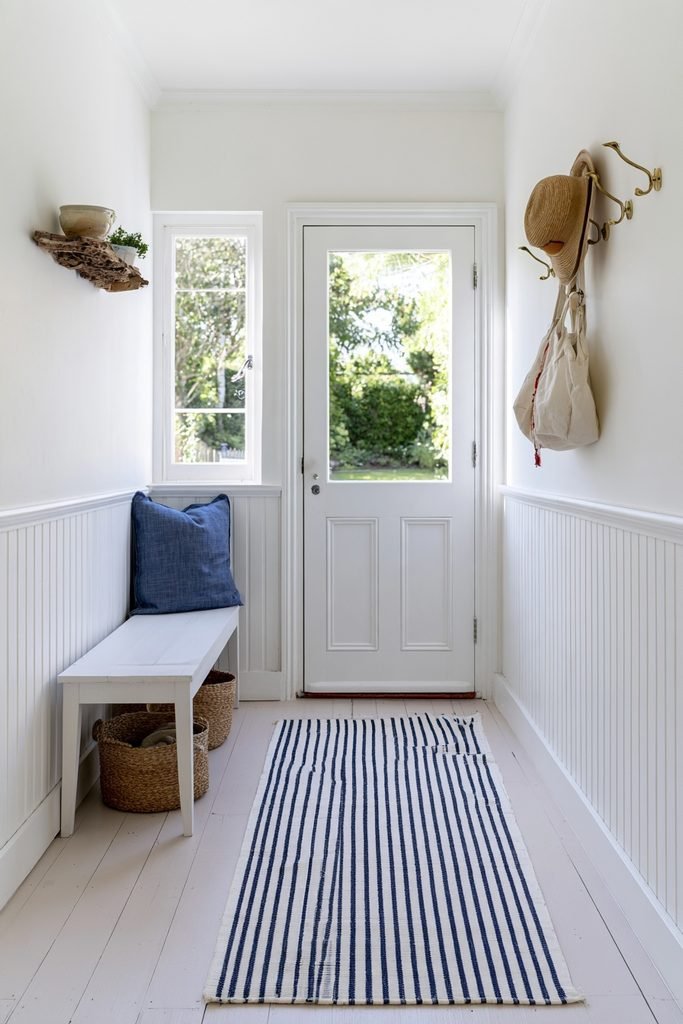
Thin nautical stripes in blue and white can bring a coastal feel to an entry hallway, especially one with light wood flooring. A cotton or flatweave coastal runner keeps the look breezy rather than heavy.
Runner With a Contrasting Border
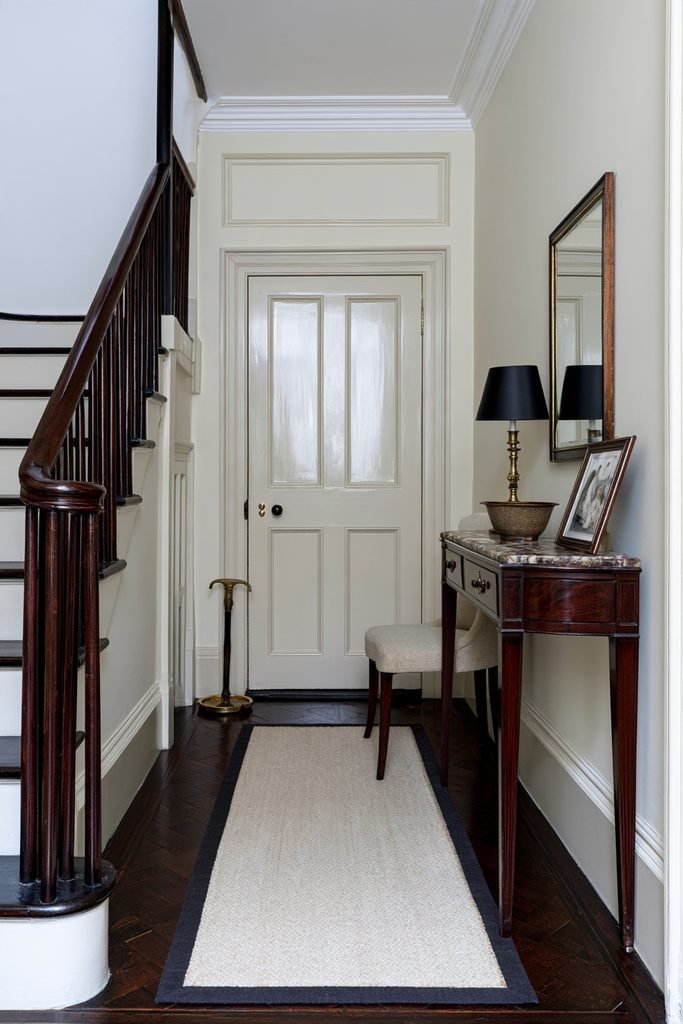
A runner with a bound border in a contrasting color adds a tailored, finished look to the hallway floor. A cream runner with a navy or charcoal border reads as more custom than a plain edge-to-edge pattern.
Runner Made for a Long Hallway
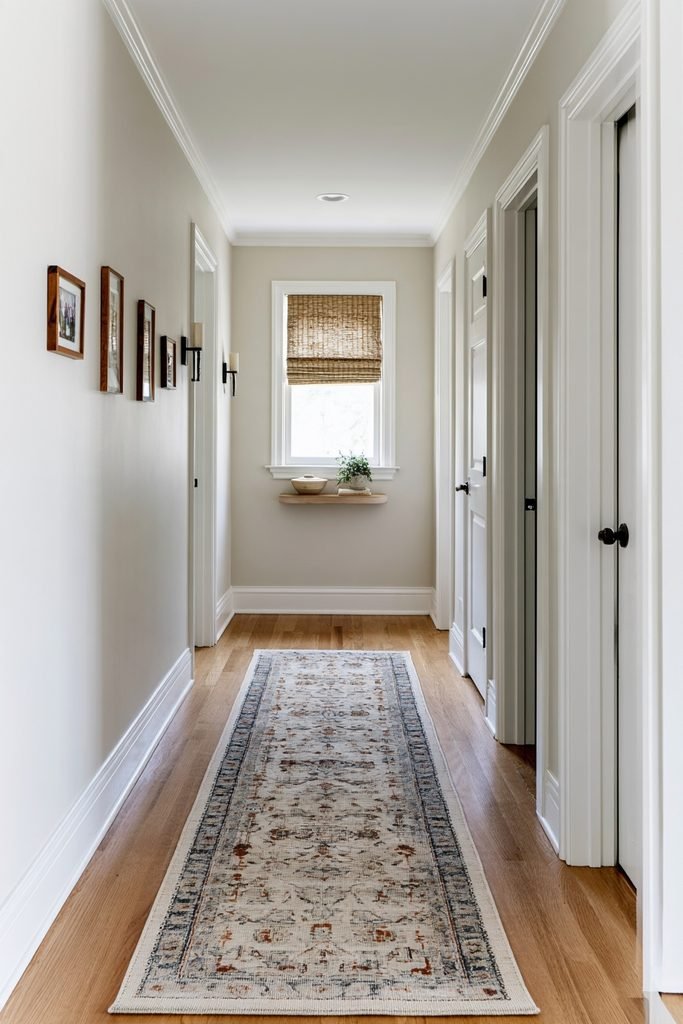
In an especially long corridor, a single extra-long runner or two matching runners placed end to end can keep the look continuous. The Rugs’ guide to hallway rug ideas recommends covering roughly 80 to 90 percent of the hallway’s length so the rug reads as intentional rather than undersized.
Runner Sized for an L-Shaped Hallway
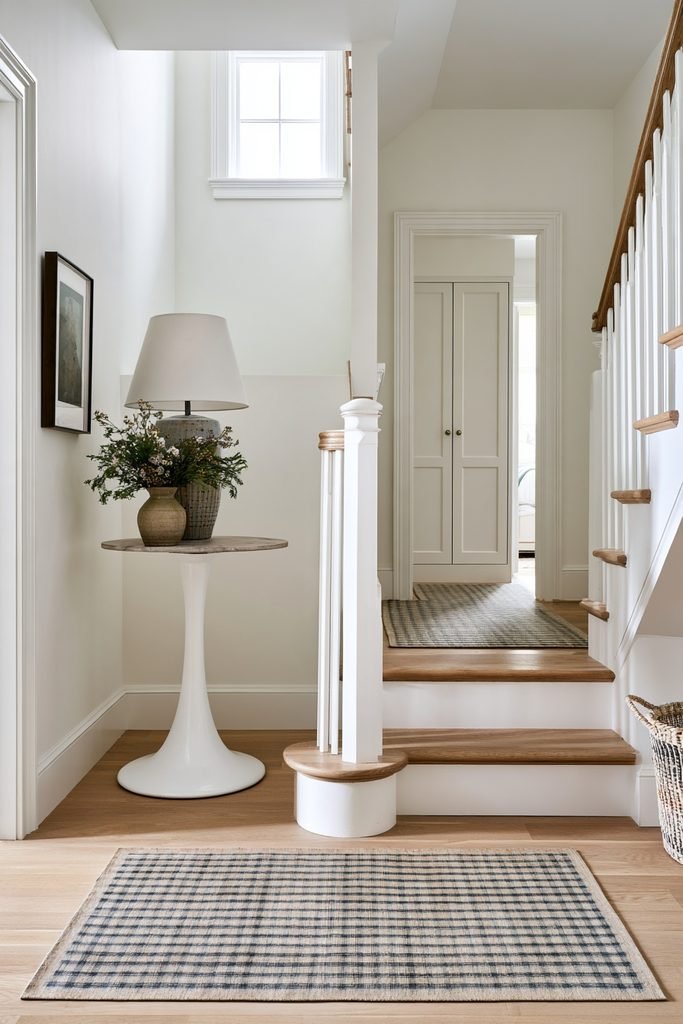
An L-shaped or turning hallway often calls for two coordinating runners rather than one continuous piece, since a single rug rarely bends cleanly around a corner. Kevin Francis Design suggests choosing runners in the same material and tone for each leg of the hallway so the transition still feels cohesive.
Terracotta or Rust-Toned Runner
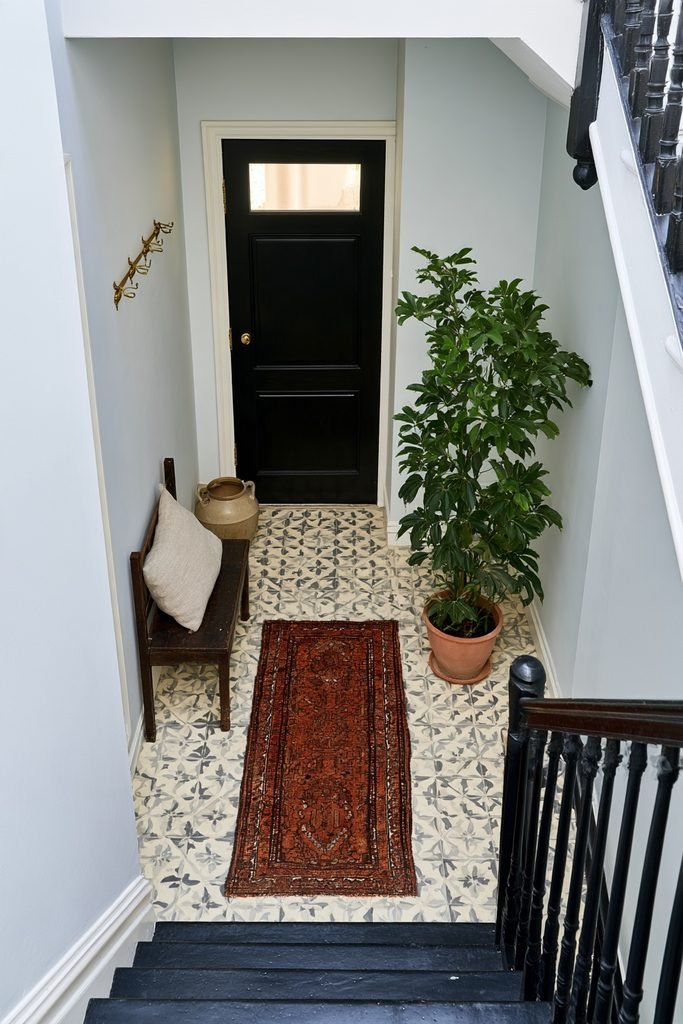
A terracotta or rust-colored runner can warm up a hallway with cool-toned walls or minimal natural light. Lany Space points to gemstone and warm earth tones as some of the most effective color choices for hallways that tend to feel dim.
Emerald Green Runner
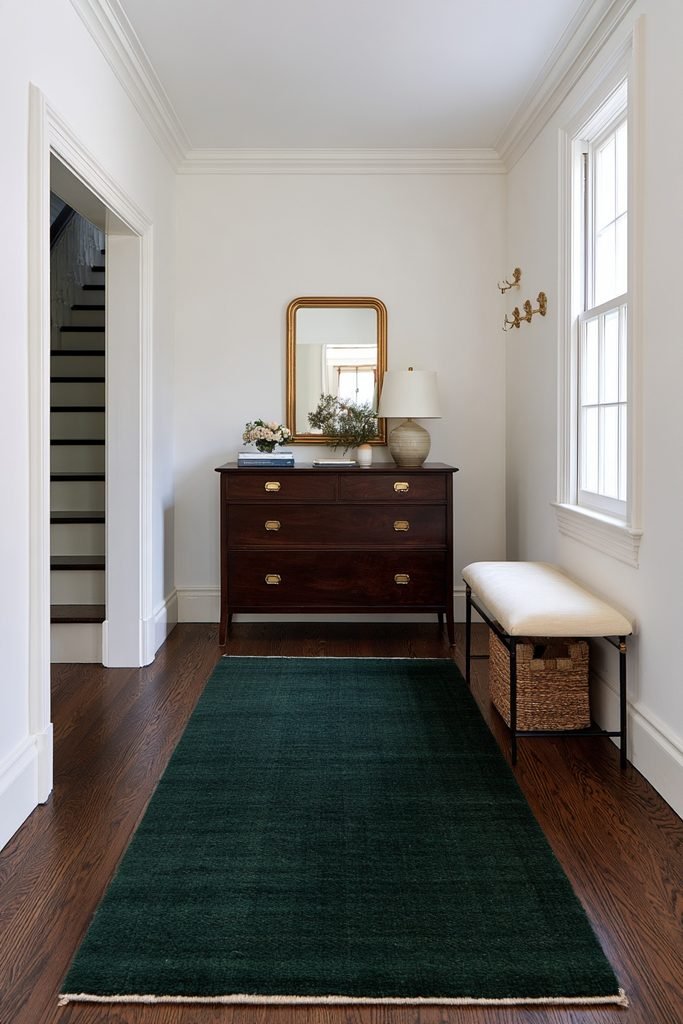
A deep emerald green runner brings richness to a hallway without feeling as bold as a bright primary color. Emerald pairs particularly well with brass fixtures, dark wood console tables, and warm white walls.
Monochrome Black-and-White Runner
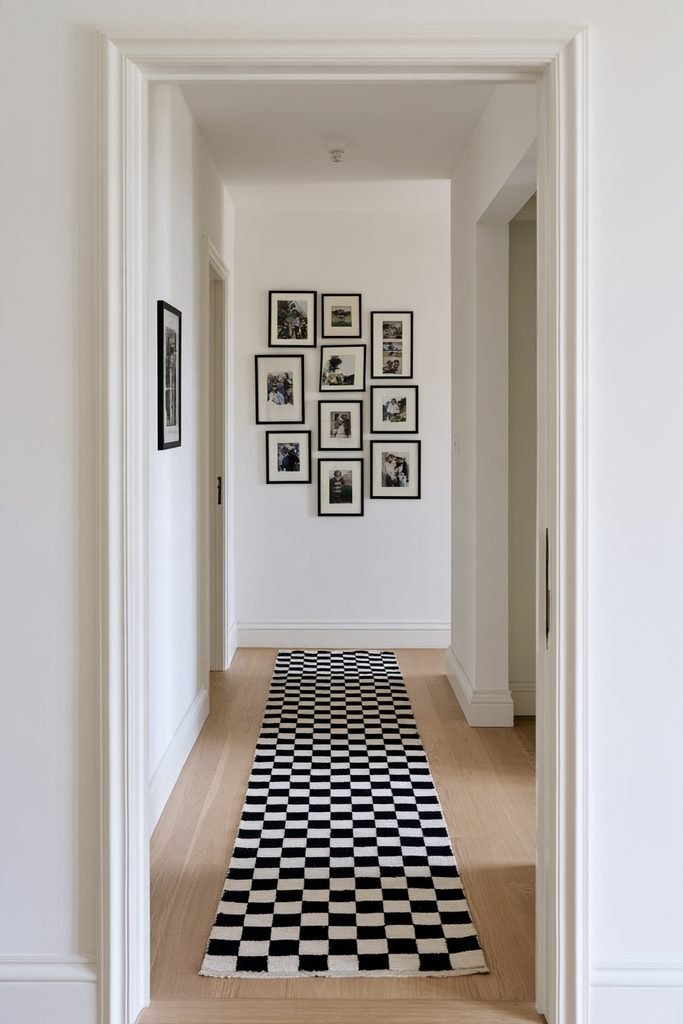
A black-and-white runner, whether striped, checkered, or geometric, adds graphic contrast while staying easy to coordinate with existing decor. This kind of monochrome runner shows how a black-and-white palette can anchor a hallway filled with framed photos or artwork.
Abstract Art-Inspired Runner
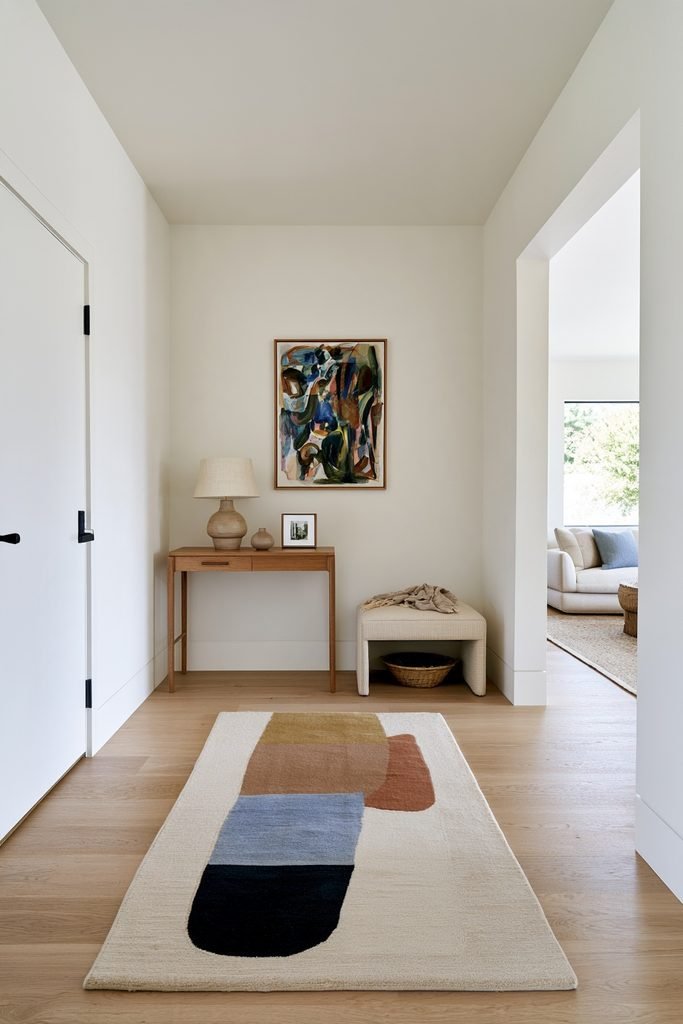
An abstract pattern with irregular shapes and unexpected color combinations can serve as a piece of functional art underfoot. Balancing an abstract runner with neutral walls and simple furniture keeps the overall hallway from feeling cluttered.
Scandinavian Minimalist Runner
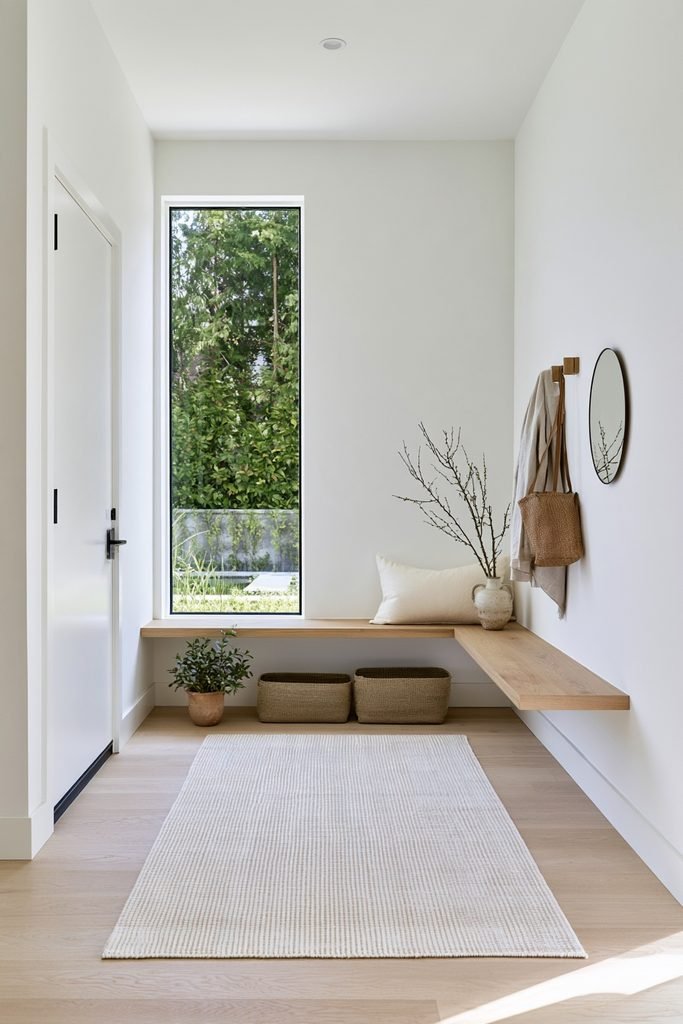
A pale, low-pattern runner in ivory, oatmeal, or soft grey suits a Scandinavian-inspired hallway built around light wood and clean lines. Keeping the pattern subtle, such as a faint stripe or dot, maintains the airy feel Scandinavian interiors are known for.
Eclectic Bohemian Runner
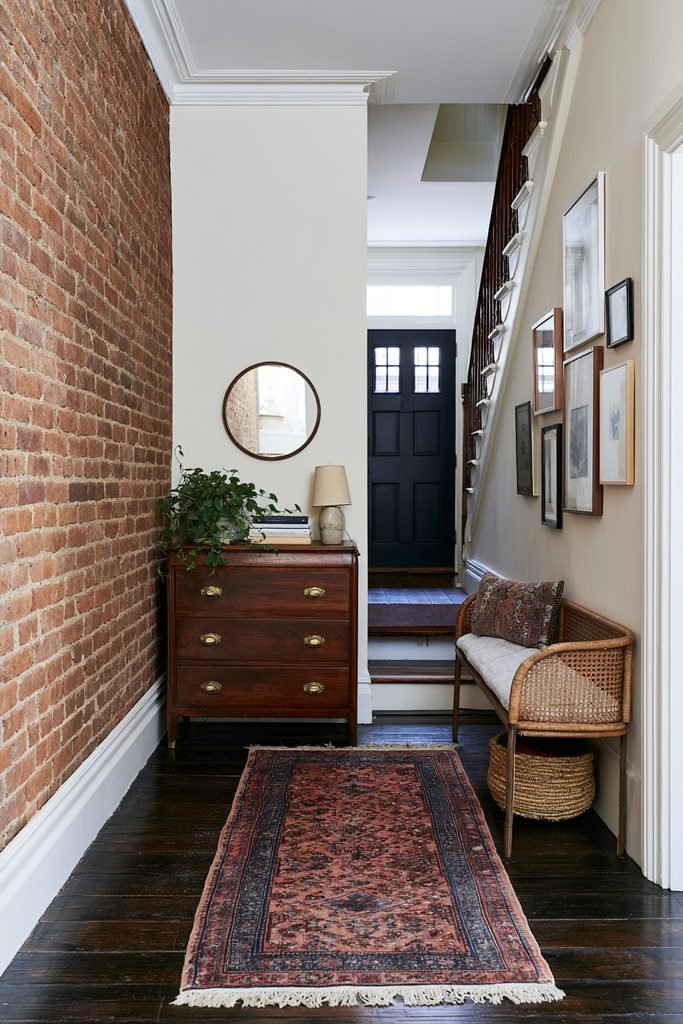
Layering pattern, fringe, and warm color in a single runner can give a hallway an eclectic, bohemian feel. A vintage-style Turkish or Moroccan runner in faded reds and oranges works especially well against exposed brick or wood paneling.
Runner That Coordinates With the Front Door
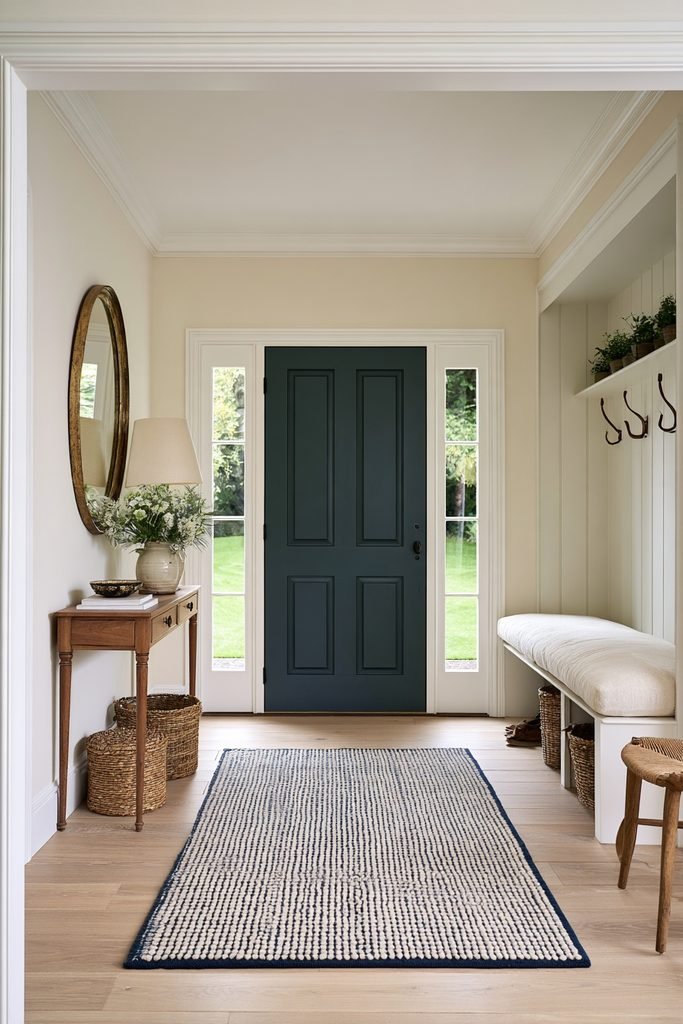
Matching or complementing the runner’s color to the front door creates a sense of flow from the outside in. Jaipur Rugs director Yogesh Chaudhary recommends a wool runner with close tufting for an entry that sees heavy use, paired with a color that echoes the door for a coordinated welcome.
Frequently Asked Questions
What size runner works best for a hallway?
A hallway runner can cover about 80 to 90 percent of the hallway’s length while leaving roughly 10 to 15 centimeters of floor visible along each side, which keeps the proportions balanced without looking undersized.
Should a hallway runner match the flooring or contrast with it?
Either approach can work, since a runner close to the floor’s tone creates a soft, understated look while a contrasting runner adds personality and pattern to a neutral hallway.
What’s the most durable material for a high-traffic hallway runner?
Wool, nylon, and polypropylene runners tend to hold up well in high-traffic hallways, with polypropylene offering a snag-free option for households with pets.
How do you keep a hallway runner from sliding?
A runner with a rubber or non-slip backing, or a separate rug pad placed underneath, keeps the rug secure on hardwood, tile, or stone flooring.