A larder cupboard brings the character of an old-fashioned pantry into a modern kitchen, combining a cabinet with a small storage room where tins, jars, and small appliances can live behind one set of doors, as 1stDibs describes it. Howdens frames a well-planned larder as the calm, functional centre of a busy kitchen, and today’s versions come in walk-in, built-in, freestanding, and corner configurations to suit nearly any layout. Paint finishes, shelving materials, and interior fittings can all be adjusted to match a farmhouse, modern, or period-style kitchen. These 28 larder cupboard ideas cover color palettes, storage features, and layout solutions that can help turn a hardworking pantry into one of the kitchen’s most useful spaces.
Go Behind Flush Doors
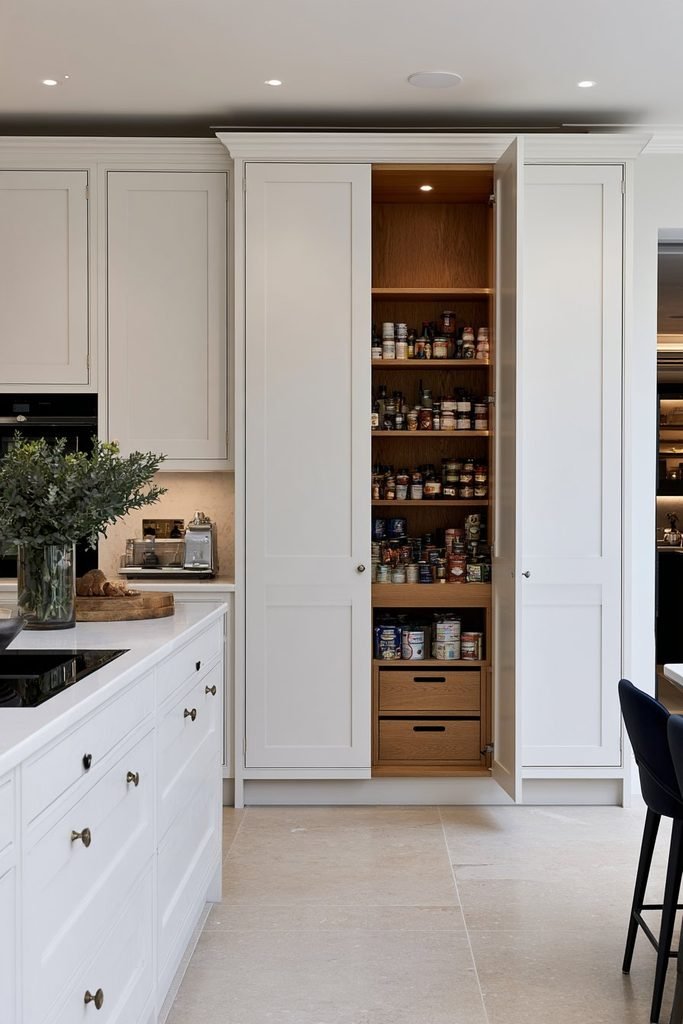
A walk-in larder can sit fully hidden behind doors that match the surrounding cabinetry, keeping the kitchen looking streamlined from the outside. The White Kitchen Company built a walk-in larder behind two tall Shaker doors set flush with a fitted bar, so the space reads as part of the run until it’s opened to reveal oak shelving and drawers beyond.
Turn the Corner
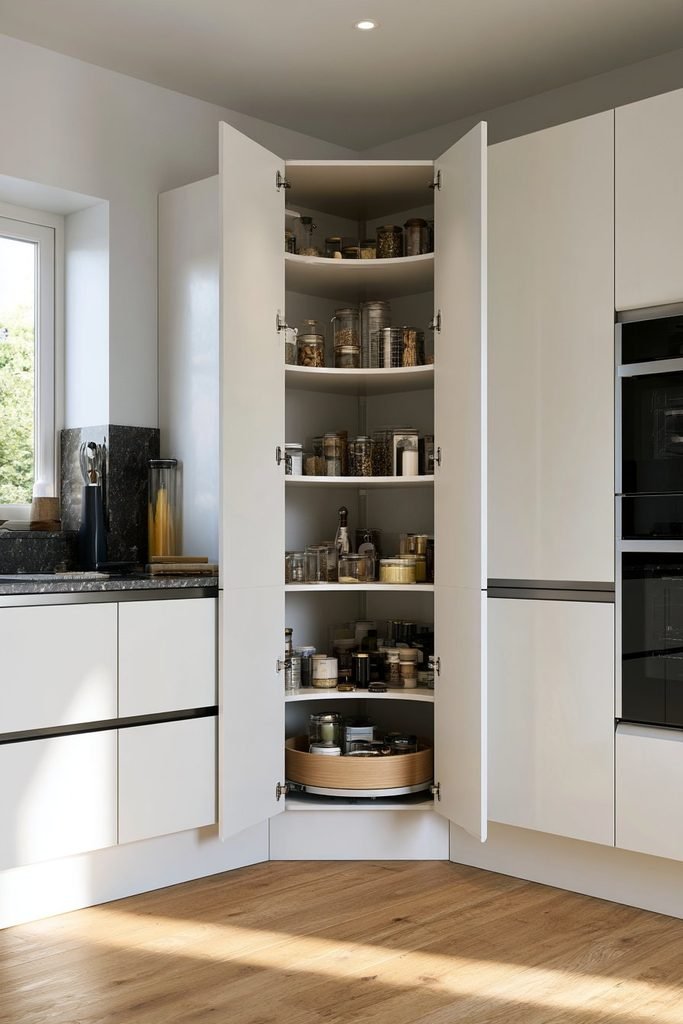
Corner space is often wasted in a kitchen layout, but a corner larder can put it to work with angled or rotating shelving. Deep triangular shelves paired with a rotating tray can bring jars and tins within easy reach without forcing an awkward reach into the back of the cabinet.
Lean Into Sage Green
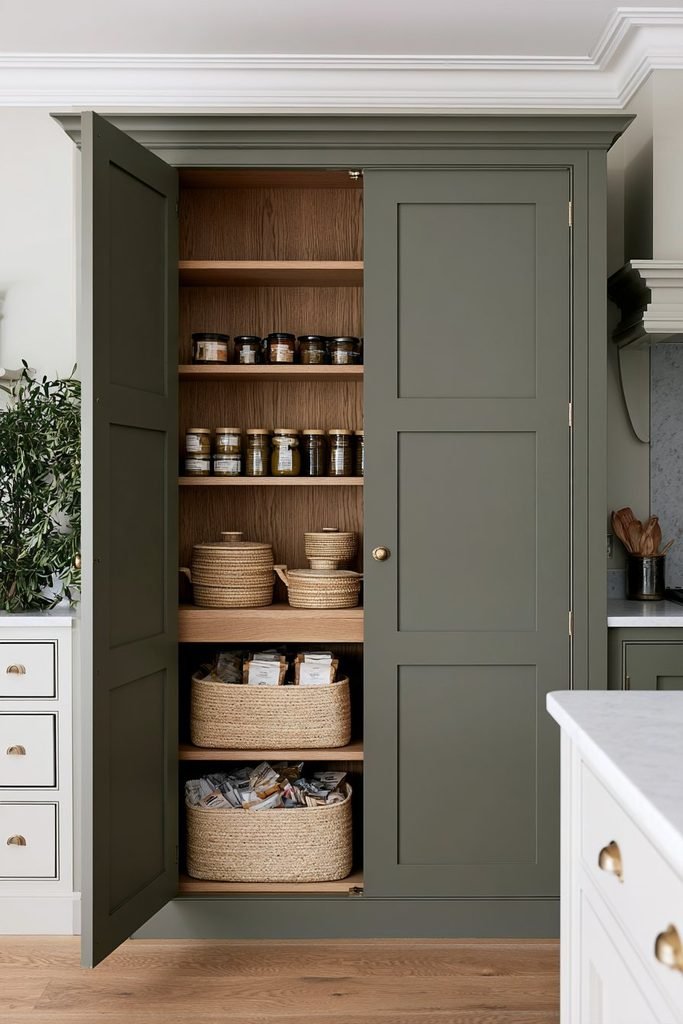
Sage green cabinetry can give a larder cupboard a calm, botanical feel that pairs naturally with oak or pale timber shelving. Brass or brushed knobs against the muted green doors can add a soft glimmer, while woven baskets on the shelves keep loose packets corralled.
Show Off Behind Glass
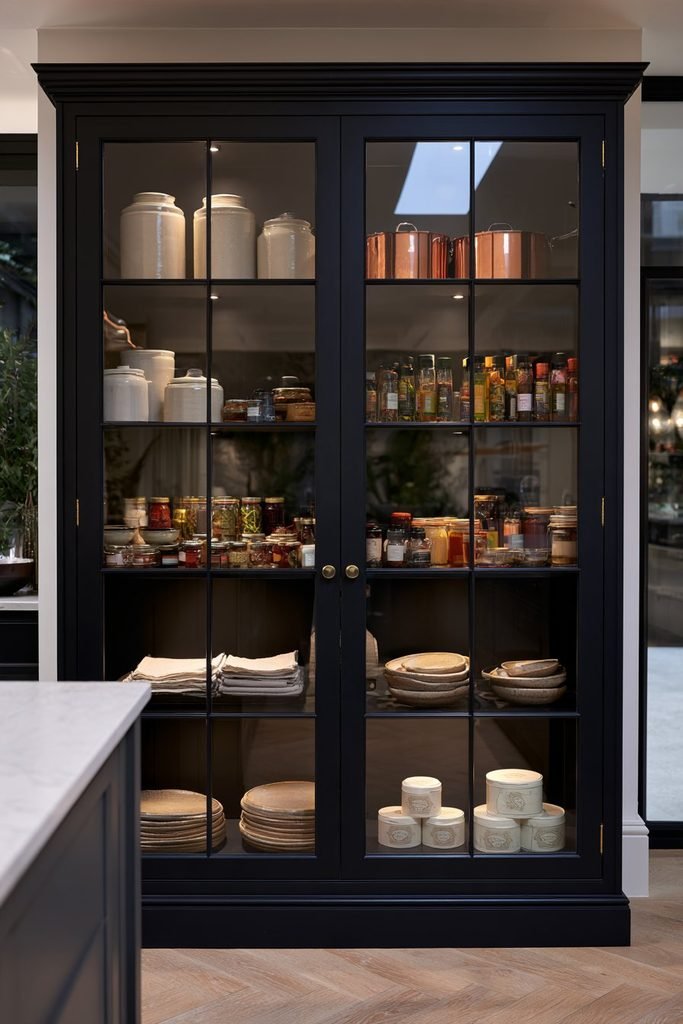
Glass-fronted doors can turn a larder cupboard into a display feature rather than hidden storage. Grouping jars, tins, and containers in matching sets behind the glass keeps the look tidy, and interior lighting can make the display glow during evening cooking.
Anchor with a Farmhouse Piece
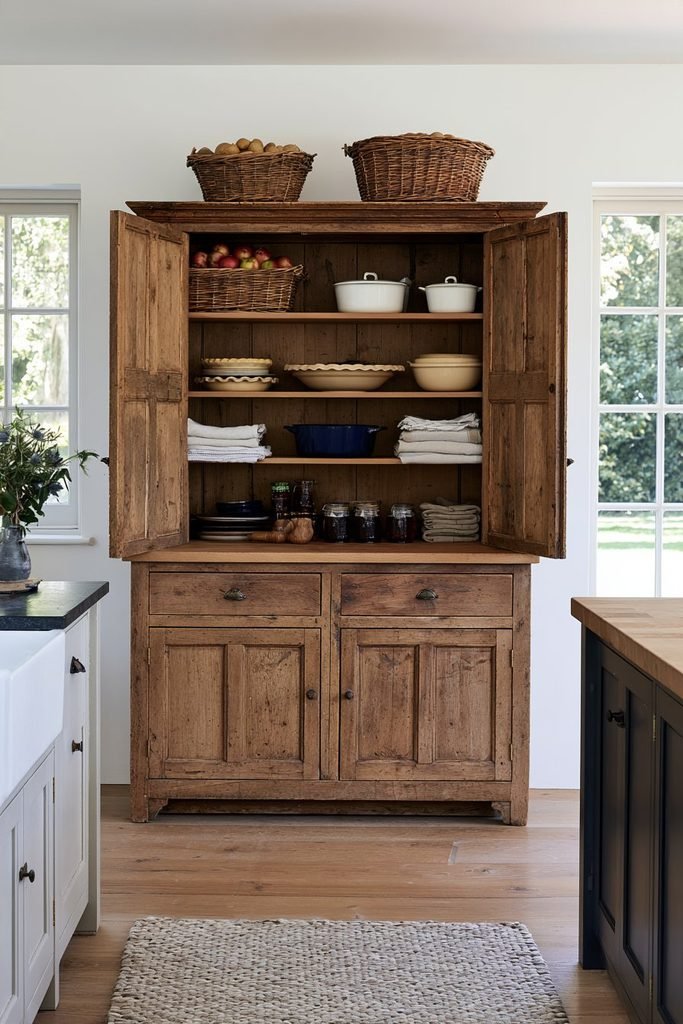
A freestanding farmhouse larder can bring flexibility to a kitchen since it isn’t fixed to the wall. Chunky timber construction and a distressed paint finish can give the piece a lived-in character, and it can be moved or repositioned if the kitchen layout changes down the line.
Make the Most of Narrow Space
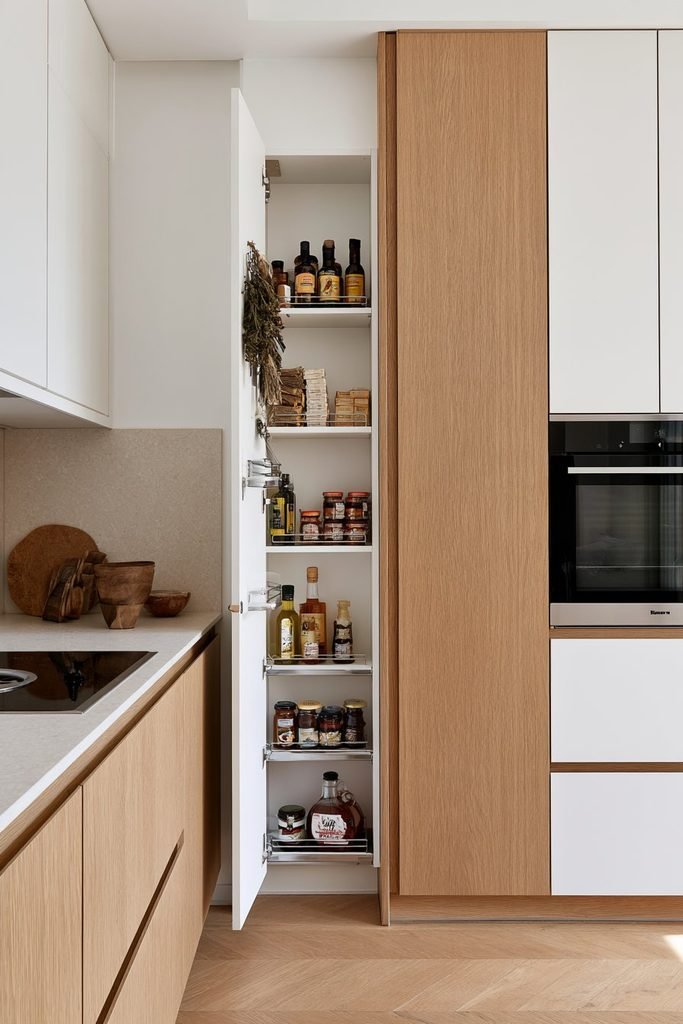
A slim larder can slot into gaps that most kitchen units can’t use, sometimes as little as 30cm wide. Tall internal shelving combined with pull-out trays and door-mounted racks can make a narrow cupboard hold a surprising amount of dry goods and spices.
Stack Deep Drawers Instead
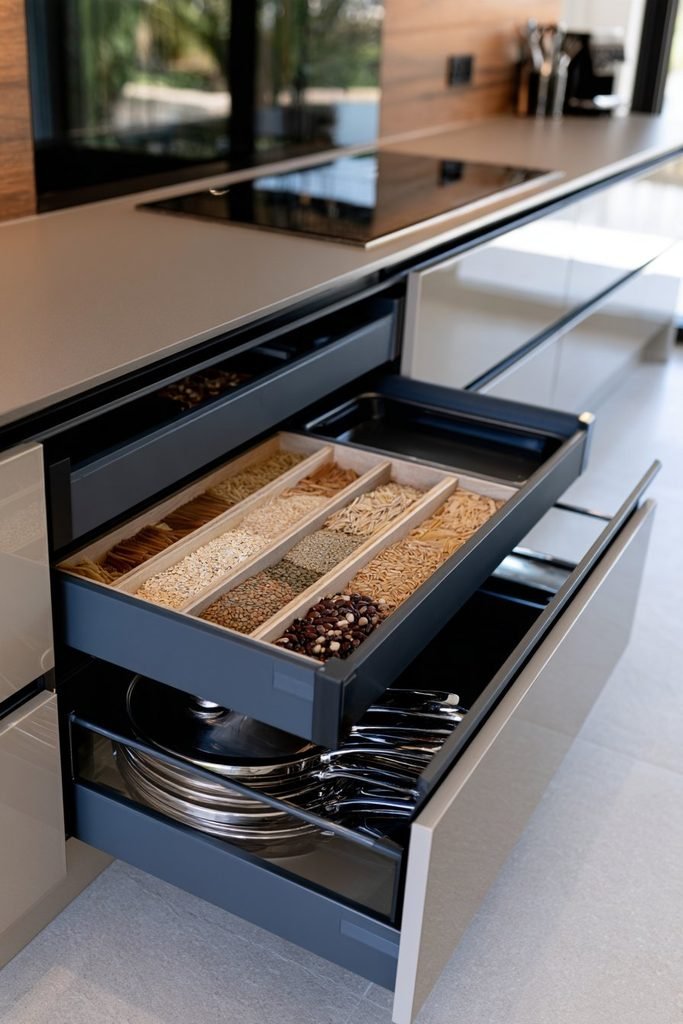
Deep base drawers with wooden dividers can work as a horizontal alternative to a tall larder cupboard, which suits kitchens with limited height for wall units. Pasta, rice, and other dry goods can sit in labeled sections so nothing gets lost at the back of the drawer.
Make a Navy Statement
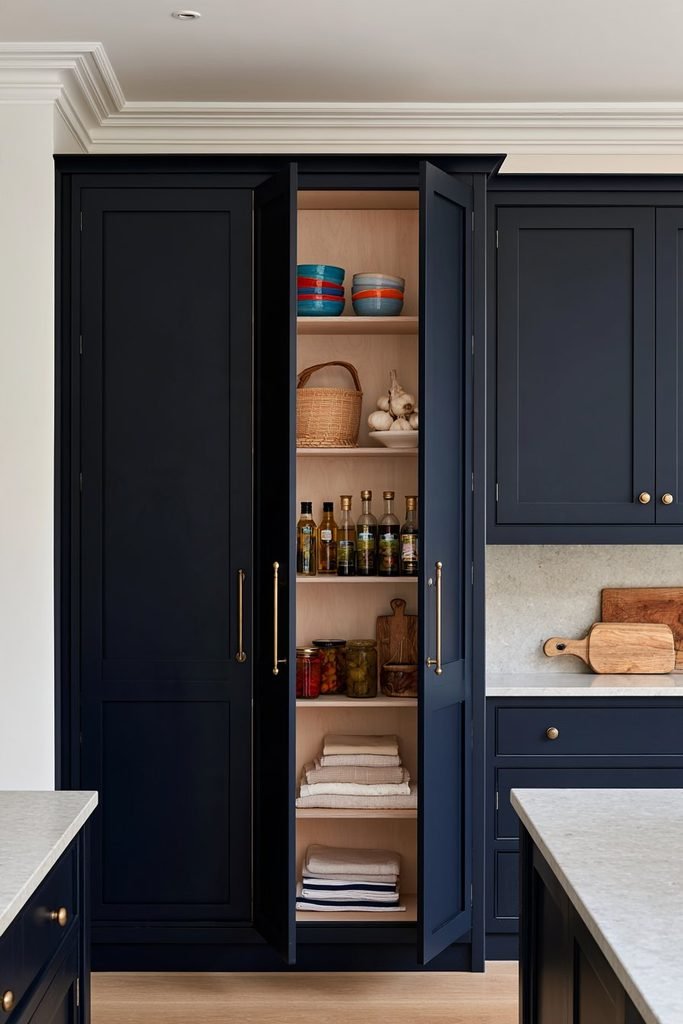
Deep navy blue cabinetry can bring a sense of drama to a larder cupboard while still feeling grounded and classic. Brass handles and pale timber shelving inside can keep the darker exterior from making the kitchen feel heavier than intended.
Build a Butler’s Pantry
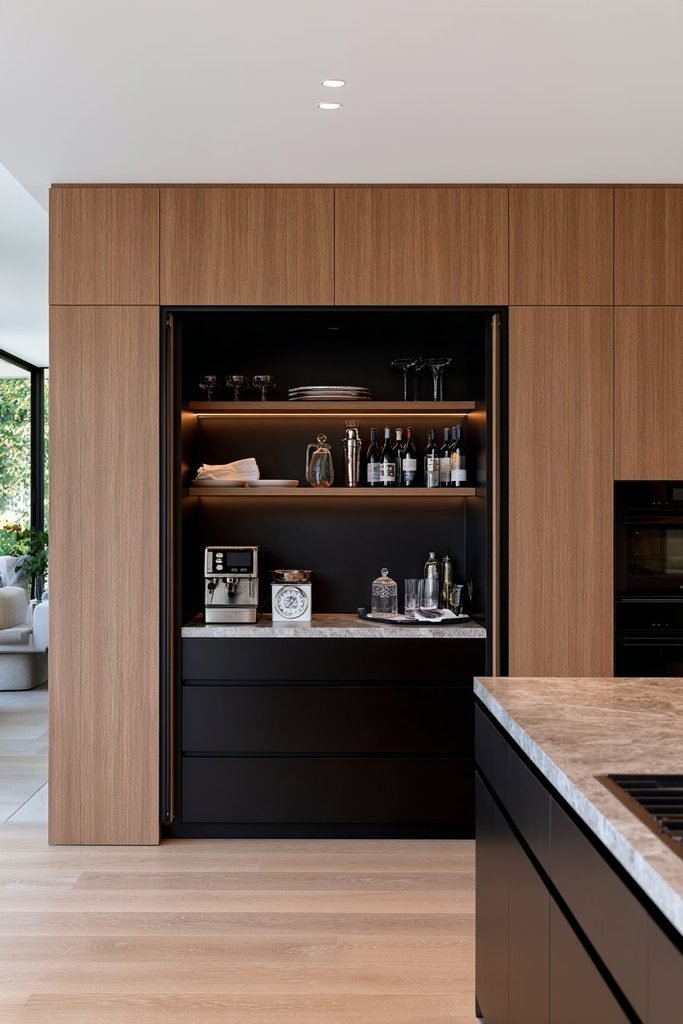
A butler’s pantry combines larder storage with a small prep counter, giving a kitchen a secondary work zone for tasks like weighing ingredients or making drinks. Pocket doors can close the whole space away when the counter isn’t in use, keeping the main kitchen clear for entertaining.
Warm Up with Terracotta
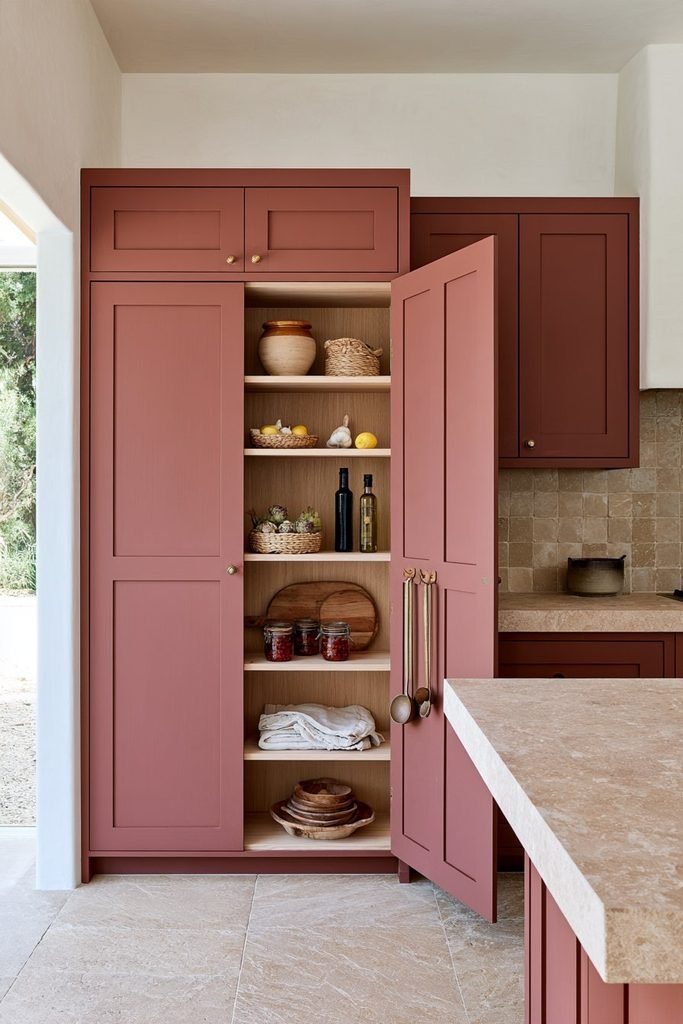
Terracotta tones can bring a Mediterranean warmth into a larder cupboard, especially when paired with pale timber shelving and ceramic storage jars. Small brass hooks fitted to the inside of the door can hold measuring spoons or cloths within easy reach.
Create a Breakfast Station
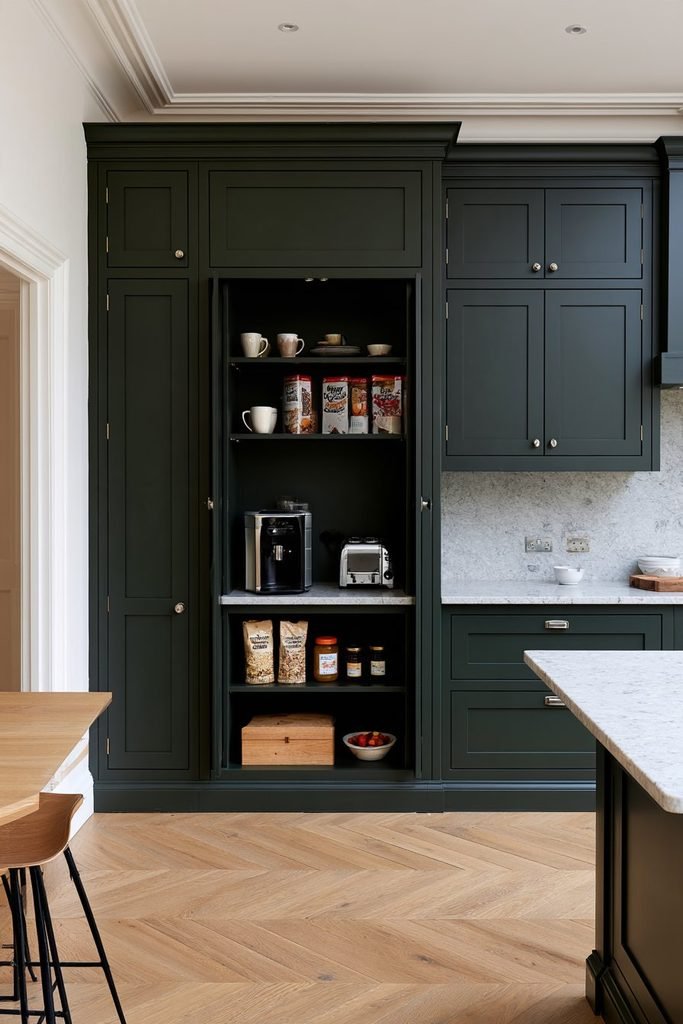
A larder cupboard built around breakfast essentials can gather cereals, spreads, mugs, and a compact coffee machine into one zone. Pocket doors can conceal the whole setup once breakfast is finished, so the counters stay clear for the rest of the day.
Hide It in Plain Sight
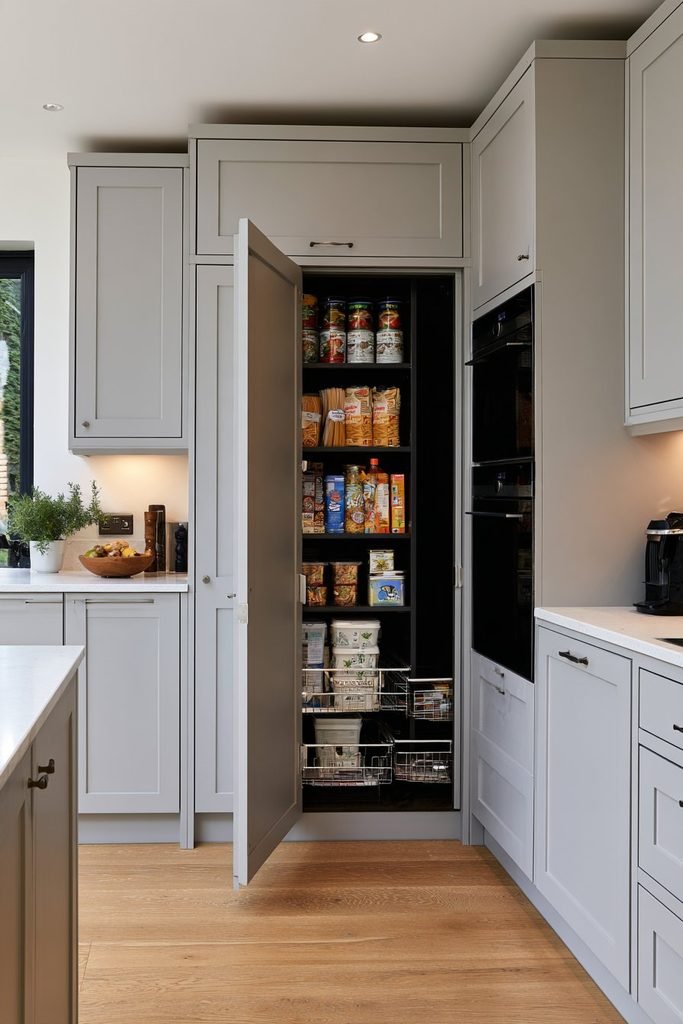
Matching a larder’s exterior doors to the surrounding cabinetry can make the whole unit disappear into the kitchen’s overall design. Adjustable shelving and pull-out baskets inside keep the hidden interior just as functional as a larder with its own visible doors.
Go Rustic with Oak
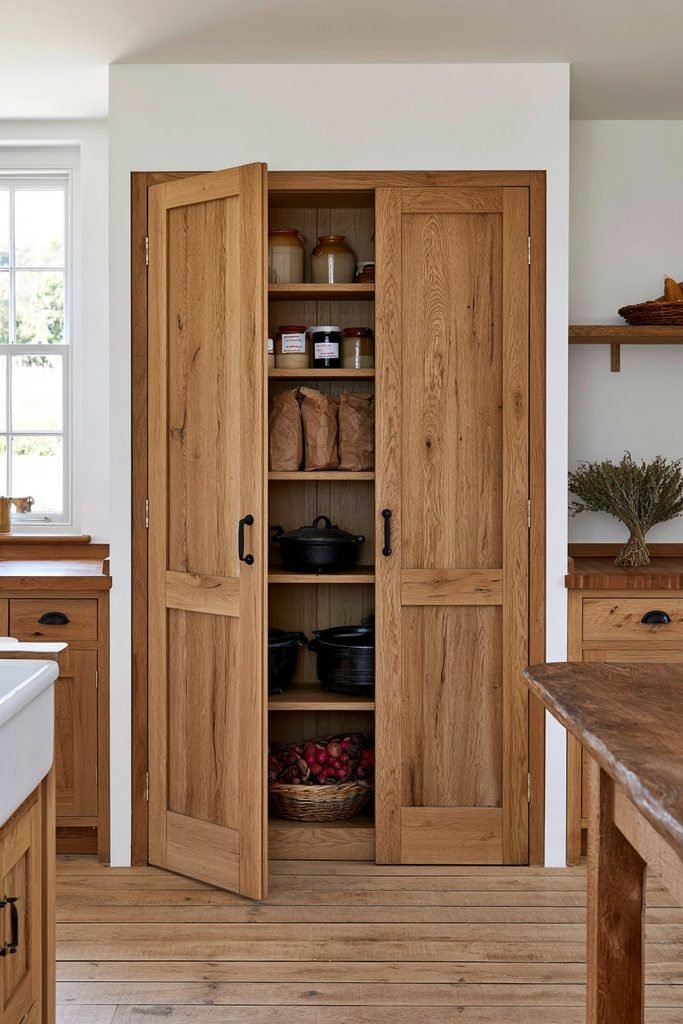
Rustic oak cabinetry can give a larder cupboard a grounded, enduring look, especially when the timber grain is left visible across the doors and shelves. Iron handles can complement the oak with a slightly rugged, farmhouse-inspired finish.
Keep It Classic Cream
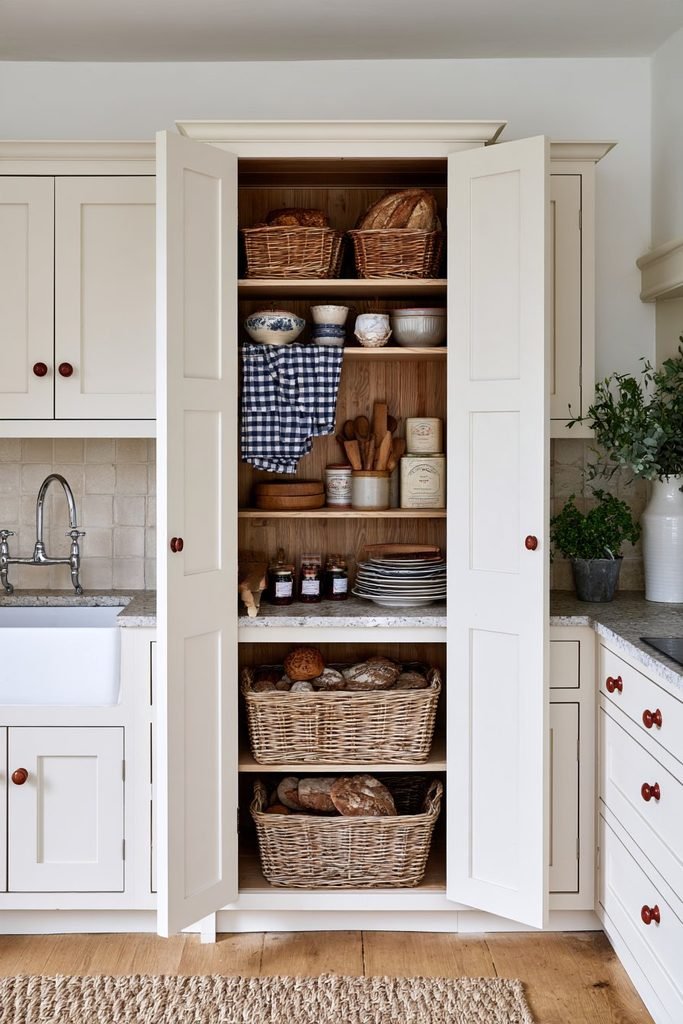
A creamy painted larder with Shaker-style doors can soften a kitchen with a familiar, cottage-inspired look. Vintage-style labels and wicker baskets inside can add a nostalgic touch without making the storage feel overly themed.
Add an Industrial Edge
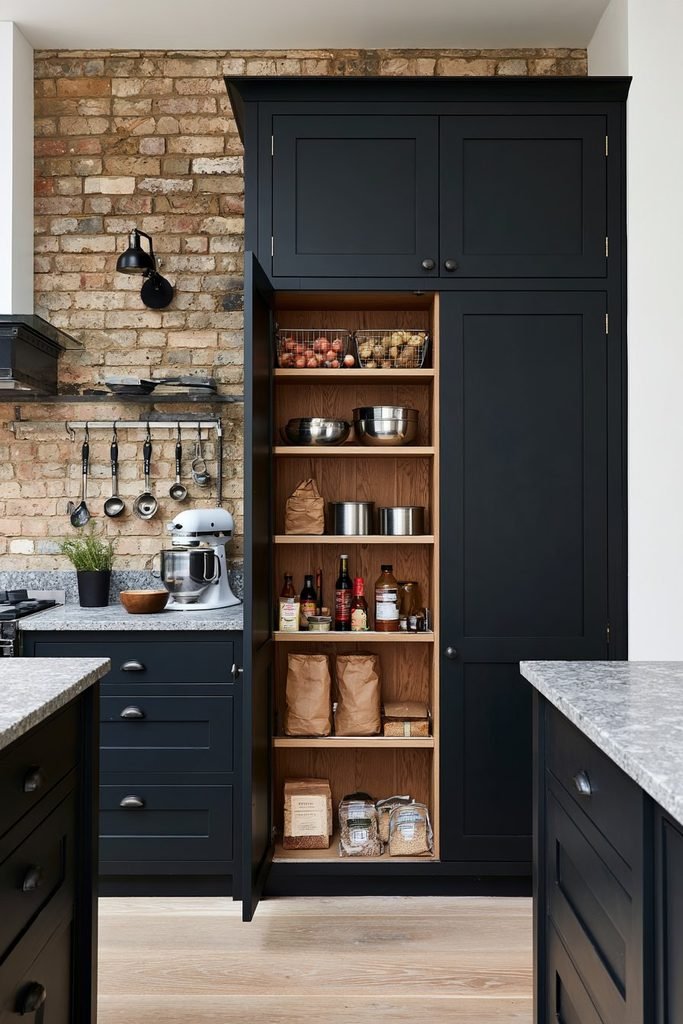
Steel-framed doors paired with timber shelving can give a larder cupboard an industrial, workshop-inspired character. Wire baskets work well for onions, potatoes, and loose packets, and dark hardware can reinforce the utilitarian look throughout.
Reach New Heights
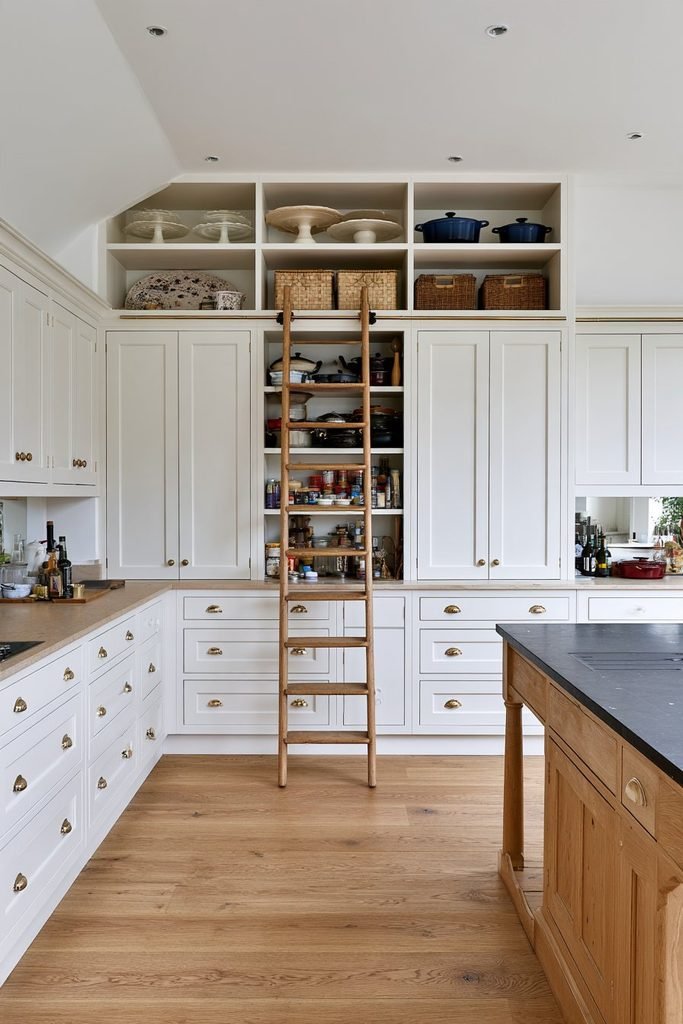
A tall larder cupboard paired with a rolling ladder can make upper shelving genuinely usable rather than just decorative. This layout suits larger kitchens where the ladder itself becomes part of the visual interest, alongside the additional storage it unlocks.
Keep It Scandinavian
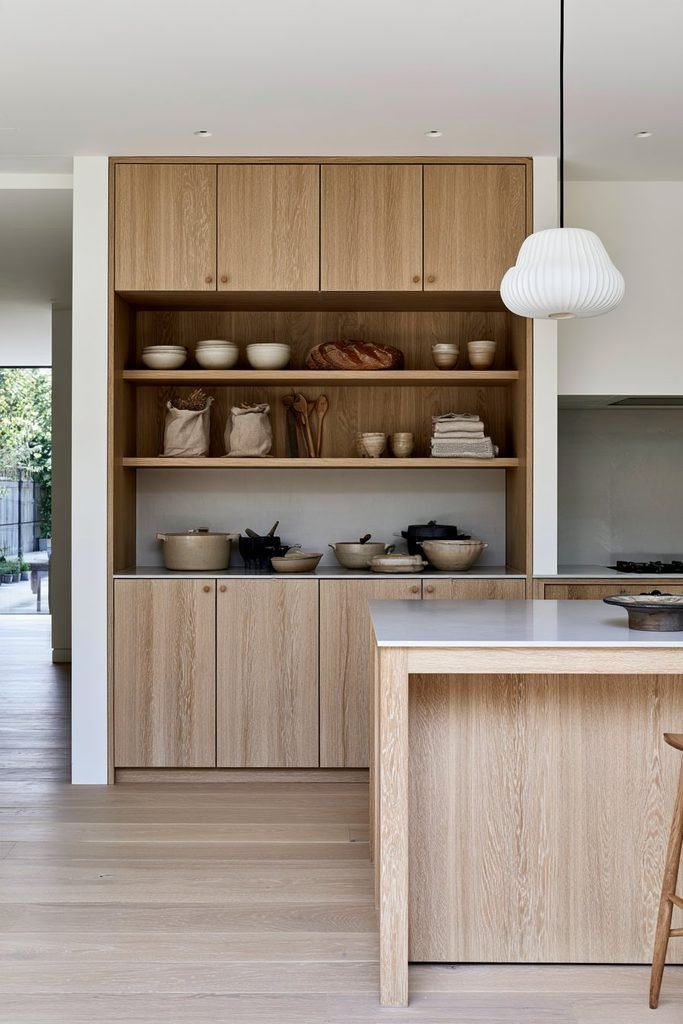
A Scandinavian-inspired larder can favor pale timber, minimal hardware, and clean lines throughout. Open shelves at eye level can display neatly grouped jars and bowls, while closed sections below hide bulkier items that would otherwise create visual clutter.
Line the Interior
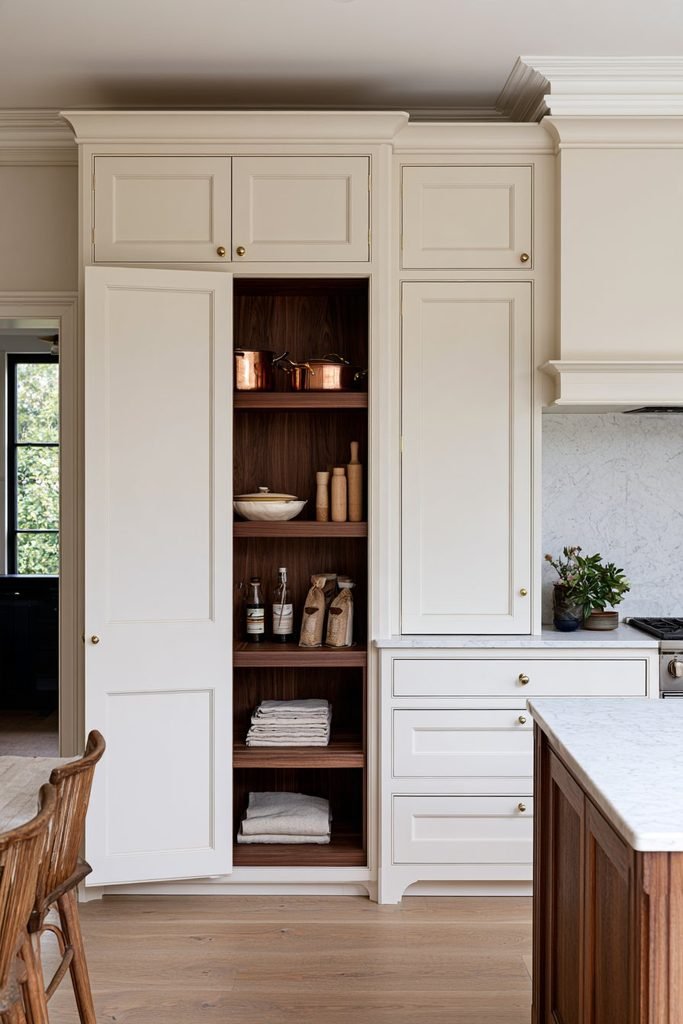
Lining the inside of a larder cupboard in a contrasting color or timber veneer can turn an everyday opening into a small surprise each time the doors swing open. Naked Kitchens builds larders this way, pairing a classic exterior with a bolder or richer interior finish that only reveals itself on opening.
Bring Georgian Symmetry
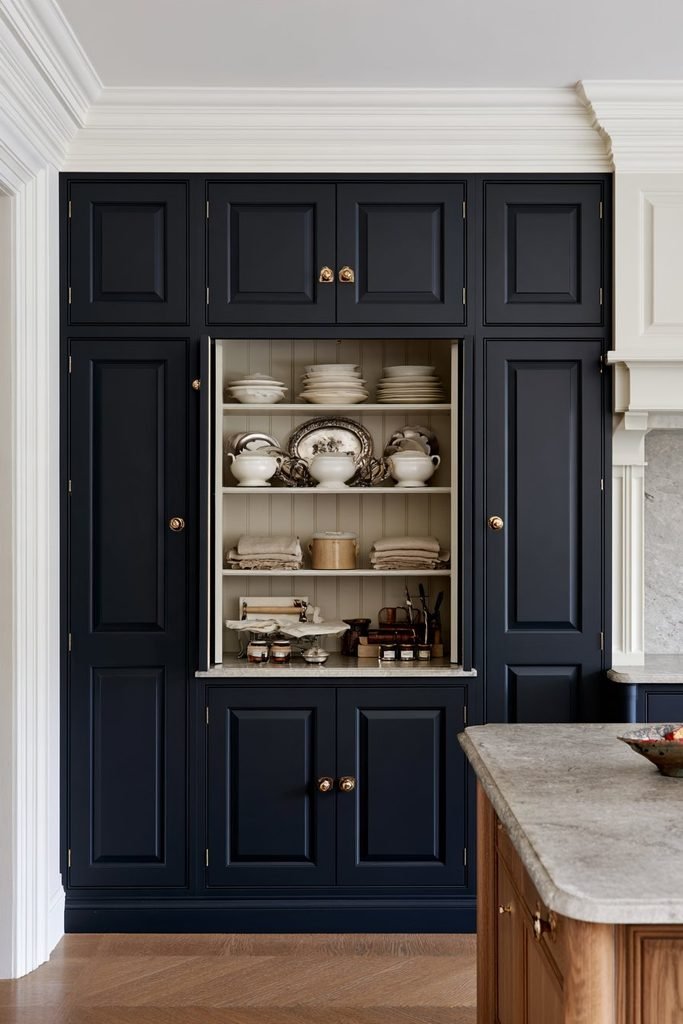
Georgian-inspired paneled doors can bring symmetry and a formal charm into a larder cupboard, which suits period properties especially well. Evenly spaced shelves and antique brass fittings inside can carry that sense of order through to the interior.
Try Charcoal and Timber
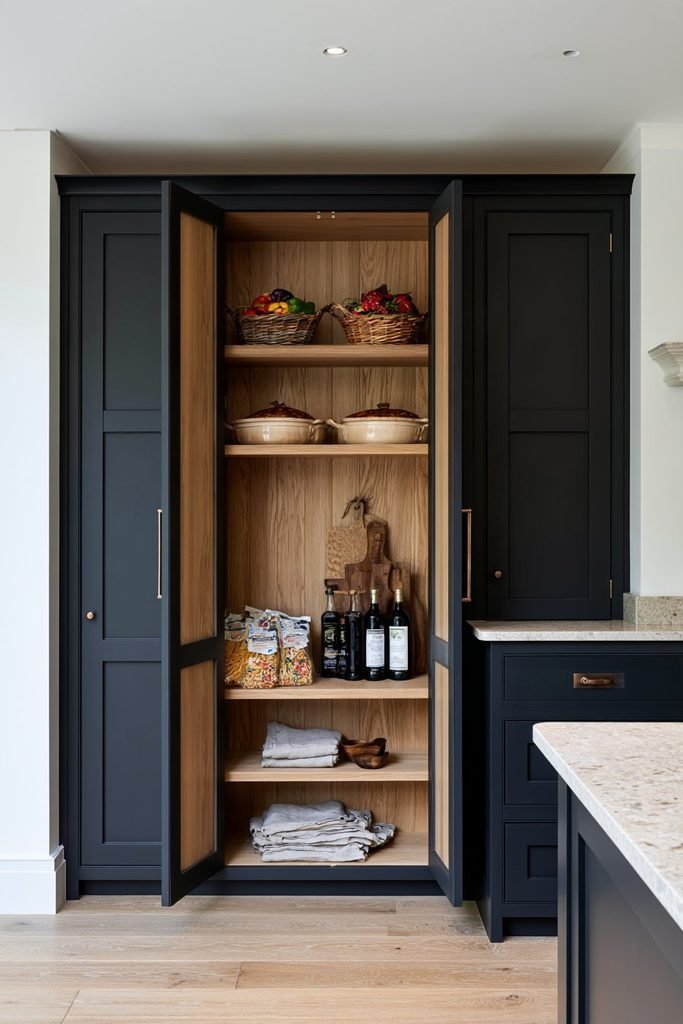
Charcoal Shaker-style doors paired with a light timber interior can give a larder a sophisticated but approachable finish. The contrast between the darker exterior and lighter shelving keeps the inside from feeling closed off once the doors are open.
Build One Yourself
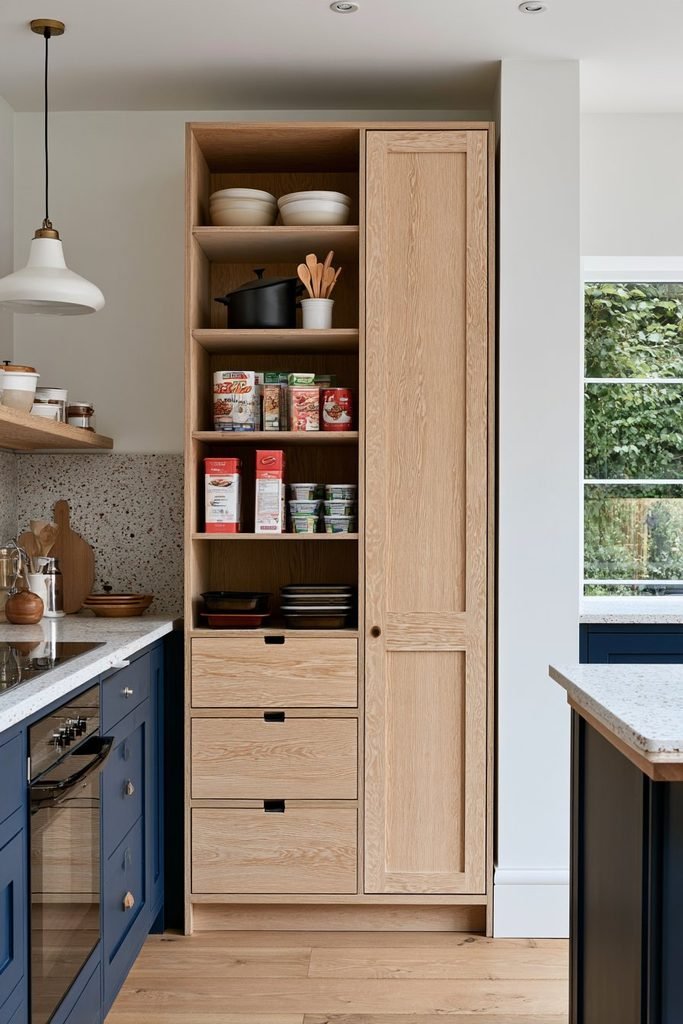
A DIY larder cabinet can be built from plywood using standard drawer boxes and Shaker-style door fronts, with no need for specialist joinery skills. Woodshop Diaries built one at roughly 42 inches wide and 84 inches tall, sized to stand alone in a kitchen or slot into a walk-in pantry as a built-in.
Label Every Jar
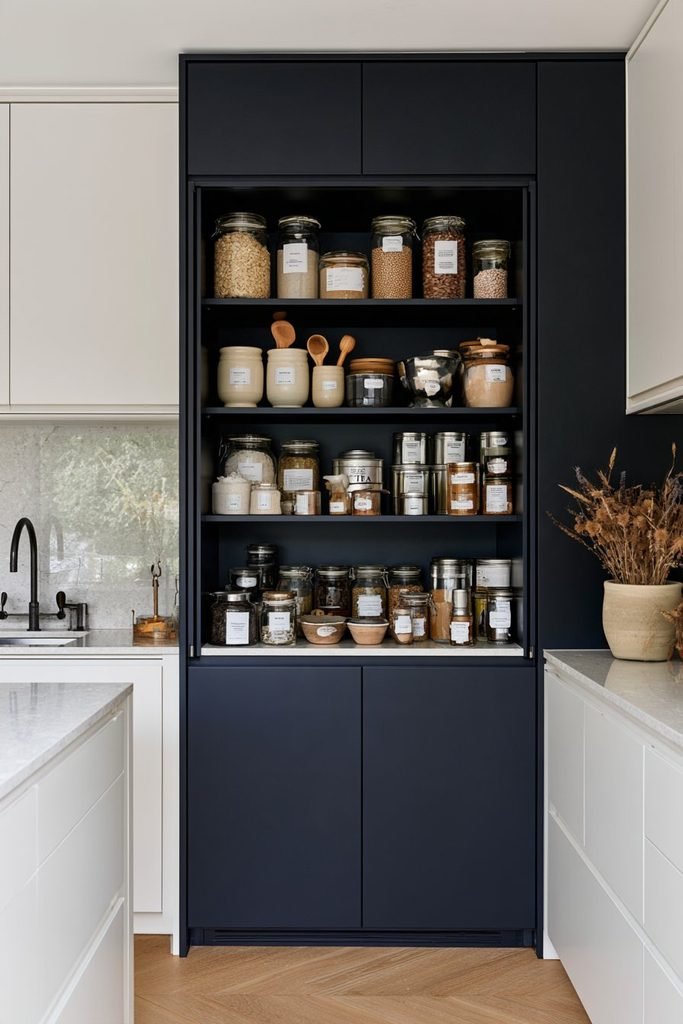
Matching glass jars with handwritten or printed labels can turn a larder’s shelves into an organized, almost boutique-style display. This approach also makes it easy to see at a glance when staples like flour, rice, or pasta are running low.
Light It From Within
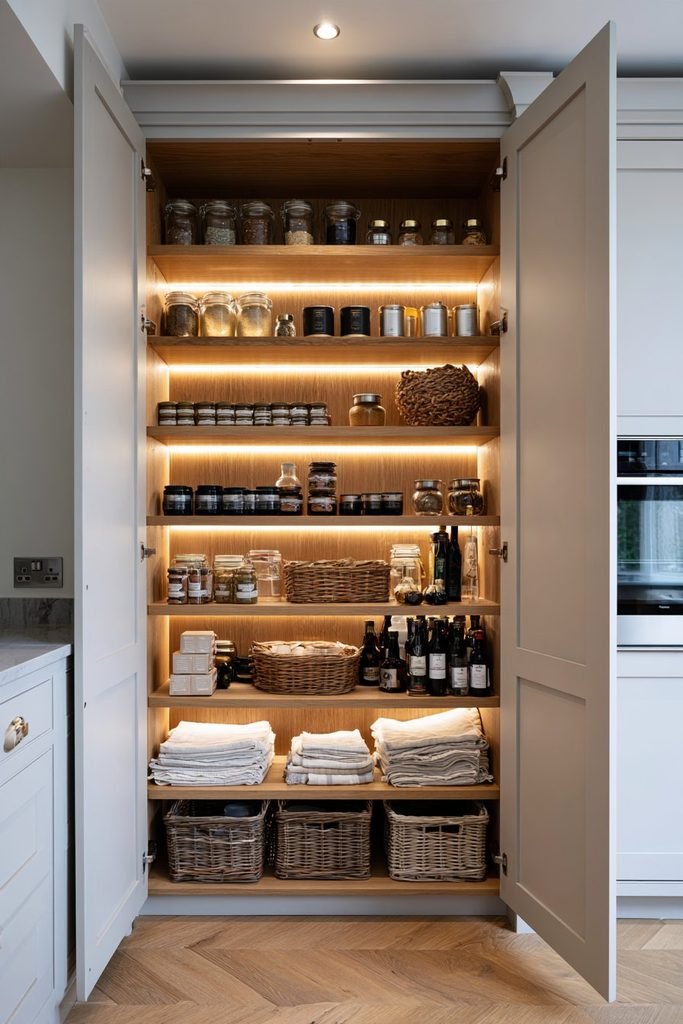
Built-in LED lighting can make a larder cupboard easier to use during darker mornings or evenings, while also giving the interior a warm, inviting glow. Strip lighting fitted along the underside of shelves tends to work best, since it lights the contents without creating glare.
Fit a Pull-Out Spice Rack
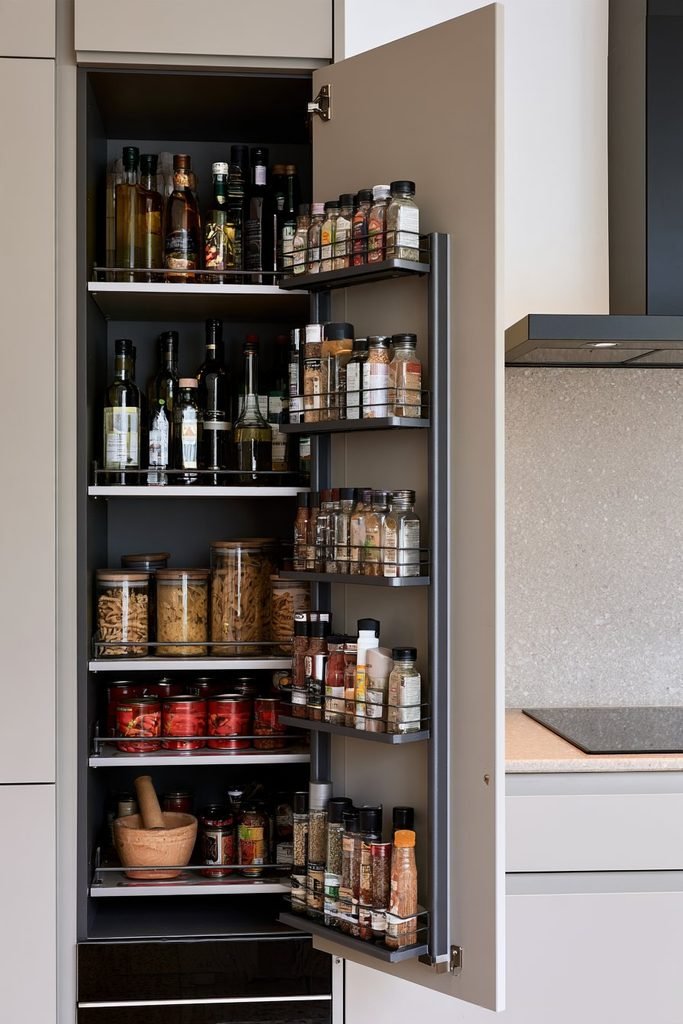
A pull-out spice rack fitted to the inside of a larder door can make small jars and bottles far easier to find than a static shelf. Multi-tiered racks can hold dozens of spices upright in a fraction of the space a standard shelf would need.
Dedicate a Baking Corner
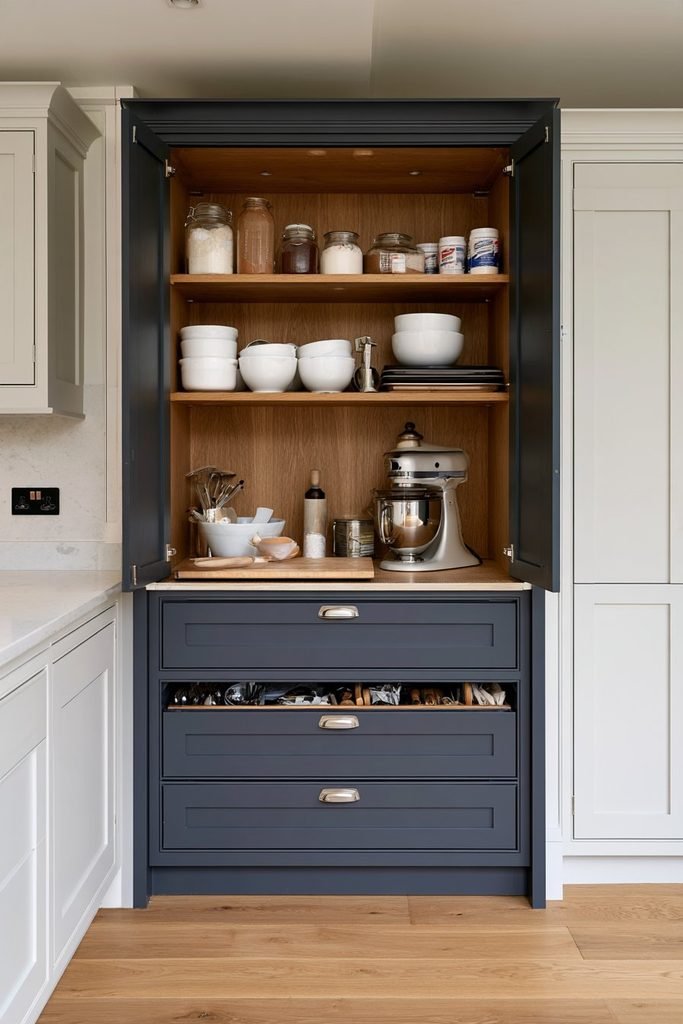
A section of a larder built specifically for baking can gather flour, sugar, mixing bowls, and small appliances into one working zone. Houzz has featured kitchens with a dedicated baking-center larder built alongside a matching beverage cabinet, giving each task its own clearly defined space.
Set Up a Beverage Station
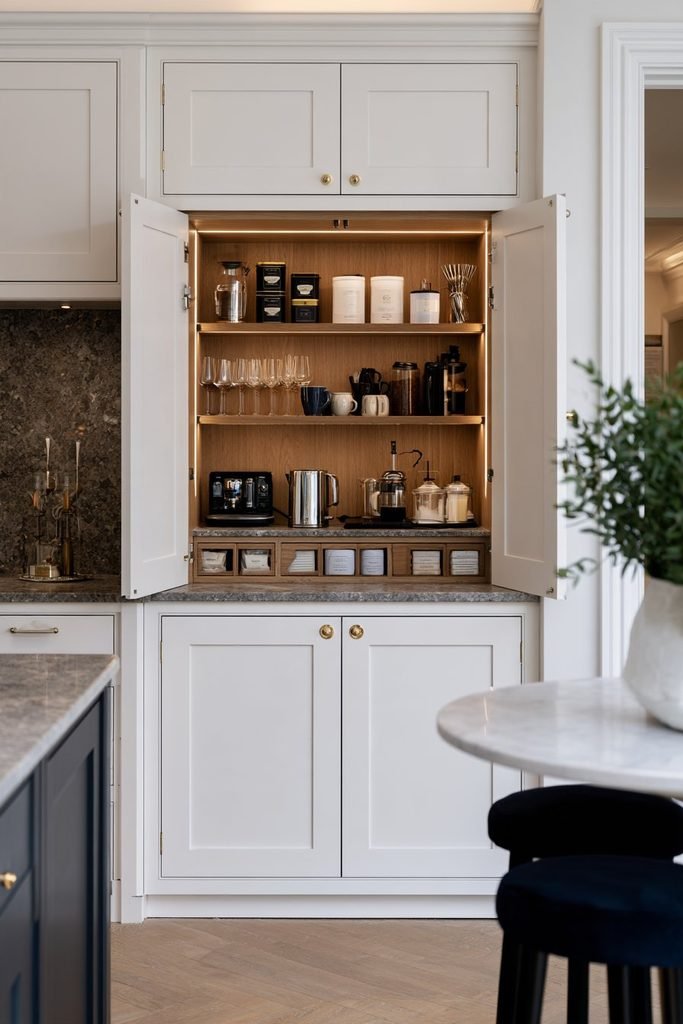
A larder cupboard fitted out as a beverage center can house a kettle, coffee supplies, and glassware behind its own set of doors. Small apothecary-style drawers can organize sugar packets, stirrers, and tea bags so the counter beside the kettle stays clear.
Cool Things Down with Stone
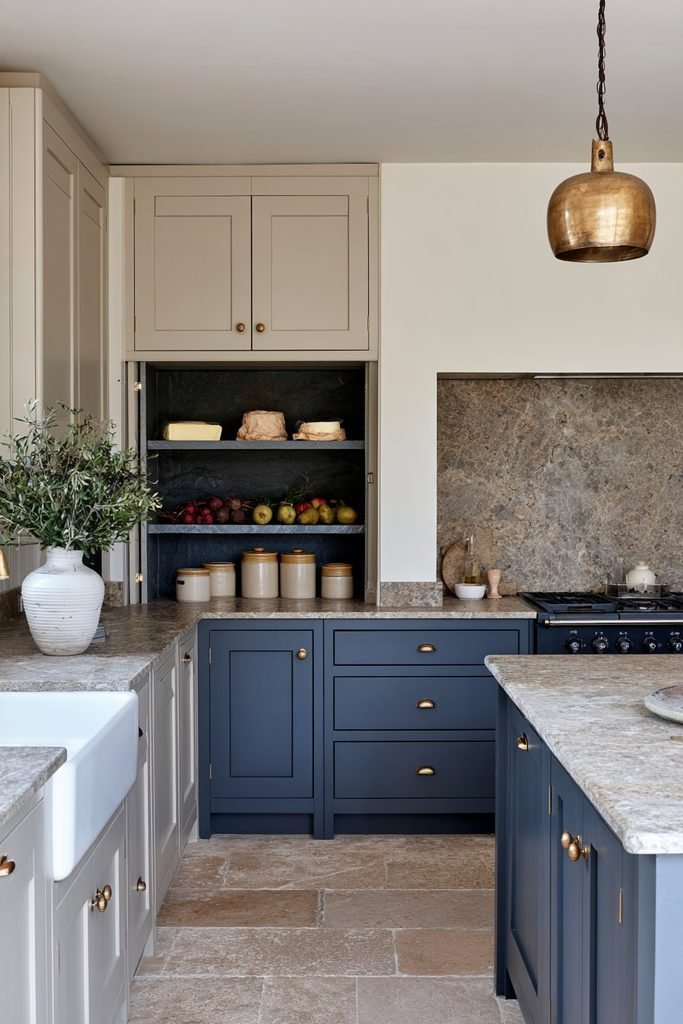
Stone, marble, or slate shelving inside a larder cupboard can help keep certain foods naturally cooler, echoing the way larders worked before refrigeration became common. Ideal Home notes that larders were traditionally built into north- or west-facing external walls specifically to stay cool, and stone shelving today borrows the same cooling properties for a similar effect.
Soften It with Blush Pink
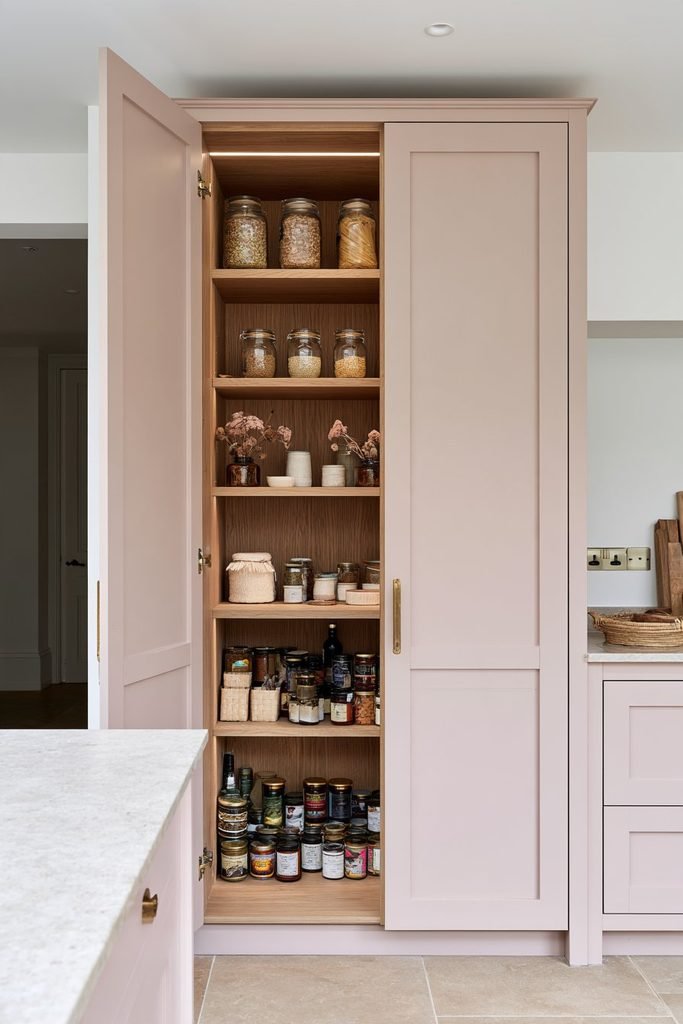
Soft blush pink cabinetry can give a larder cupboard an unexpected but graceful personality, especially when paired with pale oak and aged brass hardware. Glass jars filled with grains, pasta, or dried flowers can add gentle texture against the warm pink tone.
Frequently Asked Questions
What’s the difference between a larder cupboard and a pantry?
The two terms are largely interchangeable in modern kitchen design, though “larder” traditionally referred to a cool room or cupboard built specifically to keep food fresh before refrigeration, while “pantry” more often described general dry-goods storage. Today, both usually mean a dedicated cabinet or small room for food storage, and the choice of word tends to come down to regional preference and personal taste rather than a functional difference.
How deep should a larder cupboard be?
A built-in larder typically runs between 18 and 24 inches deep, which suits standard shelving and door-mounted racks without wasting space. A walk-in larder or pantry room can go deeper still, since the goal shifts from a single row of shelving to a small space someone can step into.
Can a larder cupboard fit into a small kitchen?
A slim larder as narrow as 30cm can still hold a useful amount of storage when fitted with tall shelving, door racks, and pull-out trays. Corner larders and deep drawer units are two other space-conscious options worth considering when a full-height cupboard won’t fit.
What’s the best material for larder shelving?
Timber shelving is the most common choice for its warmth and durability, and it suits nearly every style from Shaker to Scandinavian. Stone, marble, or slate shelving can be worth considering for anyone wanting a more traditional cooling effect, since those materials naturally stay cooler than wood.
Is a freestanding larder a good alternative to a built-in one?
A freestanding larder can be a practical option for renters or anyone who wants the flexibility to move the piece later, since it doesn’t require permanent installation. It also works well in open-plan homes, where it can help define a kitchen zone without enclosing the space.