
Winter planters for front porches can keep an entrance looking full and welcoming long after summer annuals fade. Evergreen boughs, berry branches, and hardy foliage plants hold their color and structure through frost, and the right container can carry the display until spring.
This list covers 25 ideas, from matched pairs that frame the door to budget-friendly arrangements built from foraged greenery. Each one can suit a range of styles, including modern, farmhouse, traditional, and Scandinavian porches.
Matched Door Pair
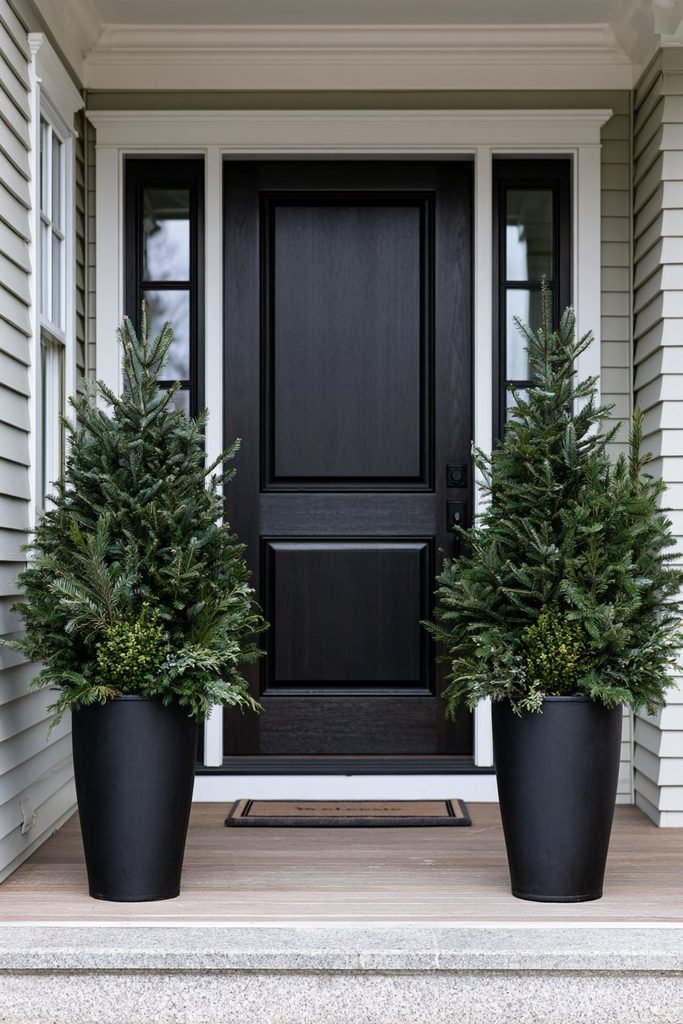
Set two identical planters an equal distance from the door to give the entrance balance and a clear focal point. Tall black metal pots filled with fir, cedar, and boxwood can frame a welcome mat with a clean, traditional feel, and repeating the same greens on both sides keeps an asymmetrical porch looking intentional.
Tall Evergreen Anchor
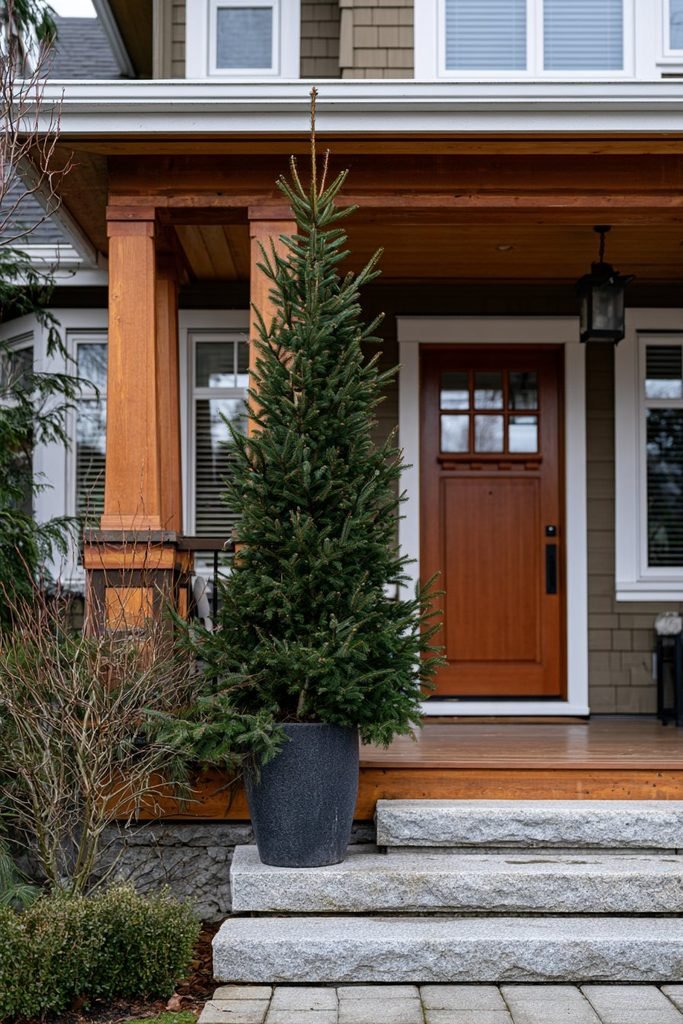
Build each planter around one tall evergreen, such as a dwarf spruce or a columnar juniper, to give the arrangement height through the coldest months. Gardening Know How recommends choosing container evergreens that are hardy to winters colder than the local climate, since roots in pots are more exposed to cold than roots in the ground.
Layered Urn Display
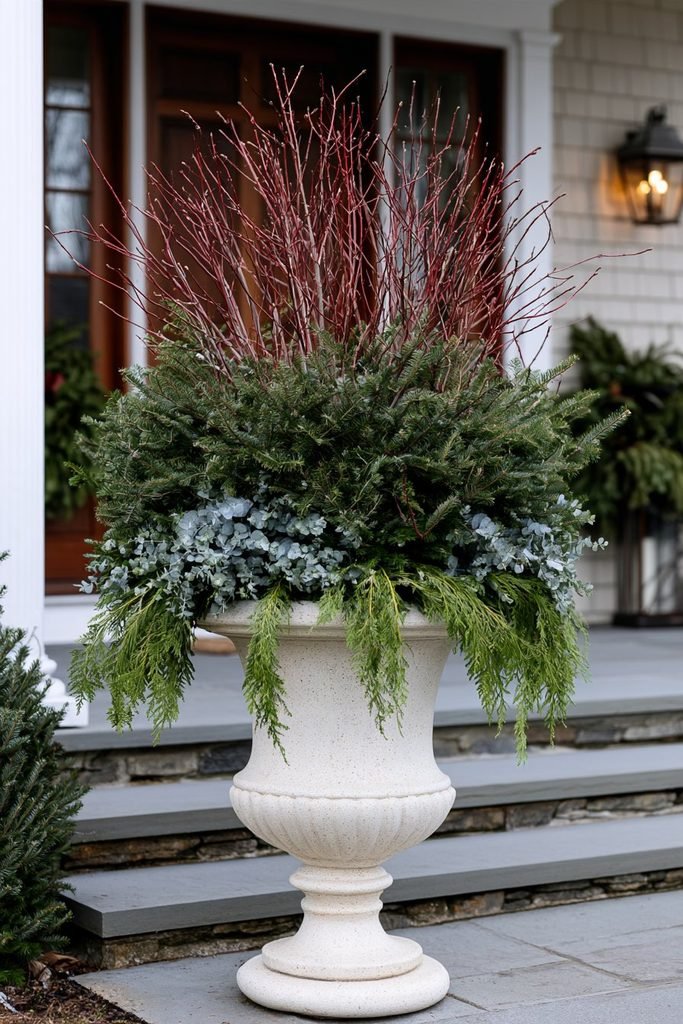
Use the thriller, filler, and spiller formula in a large urn, with tall branches in the center, full evergreen boughs around them, and trailing cedar or ivy at the rim. Canadian Log Homes shows this layering in a cream stone pedestal urn, where red twig dogwood rises above cedar and pine while silver-blue eucalyptus adds a cooler contrast.
Birch Log Height
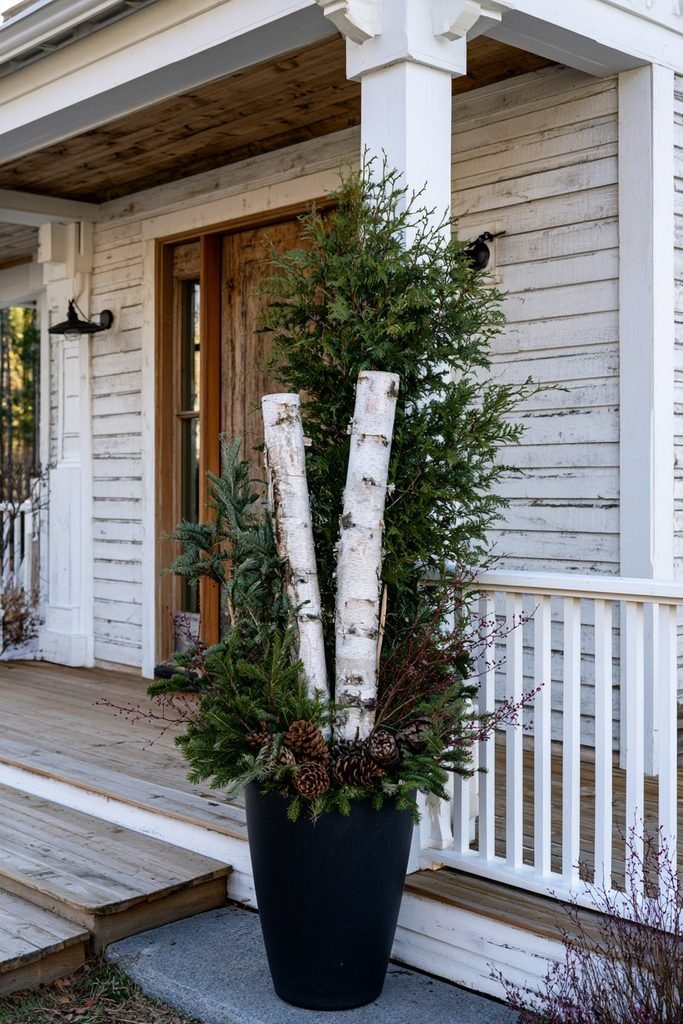
Push white birch logs or poles into the soil to add pale vertical lines against dark greens without needing extra plants. Pair them with pinecones and red berry sprigs inside a black planter for a rustic feel, and group the poles in threes so the arrangement reads as natural rather than staged.
Red Berry Focus
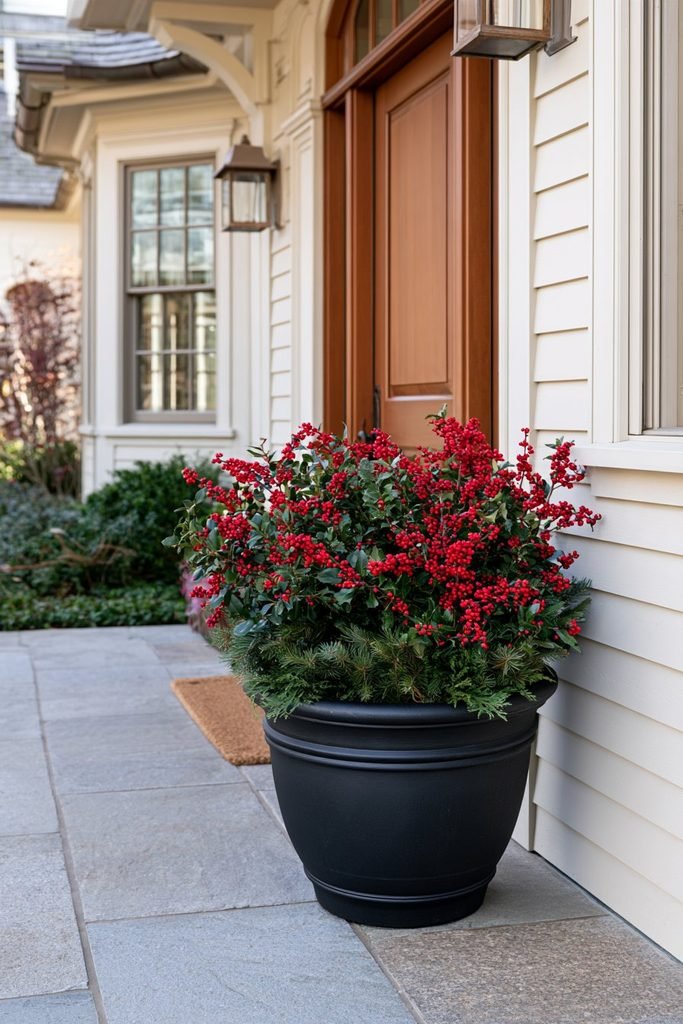
Cut red berry branches can act as the focal point of a planter, since the eye goes to the red first and the rest of the arrangement supports it. Winterberry holly stems set against cedar boughs look especially rich in a matte black pot, which gives the red and green a clean, strong backdrop.
Black Tapered Pots

Choose black tapered planters for a modern porch, where clean lines and a short palette of green, white, and natural brown keep the look streamlined. Fill them with mixed evergreens and glossy magnolia leaves, then add white berry picks and geometric ornaments that echo the angled shape of the pots.
Galvanized Farmhouse Buckets
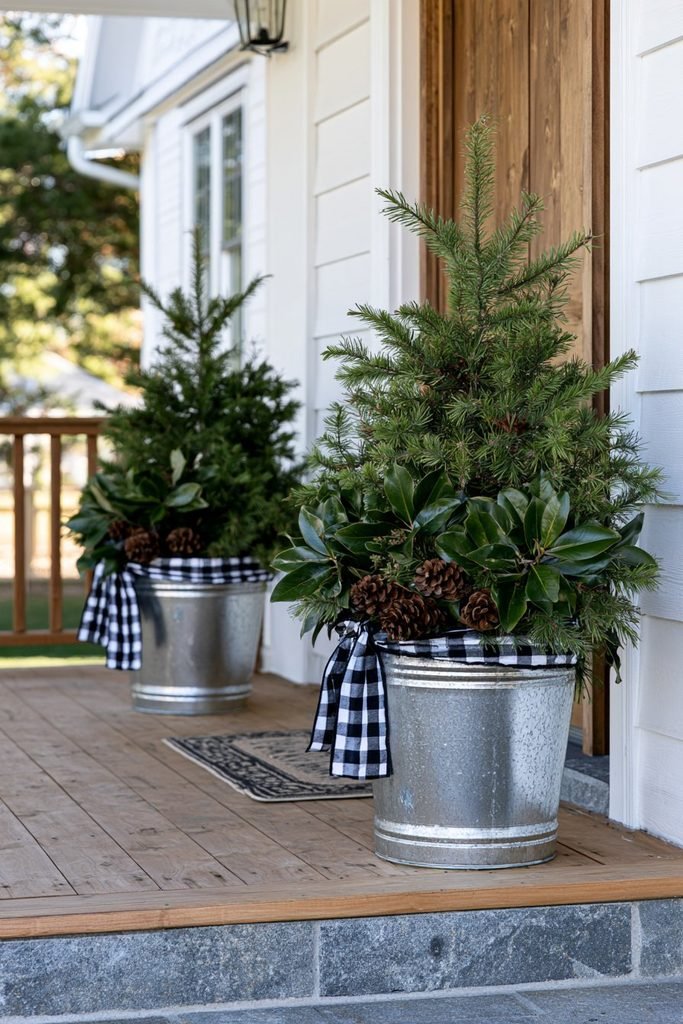
Galvanized buckets and tubs bring an inexpensive, farmhouse feel to a winter porch and can double as renter-friendly containers. Fill them with pine, magnolia leaves, and pinecones, add a black-and-white checked ribbon, and drill a few drainage holes in the base so melting snow does not collect around the greenery.
Weathered Wood Box
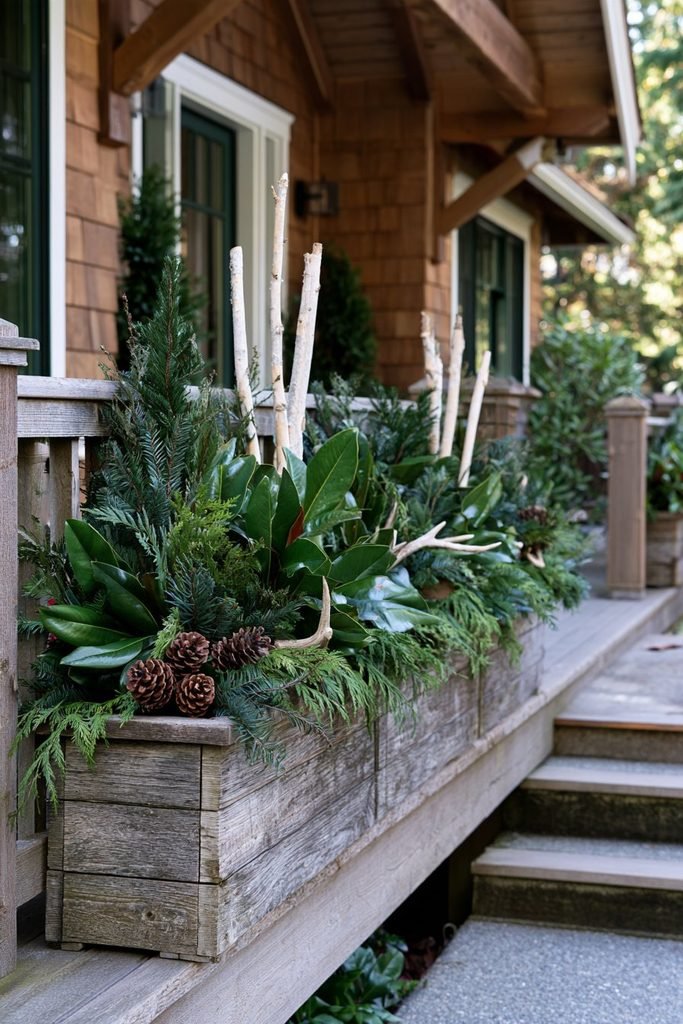
A rectangular wooden planter box fits narrow porches, steps, and railings where a round pot would not, and it offers more planting room than a round container of similar width. Fill it with evergreen boughs, magnolia leaves, and pinecones, then add faux antlers or birch sticks to give the low, horizontal shape some height.
Stone Urn Elegance
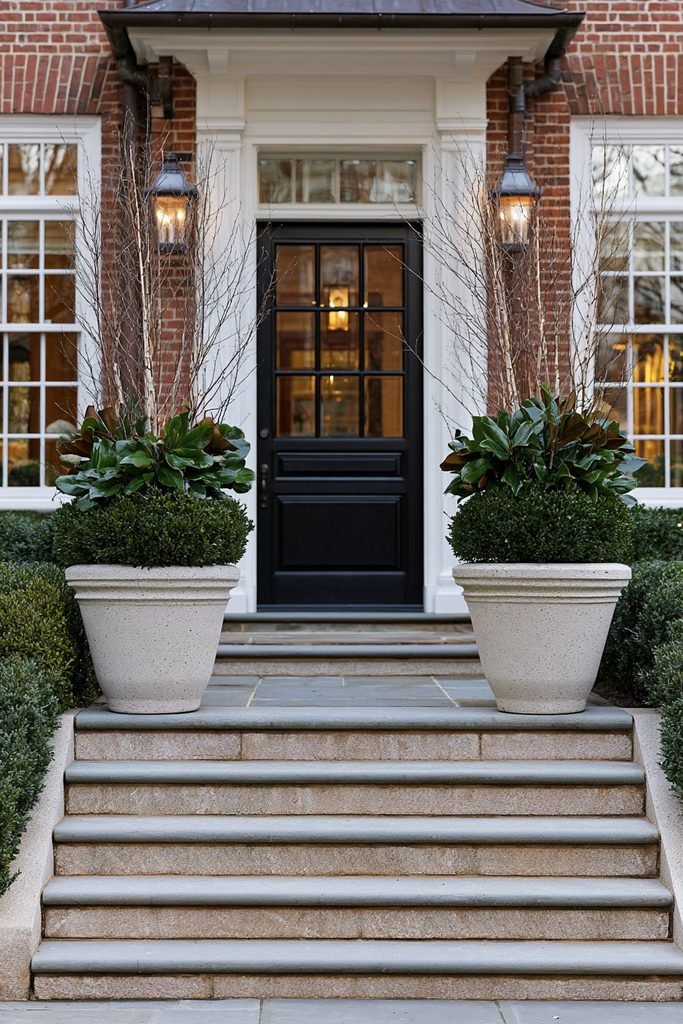
Stone, concrete, and cast iron urns hold up well to freezing and thawing, which makes them a durable choice for a formal entrance. Ceramic and terracotta can crack when moisture freezes inside the walls, so a pair of frost-proof stone urns packed with boxwood, magnolia leaves, and birch branches can flank the steps with a more reliable finish.
Ornamental Kale Color
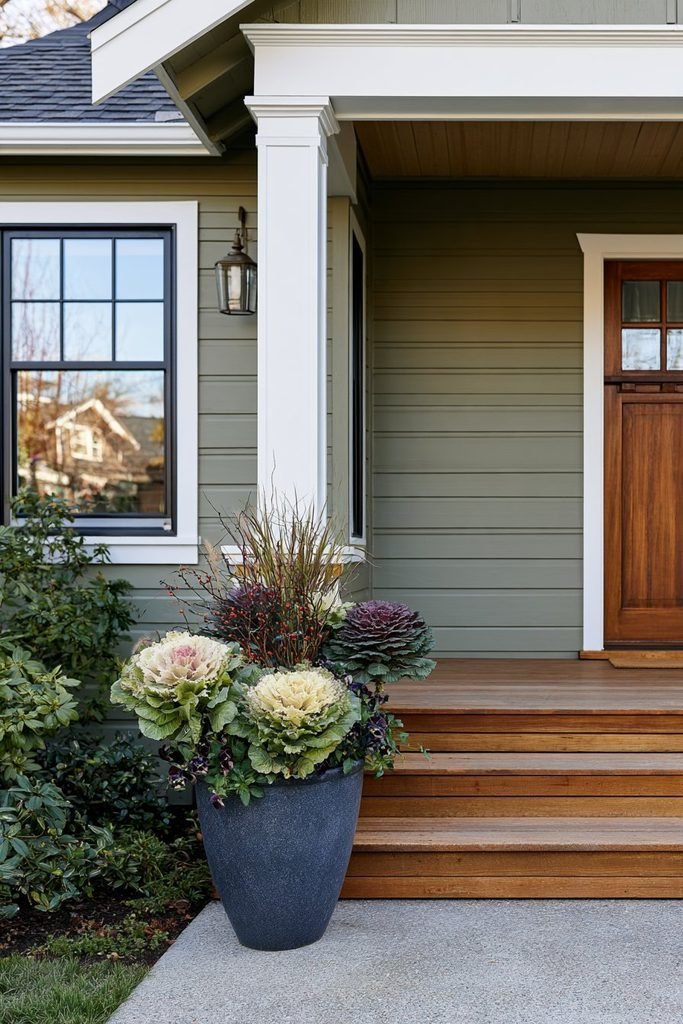
Add ornamental kale or cabbage for white, pink, red, and purple foliage that keeps its color well into freezing weather. Gardening Know How suggests combining them with winter-hardy pansies, berried twigs, or ornamental grasses for a festive container.
Winter Pansy Pop
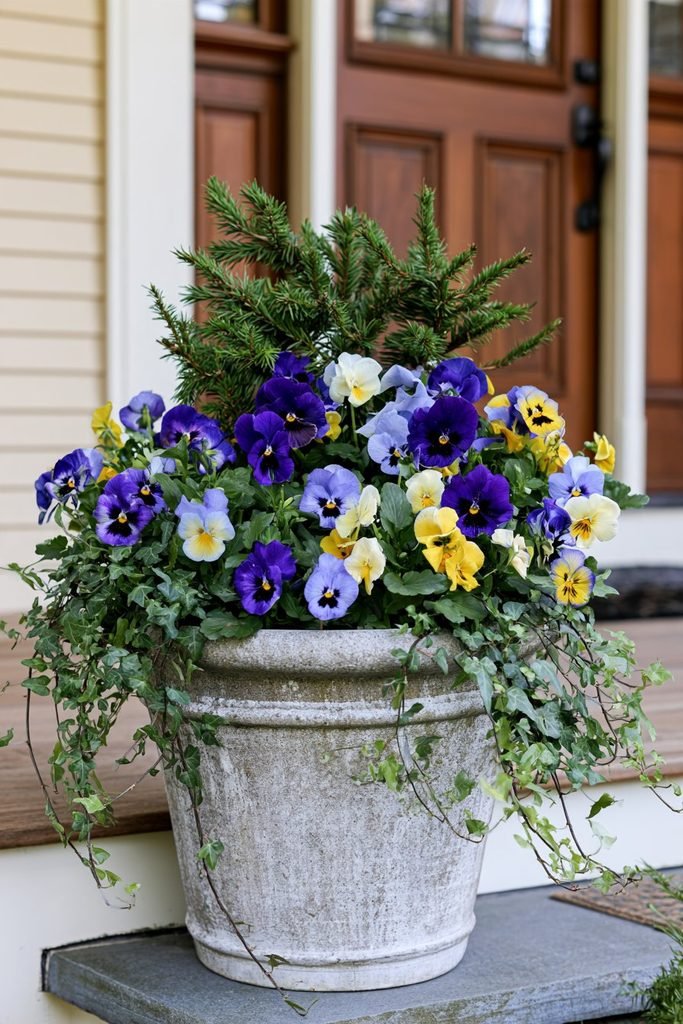
Winter pansies bring cheerful color to a planter in cool-season shades of purple, blue, yellow, and white. Place them near the front of the pot, close to the door, where their small faces are easy to appreciate, and pair them with trailing ivy to soften the rim.
Clipped Boxwood Formality
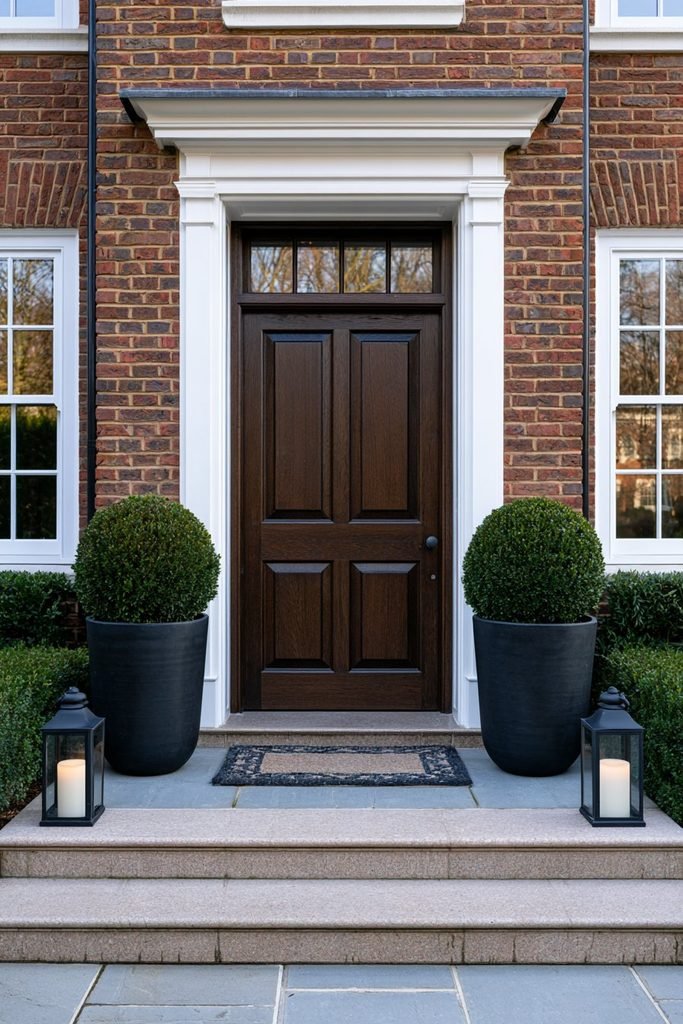
Pair clipped boxwood spheres or cones with matching black cylinder planters for a tidy, symmetrical look on a brick or traditional entry. Boxwood stays green through frost and holds its shape, and a few lanterns with white candles on the steps can complete the formal feel.
Dwarf Conifer Trio
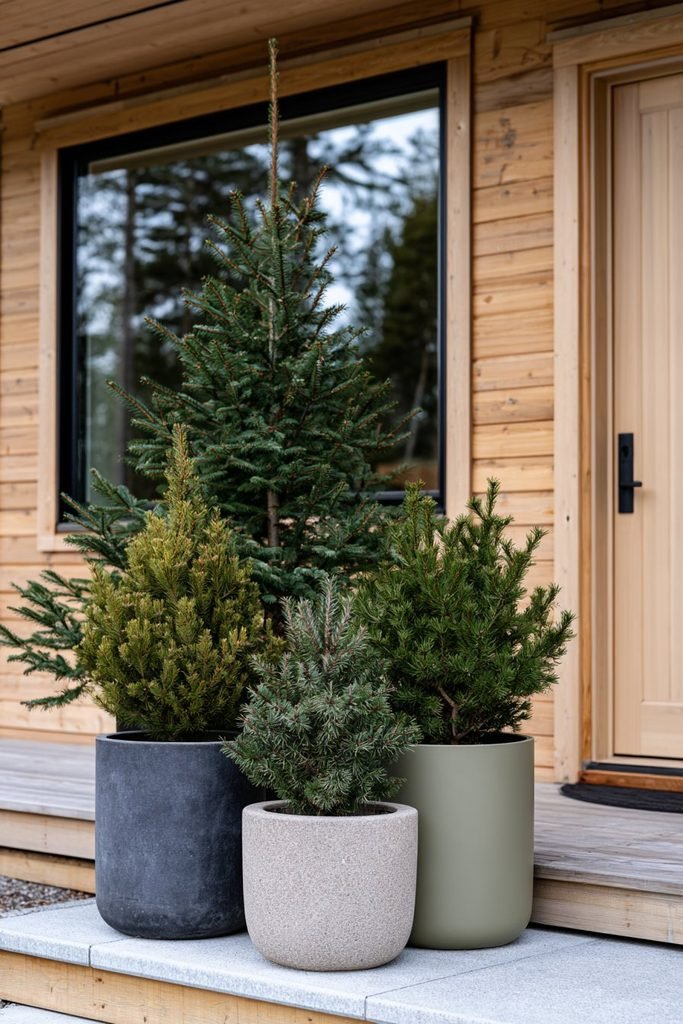
Group three pots of small conifers at varying heights for a minimal, Scandinavian-style display that relies on contrasting needle textures instead of added decoration. Davey notes that many evergreens grow slowly and can live in containers for three years or longer, so the same plants can be moved into the garden in spring.
Pinecone and Seed Pod Texture
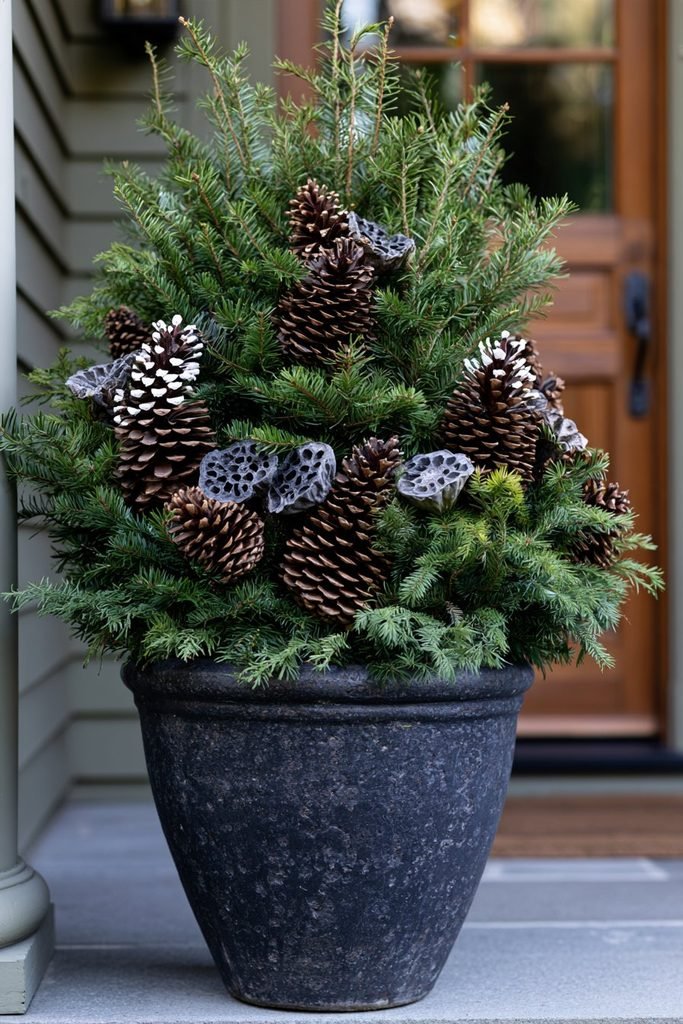
Tuck pinecones, lotus pods, and grey seed pods into the greenery to add texture that holds its shape through snow and wind. Mix natural cones with white-tipped ones in clusters of three, which can give the arrangement a deliberate, layered look.
Glossy Magnolia Leaves
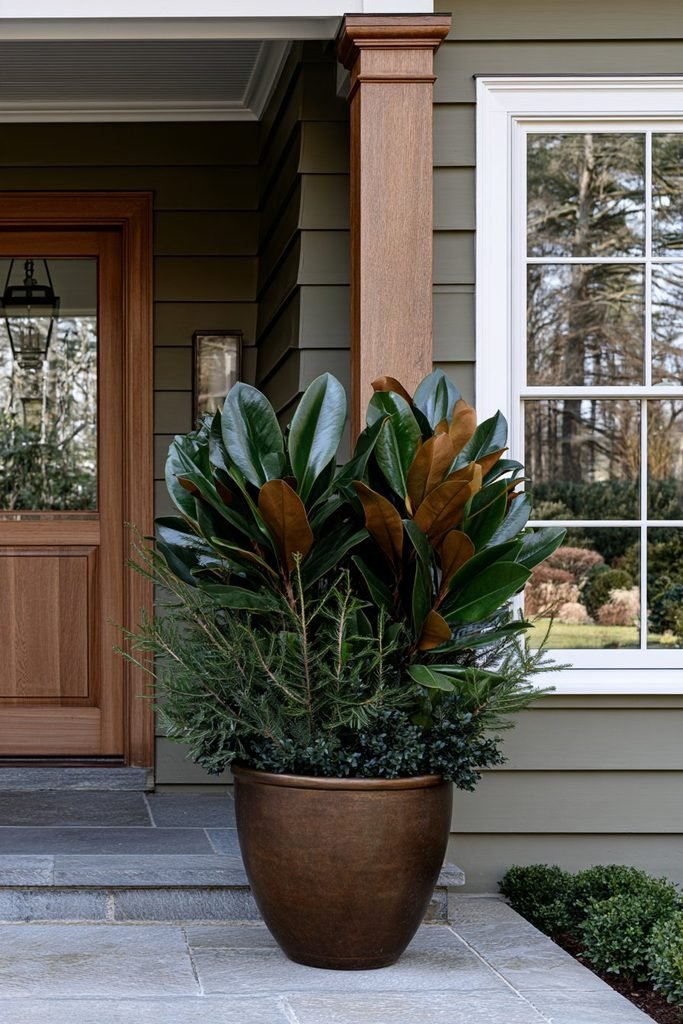
Magnolia leaves add a broad, glossy surface that contrasts with fine evergreen needles. Turn the golden-brown undersides outward for a warm copper tone, and pair them with boxwood and cedar for a full, woodland feel.
Red Twig Dogwood
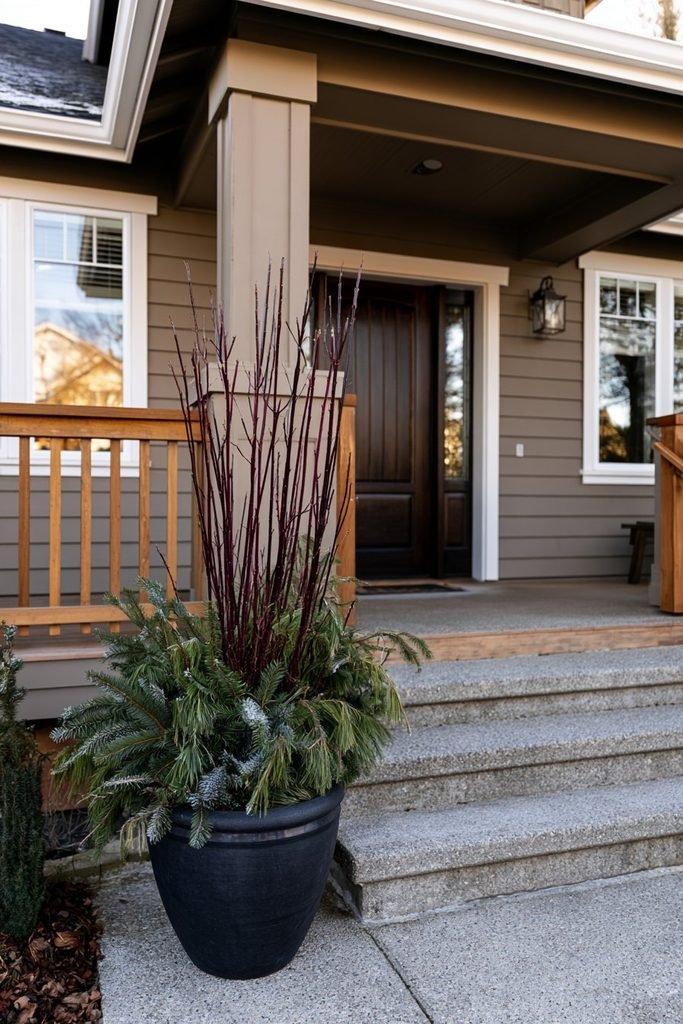
Red twig dogwood stems keep their color against snow and add a strong vertical line to the center of a planter. Push the stems into the soil among cedar and pine boughs, where their deep red can bring in a more sophisticated burgundy tone than traditional holiday berries.
Silver and Frost
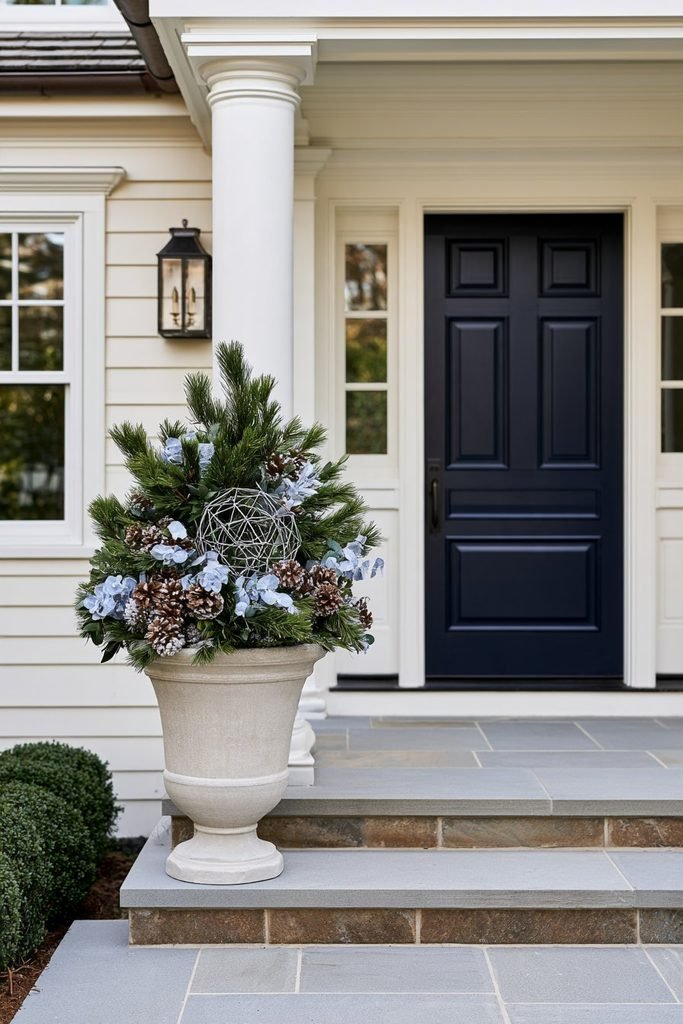
Silver reflects whatever light the day offers, which counts for a good deal when the winter sun sits low. Frosted pinecones, silver-blue eucalyptus, and a single wire orb can add a cool gleam to a traditional urn without overwhelming the greens.
Plaid Bow Accent
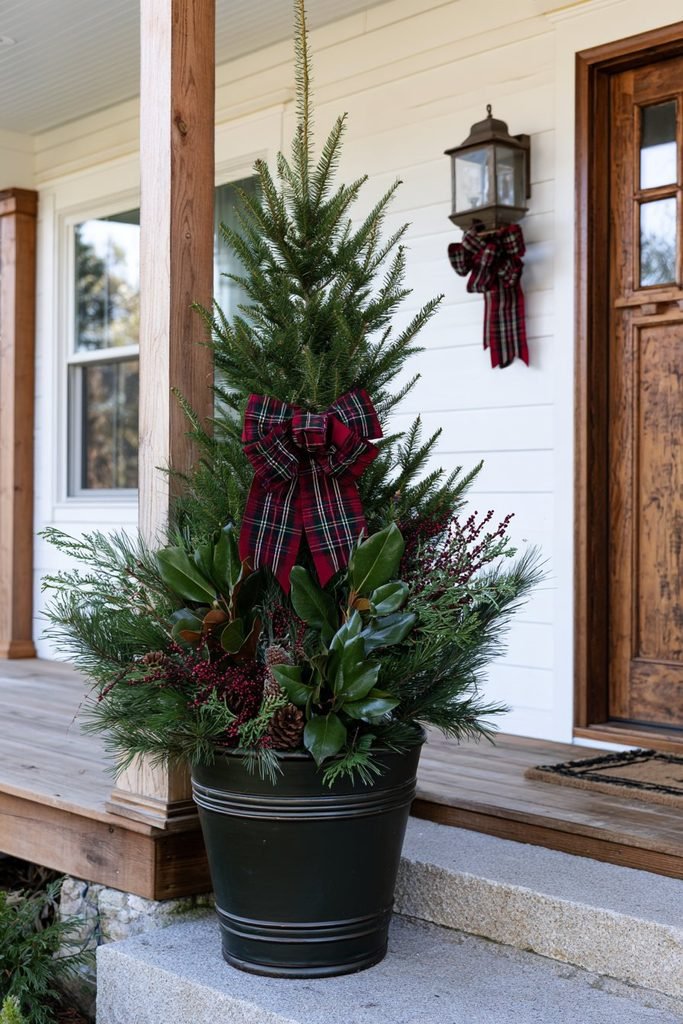
Attach a large plaid bow to the rim or tie it around a tall stem to create an instant focal point. Scale the bow to the pot, choose a plaid that picks up the colors already in the arrangement, and repeat the same ribbon on a lantern or wreath so the porch feels connected.
Warm Light Glow
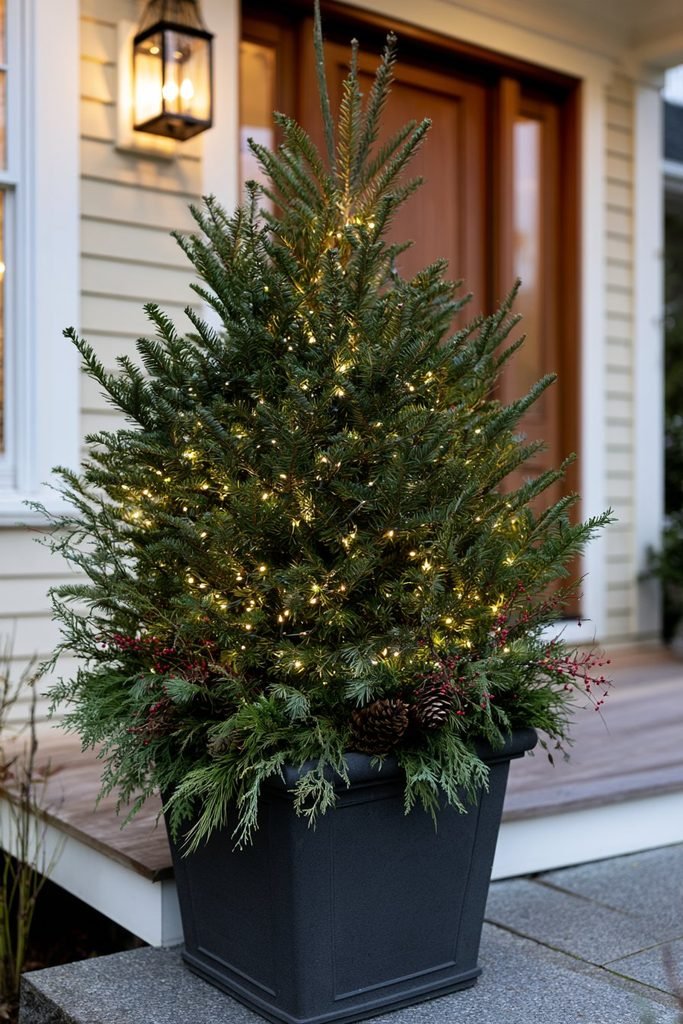
Weave warm white lights through the branches, starting low near the center and working outward, so the glow comes from inside the arrangement. Choose outdoor-rated strings or battery-powered lights with a timer, and look for a warm white around 2700K to blend with existing lanterns and porch lights.
Mossy Woodland Mix
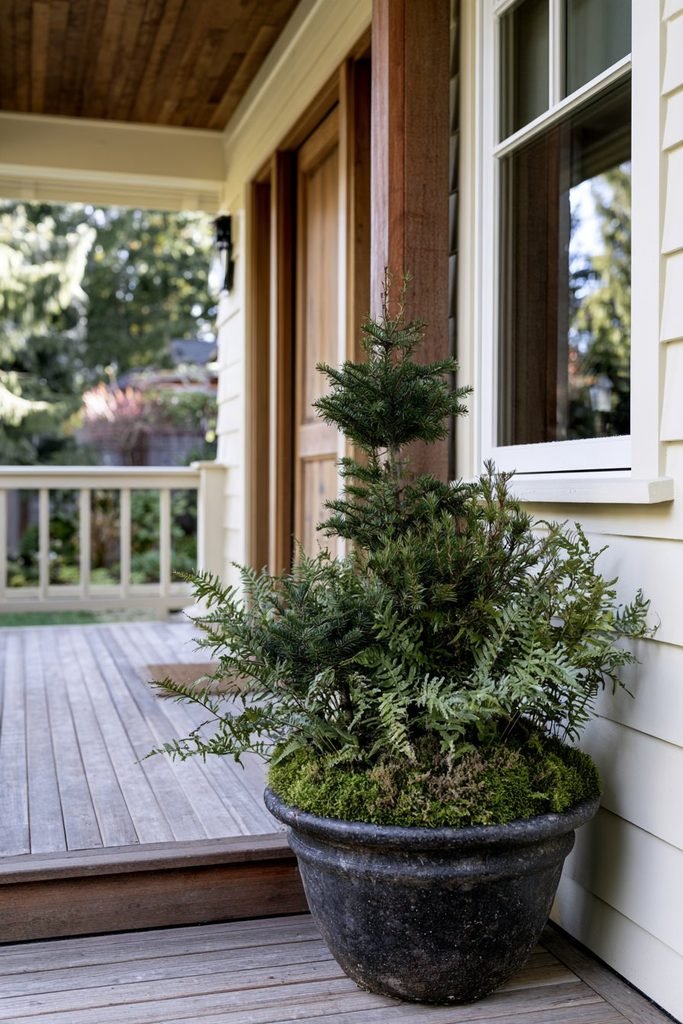
Layer moss around the base of small evergreens and tuck frost-tolerant ferns beside them for an enchanted, woodland feel on a covered porch. Epic Gardening points to leatherleaf fern as an especially hardy option that combines well with other evergreens.
Ornamental Grass Plumes
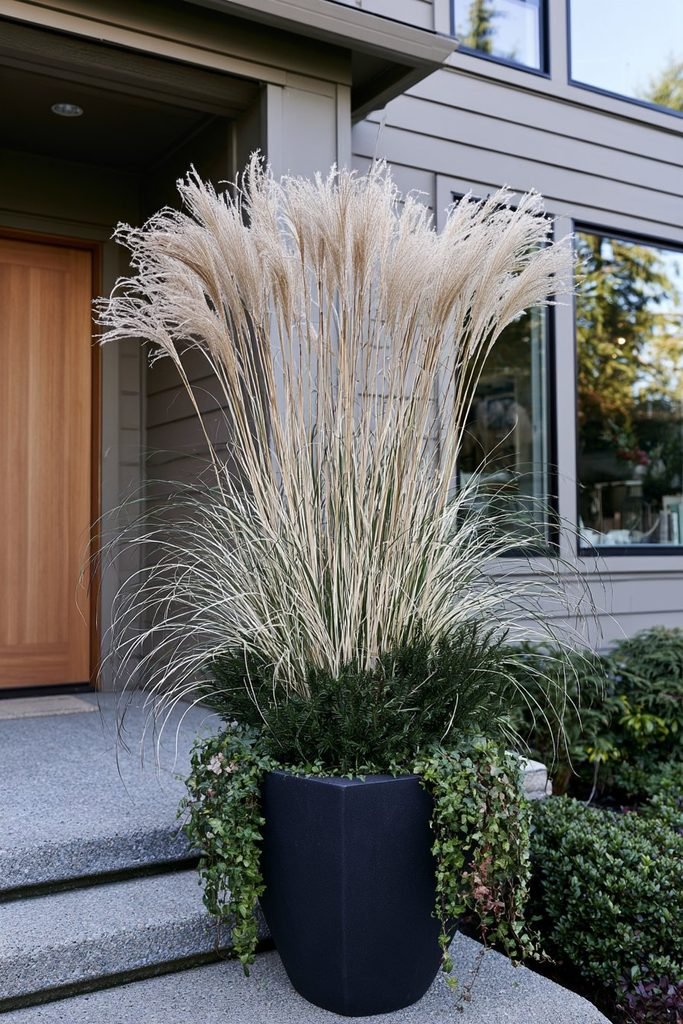
Add cold-hardy ornamental grasses as the tall center element of a planter, where their feathery plumes can soften the strict lines of a modern container. Pair them with short evergreens and trailing ivy for three clear levels of height and texture.
Fragrant Sweet Box
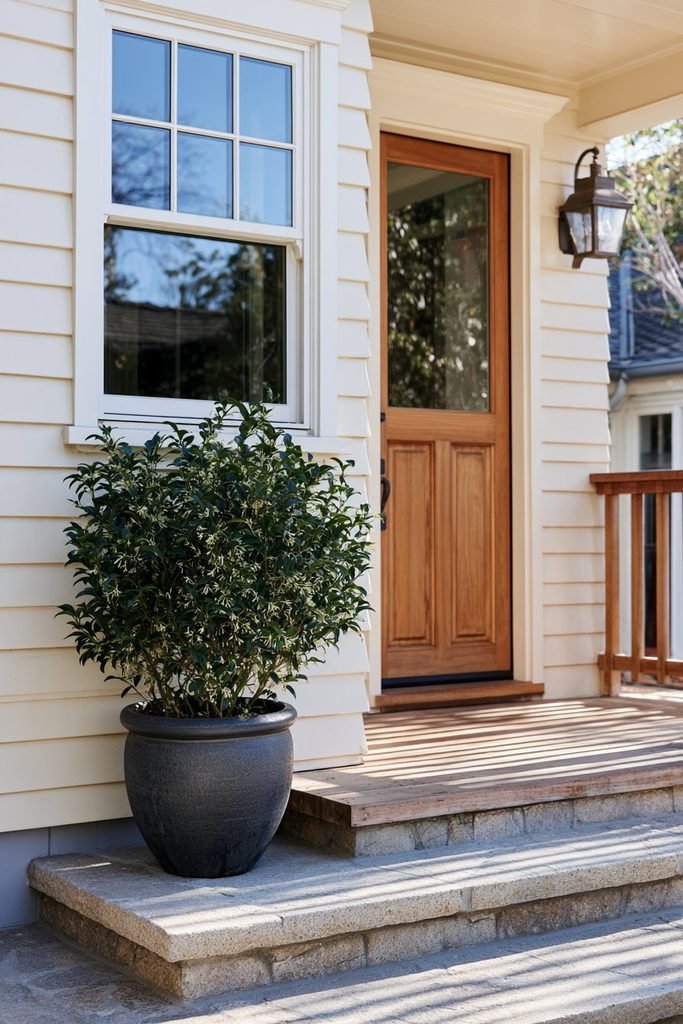
Place a pot of sweet box near the door for winter fragrance, which is uncommon in the colder months. Gardening Etc describes Sarcococca confusa as an evergreen with glossy leaves and tiny, spidery white flowers in winter, making it a good fit for milder porches.
Foraged Budget Planter
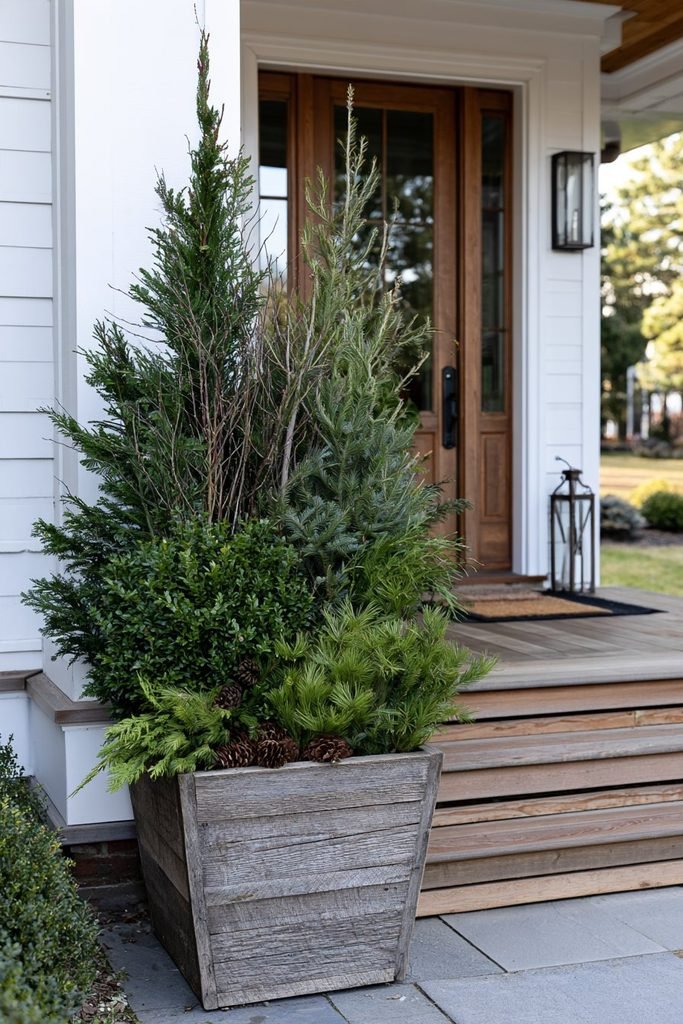
Gather twigs, pinecones, magnolia leaves, and boxwood clippings from the yard to build a planter at little or no cost. Cut greens are easy to refresh as the season goes on, and a few fresh boughs added every few weeks can keep the arrangement looking full.
Paper Bag Filler Trick
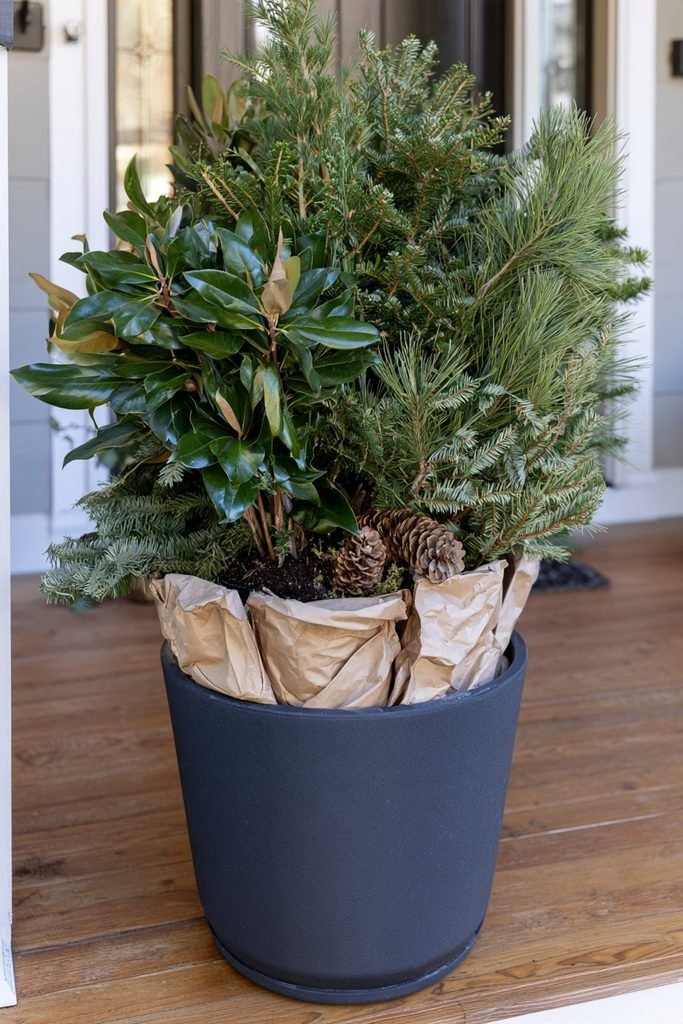
Crumple paper grocery bags into the bottom of a large planter to save on soil and greenery while adding height. Julie Blanner uses crumpled paper as a filler that also acts like a floral frog, holding stems in place, which makes it a practical DIY option for oversized containers.
Cold Snap Protection
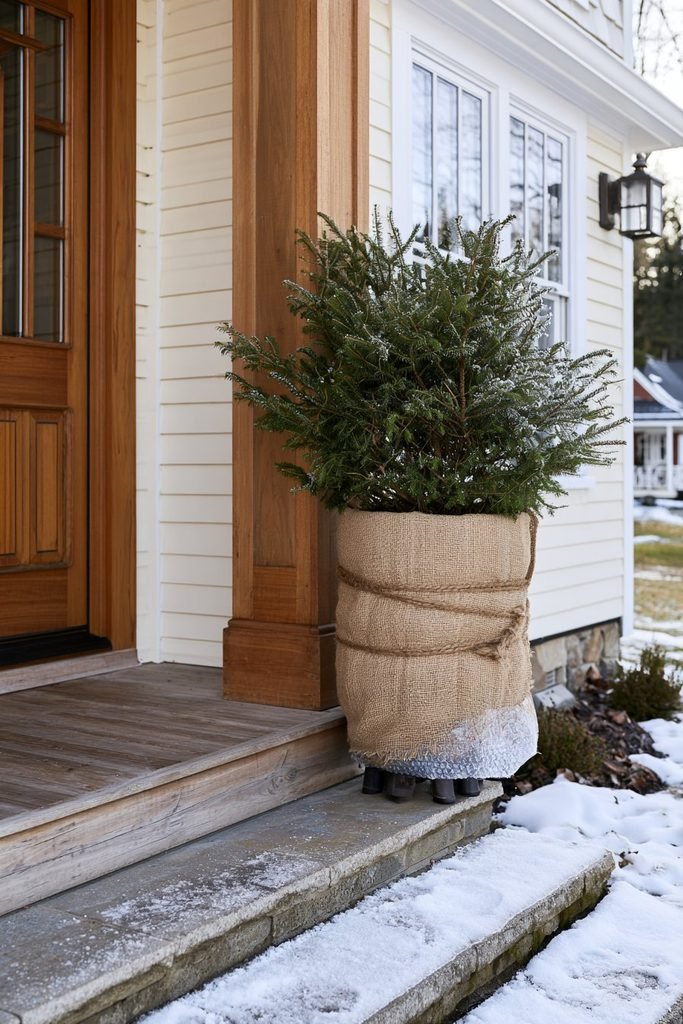
Wrap pots in bubble wrap, frost fabric, or even an old quilt when temperatures drop sharply, and raise the containers on pot feet so melting snow can drain freely. Gardening Know How lists these wraps as simple ways to protect container plants through the coldest nights.
Frequently Asked Questions
What can go in winter planters?
Cut evergreen boughs such as cedar, pine, spruce, and fir make a reliable base, and boxwood, juniper, and magnolia leaves add variety. Red twig dogwood, birch branches, berry stems, pinecones, and seed pods can add height, color, and texture. In milder climates, living plants such as ornamental kale, pansies, and dwarf conifers can stay in the pot well beyond the holidays.
What is the best container for a winter planter?
Concrete, stone, cast iron, fiberglass, galvanized metal, and wood tend to handle freeze-and-thaw cycles better than thin ceramic or terracotta. Frost-proof labels are worth checking before buying. Drainage holes matter in every material, since water that pools and freezes can damage both roots and pots.
How often do winter planters need water?
Winter planters need far less water than summer ones, but evergreens still drink during cold months. Watering well before the first hard freeze and then only when the top inch of soil feels dry, on days above freezing, is a common approach. A roof overhang can shelter a display from frost, and Gardening Step by Step notes that it also blocks rain, so porch containers may need extra attention.
How can planters survive a freeze?
Choose plants hardy to winters colder than the local average, place pots against the house or under cover, and lift them on pot feet for drainage. During a sharp cold snap, wrapping the containers in frost fabric or bubble wrap can add another layer of protection.
