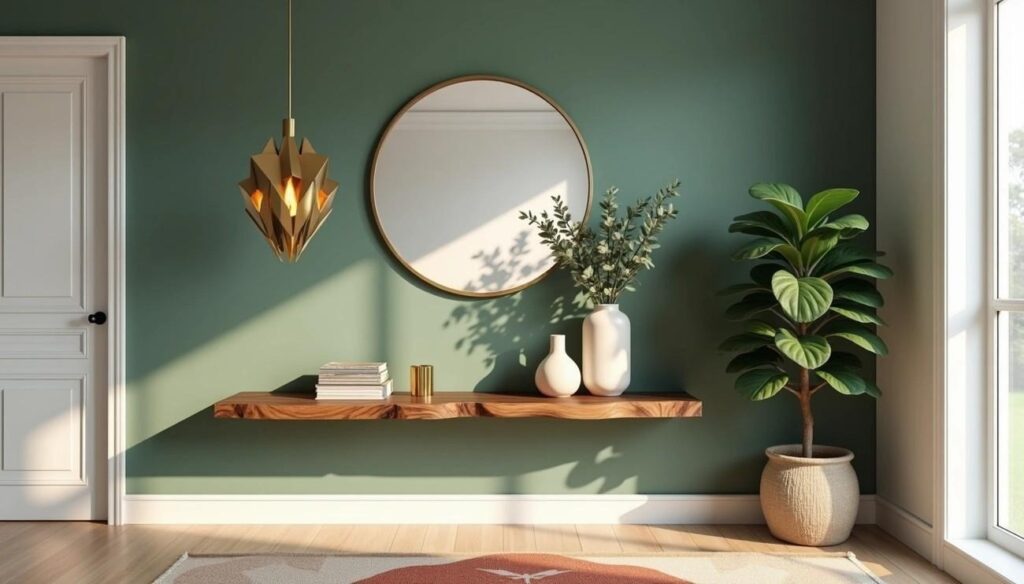
You rarely get a second chance to make a good first impression, and that’s exactly why I’m sharing these entryway decor ideas with you. A proper entryway sets the stage for the rest of your home, creating that warm welcome we all want for our guests and ourselves.
In this guide, I’ll walk you through 11 practical ideas covering everything from entryway furniture and entryway table decor ideas to modern entryway ideas and entryway wall decor ideas. Whether you’re working with a grand foyer or need small entryway decor ideas, I’ve got solutions that feel personal, inviting, and uniquely yours.
Statement Lighting as Your Entry’s Crown Jewel
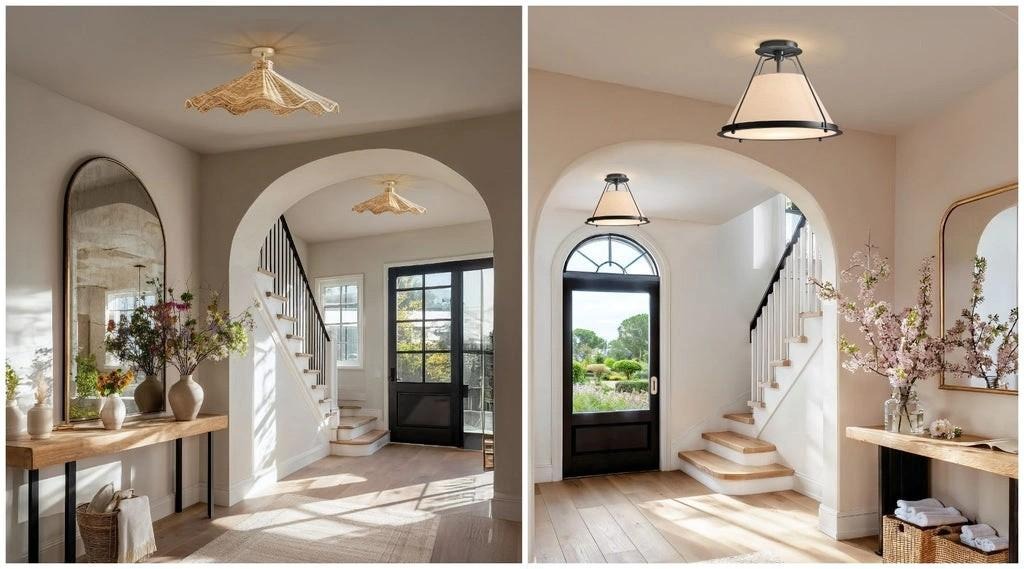
Image Source: Rowabi Lighting
Lighting often becomes the first design element your eye catches when entering a space, and I’ve seen how the right fixture can completely transform an entryway from forgettable to unforgettable. A well-chosen chandelier or pendant doesn’t just illuminate; it sets the emotional tone for everything that follows.
What Makes Statement Lighting Effective
When I work with clients on their entryways, I remind them that this is one room where a single fixture carries the entire visual weight. Placing a chandelier in your foyer brings an immediate feeling of beauty and sophistication into your home. There’s no sofa or rug to share the spotlight, which means your lighting choice needs intention behind it.
Zoë Feldman, a design professional, puts it perfectly when she describes large-scale lighting as interior architecture that brings proportion and sculpture to a room. A confident pendant can organize a space and eliminate the need for excess decoration. I’ve watched this principle work repeatedly in my own projects. The fixture becomes the room’s personality.
For smaller entries, I recommend a compact pendant light with clear glass to maximize light output without adding visual bulk. Conversely, in double-height foyers, the biggest mistake isn’t going too large but leaving vertical space unfilled.
Styling Tips for Different Ceiling Heights
Sizing matters more than most people realize. Here’s a simple rule I use: add your room’s length and width in feet, then convert that number to inches for your fixture diameter. A 10×10-foot foyer works beautifully with a 20-inch fixture.
Maintain at least seven feet of clearance under hanging lights in entryways. In double-height foyers, center the chandelier about one-third down from the ceiling. For taller spaces, select multi-tier or elongated designs to fill vertical volume without overwhelming the room.
Wall sconces work brilliantly in narrow hallways where floor space is limited. Mount them 60 to 66 inches from the floor and alternate along long walls to minimize dark spots. Dimmable models help you adjust light levels for day and night.
Flush mount lights suit modern entryways and standard-height ceilings perfectly. Low-profile designs in matte black, brass, or brushed nickel blend with contemporary decor while delivering wide, uniform spread.
Best Fixture Styles for 2026
Lighting has stepped into its role as a design centerpiece rather than quietly waiting in the wings. Sculptural fixtures that double as art dominate the 2026 landscape, with curved arms, layered globes, and organic silhouettes contributing visual impact even when turned off.
Geometric pendants throw light in unique ways and grab attention immediately. A single brushed brass pendant in a clean-lined foyer remains one of the most reliably beautiful choices available, adding warmth without drama. These work exceptionally well in spaces where restraint meets sophistication.
Organic branching forms that reference natural structures create a foyer presence guests genuinely remember. In grand entries, the branching structure fills horizontal space while the drop fills vertical space, giving presence on every axis simultaneously.
Crystal entryway fixtures today bear little resemblance to their traditional predecessors. Crystal elements set within contemporary structures deliver prismatic light and luxury without historical formality. A cascading crystal chandelier with multiple tiers fills a double-height foyer in a way no other fixture can.
Oversized fixtures remain strong, especially in great rooms, dining rooms, and entryways. When proportions are right, the whole room feels intentional.
The Power of Entryway Wall Decor Ideas
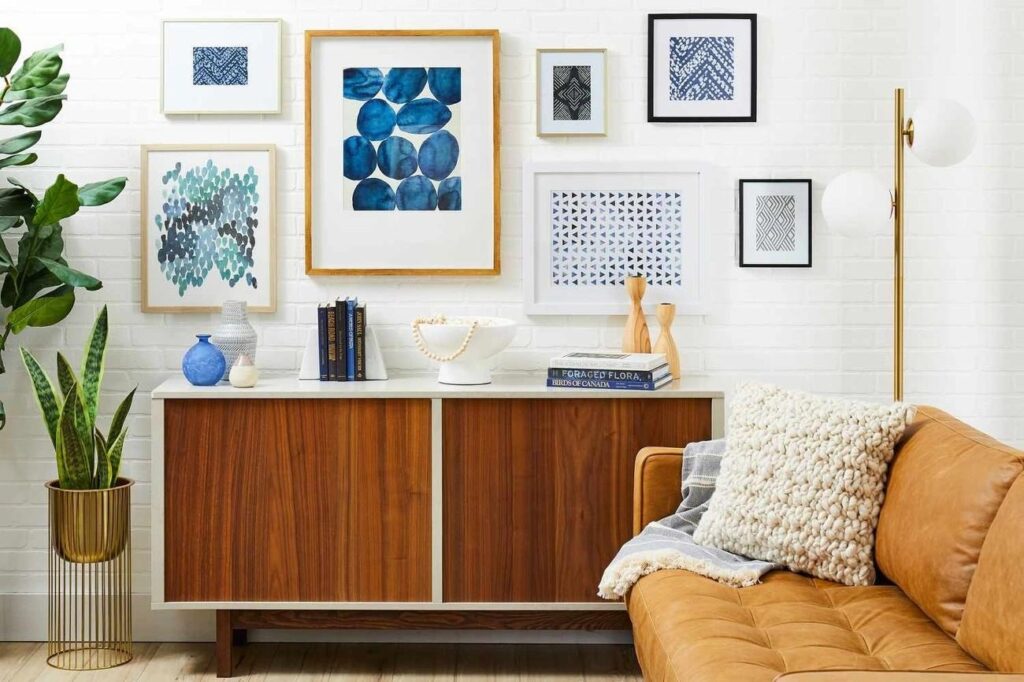
Image Source: The Spruce
Walls speak before you do, and I’ve learned that the art you hang on them can shift the entire energy of an entryway. Over the years, I’ve watched clients struggle with blank walls, unsure whether to go big, go bold, or fill the space with smaller pieces. The answer depends on understanding scale, composition, and how different materials work together.
Choosing the Right Art Scale
Getting the size right makes all the difference between artwork that commands attention and pieces that disappear into the background. When I’m helping someone select art for an empty wall, I guide them toward filling 60% to 75% of the available wall space. This creates visual balance without overwhelming the room.
For artwork hanging above furniture, the sizing changes. The piece should span about two-thirds to three-quarters the width of whatever sits beneath it. A 6-foot wide console table works beautifully with art measuring roughly 4 to 4.5 feet across. I’ve seen too many people choose pieces that are too small, which leaves the arrangement looking unfinished and awkward.
Ceiling height matters equally. In spaces with tall ceilings or wide expansive walls, vertical prints measuring 36 inches by 75 inches bring a polished, classic presence to hallways and foyers. For larger entryways, statement pieces over 60 centimeters wide create immediate impact. Photography works especially well in these spots, delivering boldness with a neutral foundation.
When doubt creeps in, I always tell my clients to size up rather than down. A well-proportioned large piece transforms a space instantly, while undersized art feels accidental.
Creating Gallery Wall Impact
Gallery walls give you permission to express personality through curated collections. I love working on these because they tell stories in ways single pieces cannot. The secret starts with selecting a large anchor piece that grounds the entire arrangement. From there, you can vary frame textures, colors, and even incorporate organic shapes.
One of my favorite projects involved a homeowner who mixed frame colors, sizes, and orientations while adding unexpected elements like a frameless skeleton and a mirror. She even included a squiggle light. The result felt playful rather than serious, exactly what she wanted for her colorful home.
Not everything in a gallery wall needs to be two-dimensional or framed. Objects from travels, woven tapestries, wall baskets, and even metal signs add depth and contrast. If an item needs visual weight, painting a colored backdrop behind it creates the illusion of a frame. Keeping pieces within a cohesive color palette prevents the wall from feeling chaotic.
For larger entryways, gallery walls showcase your style through mixed frames and sizes while staying unified through color. Layout planning matters. I recommend the paper cutout method: trace your frames onto brown paper, tape them to the wall, and adjust until the composition feels right[72].
Mixing Textures and Mediums
Texture brings a gallery wall to life. Mixing canvas prints with framed posters, metal elements, and fabric hangings creates visual richness that flat surfaces alone cannot achieve. Organic textures connect the outside world to your entryway beautifully, whether through rattan mirrors, woven pieces, or natural fiber accents paired with greenery.
I’ve layered canvas with framed photos in several projects, and the dimensional variation always elevates the design. The contrast between smooth glass, textured canvas, and metal finishes gives depth that draws people closer to examine the details.
Functional Entryway Furniture That Commands Attention
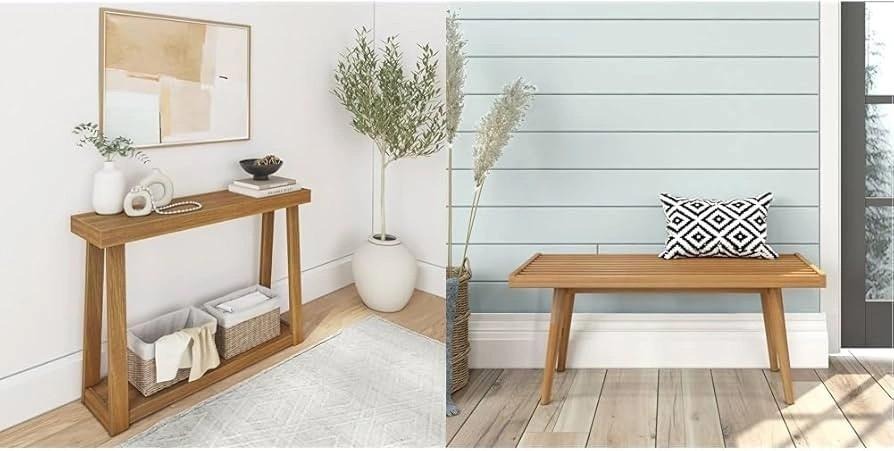
Image Source: Amazon.com
Furniture anchors an entryway in ways decorative accents cannot. During my years styling homes, I’ve watched the right console table or bench transform a passthrough into a purposeful space that actually works for daily life. Entryway furniture needs to balance beauty with function, and that’s where these pieces truly shine.
Console Tables That Make a Statement
Console tables became one of my favorite entryway furniture recommendations because they deliver surface space without overwhelming square footage. The standard console table measures 36 to 48 inches wide and 12 to 18 inches deep, with heights ranging from 28 to 32 inches. These proportions fit snugly against walls in entryways while providing enough room for keys, mail, and styled vignettes.
I always guide clients toward tables that offer drawers or shelves for hidden storage. This keeps the surface looking curated rather than cluttered. Solid wood console tables bring both order and charm to your home, with clean lines and high-quality construction that elevate any room. Wood, metal, glass, and stone all work beautifully as materials, though stone and metal tables offer the most longevity and resilience against spills and daily wear.
For narrow hallways, I’ve sourced tables as slim as 12 inches deep that still provide ample surface area without blocking walkways. The key is selecting pieces that complement your home’s esthetic while solving practical storage needs.
Storage-Smart Bench Seating
Benches solve two problems at once: they give you a comfortable place to sit while putting on shoes, and the ideal spot to drop your bag. I’ve worked with countless clients who didn’t realize how much easier life becomes when you have dedicated seating right by the door.
Storage benches take this functionality further. Models like the IKEA PERJOHAN Bench with storage at $79.99 offer solid pine construction in a compact 39-inch width. For families needing more capacity, the TJUSIG Bench with shoe storage runs $69.99 and extends to 42 inches. These pieces include compartments beneath the seat that keep shoes organized and out of sight.
Built-in seating provides even more opportunity. Installing a bench against a wall with cabinets, drawers, or cubbies creates storage for outdoor essentials you’d rather not display. Besides function, upholstered benches or settees introduce pattern and texture that make small nooks feel intentional rather than forgotten.
Floating Furniture for Small Spaces
Floating furniture changed the game for tight entryways. Because these pieces don’t touch the floor, they preserve ground space and make areas feel open. A floating console table offers the surface you need for keys and mail without eating up precious square footage.
Floating shelves maximize vertical space while keeping floors clear, which makes even small areas feel functional. Cabinets installed at mid-wall height provide drawers for essentials while the top displays decorative accents. I’ve even recommended fold-down seats that disappear when not in use, ideal for narrow entries where every inch matters.
Modern Entryway Ideas with Bold Color Blocking
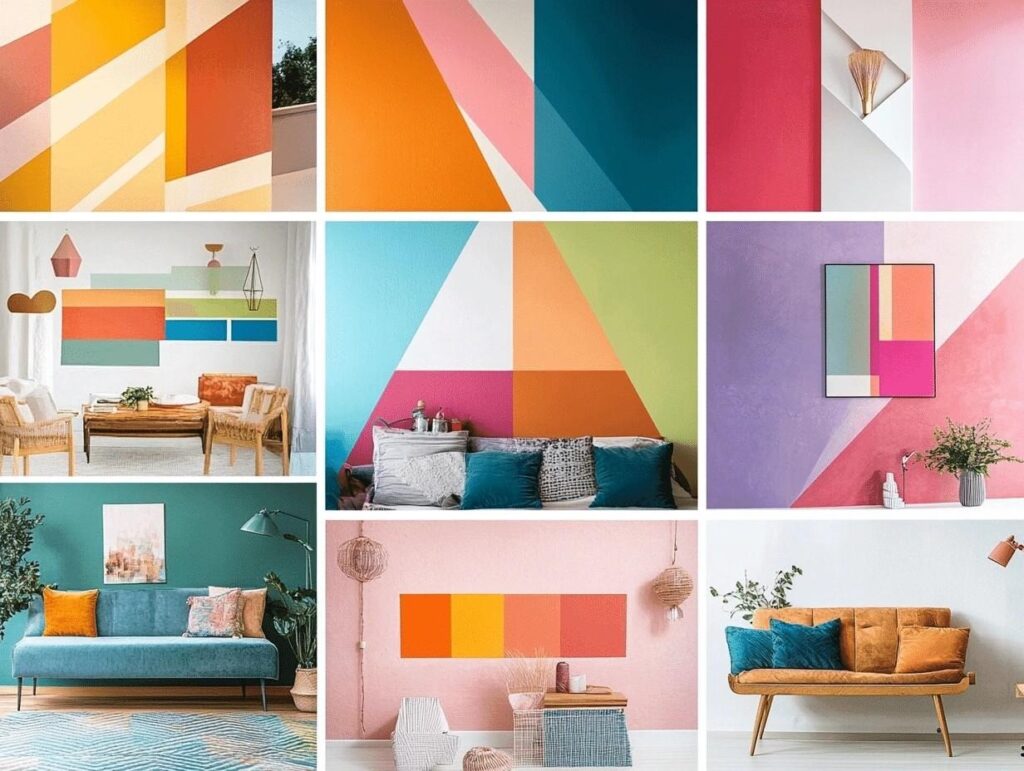
Image Source: Enthralling Gumption
Color became my secret weapon for transforming ordinary entryways into spaces that stop people in their tracks. I remember the first time I used bold color blocking in a client’s narrow hallway, and watching their face light up when they saw how a simple paint technique completely changed the feel of their home.
Selecting Your Signature Color Palette
Color-blocking is growing in popularity among homeowners, not just because it’s more budget-friendly than wallpaper, but also because it allows for a playful, creative approach to design. When I work with clients on selecting their palette, I always start by asking how they want to feel when they walk through their door.
Warm neutrals tend to create a cozy, inviting transition, while cool neutrals can enhance a clean, modern feel that connects adjacent rooms seamlessly. I’ve seen earthy reds create a welcoming atmosphere that’s perfect for entryways. Blue works exceptionally well because it makes walls look farther away than they are, which helps small entryways appear larger. For clients wanting something bold, vibrant blue makes a captivating statement when offset with warmer colors like orange.
One of my favorite projects involved a client who chose Benjamin Moore’s Brilliant Blue for their walls, then coordinated everything in a soft caramel hue, from the vintage mirror to the rope stools and walnut cabinet. The result felt both sophisticated and inviting.
Painting Techniques That Pop
The goal with color-blocking is achieving an effect that’s both composed and compelling. I always tell clients to keep the lines clean and deliberate, whether it’s a painted border around a hallway opening or a ceiling done in deep slate to ground a light, airy room.
Designer Heather Kirk taught me a brilliant trick for accentuating high ceilings: start by painting a deep color about three-quarters of the way up the walls, then apply a high-contrast, light color on the remaining wall section and ceiling. That simple technique will have your room feeling elongated and super chic.
Color-blocking also allows architectural details to shine. I’ve used it to highlight floor-to-ceiling features, archway entrances, and window seat alcoves. In open-concept layouts, it’s an effective way to define and delineate spaces, adding depth and interest.
Coordinating Accents and Accessories
Color-blocking doesn’t just work with paint. I’ve helped clients show off the technique through upholstery, like a terracotta sofa frame paired with blush seat cushions. Drapery styles where the bottom quarter is a completely different color bring the same bold effect. Even layering two rugs in bold, opposing tones creates a curated color-blocked look without requiring a paintbrush.
Mirrors That Transform and Amplify Space
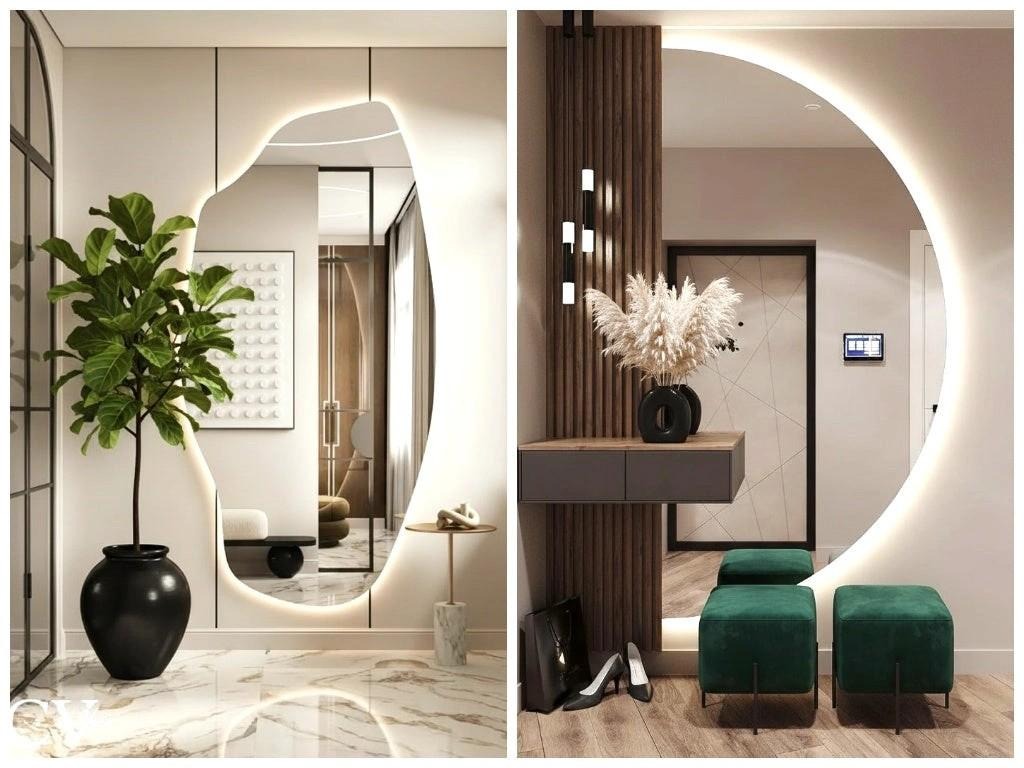
Image Source: Bargain For You Shop in Australia
Mirrors hold a special place in my design toolkit because they solve problems other decor simply cannot. I’ve watched a single well-placed mirror double the perceived size of a cramped entryway while bouncing afternoon light into corners that felt dark for years. Adding a mirror to your entryway helps make the space feel brighter and more spacious, especially if it’s on the smaller side.
Choosing Mirror Shapes and Sizes
Shape selection changed everything for one of my clients who struggled with a narrow hallway. Tall rectangular mirrors draw the eye along a plane, highlighting room height or width depending on orientation. In her case, a slim vertical mirror created the impression of added height and reduced that boxed-in feeling narrow entryways often create. Conversely, wide rectangular mirrors spread natural light across long hallways, making spaces feel larger and more open.
Round mirrors soften sharp angles and bring a pleasing gentleness to rooms. In petite foyers where a full-length mirror might overwhelm, a round design takes up less visual space while still serving its purpose. Oval mirrors offer simple elegance, looking beautiful above small vanities or in hallways. I often suggest arched mirrors to clients wanting to break up boxy furniture arrangements, as they add subtle architectural elements that make foyers feel friendlier.
Sizing requires precision. Mirrors should measure at least half the width of the console table beneath them, with recommended heights between 80 to 100 centimeters. As a general rule, mirror width should equal roughly 70 to 80% of the furniture or wall it sits above. Hang mirrors four to six inches above console tables, a guideline that creates proper visual balance. For maximum impact in spaces with tall ceilings, run mirrors from floor to ceiling to create dramatic effect and maximize light reflection.
Placement Strategies for Maximum Impact
Position mirrors where they catch and reflect natural light, such as across from windows or adjacent to light sources, to instantly brighten your entryway. Mirrors amplify sunlight, making even compact or dimly lit spaces feel open and luminous. Placing a mirror on a side wall dramatically brightens and widens the space by reflecting light at 90 degrees, breaking up the tunnel effect.
Embrace asymmetry by placing your mirror off center to create an artful look. For symmetrical impact, hang double foyer mirrors above twin entryway tables or flanking doorways, adding balance and drama. Creating a mirror gallery wall reflects light from multiple angles, helping small or dark entries appear brighter and more dynamic.
Custom Mirror Designs
Custom mirrors offer design statements tailored to your unique style and specific needs. When wall dimensions are awkward and standard sizes look undersized or crowded, custom treatment makes sense. LED backlit mirrors cast a soft halo of light that’s both functional and atmospheric, bringing modern glamor to entryways. Custom pieces allow you to match frame finishes to other accents in your entryway, such as lighting or hardware, achieving a cohesive look that feels intentional and inviting.
Entryway Table Decor Ideas for Every Style
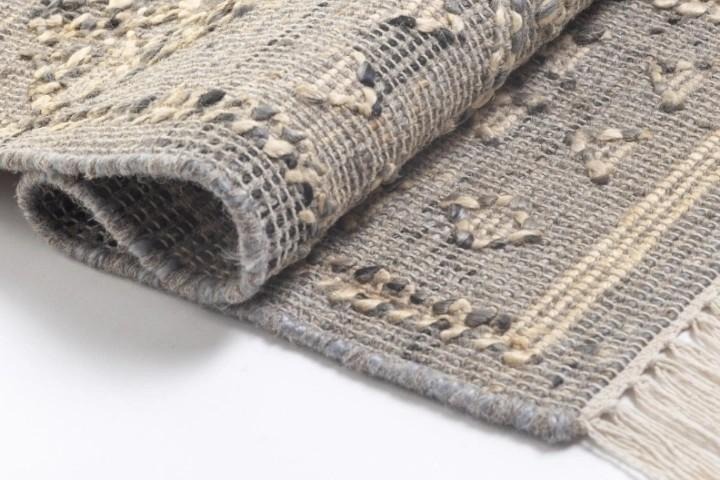
Image Source: This is our Bliss
Console table styling used to intimidate me until I discovered a simple truth: balance beats perfection every time. I’ve spent years helping clients transform their entryway furniture from cluttered catchalls into curated moments that genuinely welcome people home.
Creating Your Vignette Foundation
Starting with a strong foundation makes everything easier. In my experience, the key to a great console table setup is striking a balance between form and function. I always include a place for daily essentials like a bowl for keys or a tray for mail.
Here’s my reliable formula: anchor the look with a mirror or large artwork above the table, add height using tall lamps or vases to draw the eye upward, layer for depth by mixing different shapes and textures, keep it functional with trays or catchalls, and ground the look using baskets or books on the lower shelf.
The rule of three changed my approach entirely. Groups of threes please the eye, so I create little vignettes in threes—three vases of varying heights or a stack of two books with an object on top.
Layering Heights and Textures
Height variation prevents flat, one-dimensional styling. I use one vertical element like a lamp or tall vase, one practical anchor such as a tray for organizing items, and one sculptural object that adds personality without creating clutter.
Layering front to back keeps the eye moving—a mirror in back, vase in the middle, small dish in front. Choose objects of varying heights, colors, and textures to create depth and interest through candles, jars, pots, and uniquely shaped objects.
Seasonal Styling Swaps
Refreshing your console table keeps the space dynamic. I rotate artwork according to seasons—dark and moody pieces in fall and winter, bright and lively options in spring and summer. Swapping out small decorative objects, changing florals, or rotating in new plants maintains freshness without requiring complete redesigns.
Vertical Storage Solutions That Wow
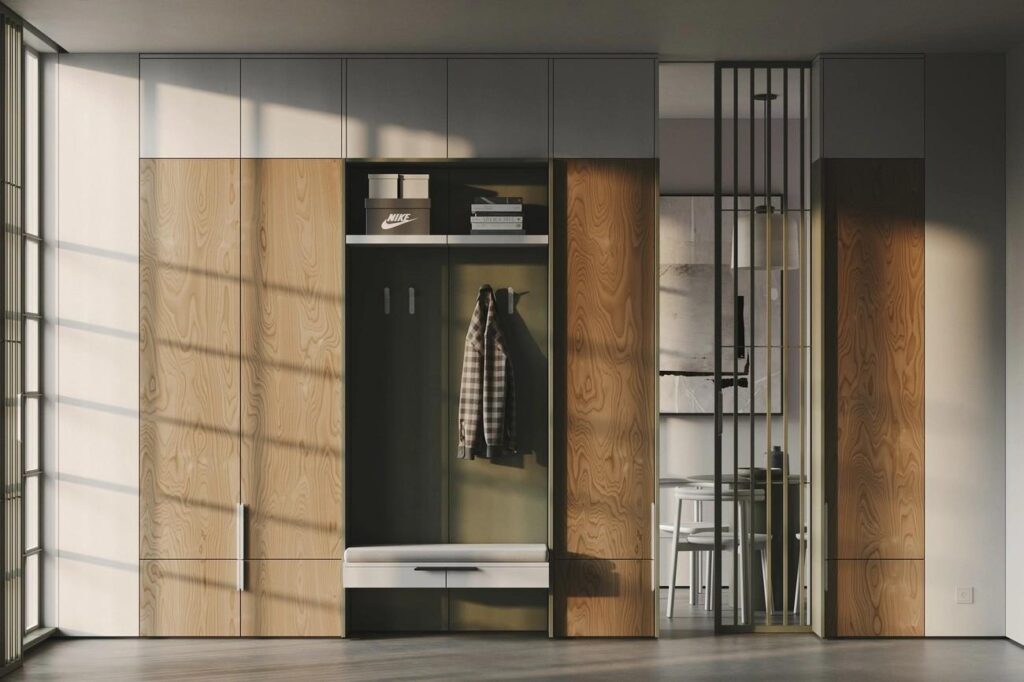
Image Source: Shelfology
Wall space taught me something valuable about small entryway decor ideas: when you can’t expand outward, you build upward. I’ve worked with clients whose entryways measured barely seven feet wide, yet we created storage capacity that rivaled full mudrooms by using every vertical inch available.
Wall-Mounted Shelving Systems
Floating shelves deliver storage without consuming floor space at all. I love recommending modular systems like IKEA’s BOAXEL because you can design a solution that fits your exact needs, adding or removing sections whenever priorities shift. These systems work brilliantly in hallways since you can customize them with hooks, rails, and boxes for everyone in your home.
For shoe storage specifically, vertical racks transform unusable corners into functional zones. An 8-tier narrow tower holds 7 pairs while fitting snugly beside your front door. For larger collections, 10-tier metal racks accommodate up to 20 pairs in a slim footprint. Wall-mounted installations with 11-inch shelf spacing handle size 10 shoes comfortably.
In extremely tight spaces where your entryway measures less than 7 inches from wall to walkway, wall-mounted slim shoe cabinets offer the most practical storage solution, with depths between 6.69 and 9.35 inches.
Hooks and Pegs as Design Features
Hooks became one of my go-to recommendations because they’re inexpensive and keep floors clutter-free. You can buy wall hooks for as little as $5.00 apiece, yet they transform how an entry functions. I always suggest staggering multiple rows at least six inches apart to maximize storage.
Pegboard walls add adaptability since you can position hooks anywhere your needs require. Open grid designs like GREJIG keep things feeling airy even when every shelf is full.
Combining Function with Visual Appeal
Smart storage design keeps entryways welcoming rather than cluttered. Wall-mounted units deliver a sleek, modern appearance while adding capacity above furniture and traffic areas. Storage doesn’t have to weigh a room down when you choose solutions that work with your architecture instead of against it.
Small Entryway Decor Ideas That Feel Grand
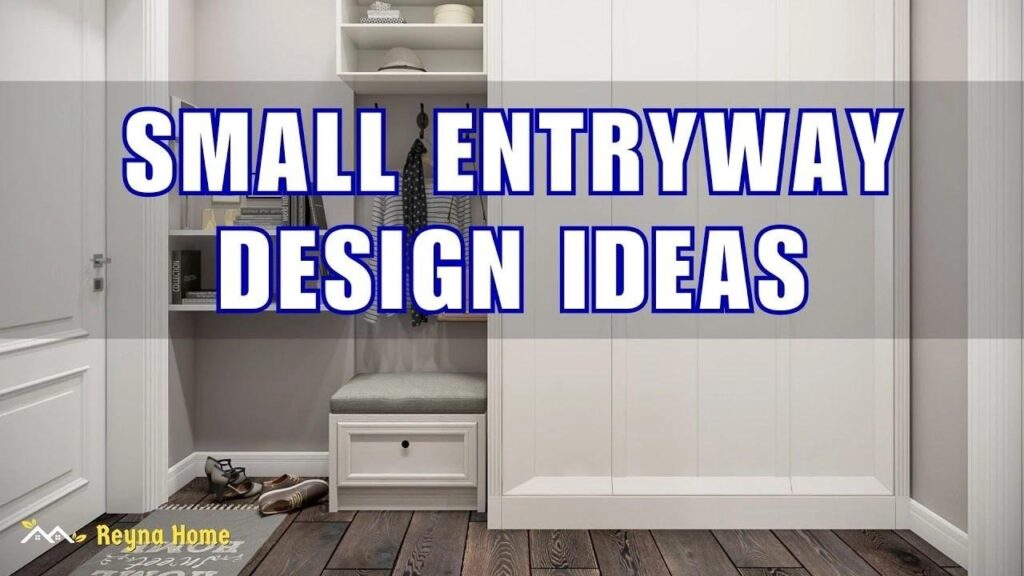
Image Source: YouTube
Working with compact entryways used to feel like solving impossible puzzles until I discovered that small spaces actually give you permission to be bolder with your choices. Over the years, I’ve helped dozens of clients transform cramped entries into welcoming spaces that feel surprisingly spacious.
Maximizing Limited Square Footage
Jessica Bunge taught me something crucial: small entryways can be tricky, so take advantage of your walls. Wall-mounted hooks and floating shelves became my go-to recommendations because they free up floor space while keeping essentials accessible. A floating shelf works perfectly for keys and mail, plus adding a wall mirror makes your space feel bigger and brighter.
In reality, I’ve found that oversized mirrors take up the perfect amount of wall space and make smaller spaces feel larger. Full-length mirrors serve double duty, creating spatial illusion while letting you check your outfit before heading out.
Furniture Scale and Proportion Tips
Furniture selection changes everything in tight quarters. I always recommend benches with built-in shoe racks underneath because they look stunning while keeping floors hazard-free. For narrow spaces, slim consoles or even wall-mounted options preserve walkway clearance without sacrificing function.
Creating Depth with Design Tricks
Neutral wall colors paired with wooden elements create dimension that makes spaces feel larger. White walls and doors paired with light-toned decor give areas an airy, spacious feeling. Sometimes less truly is more—an oversized plant, simple rug, and woven basket keep spaces clear yet stylish.
Bringing Nature Inside with Living Elements

Image Source: Instagram
Plants became one of my favorite ways to instantly freshen entryway spaces and create that welcoming atmosphere everyone craves. Houseplants provide a calming atmosphere and all-around good feng shui, which matters when you’re setting the tone for your entire home.
Selecting Low-Maintenance Plants
For entryways with limited natural light, I always recommend snake plants because they tolerate low light, irregular watering, temperature fluctuations, and general neglect. ZZ plants are almost suspiciously resilient, thriving in low light and handling inconsistent watering. Chinese evergreens are easy to grow with little light and little water, making them perfect for darker foyers. Pothos tolerates low to medium light and looks beautiful trailing from shelves. Philodendrons adapt readily to interior conditions and tell you exactly what they need.
Built-In Planter Ideas
Built-in planter boxes serve as architectural features while providing space-saving solutions that eliminate the need for pots and stands. Mother-in-law’s tongue works brilliantly in built-ins because its upright leaves don’t require much water, reducing the risk of damaging the planter interior. Peace lily, Laceleaf, Bromeliad, and Rushfoil inject color while growing predominantly upright.
Organic Textures and Materials
The texture and shape of natural elements like branches, dried flowers, and gathered walnuts or acorns make them lovely cozy additions. Pairing them with shiny, refined glass elements creates beautiful displays where opposites attract.
Textile Layers for Warmth and Welcome
Image Source: Amity Home
Textiles taught me that warmth goes beyond temperature. Layering throw pillows and an area rug adds warmth and comfort to the entryway, creating that instant sense of welcome I want every guest to experience.
Area Rugs That Define Your Space
Rugs set the tone for everything above them. In narrow halls, runner rugs measuring 2.5′ x 8′ or 10′ lead the eye and elongate the space. Larger foyers work beautifully with 4×6 or 5×7 rugs centered beneath a chandelier or in front of console tables. For expansive entryways, 5×7 or 6×9 dimensions help connect benches, console tables, and seating into cohesive layouts.
Material selection matters for durability. Flatweave wool, low-pile hand-knotted rugs, and performance blends resist dirt and wear beautifully in high-traffic zones. High-pile wool brings softness and warmth, jute or sisal adds natural earthy roughness, while flatweave creates a cleaner look with subtle texture. Layering rugs became one of my favorite tricks: a large neutral base rug creates structure, then add a smaller vintage-style pattern on top.
Curtains and Dividers for Soft Separation
Curtains add vertical texture and soften the hard frame of windows. Sheer curtains keep rooms airy and light, while heavier drapes feel plush and insulating. Fabrics help manage sound when there’s generous fullness and folds.
Cushions and Throws for Inviting Seating
Mix cushions rather than match them. Coordinate through combinations like knit plus velvet plus cotton, or linen plus bouclé plus embroidered detail. Throws should contrast with furniture: chunky knit over smooth leather chairs creates deliberate touchable moments.
Architectural Details That Elevate the Ordinary
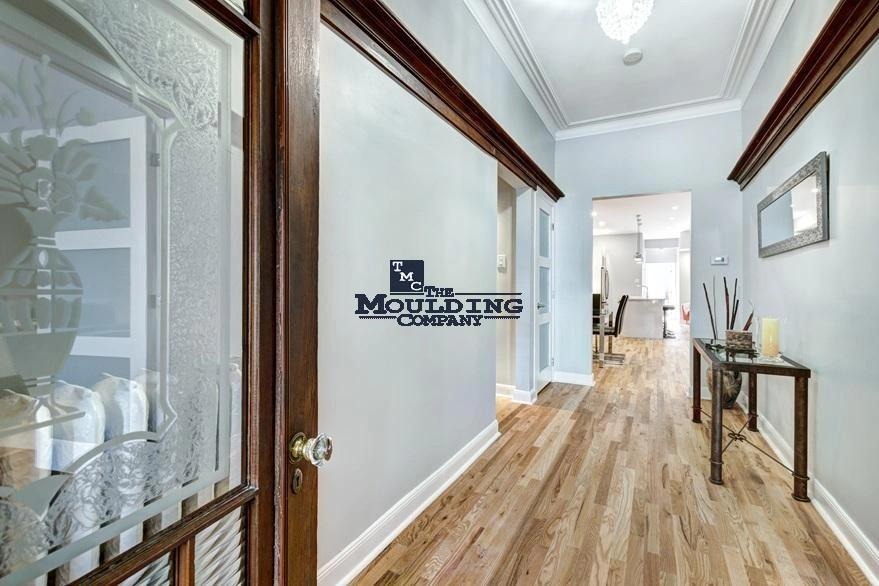
Image Source: The Molding Company
Architectural details became the game-changer in my approach to entryway design, especially when I learned that adding these elements could transform a basic hallway into something that felt custom and intentional. Wall panel molding can be used to create panels or embellish panels on a flat or recessed surface, making it versatile for hallways, living rooms, bathrooms, and beyond.
Paneling and Molding Applications
Board and batten changed my perspective on budget-friendly upgrades. One of my favorite projects involved installing half-wall paneling in a client’s foyer, anchoring the space with texture and dimension while protecting walls from daily wear. Picture frame molding delivers subtle sophistication, whereas vertical slat designs bring modern energy to traditional spaces. Urethane panel molding works beautifully on doors, walls, and architectural paneling in residential applications, and I love that it’s lightweight and easy to install.
Ceiling Treatments That Draw the Eye
High ceilings deserve features that highlight their architectural presence. Arched woodwork brings the eye upward and makes spaces feel grand, while tray ceilings add subtle elegance by drawing attention overhead. Paneled ceilings paired with geometric pendant lighting create focal points that dazzle.
Flooring Transitions as Design Features
Entryways naturally call for material changes since stone or tile handles moisture better than wood. I’ve created tile rectangles large enough for guests to stand on, forming paths that lead to hallways while hardwood covers remaining areas. Diamond patterns in darker shades close to wood tones create nice contrast.
Conclusion
Just to reiterate, transforming your entryway doesn’t require tackling all eleven ideas at once. I’ve watched clients achieve stunning results by starting with one element that speaks to them, whether it’s a statement light fixture or simply adding a mirror. Pick what excites you most and build from there. Not every idea will suit your space, and that’s perfectly fine. The goal is creating an entry that feels authentically yours, one that makes you smile every time you walk through the door. Your entryway sets the tone for your entire home, so take your time finding what works best for you.