Surprisingly, we spend over thirty years in bed across a lifetime, yet many of us struggle to make our bedrooms feel comfortable and functional. When I started exploring bedroom decoration ideas for my compact space, I felt overwhelmed by advice that didn’t fit my reality. Small bedrooms present unique challenges, but with the right approach, they can transform into esthetic bedroom spaces that feel both practical and personal. In this guide, I’ll share bedroom decorating ideas covering everything from bedroom wall decoration ideas to bedroom room decoration layouts that actually work. These proven bedroom styles have helped me create a space I love.
Multi-Functional Furniture for Small Bedrooms
Why Multi-Functional Pieces Transform Small Bedrooms
Furniture that performs multiple jobs changes how you experience your bedroom. I learned this when I realized my guest bed sat empty most of the year, stealing precious floor space. Multi-functional pieces solve this by creating actual, measurable space. A sofa-wallbed, for example, creates an additional 18 square feet of usable space daily. When comparing multi-functional beds to separate bed and sofa setups, you gain back up to 40 square feet of livable area.
Beyond square footage, these pieces adapt to your life. Your bedroom becomes a workspace during the day and a sleeping area at night without feeling cramped. This flexibility matters when every inch counts in bedroom room decoration.
Best Multi-Functional Furniture Options for Compact Spaces
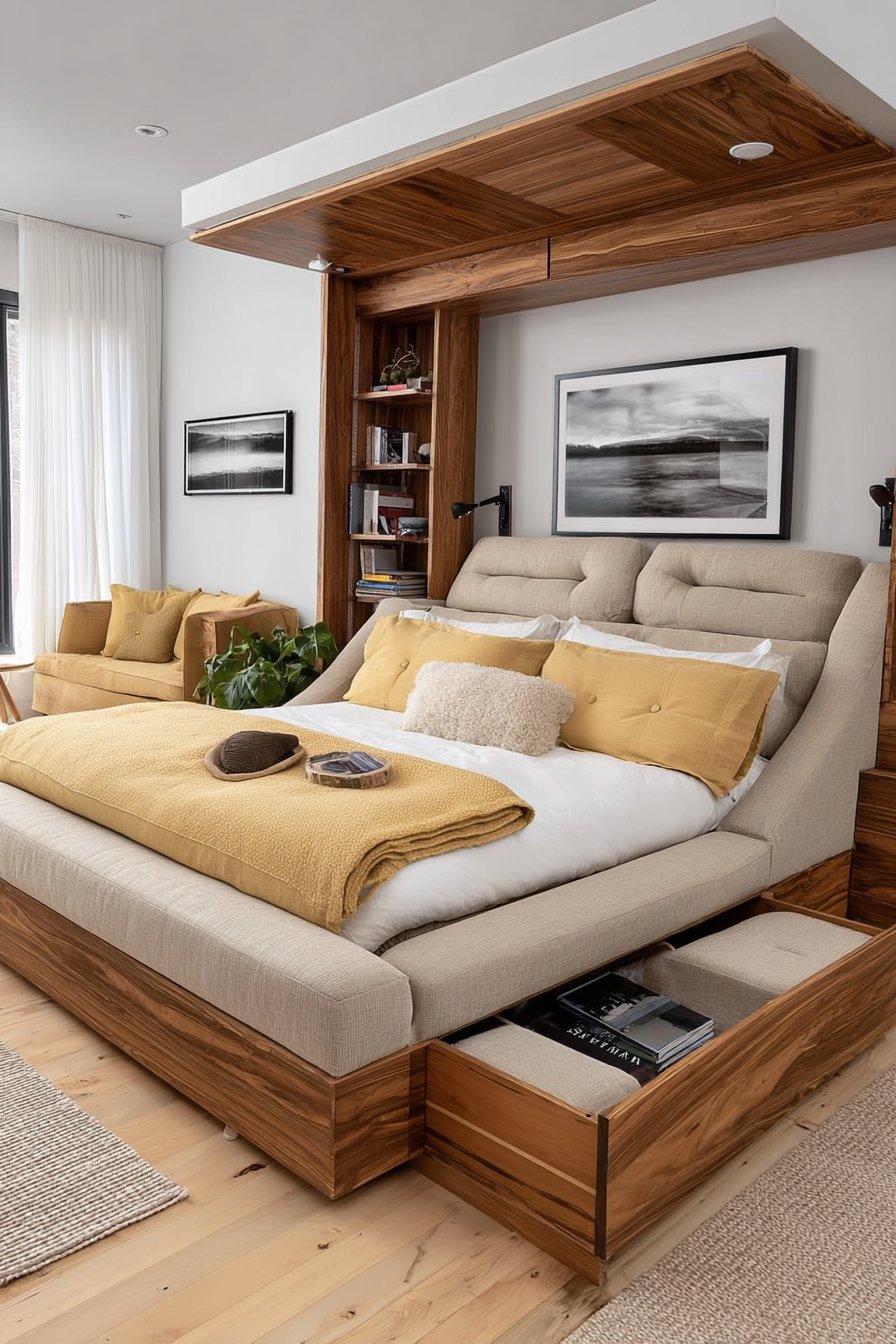
Murphy Beds fold against the wall when not in use, turning your bedroom into a functional living space. Modern versions integrate sofas, so the sofa cushions tuck inside the cabinet as you pull the bed down. Some models include storage compartments under the seat, giving you triple functionality.
Storage Beds with lift-up frames hide bedding and seasonal items beneath the mattress. Ottoman beds use hydraulic mechanisms for easy access and don’t require side clearance like drawer-based storage beds. These work particularly well for bedroom decorating ideas focused on minimizing visible clutter.
Sofa Beds serve as seating during the day and transform into beds for guests. Look for designs that convert easily without removing cushions. Quality matters here, as you’ll use this piece daily.
Storage Ottomans provide seating, footrests, and hidden storage for linens or seasonal clothing. I use mine at the foot of my bed for extra blankets.
Convertible Tables expand from compact consoles into full dining surfaces. Some desk-to-dining table designs let you work during the day and host dinner at night, maximizing function in esthetic bedroom spaces.
Shera’s Personal Experience with Space-Saving Solutions
When I moved into my current bedroom, I felt stuck between having a proper bed or a workspace. I chose a Murphy bed with an integrated desk, and it changed everything. Mornings, I fold up the bed and my workspace appears. The desk surface is spacious enough for my laptop and notes. What is more, the side cabinet holds my work supplies, keeping the area tidy.
The first few weeks felt awkward. I worried about the mechanism failing or the bed feeling uncomfortable. Neither happened. The hydraulic system operates smoothly, and the mattress sleeps just as well as my old bed frame. I gained roughly 35 square feet, which I now use for a reading chair and plant corner.
This single change influenced how I approach bedroom wall decoration ideas. With more floor space, I could focus on vertical design elements rather than cramming furniture everywhere.
Implementation Tips for Your Bedroom
Measure your space before shopping. Multi-functional pieces often need clearance for mechanisms to operate. Murphy beds require wall depth, while storage ottomans need lift space above them.
Consider your daily routine. If you work from home, prioritize desk-to-bed conversions. If you host guests frequently, sofa beds make more sense.
Invest in quality construction. Cheaper mechanisms break down quickly, consequently defeating the purpose. European-made options often include lifetime warranties on wall bed mechanisms.
Match finishes to your existing bedroom styles. Multi-functional furniture comes in various materials, from wood veneers to upholstered designs, ensuring your space maintains visual cohesion.
Start with one piece rather than replacing everything at once. I began with my Murphy bed, then added a storage ottoman months later. This approach lets you test what works for your lifestyle without overwhelming your space or budget.
Vertical Storage That Saves Space
When I first tackled my bedroom’s storage crisis, I kept staring at my crowded floor, completely missing the solution floating above my head. Walls offer over 200 square feet of vertical surface in an 8×6 bedroom, yet most of us only use the lower three feet. This realization changed how I approach bedroom decoration ideas.
Floor-to-Ceiling Storage Units for Small Bedrooms
Floor-to-ceiling storage transformed my bedroom from chaotic to functional. These units make walls seem higher by elevating your eyeline, regardless of whether they’re full of belongings. The visual trick works because having tall units draws your eyes upward, creating the illusion of a grander space.
I installed a floor-to-ceiling unit along one wall, mimicking what architect Michael Roper did in a 23sqm space where he integrated bookshelves, clothing drawers, a hanging rail, shoe storage, and even a Murphy bed into one full-height storage wall. My version is simpler but equally effective for bedroom room decoration.
Custom joinery blends with walls and provides discreet yet expansive storage. The Billinghurst project purposely left gaps separating storage walls into two parts, with lower cabinets matching door height and upper cabinets accessed by a mobile staircase. This break adds openness that would disappear with continuous shelving.
One consideration: the top shelf stays hard to reach. I keep a small step stool nearby, storing seasonal items I rarely need up high.
Wall-Mounted Shelves and Floating Furniture
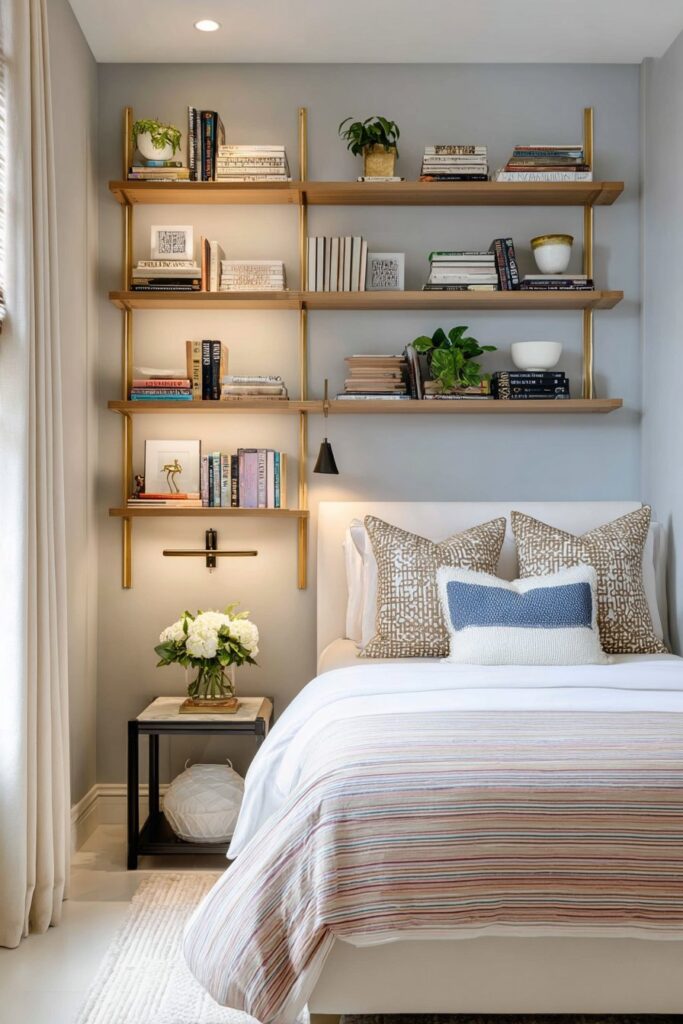
Floating shelves outperform bulky bookcases in compact bedrooms because they preserve visual openness. Traditional shelving units consume valuable floor space and make small rooms feel boxed in. Wall-mounted options achieve the same storage function with a lighter footprint.
I mounted floating shelves above my headboard, along my longest wall, and above the door frame. Shelf depth matters more than length. I rarely exceed 8-10 inches of depth. Deeper shelves visually shrink the room and invite clutter.
Wall-mounted furniture changed my workspace situation. My wall-mounted desk folds up when not in use, ensuring I have a dedicated productivity spot without permanently allocating space. Murphy beds operate similarly, hoisting up against the wall during the day to create room for other activities.
I use a pegboard system for accessories and smaller items. Pegboards with inexpensive organizers hold everything from jewelry to reading glasses. Wall sconces freed up my bedside table surface, giving me more room for books.
How Vertical Storage Creates Visual Height
Vertical storage doesn’t just add function. It creates the perception of height by directing attention upward. Tall bookshelves tap into a dimension we overlook, ascending vertically rather than sprawling outward. This approach optimizes storage capacity without compromising floor space.
Floor-to-ceiling shelving makes a room feel bigger even when packed with items. The key is how storage near the ceiling draws eyes up, making walls seem higher. I noticed this effect immediately after installing my tall unit.
Practical Ways to Organize Vertically
Above-bed storage became one of my most efficient zones. The wall above the bed is usually the safest place for heavy vertical storage. I maintain at least 20-24 inches of clearance above my mattress to avoid a cramped feeling. My shallow cabinets and floating shelves increased bedroom storage by nearly 40 percent without adding floor furniture.
Corners and doors represent the most overlooked vertical zones. Over-the-door hanging organizers work without drilling, making them renter-friendly. Corner ladder shelves use awkward angles that would otherwise stay empty.
Visual discipline prevents overwhelming clutter. I keep shelf spacing consistent, use matching storage boxes, and leave at least 30 percent of wall space empty. That negative space keeps the room breathable even as storage increases.
Light Color Schemes for an Open Feel
Why Light Colors Work in Small Bedroom Decoration
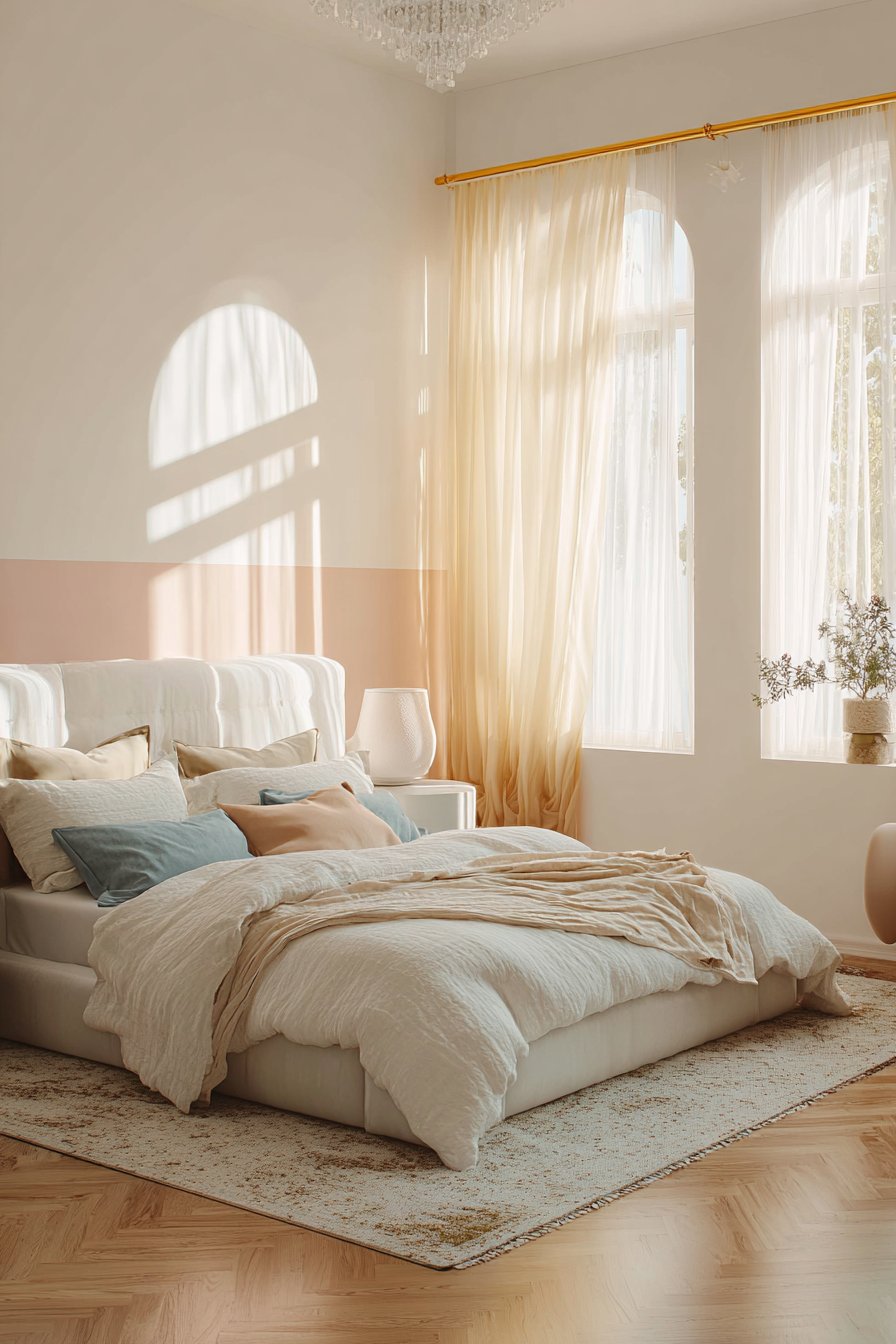
After organizing my furniture and vertical storage, I realized my bedroom still felt confined. The solution wasn’t adding more, but rather rethinking what already surrounded me: the walls. Light colors reflect light, making rooms feel open and airy. This isn’t just esthetic preference; it’s physics working in your favor for bedroom decoration ideas.
Painting with pale and pastel colors above eye level creates an airy effect that visually heightens walls, especially when you paint the ceiling a lighter shade or slight variation of the wall color. The subtle contrast brings depth and dimension without breaking unity. I tested this by painting my ceiling two shades lighter than my walls, and the room instantly felt taller.
Colors also absorb shadow, so you don’t notice corners as much. Small rooms show more shadows, and the right colors solve this by softening harsh angles. I noticed this difference immediately after repainting from a medium gray to a soft white.
Best Color Combinations for Esthetic Bedroom Spaces
Soft white maximizes light reflection, creating an open feel. For warmer alternatives, pale blue evokes tranquility and openness, while sage green brings natural, refreshing atmosphere. Light gray offers a modern backdrop, and warm beige with subtle gray undertones provides welcoming warmth while enhancing perceived space.
I initially chose bright white, thinking it was the safest option. However, white felt stark against my furnishings. Consequently, I switched to an off-white with warm undertones, which felt softer and more inviting. The room maintained its spacious quality while gaining coziness.
When selecting colors, consider your room’s light. East and west-facing rooms particularly benefit from considered color placement, as they experience varying natural light from morning until evening. My west-facing bedroom gets harsh afternoon sun, so I chose cooler tones that balance the warmth.
Creating Depth with Tonal Variations
Painting walls, ceiling, and woodwork in slight variations of the same color creates cohesive, monochromatic schemes. This tonal approach elongates wall length, seamlessly blending them into the ceiling above and baseboard below. I painted my walls in a mid-tone gray, then used paler hues on trim and a slightly darker shade on one accent wall behind my bed.
This technique works because your eye doesn’t get drawn to corners, creating the feeling of space. Using similar tones minimizes contrast lines, making rooms feel taller and more open.
Shera’s Approach to Selecting Bedroom Colors
I ordered eight paint samples before committing. Each sample went on different walls to observe how light changed throughout the day. Morning light made some colors look washed out, while evening light warmed others unexpectedly. Testing samples in your actual room matters more than relying on store displays.
For my bedroom styles, I ultimately chose a warm neutral that reads slightly pink when sunlight hits it. This flexibility keeps the space interesting without overwhelming the bedroom wall decoration ideas I’ve incorporated. The color flows naturally with my textiles and complements the bedroom room decoration layout I’ve worked hard to perfect.
Layered Lighting for Depth & Warmth
The Three Types of Lighting Every Small Bedroom Needs
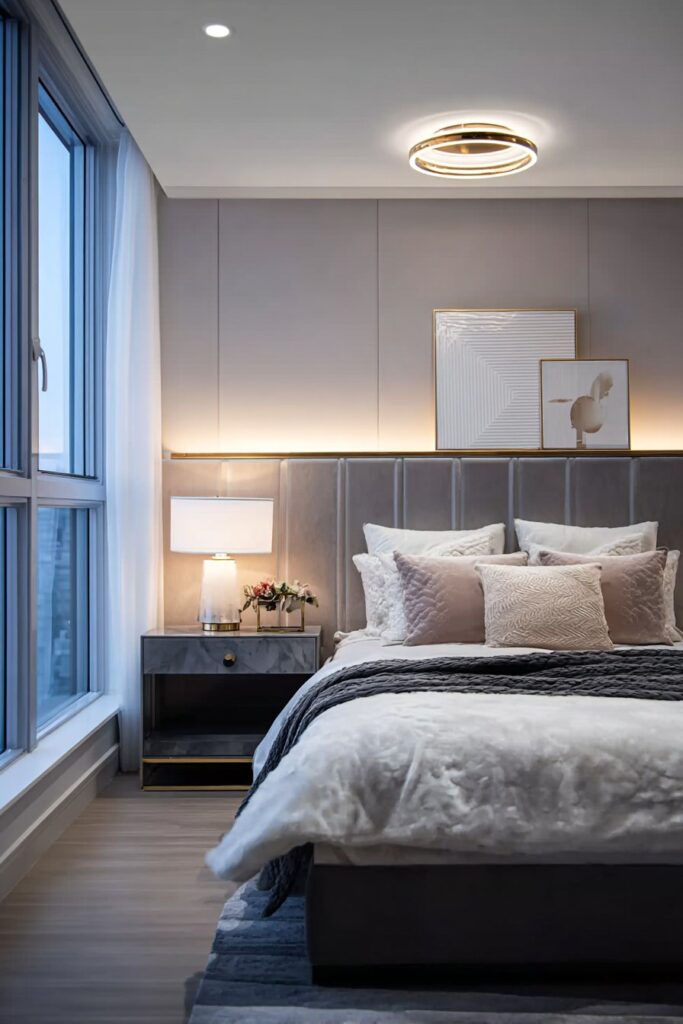
Color choices transformed my walls, but the room still lacked dimension until I understood lighting layers. Every bedroom needs three distinct lighting types working together: ambient, task, and accent. Ambient lighting provides overall illumination, task lighting helps you perform specific activities, and accent lighting highlights features while adding depth.
I approached lighting wrong initially. One overhead fixture seemed sufficient, but it created a flat, one-dimensional feel. Layering light at multiple heights changed everything. I installed ceiling fixtures, added bedside lamps, and positioned a floor lamp near my reading chair. This three-dimensional approach makes the room feel open rather than cramped.
Wall-Mounted and Pendant Light Solutions
Small bedrooms demand fixtures that don’t consume floor space. Wall sconces and pendants became my solution for bedroom decorating ideas that preserve square footage. Sconces mount directly to walls, serving as sole light sources in tiny bedrooms. I installed one on each side of my bed for balanced illumination, and each operates on independent dimmers.
Pendant lighting over nightstands provides illumination without occupying valuable surface area. Since hanging a pendant where my table lamp previously sat, I gained space for books and personal items. Pendants create a three-dimensional effect while offering modern esthetic bedroom appeal.
Flush-mount fixtures work particularly well for bedroom room decoration in compact spaces. They sit flat against the ceiling, taking up minimal visual space while providing adequate illumination. I complemented mine with wall sconces to create layered lighting throughout the room.
How Lighting Affects Perceived Space
Lighting positioned around a room’s perimeter makes it feel more spacious. Previously, my central overhead light created harsh shadows in corners, making the space seem smaller. Distributing light sources eliminated those dark pockets where eyes get trapped.
Layered lighting prevents rooms from feeling flat. Multiple light sources at varying heights add visual interest and dimension. This approach ensures consistent illumination across vertical surfaces like walls, automatically making rooms feel more open and intentional.
Creating Mood with Dimmable Options
Dimmer-compatible fixtures became non-negotiable for my bedroom styles. Control lighting should be separately switched on dimmers if mood matters to you. I installed dimmers on every fixture, allowing me to adjust brightness according to time of day and activity.
Warm-toned lighting specifically enhances small bedroom wall decoration ideas. I use 2,700k lightbulbs, which provide a warm white glow. This temperature promotes relaxation better than cool lighting. Materials like parchment, linen, or opal glass shades soften the glow, while brass finishes add warmth. My bedroom now shifts from bright and functional during morning routines to soft and intimate for evening reading.
Mirrors That Make Rooms Look Bigger
Mirrors turned out to be the simplest bedroom decoration ideas I overlooked for months. I walked past blank walls daily, never considering how a reflective surface could reshape my entire space. Once I understood placement strategy, mirrors became the tool that finally made my bedroom feel expansive rather than cramped.
Strategic Mirror Placement for Maximum Impact
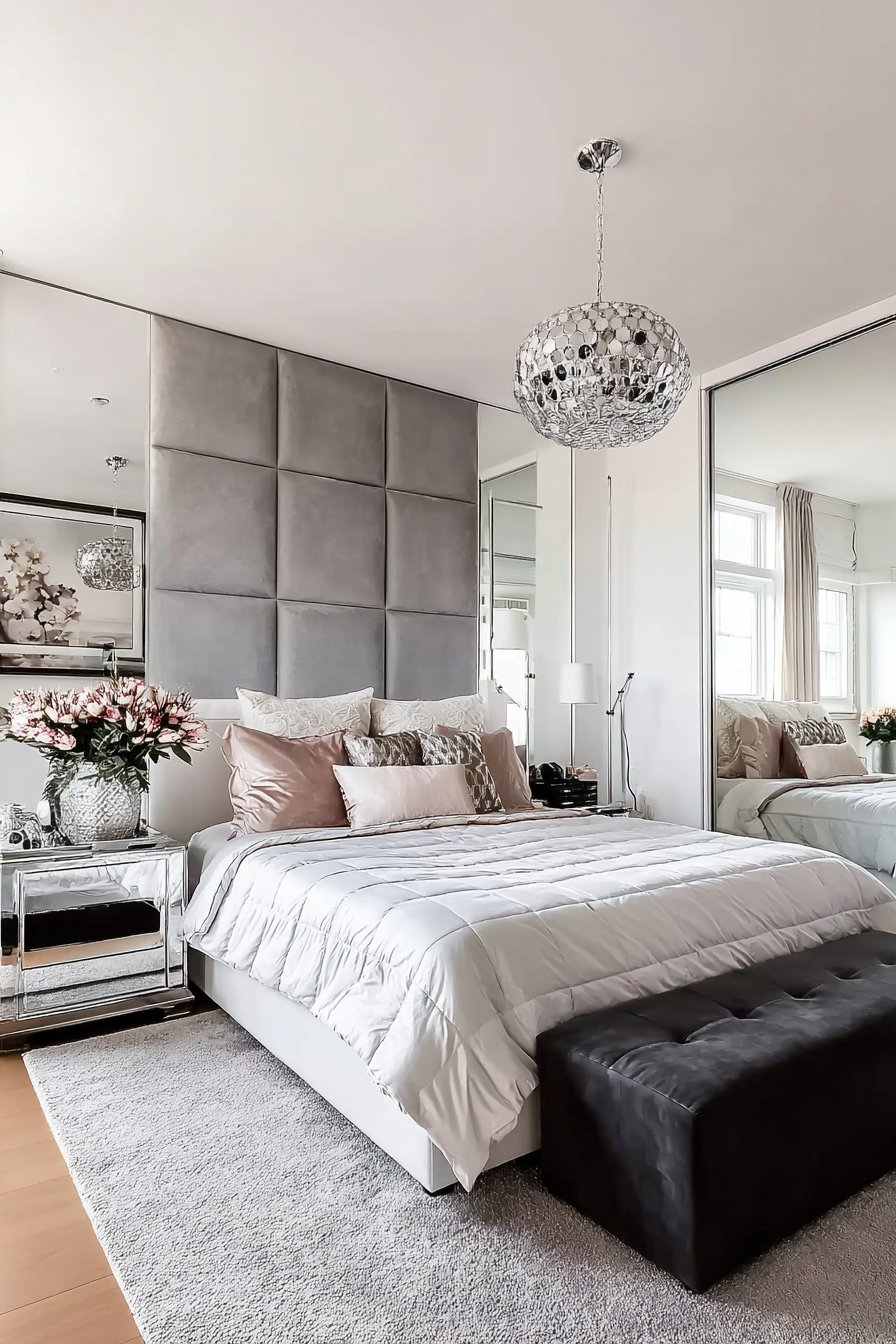
Position mirrors directly across from windows to capture and reflect incoming light. This placement essentially creates another light source, as one designer described it to me like “putting in another window”. I hung a large mirror on the wall opposite my east-facing window, and mornings now feel twice as bright.
Hanging mirrors at eye level works best for most bedroom room decoration layouts, roughly 60 inches from the floor to the mirror’s center. Mounting them slightly higher draws eyes upward, creating perceived height. I placed mine 65 inches up, and my 8-foot ceilings suddenly seem taller.
Dark corners benefit enormously from mirror placement. The previously dim area beside my closet now reflects light from across the room. Besides brightening that zone, the mirror makes the corner feel intentional rather than forgotten.
Types of Mirrors That Work Best in Small Bedrooms
Full-length mirrors near closets serve dual purposes for dressing needs and enhanced depth perception. I mounted mine on the inside of my closet door, keeping it hidden when closed while maintaining functionality.
Mirrored nightstands on each side of beds brighten spaces by catching sunlight and lamp glow, making dim corners feel lively. After adding these to my esthetic bedroom setup, I noticed how they reflect my bedside lamps, doubling their illumination effect.
Decorative mirrors above dressers create classic bedroom wall decoration ideas. Tall rectangular mirrors add height, making ceilings appear higher. Round mirrors soften tight spaces filled with angular furniture.
Reflective Furniture and Metallic Accents
Metallic surfaces serve similar purposes as mirrors because they’re reflective, though they add interesting distortion elements. In smaller areas, metallics provide the bold addition needed to create expansive feelings. I added a brass lamp base, and its warm reflective surface compliments my window view identically to how my mirror functions.
Mirrored furniture pieces like dressers combine storage with functionality. The reflective surfaces amplify light and create spaciousness. However, I limit mirrored elements to two pieces maximum, as more than that shifts from glamorous to overwhelming.
Real-Life Examples of Mirror Magic
My bedroom transformation happened gradually. I started with one mirror opposite my window, then added mirrored nightstands months later. The cumulative effect surprised me. What felt like a 10×10 room now reads as noticeably larger, due to strategic reflection creating depth where walls once felt close.
Minimalist Bedroom Wall Decor Ideas
Once my walls had proper lighting and the right colors, I faced a new dilemma: how to decorate them without recreating the cluttered look I’d worked so hard to eliminate. Bare walls felt sterile, yet I worried that adding bedroom wall decoration ideas would undo my progress. Finding balance between personality and space became my next challenge.
Choosing Statement Pieces Over Clutter
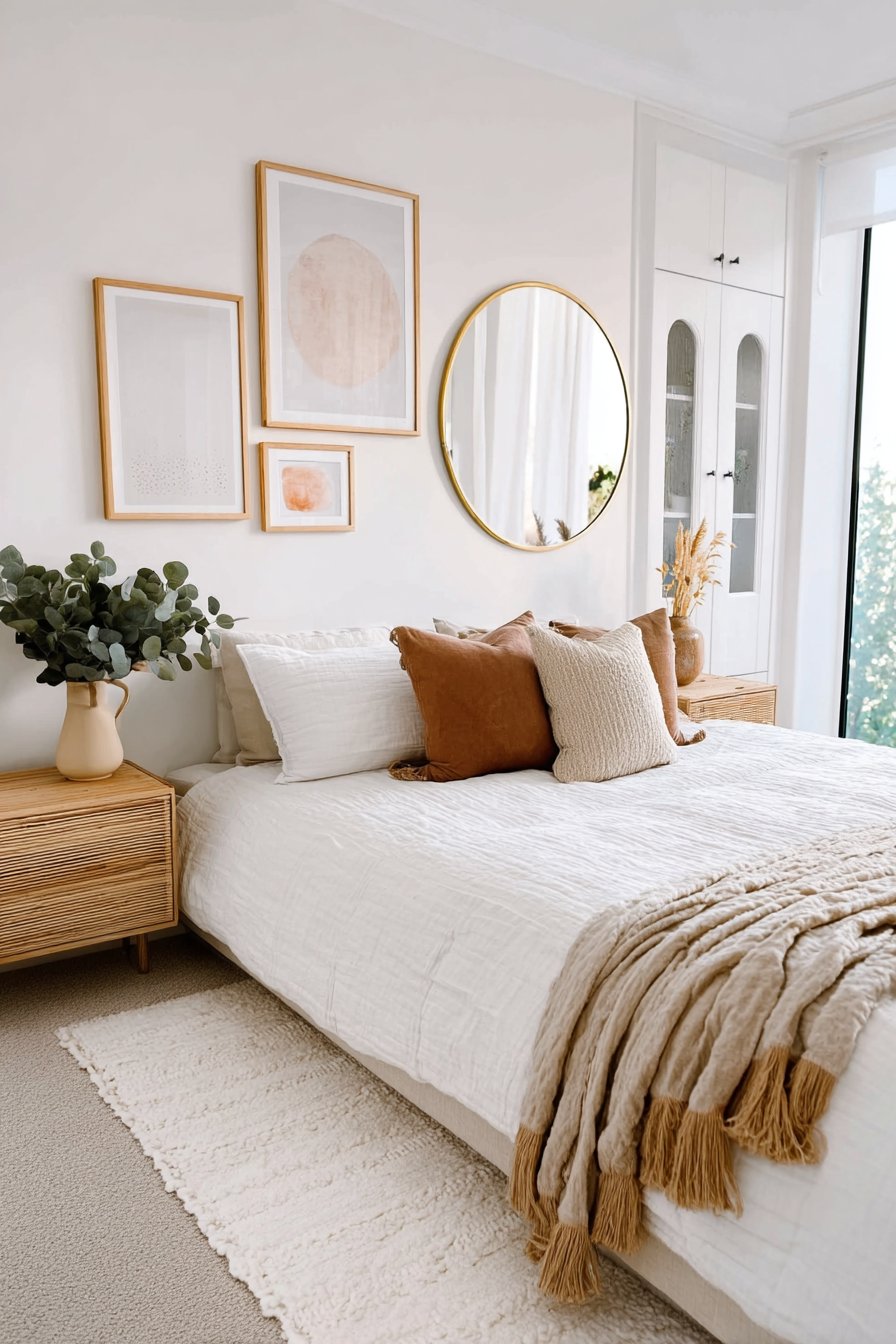
Statement wall art completely changes a room and serves as the easiest way to infuse personality into a space. Large walls can feel cold without some form of decor, and statement art fills those spaces beautifully while creating a natural focal point. I chose one oversized black-and-white photograph for my longest wall, and it instantly made the room feel intentional rather than empty.
Large-scale art makes rooms feel purposeful by turning bare walls into main features. I lean my artwork against the wall for a casual look rather than mounting it, which helps if I want to switch pieces later. Oversized art also balances tall walls and high ceilings for a well-scaled layout.
Textured Wall Treatments for Small Spaces
Wall textures offer character and style, instantly elevating a room while making it feel more dynamic without taking up any extra physical space. Textured walls add dimension, making small spaces feel more open and welcoming while keeping the room free from clutter. Besides that, textured walls reflect light, conceal imperfections, and create the illusion of a larger space.
Subtle finishes like soft sand or knockdown texture work best in small bedrooms because they provide visual interest without overwhelming the space. I added a knockdown texture to my accent wall behind the bed, creating a soft, stucco-like effect. Metallic wall textures reflect light beautifully, giving the room a more luxurious and spacious appearance. Light colors paired with textured walls create a feeling of openness, so I stuck with neutral tones.
Gallery Wall Techniques That Don’t Overwhelm
Gallery walls intimidated me initially, but I learned that cohesion prevents overwhelm. I decided on a color story first, balancing colors across the whole wall to keep everything feeling cohesive. My warm neutrals, blacks, and touches of navy zigzag across the arrangement rather than clustering in one spot.
Varied subjects and mediums keep gallery walls interesting. Mixing portraits, landscapes, abstracts, photographs, and ink drawings creates a collected feel. Measuring 2-3 inches between each piece makes the gallery wall feel like one cohesive statement rather than several prints hung at various points.
Balancing Personality with Simplicity
Minimalist bedroom decoration doesn’t mean eliminating personality. I retain negative space on my walls, never filling them completely with pictures or paintings. This balance prevents the cluttered look that makes rooms feel messy and cramped. One statement piece paired with carefully chosen smaller works reflects who I am without sacrificing the open esthetic bedroom feel I’ve created.
Under-Bed Storage Solutions
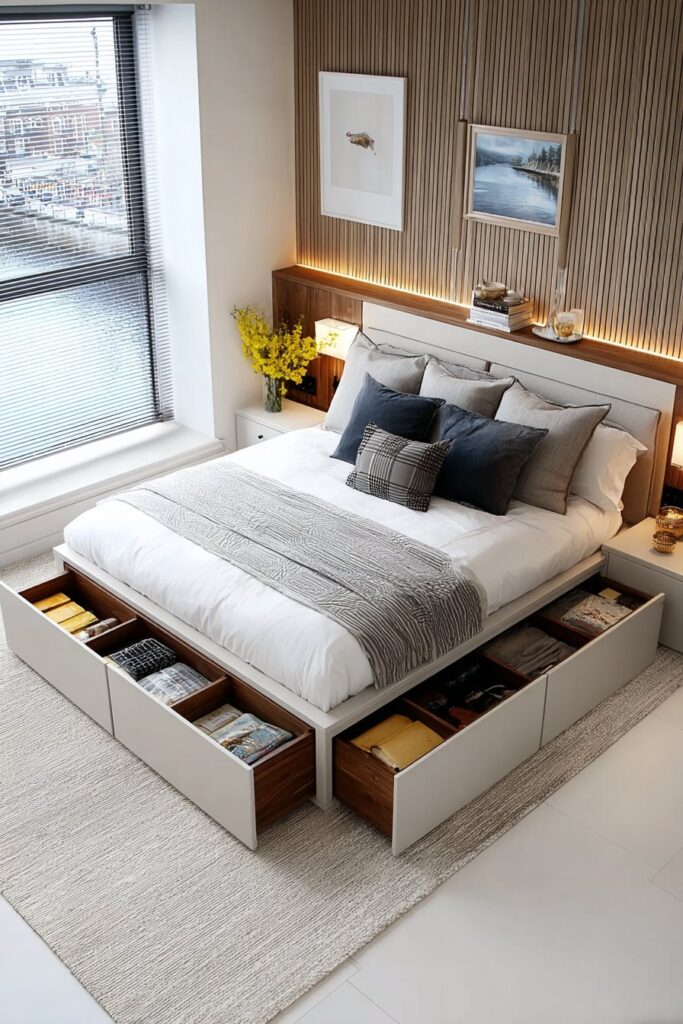
The space beneath my bed sat empty for two years before I realized I’d been ignoring roughly 15 square feet of potential storage. This area collects dust anyway, so I decided to make it work harder for my bedroom decoration ideas.
Types of Under-Bed Storage Solutions
Measuring the distance from floor to bed rail changed everything. I needed containers that slide easily without scraping. Plastic bins with snap lids keep dust and moisture out. Canvas storage bags offer breathability, helping clothes last longer. For everyday items like socks, wheeled storage drawers make access effortless.
Clear plastic totes let me see contents without pulling them out, saving time when I’m rushing. On the other hand, opaque containers provide visual calm when partially visible. I use clear bins for shoes and opaque ones for bedding.
Fabric baskets work well in my esthetic bedroom setup because they’re lightweight and renter-friendly. Wooden crates handle heavier items and include pre-cut handles. I store off-season clothing in compressed felt bins, which protect fabrics better than plastic.
Beds with Built-In Storage Compartments
Storage beds transformed how I approach bedroom room decoration. Lift-up storage beds don’t require side clearance, working perfectly when my bed sits near the wall. The mattress platform lifts from the top, revealing a full storage cavity underneath.
Drawer storage beds suit frequently accessed items. Four extra-spacious drawers with lockable wheels prevent unwanted rolling. However, drawers need clearance to open fully, which tight bedrooms often lack.
Organization Systems That Keep Things Accessible
Professional organizers recommend category-specific storage rather than large bins holding everything. I use dividers within drawers to separate items. For bedding, I chose containers with wheels since linens are heavy.
Maximizing This Often-Overlooked Area
I store seasonal clothing, spare bedding, luggage, and shoes under my bed. Items I use occasionally belong here, not daily essentials. Before storing clothing, I launder everything thoroughly and add cedar blocks to prevent moths. A few dryer sheets keep bedding fresh.
Smart Furniture Layout & Room Flow
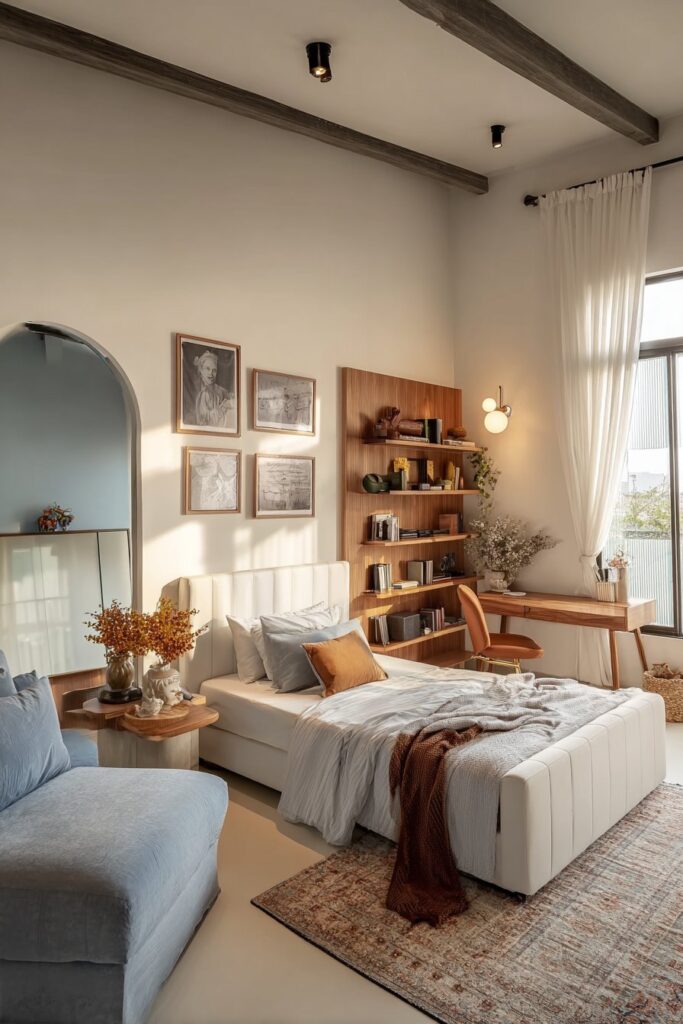
The Corner Placement Strategy
Placing my bed in the corner felt counterintuitive at first. However, corner bed placement maximizes open floor space, which freed up room for movement. This layout works exceptionally well in narrow bedrooms where every square foot matters. Tucking the bed into a corner away from the door created a protected, quiet sleeping zone.
I positioned my bed flush against both walls, keeping the accessible side open. A single nightstand on that side holds essentials without crowding the walkway.
Creating Pathways in Tight Spaces
Movement around furniture determines whether a bedroom feels functional or frustrating. I learned to leave at least 24 inches of walking space on the sides I use most. For main pathways from door to bed, 36 inches creates comfortable flow. Equally, dresser drawers need 36 inches of clearance in front to open fully.
Bedroom Room Decoration Layout Principles
Centered bed placement on the farthest wall creates a powerful focal point and balanced symmetry. For example, this layout allows access from both sides while maximizing wall space for bedroom wall decoration ideas. Avoid placing beds too large for your room, as this makes adding appropriately sized nightstands impossible.
How Shera Approaches Small Space Arrangement
I sketched my room dimensions first, marking door swings and window positions. Testing furniture placement on paper prevented costly mistakes. My final layout prioritizes clear pathways over cramming in extra pieces, ensuring my esthetic bedroom remains both beautiful and livable.
Cozy Textiles Without the Clutter
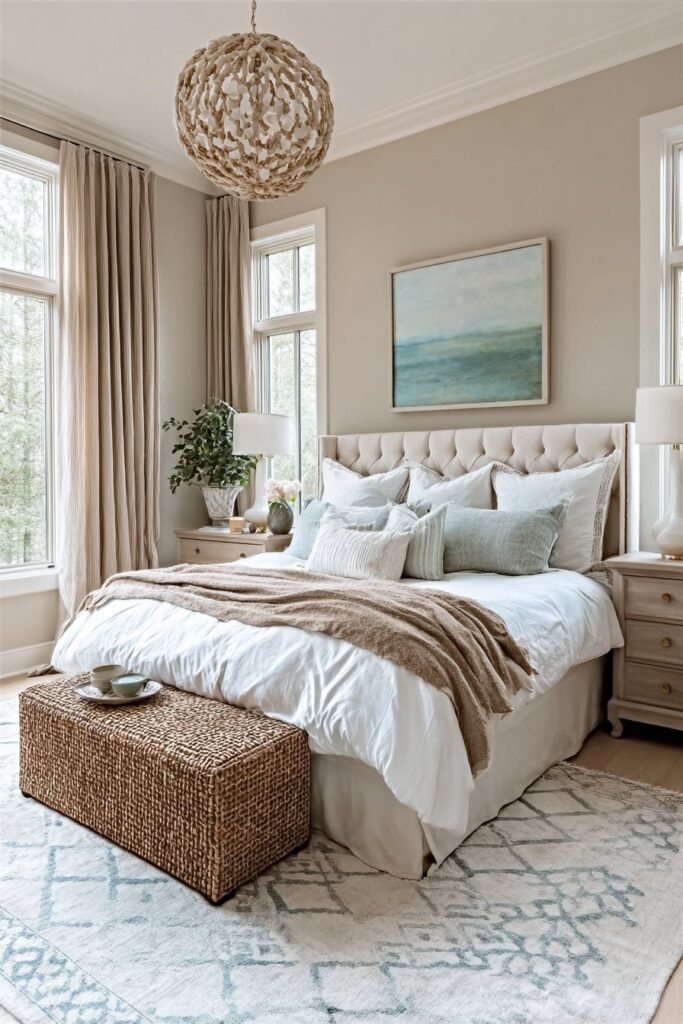
Selecting Bedding for Visual Lightness
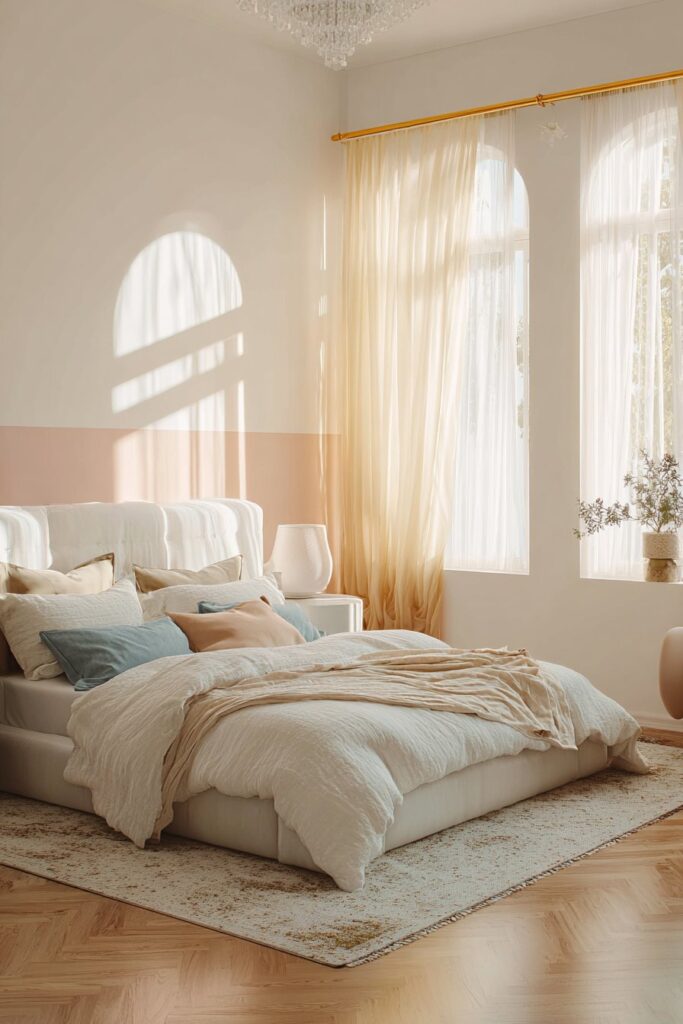
Textiles completely changed how my bedroom felt, even though I’d already optimized furniture and lighting. Bedding plays a powerful role in shaping how we perceive light, depth, and spatial balance. Soft, light tones such as ivory, cream, pastel blue, or blush pink reflect more light throughout the room, making bedrooms appear brighter, airier, and more spacious.
Lightweight materials like cotton or linen feel cozy but won’t overwhelm the space. I switched from my thick comforter to a thinner duvet, keeping things smooth and streamlined. Natural cotton bedding in light tones diffuses light gently rather than reflecting it harshly, creating the calm visual environment I wanted for my esthetic bedroom.
Curtain and Drape Options for Small Windows
Thick, heavy drapes hog all the space and leave rooms feeling squished. I replaced mine with sheer voile curtains that play nice with sunlight, letting it dance through while still giving cover. Lightweight fabrics in neutral tones keep the space calm, maintaining the open feel my bedroom decorating ideas required.
Rugs That Define Zones Without Overwhelming
Light-colored rugs with minimal patterns reflect more light and create an airy feel. I positioned my rug so it extends at least 18 to 24 inches beyond the sides and foot of my bed. Wool rugs absorb sound, creating a quiet, calm atmosphere, while their natural texture adds interest without being distracting.
Texture Over Pattern in Compact Bedrooms
Different materials interact with light differently. Cotton offers soft, natural light diffusion, linen adds slight texture for organic depth, and quilted fabrics create layered shadows that add dimension. Mixing textures creates visual interest in my bedroom room decoration without the chaos patterns might introduce.
Personal Touches for Your Bedroom Style
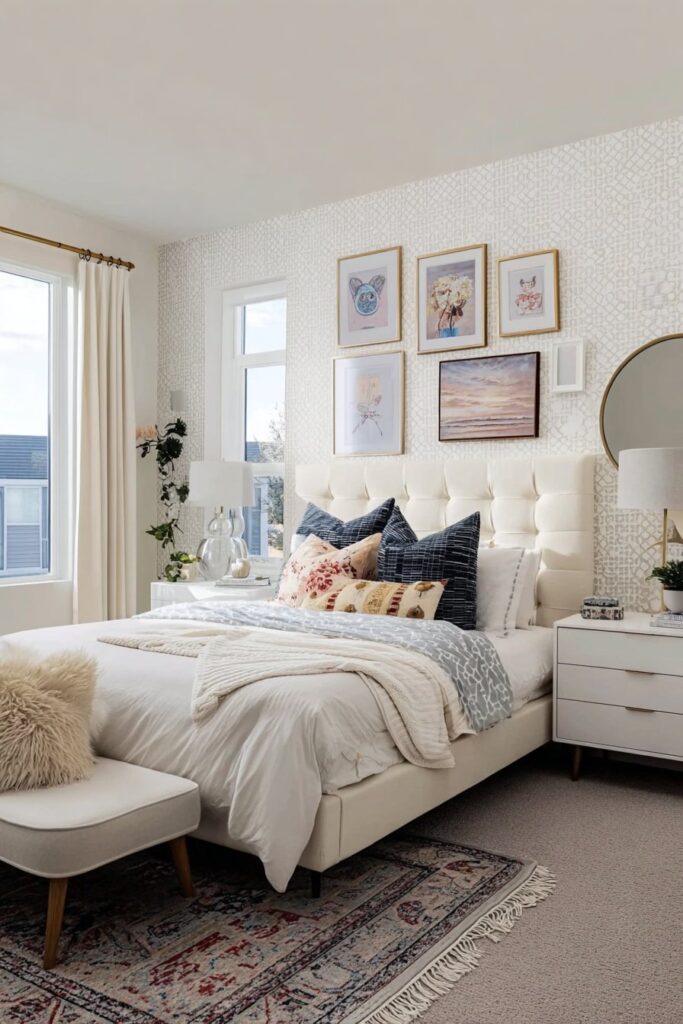
Curating Meaningful Decor Items
Personal touches transformed my functional bedroom into a sanctuary that actually feels like mine. Display meaningful items that tell your story. I created a gallery wall with photographs and prints that inspire me, allowing personal expression that evolves as my tastes change. Rather than filling every surface, I prioritize items holding sentimental value or connecting to places I’ve traveled. Grouping objects in threes or fives creates visual rhythm, so I arranged three framed quotes alongside family photos on my dresser.
Displaying Collections Without Creating Clutter
My hat collection used to hide in closets until I realized accessories work beautifully as decor. Displaying collections requires intention. I group similar items together rather than scattering them, which reduces visual clutter immediately. My vintage travel finds now sit on one floating shelf, creating cohesive impact without overwhelming the bedroom room decoration.
Plants and Natural Elements in Small Spaces
Plants bring life and improve air quality. I chose varieties matching my space constraints. Tall, slender plants spread at the top rather than consuming floor space, while vining varieties placed atop high shelves make visual impact without taking floor area. Hanging plants from the ceiling take up exactly zero percent of floor space.
Making Your Space Uniquely Yours
Layer decor reflecting your style, from minimalism to relaxed esthetics. These quiet touches shape atmosphere in esthetic bedroom spaces. What you already own deserves to be seen, making these bedroom decoration ideas genuinely yours.
Conclusion
Transforming my small bedroom felt overwhelming initially, but these decoration ideas proved that limited space doesn’t mean limited style. By implementing multi-functional furniture, vertical storage, and strategic lighting, I created an esthetic bedroom that feels twice its actual size. The key is starting with one change rather than attempting everything simultaneously. Pick the solution addressing your biggest challenge first, whether that’s storage, lighting, or layout. As a result, you’ll build momentum naturally. Small bedrooms can absolutely feel spacious, functional, and uniquely yours. I’d love to hear which idea you’re implementing first in the comments below.